Moses Killed the Taskmaster Who Violated Dathan's Wife
An Egyptian taskmaster forced Shelomith while Dathan was driven to labor, until Moses struck the abuser dead and fled the men he had saved.
Table of Contents
 Click for full size
Dawn at the Officer's Door
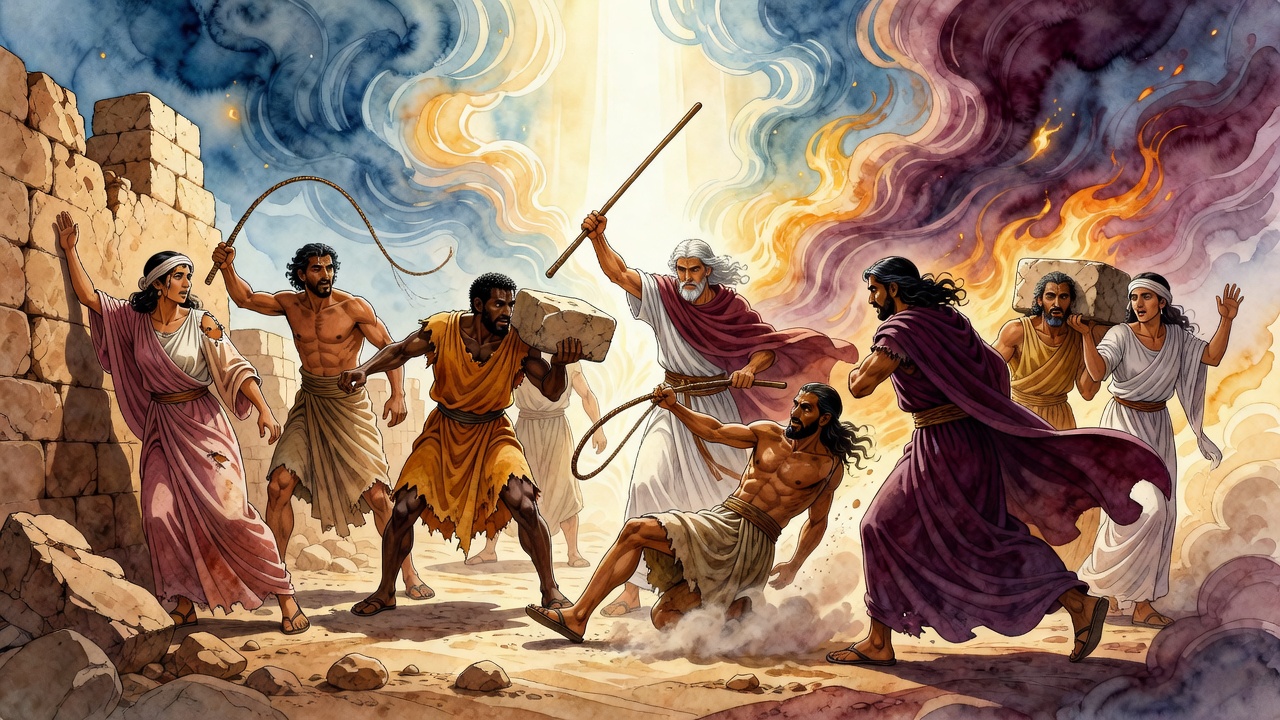
Before the sun rose over Goshen, an Egyptian taskmaster hammered on the door of a Hebrew officer. Dathan held rank over ten laborers. His wife Shelomith, daughter of Dibri of Dan, was beautiful and quick with talk. Whenever the Egyptian came on official business, she greeted him and spoke. The man stored that ease for a crime. At break of dawn he ordered Dathan out with his detachment. The husband had scarcely left when the taskmaster entered the emptied house and dishonored the woman. From that forced union, legend says, would later come the blasphemer of the Name whom Israel would stone on the desert march.
Dathan returned as the Egyptian slipped from the chamber. Discovery made the taskmaster savage. He drove Dathan to work with blows meant to kill. Dust, sweat, and the crack of the rod filled the work yard. Other Hebrew officers, gentler men, took beatings themselves rather than prod their own people. Dathan lived under a different geometry of pain: his home stolen at dawn, his body broken at noon. The system of tens and Egyptian overseers, built to extract labor, had become a machine for private predation as well.
The Prince Who Knew the Crime
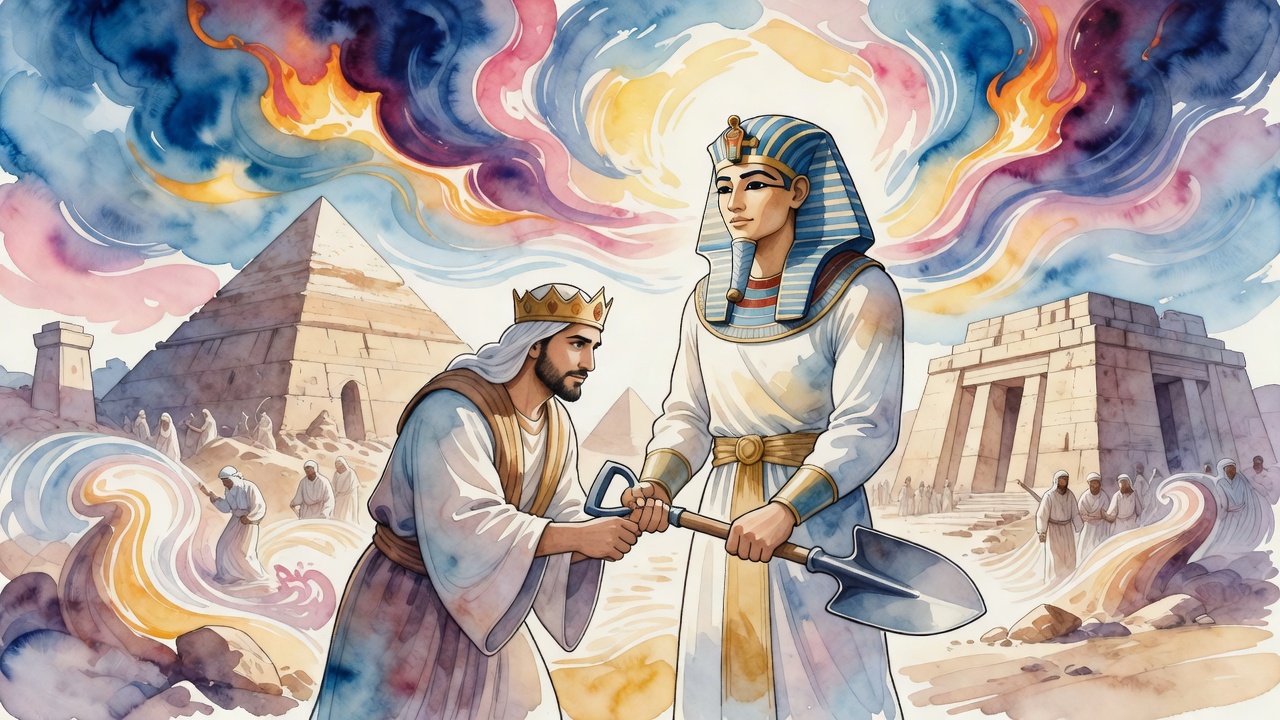
Moses arrived at the place of torture. The holy spirit had already shown him the double assault, house and field. Dathan ran toward the young prince of Egypt and poured out the wrong. Moses turned on the taskmaster. "Not enough that thou hast dishonored this man's wife, thou aimest to kill him, too?" He looked up and argued with heaven as well as earth. "What will become of Thy promise to Abraham, that his posterity shall be as numerous as the stars, if his children are given over to death? And what will become of the revelation on Sinai, if the children of Israel are exterminated?"
Wrath and prophecy moved in the same breath. Moses did not strike for a stranger's bruise alone. He struck because the chain of promise ran through those bruised backs, and because a future mountain of law would stand empty if Egypt finished its murder. The Egyptian fell. The sand took blood that no court in Pharaoh's house would ever call justice. A prince raised among pillars chose the work yard over the throne room for one irreversible hour.
A People That Feared Its Rescuer
When Moses later tried to stand among the Hebrews as a leader, Dathan and Abiram met him with a knife of a question. "Comest thou hither to slay us, or dost thou purpose to do the same with us as thou didst with the Egyptian?" The man who had risked a palace for a Hebrew officer was now treated as a threat by the officers' circle. The words drove him back toward Midian. Two more years would pass before the bush at Horeb ordered him home.
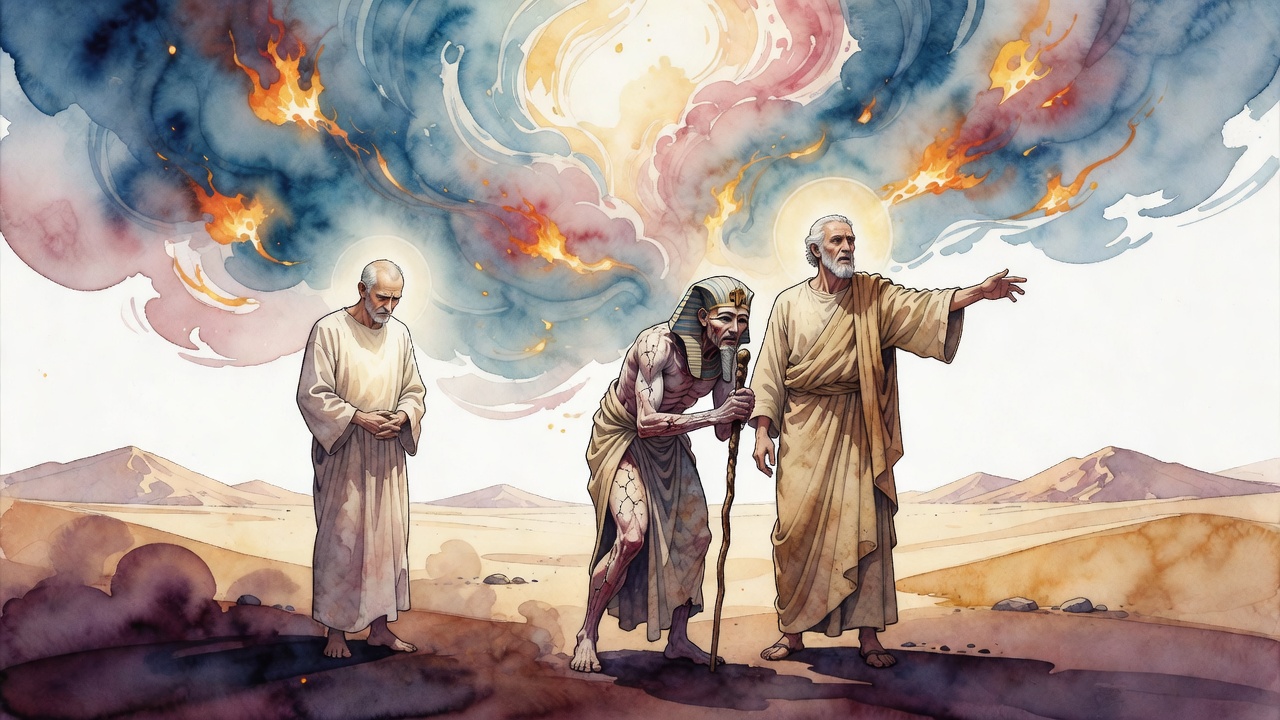
Those final years of bondage grew worse. Pharaoh, struck with leprosy from crown to sole for his cruelty, took counsel with three advisers. Balaam urged the slaughter of Israelite children so the king might bathe in their blood. Jethro fled the atrocity for Midian. Job kept silence and later paid a year of suffering for that silence. The court that planned child murder was the court Moses would one day confront. The same Dathan who had once run to him for rescue would stand in the line of men who bit the hand that tried to free them. Gratitude and grievance shared one name.
Officers Who Absorbed Blows
Not every Hebrew officer was Dathan. Many let Egyptian rods fall on their own backs rather than on the ten men under them. Moses saw that gentleness and still cried out against heaven's ledger. He had read Genesis. The flood generation, the builders of the tower, the men of Sodom, all had judgments he could call just. Israel's weight of brick and blood seemed different. "What hath this nation of Israel done unto Thee, that it is oppressed more than any other nation in history?" He asked why the seed of Esau and Ishmael did not share the same stranger's yoke if the old word to Abraham alone explained the bondage.
He also asked a harder thing. Living Israelites were being sealed into the walls of Pharaoh's buildings. A messenger who could not stop that sealing wondered why he had been sent. The Name that terrified the earth did not yet terrify Pharaoh. Redemption would come in its hour, Moses knew, but the hour was measured in bodies still breathing under mortar. Compassion among officers and cruelty in the palace ran side by side while heaven kept its own clock.
The Long Shadow of One Morning
Shelomith's violation, the blasphemer's later birth, Dathan's betrayal of gratitude, and Moses' flight form one continuous morning stretched across years. Rescue and accusation share the same yard. A prince can kill a taskmaster and still be cast as a killer of Hebrews by the men he defended. Heaven can appoint a redeemer and still let that redeemer spend years herding Midianite flocks while Egypt bathes in planned blood.
When God finally spoke from the bush, the command was not only "Go." It was a return to a people that had already measured Moses by the dead Egyptian rather than by the living wife and husband he had tried to save. Leadership began under that unfair weight. The buried taskmaster did not stay buried in memory. He rose in every sneer that asked whether the next blow would fall on Israel instead of Egypt. The first act of deliverance looked, to some eyes, like the first act of a new oppressor. That misreading would haunt the road from Goshen to the sea.
← All myths