Moses Strikes for Shelomith Then Faces the Serpent
One dawn the taskmaster led a Hebrew out early, then slipped back inside. Shelomith thought the man in the doorway was her husband.
Table of Contents
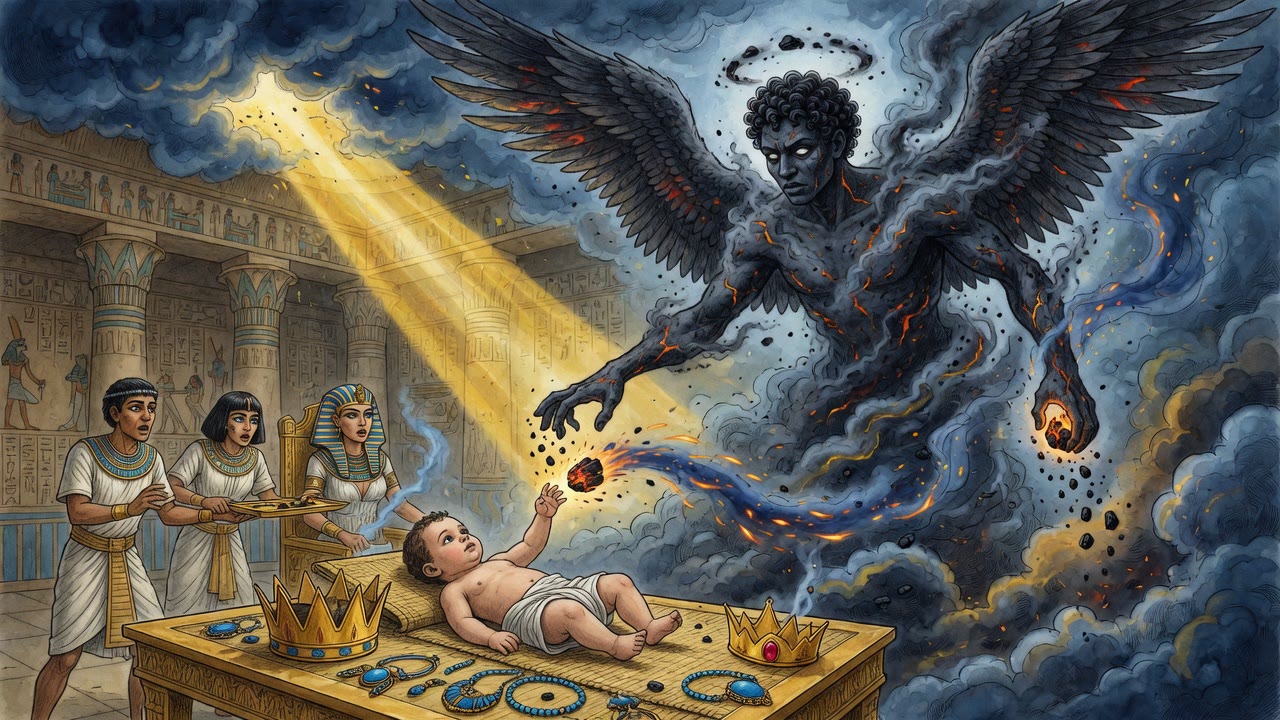
The cock crew. The taskmaster over a hundred and twenty men led a Hebrew out early, then slipped back through the same door. Shelomith daughter of Dibri, wife of that Hebrew, beautiful and without blemish, thought her husband had returned.
 Click for full size
He lay with her. She believed it. The husband came home and met the Egyptian leaving.
"Did he touch you?"
"Yes," she said. "And I thought it was you."
Found out, the taskmaster turned and beat the husband. That was the blow Moses would not let stand (Exodus 2:11-12).
Moses Put His Shoulder Under the Load
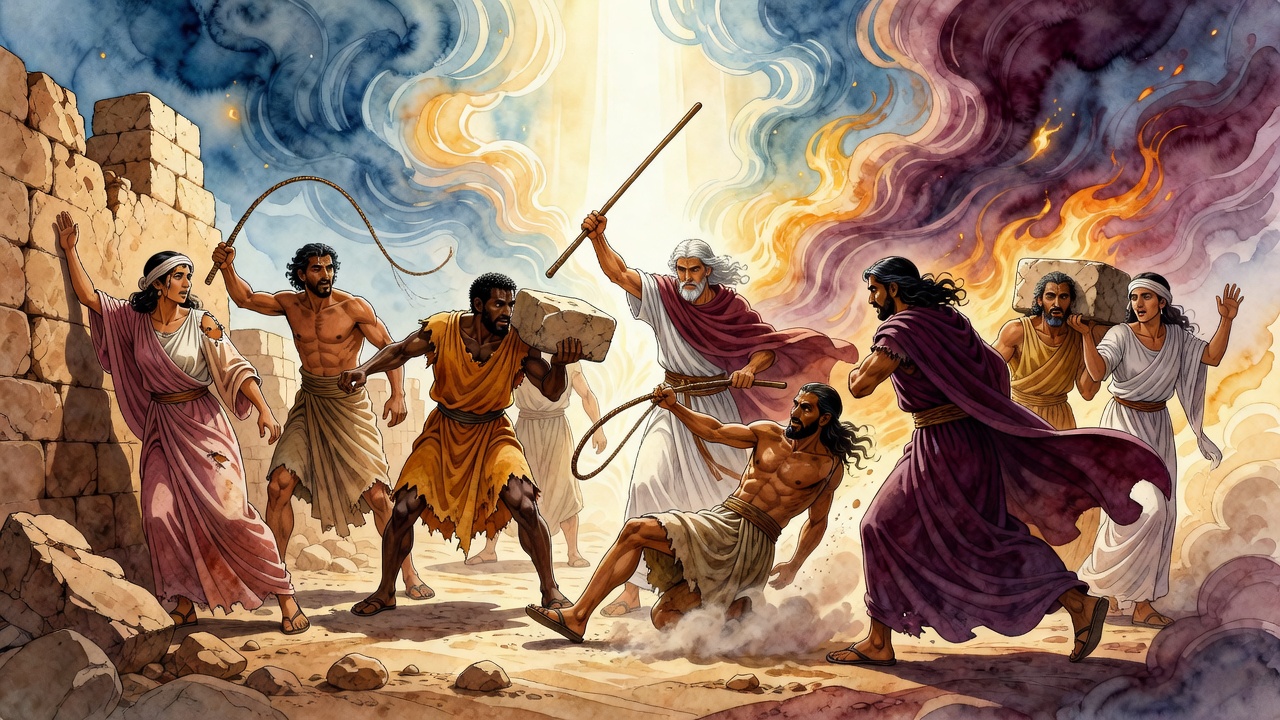
Moses went out to his brethren and did not glance from a distance. He wept at their labor and set his shoulder under each load until the burden became his own. Growth in that house was not the swelling of a body. Beasts grow. Birds grow. Moses grew by going out into the suffering of his people until he could not watch a rape covered by a whip.
He saw the Egyptian striking the Hebrew. He looked this way and that. No man watching. Moses strikes the Egyptian and hides him in the sand.
The next day two Hebrews quarreled, and the secret cracked.
"Who made you a prince and a judge over us? Do you mean to kill me as you killed the Egyptian?"
Moses fled. The blood in the sand did not end Egypt's cruelty. It marked the first time a prince of the house chose the beaten over the beater, and paid for the choice with exile.
The Staff Coiled Into a Serpent
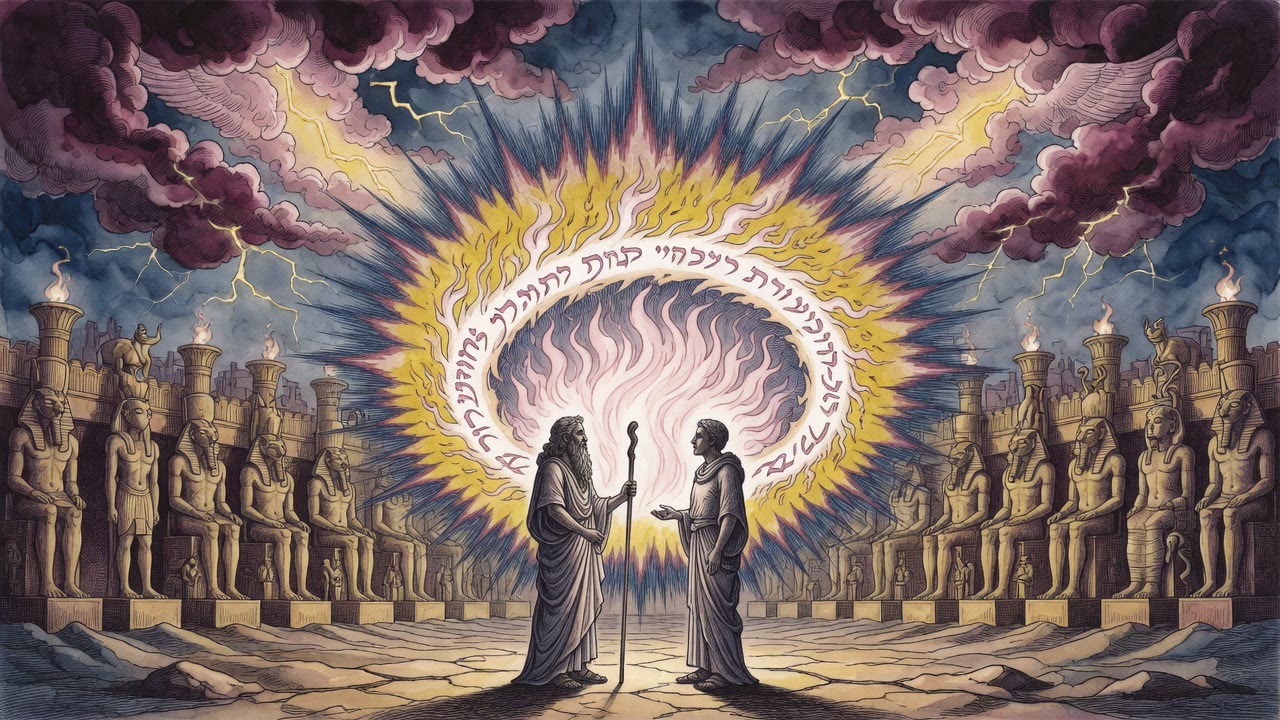
Years later, at the bush, he hesitated. He faces Israel in a sentence that cuts them before he has left the mountain. "They will not believe me," he said.
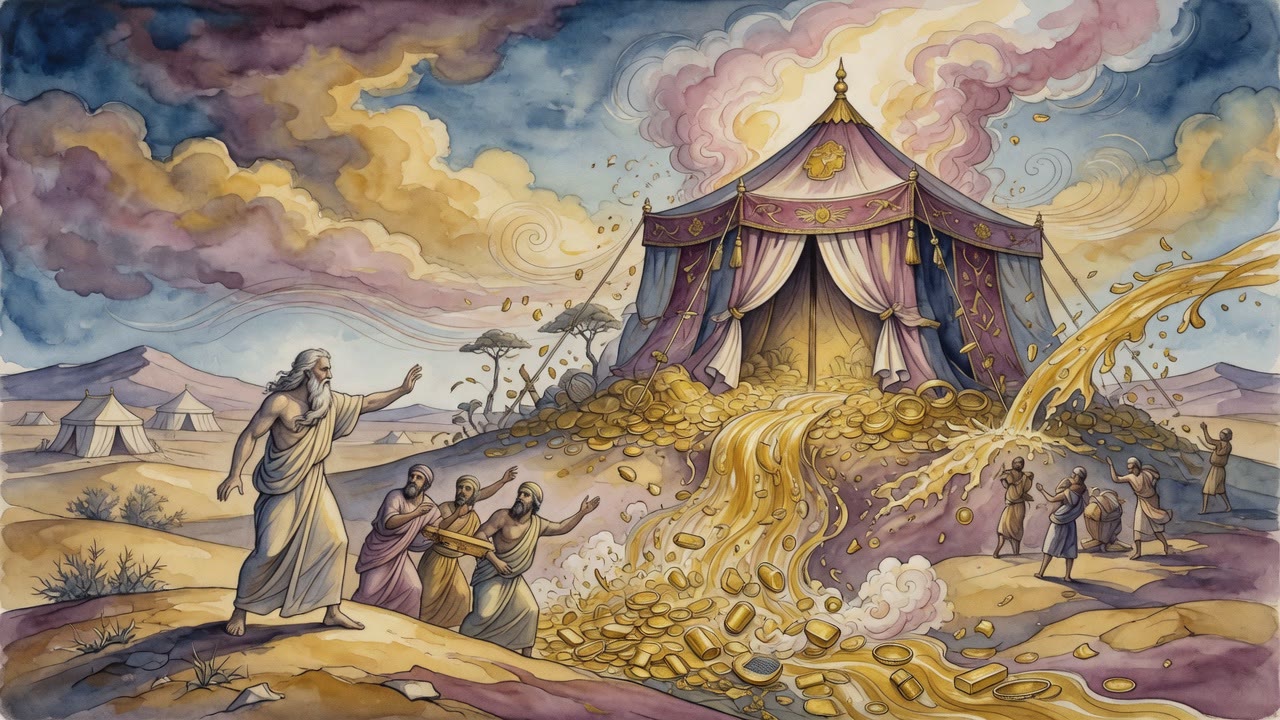
"What is that in your hand?" The Master of the world already knew what Moses held. The staff coiled into a serpent because in that moment Moses had taken up the trait of the first serpent, the speaker of an evil report. He had cast a shadow of slander on his own people (Exodus 4:1-6).
Israel did not deserve it. They were believers and children of believers. The people would believe when they heard. Abraham had believed, and it was counted as righteousness. The mark returned on the speaker. The hand turned leprous, white as snow, measure for a tongue that wronged the faithful.
"Put your hand back in your bosom."
The staff became wood again. The mouth that would free Israel first had to unlearn the serpent's way of speaking about Israel.
Pharaoh Harnessed His Own Chariot
When Israel finally left, the report did not come from royal spies. Egyptian escorts had gone out with the people as patrons of the march. For three days the road held. On the fourth, when Israel pressed farther into the wilderness, the escorts blocked the path.
"We have no permission to let you go further," they said.
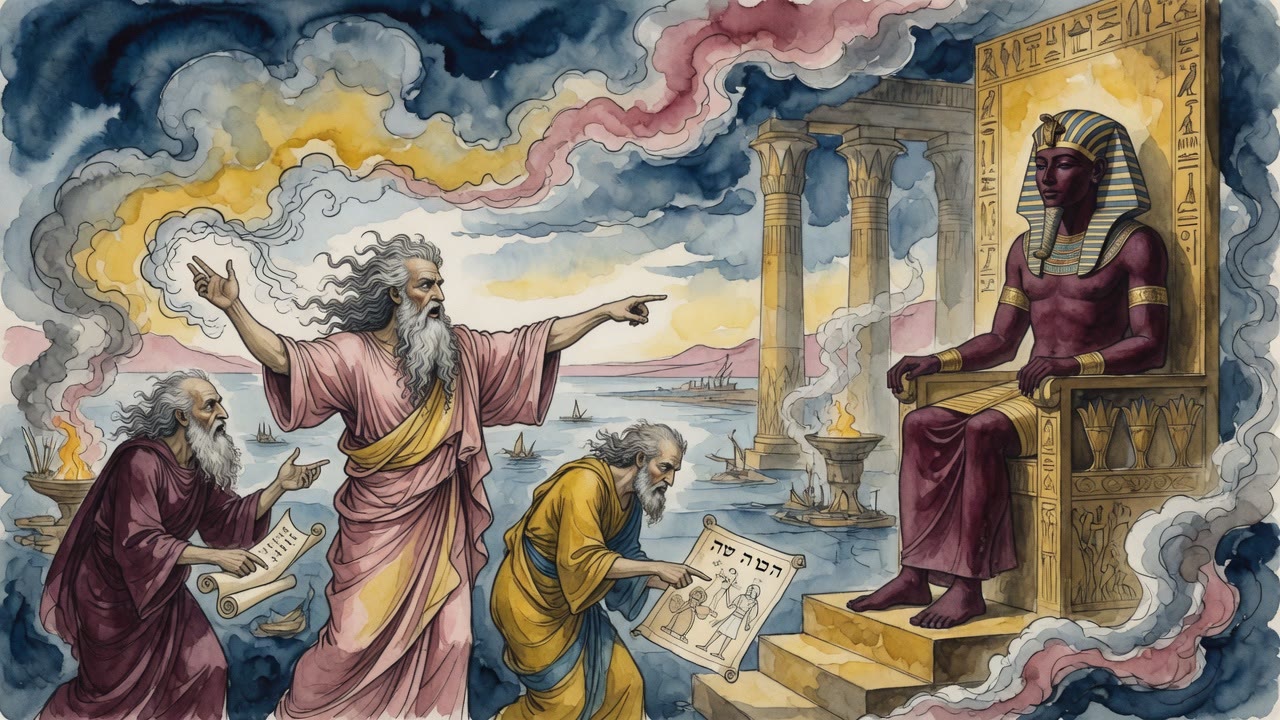
Israel rose and struck them. Survivors fled to Pharaoh and poured out the tale. Pharaoh did not summon a servant. With his own hands he tied the straps of his chariot (Exodus 14:6).
Hatred breaks the ordinary order of dignity. A king who would never stoop to such labor stoops when hate drives him, as Balaam later rose early and saddled his own donkey to go and curse Israel. Love breaks order too. Abraham rose early and saddled his own donkey to do the will of his Maker at the binding of his son.
The same eager hands. Two masters. Pharaoh's leather straps pulled toward the sea of drowning. Abraham's toward a mountain of obedience.
From Sand to Sea
The man who buried a taskmaster for Shelomith's household became the man whose staff had to unlearn the serpent's tongue before it could split a sea. The king who tied his own wheels chased a people he had already lost.
Between the sand grave and the chariot pole ran one pressure. Who will put a shoulder under Israel's load, and who will put hands on leather to drag them back.
Moses learned the cost of a wrong word about his people. Pharaoh never learned the cost of a hatred aimed at the wrong nation. The sea would settle that difference without asking either man to explain himself.
Shelomith's name stayed on the first blow. A woman was violated. A husband was beaten. A prince of Egypt chose sides in the sand. Later the staff became a serpent, and a people who would believe were not to be spoken of as a people who would not. Pharaoh's hands on his own chariot finished the pressure: one man buries a rapist, one mouth is whitened for slander, one king yokes himself to chase what he can no longer own.
← All myths