Frogs Forced Their Way Into Pharaoh's Flesh
One frog croaked and an army answered, marble cracked on command, and Pharaoh finally suffered in his own body what blood in the Nile had left untouched.
Table of Contents
 Click for full size
Blood Did Not Touch the King's Skin
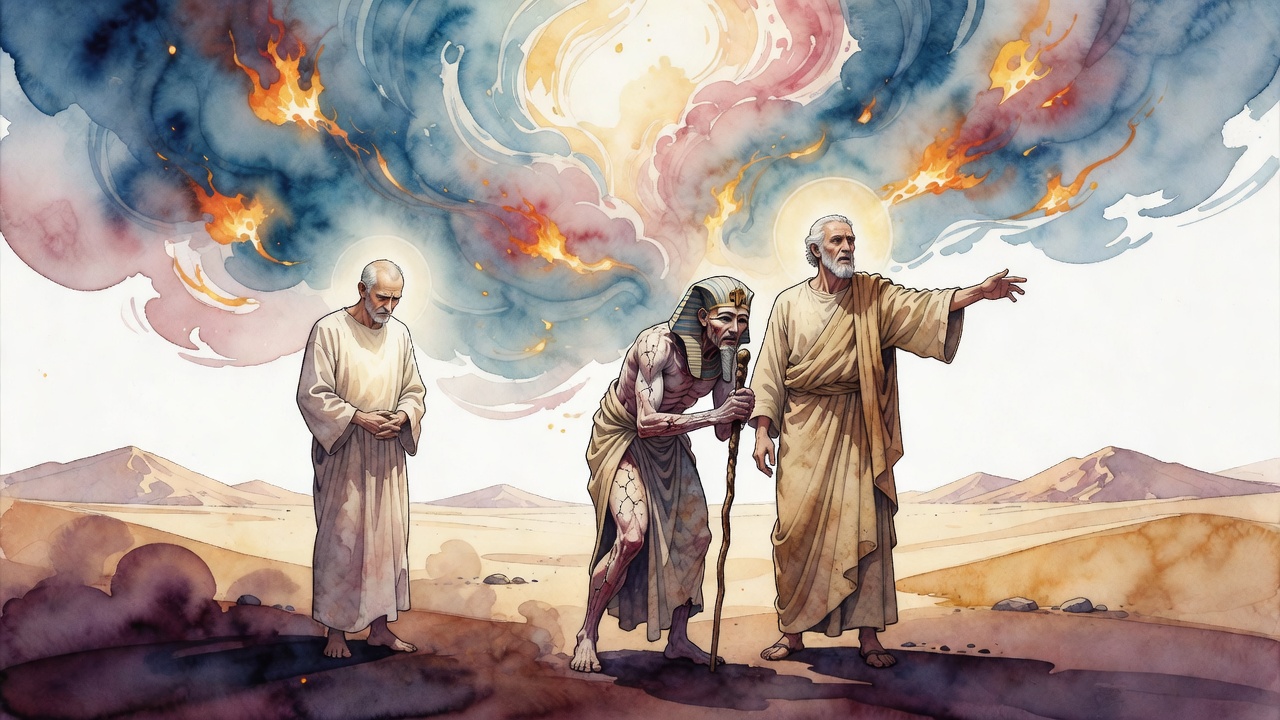
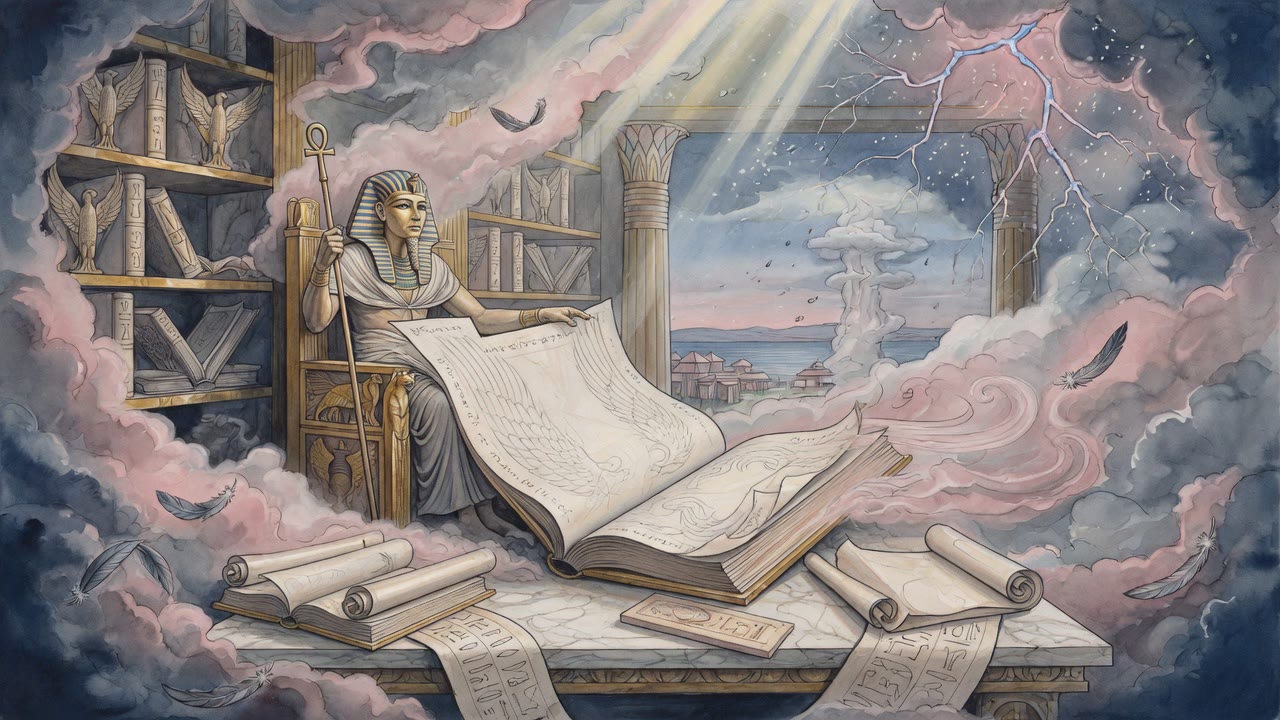
The Nile ran red, and still Pharaoh slept as a man who had won a contest. His magicians, the legends say, with help from angels of destruction, copied the first plague well enough to keep pride intact. If the court could stain water, why yield to Moses? Spectacle without pain is only theater. Theater does not free slaves. It entertains the men who own them.
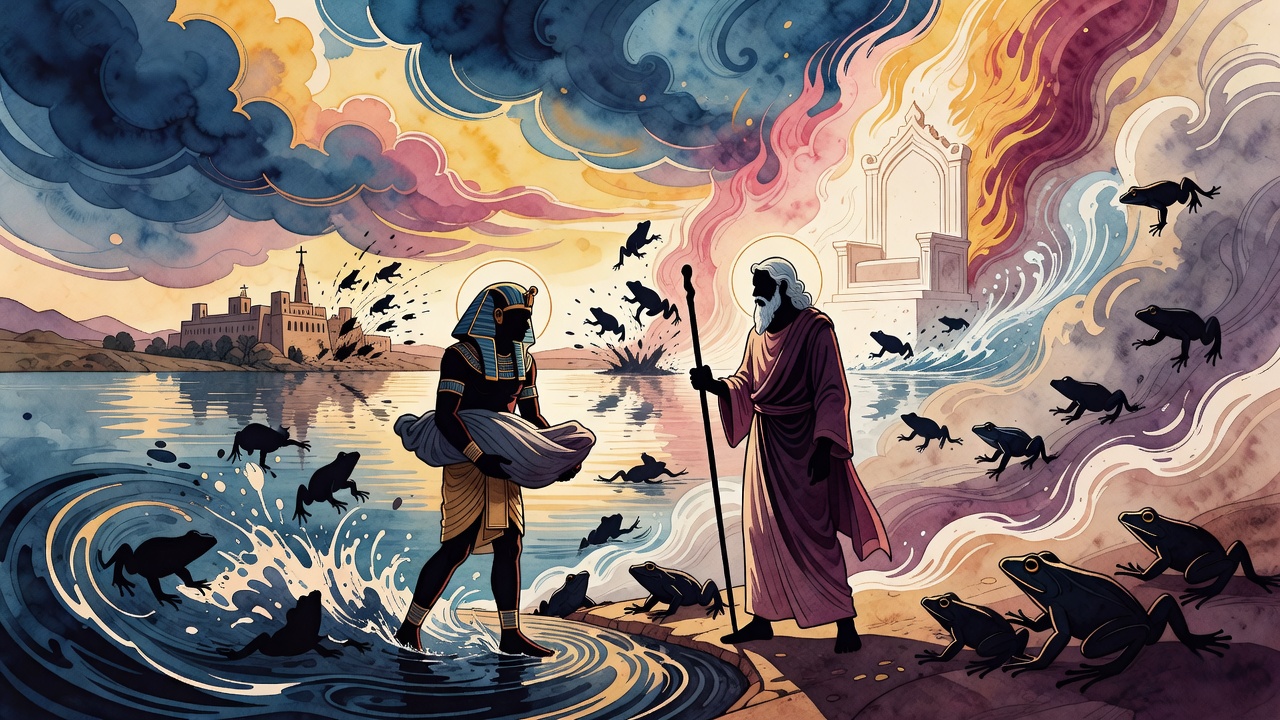
Then Aaron stretched out the rod over the rivers. Why Aaron and not Moses? Because Moses had been saved by the Nile as an infant, and gratitude would not let him strike the water that had carried his basket. The tradition calls that reluctance by its right name: recognition of good done, even by a river that later served a killing order. Aaron struck. One frog rose and croaked. The croak was a summons. Companions answered until Egypt's floors, beds, ovens, and dough were a living green noise that did not negotiate.
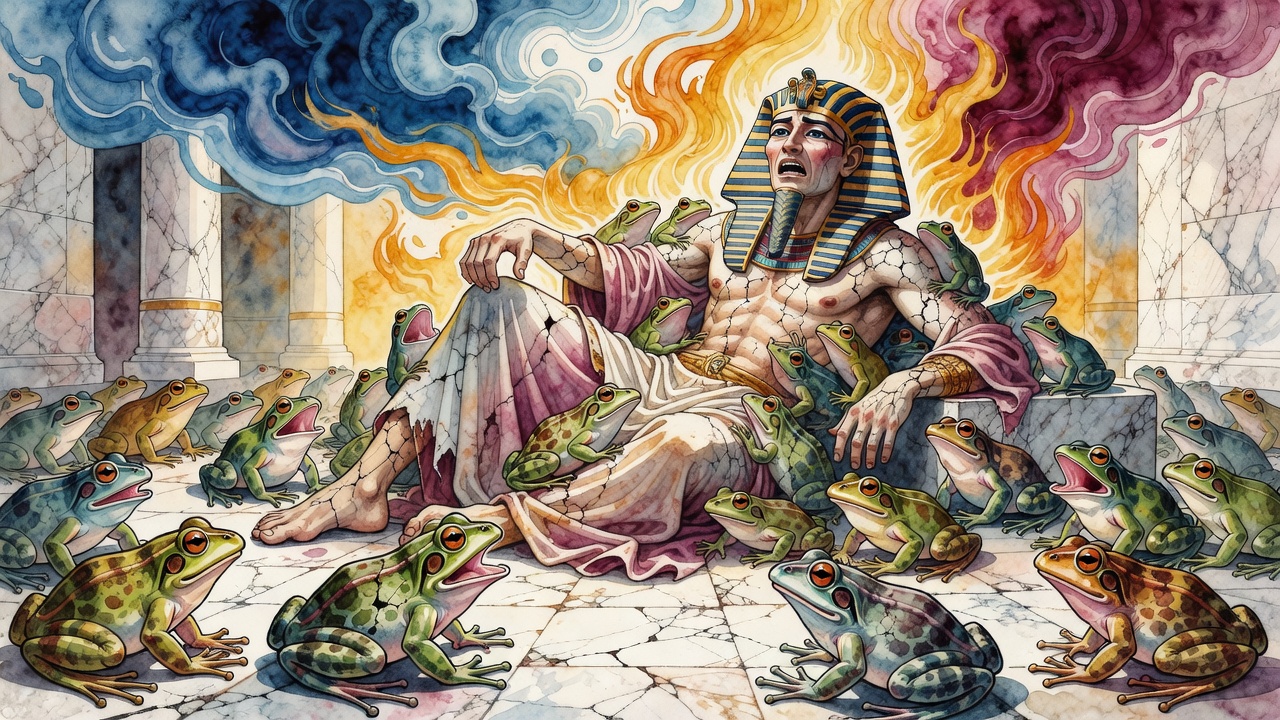
Pharaoh's body, which the blood had left mostly unbothered, now became a landscape of amphibian feet. That was the point. Pain arrived where argument had failed.
Marble, Make Way
These were not ordinary amphibians. They pierced metals and cracked stone. A frog approaching a palace wall would command, "Make way, that I may do the will of my Creator!" and marble would split to let it through. They leapt into red-hot ovens to eat the bread, burning rather than refuse the mission. Later generations would hear in that self-expenditure an echo of Hananiah, Mishael, and Azariah walking into fire rather than bow. Even a frog, the tradition insists, can know for whom it was sent, and can choose the oven over disobedience.
They filled Egyptian marketplaces and stables and left the Hebrews alone. Targeting was part of the miracle. Chaos that can tell slave from master is not chaos. It is judgment with a map. A Hebrew child could sleep while an Egyptian noble found frogs in the folds of royal cloth. The distinction was louder than any speech Moses had delivered at the door.
Why Frogs, Why Then
God chose creatures of the water against a nation that had tried to destroy, by water, the people destined to carry the Torah, and the Torah itself is likened to water. Measure answered measure in the element of drowning. Elsewhere the legends extend the pattern: lice from dust against a people whose seed is like dust, beasts against those who treated humans like beasts. The frogs were the water-clause of that ledger, croaking the account open.
Egypt had also driven Israel into the fields to plant and guard trees for their masters. "Go forth, plant ye trees for us, and guard the fruit thereon," the taskmasters sneered in the retelling. Hail would later answer that forced agriculture by shattering crops, and locusts would finish what hail left, teeth like a lion's in the proverb the legends quote. The second plague is of a piece with that economy of debt. Bodies that forced other bodies into mud would find mud's children in their beds and in their bread and in the cracks of their proud walls.
Heaps of the Dead and a Prayer Delayed
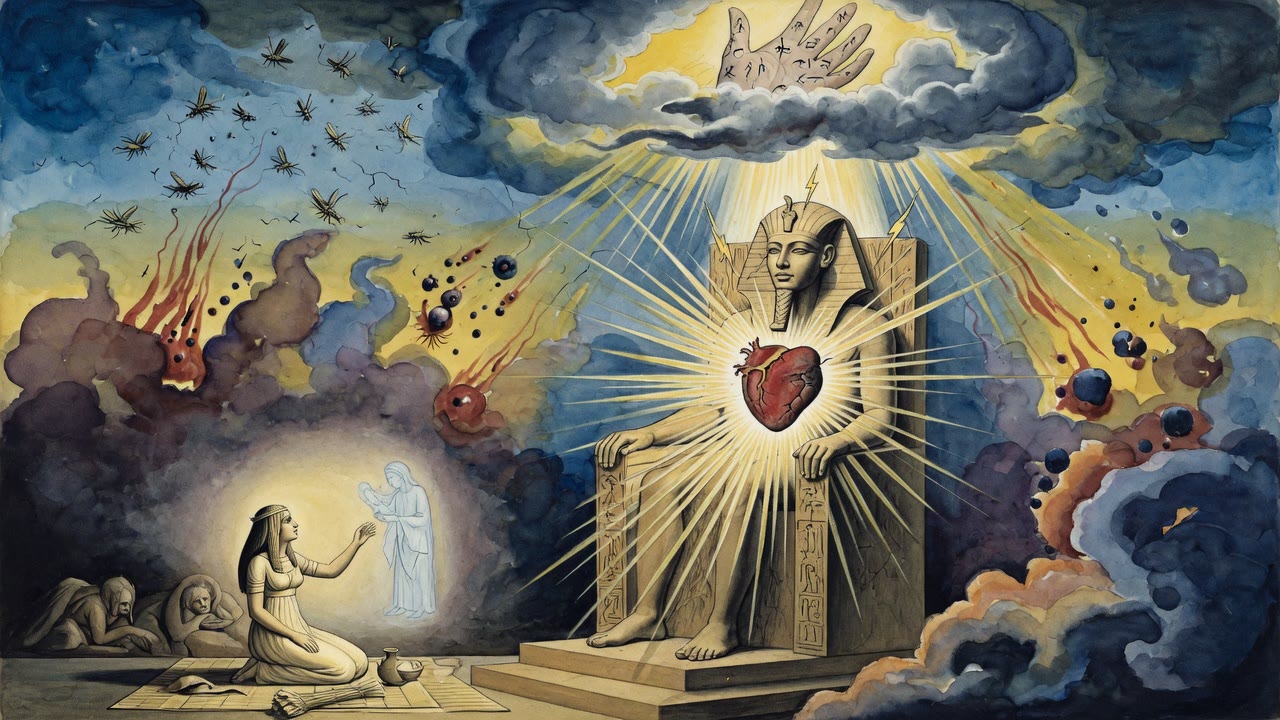
Unlike the blood, the frogs made Pharaoh suffer in his own flesh. That is why he finally bargained. Remove them, and the people may go. Moses agreed to pray, but not at once. The plague's appointed span had not yet closed. Cosmic timing held even while the king begged. Mercy on a schedule is still mercy, but it refuses to let a tyrant set the clock. When the frogs died, they died too fast to retreat to the river. Egyptians heaped them, four heaps to a person in the wild count of the legend, and the stench taught what the croaking had only begun.
Magicians who could redden water could not manage this. The failure mattered. Counterfeit power stops where heaven's creatures refuse to take direction from a court. Pharaoh's body learned what his eyes had refused at the Nile. Pain is a teacher with poor manners and excellent memory. The second plague wrote its name under the first: not only can God change a river, God can send the river's children to live in a king's house until the king cannot pretend the contest is still a game of tricks.
When the stench finally thinned, Egypt tried to return to ordinary mornings. Ordinary would not return. The ovens that had held burning frogs still smelled of obedience from below. The marble that had cracked on command still showed seams. A court that copies blood cannot copy a creature that cracks stone for its Creator. That was the quiet leftover of the second plague, sharper than the croaking while it lasted.
← All myths