5 min read

The Pillars Boiled Egypt's Chariots in the Mud

At the sea the pillar of cloud turns the ground to sticky mire, the pillar of fire boils it, and Egypt's horses melt their hooves where they stand.

Curated by Arthur · Told by Maggid ·
Table of Contents
  1. Cloud Softened the Ground
  2. Fire Heated the Mire
  3. Angels Waited for a Nod
  4. The Water Finished What Mud Began

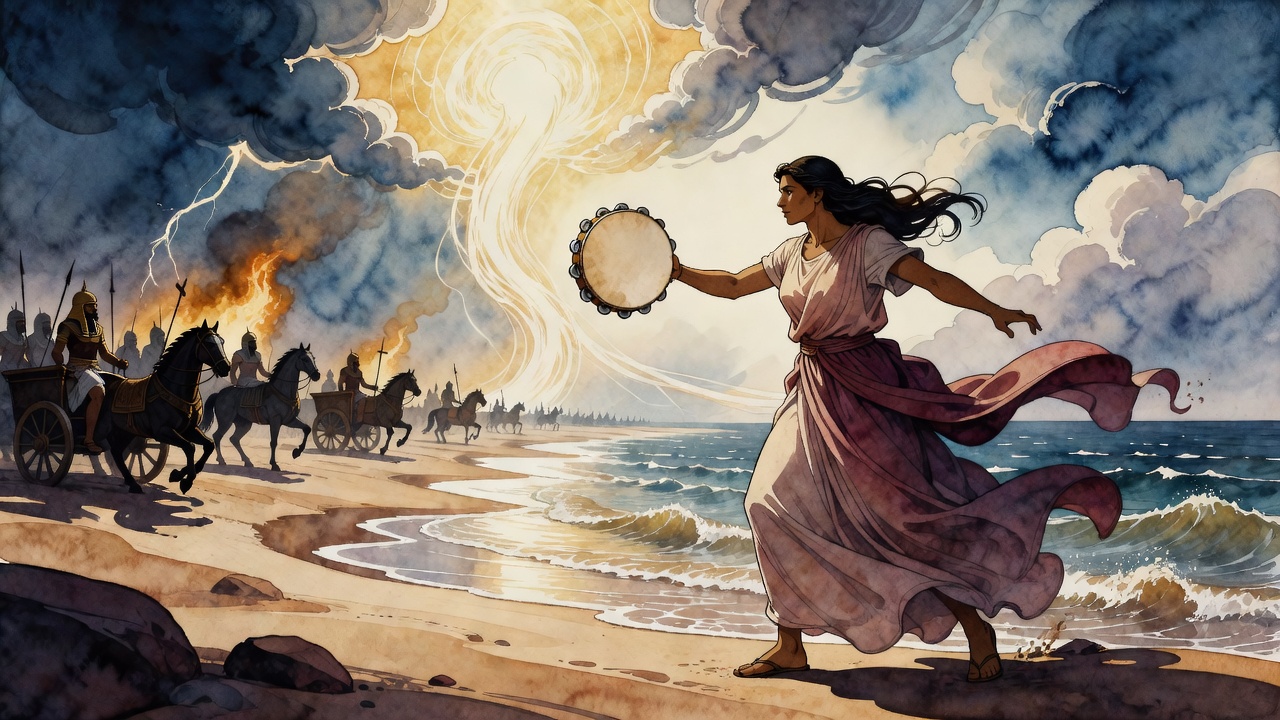
The chariots hit the seabed road with bronze teeth and confidence. Dry sand packed under the wheels. Walls of water rose left and right like green glass. Ahead, the last of Israel was still climbing the far bank. Behind, Pharaoh drove the cream of Egypt into a path that had no right to exist.

The Pillars Boiled Egypt's Chariots in the Mud Click for full size

Then the pillars turned on the hunters.

Cloud Softened the Ground

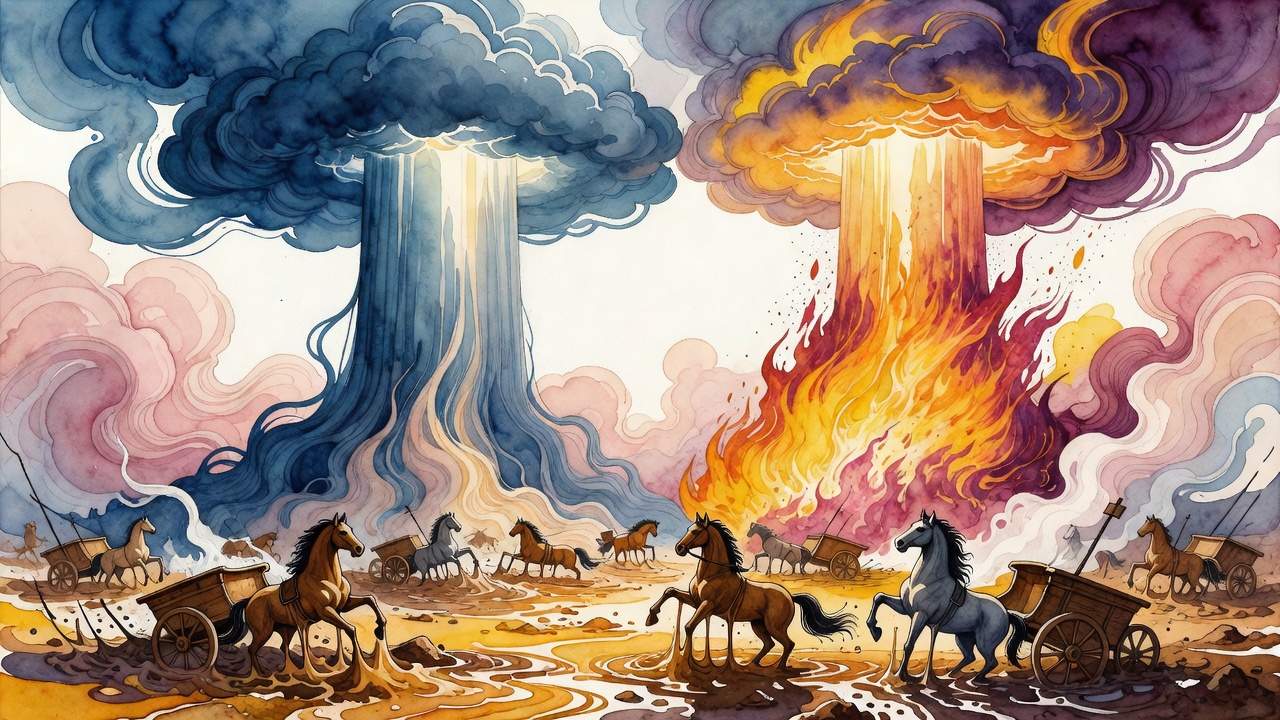
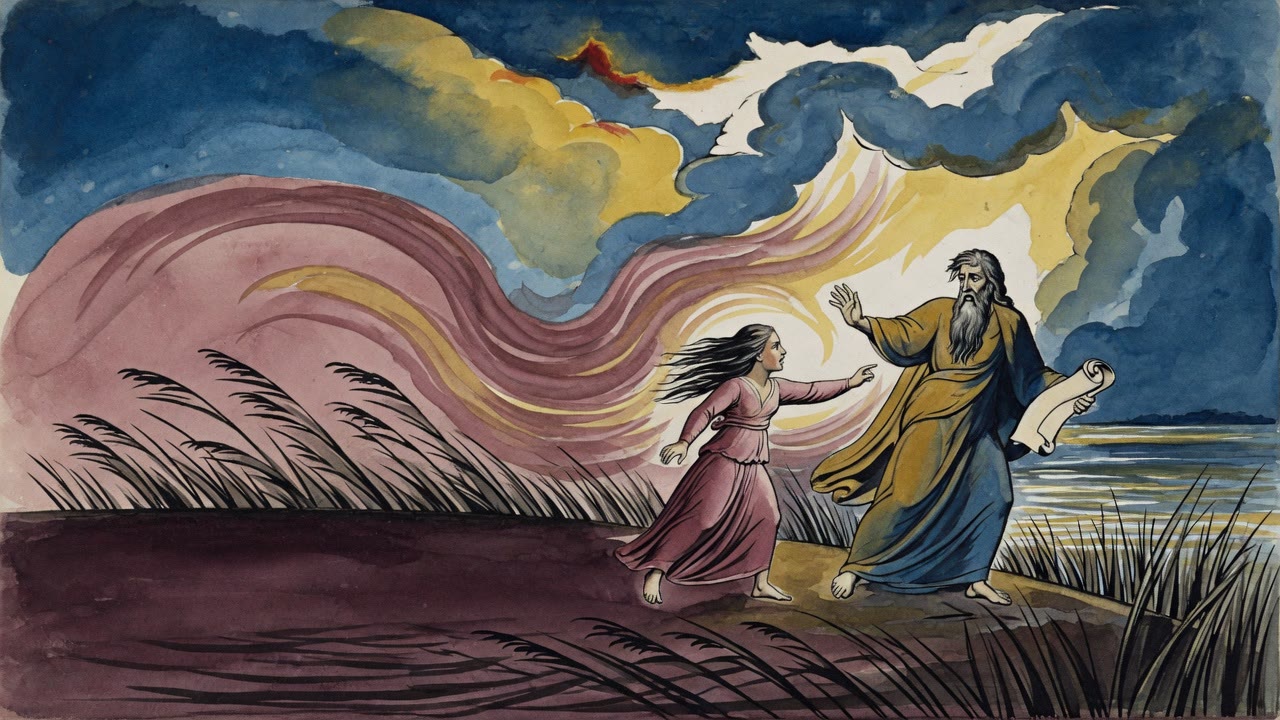
The pillar of cloud dropped its kindness. What had been a road for slaves became glue for masters. The packed floor of the sea went soft, sticky, clinging. Hooves sank. Spokes locked. Drivers cracked whips until the leather split and the horses only sank deeper, screaming as mud climbed their legs.

A captain tried to reverse. His chariot jerked half a turn and stuck. Another man leapt free and found his sandals held as if the earth had grown hands. The cloud did not look like war. It looked like weather. Weather is what killed them first.

Moses stood on the far side with a staff that had already made blood of a river and frogs of a bank. He did not smile. He watched the trap close from the front while the rear of Egypt still pushed forward, still certain the road was theirs by right of empire.

Fire Heated the Mire

The pillar of fire came next. It did not merely light the sky. It heated the mire until the mud itself began to boil. Steam rose in sheets. Bronze tires hissed. Horses that had survived the plagues of Egypt felt their hooves soften and fail. Flesh met heat where iron shoes used to hold.

Men who had laughed when the Nile turned red now clawed at straps and reins. Magicians who once matched blood with tricks from Angels of Destruction had no spell for boiling mud. Frogs had cracked marble and leaped into ovens to do the will of their Maker. Here the will of the Maker did not need frogs. It had two pillars and a king who would not turn around.

Pharaoh shouted orders that the heat ate before they reached the last rank. The army of Egypt, trained for open desert and hard riverbanks, found itself cooking in a trench of its own arrogance.

Angels Waited for a Nod

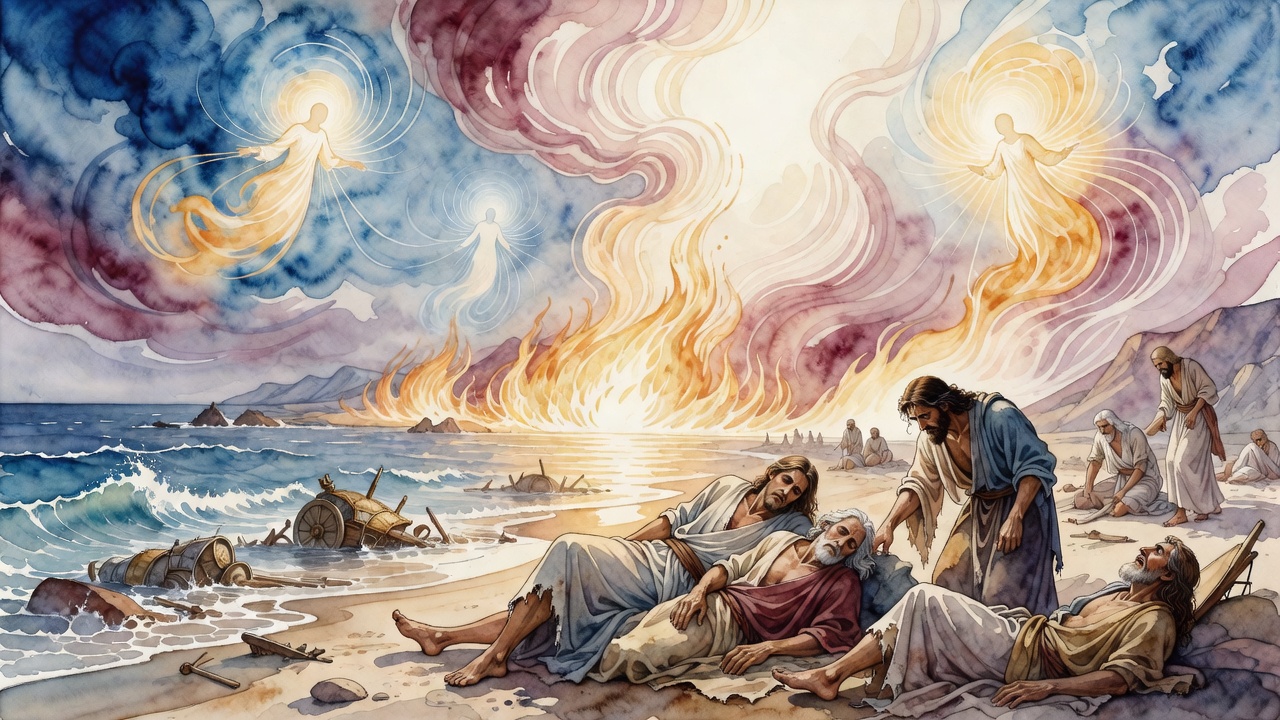
Above the steam, Angels of Destruction stood ready. They had stood ready once before, on the night the firstborn fell, ninety million of them by one count, hail and flame in their gaze, and God had held them back and said His own wrath would not rest until He Himself walked Egypt. That night He had restrained the host and done the work with His own passage through the land.

At the sea the restraint loosened. The pillars fought with cloud and fire. The angels took the rest of the pain. The anguish at the water ran worse than the plagues already endured in the cities. Locusts, darkness, and the death of the firstborn had been terrible. This was personal, close, and prolonged.

God gave the Egyptians strength they did not ask for. Enough strength to stay conscious in the torment. Enough not to die at the first scald. Enough to feel the full length of the sentence. Mercy of a kind no survivor would want. The road that had opened for Israel closed into a furnace of mud and light.

The Water Finished What Mud Began

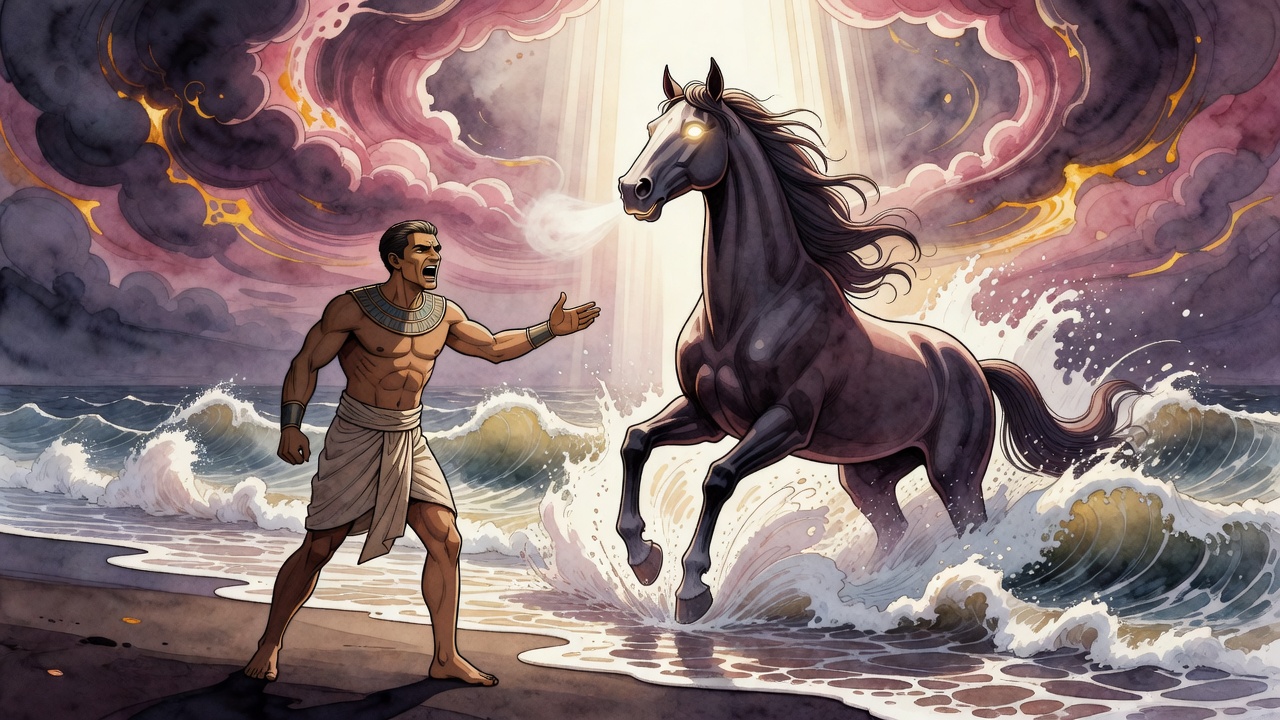
When the walls finally forgot their command, they fell as one body. Water met boiling mire and turned the trench into a single rolling dark. Chariots, captains, horses, and the men who had chased a nation into the sea went under together. They did not float. They sank the way lead sinks (Exodus 15:10).

On the far bank Israel stood and watched an empire vanish into the place where the road had been. Miriam took a timbrel. Moses opened a song. The sea that had been a wall became a grave, and the pillars that had led the camp by day and night had shown a second face: guide for the free, weapon for the hunter.

Somewhere under the surface a last wheel stopped turning. Somewhere above it the pillar of cloud resumed its quiet shape, as if weather could pretend it had never been a soldier.

Pharaoh's boast died with the steam. The magicians' craft died with the mud. The firstborn night had already broken Egypt's houses. The sea finished Egypt's chase. Between those two judgments the pillars had written a middle chapter no court magician could counterfeit: ground that held slaves and melted kings.


← All myths

From the tradition

Sources

3 sources

The texts behind this telling. Some cards carry a translation of the source; others are our own retelling of it, and each card says which. Every card links out to the original.

Legends of the Jews 1:51Legends of the Jews

Retold in our words. Read the original at the link below.The Legends of the Jews by Louis Ginzberg (1909) · Public Domain

Moses, the parting of the waters. but what about the Egyptian side of things? It wasn't just a failed chase; it was a full-blown divine smackdown.

The Egyptians, so confident, so relentless in their pursuit, are suddenly battling… what, exactly? It wasn't just water.

The verse reads, "The Lord fought against the Egyptians also with the pillar of cloud and the pillar of fire." imagery for a moment. These aren't just elements; they're instruments of divine wrath. The pillar of cloud, it says, turned the ground into a sticky, clinging mire. And the pillar of fire? It heated that mire to a boiling point. Boiling point.

Horses screaming, their hooves literally melting. According to Ginzberg's retelling in Legends of the Jews, the horses couldn't even move! It was as if the very earth was turning against them, trapping them in a fiery, muddy grave.

But it gets worse. Much worse.

The text goes on to say that the anguish and torture inflicted upon the Egyptians at the Red Sea were far more excruciating than the plagues they had already suffered in Egypt. Think about that for a second. They endured locusts, darkness, the death of their firstborn… and this was worse?

Why? Because at the sea, God delivered them into the hands of the Angels of Destruction. Not just natural forces, but divine beings whose sole purpose was to torment. These weren't random acts of nature; they were targeted strikes, fueled by divine anger.

And here’s a fascinating detail: apparently, God had to give the Egyptians extra strength just so they could endure the pain! Otherwise, they would have succumbed immediately. Why keep them alive just to prolong their suffering? Perhaps to make a point? To show the full extent of His power? Or maybe, just maybe, to give them one last chance to turn back, to repent.

The story of the Exodus is so much more than just a tale of liberation. It’s a story about the consequences of defiance, the awesome power of the divine, and the sheer terror that awaits those who stand against it. It makes you think about the choices we make, and the forces, both seen and unseen, that shape our destinies. What does it mean to be on the right side of history, and what price are we willing to pay to get there?

Full source
Legends of the Jews 4:332Legends of the Jews

Retold in our words. Read the original at the link below.The Legends of the Jews by Louis Ginzberg (1909) · Public Domain

It is often remembered as simply the death of the firstborn sons, but the scope, according to some fascinating interpretations in our tradition, was far, far wider.

Pharaoh, blinded by pride, and all those who sided with him, figured the loss of a few firstborns was a price worth paying to keep the Israelites enslaved. A minor setback, they thought. They couldn't have been more wrong.

The decree, as the Legends of the Jews, that monumental compilation by Rabbi Louis Ginzberg, tells us, wasn't limited to just the firstborn sons. Oh no. It included the firstborn daughters as well! And, critically, it wasn't just about the firstborn children from current marriages. It encompassed all firstborn children from any previous relationships the parents had ever had.

Consider this: the Egyptians, well, they weren't exactly known for their strict adherence to marital fidelity. As Ginzberg points out, it wasn't uncommon for a woman to have ten children, each of whom was the firstborn of a different father! So, the net was cast incredibly wide.

But it gets even more intense. According to some traditions, God went even further. The decree ultimately extended to the oldest member of every household, regardless of whether they were technically the firstborn or not. What God resolves, as they say, is executed.

And the moment of execution? Precise. Absolutely precise. The stroke of midnight, so exact that only God Himself could discern it. At that instant, He appeared in Egypt. Not alone, mind you. He was attended by nine thousand myriads – that’s ninety million! – of Angels of Destruction.

These weren't your fluffy, cherubic angels. These were angels of hail and flames, their very gaze capable of inspiring terror and trembling. Ready to unleash annihilation, they poised themselves to strike.

But then, God, in His infinite power, restrained them. "My wrath," He declared, "will not be appeased until I Myself execute vengeance upon the enemies of Israel."

Think about the weight of that for a moment. The Creator of the Universe, stepping in to personally deliver justice. It emphasizes the profound significance of this moment in our history. It wasn't just a plague; it was a divine intervention of unparalleled magnitude, a demonstration of God's unwavering commitment to His people.

Full source
Legends of the Jews 4:294Legends of the Jews

Retold in our words. Read the original at the link below.The Legends of the Jews by Louis Ginzberg (1909) · Public Domain

Pharaoh, hardened of heart, remained unimpressed by the first plague, water turning to blood. Why? Because his magicians, aided by "Angels of Destruction," could replicate the effect. He saw no divine hand, no reason to heed Moses’ words. It's like a magic show rivalry, only with the fate of a nation hanging in the balance.

Then came the frogs.

It was Aaron, Moses' brother, who brought this plague upon Egypt. He stretched out his hand with his rod over the rivers, and suddenly, frogs everywhere! Now, why Aaron and not Moses? Well, Legends of the Jews offers a fascinating reason: Moses, whose life had been spared by the waters of the Nile as an infant, couldn't bring himself to punish his "savior" by afflicting it with reptiles. A beautiful example of showing hakarat hatov – gratitude.

At first, just one frog appears. But this wasn't your average amphibian. This frog, according to the legend, began to croak, summoning countless companions. Soon, the entire land of Egypt was overrun.

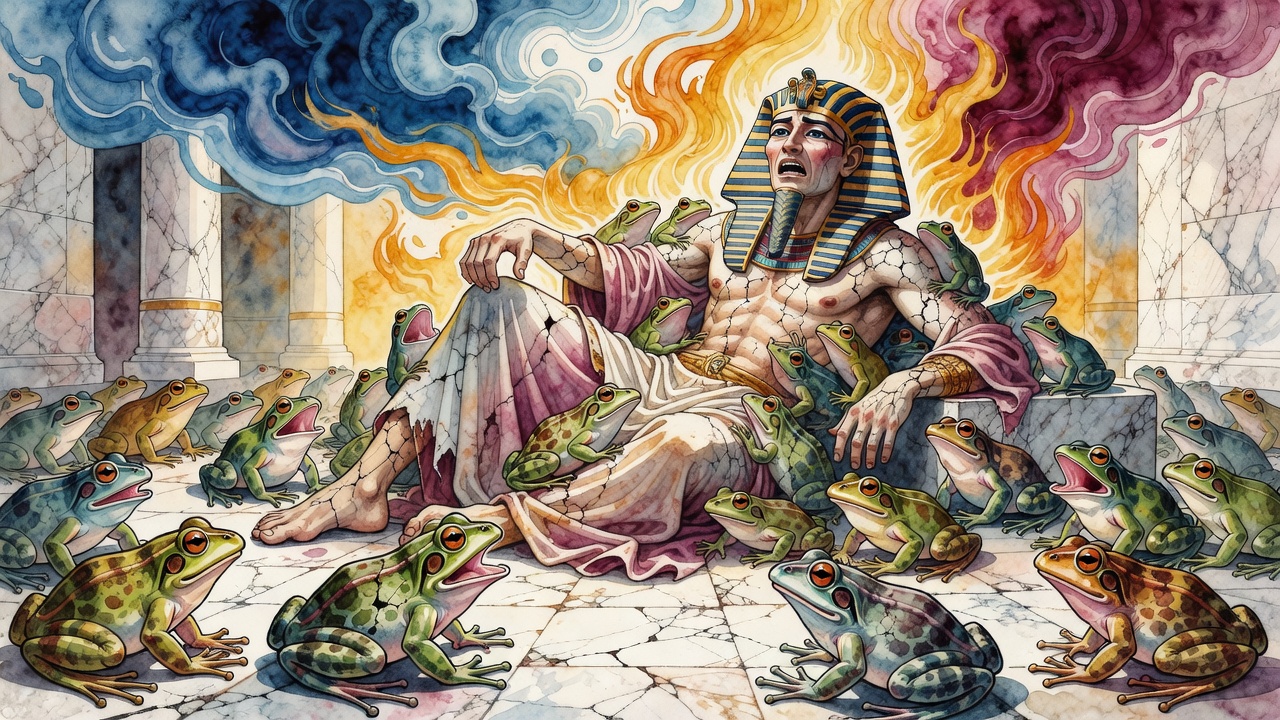
But here's where the story gets truly wild. These weren't just ordinary frogs; they possessed a supernatural determination. They could, somehow, pierce through the hardest metals. Marble palaces offered no refuge! If a frog approached a wall, it would command, "Make way, that I may do the will of my Creator!" And the marble would crack, allowing the frog to enter and torment the Egyptians. They attacked them physically, overwhelming them.

In their fervor to fulfill God’s command, the frogs even leaped into red-hot ovens, devouring the bread. Self-sacrifice for a higher purpose, even among…frogs?

This act of self-sacrifice resonated deeply. Centuries later, when Hananiah, Mishael, and Azariah were ordered by Nebuchadnezzar to worship idols or face a fiery furnace, they drew inspiration from the frogs. “If the frogs, which were under no obligation to glorify the Name of God, nevertheless threw themselves into the fire in order to execute the Divine will…how much more should we be ready to expose our lives to the fire for the greater glory of His Name!”

And just as the frogs' sacrifice was remembered, so too were they rewarded. According to the Legends, while the other frogs perished when the plague ended, the frogs in the ovens were miraculously saved. The fire had no power over them.

What does this all mean? It's more than just a story about a plague. It's evidence of the power of devotion, even in the most unexpected creatures. And it’s a powerful illustration of kiddush (the sanctification blessing over wine) Hashem, sanctifying God’s name. So, next time you see a frog, remember this story, and perhaps you'll see it in a whole new light.

Full source