Freedom Exhausted Israel Until the Angels Sang
Pharaoh learned Israel would not return, the sea crushed Egypt's host, and freed slaves could not stand until angels and fragrance healed them.
Table of Contents
 Click for full size
Gone for Good
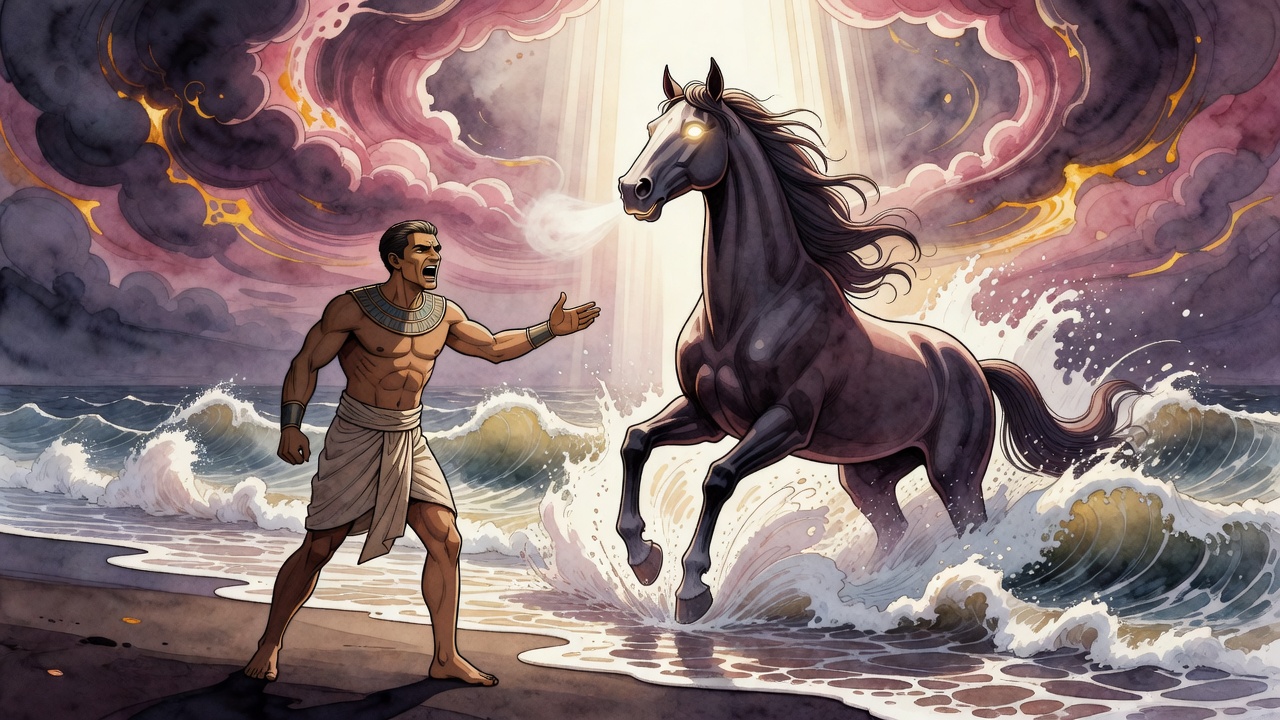
When the news reached Pharaoh that Israel would not return, the court cracked. Advisers and magicians named the truth: the labor force and the people were gone for good. Rage followed arithmetic. A king who had bargained plague by plague now faced empty work yards and a sky that had already chosen sides. Pursuit became the only policy he could still imagine. Tribute nations smelled weakness. The empire that had treated Hebrews as raw material discovered it had built its house on backs that could walk away under a prophet's staff.
The road to the sea filled with chariots because pride cannot sit still inside an emptied treasury of souls. Moses led a nation that had not yet learned how heavy free air can feel in lungs trained on brick dust. Behind them rode a king who still thought water would obey him better than it obeyed heaven.
Pillars Against Egypt
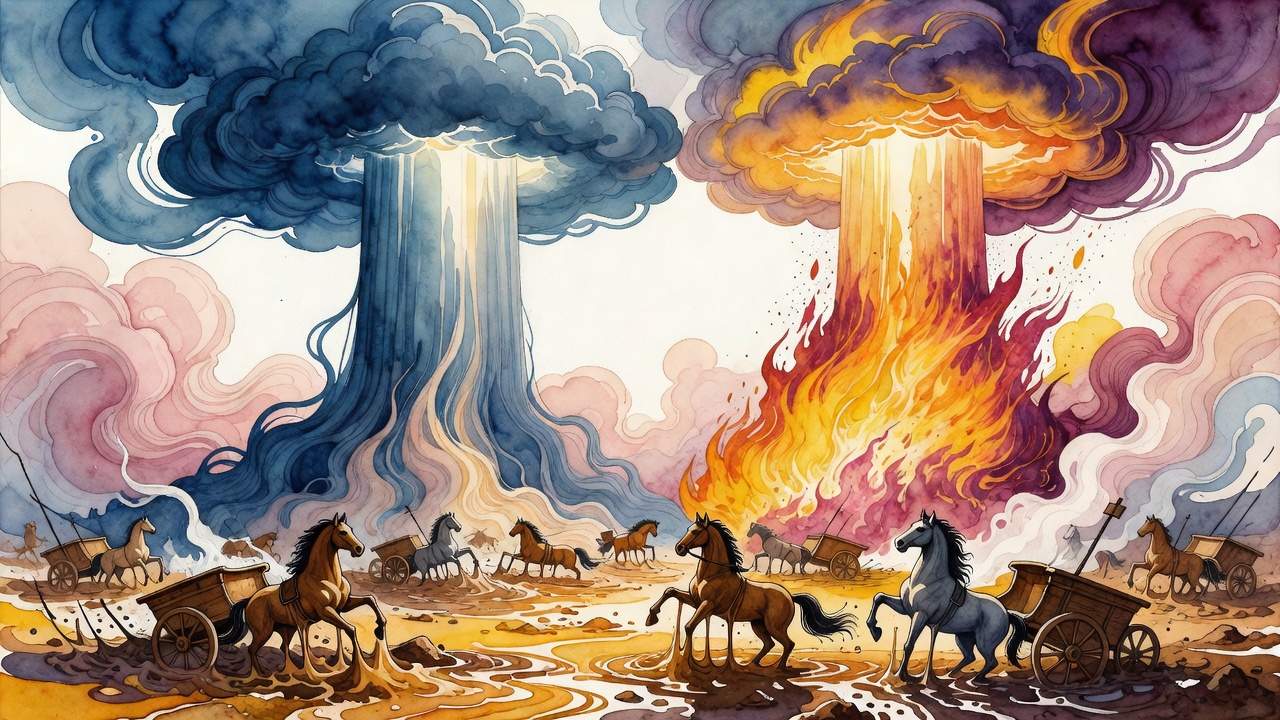
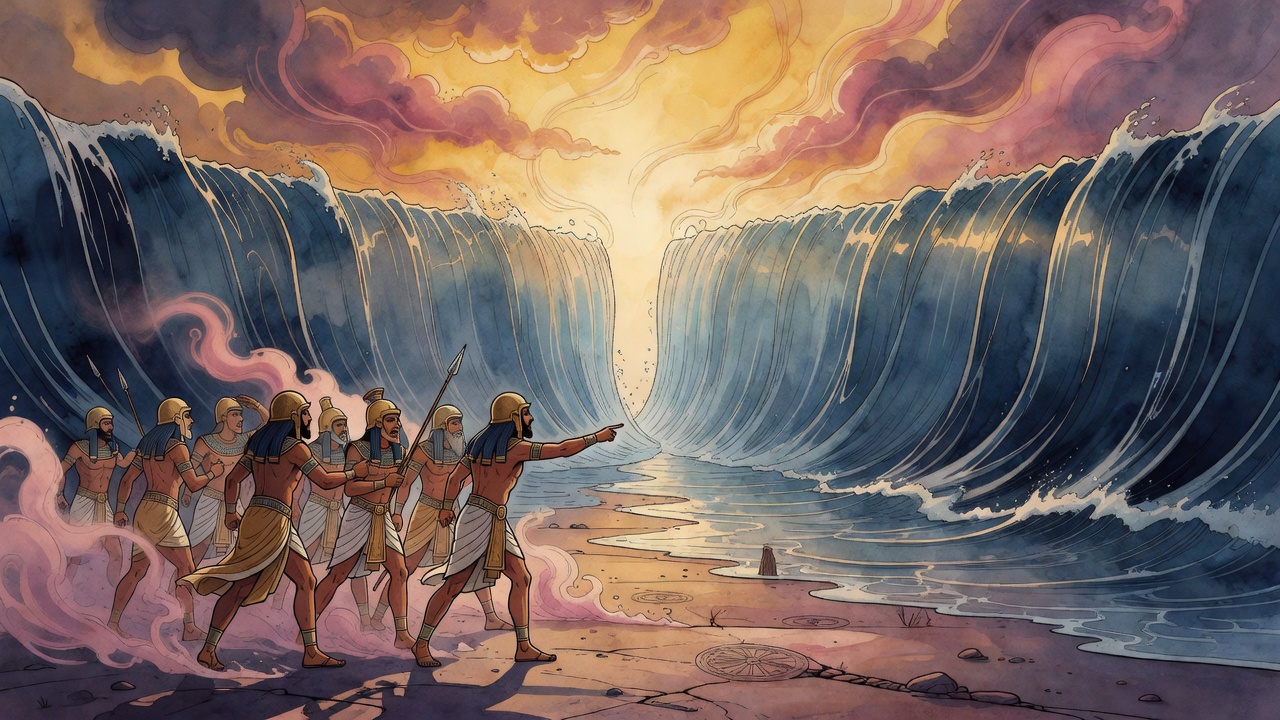
Between the camps moved the pillar of cloud and fire, a wall of presence that turned Egyptian certainty into confusion. What looked to Israel like guidance looked to Egypt like a sentence. Night and day rearranged for the chase. The sea opened for one people and waited like a mouth for the other. When the waters returned, the chase ended as wreckage on a shore that had been a road an hour before.
The legend does not paint a mild failure. It paints a divine strike on an army that still thought a whip could renegotiate heaven. Chariot wheels and drowned ranks taught a simpler map: some borders are water that obeys a staff more than a crown. Egypt's confidence died wet. Israel's path dried underfoot and then closed behind like a gate no siege engine could force.
Moses raised the staff. God raised the sea. Pharaoh raised nothing that lasted past the last wave.
Bodies That Could Not Celebrate
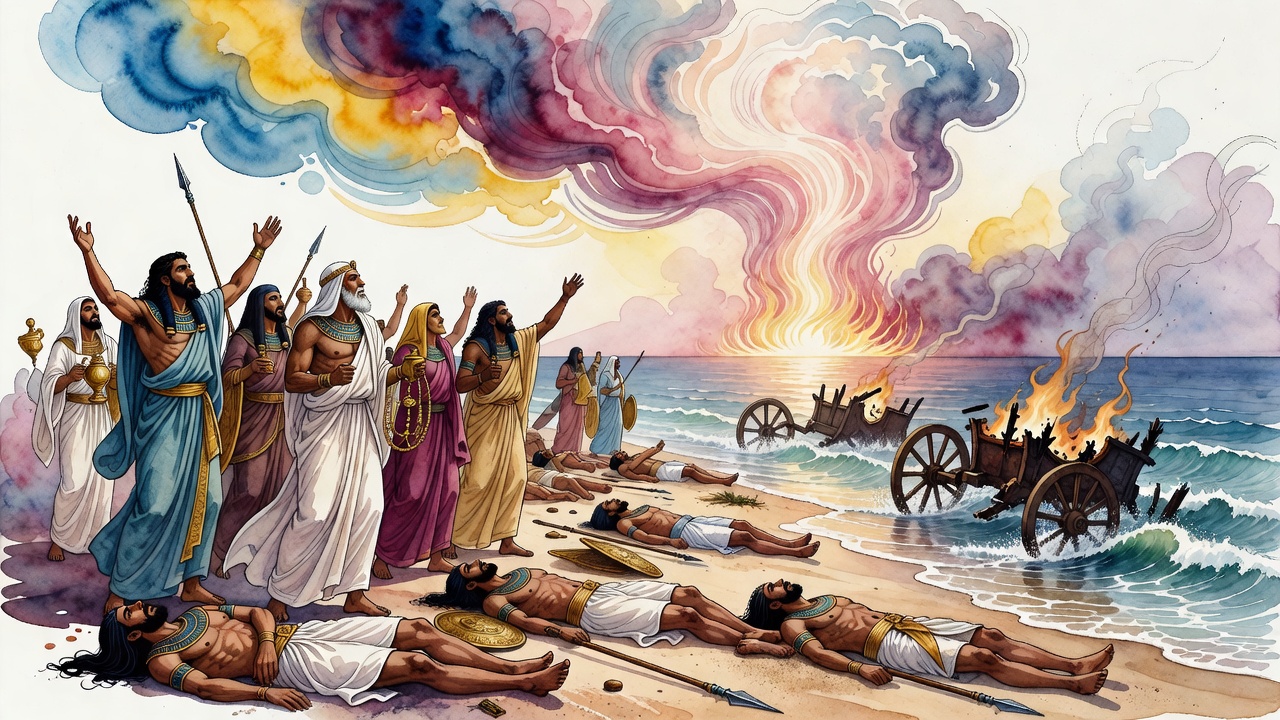
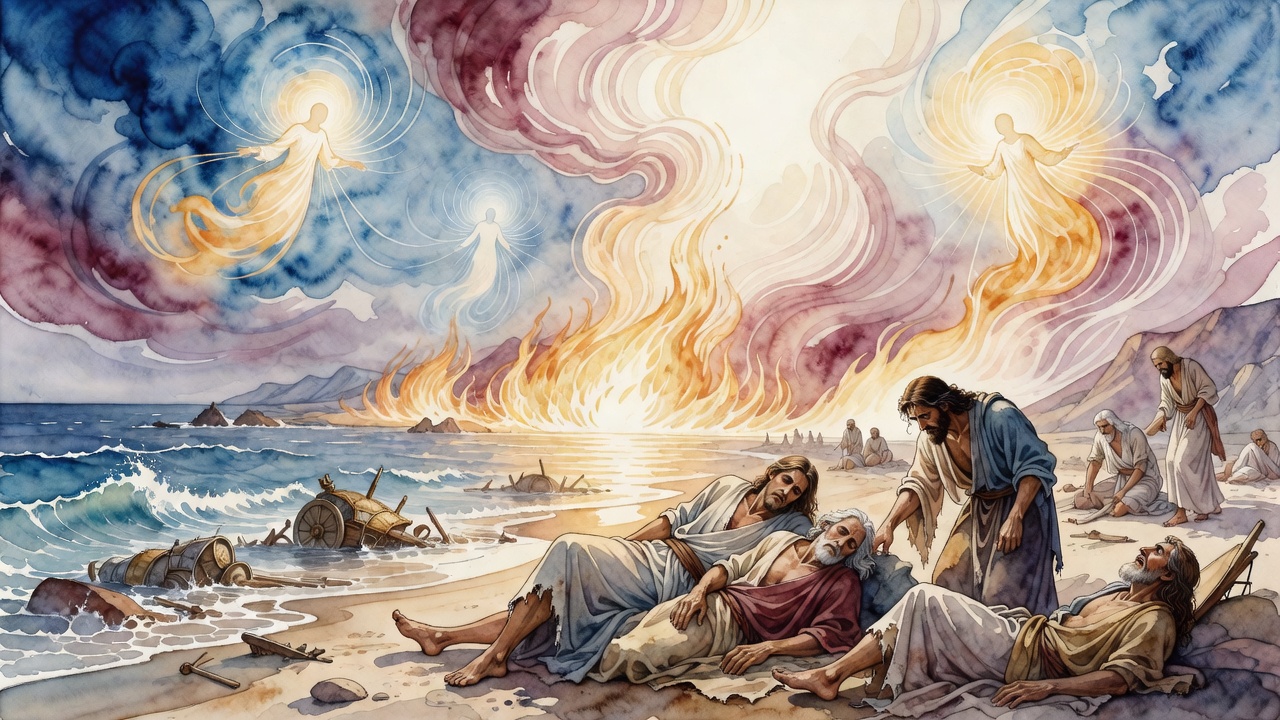
On the far shore the songs began, and still many could not stand in joy. Sudden freedom after long slavery left the people exhausted, sick with the aftershock of fear and night marching. Triumph in the mouth met collapse in the limbs. The story refuses the cartoon of instant dancing. Trauma does not dissolve because a tyrant drowns. Israel needed more than a dry path. It needed repair of nerves that had flinched at every Egyptian shout for years without number.
Only when the angels sang, celebrating not only Israel's redemption but the nearness of the Shekhinah (God's indwelling presence) who suffers exile with her people, did strength begin to return. God caused the earth to breathe out a healing fragrance that cured their diseases. Music and scent finished what the sea had started. A nation can be legally free and still unable to walk into its own future without help from above and from underfoot.
The first free dawn was quieter than later tellings admit. Quiet can be holy when it is the quiet of bodies learning they are no longer property.
Shekhinah in the Same Exile
As long as the chosen people sits in bondage, the Shekhinah (the Divine Presence) who dwells among them is, as it were, in exile too. Their release is her release. That teaching turns a national escape into a shared rising. The angels' choir was not entertainment for tired refugees. It was heaven naming that the Presence had come out with them and would not stay behind in Goshen's ruined quotas and empty brick yards.
Healing fragrance from the ground answered bodies that still carried Egypt in muscle and nerve. Freedom became livable only when earth and song agreed with the miracle of water. The Divine does not only break chains. The Divine mends the wrists the chains cut. That second work takes angels and a scented wind and time measured in breaths, not only in plagues.
After the Last Wave
Pharaoh's discovery that Israel would never return, the pillars that judged Egypt, the drowning, and the fragile hour of liberty form one continuous night and morning. Moses had split the sea. God still had to split exhaustion from the will to live free. Later camps would forget how weak that first free dawn felt. The legend keeps it so that triumph never erases the human cost of leaving hell in a single night.
Chariots under water are only half the Exodus. The other half is a nation sitting on sand, too spent to cheer, until angels and a scented wind teach their blood that bondage is actually over. That second miracle is quieter than walls of water and just as necessary. Without it, free people remain slaves in their own nerves. With it, the march toward Sinai can begin on feet that finally believe the whip is behind them and the Presence is not a rumor but a fellow traveler out of exile.
← All myths