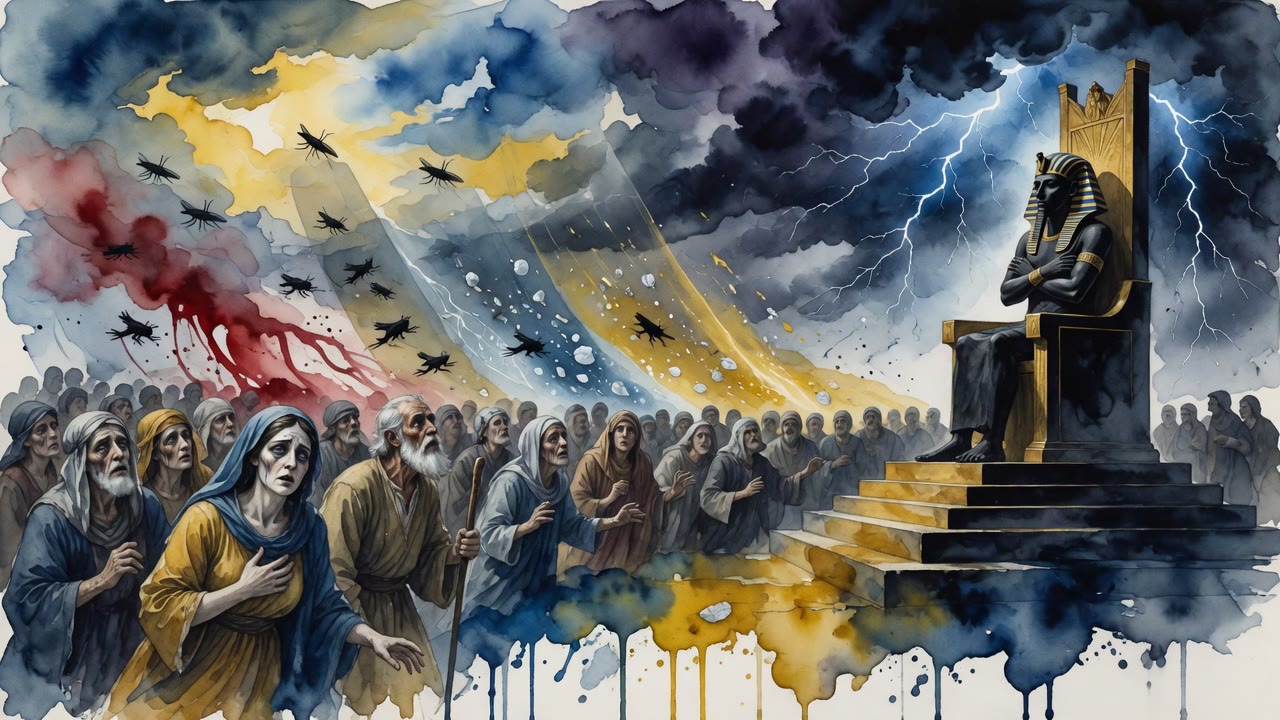
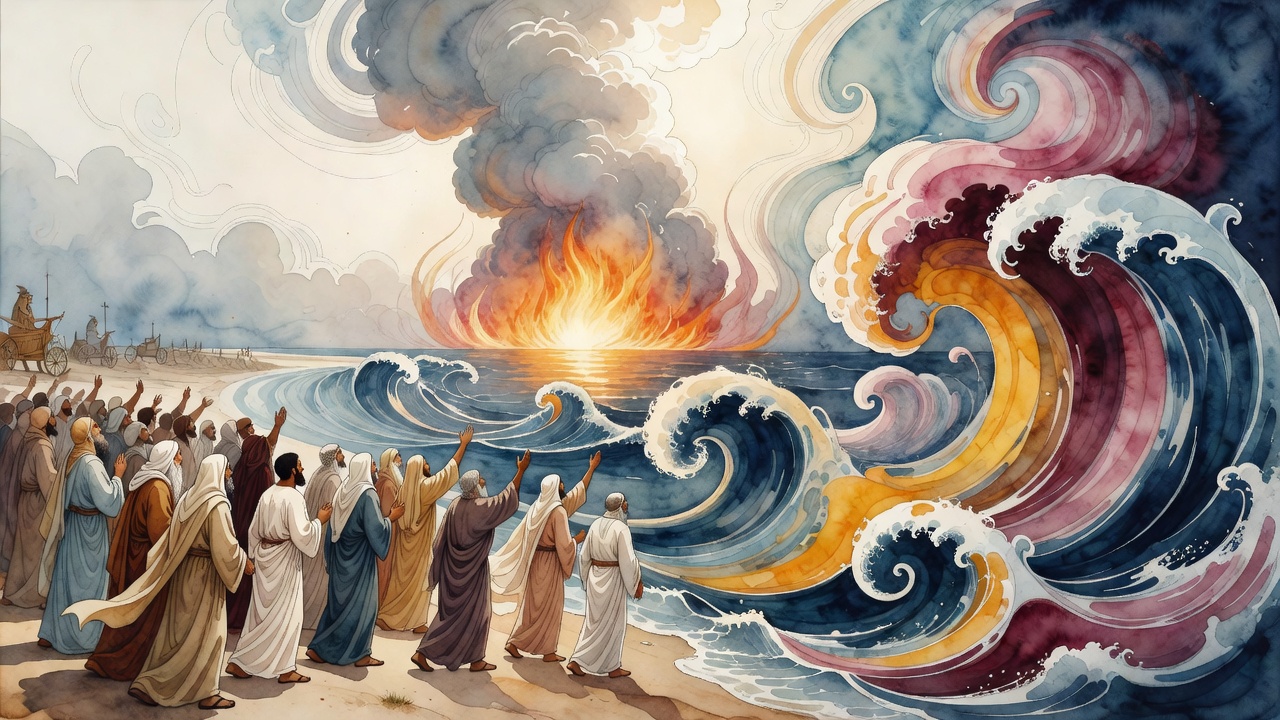
Egypt's Soldiers Argued While the Walls of Water Closed In
Trapped between walls of water, Egyptian soldiers argued whether the storm was weather or war. The sober named God too late to leave the seabed.
Table of Contents
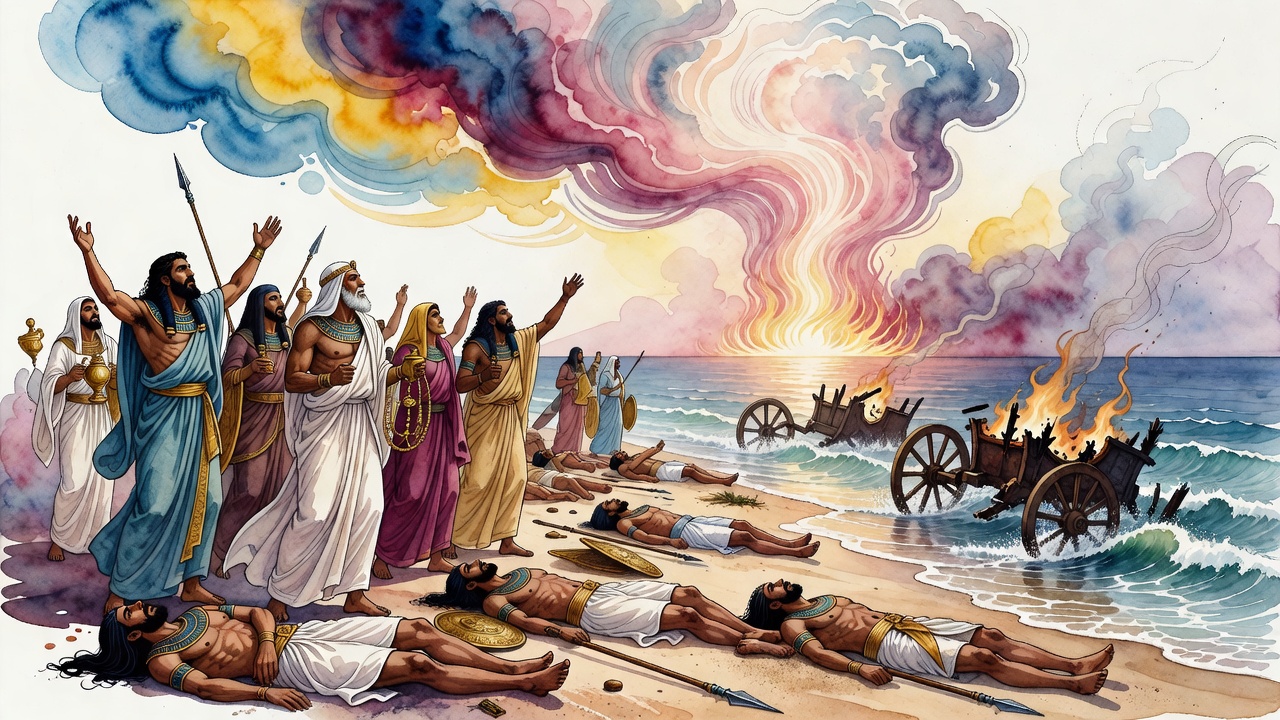
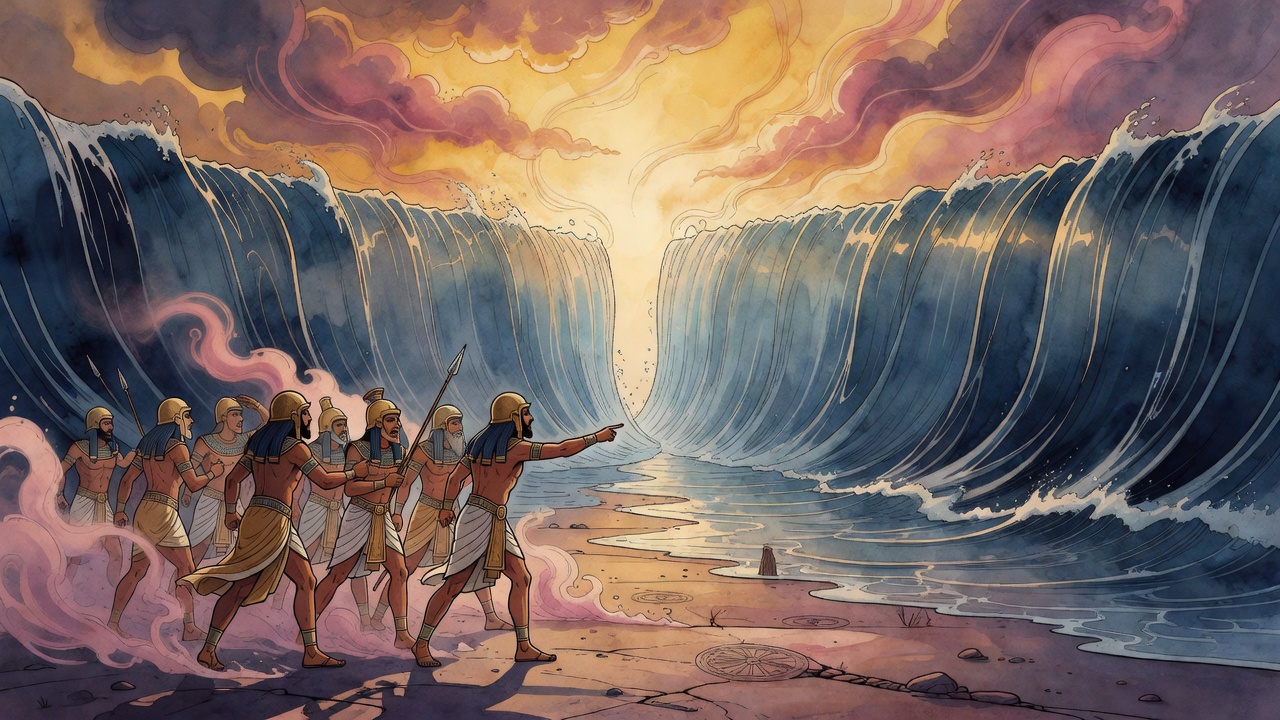
The seabed under the Egyptian chariots was not dry for long. Walls of water stood to the right and left, and for a stretch of impossible time the army of Pharaoh drove between them as if a road had always lived under the sea. Wheels bit mud. Horses screamed. Then the walls began to lean, and the argument started while the water was already choosing its side.
 Click for full size
"Egypt said: I shall flee from before Israel" (Exodus 14:25). The sentence did not leave every mouth with the same meaning. Some men still saw weather. Others finally saw war.
Fools Named the Storm
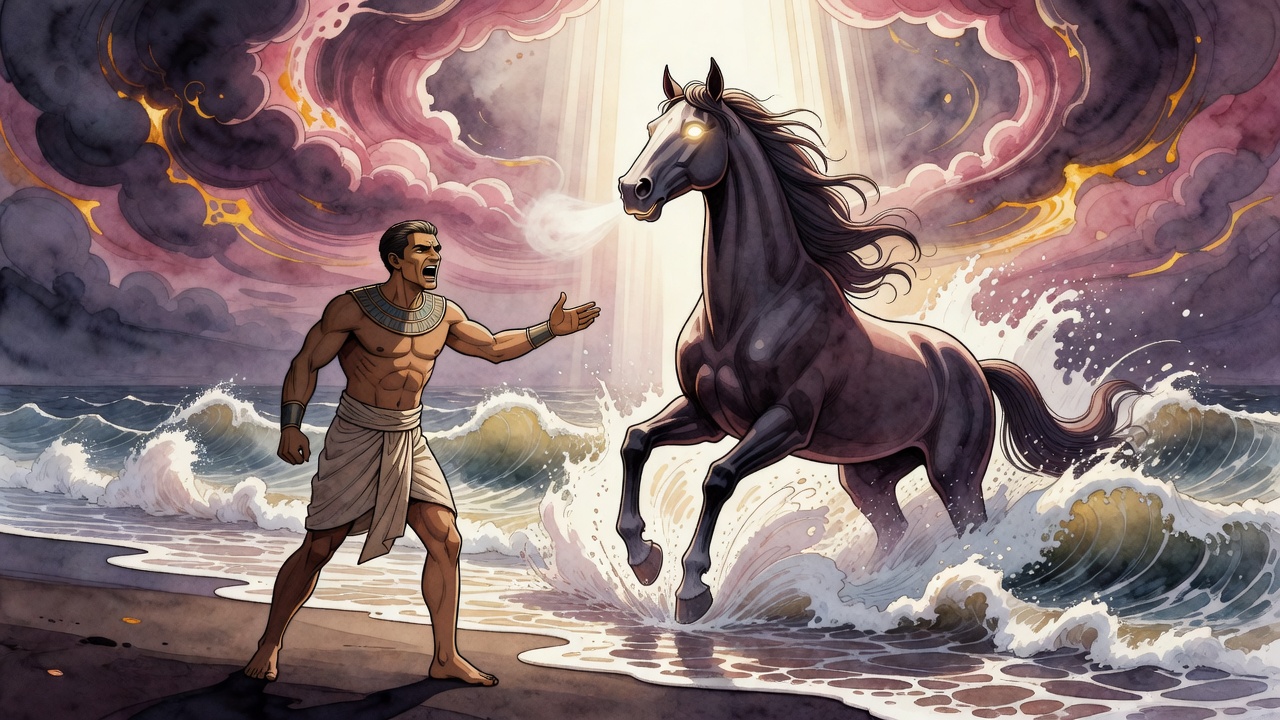
The wicked and foolish among them shouted over the roar, "Shall we flee these toils and tempests?" They treated the collapse as bad luck timed to a chase. Waves, wind, unfortunate hour. A man who had survived ten plagues by calling them tricks of nature still tried the same grammar between two cliffs of water. He saw foam, not a Hand. He saw current, not a Court.
Chariot poles cracked. Spray hit faces like thrown grit. A driver hauled on reins that no longer answered. Still the fool framed escape as outrunning weather. If he could clear the mud before the walls met, he would tell the story later as a narrow escape from sea and wind, not as defeat by the God of the slaves he had hunted.
Arrogance is slow to update its map. The map kept saying Egypt. The water kept saying otherwise. Men who had laughed at blood in the Nile now called the sea a storm and whipped horses harder, as if speed could outrun a verdict already spoken above the walls.
The Sober Named the War
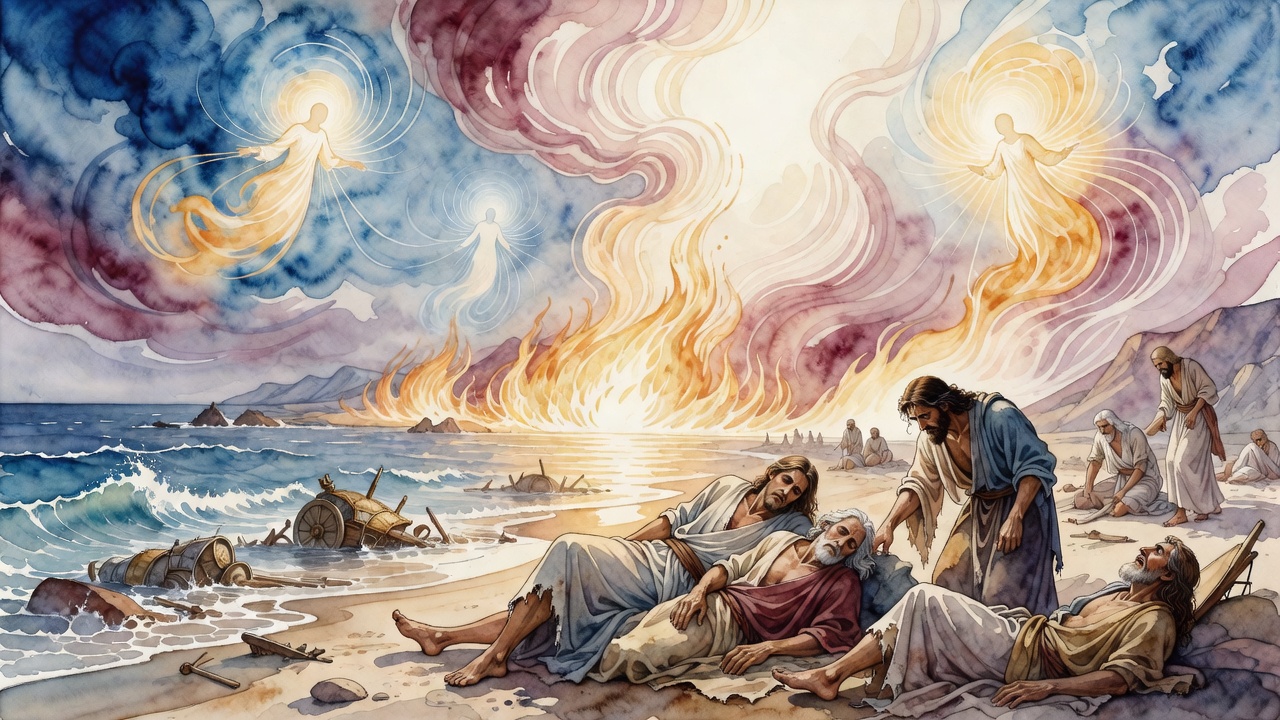
Other soldiers spoke a colder sentence. "I shall flee from before Israel, for the Lord wars for them against the Egyptians." They had watched blood in the Nile, darkness you could touch, a night when firstborn breath stopped in every Egyptian house. At the sea they stopped pretending the pattern was random. The same Power that had struck Egypt at home was operating on the seabed.
They realized what the fools refused: He who wrought miracles for Israel in Egypt was doing so at the sea. Recognition arrived with the first heavy fall of water from the walls. Clarity did not open a second road. It only changed what a man knew while he drowned. The foolish died denying the scene. The sober died naming the God who closed it.
A captain who had mocked Hebrew slaves now tried to turn a chariot in mud that grabbed like hands. He shouted the Name of Israel's God into spray that filled his mouth. The Name did not reverse the walls. It only refused him the comfort of dying ignorant. Beside him a younger soldier dropped his spear and stared upward at water that no longer looked like weather at all.
A Staff Israel Feared
On the far shore, Israel watched the sea finish its work and then looked at the staff in Moses' hand as if the wood itself were a predator. That staff had brought ten plagues in Egypt: blood, frogs, lice, and the rest. At the sea it had helped open a road and close a grave on Pharaoh's host. Twenty catastrophes seemed to hang from one length of wood. The people concluded the staff was an instrument of punishment and nothing else.
Fear of the object settled into the camp the way sand settles into seams of cloth. Children stared at it. Elders kept distance when Moses leaned it against a rock. Women who had crossed between the walls still flinched when the wood moved in the sun. The same rod that had forced Egypt to its knees now made free people step aside on dry ground, as if devastation might leak from the grain.
Mercy had not yet rewritten the wood in their eyes. Memory of blood and drowning sat closer than any promise of future help.
The Same Wood at the Rock
Thirst later forced the lesson. In the desert the camp murmured that sacred tools only wounded. Children cried for water. Flocks pressed toward dry stone. God answered by sending Moses back to the feared instrument. "Take your staff with which you smote the Nile, and go" (Exodus 17:5). The command named the old violence on purpose. The rod that had turned a river to blood would strike a rock and open water for a dry nation.
Moses raised what Israel had labeled pure devastation. Stone split. Water ran in a bright sheet down the rock face and into channels hands had not dug. Throats that had complained filled. Livestock shoved forward and drank. The staff did not change substance. The purpose did. What had punished Egypt now kept Israel alive between wells.
The camp learned, under the pressure of thirst, that God's tools are not locked into a single use. Judgment and mercy can travel the same grain of wood. Back at the sea, the argument among the Egyptians had already ended under water. Fools and sober men lay in the same mud. On the desert rock, the survivors of that night drank from a blow struck by the same staff, and the fear in their hands had to make room for water.
← All myths