Israel Stood Silent While God Waged the Sea War
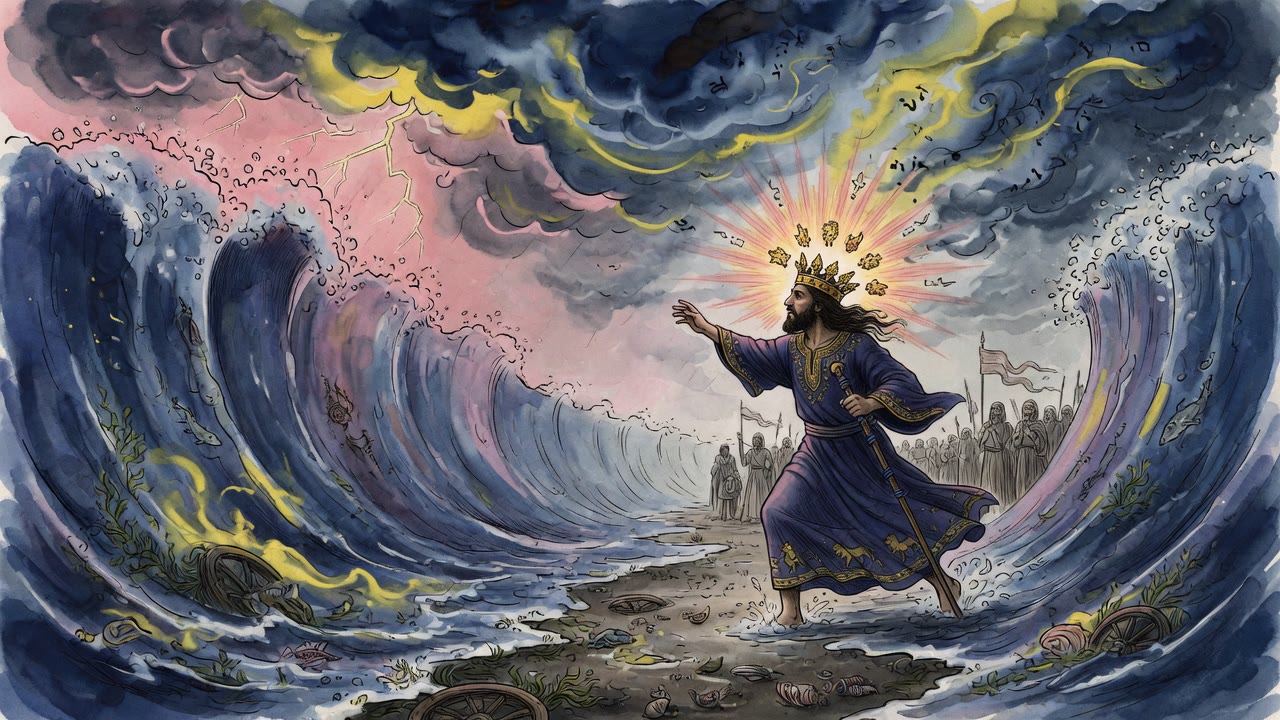
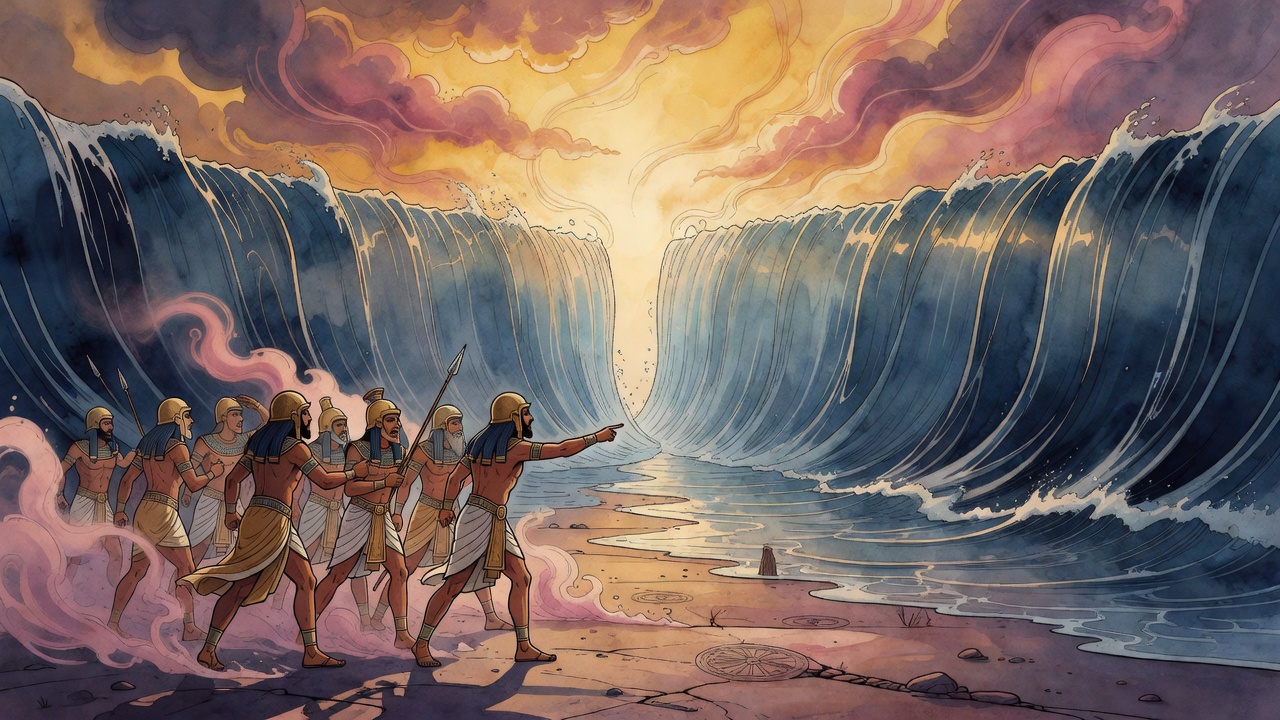
Chariot dust rose behind them. Water stood in front. Moses told them to keep silent and exalt while horses closed on the shore.
Table of Contents
The water stood in front of them like a wall without a door. Behind them, chariot dust rose. Israel packed between two deaths and found no third path wide enough for a nation. Children cried. Men fingered empty hands that had never held a proper weapon of war.
 Click for full size
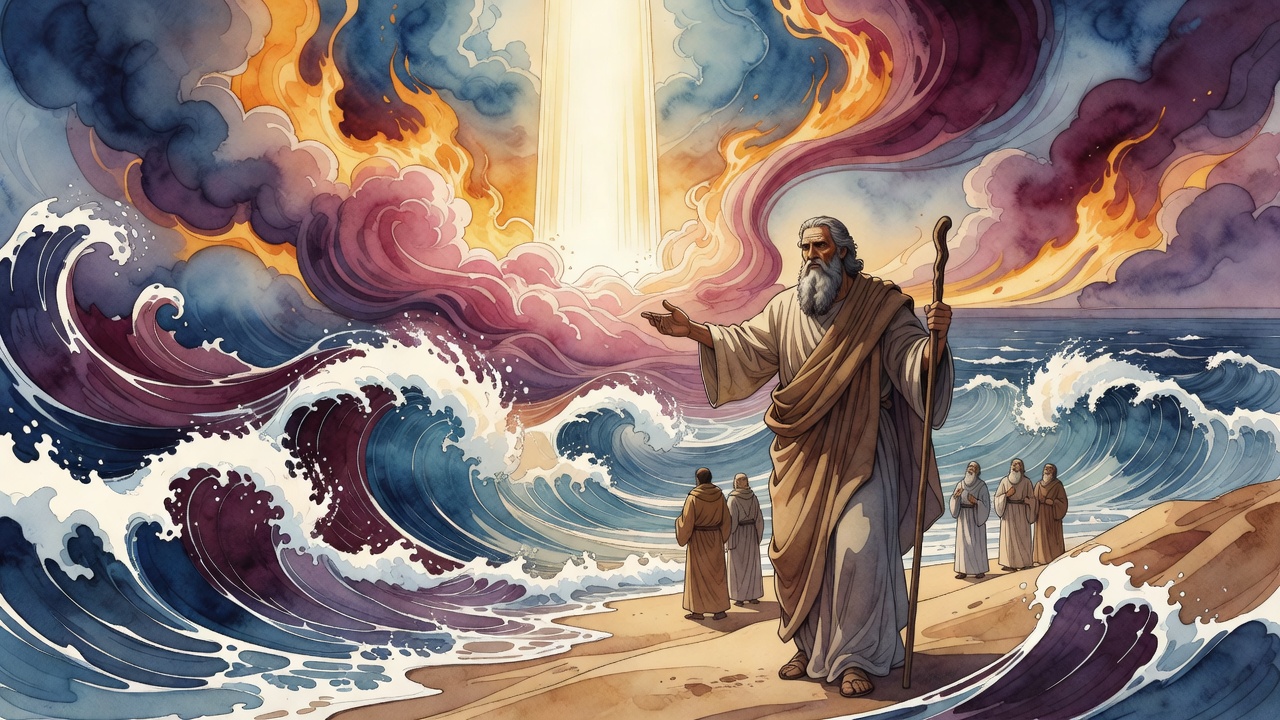
Moses spoke the line that stripped them of every familiar defense. "The Lord will war for you, and you shall keep silent" (Exodus 14:14). Silence is a hard order when horses are close enough to smell.
They Asked Moses for a Weapon
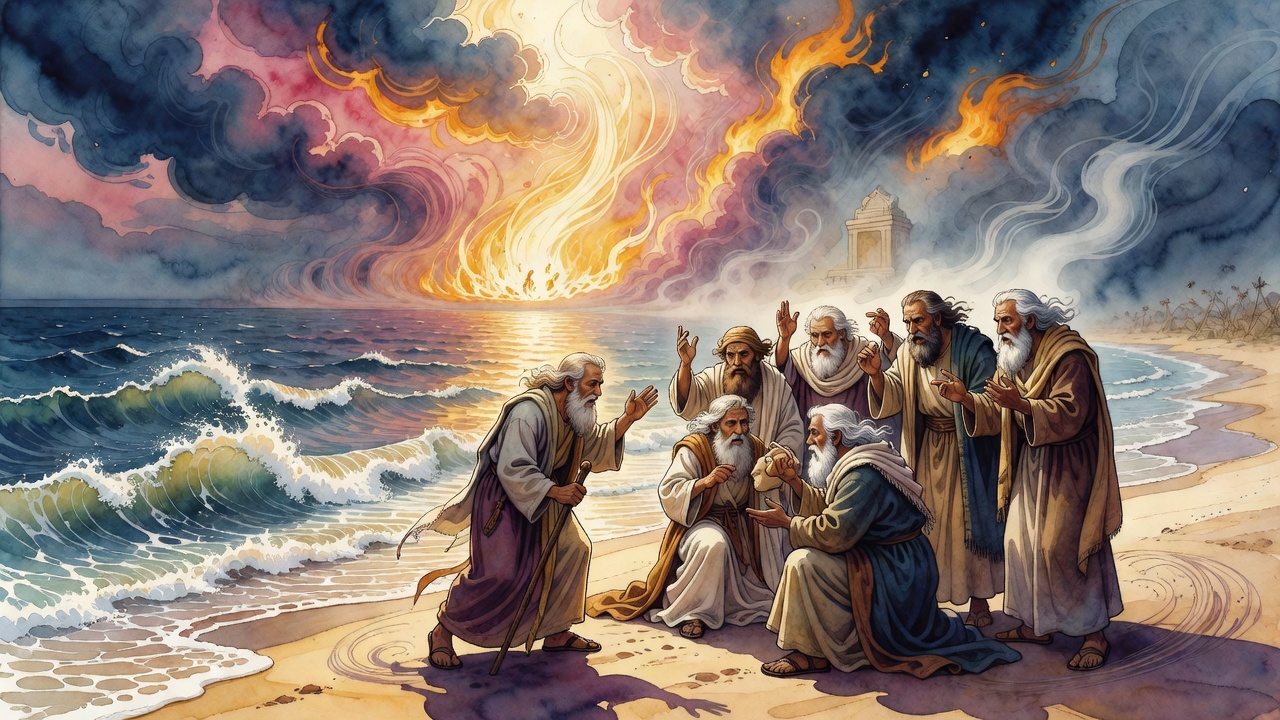
They pressed him anyway. "What can we do?" The question was not theology. It was panic with a grammar. If they were not to swing iron, what work remained for living bodies on a shore that was about to become a grave or a road?
Rabbi Meir would later hear Moses answer without handing them swords. Their work was throat and name. Exalt. Sing. Render grandeur and glory to the Master of wars. Praise was not decoration after victory. It was the only tool left in a trap designed by God.
Moses stretched his hand over the sea because heaven had already chosen that gesture as the hinge. Israel stood with mouths open toward a Name rather than toward Egyptian spears. A mother covered her child's ears against the chariot rattle and then uncovered them when the first notes of forced praise shook out of her own throat. The army of Pharaoh rolled closer. Wheels bit sand. Drivers cracked whips that had learned their work on Hebrew backs. The sea did not yet move.
Silence here did not mean emptiness. It meant no sword plan, no negotiation, no clever reverse through the dunes. Their part was to stand where they were told and put grandeur on the Name while the trap finished closing around them.
The Sea Returned as a Hunter
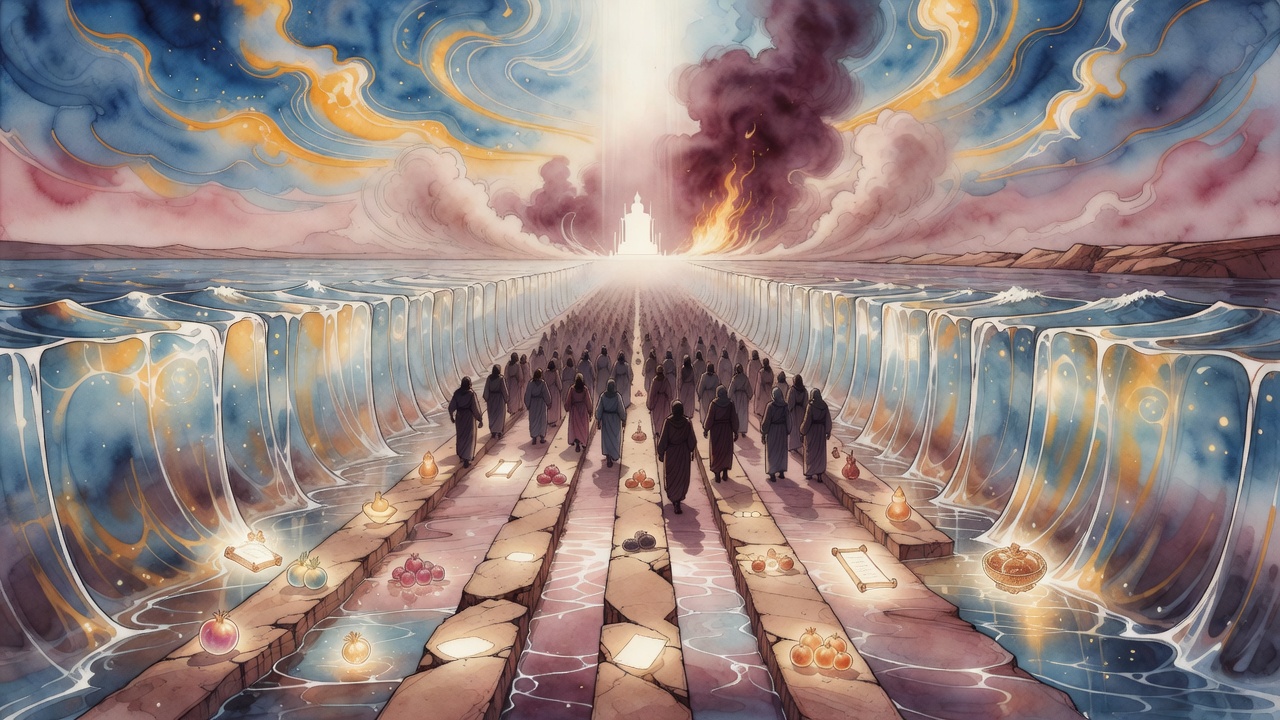
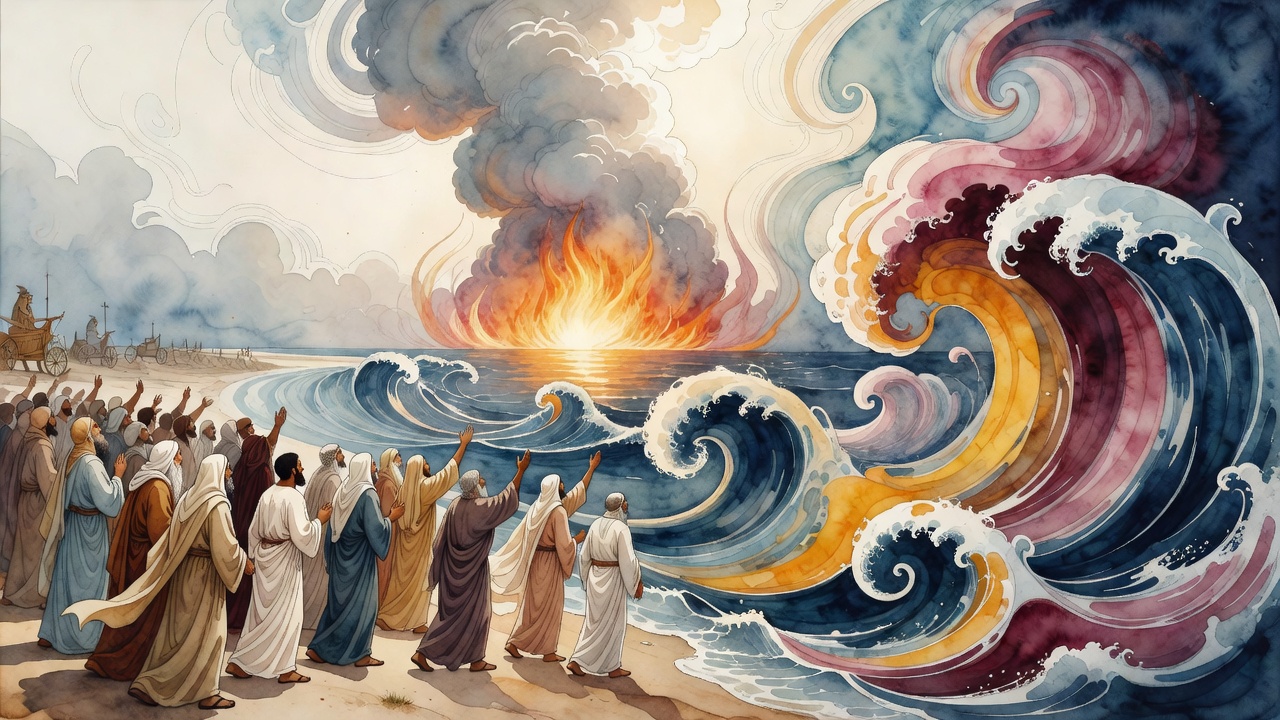
When the waters finally split, dry ground appeared where fish should have been. Israel walked. Egypt followed into a corridor that was never meant for chariots. Toward morning Moses stretched forth his hand again, and the sea returned to its strength, its hardness (Exodus 14:27).
Some heard in that return the full force of the Creator slamming walls back together. Others heard an unyielding crush, a hardness no armor could bargain with. Either way, the water did not settle. It hunted.
Egypt fled toward it. Wherever a soldier ran, the sea was already there. The flood was not a blind spill across a map. It pursued. Every exit became a mouth. Men who had driven slaves for years discovered what it meant to be driven by an element that took orders from above.
Wheels locked. Horses screamed. Drivers tried to turn and found the path narrowing behind them as fast as it narrowed ahead. The corridor closed from both sides and from below. Men who had laughed at a slave god met water that refused to be mocked. By the time light stood clear over the shore, the army that had owned the night was gone under foam, and Israel's silence broke into a sound the cliffs threw back.
Gold Heavier Than Egypt's Silver
Israel had already emptied Egypt once. Idols melted in the plagues returned to plain metal, and what had been used as worship became lawful spoil on their shoulders. Silver rode with them into the desert like a second skin of wealth.
At the sea the haul grew heavier. Silver for Egypt, gold for the sea. One enrichment in the leaving, a greater one in the water's wreck. Dove wings sheathed in silver, pinions in fine gold. They left bondage rich. They left the shore richer, walking past the wreckage of the force that had chased them.
Children picked coins from wet sand. Elders loaded carts that sagged. A boy held up a coin green with sea-film and did not know whether to keep it. Freedom arrived twice in measurable weight, once at the doorposts of Egypt and again where Pharaoh's host went under.
Canaan Melted at the Report
The Song did not say the wonders were finished. It said working wonders, a tense that refuses to close the ledger. What began at the sea was not a museum piece. It was the opening of a pattern still in motion.
Far inland, Canaan heard and melted. Not because an army had already arrived, but because the decree had. Edom and Moav had feared for flocks and silver when Israel passed near. Canaan understood a different stake: dispossession, inheritance, nothing that breathes left in the cities marked for the oath. Hearts liquefied at the report alone. Namogu. They melted from the inside before a spear was thrown.
On the shore Israel still stood with salt on their lips, silent no longer, singing because the war had been fought without their swords. Someone laughed and then sobbed into the same breath. Moses lowered his hand. The tendons in his forearm jumped once and went still. The water kept the dead. The road east waited, already heavy with gold and with a fame that outran their feet toward cities that would melt before they marched.
← All myths