Egypt Shoved Israel Out Without Burying Its Dead
After the tenth plague, Pharaoh forced gold into Hebrew hands and left corpses unburied in his haste. At the sea, fire took the chariot wheels next.
Table of Contents
 Click for full size
Corpses and Jewelry
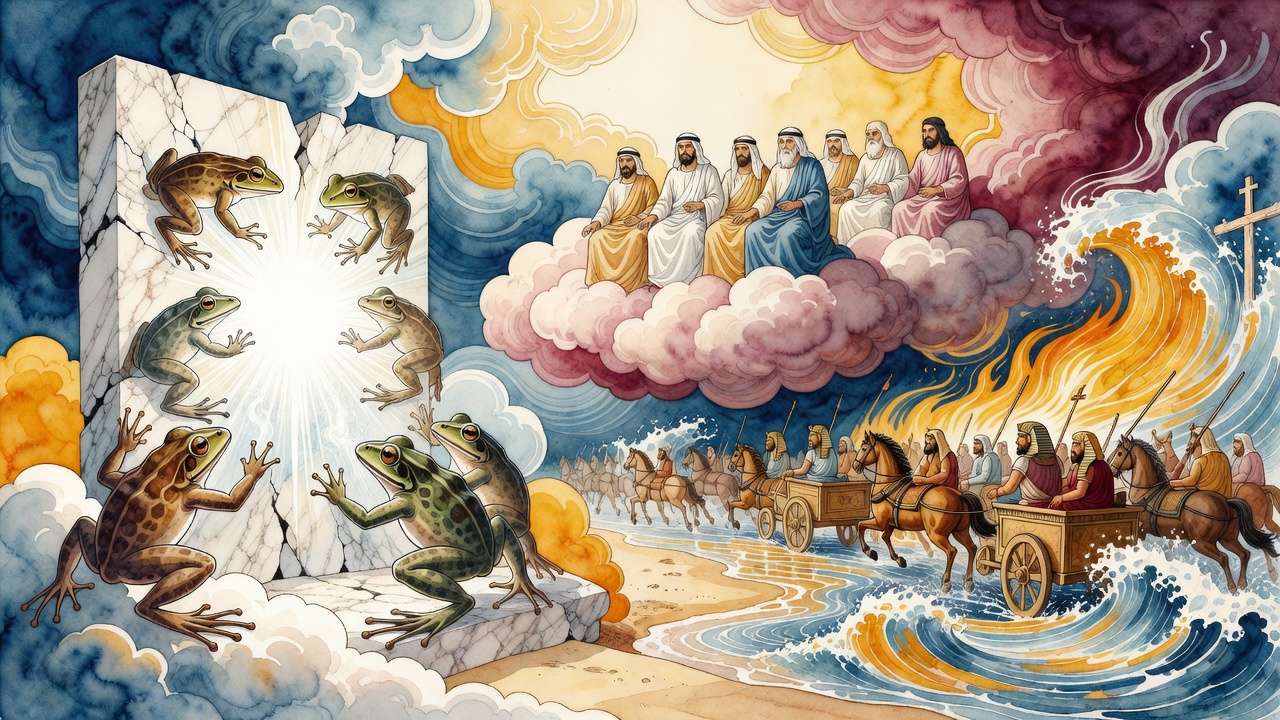
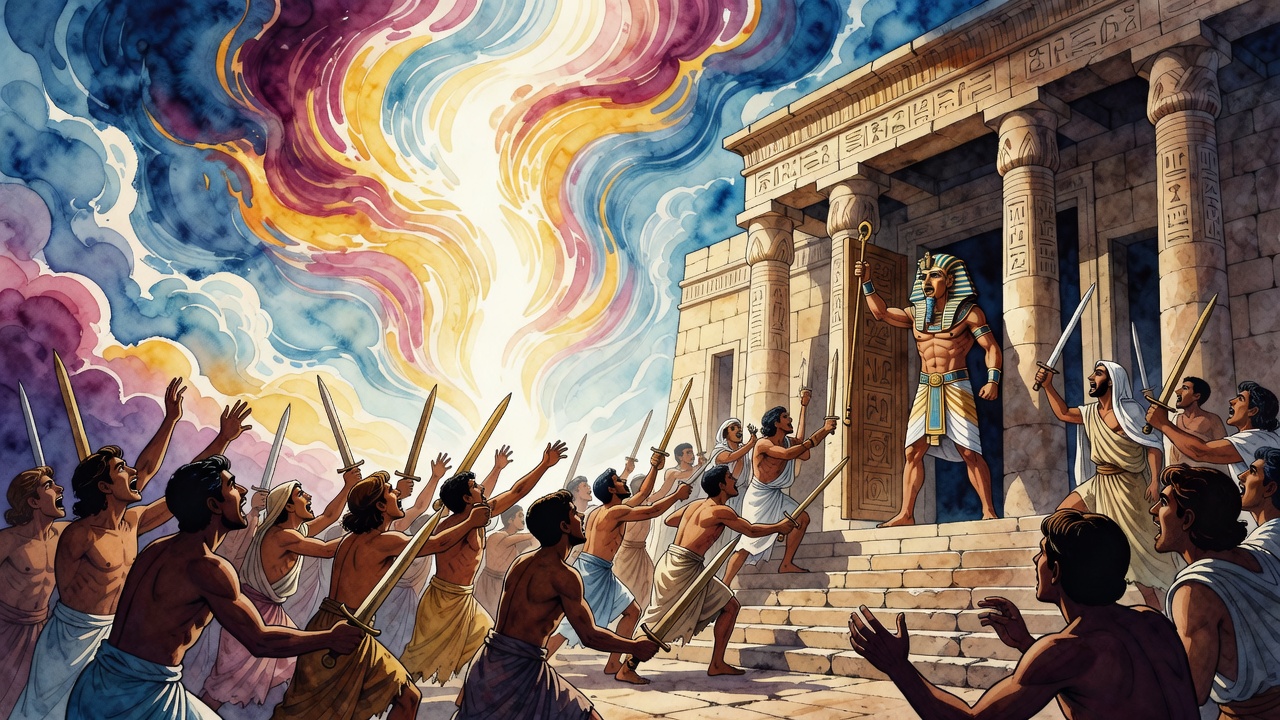
The tenth plague did not leave Egypt time for funerals. Pharaoh and his people, the legends say, did not even bury their dead. They shoved Israel toward the door with both hands, desperate to be rid of the people whose God had found every firstborn, even those traveling far from the Nile on trade or garrison duty. The Mekhilta reads the blow as bloodline, not border. An Egyptian firstborn in Canaan or Nubia fell with those who slept in Memphis. Psalms says He smote Egypt through their firstborn. Geography offered no shield, and distance was not a covenant partner.
Gold and garments were pressed on the leaving slaves until their arms ached with wages long withheld. Nobles apologized under pressure from a king who feared the next breath might be his last. A single Israelite's share, tradition claims, could have funded the Tabernacle's gold. This was pay for unpaid centuries, not theft in the night. On that same day a woman named Rachel gave birth in the brickyards while still under the lash of labor. The infant fell into clay and vanished from human hands. The angel Gabriel molded brick and child together into a footstool before the throne, and that night the firstborn of Egypt died while heaven kept the memorial of four nights, the night of creation, the night of the Covenant of the Pieces with Abraham, the night of the Exodus, and the night of the last redemption still to come, when Moses and the Messiah lead flocks together on the fifteenth of Nisan.
Clouds and Unleavened Bread
Israel left Raamses exhausted by the sudden swing from slavery to freedom, bodies still remembering bricks. A healing fragrance moved among them and cured diseases the brick pits had written into lungs and skin. Seven clouds of glory covered the camp, leveling mountains and valleys ahead, a pillar of fire for night so no child would walk blind. The mixed multitude outnumbered Israel, yet the clouds were for the covenant people alone. Six hundred thousand families went out with little more than unleavened bread and bitter herbs carried in their own hands, unwilling to trust even that command-food to beasts of burden. They covered three days' march to Succoth in a breath when the call reached them.
Egypt rejoiced to be free of dread more loudly than Israel rejoiced to be free of chains. The legends liken it to a donkey happier than its rider when a hard journey ends. Only when angel hosts sang for the redeemed people and the Shekhinah (God's presence among the people) that goes with them into exile did Israel's strength begin to return. When Israel is in exile, the Presence is not at ease in a distant heaven. It walks in the dust with them.
The Divine Road
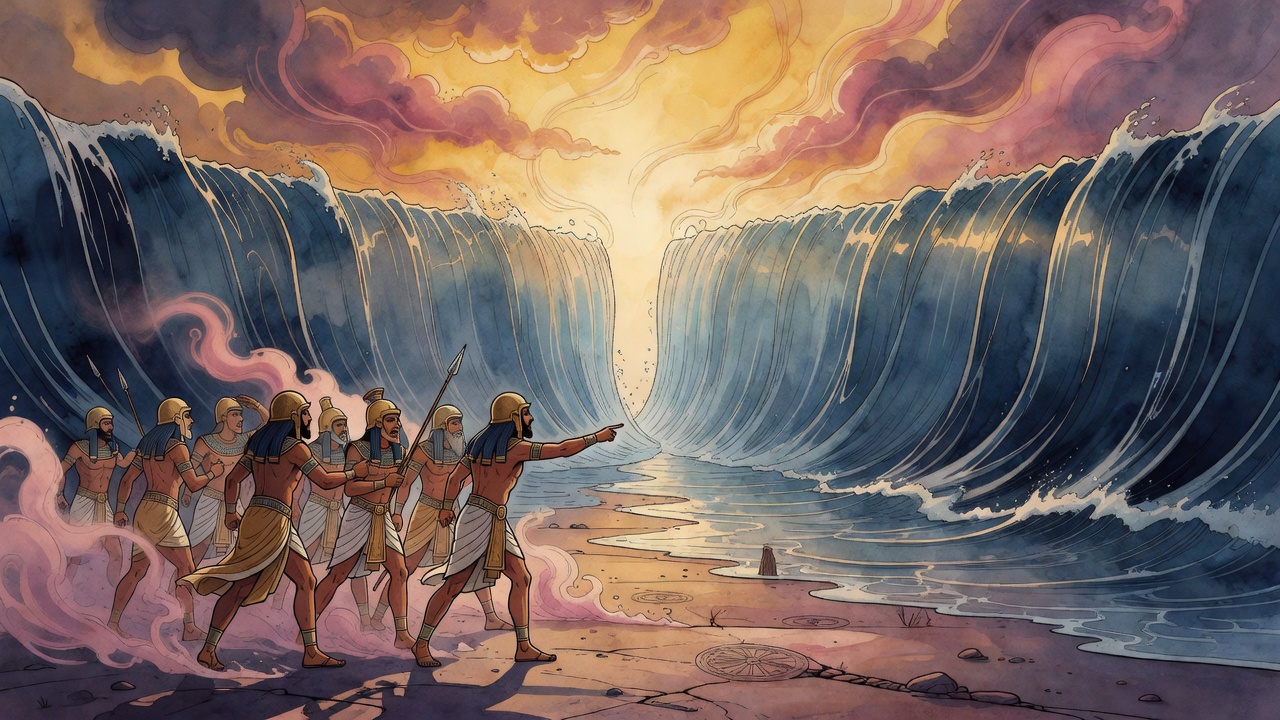
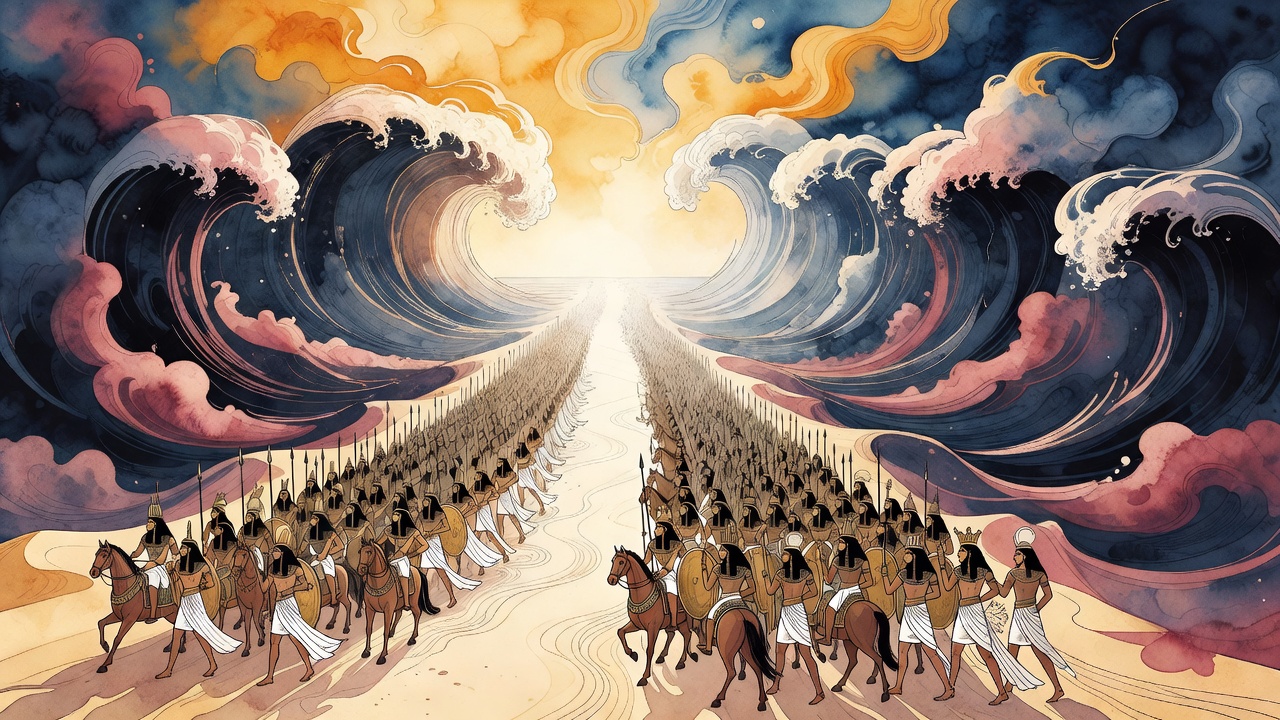
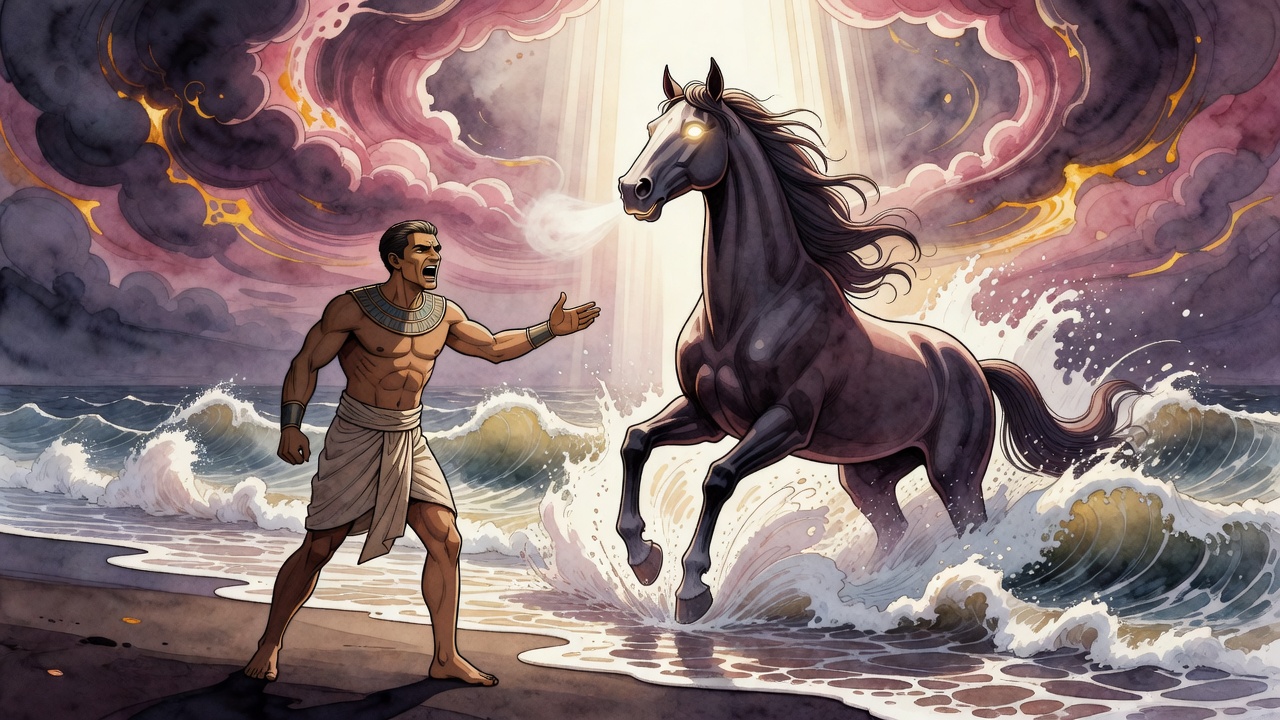
At the sea Moses struck the water with his rod. Josephus says the bed dried hard enough for a road, not mud, not damp sand, but ground fit for a march. Moses walked in first. He sent no scouts ahead to test for sinkholes. He called it a divine road and told the people to take joy in the danger now facing their hunters. The Egyptians, spent from pursuit, had planned a morning attack after rest. Seeing Hebrews walk mile after mile unharmed between walls of water, they charged in, assuming the path was public infrastructure.
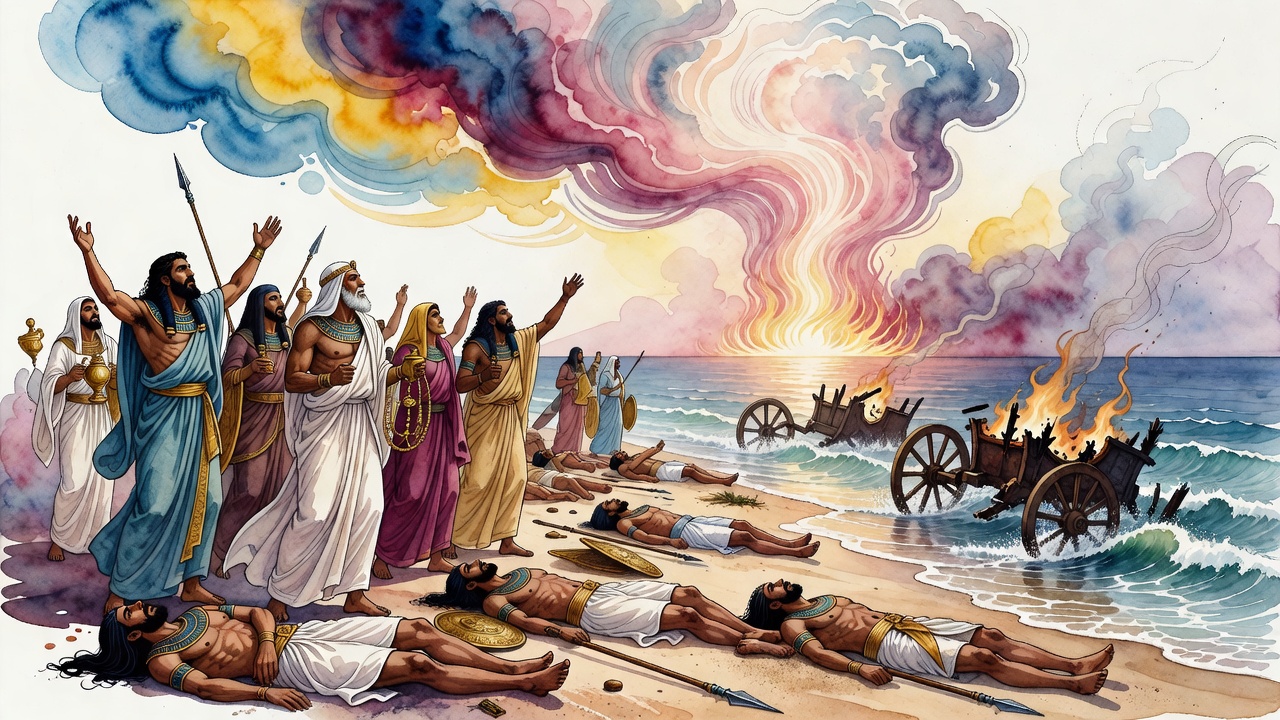
It was not. The road was cut for those in danger, not for those who meant destruction. When Israel reached the far shore and the entire Egyptian army filled the corridor, the sea returned with wind, storm, rain, thunder, lightning, and bolts from a black dismal night. Not one Egyptian survived to carry the news home. Rabbi Yehudah read the removed chariot wheels as fire from heaven shattering wood and yoke until unmanned cars careened, spilling silver, gold, gems, and pearls toward Israelite hands as spoil Pharaoh had ridden to war. Morning light showed enemy weapons washed ashore on the tide. Moses armed free people with the iron of their oppressors and turned their faces toward Sinai to offer thanks.
Song in a Black Night
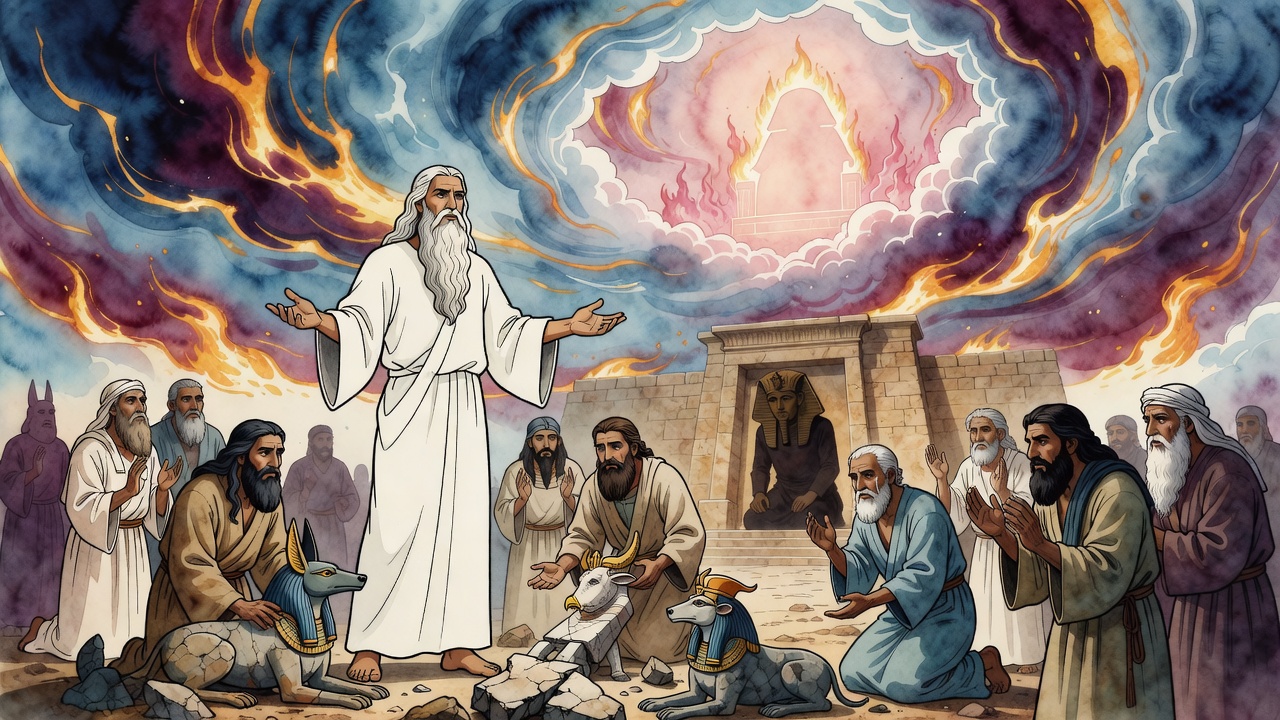
On the far bank Israel sang through a night that was black for Egypt and radiant for the saved. Moses composed the Shirah, a song Josephus even describes in the meter of his Greek-reading audience. The instruments of bondage became tools of a march. Pharaoh had ridden to war with state treasure in the baggage train. The public wealth of Egypt joined the private wages already loaded on Hebrew shoulders until the people who had baked bricks without straw carried a kingdom's portable glory into the wilderness.
The nation that would not pause to bury its dead had paused long enough to chase a people into a trap of its own choosing. Water that once received Israelite infants now received Egyptian horses. The shove out of Egypt ended in a road no army had permission to use, and a morning after when free hands picked up swords that would never again crack a Hebrew back.
← All myths