Pharaoh Chased Israel to the Sea That Closed on Egypt's Chariots
Pharaoh woke to stone cracking. A frog came up through the marble and named the One who had sent it. The king had called that river his own god.
Table of Contents
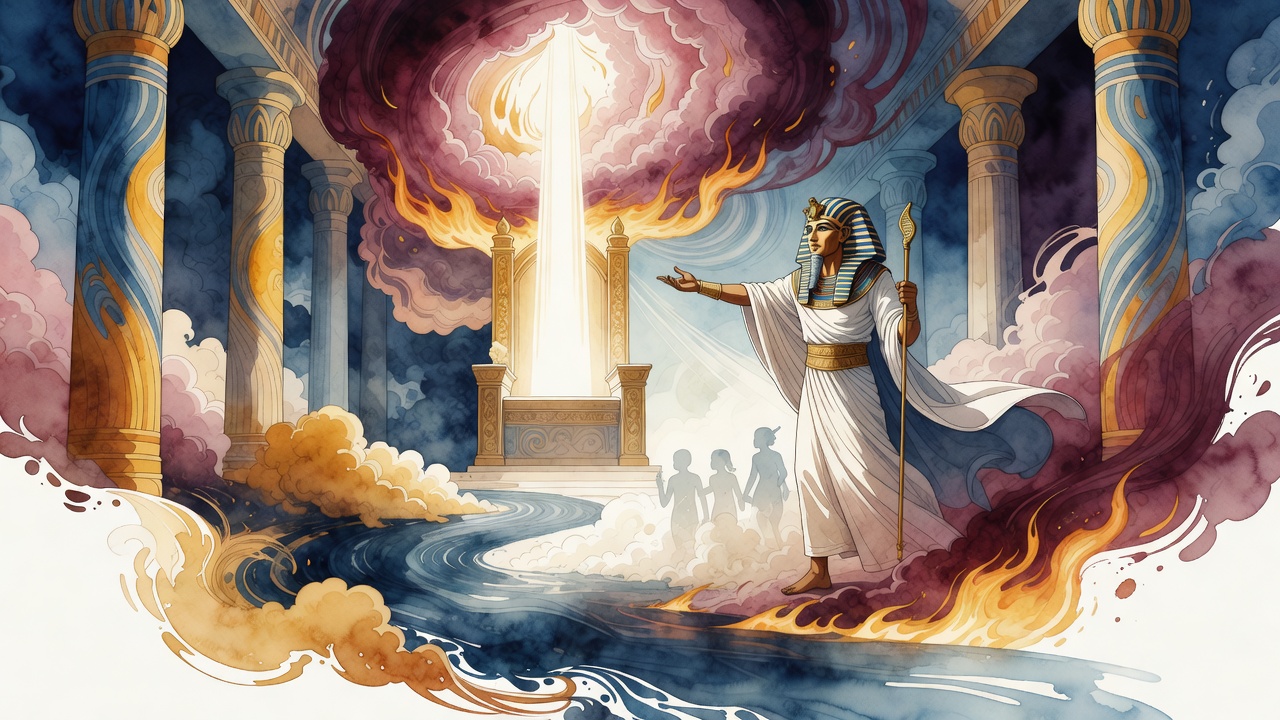
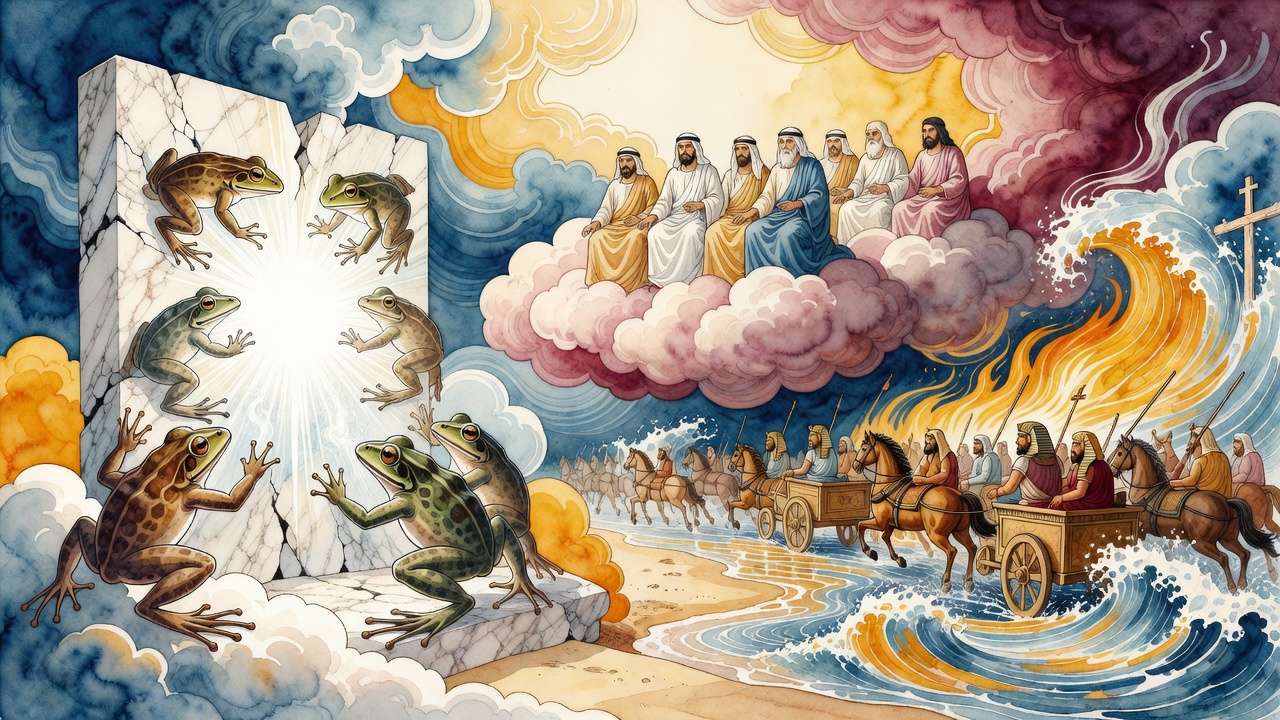
Pharaoh woke to a sound like stone cracking from the inside. A frog pushed through marble and croaked a sentence no idol had ever spoken: I am the messenger of the One who said, Let there be a world, and there was a world. The king who had called the Nile his own now watched the Nile's creatures write another Name on the walls of Egypt.
 Click for full size
Plagues Written on Bodies
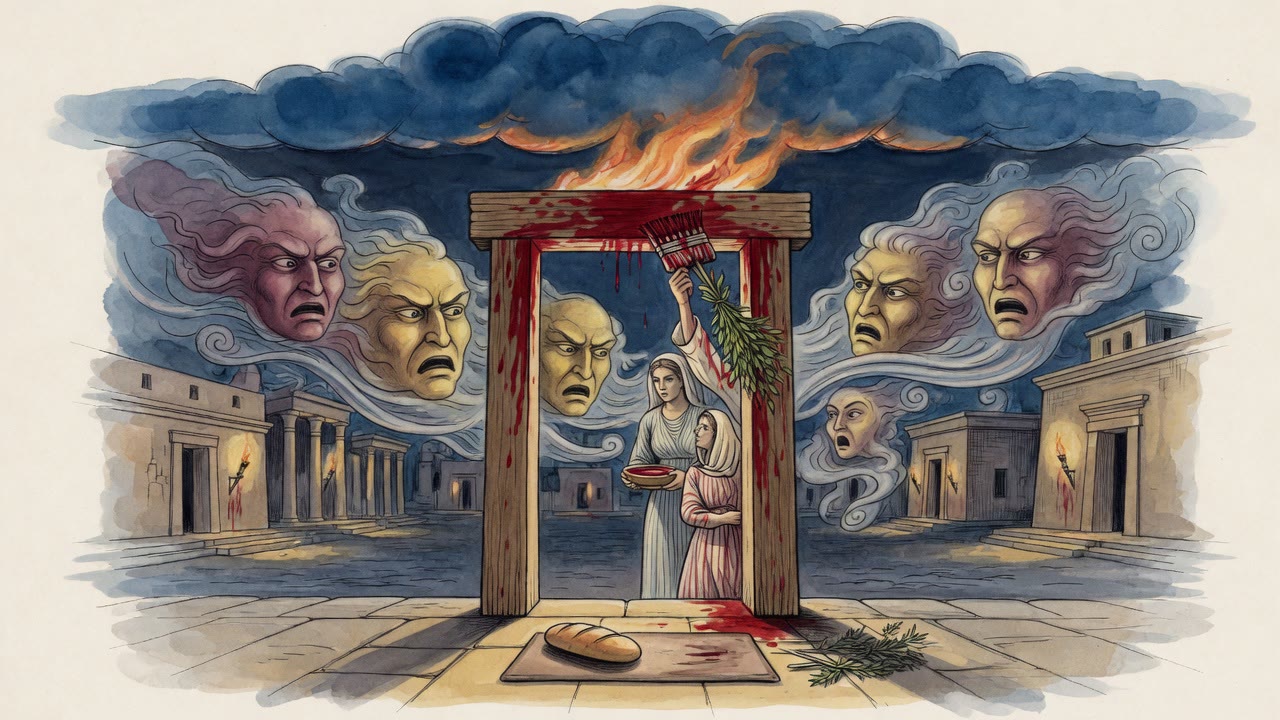
Rabbi Yudan bar Rabbi Simon taught that the plagues were not only storms outside the skin. They were written on the Egyptians themselves. Darkness pressed so thick a man could not rise from where he sat. Frogs appeared wherever Egyptians sat, though stone houses and houses of books were sometimes spared. Hail came as double stones that split thin vines, while some fig trees found an unexpected grace. When the firstborn died, the firstborn of man, woman, and animal fell together, and houses without a firstborn still learned terror. When Israel left, even the lowest among them drove donkeys loaded with silver and gold. The land that had swallowed their labor paid them out in one night of open hands.
These were not random disasters. Each plague answered a boast. The Nile that was claimed as a private god became a battlefield. The darkness that had covered Hebrew labor camps returned as a blindness Egypt could not command.
The Near Road Was Judgment
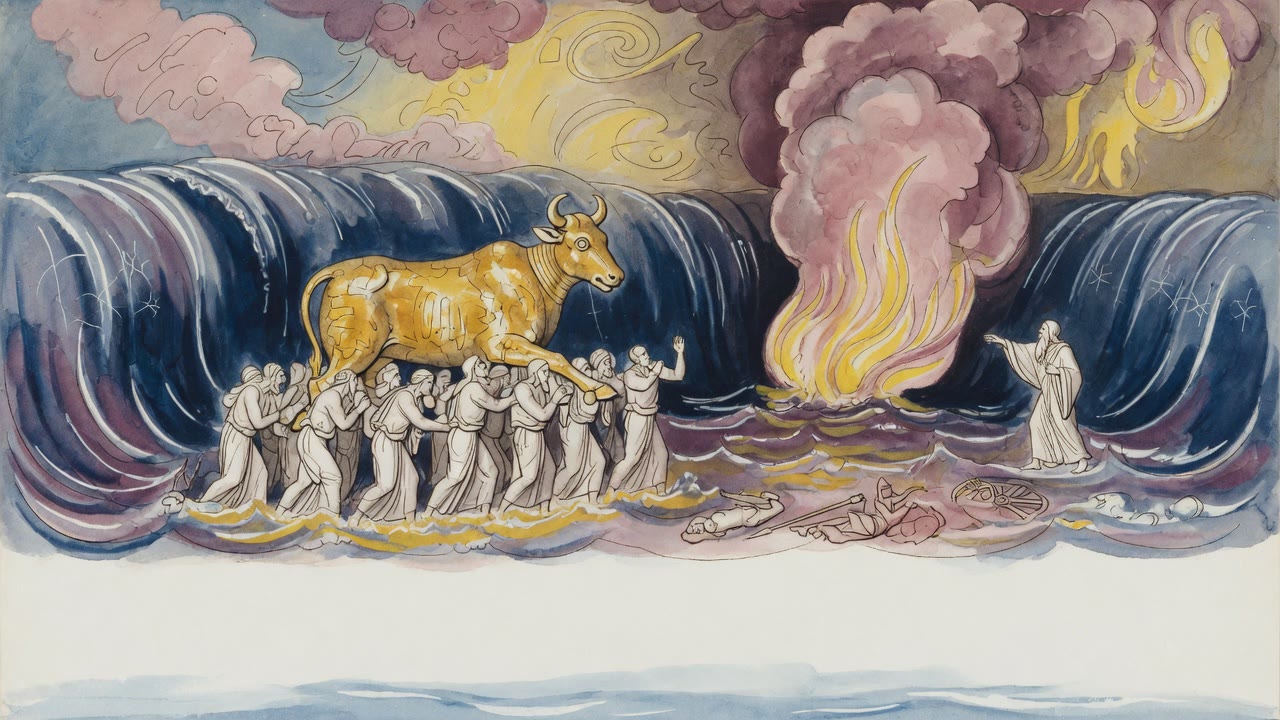
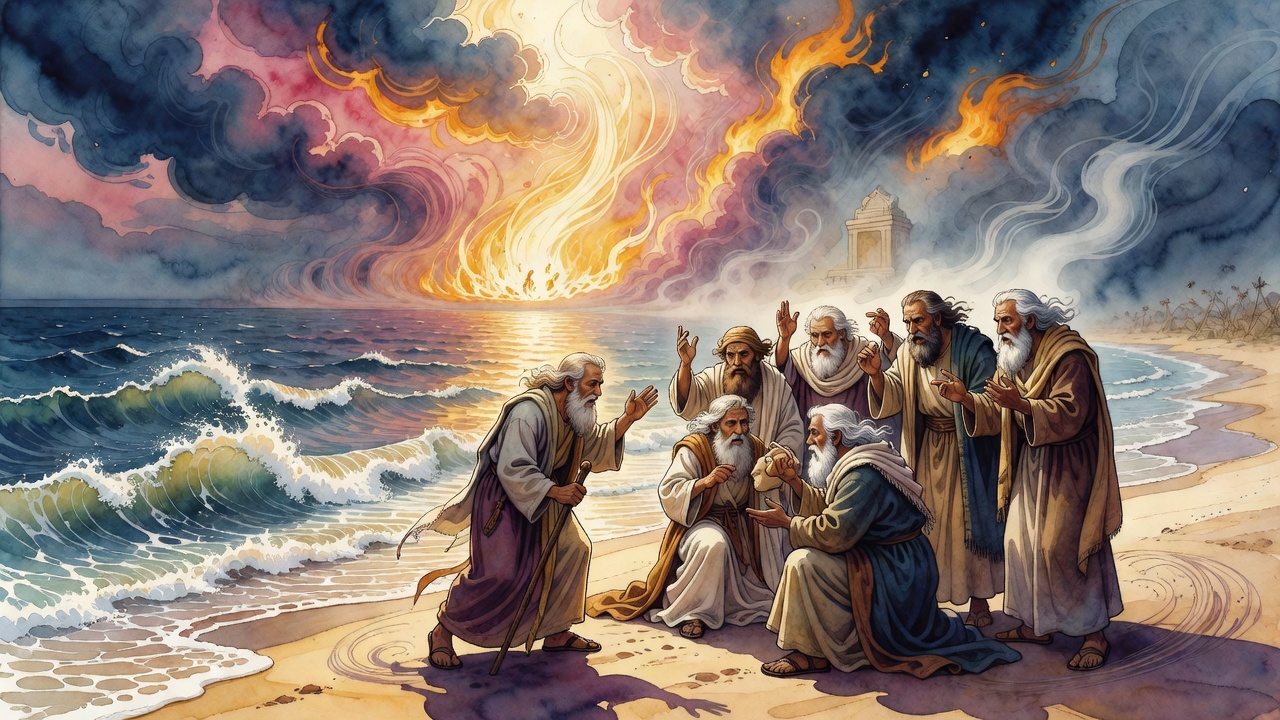
Scripture says God did not lead them by the way of the land of the Philistines, for it was near (Exodus 13:17). The midrash hears time, not only miles. What was near was Pharaoh's reckoning. He had hardened himself through plague after plague, chased his former slaves after letting them go, and refused to bow before the God who had already shattered his land. His account was not yet settled. By turning Israel toward the sea, the Holy One set the stage for final payment. Pharaoh would chase his quarry into a trap of his own choosing. The waters that opened for the redeemed would close upon the oppressor. The detour was not retreat. It was the opening move of justice, drawing the tyrant out to the place where the score would be paid.
Clouds to the Sanctuary and Back
Targum Pseudo-Jonathan reads the eagles' wings of Exodus as more than a metaphor. On the night of the first Passover, God bore Israel upon clouds from Pelusin, the border of Egypt, to the place of the sanctuary, the future Temple Mount, so they could solemnize the Pascha there. In the same night He brought them back, then drew them toward the mountain of the law. The sacrifice of Exodus 12, in this Aramaic vision, was not only a meal of escape. It was a brief airlift to the site where sacrifice would one day be whole. The exodus was never only about leaving. It was about arriving: at the mountain, at the sanctuary, at a Name that would not share Egypt's gods.
The Staff That Could Do the Errand Alone
Take this staff in your hand, God told Moses. With the gift came a sharp word and a generous one. If you will not do My errand, this rod will do My errand. God does not depend on any one messenger. But I want to grant you the merit, so I will place many miracles in your hand: manna, the well, the Sabbath, the clouds of glory, and the Torah itself. The Name written with sacred letters is not pronounced as it is written; Israel reads it as Adonai, the Lord, guarding it from casual speech. In this world joy and grief each have their blessing. In the world to come only the blessing for good remains, for all will be revealed as good.
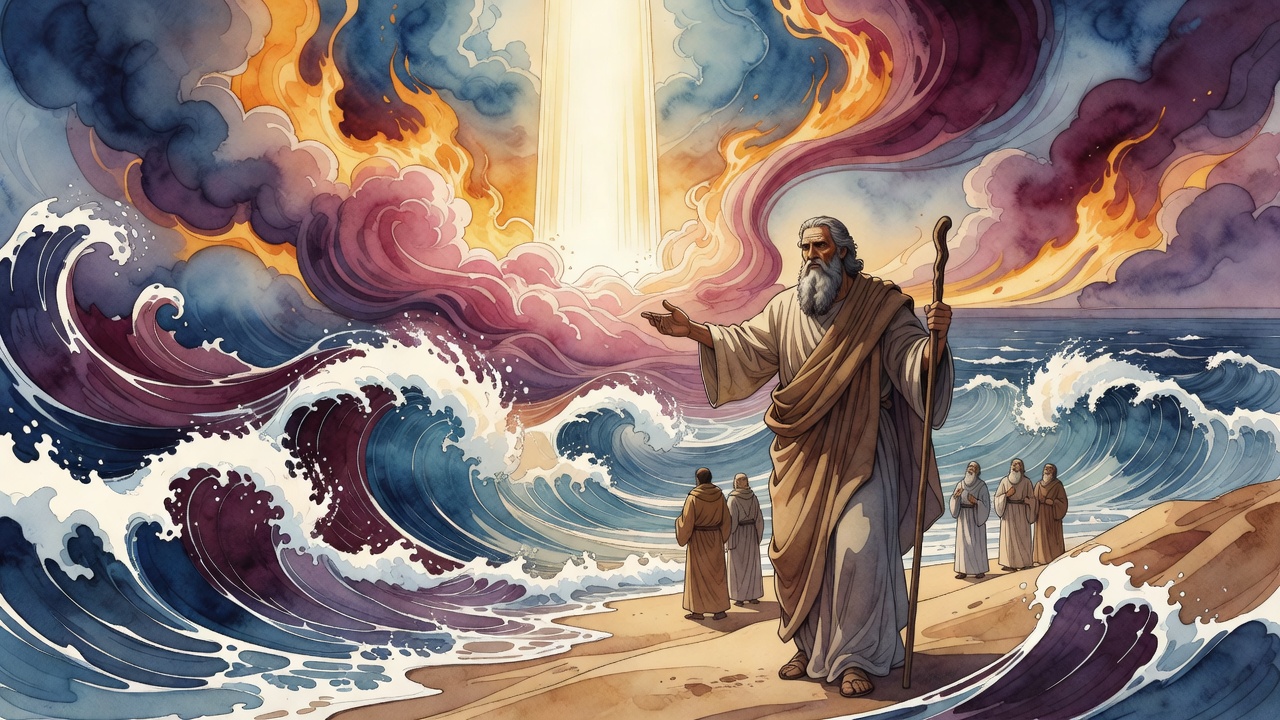
Moses walked into Pharaoh's court with a stick that could replace him and a Name he would not waste. Pharaoh chased him toward the sea thinking he still owned the map. The map had already been redrawn around a cup of judgment, a cloud of sanctuary, and a staff that would not drop the errand even if the messenger flinched.
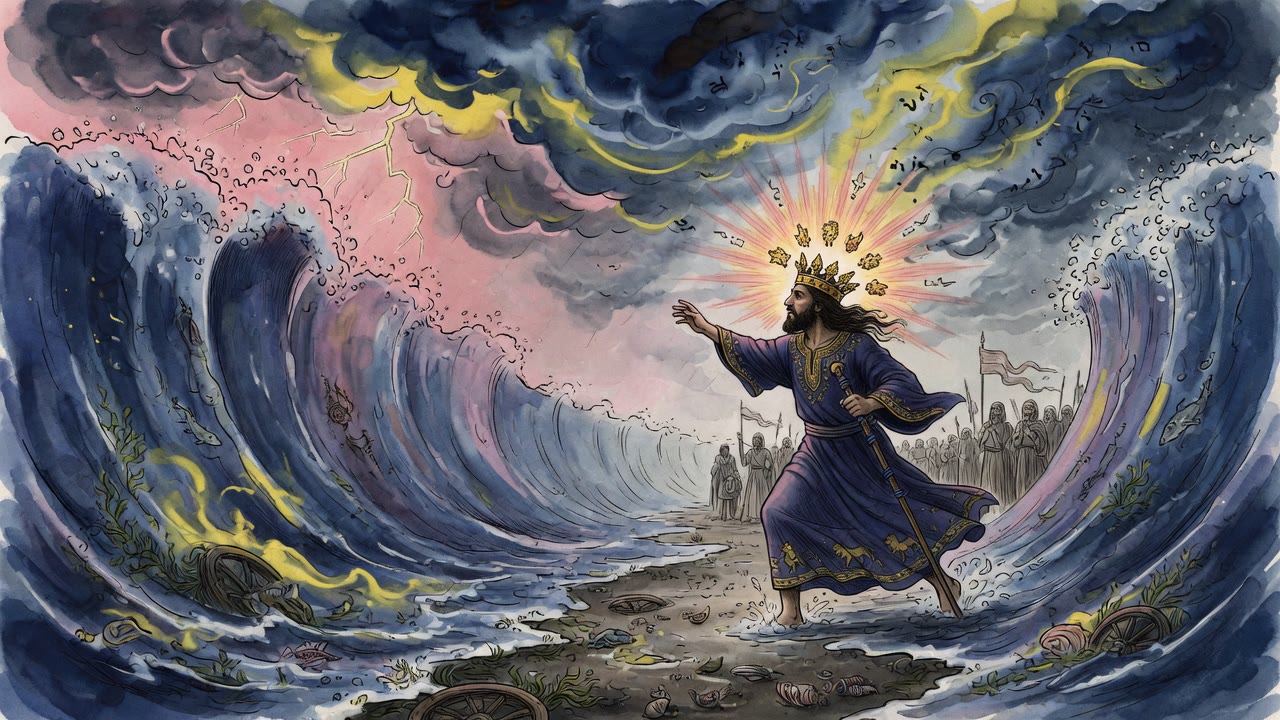
Stand for a moment on the shore before the water moves. Behind Israel are the brick pits and the frogs that preached through stone. Above them is the memory of a night ride on clouds to a mountain that does not yet hold a Temple, only a promise of one. Ahead is a path no general would choose, a dead end that becomes a door. Pharaoh's horses drum the sand. He believes he is hunting slaves. He is walking into the hour that has been near since the first refusal. The staff rises. The Name stays guarded on the tongue. The sea learns its cue. When the water returns, the midrash wants you to hear not only drowning wood and iron, but a ledger closing: the Redeemer who frees the slave also calls the master to account.
← All myths