Egypt Begged Them Out Before One More Hour
Moses made the elders pull their hands off Egypt's idols before anyone touched a lamb. Four hundred years leave residue. Blood went on the lintels that night.
Table of Contents
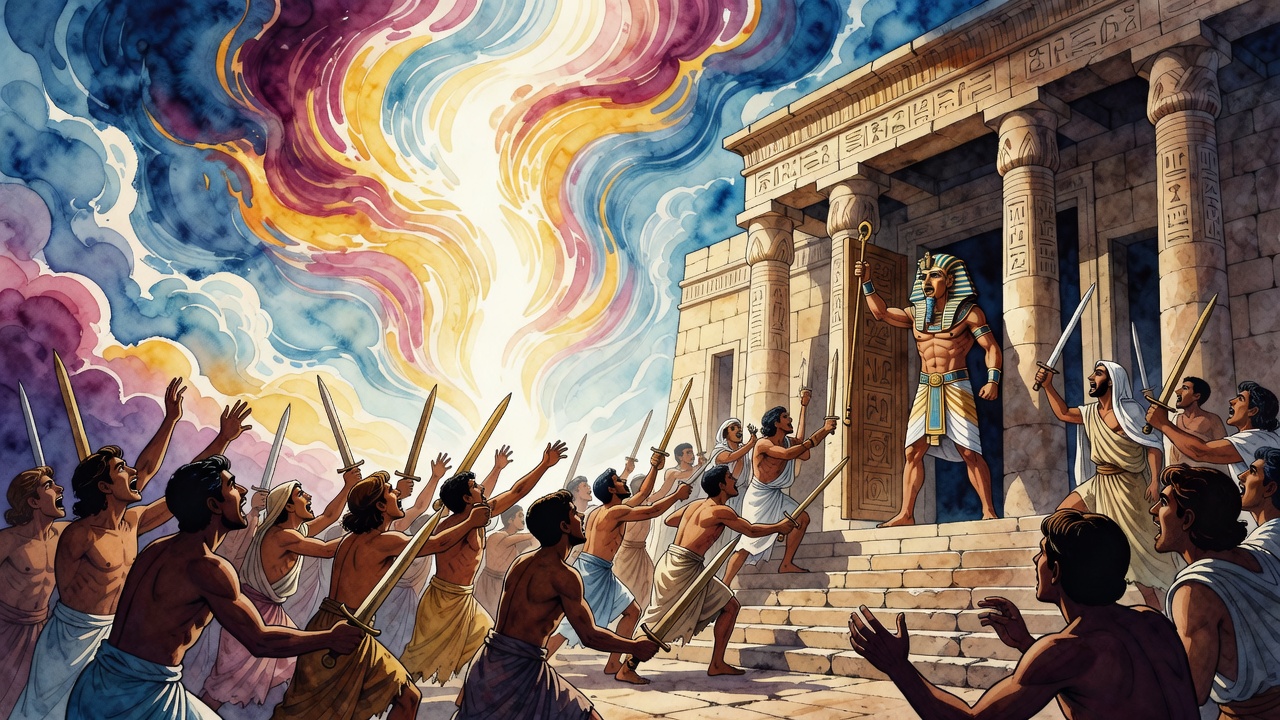
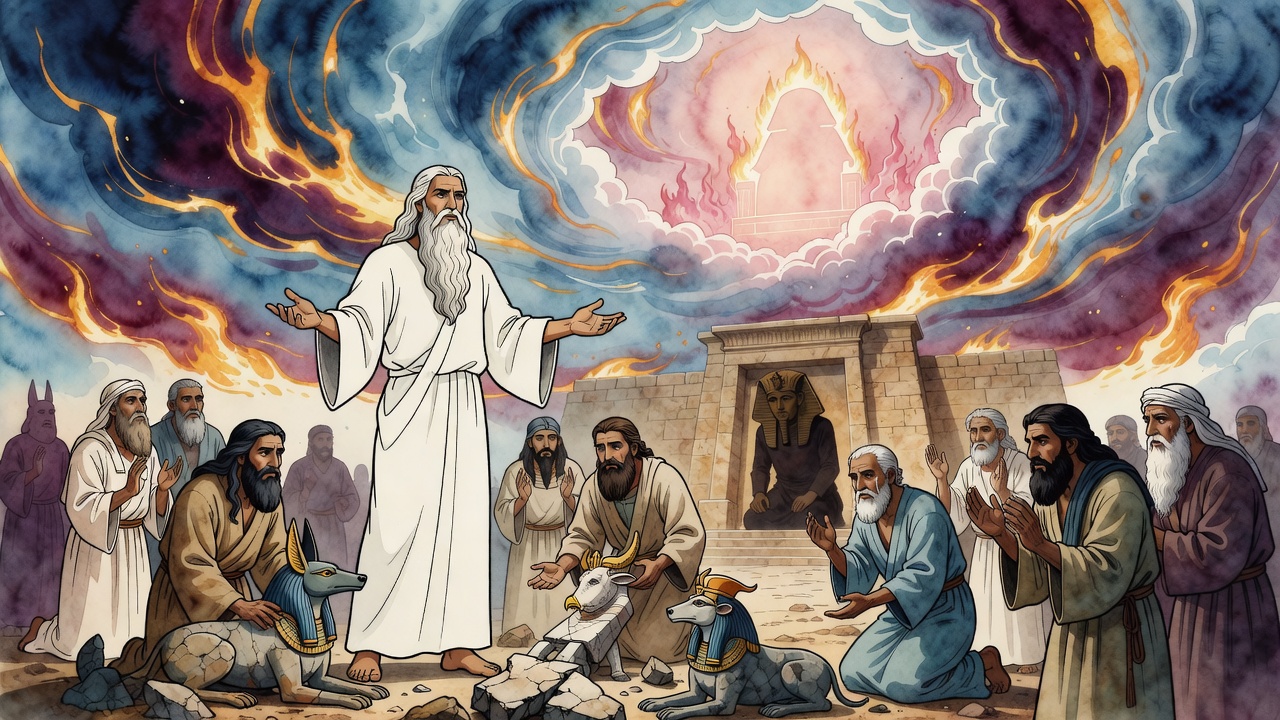
Moses called the elders and did not flatter them. "Withdraw your hands from the idols of the Mizraee," he said, "and take from the flock according to your houses, and kill the paschal lamb."
 Click for full size
On the edge of freedom, the old guard still had Egyptian gods under their fingers. Four hundred years leave residue. Nine plagues had not scrubbed every private shelf. The lamb, sacred in Egypt's eyes, would have to die in Hebrew doorways, and the elders had to lead the break in public.
The Death Threat That Found No Purchase
Earlier, Pharaoh had threatened Moses with death if he saw his face again. Moses answered with a calm that only heaven can teach. "You have spoken fairly," he said. While he lived in Midian, a word from before the Lord had told him that the men who once sought his life had fallen from their power and were reckoned with the dead.
Assassins were already empty names. So Moses added his own last line: at the end there would be no mercy on Pharaoh, though Moses would still pray to restrain plague where he could. "Now I will see your face no more." He walked out knowing the next conversation between heaven and Egypt would not use a palace chamber.
When the Lowest Heart Cheered Slavery
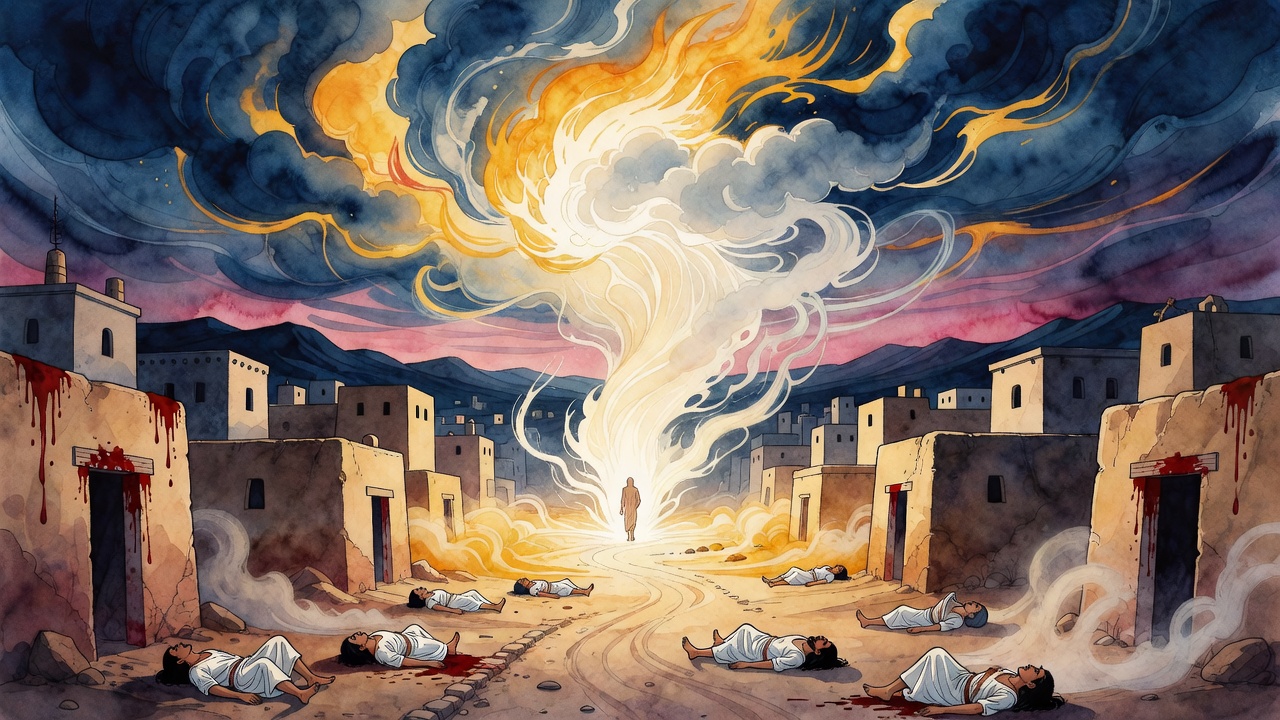
The tenth plague did not stop at princes. It reached the firstborn of the maidservant turning the grindstones. Why strike the powerless? The sages answered that even those chained to the mills wanted Israel to stay enslaved. They had nothing to gain from Hebrew bondage, yet they cheered it from below, content to keep someone under them.
Hatred had soaked the whole land. The judgment followed the cheer, not only the crown. Cruelty was not the king's private craft. It had become Egypt's weather.
The Hour Egypt Learned to Count
When the cry rose in the night, Moses, Aaron, and Israel heard Pharaoh weeping and did not rush. They were not going to be moved by a king who had refused nine warnings. They waited until Pharaoh himself came, with servants and every remaining Mizraee, urging the house of Israel to leave at once.
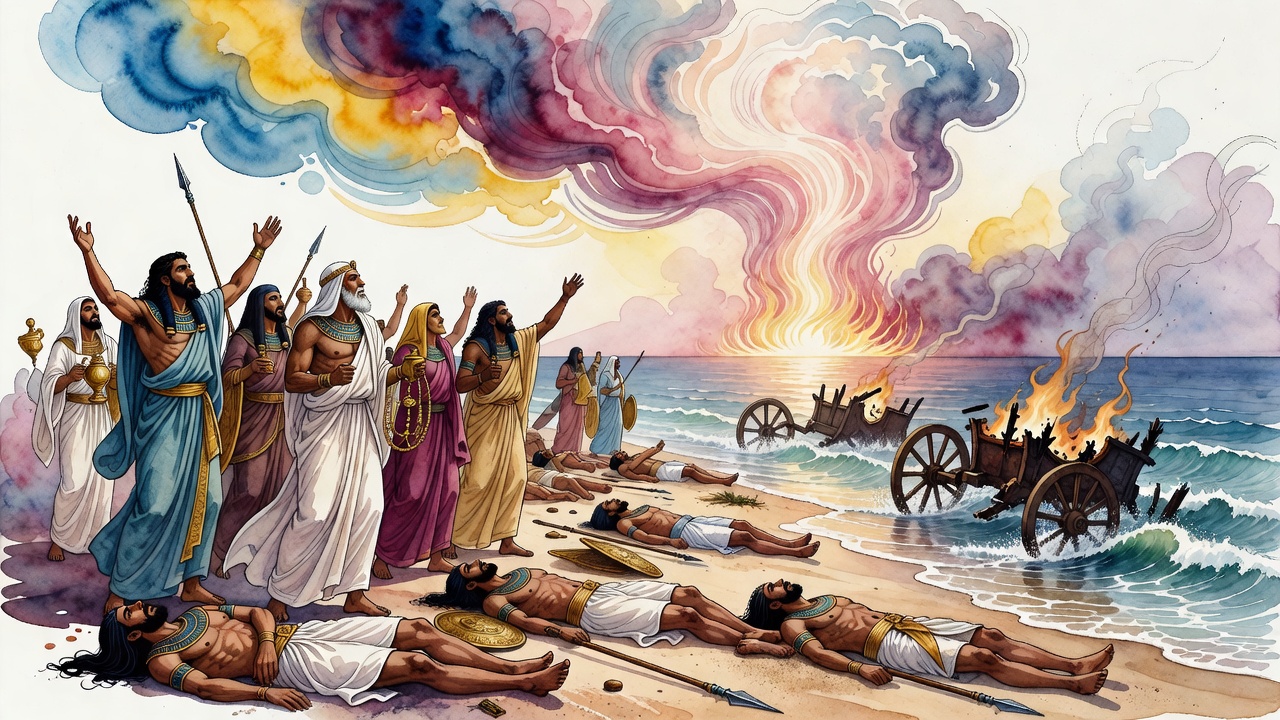
The reason the Egyptians gave was pure panic. "If they prolong here one hour more, behold, we are all dead." For centuries Egypt had owned the Hebrew clock. Now Egypt counted minutes. An hour, they said. One more hour and the rest of them would not survive.
Israel left when Egypt was begging at the door, not when Pharaoh first sobbed into his sleeve.
Hands Off the Idols, Feet Toward the Night
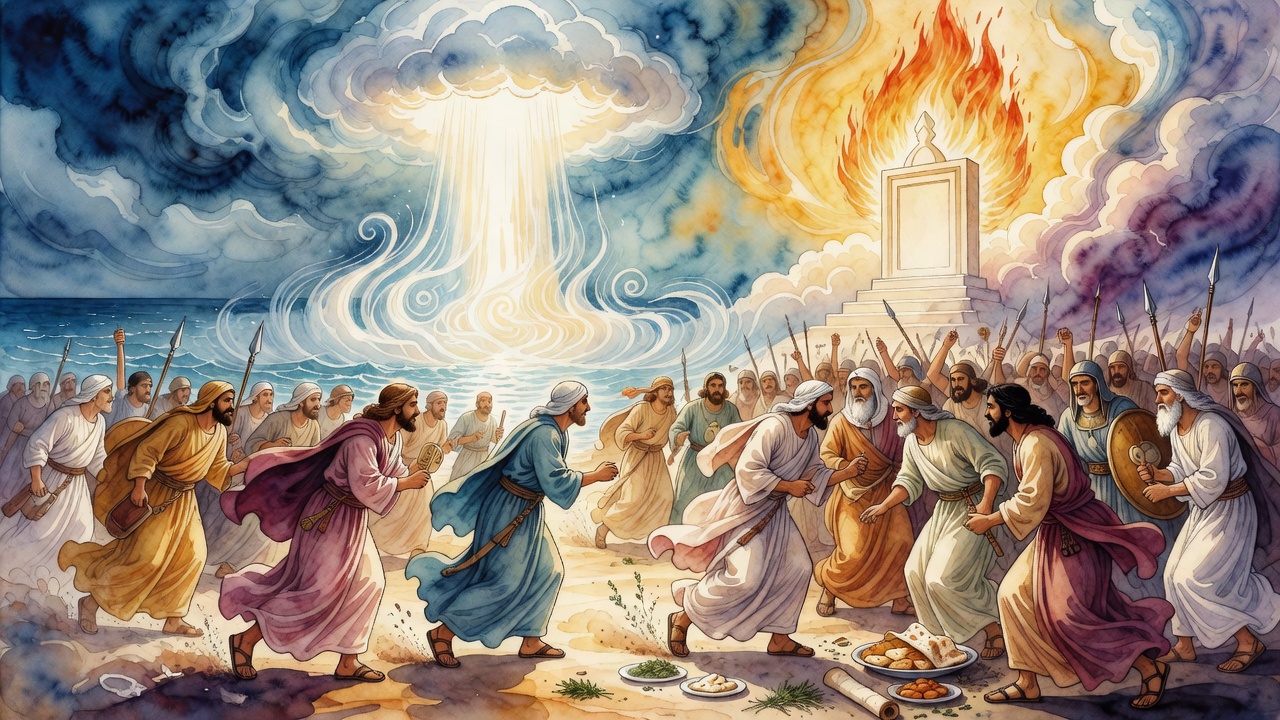
The elders who put down the idols led the nation that followed. Blood on the lintel. Lamb roasted in haste. Dough that would not wait to rise. The spiritual Exodus and the physical Exodus moved on the same night, or the road out would have carried old gods in the packs.
Moses did not smile. Freedom that still clutches a foreign statue is only a change of address. He had washed the elders' hands before the journey began.
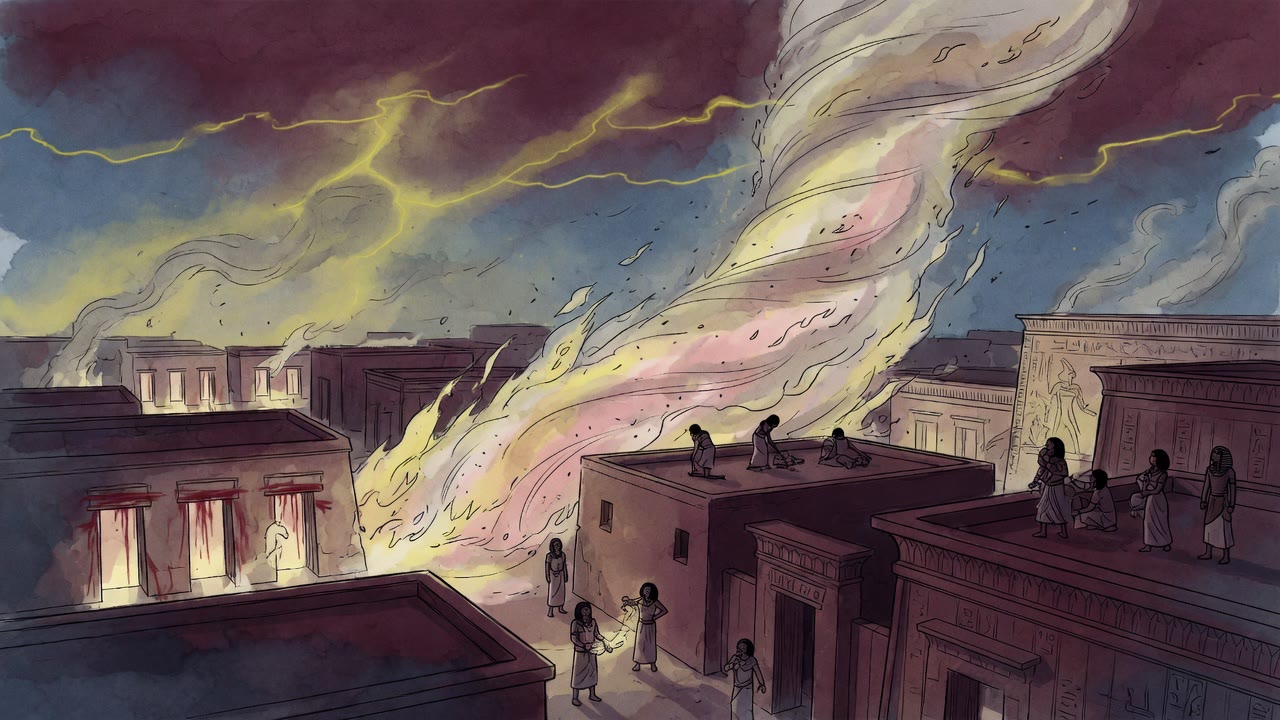
In the Hebrew houses the elders who had just pulled their hands from idols now marked doorframes with blood that still smelled of the flock. Some hands shook. Some did not. The same men who had hesitated over Egyptian statues moved faster once the choice was public. Outside, an Egyptian father who had cheered Hebrew slavery from a millstone's shadow found his own firstborn cold, and the cheer died in his throat too late to matter.
Moses held the people at the threshold of leaving until the city itself came to beg. An hour, the Mizraee said, one hour more and we are finished. The clock that once belonged to overseers now belonged to panic, and Israel walked out on that inverted time with dough on their shoulders and no patience left for a king's second thoughts.
Earlier, when Pharaoh had threatened death, Moses had walked out knowing Midian's old killers were already powerless. That calm was not bravado. It was information. Heaven had cleared the board of private assassins so the last night could be about public justice, not a knife in a corridor. "I will see your face no more" was not a sulk. It was the end of negotiation as a genre.
The elders' renunciation and Egypt's panic met in one night's choreography. Hands off idols. Blood on wood. Lamb in the belly. Then a door opening onto Egyptians who counted minutes instead of bricks. Israel did not run because Pharaoh cried. Israel moved when the land that had owned their hours admitted that one more hour would finish what nine plagues had begun.
Dough that would not rise rode on shoulders still tense from the night's cry. Children asked if they were free yet. Elders who had just abandoned idols answered with their feet. Behind them Egypt counted the last hour it thought it owned and discovered the hour had teeth.
← All myths