5 min read

On the Fourth Day Israel Struck the Egyptian Escorts

Your three-day leave is up, said the Egyptian officers on the road. The ones who could still run afterward reached Pharaoh with blood on their report.

Curated by Arthur · Told by Maggid ·
Table of Contents
  1. When the Leave Expired
  2. The Horn That Sounded Backward
  3. Sandals On, Staff in Hand
  4. Silver for the Son Who Lived
  5. Haste, Blow, and Redemption
On the Fourth Day Israel Struck the Egyptian Escorts Click for full size

When the Leave Expired

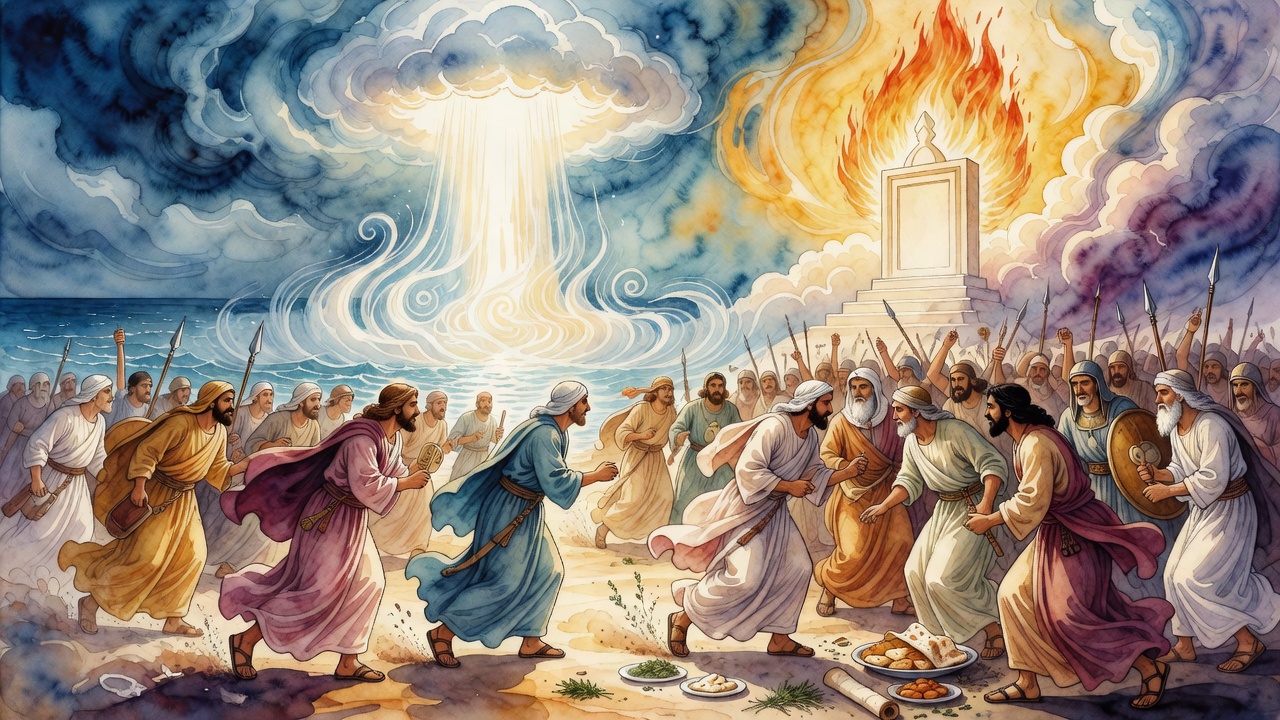
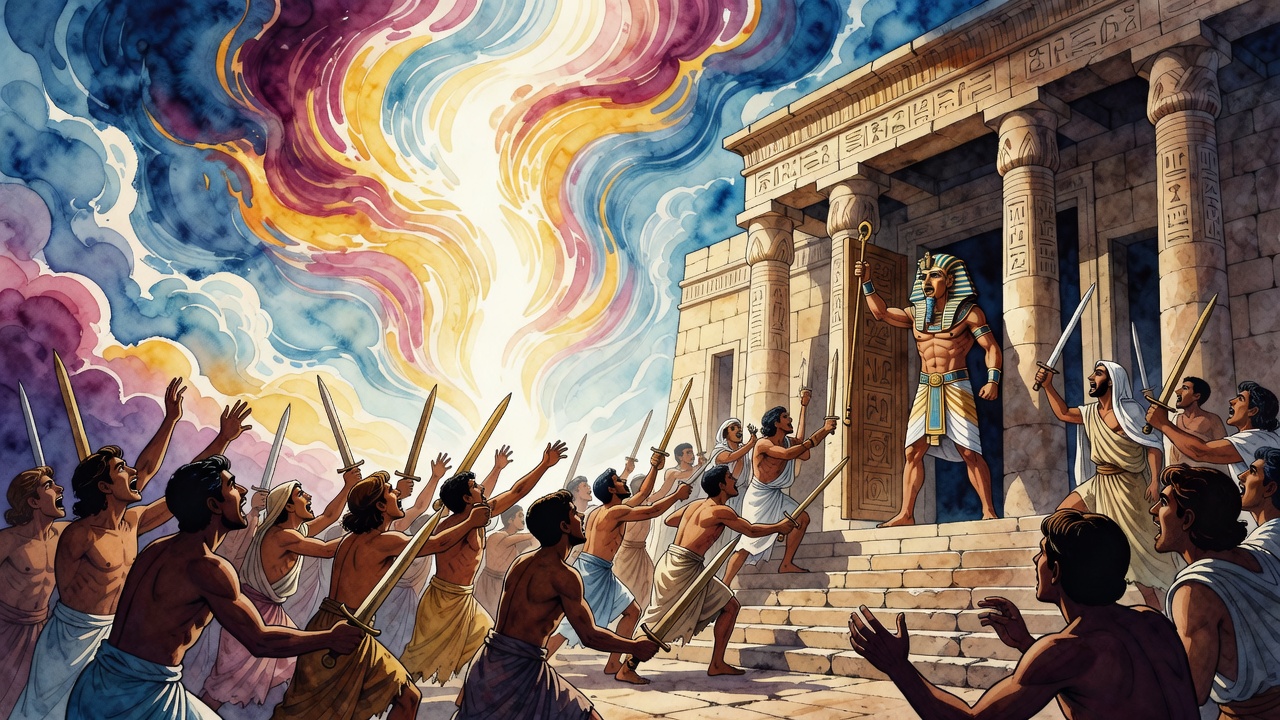
The fourth day on the road was tight as a drawn bow. Israel had come from Rameses through Succoth and Etham, gear packed, animals restless, children already learning the taste of dust that is not slave-dust. Then the Egyptian escort officers stepped into the path with the calm of men who still believed the crown owned the calendar. Your three-day leave is up, they said. Time to return as the decree demanded. The holiday of slaughter and departure was, in their minds, a furlough.

Israel answered that they had left openly, with leave, on the morrow of the Passover, and owed no return to brick and lash. The officers insisted: willing or not, you will obey the crown. So Israel rose against the escorts and struck them, wounding some and killing others, because freedom that only argues will be walked back in chains. The officers who could still run ran to Pharaoh with blood on their report.

The Horn That Sounded Backward

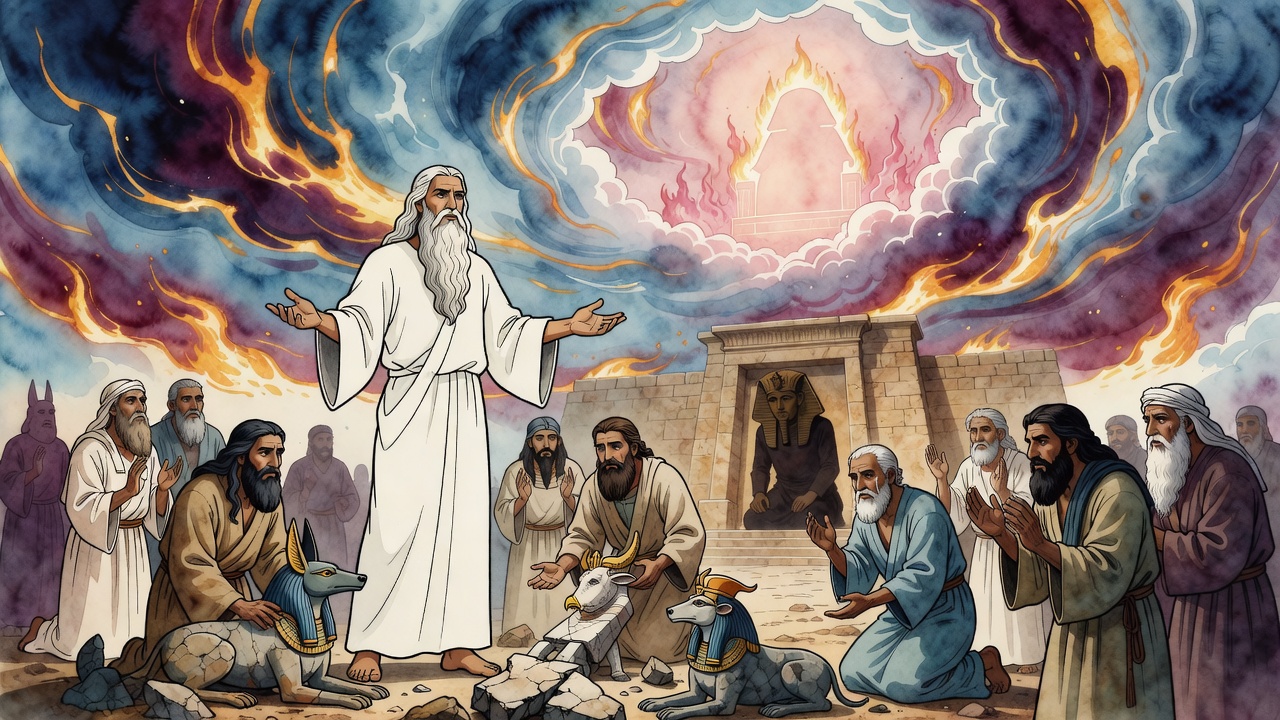
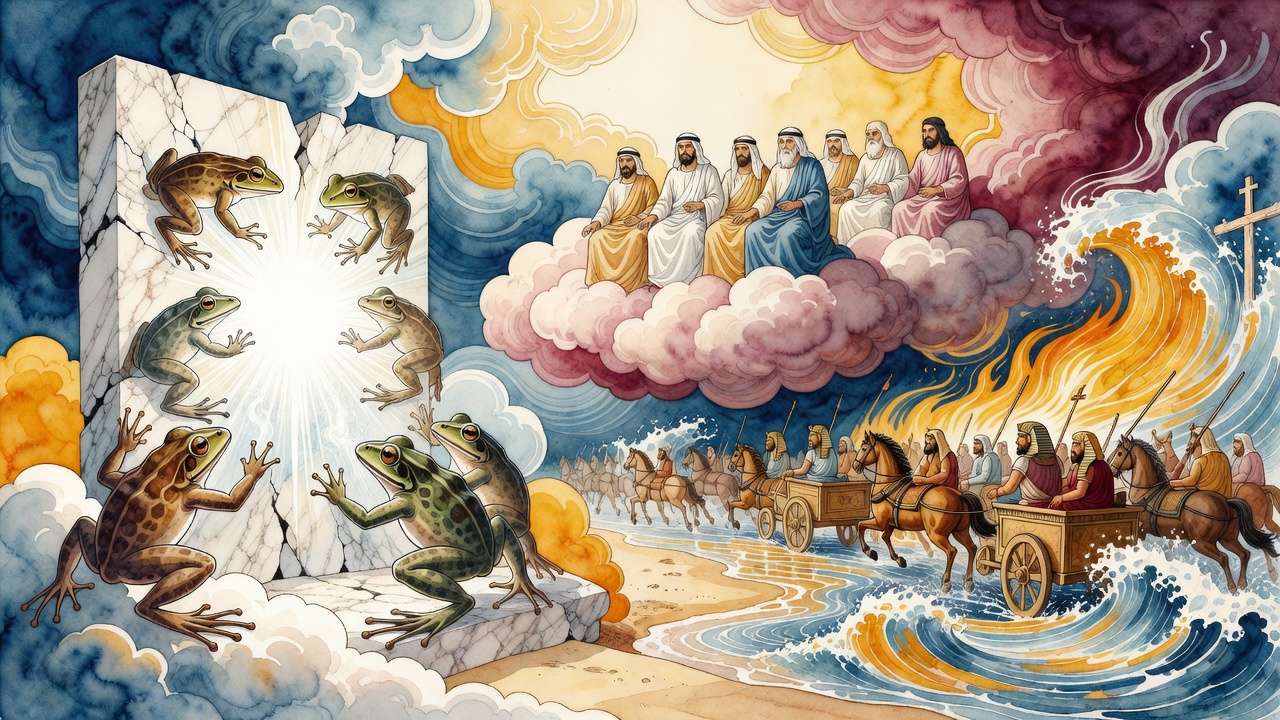
Moses gave the order to turn back toward the sea's trap and God's plan. When the horn sounded for the reversal, people of weak faith tore hair and clothes, certain the march had become a riddle whose answer was slavery again. Mothers hid their faces. Men who had raised staffs against escorts now shook. Moses steadied them with God's own word: you are free men, and this turning is not surrender. It is the road that will drown the chariots.

The place itself was loaded with old gold and old pride. Between Migdol and the sea stood Egypt's monuments and the hoard of silver and gold Joseph had once collected in famine years. One idol, Baal-zephon, was left standing on purpose to lure the Egyptians into pursuit and their own ruin. Pharaoh would soon call Israel entangled in the land, a word the sages hear as bewildered, like cattle lowing in confusion, unsure which way the pen opens.

Sandals On, Staff in Hand

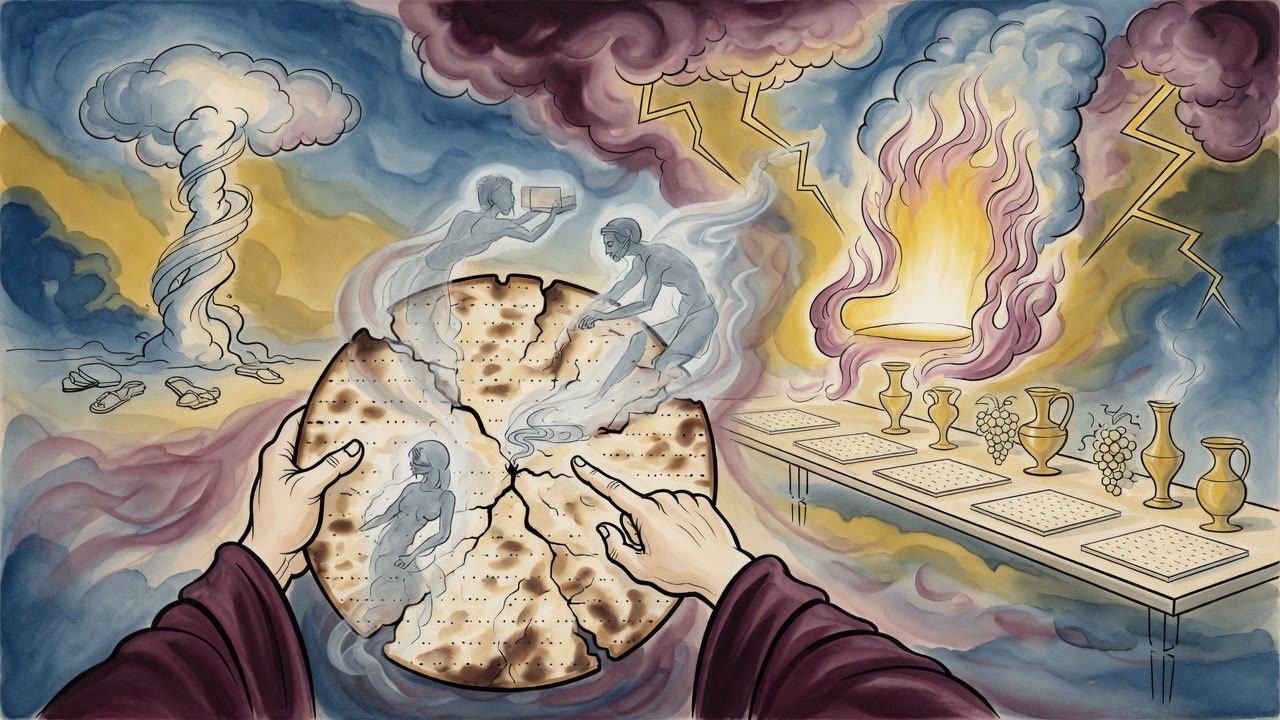
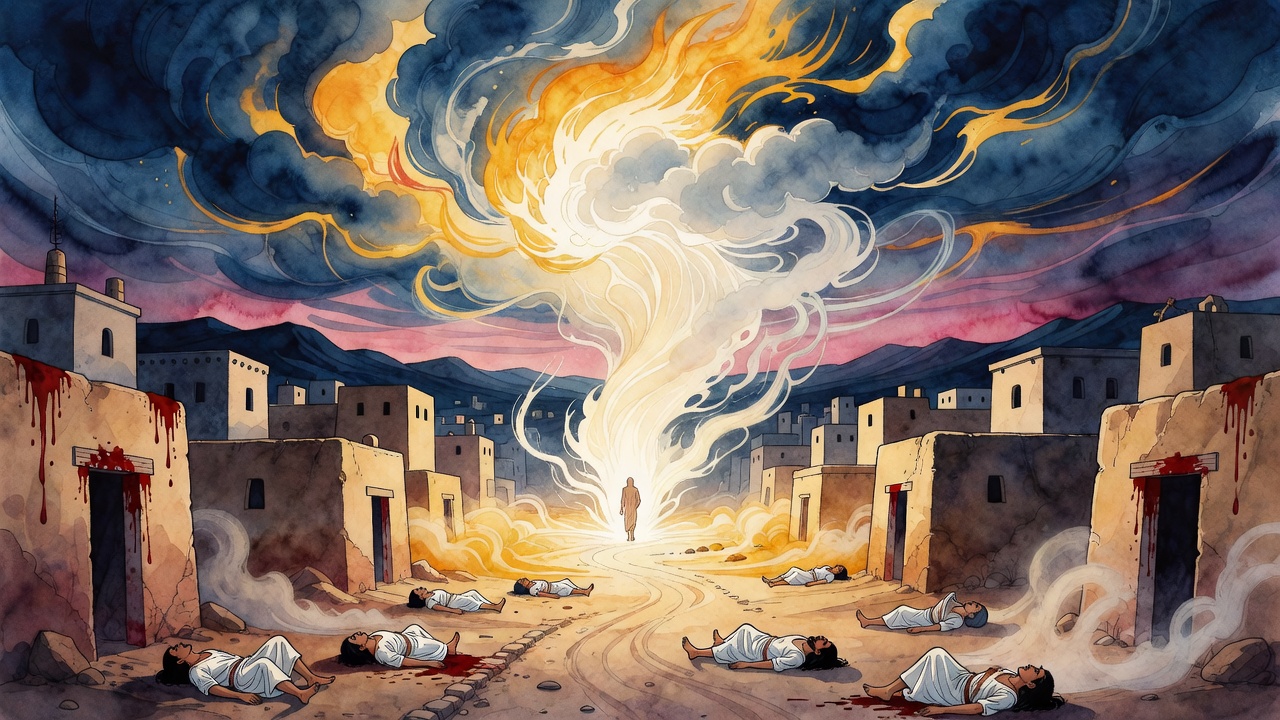
Before any of that road, there was a meal eaten like a departure already begun. "Eat it in haste," the Torah said, and the Mekhilta catches the mood exactly: travelers about to break camp, sandals on, staff in hand, food swallowed on the edge of freedom while Egypt's firstborn still lay quiet in their houses. That haste belonged to the first night. Later generations eat the Passover at ease, reclining, because the danger has changed shape. The blood-work of that night shared the urgency; roasting and rinsing did not all fall under the same alarm.

Calling it a Passover taught that every action must be performed with this offering in mind; an animal slaughtered for some other intent is disqualified. "To the LORD" fixed the direction of the whole rite. The hurried meal in a doomed land was worship turned toward Heaven, not panic alone, even when the hands shook on the matzah.

Silver for the Son Who Lived

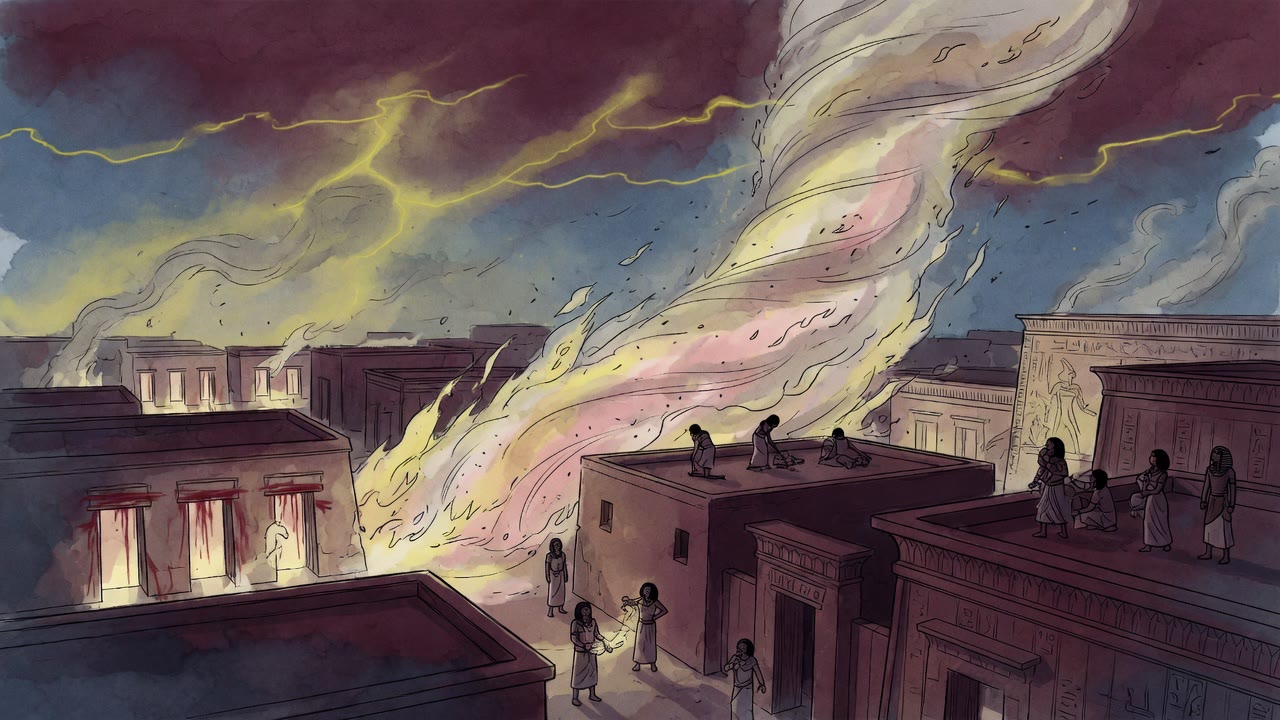
When a son asks why the firstborn is redeemed, the Targum gives the father's answer from one night that still governs the calendar. The Word of the Lord hardened Pharaoh's heart, and the firstborn of Egypt died from man to cattle while Israel kept its eldest under blood on the doorposts. Therefore every male that opens the womb among animals is offered, and every firstborn son is bought back with silver, a small price that admits it can never match the night.

The ritual stays unbalanced on purpose. You give something back to the God who gave you everything, knowing the debt cannot be settled in coin. Gratitude in this telling is not a mood that arrives after a good harvest. It is a payment renewed each generation, a private echo of a public plague and a public rescue, so a boy who never saw Egypt still tastes the cost of his own life.

Haste, Blow, and Redemption

The escorts on the fourth day tried to renegotiate freedom into a temporary pass signed by a king who still thought he owned Hebrews. Israel answered with hands. The horn's backward call tried to sound like defeat, and Moses renamed it strategy under promise. The first night's haste and the firstborn's silver bookend the story: leave ready, fight when the leave is lied about, and never forget who died so you could walk.

These scenes are kept in Midrash Aggadah, Mekhilta, and Targum tradition so the Exodus does not become a smooth parade with banners and no bruises. Freedom had a street fight, a panic on the sand, a meal eaten standing, and a coin still paid for sons who live. The fourth day is as holy as the first night because both refuse to return the people to Pharaoh's arithmetic.


← All myths
From the tradition

Sources

3 sources

The texts behind this telling. Some cards carry a translation of the source; others are our own retelling of it, and each card says which. Every card links out to the original.

Yalkut Shimoni on Torah 230:5Yalkut Shimoni on Torah

Translation of the source text.Torat Emet (Yalkut Shimoni) · CC-BY-NC

"The children of Israel journeyed from Rameses to Succoth, and from Succoth to Etham, and from Etham to before Pi-hahiroth." They journeyed on the eve of Sabbath, and the Sabbath, and the first day of the week. On the second day of the week, which was the fourth of their journeying, Israel began to repair their gear and ready their animals to depart. The escort officers said to them: The time set in your decree to return to Egypt has arrived, as it is said, "a journey of three days" (Exodus 5:3). Israel said to them: When we went out, by whose leave did we go out? As it is said, "on the morrow of the Passover" (Numbers 33:3). The escort officers said to them: Willing or unwilling, in the end you will fulfill the words of the kingdom. Israel rose up against them, struck some of them, wounded some of them, and killed some of them. They went and told Pharaoh. Moses said to them: Turn back. Once the horn was sounded for return, the men of little faith among Israel began to tear at their hair and rend their garments, until Moses said to them: From the mouth of the Holy One, blessed be He, it was said to me that you are free men. Therefore it is said, "and they shall encamp before Pi-hahiroth."

"Between Migdol and the sea." There was the greatness of Egypt, there was their glory, there was their place of distinction. There Joseph gathered the silver and the gold, as in the matter that is said, "and Joseph collected" (Genesis 47:14). "Before Baal-zephon": it remained from all the objects of fear, in order to entice the heart of the Egyptians. Of it He says, "He enlarges the nations and destroys them" (Job 12:23). "Opposite it you shall encamp by the sea," in order to entice the heart of the Egyptians.

"And Pharaoh will say of the children of Israel: They are entangled in the land" (Exodus 14:3). Nevukhim (entangled) means nothing other than bewildered, as it is said, "how the beasts groan, the herds of cattle are bewildered" (Joel 1:18).

Full source
Mekhilta DeRabbi Shimon Ben Yochai 12:11Mekhilta DeRabbi Shimon Ben Yochai

Translation of the source text.Mechilta de-Rabbi Simon b. Jochai, ed. D. Hoffmann, Frankfurt 1905 · Public Domain

"And thus you shall eat it" (Exodus 12:11): "and you shall eat it in haste," in the alarm of people setting out on a journey. I would know only that its eating must be in haste. From where to include the receiving of its blood and the sprinkling of its blood? The verse says "and thus." One might think I should include its roasting and the rinsing of its entrails; the verse says "thus," "thus" [restricting it].

"It" (Exodus 12:11): it is eaten in haste, but the Passover of later generations is not in haste. Another interpretation: it is eaten in haste, but the matzah and bitter herbs are not in haste.

"A Passover" (Exodus 12:11): that all its actions be for the sake of the Passover. "It is": this excludes one who slaughtered it not for its own sake. "To the LORD": for the sake of the One whose Name is unique.

Full source
Targum Pseudo-Jonathan on Exodus 13:15Targum Pseudo-Jonathan on Exodus

Retold in our words. Read the original at the link below.The Targum of Jonathan ben Uzziel, trans. J. W. Etheridge, London, 1862 · Public Domain

The Targum Pseudo-Jonathan on (Exodus 13:15) gives the father's answer when the son keeps asking. Why the firstborn? Because of one night.

"When the Word of the Lord had hardened the heart of Pharoh," the Targum paraphrases, "He killed all the firstborn in the land of Mizraim, from the firstborn of man to the firstborn of cattle." The tenth plague was total. Every household in Egypt lost its eldest; every Israelite household kept theirs.

Notice the Targumist's careful phrasing. It is not God directly who hardens Pharaoh's heart but the Memra, the "Word of the Lord." This is a favorite Targumic move: divine action is filtered through the Memra, preserving God's transcendence while still attributing the plague to Him.

"Therefore," the father concludes, "do I sacrifice before the Lord every male that openeth the womb, and every firstborn of my sons I redeem with silver." Two categories, two responses. The firstborn animals are offered. The firstborn sons are bought back. Each act is a small, private echo of the public miracle that saved them.

The Targum wants the ritual to feel unbalanced. You give back something to the God who gave you everything, knowing the debt can never be settled.

Takeaway: gratitude in Judaism is not a feeling. It is a sacrifice you renew every generation.

Full source