Egypt Shoved Israel Out and Wailed That All Egypt Was Dead
After soft words came hard bricks. On the night of dying, Egypt shoved Israel toward the door and still hoped for a three-day return.
Table of Contents
 Click for full size
Soft Mouth, Hard Brick
Slavery did not begin with a whip in every hand. The teachers hear a pun in the hardness of Egypt's labor: be-feh rakh, with a soft mouth. At first the Egyptians came with sweet invitations. Wouldn't you like to help? Just today. Then tomorrow. Then quotas. Then chains. Clay. Bricks. Field work. In all the work they made them do was hardness.
The Targum refuses to let the story start mid-suffering. Look at the whole arc, it insists. A system that begins as invitation can still end as a kiln. Soft speech is not mercy when it is the doorway into brick. Bitter herbs at the table remember the later taste, not the friendly early days.
We Are All Dead Men
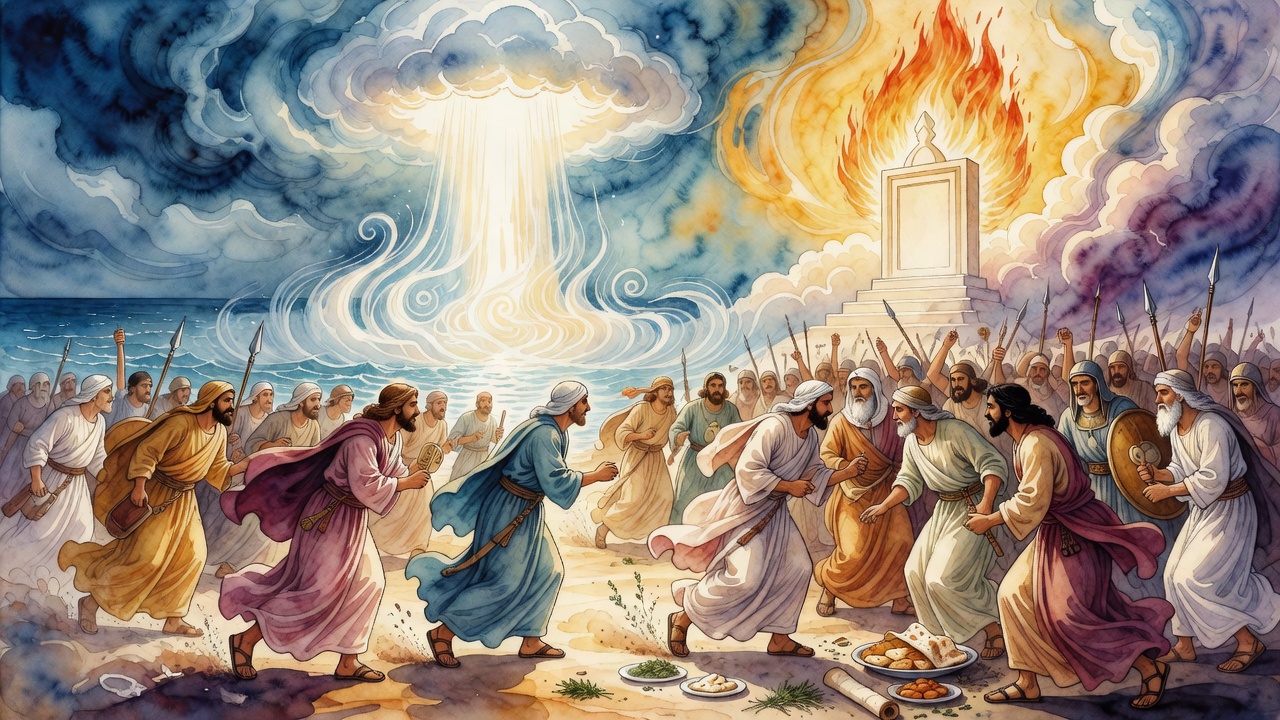
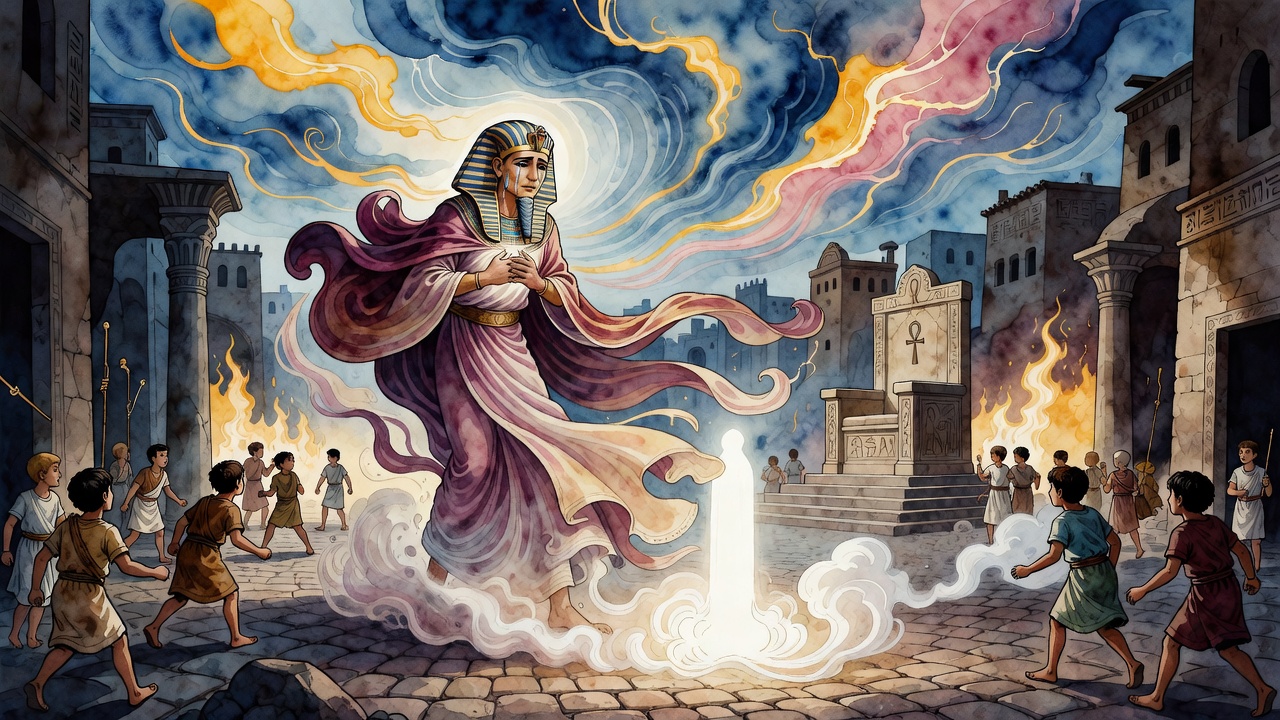
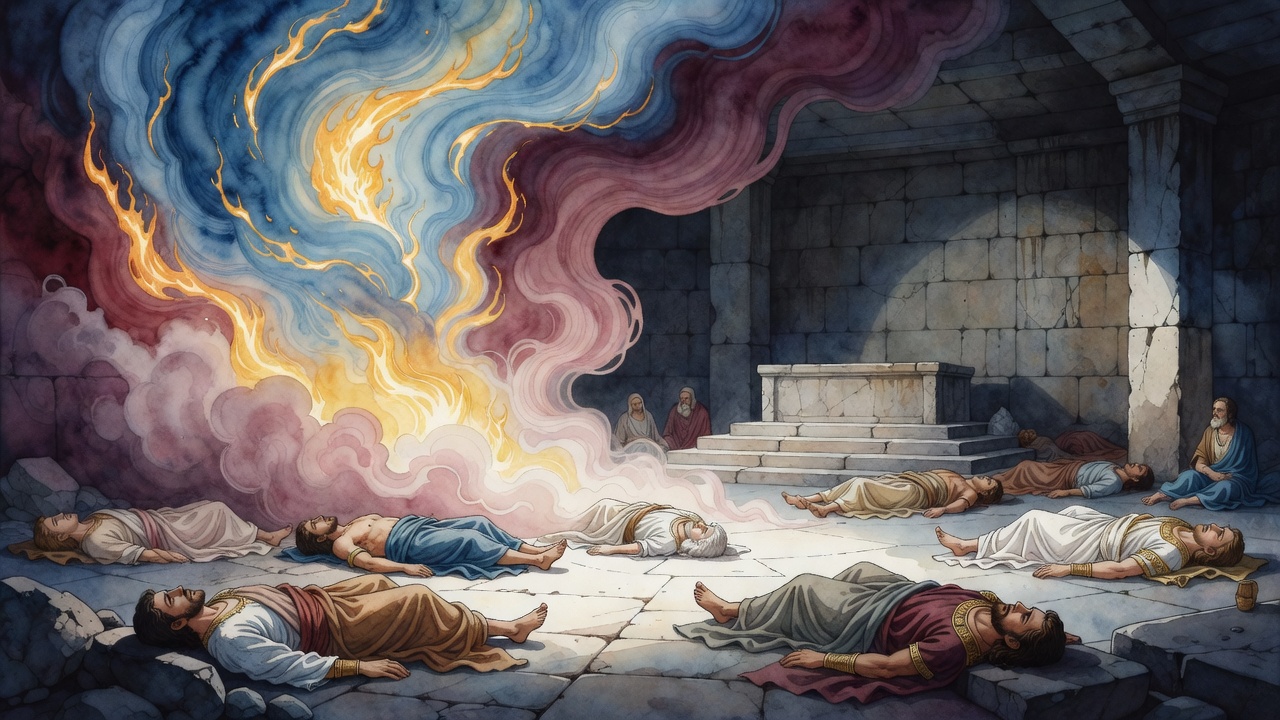
On the night the firstborn died, the old dominance collapsed. Strength that once held slaves drained out of Egyptian hands. They left their dead unburied in roadside corners and heaped on wagons. They stopped dragging their feet and started shoving Israel toward the door.
Get out of the land, they cried, but their panic still had a limit. Only a three days' journey into the wilderness, not all the way to Canaan. Even then they imagined Israel would return. Terror had not yet learned the shape of permanent loss.
They wailed, "We are all dead men," because the dying made no sense to them. Moses had warned that the firstborn would die, yet firstborn and non-firstborn alike fell in the night. The rabbis supply the grim arithmetic. Egyptian society had blurred paternity and maternity past counting. One man fathered ten sons by ten women, each a firstborn of his mother. Ten men fathered ten sons by one woman, each a firstborn of his father. In a nation where almost everyone could claim to be someone's firstborn, the plague reached nearly every house.
The Door That Would Not Stay Three Days
Egypt shoved, and Israel moved with dough that had no time to rise. The soft mouth had become a scream. The hard brick had become a road. Behind them, houses full of firstborn math lay quiet in ways no accountant of cruelty had planned.
They carried the memory of invitation and the memory of the kiln in the same packs. Freedom is not only exit. It is the refusal to let soft speech rewrite the brick years. When they later stand at the sea, they will not be walking a three-day leave. They will be walking out of a schedule Egypt still hoped to keep.
What Panic Could Not Unlearn
Three days was Egypt's last fantasy of ownership. The wilderness would not return the workers. The sea would close the argument. The soft mouth would not get another generation of volunteers for the kiln. Israel would learn to tell the story from hardness back to invitation so no child mistakes the first smile for safety.
On a night of mixed firstborn deaths, a nation that had blurred every line discovered that heaven still knew how to count. The shove toward the door was not generosity. It was the sound of a system choking on its own design.
Listen Again to the Soft Mouth
A whip announces itself. An invitation rewrites the calendar one favor at a time until the brick is already warm in your hands and the quota has a number. The Targum's hardness is a refusal to romanticize the entry point. The Haggadah's bitter herb is the same refusal in the mouth of a child.
On the death night, Egypt's accounting collapses. They had organized cruelty with confidence and discovered that heaven can count firstborns through a fog of blurred beds. Wagons of the unburied are not a footnote. They are the empire seeing its own design return as corpse-math. The shove toward the door still tries to keep a leash called three days. Panic wants ownership even while it screams.
Israel left with dough on their shoulders and the taste of that night in their mouths. The soft mouth had been the first tool. The hard brick had been the middle. The shove was the last word Egypt got to say before the road opened and did not open back.
← All myths