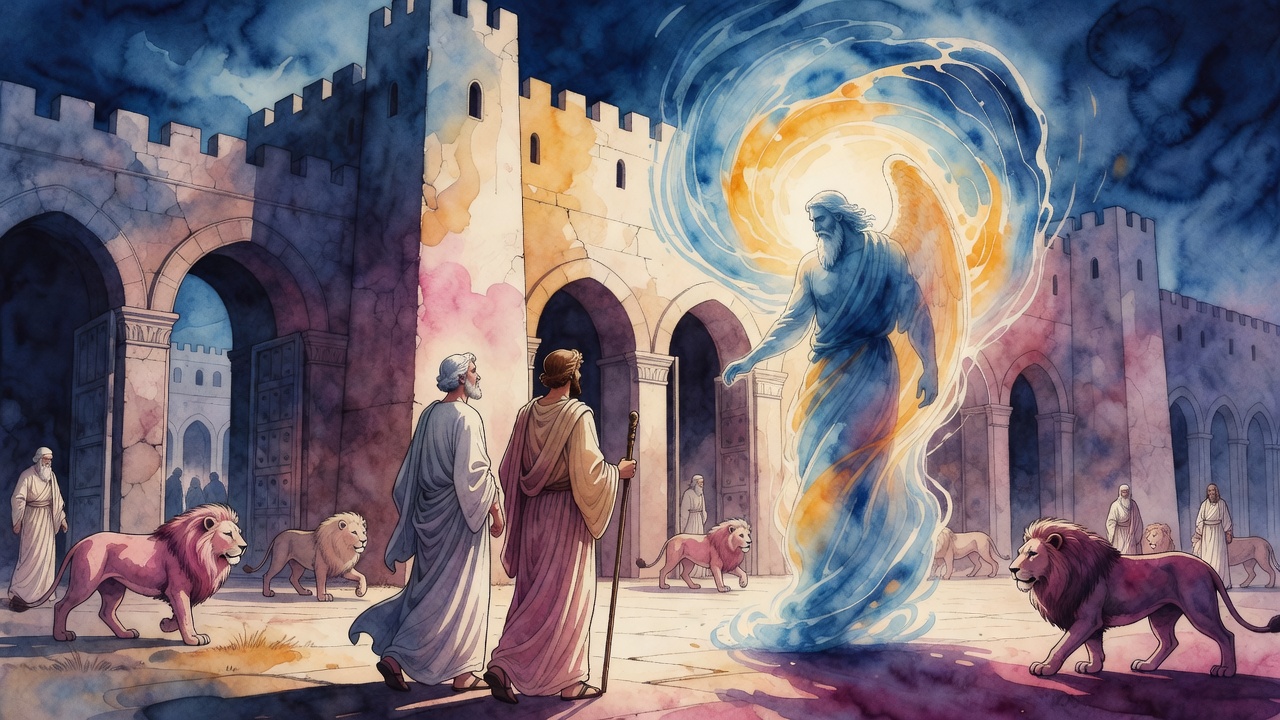
Pharaoh Hunted Moses While the Firstborn Died
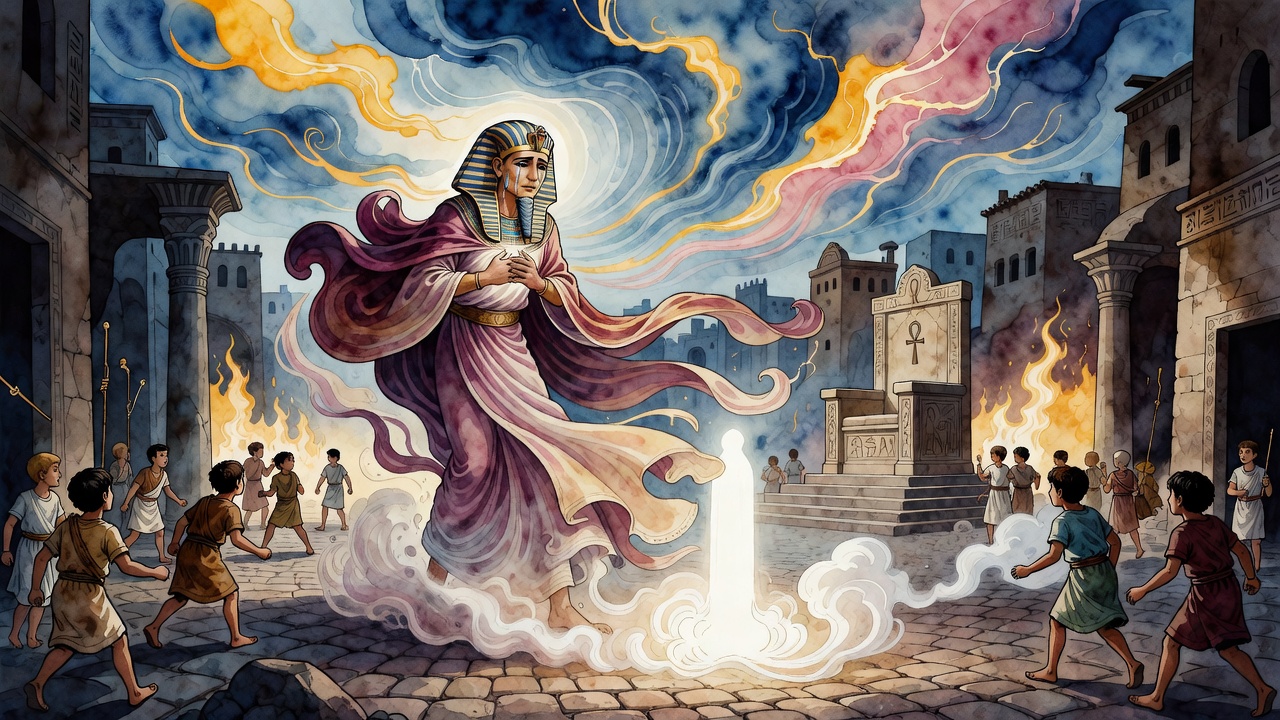
On the night death walked Egypt, Pharaoh wandered the streets weeping for Moses, while Hebrew boys misled the king who no longer knew where his slaves slept.
Table of Contents
 Click for full size
The King Who Did Not Wait for Dawn
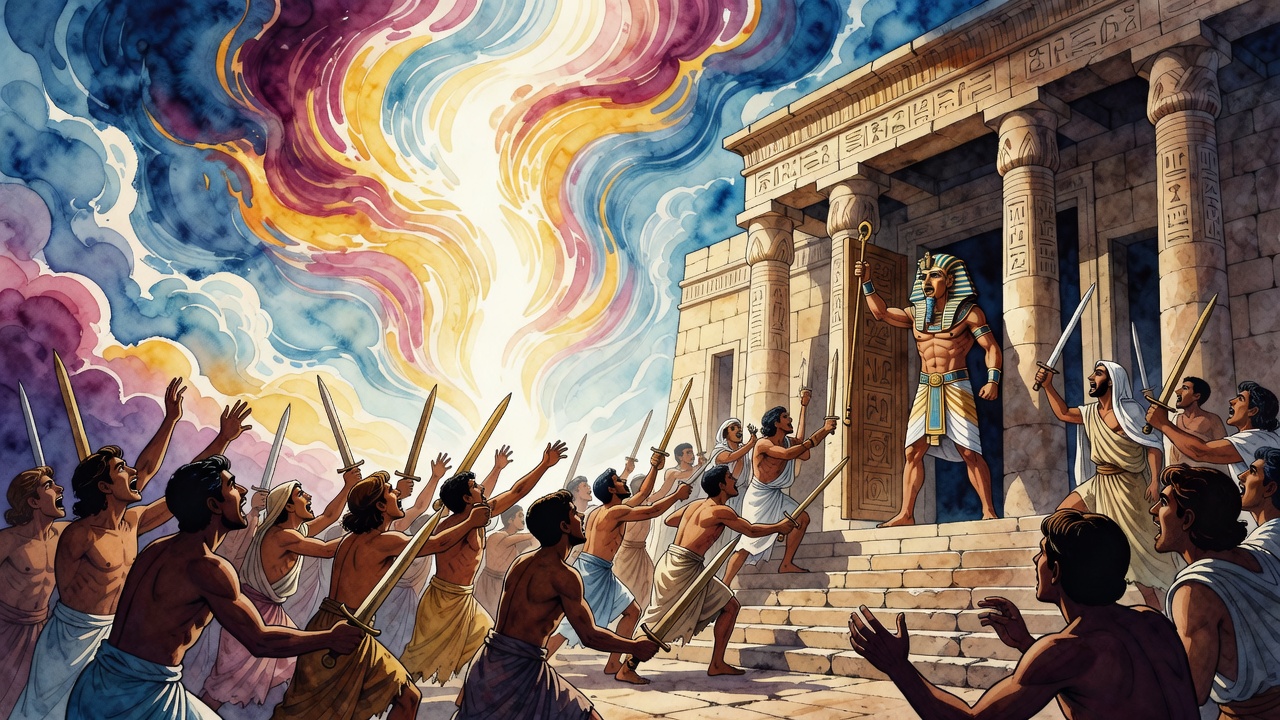
Pharaoh did not wait for the third hour, the hour when kings rise and the palace begins to breathe. He did not wait for a servant to touch his shoulder. Death was already in the courtyards, and the screams of firstborn sons tore the night open like cloth. The man who had ordered Hebrew infants into the Nile now stumbled barefoot into the dark, calling for Moses.
He knew Moses never lied. Moses had said, "I will see thy face again no more," and Pharaoh believed him the way a drowning man believes the shore. If the prophet would not come to the throne, the throne would have to crawl into the alleys. So the ruler of Egypt sent slaves to rouse the city, and then he went himself, royal garments dragging through dust that still smelled of frogs and ash and the sour memory of hail.
He did not know where Moses lived. That was the first humiliation of the night. The second was smaller and sharper. Hebrew boys saw him coming through the lanes. They pointed left when the path ran right. They sent him past empty doorways and into dead ends, and the king of Egypt wept while he walked, crying, "O my friend Moses, pray for me to God!" The title friend sat wrong in his mouth, but grief does not choose grammar. Somewhere behind him, firstborn servants fell in the same hour as firstborn princes. The plague did not pause to check title deeds.
Bithiah Stood Between Two Bloodlines
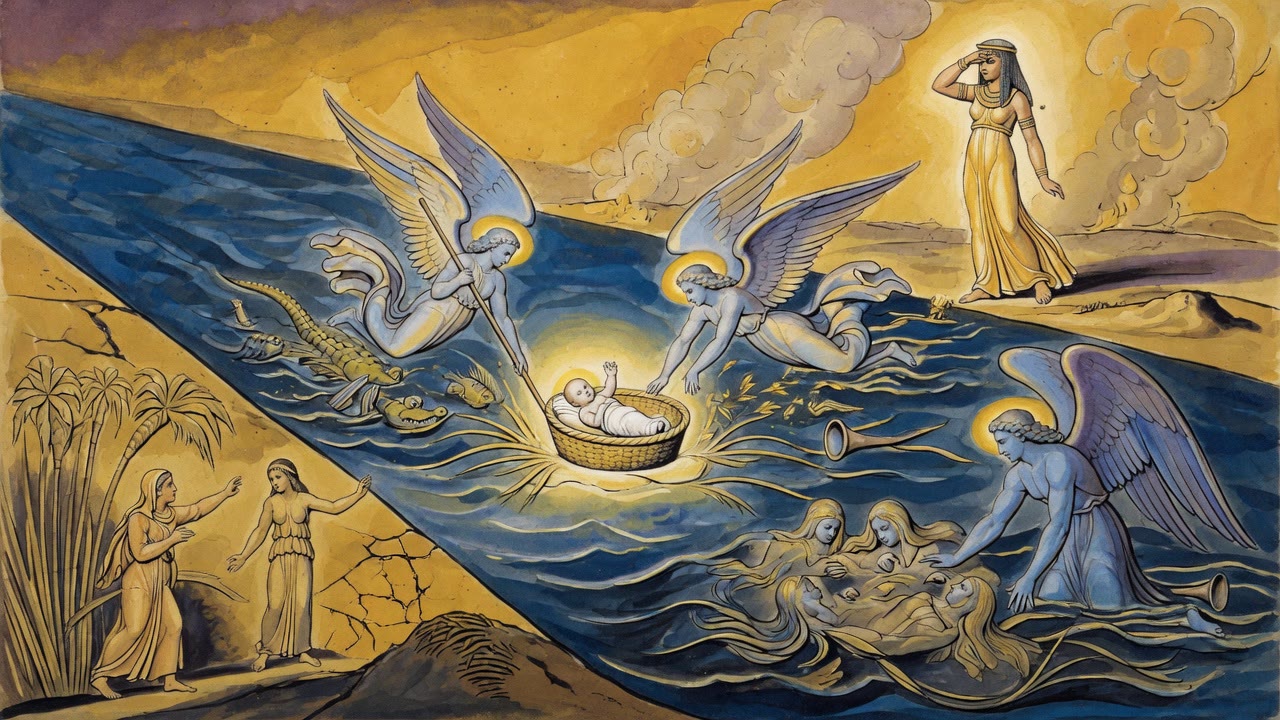
Bithiah, Pharaoh's daughter who had drawn a Hebrew baby from the river, stood near her father as the plague finished its work. She had raised Moses as her own. The water that once saved him now seemed to accuse the house that had raised him and then tried to break him. She turned on the man who had refused nine warnings and shouted that he had brought evil upon her and upon her people.
Moses answered with a cold, exact mercy. "Ten plagues the Lord brought upon Egypt. Hath evil accrued to thee from any of them? Did one of them affect thee?" Bithiah admitted the truth without ornament. The water that turned to blood had left her cup clean. The darkness that pinned Egyptians to their chairs had left light on her path. The boils had not signed her skin. She was a firstborn of her mother, and still she stood upright while the night harvested others.
"Although thou art thy mother's first-born," Moses said, "thou shalt not die, and no evil shall reach thee in the midst of Egypt." Protection for her alone was not enough to quiet her. She looked at her brother the king, at the firstborn of the court, at the cattle Egyptians had treated as gods, and asked what security meant when everyone around her fell. The night did not answer with comfort. It answered with bodies, and with the sound of a foster mother learning that love for one Hebrew child does not rewrite a kingdom's ledger.
When Idols Melted With the Firstborn
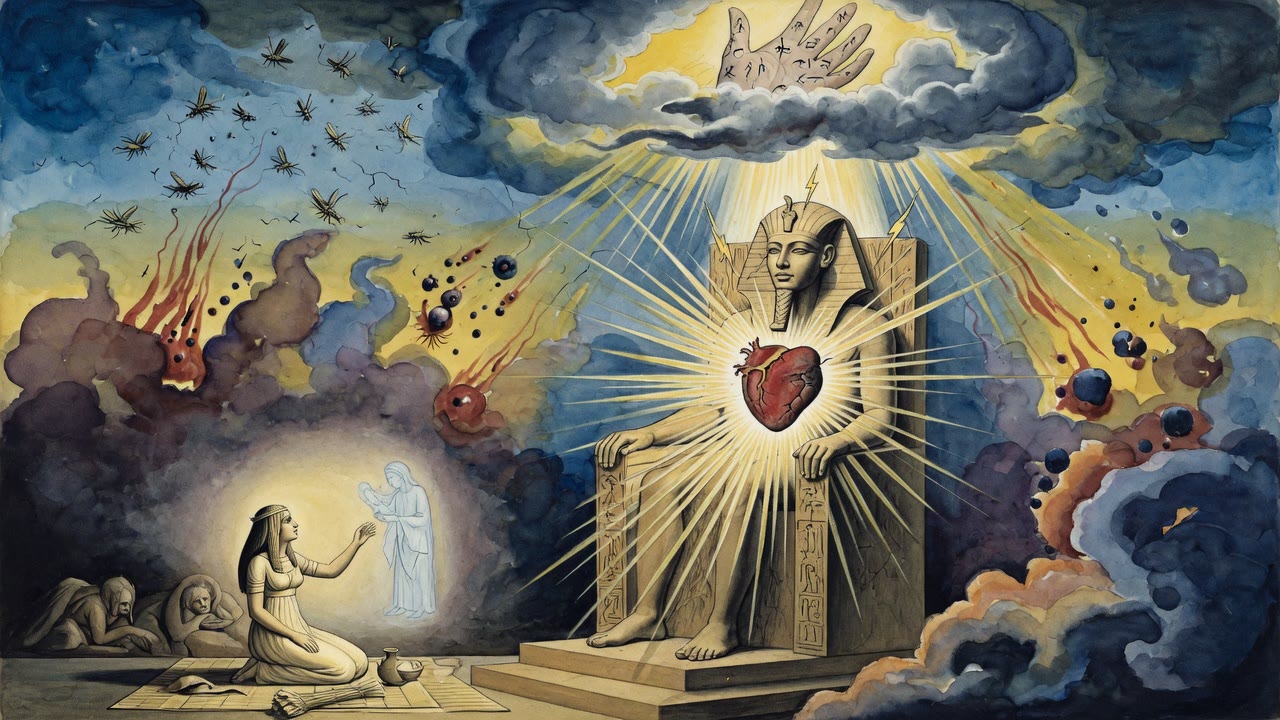
God did not confine the blow to Goshen's borders or to the slave quarters. If only Hebrew captives and foreign prisoners had died, Egypt would have said its own deities were angry and mighty, that the gods had taken their side in a private quarrel. So the idols themselves were broken in public. Stone statues ground to dust. Wooden images rotted where they stood. Metal gods melted as if heat had been poured from inside them. The firstborn of the cattle died with the firstborn of men, so no one could claim a bull-god or a river-god had turned its face in private rage.
The plagues had always been an argument as well as a punishment. Measure answered measure, from water to water, from dust to lice, from forced fields to hail and locusts. The night of the firstborn was the last clause of that argument, spoken without translators and without magicians who could copy the trick. There was nothing left to copy. There was only the sound of a kingdom learning, too late, that the God of the Hebrews ruled also the houses of their masters and the temples where those masters had gone to feel tall. Outside Goshen the same truth held as inside it. Power that pretends to be local meets a Power that does not ask permission to cross a boundary stone.
Three Times Pharaoh Proclaimed Freedom
When Moses finally stood before him again, the bargain was not gold and not tribute. It was speech. Moses offered Pharaoh a way to live if he would learn a single hard sentence and speak it aloud until the words no longer tasted like surrender. "Ye children of Israel, ye are your own masters. Prepare for your journey, and depart from among my people. Hitherto ye were the slaves of Pharaoh, but henceforward ye are under the authority of God. Serve the Lord your God!"
Moses made him say it three times. Then God took the king's voice and stretched it across Egypt so that native and foreigner, soldier and servant, baker and midwife, heard the same confession at once. The man who had called himself master of the world was forced to announce that his slaves belonged to another King. Freedom did not begin with open gates alone. It began when the mouth that had ordered bricks now ordered departure, and when that mouth could not take the words back because heaven had already amplified them.
In the streets the Hebrew boys who had misled the weeping king would hear the same voice they had mocked, now saying leave. Even a joke can end in a decree. Even a hunt can end with the hunter declaring the quarry free.
← All myths