Parshat Shemot5 min read

Pharaoh Read Gender in the First Face of Birth

Pharaoh ordered boys killed at birth by the face that leads. Israel kept Hebrew names, language, and brick-yard mercy anyway.

Curated by Arthur · Told by Maggid ·
Table of Contents
  1. Kill Him Before He Breathes
  2. Four Virtues Under the Whip
  3. Hard Truths Before the Throne
  4. A People That Would Not Dissolve
  5. The Road That Started in Blood
Pharaoh Read Gender in the First Face of Birth Click for full size

Kill Him Before He Breathes

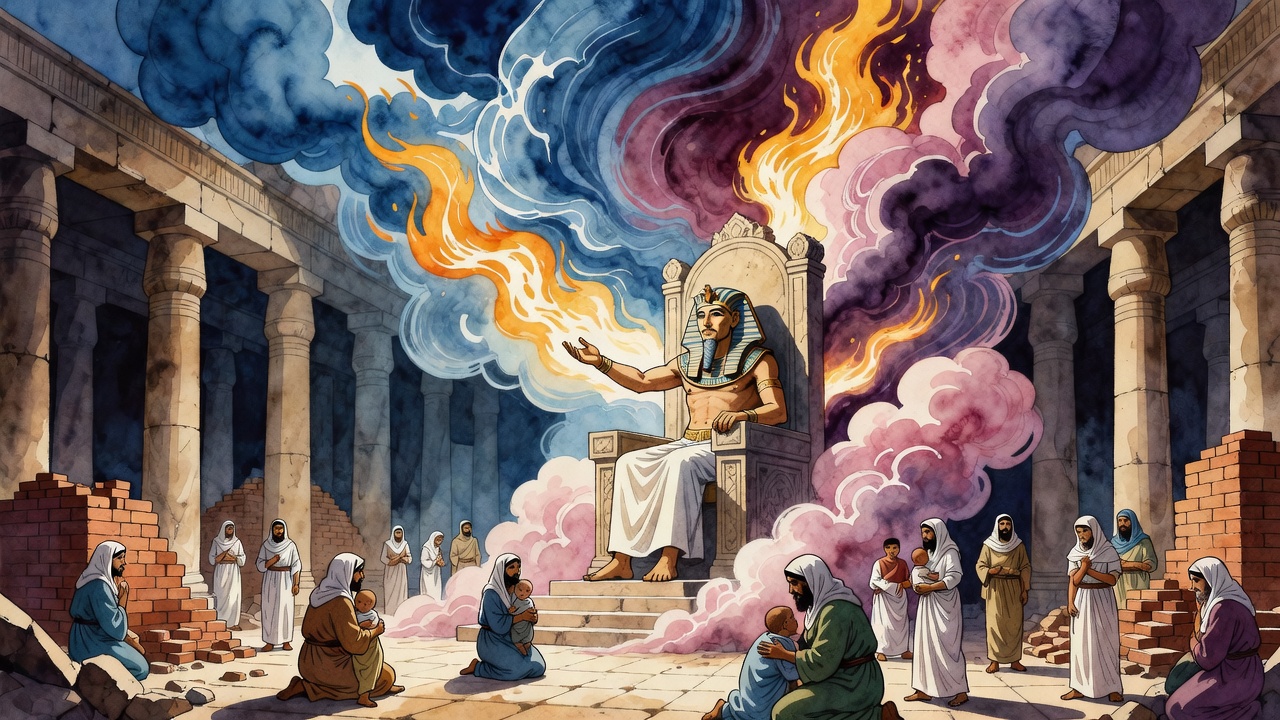
Pharaoh feared the growth of Israel the way a man fears a river rising against his walls. His decree cut at the root. "At the birth of the child," he ordered, "if it be a man child, kill it; but if it be a female child, then you need not kill it, but you may save it alive." Boys died before names. Girls lived as spoils of a king who wanted a future without rivals.

The midwives asked the practical horror. How do we know male from female while the child is still coming? Pharaoh answered with a twisted teaching of his own. "If the child issues forth from the womb with its face foremost, it is a man child, for it looks to the earth, whence man was taken; but if its feet appear first, it is a female, for it looks up toward the rib of the mother, and from a rib woman was made."

He turned creation into a murderer's checklist. Earth and rib became signals for a blade. Birth rooms filled with a king's theology of death.

Four Virtues Under the Whip

While death waited at birth stools, the people still held four lines the legend refuses to erase. They kept clear of incest when the world around them did not. They refused the evil tongue when gossip would have been easy under the lash. Pressure cookers breed slander. Israel, by and large, would not feed that fire.

They would not trade Hebrew names for Egyptian fashion. Names carry power and memory. They kept the holy language in their mouths when another tongue owned the street. Lashon hakodesh stayed alive in slave huts.

Fraternal affection held hardest of all. If one man finished his brick quota early, he did not rest on the saved strength. He helped his neighbor meet the count. God saw the mercy and answered in kind. "They deserve that I should have mercy upon them, for if a man shows mercy unto another, I have mercy upon him." Bricks became a quiet covenant of shoulders. Monuments to oppression rose with hands that still chose solidarity.

Hard Truths Before the Throne

When the hour came to send Moses and Aaron, God did not sell them a soft mission. "My children are perverse, passionate, and troublesome," He warned. Prepare to stand their abuse, even stones thrown by the mouths you free. Generations of slavery had made tempers sharp and trust thin. Liberation would not feel like a parade every day.

Respect still bound the approach to Pharaoh. God would punish the king according to his deserts, yet the messengers must not fail in the honor due a ruler. Power would be broken without turning the liberators into mockers of every throne.

First step toward redemption: take the elders into counsel, and pull the people off idols. Freedom without that turning would only change masters. Physical exit without spiritual exit is a longer chain with a new name.

A People That Would Not Dissolve

Pharaoh tried to read destiny in the presentation of a birth. Israel answered by remaining Israel under mud and quotas. Names stayed. Speech stayed. Hands stayed linked on the brick fields. The king who measured infants by face and feet could not measure the mercy that still moved between slaves.

The midwives' courage and the people's four virtues built a pressure God would not ignore. Murder dressed as policy met a nation that refused to become Egypt in its own mouth. Every shared brick and every Hebrew name was a small revolt the taskmasters could not easily count.

The birth decree tried to erase tomorrow's men. The camp's virtues kept tomorrow's identity intact long enough for a redeemer to arrive.

The Road That Started in Blood

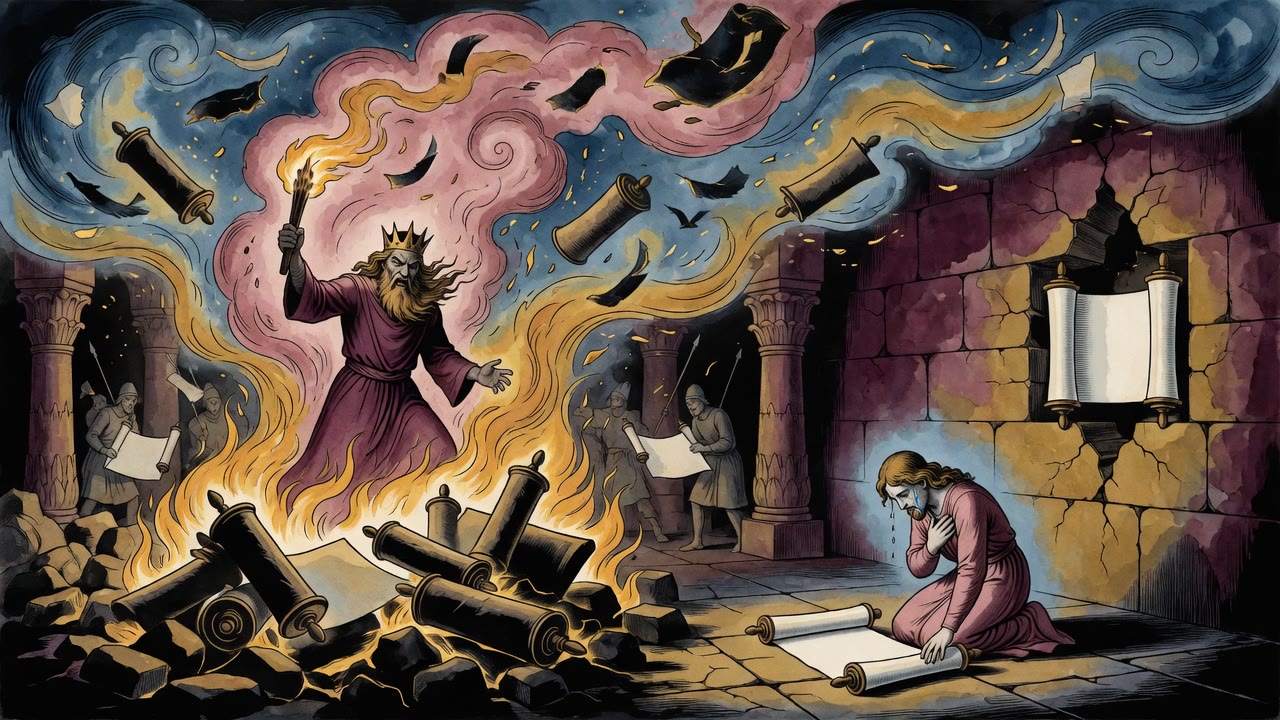
Every boy the decree hunted was a future voice. Every girl it spared was meant to feed a labor force without fathers. Against that arithmetic the brick-yard helpers and the keepers of Hebrew names wrote another count. Moses would one day hear hard truths about the very people he loved. Aaron would walk into a court that had once ordered infants sorted like cattle.

The face-first rule never became the last word. Mercy between slaves rose higher than a king's anatomy of death, and the God who watches birthrooms and brick pits began the long work of bringing both into open air.

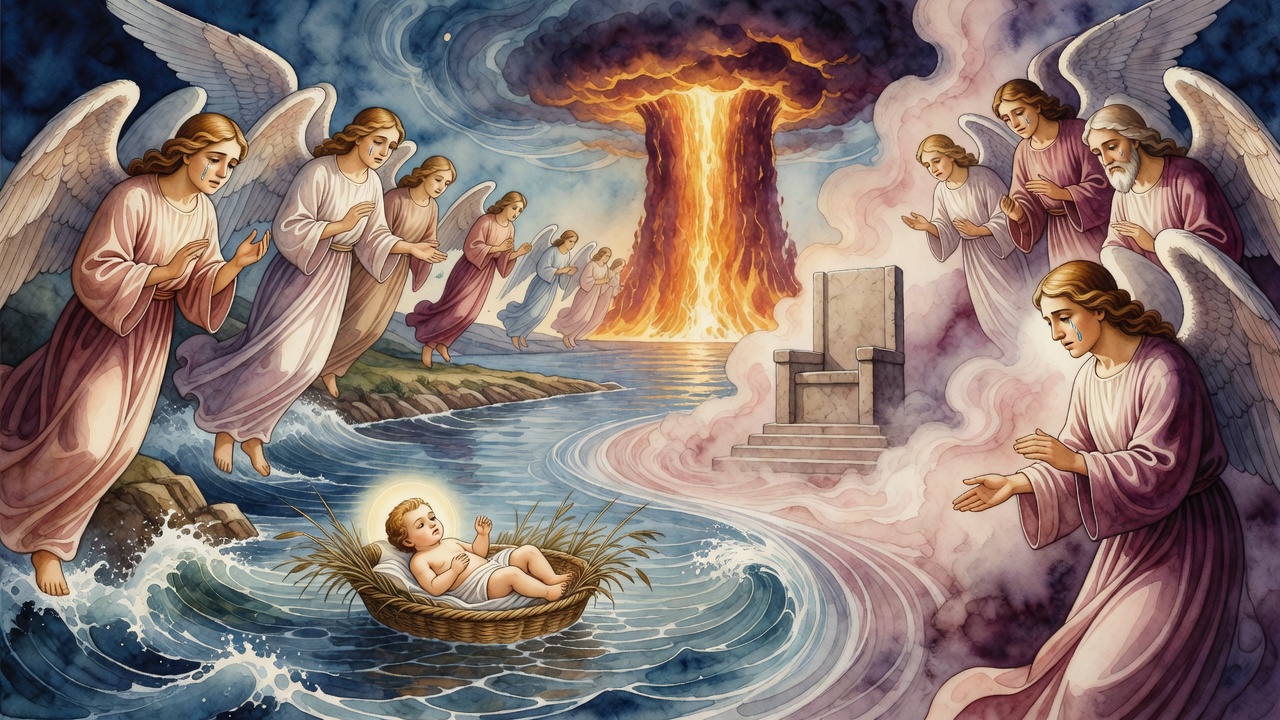
When plagues finally shook the palace, they fell on a king who had already declared war on cradles. The river that once hid a basket had first been taught to take sons. Israel walked out carrying names, language, and the memory of hands that finished another man's bricks when the quota was already done.

In the birth rooms the decree tried to turn midwives into hunters. In the brick yards the people tried to turn exhaustion into help. Those two scenes ran at once under the same Egyptian sun. Pharaoh measured faces and feet. God measured names, speech, and whether a man who finished early would still bend to lift another man's load. The measurements did not agree, and only one of them would outlast the plagues.


← All myths

From the tradition

Sources

3 sources

The texts behind this telling. Some cards carry a translation of the source; others are our own retelling of it, and each card says which. Every card links out to the original.

Legends of the Jews 4:20Legends of the Jews

Retold in our words. Read the original at the link below.The Legends of the Jews by Louis Ginzberg (1909) · Public Domain

The story of Pharaoh in the Bible isn't just about slavery; it's about a desperate attempt to control the very future, one newborn baby at a time.

Pharaoh, gripped by fear of the growing Israelite population, issues a chilling decree. As Legends of the Jews recounts, his order was precise, horrifyingly so. "At the birth of the child," he commanded, "if it be a man child, kill it; but if it be a female child, then you need not kill it, but you may save it alive."

Think about the weight of that. Infanticide, based solely on gender.

How could the midwives possibly carry out such an order? They challenged Pharaoh, asking, "How are we to know whether the child is male or female?" After all, the king had ordered them to kill the baby during birth.

Pharaoh's twisted reply reveals a strange, almost poetic, understanding of creation. He instructed them: "If the child issues forth from the womb with its face foremost, it is a man child, for it looks to the earth, whence man was taken; but if its feet appear first, it is a female, for it looks up toward the rib of the mother, and from a rib woman was made."

Man, according to Pharaoh, is earthbound, looking down to his origins. Woman, on the other hand, gazes towards her origin, the rib from which she was created. It's a stark, disturbing image of control and a warped understanding of the divine.

What does this tell us? It's more than just a historical detail. It's a glimpse into the mind of a ruler willing to pervert even the most fundamental aspects of life – birth itself – to maintain his grip on power. It serves as a stark reminder of the importance of courage, resistance, and the enduring strength of the human spirit in the face of unimaginable cruelty.

Full source
Legends of the Jews 4:148Legends of the Jews

Retold in our words. Read the original at the link below.The Legends of the Jews by Louis Ginzberg (1909) · Public Domain

As retold by Ginzberg, it wasn't all doom and gloom. Even in the depths of oppression, the children of Israel held onto certain virtues, sparks of light that perhaps caught the Divine Eye.

What were these virtues? Well, for one thing, incest was a no-no. In a world where such things happened, the Israelites maintained a moral code. They also weren't evil-tongued. for a second. In a pressure cooker like slavery, gossip and slander could easily run rampant. But the Israelites, by and large, resisted that temptation.

Here’s a fascinating detail: They didn't change their names. This might seem minor, but names carry power. They're tied to identity, to heritage. By keeping their Hebrew names, they maintained a connection to their past, to their ancestors, to their covenant with God. They also clung to the Hebrew language. Even when surrounded by another culture, another tongue, they held onto lashon hakodesh, the holy language.

Perhaps the most compelling virtue was their sense of community. The Legends tell us that great fraternal affection prevailed among them. And here's the kicker: if one Israelite finished making their quota of bricks before their neighbor, they helped the others.

Enslaved, beaten down, forced to build monuments to their own oppression... and still, they helped each other. They could have rested, conserved their energy. But they chose to ease the burden of their fellow Israelites.

Why is this so significant? Because, as God says, "They deserve that I should have mercy upon them, for if a man shows mercy unto another, I have mercy upon him. That our actions, our kindness, our compassion, can actually influence the Divine.

Mercy begets mercy.

Our capacity for empathy, for solidarity, can create ripples of positive change. Maybe, just maybe, those ripples can even reach the heavens.

Full source
Legends of the Jews 4:259Legends of the Jews

Retold in our words. Read the original at the link below.The Legends of the Jews by Louis Ginzberg (1909) · Public Domain

The familiar picture has Moses and Aaron striding confidently into Pharaoh's court, ready to unleash divine power. But according to tradition, there was a crucial pep talk from God Himself beforehand.

What kind of advice would God give to the men about to lead His people out of slavery? It wasn't just, "Go get 'em!" It was a lot more nuanced, and frankly, a little daunting.

Before Moses and Aaron could even think about confronting Pharaoh, God laid some hard truths on them. As we read in Legends of the Jews, God warned them, "My children are perverse, passionate, and troublesome." He knew the Israelites weren't going to be easy to manage. generations of slavery had taken their toll. They were understandably frustrated, and perhaps even prone to lashing out.

God continued, "You must be prepared to stand their abuse, to the length of being pelted with stones by them." Can you imagine? Knowing that the very people you're trying to liberate might turn on you, even to the point of violence? That takes a special kind of courage. It speaks to the immense patience and dedication that Moses and Aaron were expected to have.

And it wasn't just about dealing with the Israelites. God also emphasized the importance of respecting authority. "I send you to Pharaoh," He said, "and although I will punish him according to his deserts, yet you must not fail in the respect due to him as a ruler." Even when challenging injustice, the tradition suggests, there's a way to maintain a certain level of decorum and respect for established power. It highlights the complexity of leadership and the importance of navigating difficult situations with grace.

Finally, God gave them a crucial strategic instruction. "Furthermore, be careful to take the elders of the people into your counsel, and let your first step toward redemption be to make the people give up the worship of idols." This tells us that redemption wasn't just about physical freedom. It was also about spiritual renewal.

The idols represent the false values and beliefs that had taken root during their enslavement. Abandoning them was essential for the Israelites to truly embrace their identity as God's chosen people. Consulting with the elders was also key. It shows that Moses and Aaron weren't meant to be lone wolves. They needed the wisdom and experience of the community to guide them.

So, before the plagues, before the parting of the Red Sea, there was this conversation – a reminder that true leadership requires patience, respect, and a focus on both the physical and spiritual well-being of the people. It's a powerful lesson for anyone striving to make a difference in the world. Does this behind-the-scenes glimpse change how you view the Exodus story? It certainly makes Moses and Aaron's task seem even more challenging, and their eventual success even more remarkable.

Full source