Parshat Shemot5 min read

Zipporah Warned Moses of the Man-Eating Tree

Moses credited a dead Egyptian for his Midian well. Zipporah answered his suit with Jethro's garden tree that swallowed suitors.

Curated by Arthur · Told by Maggid ·
Table of Contents
  1. Thanks for a Killing
  2. What He Had Fled
  3. The Tree in the Garden
  4. A Suit Hung Between Deaths
  5. Exile's Door
Zipporah Warned Moses of the Man-Eating Tree Click for full size

Thanks for a Killing

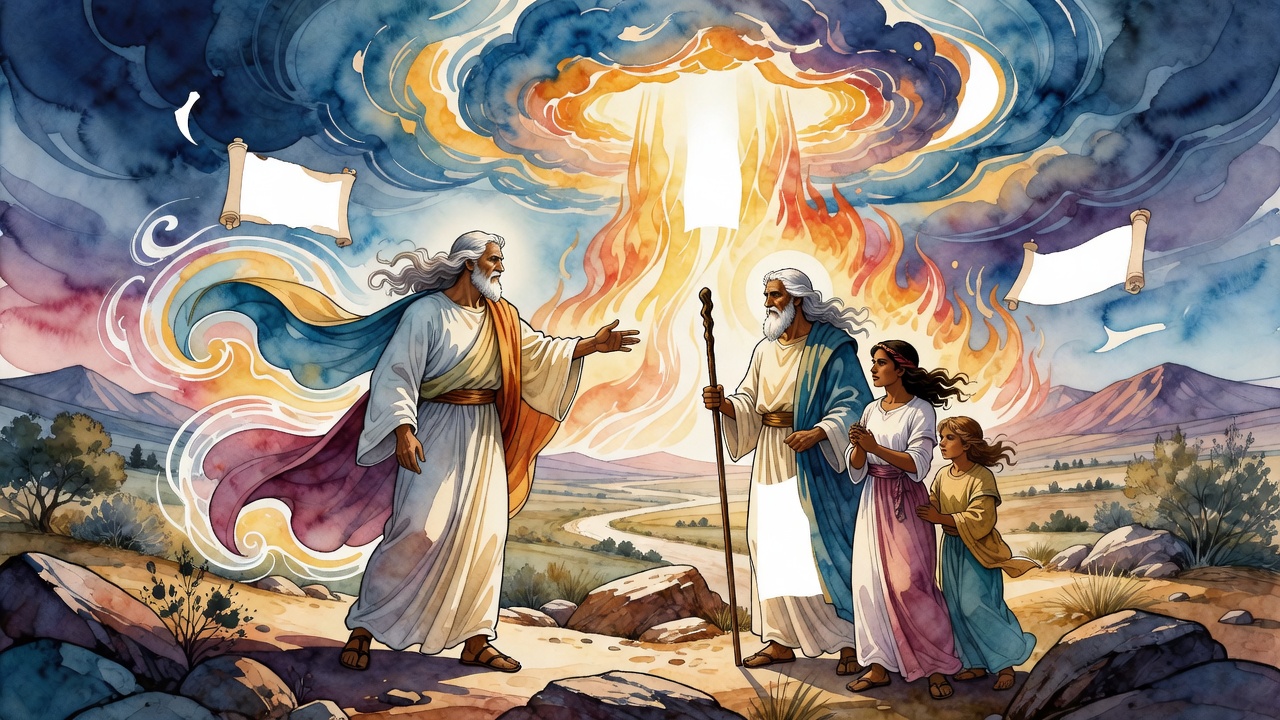
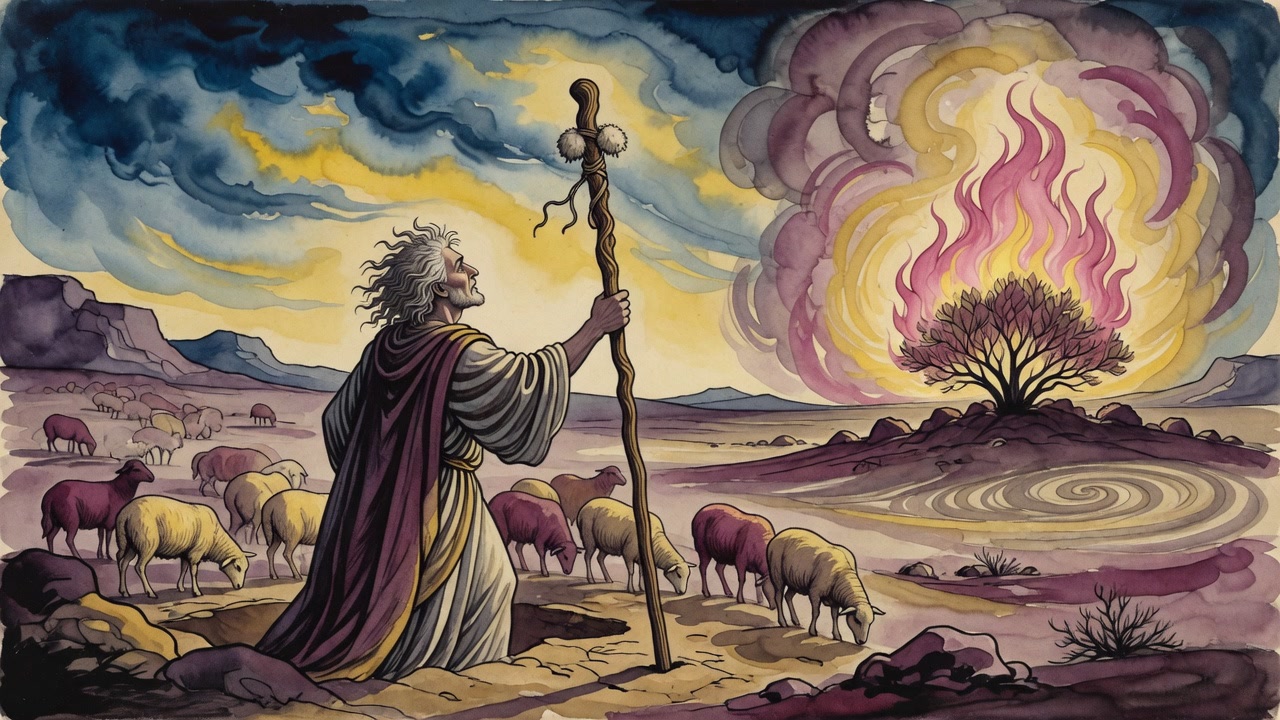
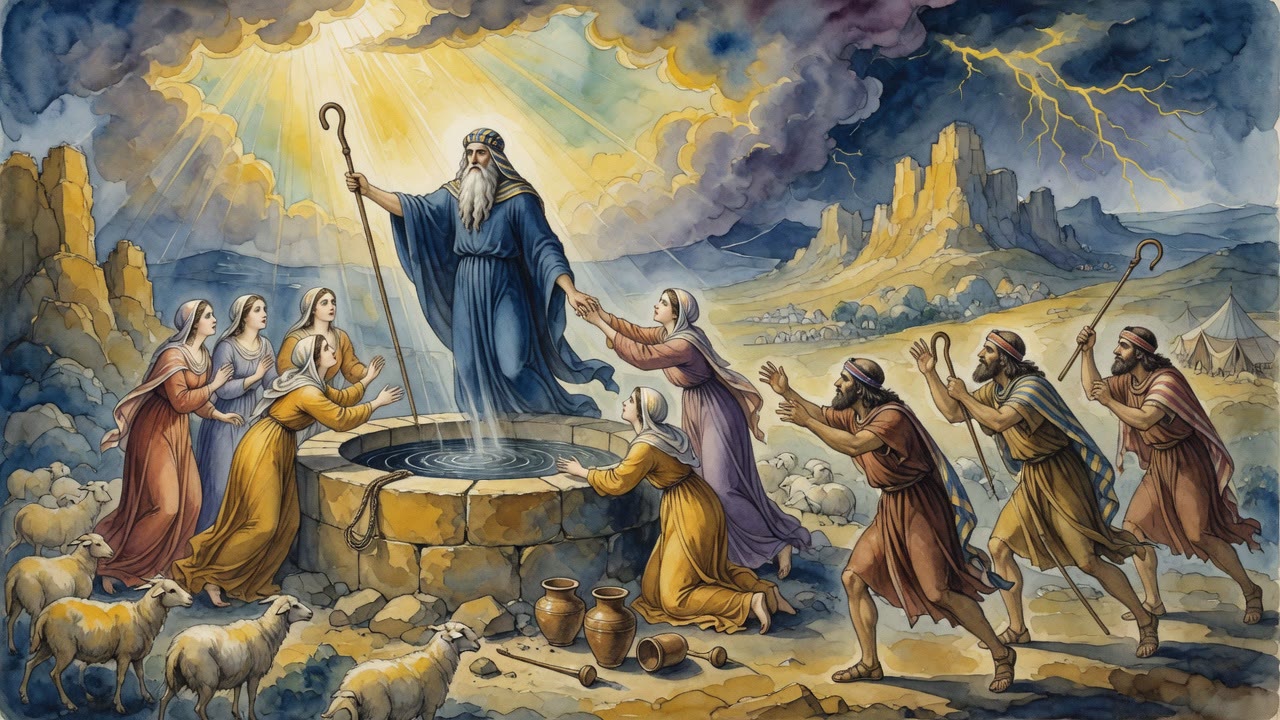
Moses stood by a Midianite well with dust still on him from flight. He had driven off shepherds and watered the flock of Jethro's daughters. Water rose in the troughs. Gratitude rose toward him like heat. He turned it aside with a sentence that startled the air.
"Your thanks are due to the Egyptian I killed," he said. "Because of him, I had to flee Egypt. Had it not been for him, I would not be here now." The dead taskmaster became the strange patron of a meeting at water. Violence had opened the road. Moses named the fact without romance.

He would not take praise that belonged to the chain of consequence. A prince who had struck and run refused to play the simple hero at a well. The daughters heard a man who could hold both rescue and blood in the same breath.

What He Had Fled

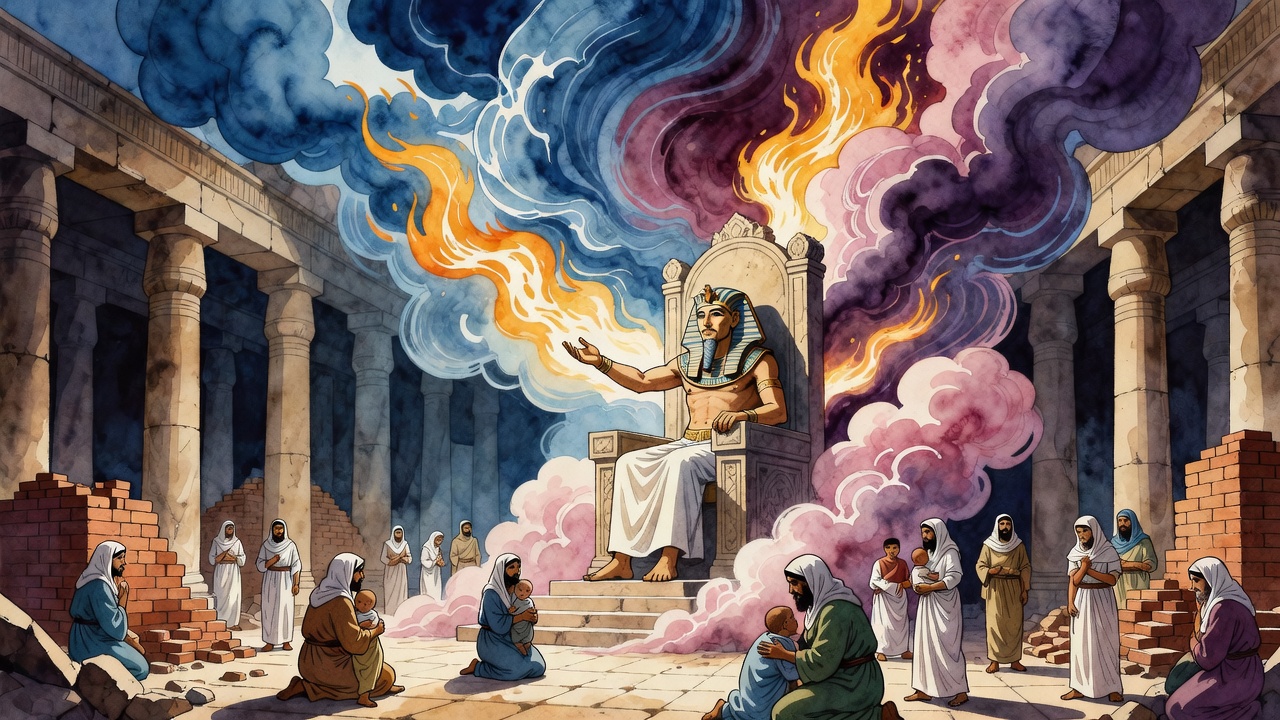
Behind him lay a king who sorted newborns by the face that led from the womb. Face first, kill the boy, looking toward the earth from which man was taken. Feet first, spare the girl, looking toward the rib. Egypt turned birth into inventory. Midwives had been ordered to make that inventory with their hands.

Israel still kept Hebrew names, holy speech, and the habit of finishing a neighbor's bricks when strength remained. Fraternal affection under the whip. Moses had struck one Egyptian who beat a Hebrew and broken his place in the palace. The well was exile's gift, not a vacation from history.

Among seven daughters one held his eye. Zipporah moved with a modesty that cut through ordinary chatter. Moses wanted marriage. Midian had rules that Egypt's court never dreamed, and a father who tested suitors with more than words.

The Tree in the Garden

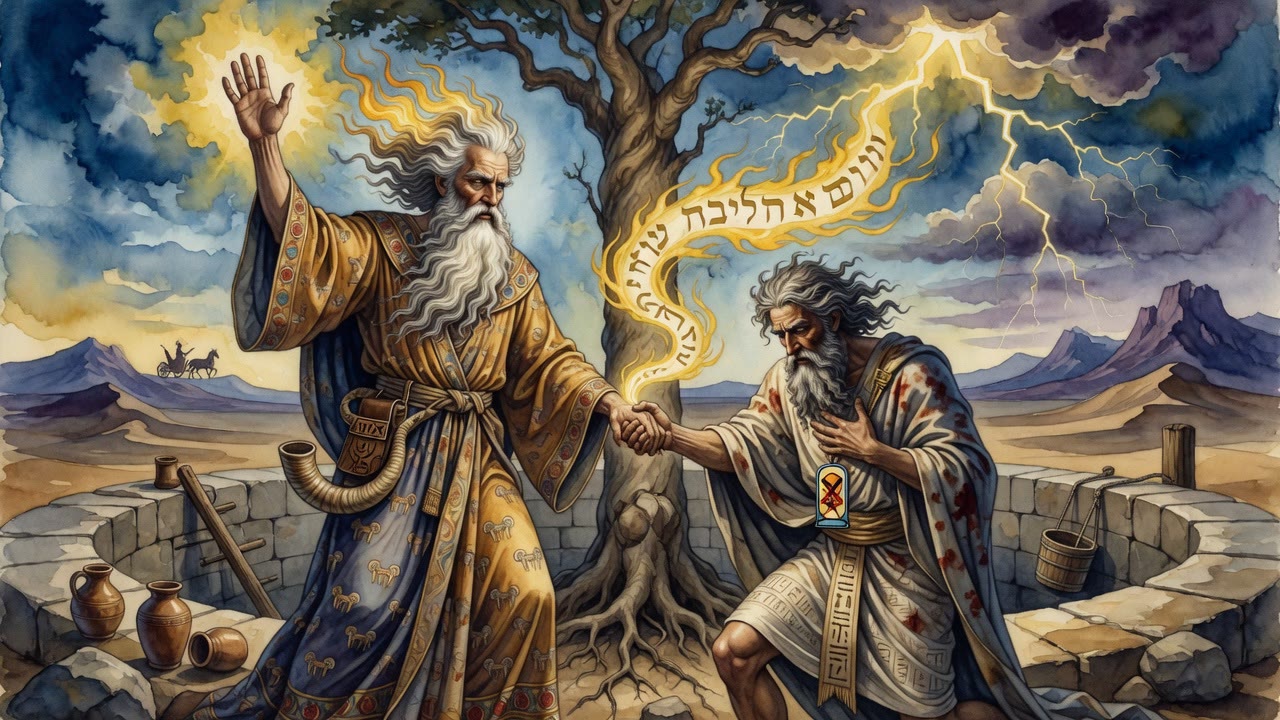
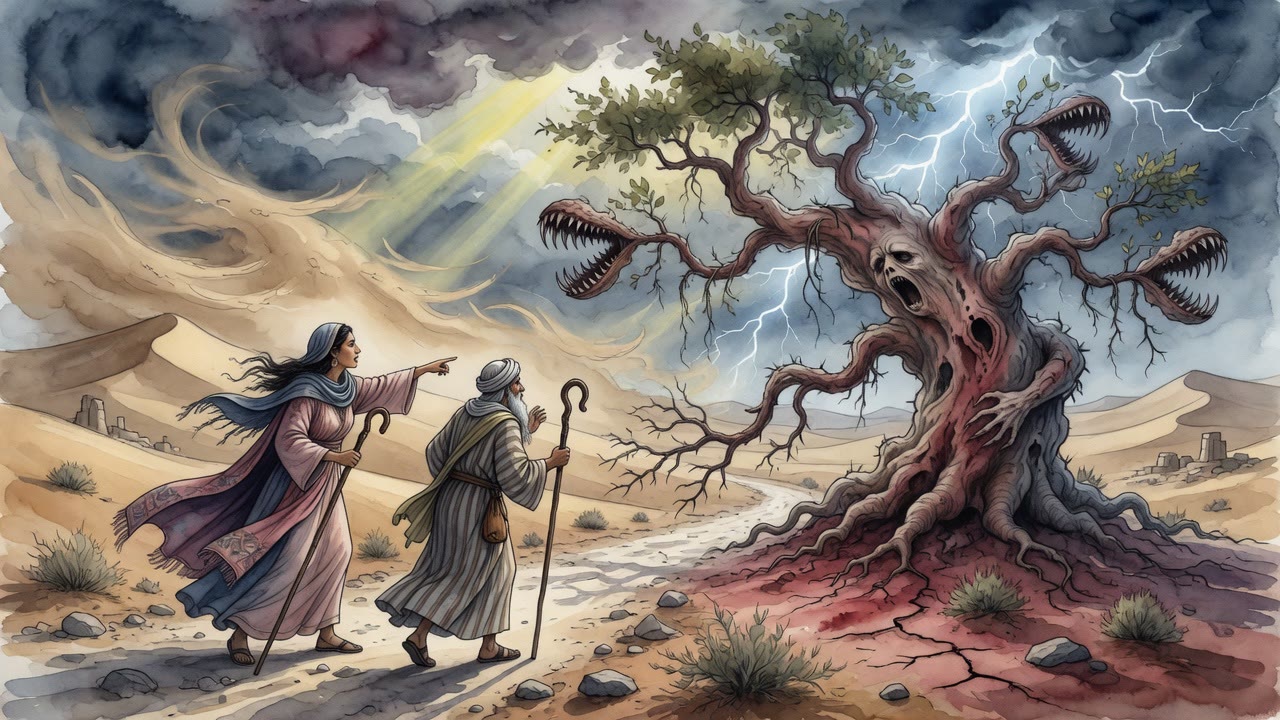
Zipporah did not answer with soft delay. She told him about her father's test as plainly as a boundary stone. "My father has a tree in his garden with which he tests every man that expresses a desire to marry one of his daughters. And as soon as the suitor touches the tree, he is devoured by it."

Devoured. Not refused with words. Not sent away with a gift. The garden kept a living gate that ate ambition. Jethro's household would not give daughters to men who could not pass a trial older than Moses' flight. The prophet who had killed and run now faced a plant that killed and stayed rooted.

What kind of tree swallows a man? The legend does not soften the image into metaphor. Suitor after suitor had reached for a future and met bark that answered like a mouth. Zipporah's warning was love's first honesty. Come further and risk being eaten by the test that guards this house.

A Suit Hung Between Deaths

One death had made him free enough to stand at the well. Another death waited in bark and root for the wrong hand. Moses had thanked a corpse for his path. Zipporah warned him that the next path ran through a hunger that did not speak Egyptian or Hebrew, only appetite.

He had already chosen a side when he struck the Egyptian. He would choose again if he reached for that tree. Between brick pits and Midian gardens the same question pressed. What will you touch, and what will touch you back?

The daughters went home with full troughs and a story of a stranger who redirected praise to a killing and heard, in return, of a tree that ate men. Jethro would hear both halves. The match, if it came, would begin under those two shadows.

Exile's Door

Israel under Pharaoh still whispered in the old tongue and helped with bricks while Moses learned the price of a Midianite marriage. The man-eating tree stands at the edge of the legend like a guard dog made of wood. Zipporah's warning is not a joke for children. It is the moment a fugitive prince learns that even kindness at a well does not skip the tests a priest of Midian sets for the men who want his house.

Thanks due to a dead Egyptian. A tree that devours suitors. Between them Moses stood as a man whose past violence and future household both demanded reckoning. The well water was clean. The road that brought him there was not. The garden that might take him next would not pretend otherwise.

Exile had not ended his story. It had only changed the tests from brick and whip to root and marriage, and Zipporah was the first to say the new test out loud.

Jethro's garden waited with a hunger that did not negotiate. Moses had already learned that Egypt's law could devour boys at birth and men at the brick. Midian offered a different devouring, private and botanical, aimed at anyone who wanted a daughter of the priest. Zipporah's honesty put the risk in plain speech. If he loved her, he would have to face the tree. If he feared the tree, he would have to leave the well with only water for his credit.


← All myths

From the tradition

Sources

3 sources

The texts behind this telling. Some cards carry a translation of the source; others are our own retelling of it, and each card says which. Every card links out to the original.

Legends of the Jews 4:123Legends of the Jews

Retold in our words. Read the original at the link below.The Legends of the Jews by Louis Ginzberg (1909) · Public Domain

You remember Moses. The future leader, still on the run after that… incident in Egypt. Well, as the story goes, after helping the daughters of Jethro at the well, they were, understandably, full of gratitude. But Moses, ever the humble soul, brushed aside their thanks.

"Your thanks," he said, "are due to the Egyptian I killed. Because of him, I had to flee Egypt. Had it not been for him, I wouldn't be here now." He's acknowledging the dark circumstances that led him to this very place. Acknowledging that even something born of violence can inadvertently lead to something new. A glimpse into a complex character.

Speaking of new beginnings… among Jethro's seven daughters, one in particular caught Moses' eye. Zipporah, the maiden whose modest demeanor set her apart. He was smitten. And what does one do when smitten? Well, in those days, one proposed marriage!

Here's where the story takes a rather… unusual turn. Zipporah, as Ginzberg retells it in Legends of the Jews, gently rebuffed him. Why? Because her father, Jethro, had a rather… unique method of vetting potential husbands.

“My father has a tree in his garden," she explained, "with which he tests every man that expresses a desire to marry one of his daughters. And as soon as the suitor touches the tree, he is devoured by it."

Devoured by it! A man-eating tree as a pre-marital test! What kind of tree could it be, and where did Jethro get it from?

This brief exchange, filled with humility and the bizarre, sets the stage for a significant chapter in Moses' life. A chapter where he'll encounter not only a wife, but also a father-in-law who seems to have a penchant for the theatric… or perhaps, something far more mysterious.

Full source
Legends of the Jews 4:20Legends of the Jews

Retold in our words. Read the original at the link below.The Legends of the Jews by Louis Ginzberg (1909) · Public Domain

The story of Pharaoh in the Bible isn't just about slavery; it's about a desperate attempt to control the very future, one newborn baby at a time.

Pharaoh, gripped by fear of the growing Israelite population, issues a chilling decree. As Legends of the Jews recounts, his order was precise, horrifyingly so. "At the birth of the child," he commanded, "if it be a man child, kill it; but if it be a female child, then you need not kill it, but you may save it alive."

Think about the weight of that. Infanticide, based solely on gender.

How could the midwives possibly carry out such an order? They challenged Pharaoh, asking, "How are we to know whether the child is male or female?" After all, the king had ordered them to kill the baby during birth.

Pharaoh's twisted reply reveals a strange, almost poetic, understanding of creation. He instructed them: "If the child issues forth from the womb with its face foremost, it is a man child, for it looks to the earth, whence man was taken; but if its feet appear first, it is a female, for it looks up toward the rib of the mother, and from a rib woman was made."

Man, according to Pharaoh, is earthbound, looking down to his origins. Woman, on the other hand, gazes towards her origin, the rib from which she was created. It's a stark, disturbing image of control and a warped understanding of the divine.

What does this tell us? It's more than just a historical detail. It's a glimpse into the mind of a ruler willing to pervert even the most fundamental aspects of life – birth itself – to maintain his grip on power. It serves as a stark reminder of the importance of courage, resistance, and the enduring strength of the human spirit in the face of unimaginable cruelty.

Full source
Legends of the Jews 4:148Legends of the Jews

Retold in our words. Read the original at the link below.The Legends of the Jews by Louis Ginzberg (1909) · Public Domain

As retold by Ginzberg, it wasn't all doom and gloom. Even in the depths of oppression, the children of Israel held onto certain virtues, sparks of light that perhaps caught the Divine Eye.

What were these virtues? Well, for one thing, incest was a no-no. In a world where such things happened, the Israelites maintained a moral code. They also weren't evil-tongued. for a second. In a pressure cooker like slavery, gossip and slander could easily run rampant. But the Israelites, by and large, resisted that temptation.

Here’s a fascinating detail: They didn't change their names. This might seem minor, but names carry power. They're tied to identity, to heritage. By keeping their Hebrew names, they maintained a connection to their past, to their ancestors, to their covenant with God. They also clung to the Hebrew language. Even when surrounded by another culture, another tongue, they held onto lashon hakodesh, the holy language.

Perhaps the most compelling virtue was their sense of community. The Legends tell us that great fraternal affection prevailed among them. And here's the kicker: if one Israelite finished making their quota of bricks before their neighbor, they helped the others.

Enslaved, beaten down, forced to build monuments to their own oppression... and still, they helped each other. They could have rested, conserved their energy. But they chose to ease the burden of their fellow Israelites.

Why is this so significant? Because, as God says, "They deserve that I should have mercy upon them, for if a man shows mercy unto another, I have mercy upon him. That our actions, our kindness, our compassion, can actually influence the Divine.

Mercy begets mercy.

Our capacity for empathy, for solidarity, can create ripples of positive change. Maybe, just maybe, those ripples can even reach the heavens.

Full source