Jethro Bound the Fugitive Moses the Way Laban Cornered Jacob
A price on his head, Moses fled Egypt into Midian, where the priest Jethro took him in as a friend and bound him by oath before giving Zipporah.
Table of Contents
 Click for full size
A Prince With a Price on His Head
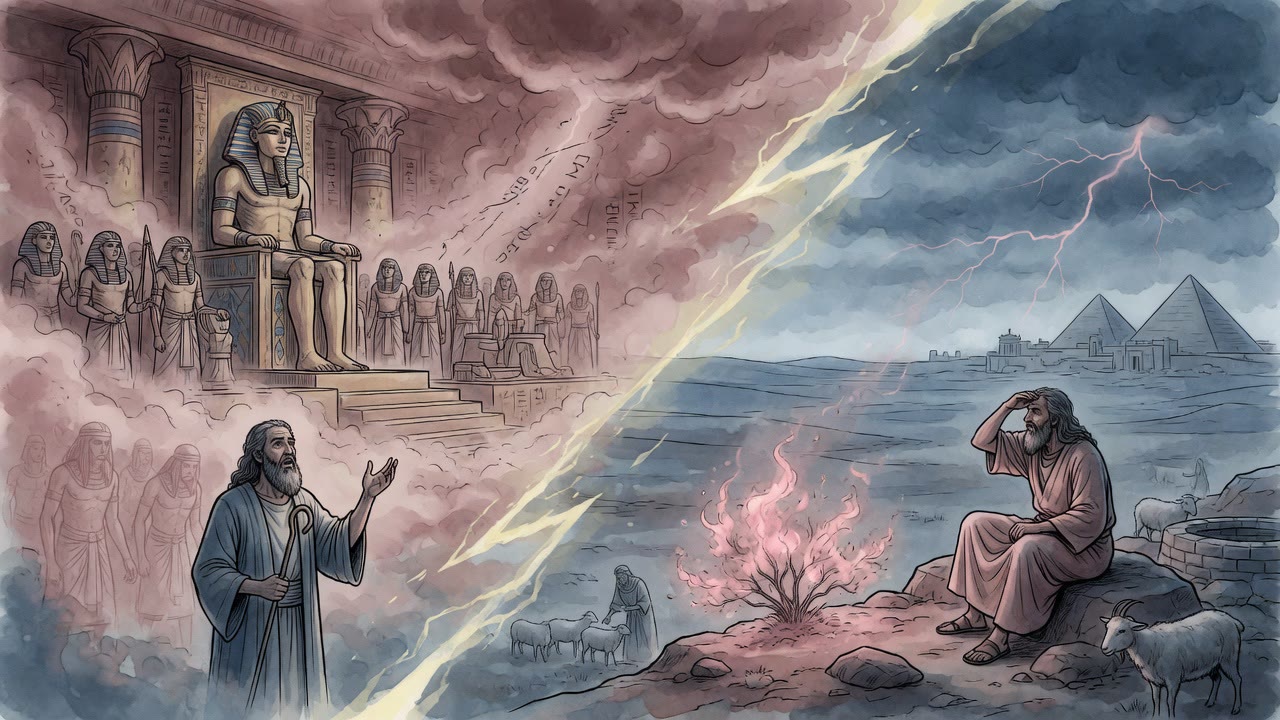
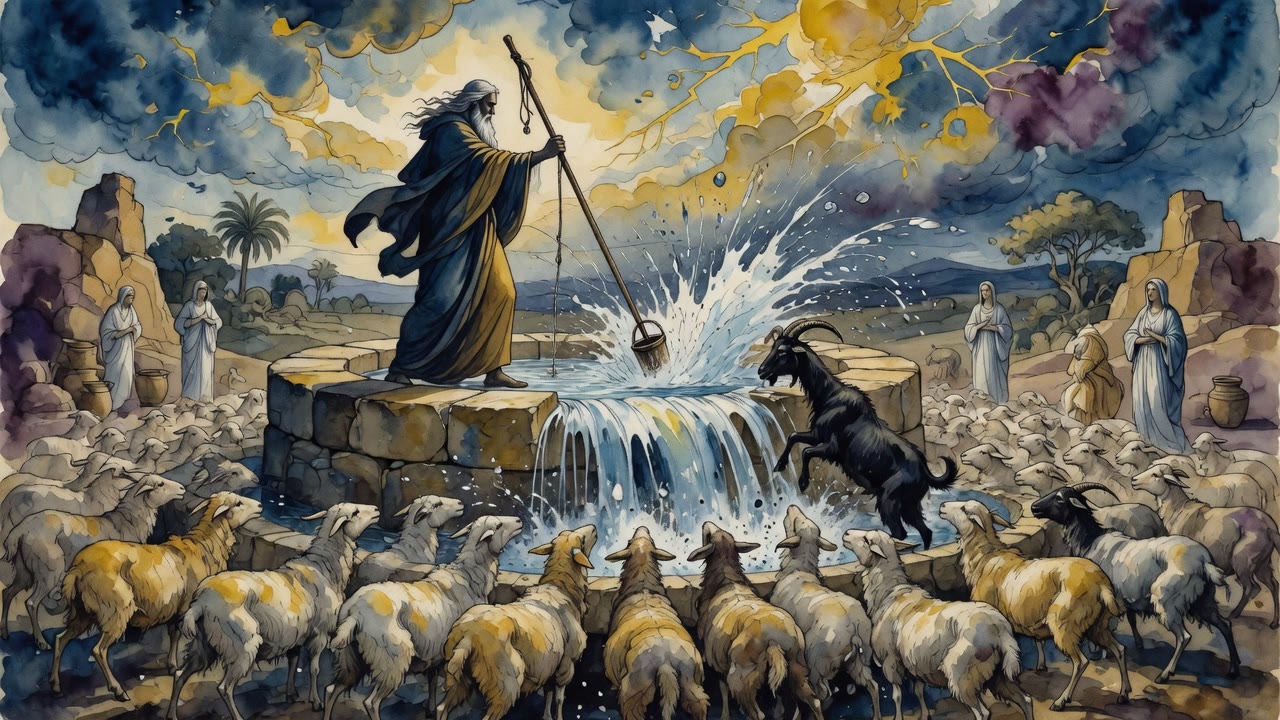
The dust of the eastern road still clung to Moses when he reached the well. Behind him lay Egypt, where he had struck down a taskmaster, buried the body in sand, and learned that Pharaoh now wanted his life. A man with a bounty on his head does not stop running until the country that hunts him has become a rumor. Moses stopped in Midian, at a stone trough where seven sisters were trying to water their father's flock while a knot of shepherds shoved them back from the water.
He drove the shepherds off, drew the water himself, and filled the troughs. The sisters came home while the sun was still high. When their father asked how they had finished so early, they told him an Egyptian had pulled them out of the shepherds' hands and even drawn the water for them. "Where is he?" the priest said. "Why did you leave the man out there? Call him. Let him eat bread."
The Friend Who Loved at All Times
The priest was Jethro, and he opened his door to the fugitive as if he had been waiting for him. A friend loves at all times, and a brother is born for adversity. Jethro was that friend. He took in a man fleeing an enemy who wanted him dead, and asked nothing back.
His house had known no sons. If Jethro had owned sons of his own, his seven daughters would never have been out among rough shepherds, shoving for a place at the trough. The same silence had once hung over Laban, who had no sons until Jacob came to his tents, and then was suddenly rich in cattle and in boys. So it went now in Midian. A righteous man entered the house, ate the bread, and stayed. And out of Jethro's line, in the generations to come, there would rise sons where there had been none, and daughters remembered by name.
The Oath He Learned From Laban
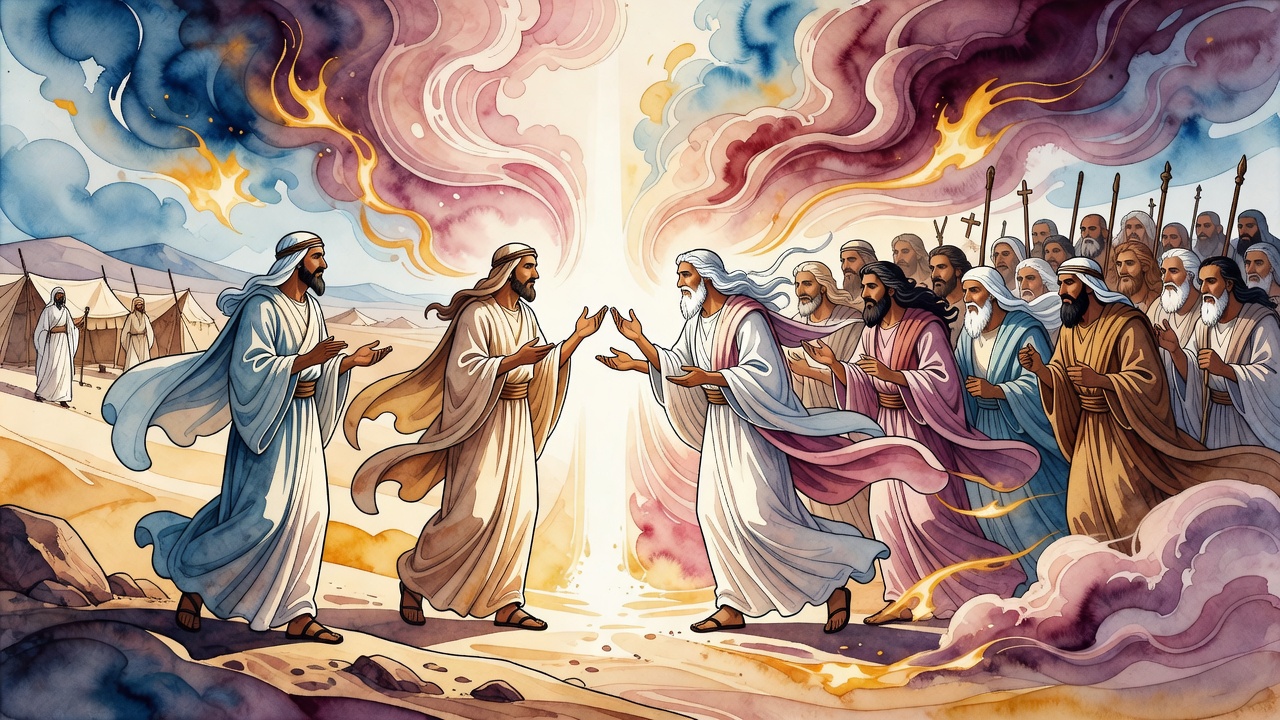
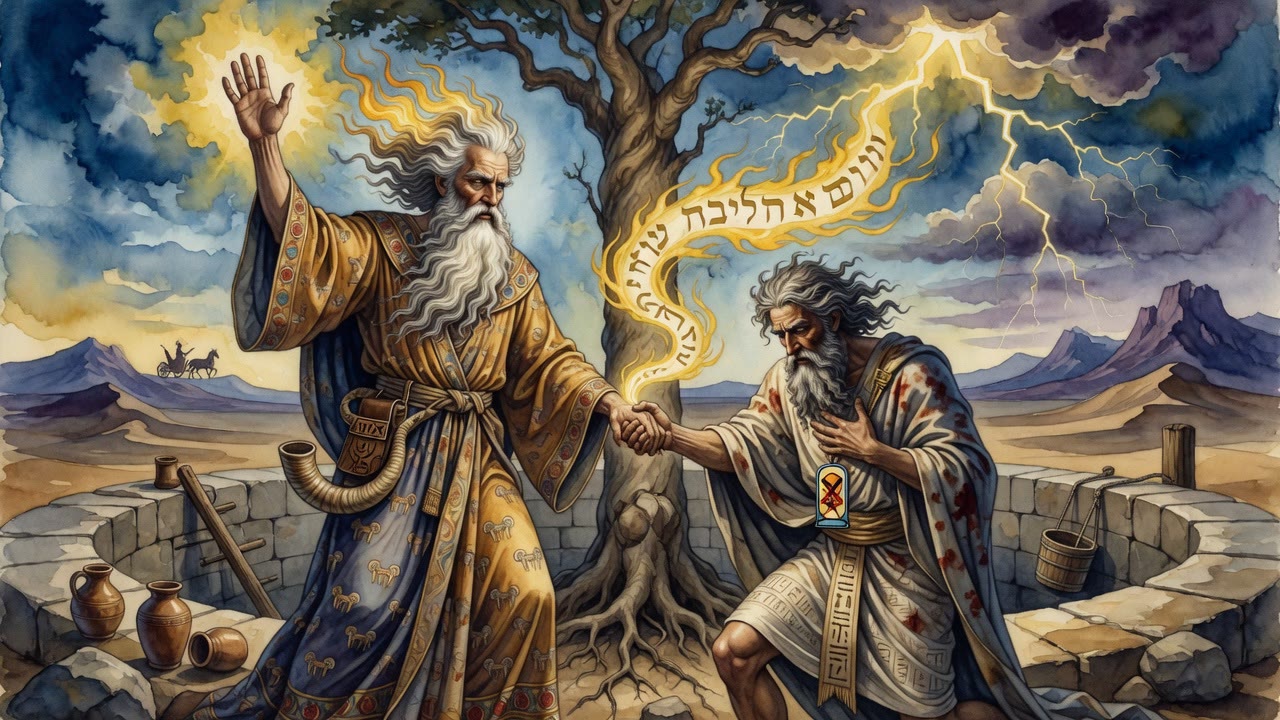
Jethro loved him. He also did not entirely trust the world to be kind to his daughter. Before he would give him Zipporah, he did what Laban had done at the heap of stones on the mountain of Gilead, when Laban cornered Jacob and made him swear: "If thou shalt afflict my daughters, and if thou shalt take other wives beside my daughters, no man is with us. See, God is witness betwixt me and thee."
He would not hand his child to a stranger out of Egypt on a stranger's promise. So he bound Moses with an oath. The verse that says Moses was content to dwell with the man is not a soft word. It is a word of swearing, the same word used of Saul when he adjured the whole army not to taste food until nightfall. Moses swore to stay. He tended the flock. He married Zipporah. He became, in every way that mattered, a son of that house, and the vow settled over him quietly, the way a debt does, waiting.
The Voice at the Bush and the Vow Left Behind
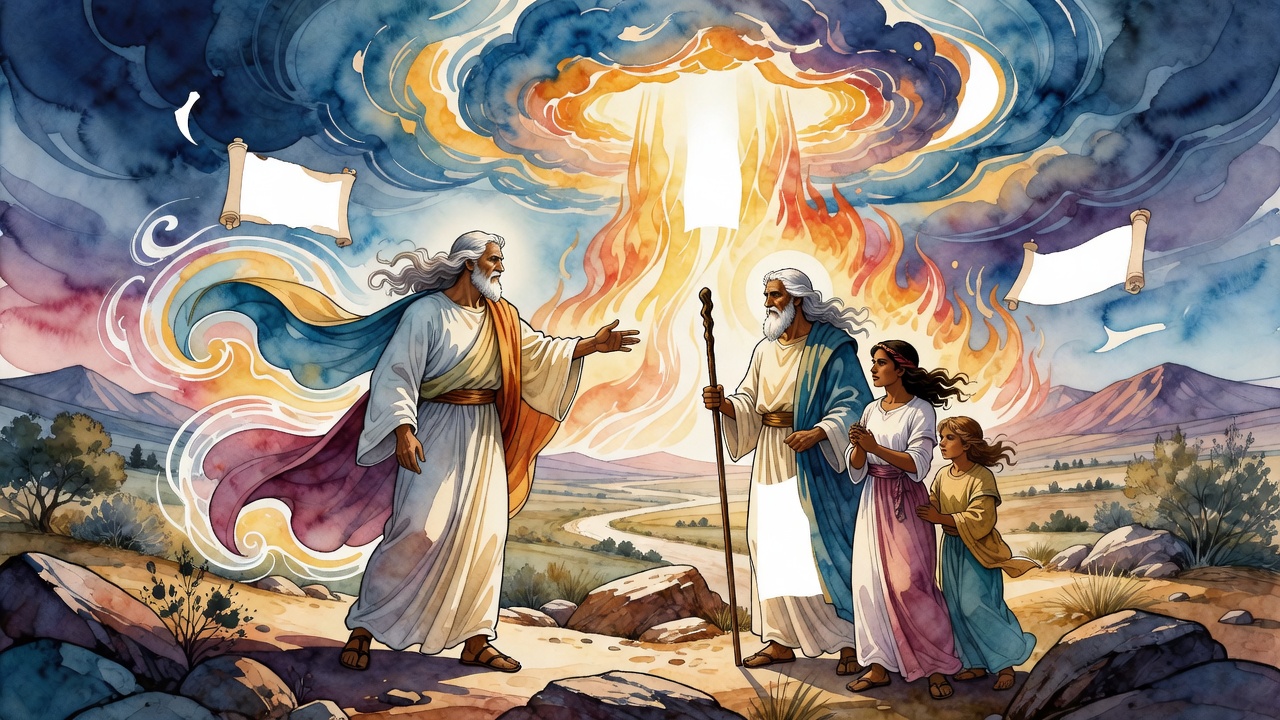
The vow was still on him years later, when he led Jethro's sheep to the far side of the wilderness, to the mountain of Horeb, and a bush burned without turning to ash. Out of the fire a voice called his name and gave him the errand he had run from Egypt to escape. "Come now, and I will send thee unto Pharaoh, that thou mayest bring forth My people out of Egypt."
Moses did not leap. He argued, he stalled, and then he said the thing the oath had planted in him. "Master of the Universe, I cannot simply go. Jethro welcomed me and opened his home to me. I am like a son to him. A man who opens his door to another is owed the other's very life. I cannot leave without his leave." The debt was real. But no decree sealed in heaven has ever been turned aside by a man's reluctance. Jonah rose to flee toward Tarshish and still stood in Nineveh in the end. Jeremiah pleaded that he was only a child and still went wherever he was sent. Moses would go too. First he would go back and ask.
Moses Went and Returned to Jethro
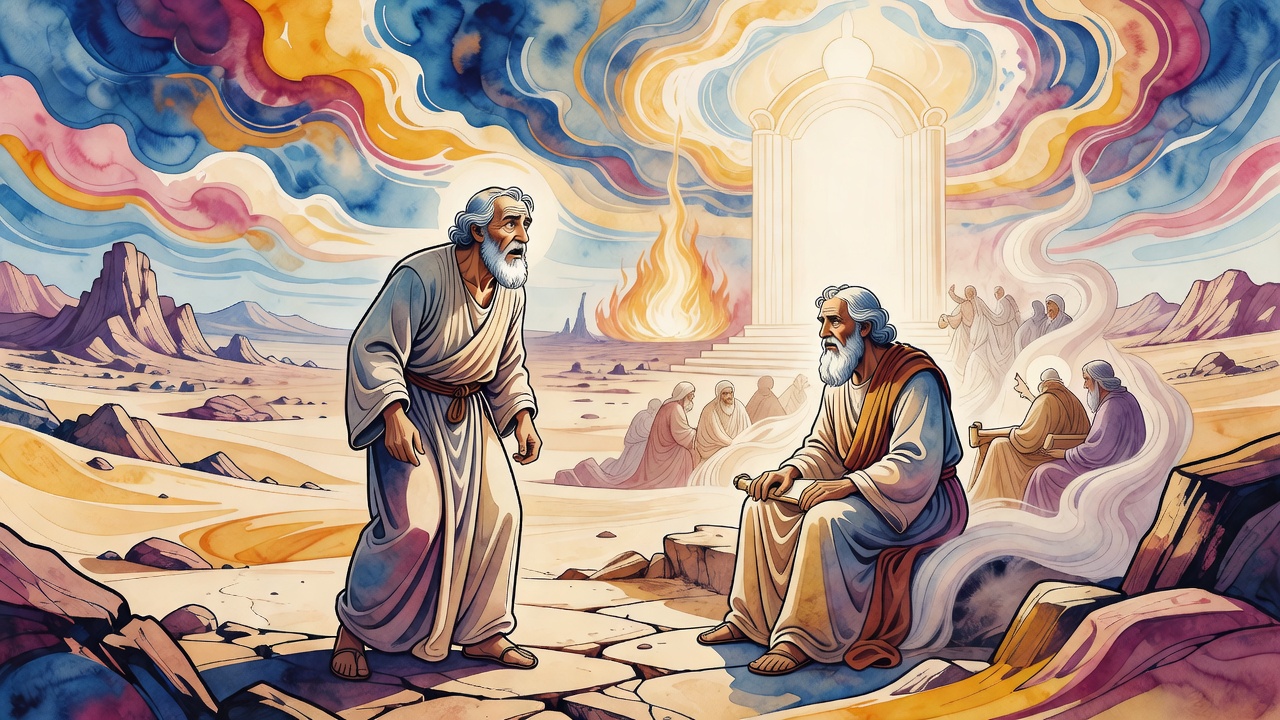
So he came down off the mountain and walked back to the tents in Midian to loose the oath the honest way. He stood before his father-in-law and asked, "Let me go, I pray thee, and return unto my brethren that are in Egypt, and see whether they are yet alive." He did not slip away in the dark. He asked, the way a son asks, and Jethro answered him with two words that opened the road. "Go in peace."
The oath was loosed. And the moment it was, the voice came again. God had spoken to him at the bush, and now God spoke to him a second time inside Midian itself, because the matter was too grave to leave to a single hearing. Back at the bush, when the Lord had seen Moses turn aside to look, He had called him by a doubled name, "Moses, Moses," the way He had once called "Noah, Noah," and "Abraham, Abraham," and "Jacob, Jacob," the doubled name that marks a man given life in this world and life in the world to come.
Moses turned west. The bounty in Egypt had not been lifted. The throne he had fled still stood, and the Pharaoh who had wanted him dead sat on it, or a son of his did. He walked toward all of it anyway, released from the smaller vow so he could be bound to the larger one, a fugitive going home to break the house that had once hunted him.
← All myths