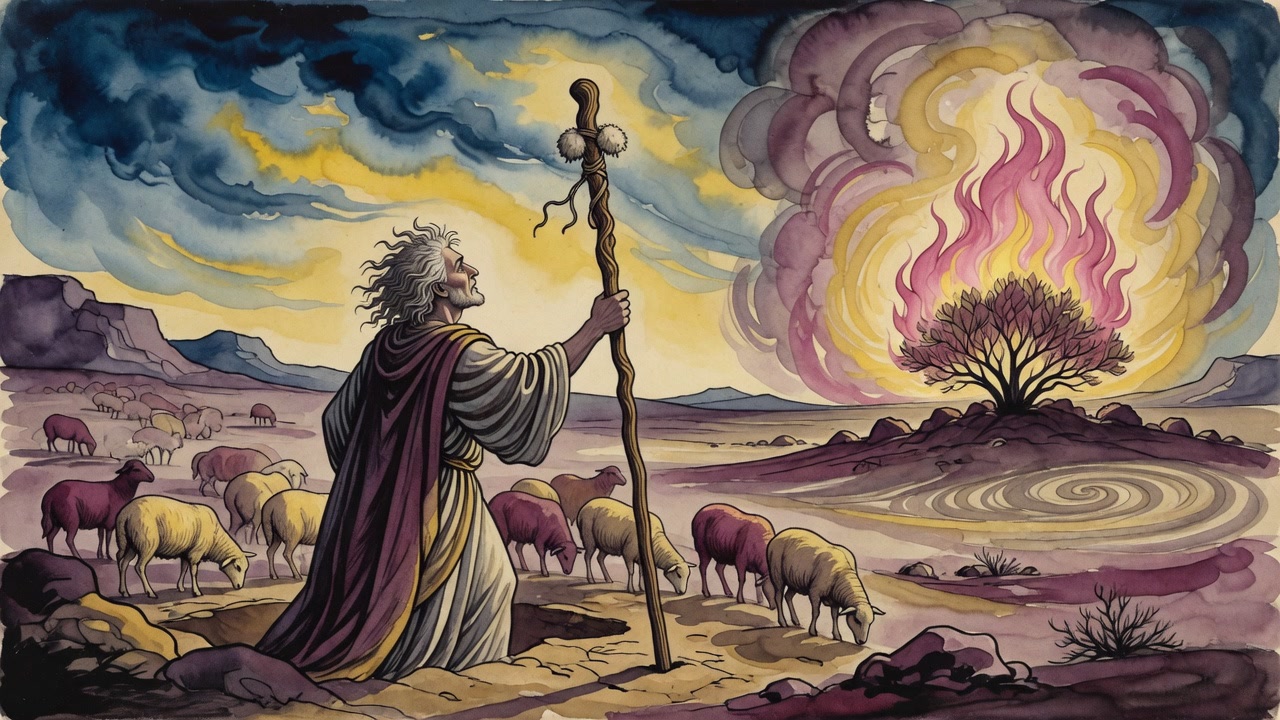
Aaron Turned Zipporah Back From Egypt's Road
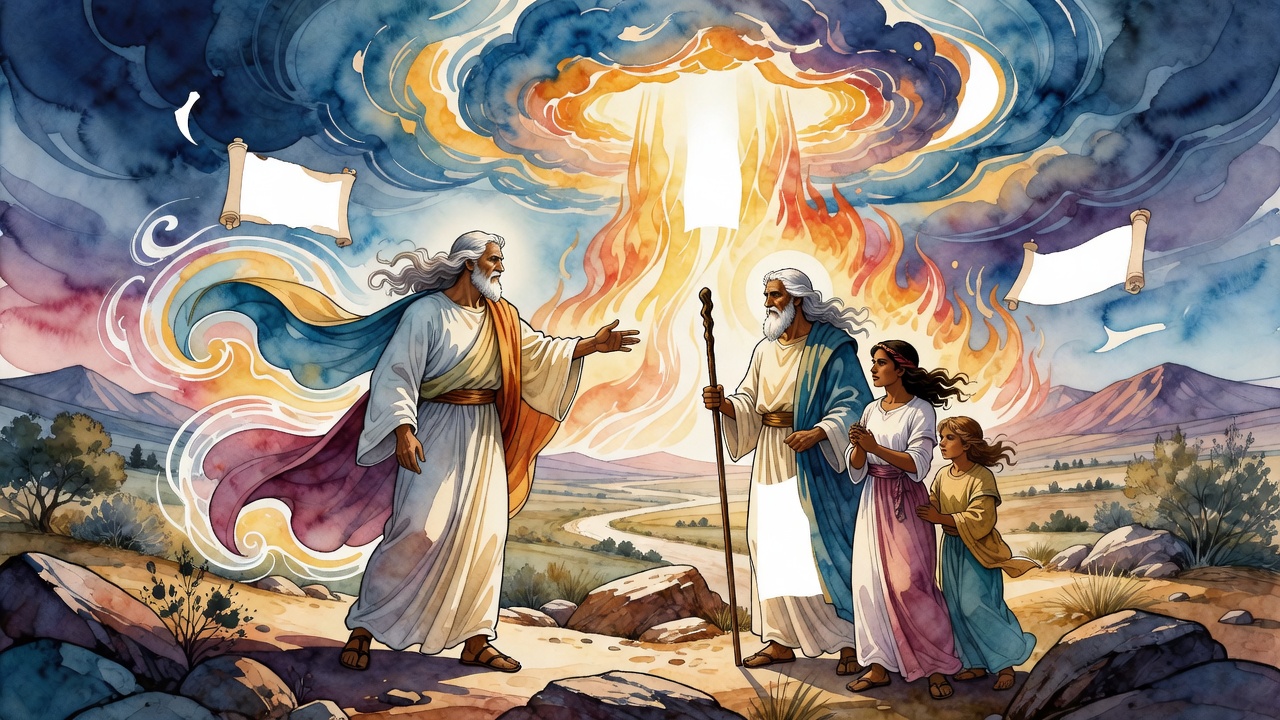
Brothers meet in the wilderness. Aaron asks why Moses is bringing a wife and sons into Pharaoh's fire, and the family turns around.
Table of Contents
 Click for full size
The Embrace on the Road
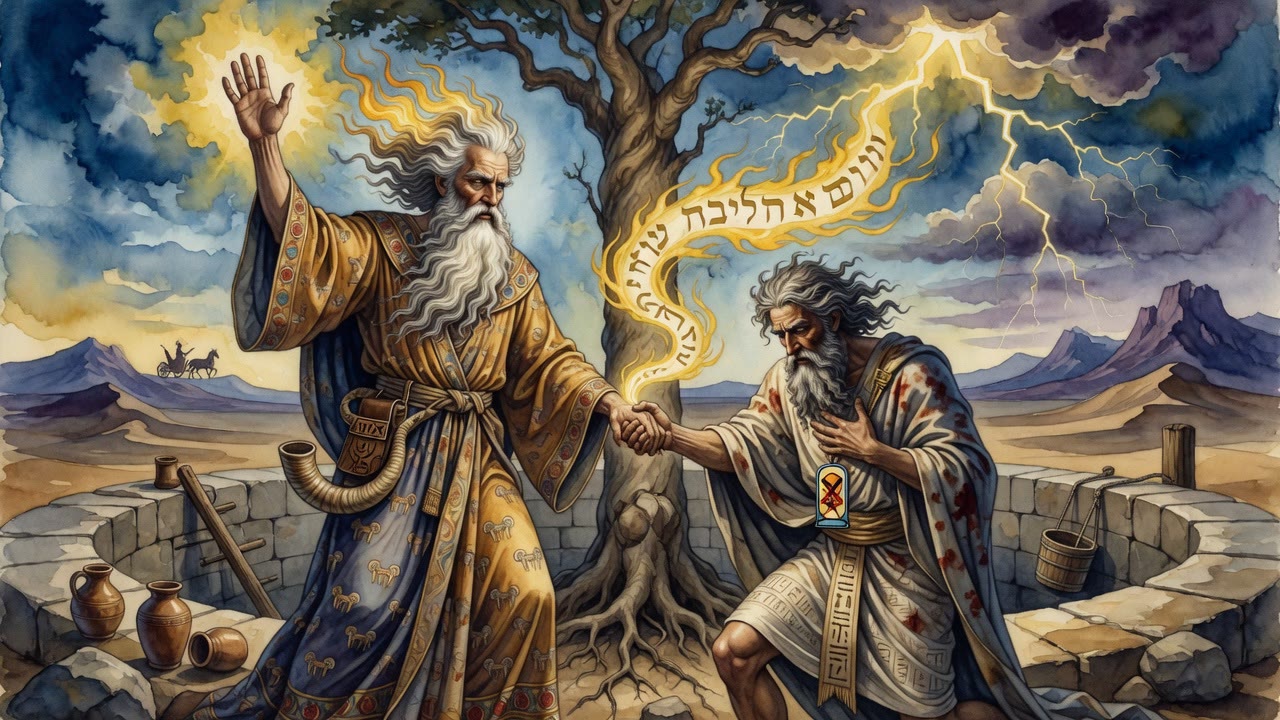
God sent Aaron into the wilderness to meet his brother. The brothers found each other where sand and scrub make every traveler look the same until the faces come close. They embraced and kissed. For a moment the long years of separation fell away, and Aaron looked past Moses at the travelers on the donkey and asked who they were.
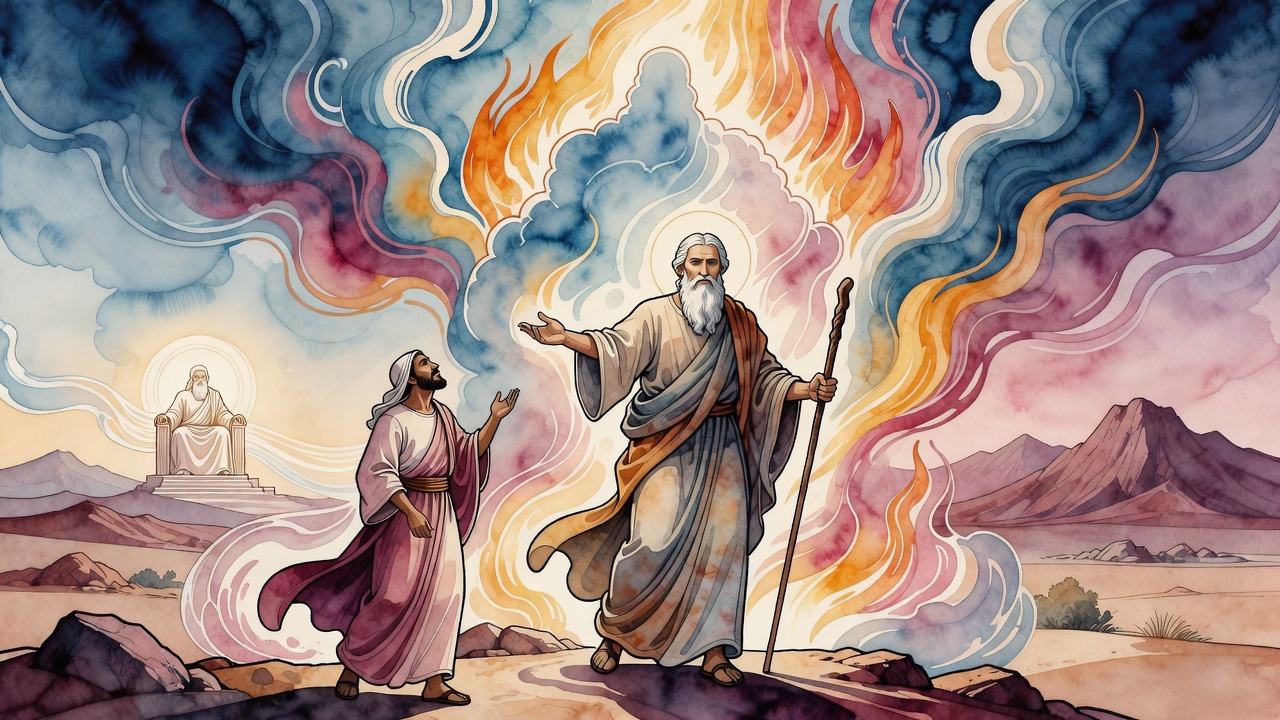
My wife and my sons, Moses said. Aaron asked where he was taking them. To Egypt, Moses answered, as if the mission that had found him at the bush now required the whole household to walk into the furnace with him.
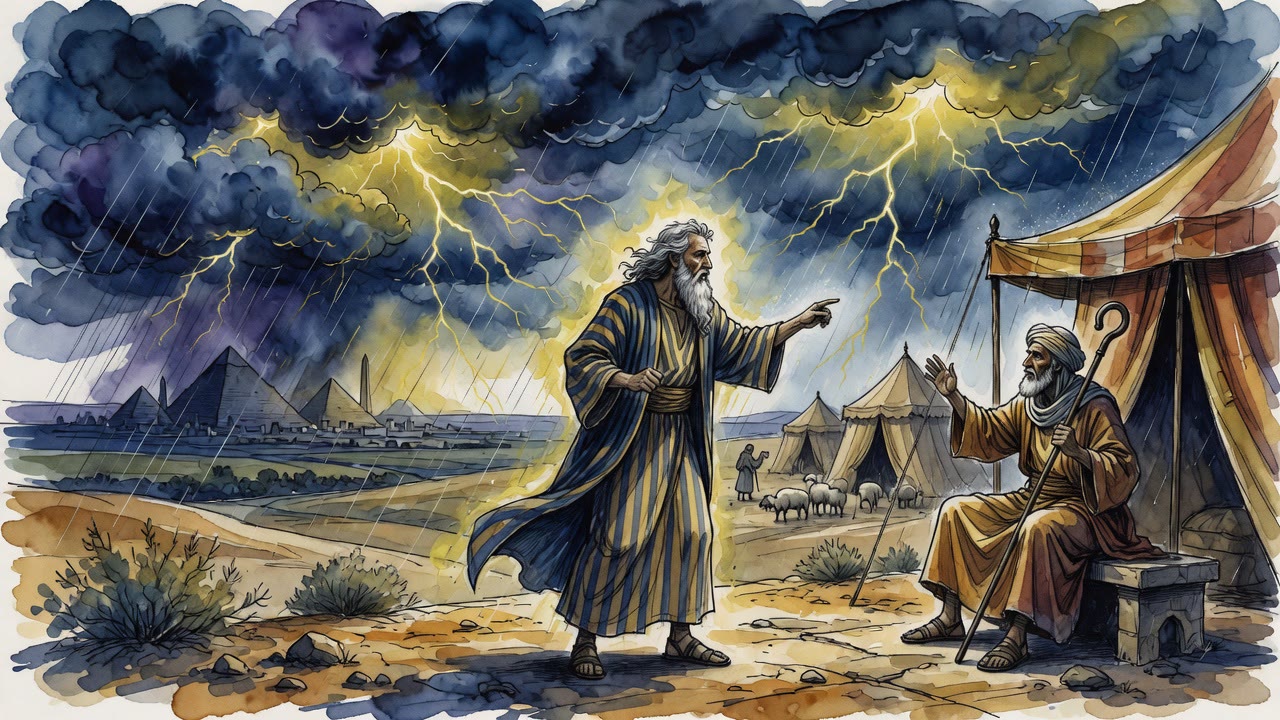
Aaron's reply cut clean through the joy of reunion. We are already grieving over the ones already in Egypt, and now you bring more in? Why add a wife and children to a nation about to face Pharaoh's wrath? Moses heard the wisdom in it. The donkey stopped. He turned to Zipporah and told her to return to her father's house. She took the two boys and went back toward Midian without a speech that Scripture records. Some sages hear in the later phrase "after she had been sent away" the language of a formal writ placed in her hand, not a casual goodbye. Safety looked like separation. Love looked like a road that split in two.
The Name That Carries Exile
The first boy was named Gershom, because Moses had been a stranger in a foreign land. Rabbi Yehoshua reads it plainly: Midian was simply not home. Rabbi Elazar of Modi'in presses harder. The land was foreign by faith. The whole world around him worshipped idols, while Moses alone worshipped the One who spoke and the world came into being. Gershom's name held both homesickness and the loneliness of a believer who would not bow when every neighbor bowed.
Zipporah carried that name and that loneliness back to her father's tents while Moses walked into Egypt's fire alone. The boys would grow for a time without their father's daily face. The mission that saved a nation began by sending a family out of harm's way.
Jethro Leaves Comfort
When the danger had passed and Israel stood free near Sinai, Jethro came with Moses' wife and sons. The Torah has already said he was coming; it repeats that he came with his sons and his wife to settle a doubt. When the message announced "your wife and her two sons," someone might wonder whose sons they were. The verse closes the question. They are Moses' sons, no one else's. The family that arrives at the mountain is fully his.
Then the passage lingers on three small words: to the wilderness. Here was a man settled in his home, surrounded by the honor of Midian, a priest of standing, and he left it all for an empty desert that offered him nothing. Comfort was his to keep. He packed it away for the chance to stand near Moses and Moses' God. The wonder is not that he traveled. The wonder is that a man with everything chose hardship to be near the truth. The wilderness offered him no luxury, no honor, no ease. It offered him Moses, and Israel, and the God who had brought them out of Egypt. For Jethro, that was enough to leave the rest behind.
The First Mouth to Bless
Jethro heard the whole account of the rescue and burst out: Blessed be the Lord, who has rescued you from the hand of Egypt and from the hand of Pharaoh. It was a beautiful moment, and the rabbis turn it into a stinging rebuke of Israel. Six hundred thousand had left Egypt, and not one of them, Rabbi Pappias says, thought to bless God until the outsider did. The convert opened his mouth first. The redeemed nation had been carried out on wonders and stayed silent until a Midianite priest taught them praise.
He named both Egypt's hand and Pharaoh's hand, because Pharaoh is the great sea-monster God set Himself against (Ezekiel 29:3), and that grip deserved its own word. "Delivered you" speaks of Moses and Aaron; "delivered the people" speaks of Israel; the deliverance was from under the whole crushing weight of empire. The wife once turned back for safety now stood in a camp that finally knew how to say thank you, taught by the father who had walked out of comfort to reach them. The road that split at Aaron's counsel met again at the mountain, and the first full blessing of the Exodus came from a guest.
Zipporah watched her husband among a people she had not raised her sons beside. Gershom heard his name spoken in a place that was no longer foreign only to his father. Jethro stood in the dust he had chosen and blessed a God Israel had not yet thanked with a full mouth. The family that Egypt almost swallowed whole stood together again, and the outsider's praise taught the redeemed how to open their lips.
← All myths