5 min read

Moses Asked Jethro for Permission to Return to Egypt

Moses asks Jethro's permission as if only checking on kin. God says the hunters of his life are reckoned dead, and Pharaoh's passion will be made obstinate.

Curated by Arthur · Told by Maggid ·
Table of Contents
  1. What He Withholds
  2. Reckoned as the Dead
  3. Obstinate Disposition on the Road
  4. Permission, Safety, Stubbornness

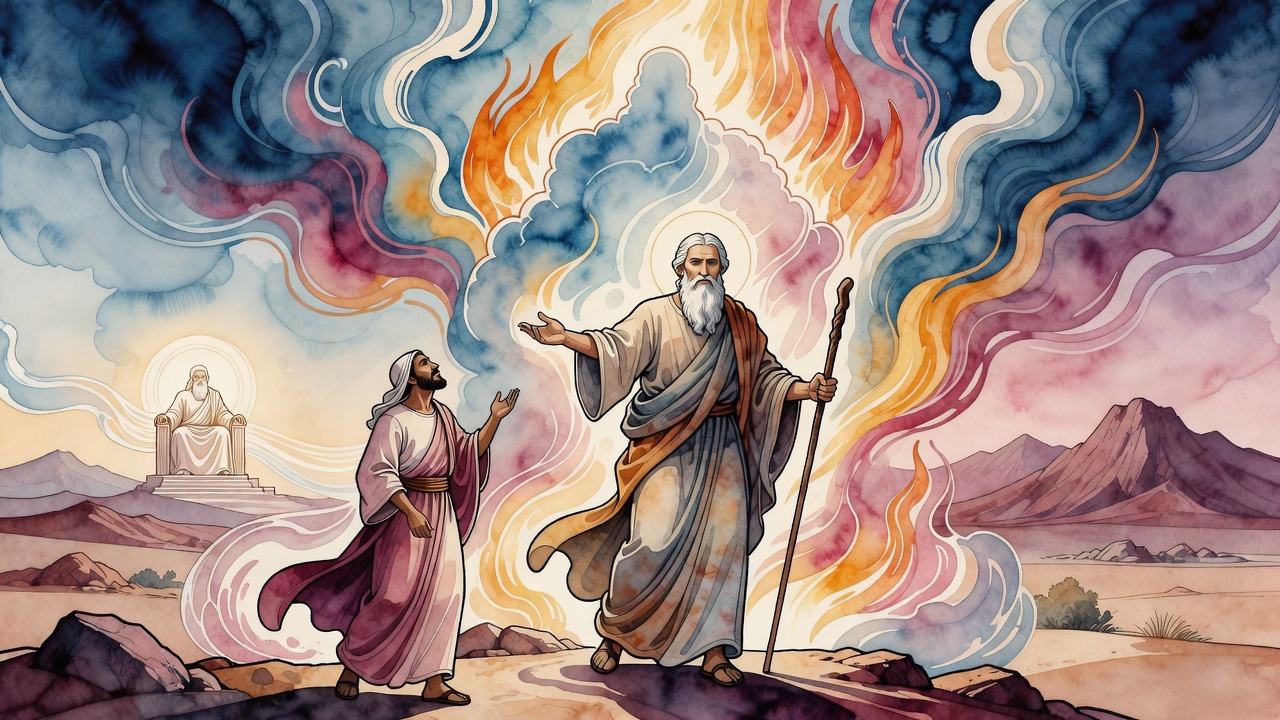
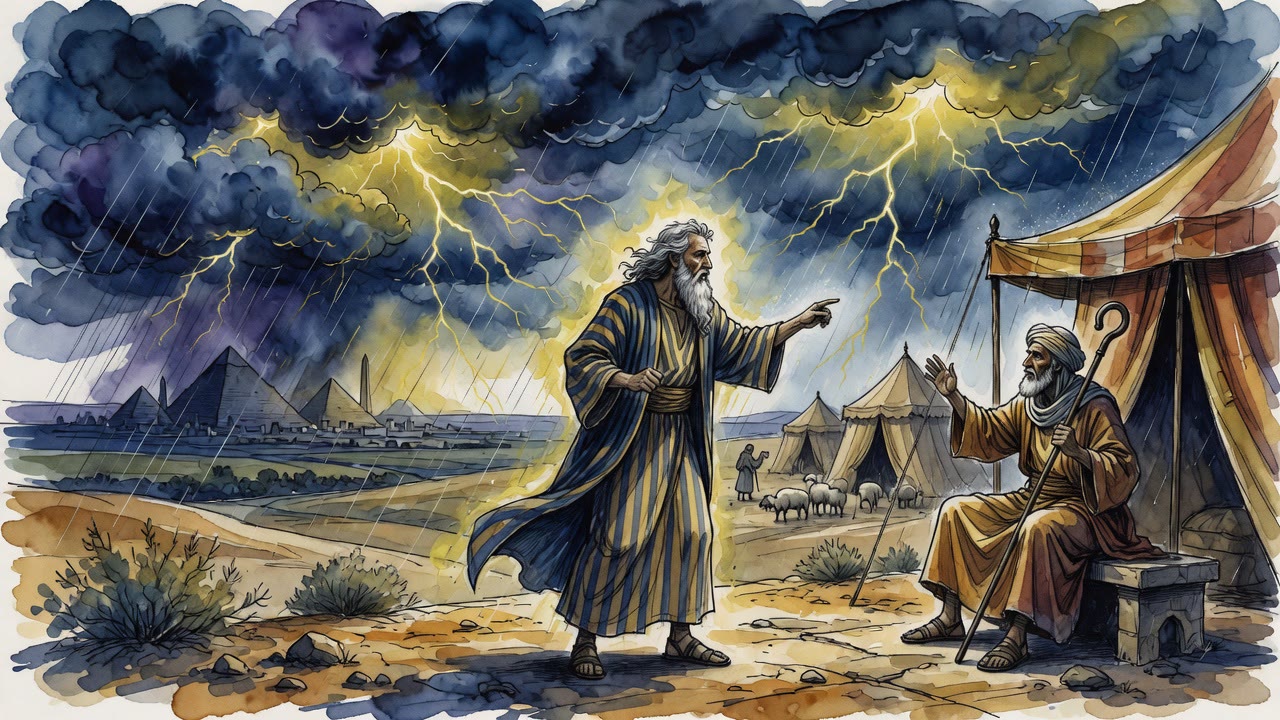
Moses stood before Jethro with the fire of the bush still in his bones and spoke like a man asking for a short trip.
Moses Asked Jethro for Permission to Return to Egypt Click for full size

He did not announce ten plagues. He did not display a staff that could become a serpent. He returned to his father-in-law and asked permission in the doorway of the tent that had saved him. "I will now go to my brethren who are in Egypt, to see how they now live." The understatement was almost comic if the stakes had not been a nation's life. Goats shifted in the yard. Somewhere a child laughed. Smoke from the evening fire curled past the flap. The shepherd who had met the Name on a mountain framed the Exodus as a welfare visit.

Jethro had taken him in when he was a fugitive with blood and desert dust on him. Moses would not steal a departure from the house that had given him a wife, a craft, and safety. Courtesy first. Then the road that led back to the brick pits and the river that once held his basket.

What He Withholds

Why keep the full commission dark? The tradition notices the caution and turns it over like a stone in the hand. Perhaps he feared Jethro would forbid a suicide mission and chain him with kindness until the bush became only a story he told at night. Perhaps he refused to drag Midian into a war of signs not yet begun, a war that would empty Egypt's barns and fill its graves. Perhaps the words still staggered in his mouth and "see how they live" was all he could force into daylight without stumbling. Whatever the cause, the scene is restraint. Prophecy does not cancel gratitude. The liberator asks leave like a son-in-law, not like a general commandeering a tent and a legacy.

Zipporah and the boys will feel the journey soon enough, the night stops, the strange hotel of circumcision on the road. For this breath, Moses honors the doorpost of the man who sheltered him when Egypt wanted him dead. He bows his head. He waits for a yes that is more than logistics.

Reckoned as the Dead

On the road, heaven unlocks a fear Moses has carried since the buried Egyptian and the tattling Hebrew. The men who sought his life have come to nought, gone down from their possessions. Behold, they are reckoned as the dead. Not necessarily corpses lined in a row for burial songs. Ruined in status, stripped of power, counted as dead the way poverty and collapse count a man dead in later rabbinic speech. The warrant for his arrest has aged into irrelevance while he herded another man's flocks under Midianite stars.

He can reenter Egypt without scanning every alley for the old prosecutors. The news is practical and spiritual at once. The past that hunted him has been downgraded from fatal to finished. Markets still open. Viziers still scheme. But the specific mouths that wanted his blood have lost their teeth. The future hunter, Pharaoh, is another problem entirely, larger and colder, sitting on a throne that does not forget Hebrew labor.

Obstinate Disposition on the Road

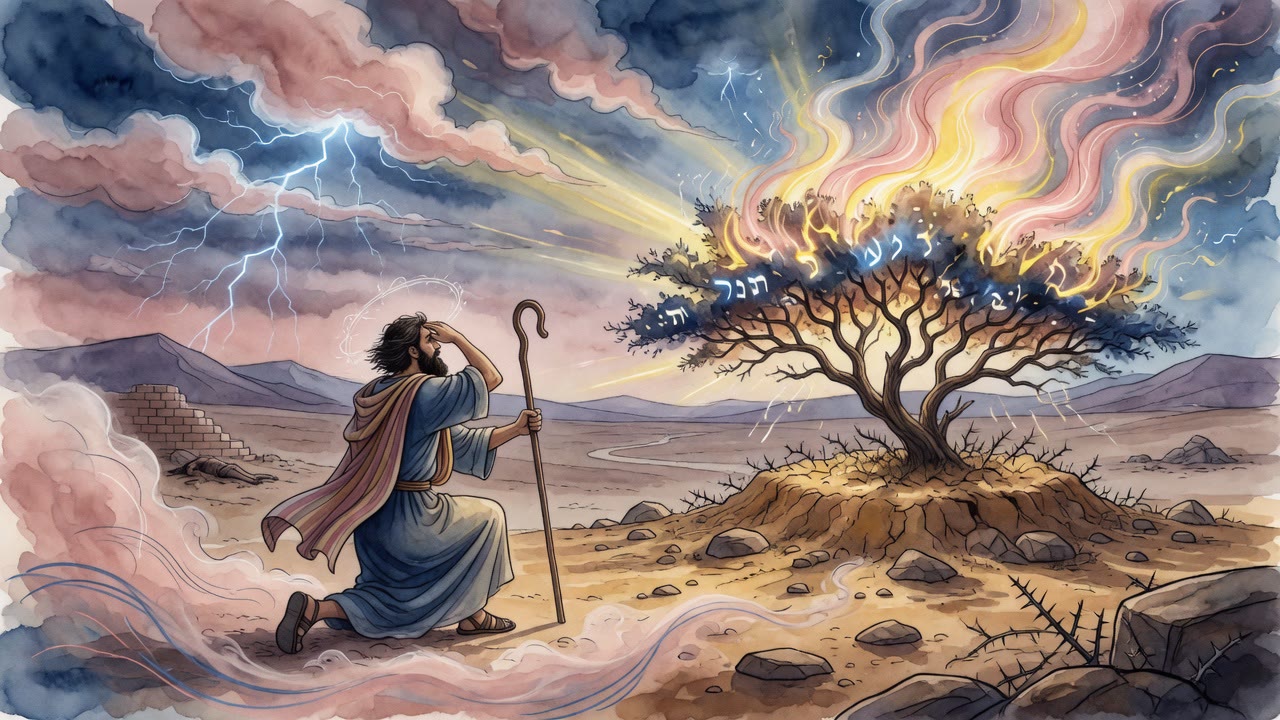
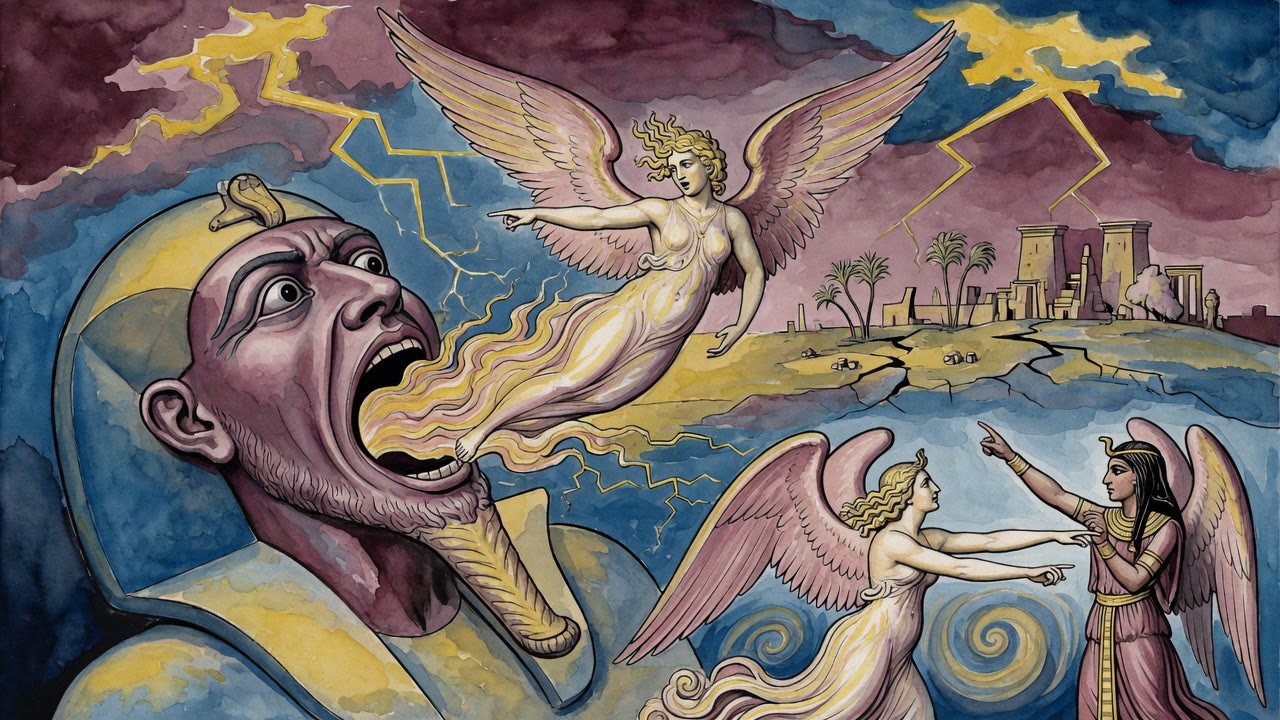
That problem arrives as a warning spoken while sand still gritted between his teeth. I will make obstinate the disposition, the passion, of Pharaoh's heart, and he will not deliver the people. The Aramaic prefers disposition to a crude surgery on free will. God intensifies what is already tyrannical in the king until retreat becomes impossible. Lesser rulers fold after three disasters and call it wisdom. This one will be stiffened so the full drama of release can burn itself into the earth and into the memory of nations that have never seen the Nile.

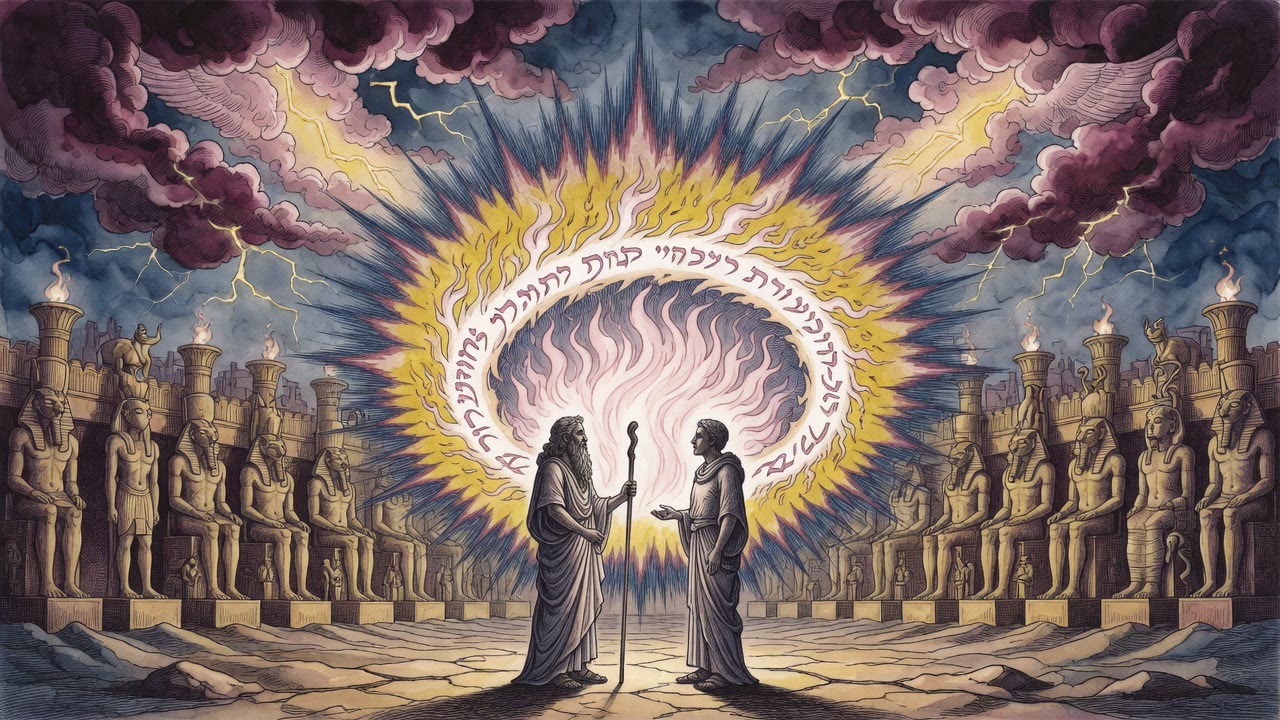
Moses walks toward a palace where his old enemies are politically dead and his new enemy will be passionately hard. The combination is strange comfort. Safety from the past. Difficulty from the throne. No illusion that speech alone will melt the king on the first polite morning, no matter how carefully Aaron arranges the words.

Permission, Safety, Stubbornness

Three gifts mark the departure from Midian. Jethro's leave, so the mission does not begin as theft from a household that fed him bread when he had nothing. The reckoning of old hunters as dead, so the return is not pure suicide dressed as piety. The forecast of obstinate passion, so failure to persuade on day one will not look like a broken promise from the bush. Moses asked only to see how his brothers live. Heaven answers with the whole architecture of the confrontation ahead, including the parts that will make him look like a failure until the sea opens and the song begins.

He goes. The understated goodbye remains one of the quietest hinges in the book. Empires fall after a man remembers to ask his father-in-law for the road, receives news that the old knives are blunt, and is told the new knife will only grow sharper until the Name is known in every street that once mocked Hebrew names.

Midian shrinks behind him. Egypt rises ahead like a heat shimmer with teeth. Between them, a promise that fear of the past is finished and fear of the throne is part of the plan, not proof the plan has failed.


← All myths
From the tradition

Sources

3 sources

The texts behind this telling. Some cards carry a translation of the source; others are our own retelling of it, and each card says which. Every card links out to the original.

Targum Pseudo-Jonathan on Exodus 4:18Targum Pseudo-Jonathan on Exodus

Retold in our words. Read the original at the link below.The Targum of Jonathan ben Uzziel, trans. J. W. Etheridge, London, 1862 · Public Domain

Before Moses can begin the Exodus, he has to say goodbye to the family that took him in. Targum Pseudo-Jonathan preserves the scene's restraint. Moses does not march out. He returned unto Jethro his father in law and asked permission.

What Moses says is remarkably understated: I will now go to my brethren who are in Mizraim, to see how they now live. He does not say: I am going to confront Pharaoh with ten plagues. He does not mention the burning bush, the signs, the sapphire staff waiting in Jethro's chamber. He simply says he wants to check on his brothers.

Why Moses Keeps Jethro in the Dark

The sages of the Targumic tradition notice Moses' caution. Why withhold the full commission from his father-in-law? Some say: out of modesty, the mission is too large to announce. Others say: out of respect. Jethro had given him forty years of protection, a wife (Zipporah), two sons (Gershom and Eliezer), and a home. Naming the scale of the departure would feel like a betrayal of that hospitality.

Jethro's answer is equally restrained: Go in peace. No questions, no warnings, no recriminations. The Targum preserves the blessing exactly. In three Aramaic words, Jethro releases Moses to his destiny.

The takeaway: before the plagues, before the splitting of the sea, before Sinai, there is a quiet conversation in a shepherd's tent. The Jewish imagination remembers that every great deliverance begins with a moment of gratitude to the people who carried you through your exile.

Full source
Targum Pseudo-Jonathan on Exodus 4:19Targum Pseudo-Jonathan on Exodus

Retold in our words. Read the original at the link below.The Targum of Jonathan ben Uzziel, trans. J. W. Etheridge, London, 1862 · Public Domain

Back in Midian, the Holy One delivers a piece of news that unlocks the Exodus. Targum Pseudo-Jonathan preserves the phrasing with startling specificity: they have come to nought, and gone down from their possessions; behold, all the men who sought to take thy life are reckoned as the dead.

Notice the gradation. First, the enemies came to nought, ruined politically. Then they gone down from their possessions, ruined economically. Finally, they are reckoned as the dead. Not literally dead, the Targum carefully notes. Reckoned as the dead.

Poverty as Death in Rabbinic Thought

The sages of the Talmud (Nedarim 64b) will make this explicit: a poor person is considered as though dead. The Targum anticipates this reading centuries earlier. The Egyptian officials who once sought Moses' life for killing the taskmaster (Exodus 2:15) are still breathing. But they have lost their standing, their wealth, their capacity to do harm. In the rabbinic moral imagination, this is a form of death.

Why does God deliver this news? Because Moses has been carrying the weight of that old crime for forty years. He fled Egypt with a price on his head. The burning bush commissioned him; it did not absolve him. Here, God removes the last obstacle: the men who could have accused you no longer have the social power to do so.

The takeaway: redemption sometimes looks like returning to the place you once fled, with the people who hated you now silent. The Jewish imagination measures justice not only in funerals but in reversals of fortune, when the strong become powerless and the slave becomes a prophet.

Full source
Targum Pseudo-Jonathan on Exodus 4:21Targum Pseudo-Jonathan on Exodus

Retold in our words. Read the original at the link below.The Targum of Jonathan ben Uzziel, trans. J. W. Etheridge, London, 1862 · Public Domain

On the road to Egypt, the Holy One issues a warning that has troubled readers for two millennia. Targum Pseudo-Jonathan softens the Hebrew's I will harden his heart into something slightly more precise: I will make obstinate the disposition (passion) of his heart, and he will not deliver the people.

The Aramaic word is disposition or passion, not the organ, but the inclination. This matters theologically. The sages of the Targumic tradition did not want readers to imagine God overriding Pharaoh's free will by surgery on a physical heart. Instead, God intensifies what is already there. Pharaoh's existing tyrannical disposition, until it cannot retreat.

Consider All the Miracles

The verse begins with a review of the toolkit: consider all the miracles that I have put in thy hand. Before Moses walks into Pharaoh's court, God tells him to mentally rehearse the signs. The serpent-rod, the leprous hand, the water-blood, all already placed in the hand of the former shepherd.

Then the warning: do them before Pharoh, and expect to fail anyway. The Targum's moral architecture is careful. The miracles are real. The obstinacy is also real. Both are from the Holy One.

The takeaway: Moses' success cannot be measured by whether Pharaoh softens on the first try. He was told in advance that Pharaoh would not. The plagues are not a failure of persuasion; they are the form the persuasion was always going to take. In the Jewish imagination, some conversions only come after the sea has closed over the chariots.

Full source