Parshat Shemot5 min read

Jethro Said Go in Peace and Destiny Turned

There are two ways to say goodbye in Hebrew. David used one on Avshalom, who never came home. Moses got the other at his father-in-law's door in Midian.

Curated by Arthur · Told by Maggid ·
Table of Contents
  1. Two Words at the Door of Midian
  2. The Villager and the King
  3. Zeal at Learning and at Doing
  4. Not Every Dreamer Is Moses
  5. The Road That Circles Home
  6. Mercy Named and Held
Jethro Said Go in Peace and Destiny Turned Click for full size

Two Words at the Door of Midian

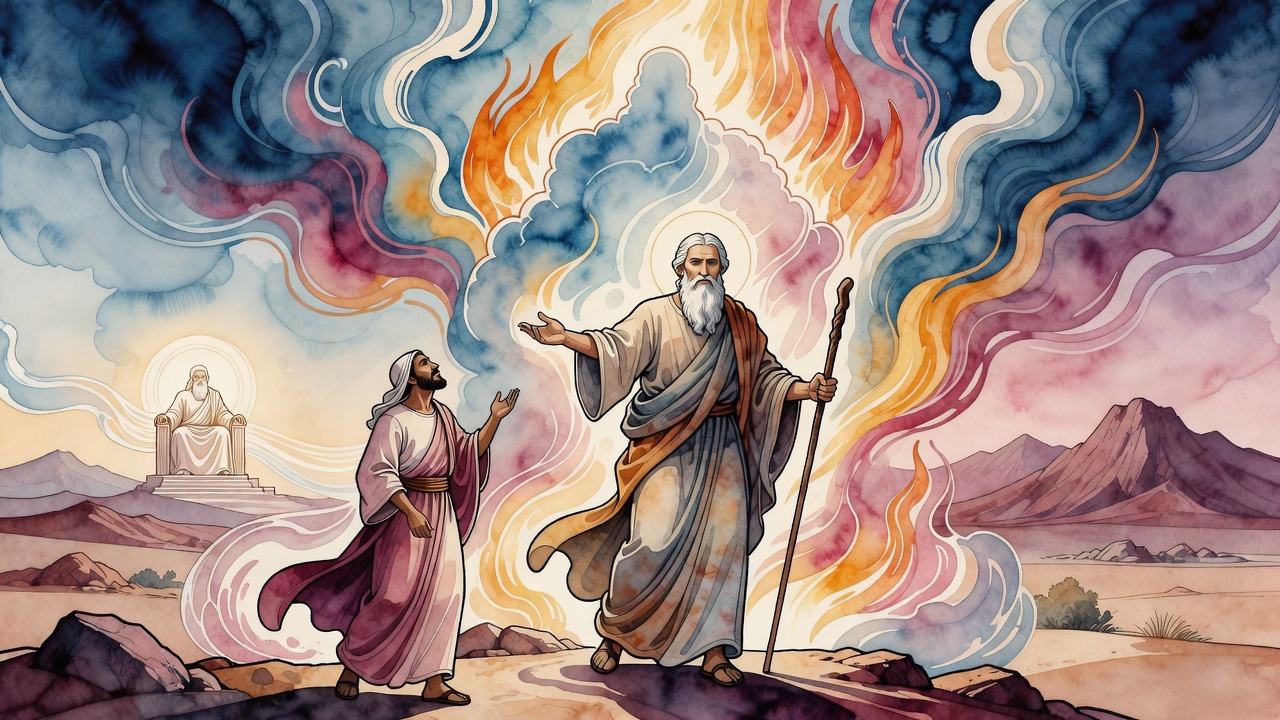
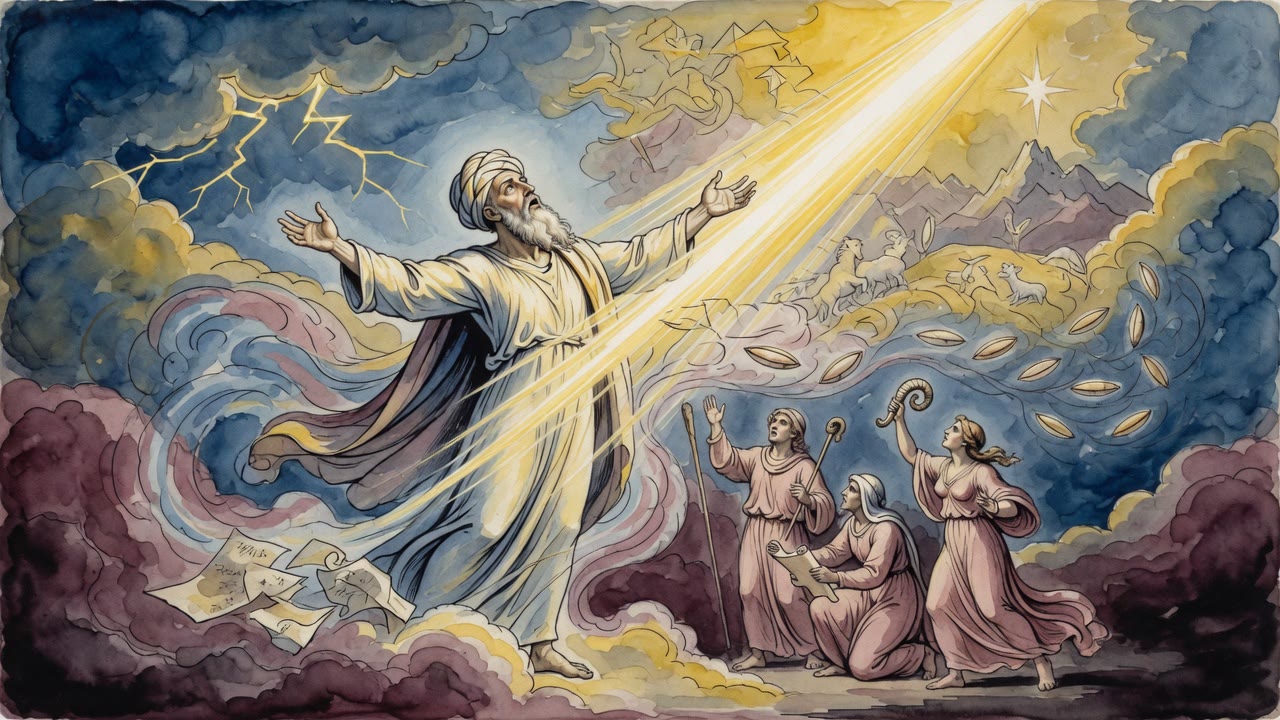
Moses stands at the edge of return. The bush has already burned without consuming. The mission is already on his tongue. He goes back to Yitro, his father-in-law, and asks leave to see whether his brothers in Egypt still live (Exodus 4:18).

Yitro answers with two words that the midrash will never treat as small talk: lekh leshalom, go in peace. The rabbis map a pattern. Everyone of whom "go in peace" is said with that form went and returned. Everyone of whom beshalom is written went and did not return. David said beshalom to Avshalom, and the son never came home (2 Samuel 15:9).

Moses receives the form that carries a road back. The phrase is not magic. It is a seal on intention, a father-in-law's blessing shaped so the mission can complete its circle. Midian releases him without cutting the thread of return.

The Villager and the King

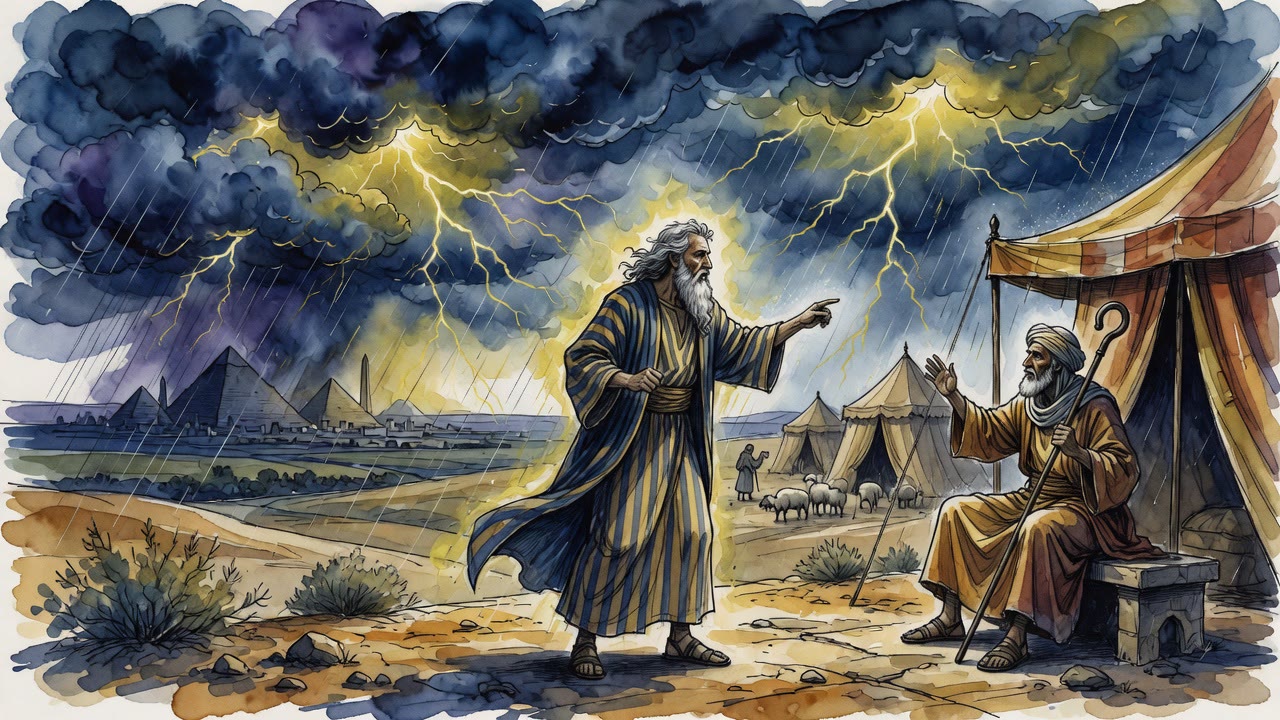
Elevated, Moses can begin to feel the weight of being the go-between. Rabbi Meir pictures a king marrying off his daughter who chooses a villager to smooth dealings with the groom's house. The villager puffs up and acts as if he owns the wedding. The king must remind him: who made you so tall? I needed a messenger.

So God reminds Moses. Who caused you to speak these words? I elevated you. The authority is real. The ownership is not. A messenger who forgets the sender becomes a danger to the mission he was chosen to carry.

Rabbi Yehuda hears another fear in Moses: when You sent me, You spoke under the attribute of mercy. Perhaps by the time I arrive it has become strict justice. Has the people's suffering turned from opening for redemption into pure punishment? God answers with the Name that holds mercy steady: I am the Lord. The attribute has not flipped while Moses walked from bush to border.

Zeal at Learning and at Doing

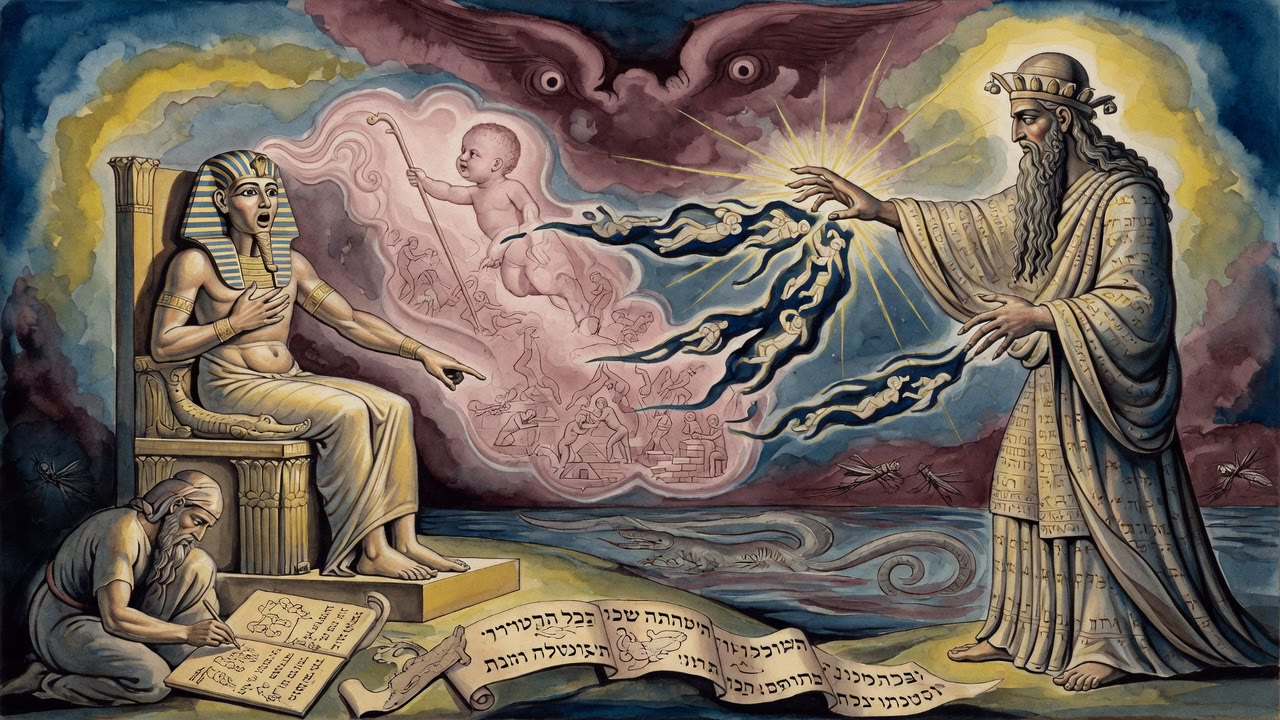
Rebbi, Rabbi Yehudah HaNasi, faces an apparent shift in divine instructions and refuses to call it retraction. God speaks in a way that kindles zeal at two moments: when a person learns what must be done, and when the person actually does it. The second intensity is not a change of mind. It is pedagogy. Moses is pressed to greater urgency precisely when the act is near, so that hearing and performing both burn clean.

Greatness is not proved by proving God reversed Himself. Greatness is proved by a prophet who can carry two heats without breaking: the heat of study and the heat of the courtyard of Pharaoh.

Not Every Dreamer Is Moses

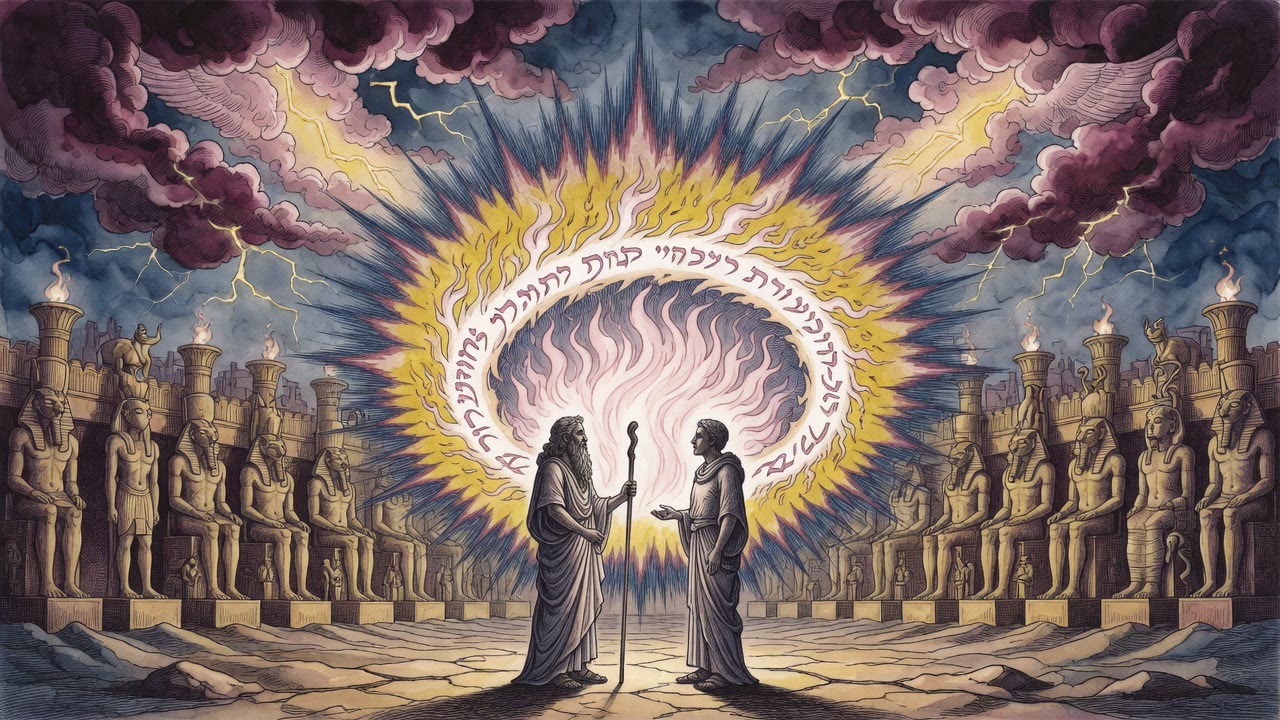
Later, when signs and wonders fill the air, Sifrei Devarim draws a hard line. A dreamer of dreams is not the same as Moses. A sign in the heavens may mean sun and moon. A wonder in the land may mean earthly marvels. Even if someone makes sun and moon and stars stand still, pay them no heed if they pull the heart from the covenant.

Rabbi Yossi HaGlili says Scripture penetrates the psyche of idolators and still commands refusal. "For the Lord your God is testing you, to know whether you love the Lord your God" (Deuteronomy 13:4). Flash is not fidelity. Cosmic theater is not Torah. Moses' authority rests on a face-to-face mission sealed by return-words and mercy-Name, not on whoever can freeze a constellation for a crowd.

The Road That Circles Home

So the departure from Midian is small on the page and heavy in the midrash. Go in peace. Stay a messenger. Keep mercy in view. Take the second heat when the doing begins. Refuse the prophet who dazzles and detours.

Moses walks toward Egypt under a blessing shaped for return. He will confront a king, lift a people, and still, by the midrash's map of language, be the kind of man for whom peace means a completed circle, not a one-way exile of the soul. The villager remembers the king. The dreamers are left talking to the sky. The words at Yitro's door keep working long after the door is behind him.

Mercy Named and Held

Moses' fear that mercy has become justice is not abstract theology. It is a messenger's dread that he arrives too late, that the people he was sent to free have already been judged past rescue. The answer "I am the Lord" does not explain the plagues away. It holds the attribute steady while the plagues still come. Mercy can wear hard tools. It does not become another god.

The contrast with the dreamer of dreams sharpens the edge. A wonder-worker who freezes the heavens can still be a test. Yitro's quiet "go in peace" does more for Moses' mission than a sky full of signs without covenant. Return-language, messenger-status, double zeal, and refusal of cosmic theater: four rails under the same road out of Midian toward a king who will laugh at a staff and still lose a nation.


← All myths
From the tradition

Sources

4 sources

The texts behind this telling. Some cards carry a translation of the source; others are our own retelling of it, and each card says which. Every card links out to the original.

Shemot Rabbah 5:3Shemot Rabbah

Retold in our words. Read the original at the link below.The Sefaria Midrash Rabbah, 2022 · CC-BY

A seemingly insignificant phrase can carry immense weight, altering the course of destiny. to a curious observation from Shemot Rabbah, a collection of rabbinic interpretations on the Book of Exodus, that highlights just that.

The passage centers around Moses, poised on the brink of his world-altering mission. Remember, he's been in Midian, living as a shepherd after fleeing Egypt. But God has appeared to him in the burning bush, commanding him to return and liberate his people. Understandably, Moses wants to tell his father-in-law, Yeter (also known as Jethro), about his plans. As (Exodus 4:18) tells us, "Moses went and returned to Yeter his father-in-law, and he said to him: ‘Please, let me go and return to my brethren who are in Egypt and see if they are still alive.’ Yitro said to Moses: ‘Go in peace [lekh leshalom].’”

Pay close attention to those last two words: lekh leshalom, "Go in peace." The Rabbis in Shemot Rabbah notice something fascinating about this phrase. They point out a pattern: "You find that everyone in whose regard ‘go in peace [leshalom]’ is stated, he went and returned.." It's like a good luck charm, a verbal guarantee of a safe return.

There's a catch! The text continues, "...and everyone in whose regard beshalom is written, he went and did not return." Here, the word beshalom is used, which also translates to “in peace,” but with a slight difference in the Hebrew. It's a subtle variation, but the Rabbis see it as carrying a different weight, a different destiny.

They illustrate this with an example from the story of David and his rebellious son, Avshalom (Absalom). As we read in II (Samuel 15:9), David says to Avshalom: “Go in peace [beshalom],” and, tragically, Avshalom never returned.

So, what are we to make of this? Is it just a linguistic coincidence? Or is there something deeper at play here?

The Shemot Rabbah isn't suggesting a magical formula, of course. Rather, it’s drawing our attention to the power of words, the intention behind them, and perhaps even a divine orchestration that works in mysterious ways. The nuance between lekh leshalom and beshalom, while seemingly small, becomes a lens through which we can examine fate and free will.

In the case of Moses, Yeter's blessing of lekh leshalom paved the way for his triumphant return, his confrontation with Pharaoh, and the Exodus from Egypt. It was a mission fraught with peril, but the blessing, perhaps, offered a layer of protection, a subtle assurance of success.

The Rabbis are inviting us to consider the weight our words carry. Are we speaking words of encouragement and hope, paving the way for their success and safe return, metaphorically speaking? Or are our words, even unintentionally, setting them on a different path?

You never know what journeys they might help shape.

Full source
Shemot Rabbah 6:3Shemot Rabbah

Retold in our words. Read the original at the link below.The Sefaria Midrash Rabbah, 2022 · CC-BY

This particular passage, Shemot Rabbah 6, uses a parable to illuminate a fascinating aspect of Moses' relationship with God.

Rabbi Meir offers a vivid analogy. To smooth things over, he chooses a villager to act as a go-between with the groom's family. But this villager, puffed up with his newfound importance, starts acting like he’s the one in charge! The king, understandably, has to remind him, "Hey, who made you so arrogant? It was me! I just needed you to be a messenger."

That’s how it was between God and Moses, according to Rabbi Meir. God elevated Moses, choosing him to be the messenger to Pharaoh and the leader of the Israelites. But somewhere along the line, perhaps Moses began to question his role, his authority. God, in turn, gently reminds him: “Who caused you to speak these words? It was I, who elevated you.”

Rabbi Yehuda offers a related, but slightly different, take on this exchange. He suggests that Moses worried about the shift in God's attributes. Moses said: ‘When You said to me: “Go now, and I will send you to Pharaoh” (Exodus 3:10), You said to me that you are destined to deliver them with the attribute of mercy. Perhaps by the time I came it was transformed into the attribute of justice.’ Moses is concerned that God's initial promise of deliverance through rachamim, mercy, might have changed to din, strict justice, because of the Israelites’ actions or the situation on the ground. Had their suffering become a punishment, rather than an opportunity for redemption?

But God reassures him, “Ani Adonai – I am the Lord.” The verse continues, saying God remains in the attribute of mercy. "And said to him: I am the Lord.”

So, what does this all mean for us? It's a reminder that even the greatest leaders, like Moses, can confront doubt and question their purpose. And perhaps most importantly, it's a reminder that even when justice seems to prevail, the potential for mercy – God's mercy – always remains.

Full source
Sifrei Devarim 84:1Sifrei Devarim

Retold in our words. Read the original at the link below.Sifrei by Rabbi Shraga Silverstein · CC-BY

Sifrei Devarim turns to A Dreamer of Dreams Is Not the Same as Moses.

What about signs and wonders? Surely, if someone can perform miracles, we should listen to them. Not necessarily. The Sifrei Devarim explains that when the Torah speaks of a prophet giving a "sign" (ot) "in the heavens," it's referring to things like the sun and moon. Remember (Genesis 1:14)? "And they shall serve as signs and times." And a "wonder" (mofet) "in the land" refers to things that happen here on Earth. The text even references II (Chronicles 32:31), where it speaks of sending emissaries "to inquire concerning the wonder that was in the land."

So, what if someone comes along and performs these incredible feats? What if they make the sun stand still or conjure up other seemingly impossible events? RABBI YOSSI HAGLILI offers a powerful insight. He says, "See how far Scripture penetrated to the ends of the psyche of the idolators and gave them dominion. Even if they cause sun and moon, stars and constellation, to stand still, pay them no heed."

Wow. Even if they can control the cosmos, we shouldn't automatically believe them. Why? Because, as (Deuteronomy 13:4) tells us, "For the L-rd your G-d is trying you, to know whether you love the L-rd your G-d."

It's a test! The Torah is suggesting that these extraordinary events might be a test of our faith. Are we going to be swayed by flashy displays and apparent miracles, or will we remain steadfast in our devotion to G-d and the teachings of the Torah?

This passage from Sifrei Devarim offers a profound lesson about discernment and the nature of faith. It's about staying true to our values and principles, even when faced with the seemingly impossible. It's about recognizing that sometimes, the greatest miracles aren't the ones we see with our eyes, but the ones that happen within our hearts.

So, the next time someone tries to impress you with their supposed divine abilities, remember this story. Remember the dreamer of dreams, the signs and wonders, and the ultimate test of faith. And ask yourself: What truly matters?

Full source
Mekhilta Tractate Bachodesh 4:19Mekhilta DeRabbi Yishmael

Retold in our words. Read the original at the link below.Mechilta, translated by Rabbi Shraga Silverstein · CC-BY

The Talmudic sage known simply as Rebbi, Rabbi Yehuda HaNasi, the compiler of the Mishnah (the earliest code of rabbinic law), raised a striking question about the greatness of Moses. Would we only need to acknowledge Moses's extraordinary status if we assumed that the Holy One, Blessed be He, had actually retracted a divine directive given to him?

Rebbi's answer cuts to the heart of how God communicates with prophets. The apparent contradiction in God's instructions was not a reversal at all. Rather, God spoke the way He did because a person is naturally prompted to greater zeal, greater urgency and devotion, at two critical moments: at the time of learning what must be done, and at the time of actually doing it.

This teaching from the Mekhilta reveals something profound about divine pedagogy. When God gave Moses instructions that seemed to shift or intensify, it was not because God changed His mind. It was a deliberate strategy to kindle enthusiasm in Moses at precisely the moments when motivation matters most. The moment you hear a command and the moment you carry it out are the two windows when the human spirit is most receptive to passion and commitment.

Moses's greatness, then, does not depend on God reversing Himself. Moses was great because he responded to every divine instruction with fresh zeal, treating each moment of revelation as if hearing God's voice for the very first time.

Full source