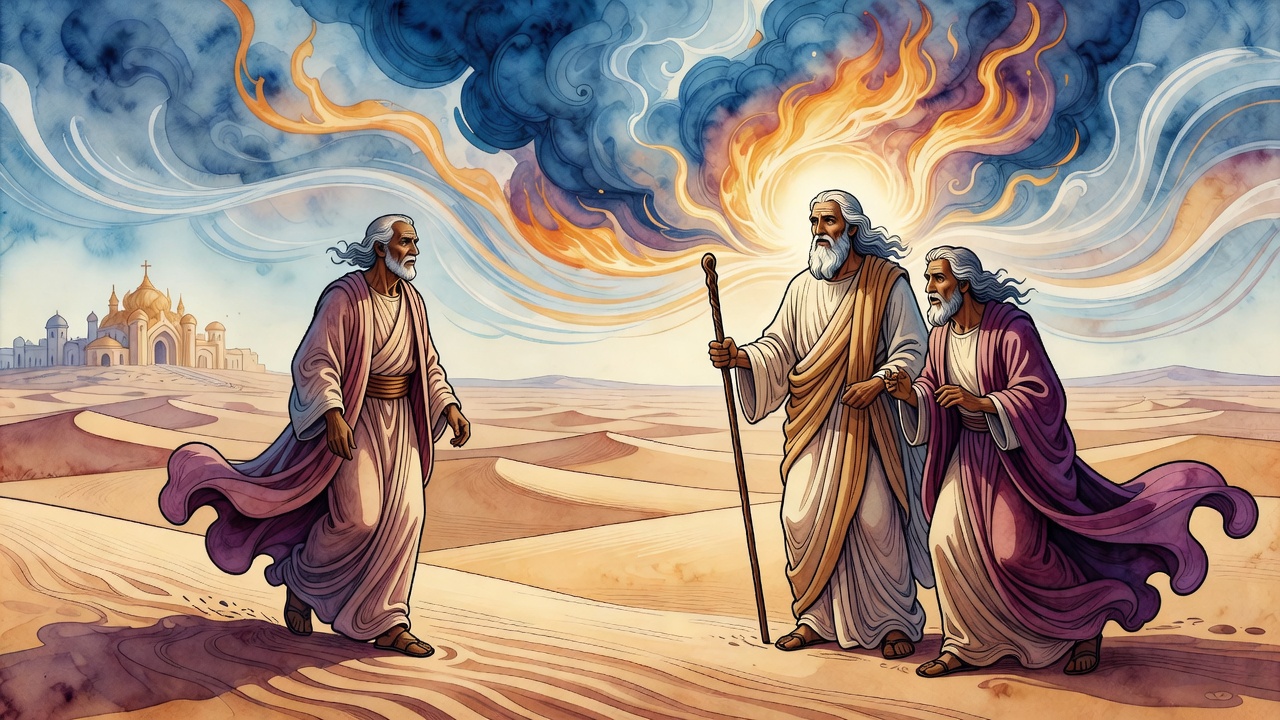
Jethro Walked In and Moses Ran to Meet Him
A Midianite priest nears the camp. Moses, Aaron, and seventy elders stream out. Before any miracle is told, two men ask after each other's peace.
Table of Contents
 Click for full size
A State Welcome on Desert Sand
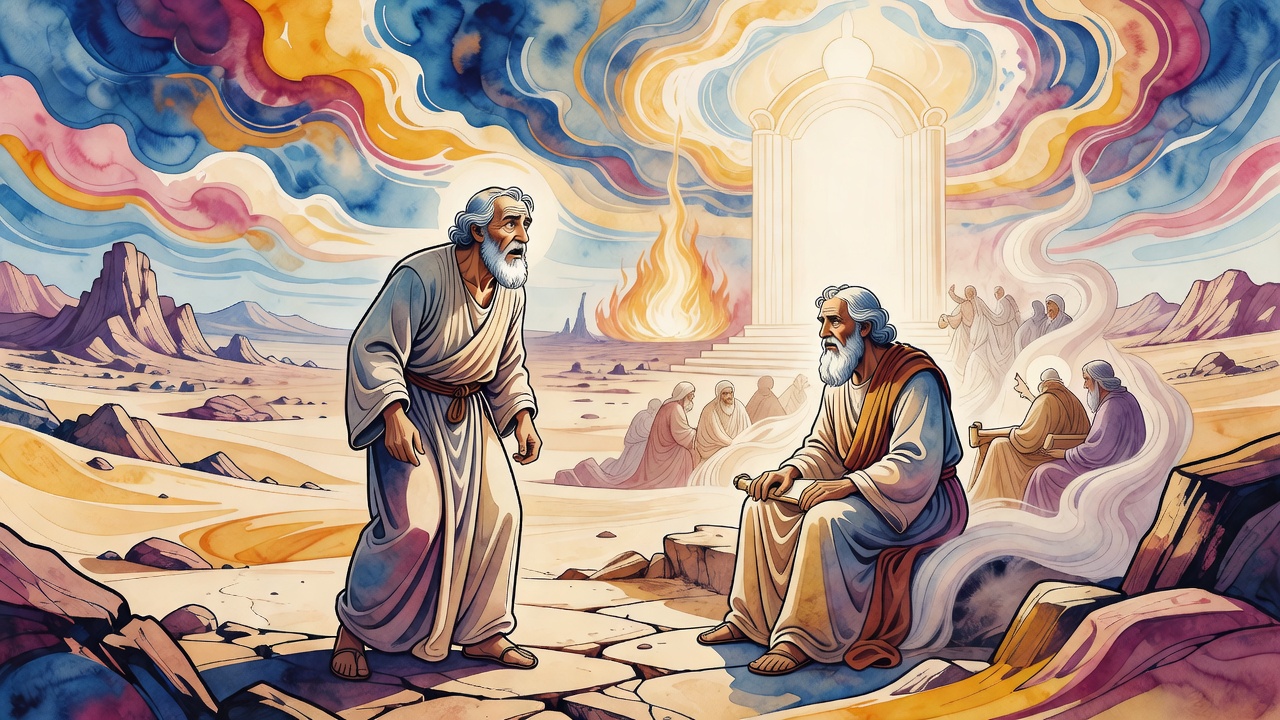
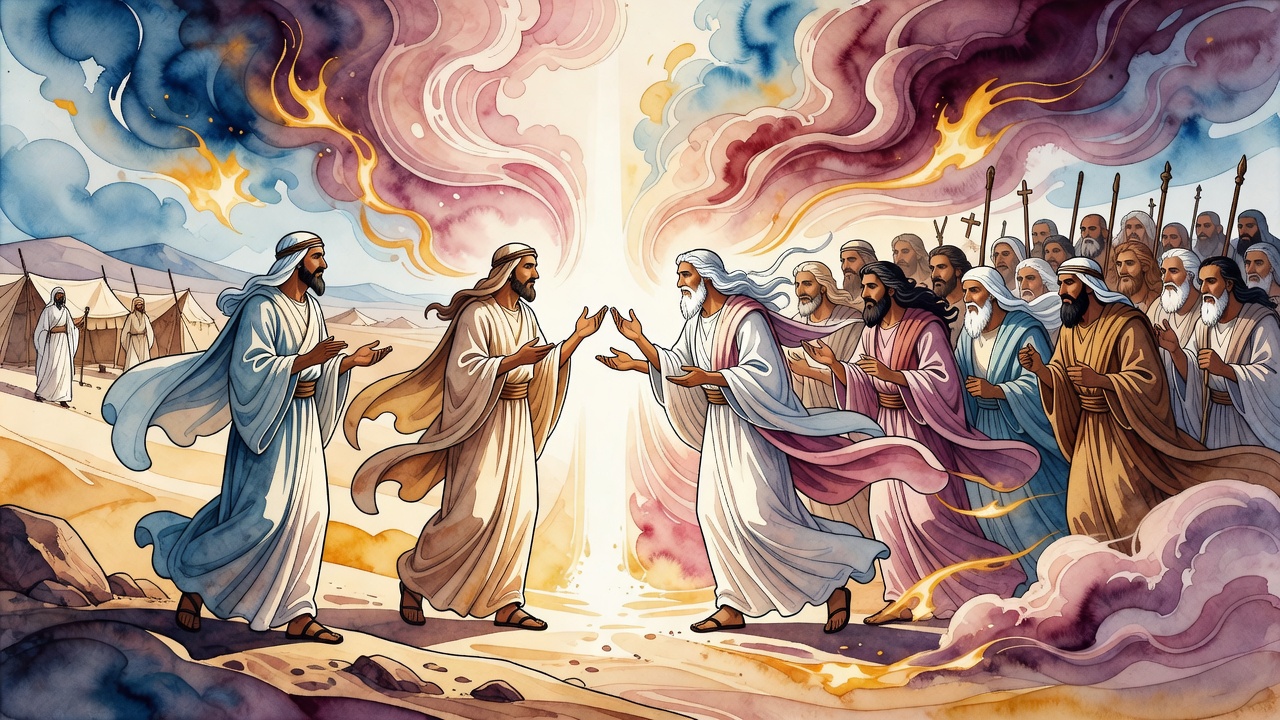
Word reached Moses that Jethro was near, and he did not send a servant. A whole procession left the camp: Moses himself, Aaron, Aaron's sons Nadab and Abihu, and seventy elders of Israel. One opinion adds that even the Ark went out with them. This was no quiet family reunion. It was a state welcome for a Midianite priest who had once given a fugitive a seat at his table and a future for his hands.
The verse says one bowed and kissed the other, but it never names who bent first. The rabbis solve it through a single title. Scripture calls Moses "the man," the humblest of all who walk the earth (Numbers 12:3). So the one who bowed and kissed was Moses honoring his father-in-law. From this they teach that a person should always show his father-in-law honor, the way David called Saul "my father" even when the throne stood between them. Dust rose around the procession. Dignity walked both directions. The camp watched its leader bend, and the bend taught more than a speech about humility ever could.
Peace Before the Plagues
Before Moses told Jethro a word about the plagues, the splitting of the sea, the manna, or the mountain that would soon burn, the two men simply asked after each other's well-being. Great is peace, for it comes even before the praise of God. Only after that calm greeting did Moses begin to recount everything, because a settled mind is what makes a person able to hear. The tent they entered together, the sages add, was the house of study.
Jethro listened to wonders that would have toppled lesser listeners, but he listened as a man who had first been greeted as a man. The miracles did not have to compete with anxiety about whether he was welcome. Peace had cleared the floor. Then he watched Moses judge from morning until his strength failed, purity cases with clear lines and disputes where the highest outcome is two people leaving as friends. The welcome turned into counsel when the Midianite saw a nation resting on one exhausted spine.
A Place Heaven Left Open
Jethro told Moses outright that his method was not good. The sages did not hear arrogance. They heard a man being handed a gift. Jethro was beloved, for Heaven left open a place in which he could distinguish himself, and that place was the plan to appoint elders to share the load. If the idea was so good and pleasing before the Holy One, why did God not simply command it to Moses at the start? Because Heaven deliberately held back. By letting the proposal come first from Jethro, God gave the man honor in the eyes of Moses and all Israel. Everyone could say Jethro was great, because the Holy One agreed with the advice he offered.
Jethro himself set a limit on his own voice. Do this only if God confirms it. If Heaven approves the path, you can endure on it. If not, you cannot endure at all. No human strategy for sharing leadership has staying power unless the will of God upholds it. Then he described the role Moses should keep. Stand for the people opposite God. Be a vessel filled to the brim with divine utterances. Do not empty yourself on every small quarrel. Carry the hard cases upward and present the people's needs favorably before Heaven. Advocate as much as judge. The traffic of justice runs both ways when one man stops trying to be the whole road.
Whose Voice Did He Obey
Scripture says Moses listened to Jethro and did all that he said. Rabbi Yehoshua takes the plain sense: Moses rebuilt the system of justice on a newcomer's suggestion, and that is no small thing for a man at the summit of Israel's leadership. Rabbi Elazar of Modiin reaches higher. Moses listened to Jethro, but what he carried out was what the Omnipresent commanded. He went up, brought the plan before God, and acted only on the divine word. Both readings stand. Human wisdom is worth hearing, even from outside the camp. The authority to act still came from above. Good counsel opened the door. Only the Holy One decided what walked through it.
Jethro left a nation that could still greet a stranger with a procession and still refuse to run its courts on one exhausted man alone. The bow that began the visit had already taught the shape of the reform: honor first, then the hard truth, then the climb that asks Heaven to seal what human eyes have seen. Judges took their seats. Moses kept the vessel full. The Midianite's voice became part of Israel's structure without ever claiming to be Sinai itself.
← All myths