Jethro Watched Moses Drown Under the Cases
Moses judged from sunrise until dark and would not share the bench. His father-in-law watched one full day of it and said the line would kill him.
Table of Contents
 Click for full size
Everything That Had Happened on the Road
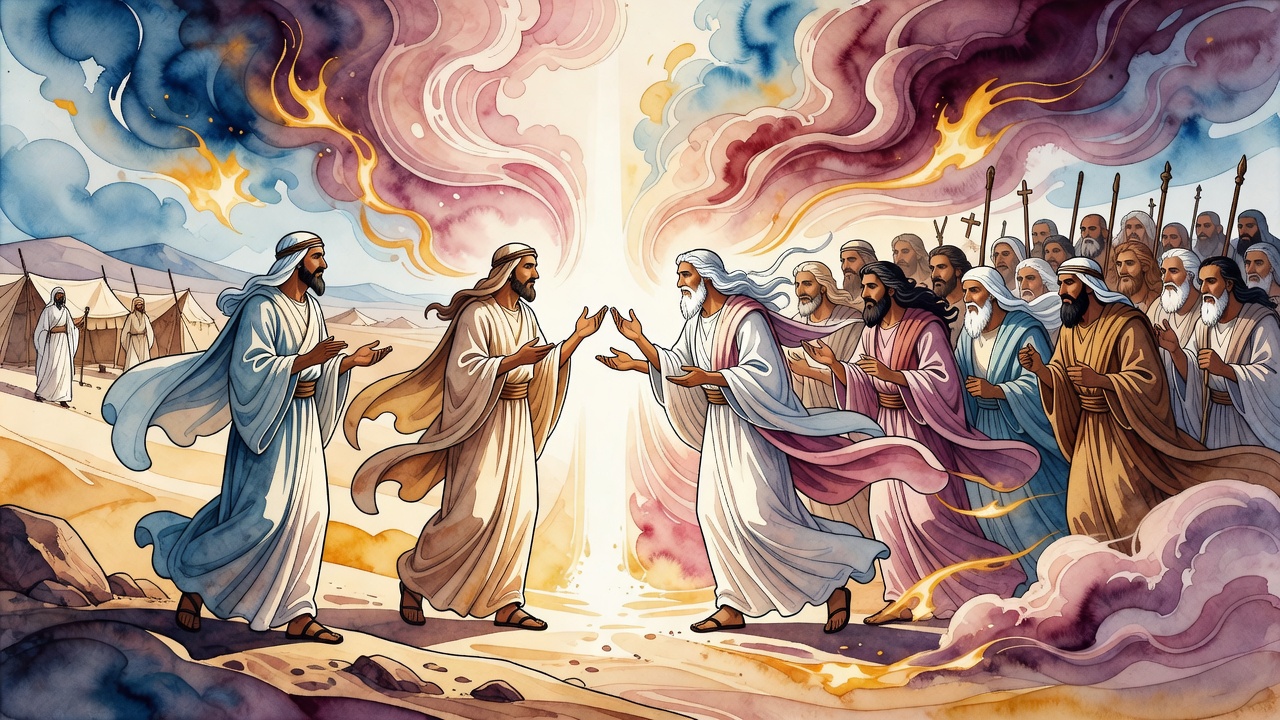
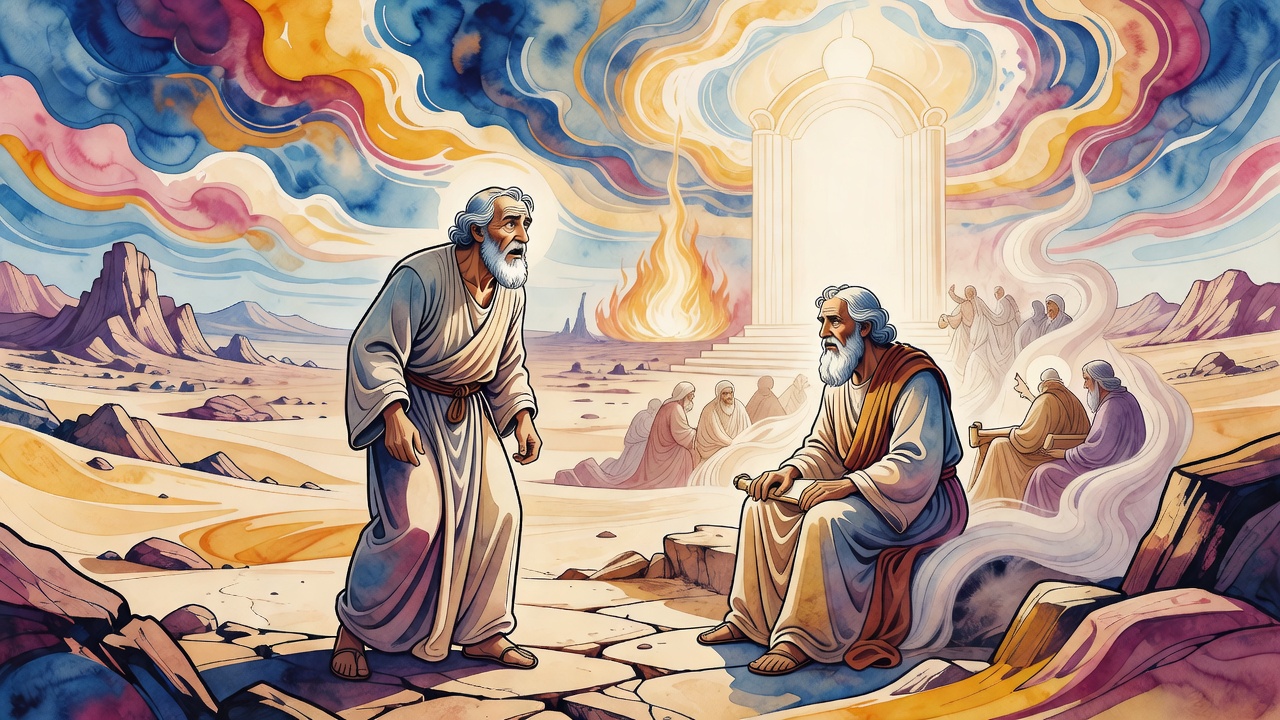
Moses gave his father-in-law the whole account and left nothing out. What God had done to Pharaoh and to the Egyptians. The sea of Suph. The bitter water at Marah. Rephidim, where there was no water at all. Amalek coming at them out of the sand, and the deliverance at the end of it.
He did not tell it as a run of victories. He told it as hardship found in the way, one hardship after another, each with a rescue tied to its back. Jethro, priest of Midian, listened the way a man tests a beam before he trusts the roof over his head. When the telling stopped, he was still looking at the man who had told it.
From Morning Until Evening
The next day he watched the court.
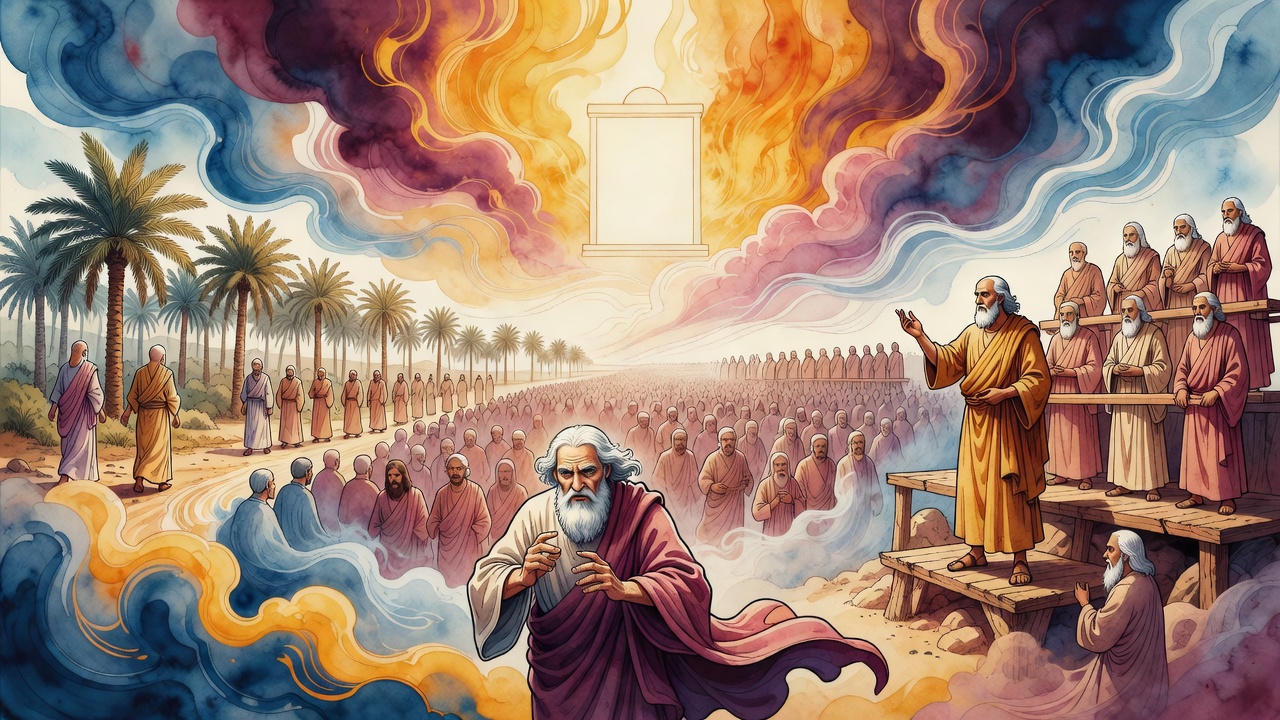
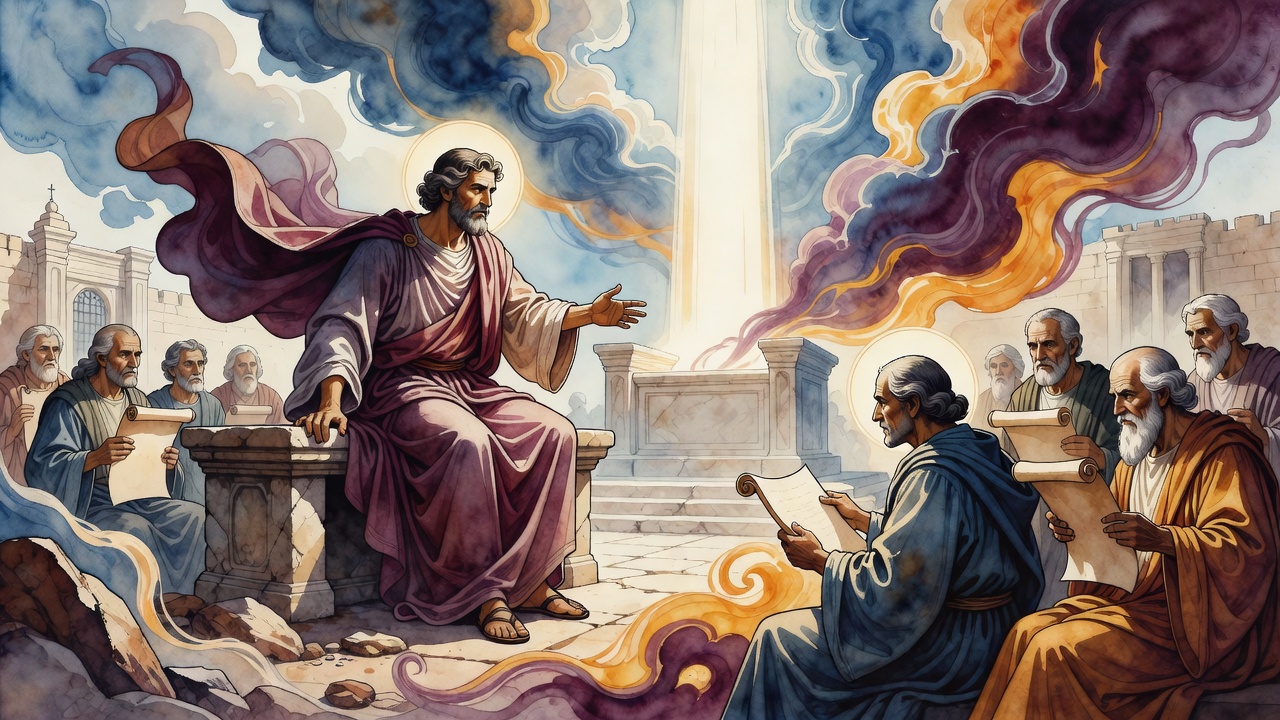
The people stood around Moses from first light until the sun went down. A boundary stone moved in the night. A borrowed ox dead in a pit. Two brothers and one tent. Moses heard them one at a time, and behind every ruling he added the reason for it, because the people did not yet know the statutes he was ruling from. "When they have a matter for judgment they come to me," he said, "and I judge between a man and his fellow, and I make them know the statutes and the law of the Lord."
Two offices in one mouth. Court and school, running at the same hour, with one man doing both and the line outside never getting shorter. He was not presiding. He was drowning, and the cases kept arriving.
What the Midianite Saw
Jethro counted the heads still waiting at midafternoon and stopped counting.
He was not looking at the docket. He was looking at a throat gone hoarse by noon, and at a man who would keep answering until something in him gave out. Behind that he saw the second injury, the slower one: a camp being trained to believe that only one mouth in Israel could hear it, so that every quarrel over a goat had to climb to the top of the nation or wait three days for nothing.
The Condition and the Promise
The counsel came with a hedge on the front of it. Do this, Jethro said, and exempt yourself from judging every case, as the Lord shall give you instruction. He would not hand a prophet a plan and call it settled. God would have to confirm it, and Moses took it to God before he touched the bench.
Then the promise. Aaron and his sons and all the elders of this people will come to the place of judgment in peace. Bishlam, in the Aramaic. Not quiet. Not an empty courtyard. Judges who arrive with something left in them, who can still follow a witness to the end of a sentence, because the day has not already emptied them out before the hard case walks in.
Seventy-Eight Thousand Six Hundred
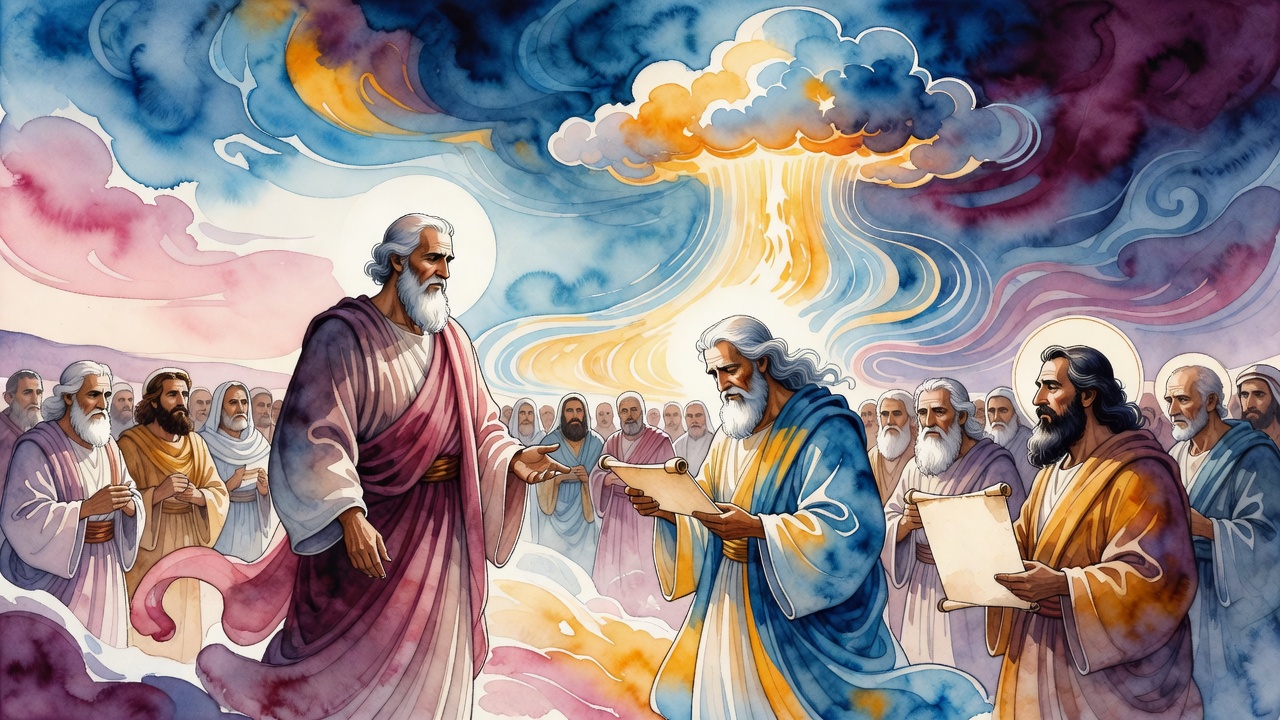
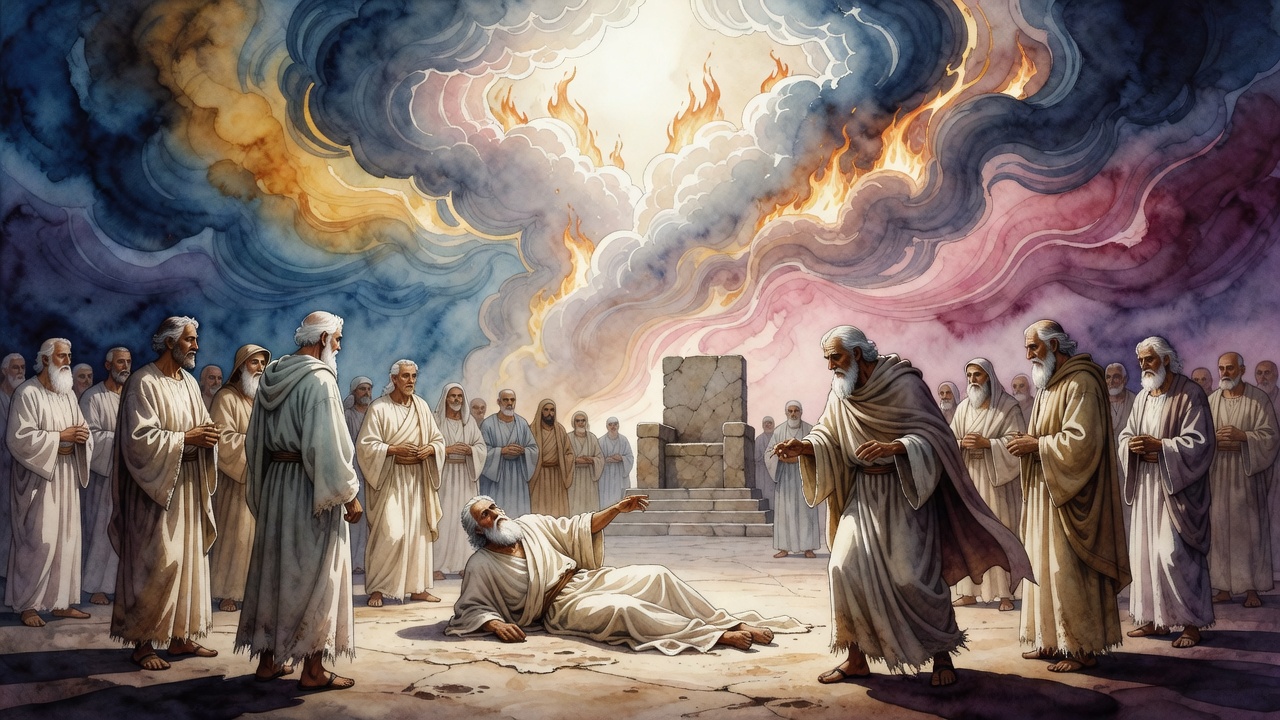
Moses picked able men out of all Israel and set them over the people in layers. Six hundred rabbans over thousands. Six thousand over hundreds. Twelve thousand over fifties. Six myriads, sixty thousand of them, over tens.
Seventy-eight thousand six hundred benches for one wandering nation, which put a judge inside shouting distance of every tent in the camp. Appointing them was the small half of the work. Moses had to put the statutes into all those mouths first, so that the rulings coming out of them would match, and that took longer than the naming did. Some of the new men shook the first week. Authority is heavy when it is still warm.
The prophet kept the hard cases. He no longer kept the goats.
The Sound He Left Behind
Somewhere in the camp a man who had waited three days for a ruling on a borrowed donkey had his case heard before noon and went home confused by how fast it had gone.
Jethro packed for Midian with that noise behind him, dozens of courts running at once, none of them urgent. Moses watched him go along the road and did not call him back. The last hardship on the long road out of Egypt had been Moses himself, standing in the only doorway, and a Midianite had walked in, named it in an afternoon, and gone home.
← All myths