5 min read

Jehoshaphat Built His Throne on Judgment

The new king ignored the pomp and hunted for judges. Jerusalem's beauty, he knew, was not marble. It was a clean court.

Curated by Arthur · Told by Maggid ·
Table of Contents
  1. A Crown That Looked for Benches
  2. Moses and the Advice He Accepted
  3. Jerusalem's Beauty Was a Court
  4. Anger That Meant to Console
  5. Restore Your Judges
Jehoshaphat Built His Throne on Judgment Click for full size

A Crown That Looked for Benches

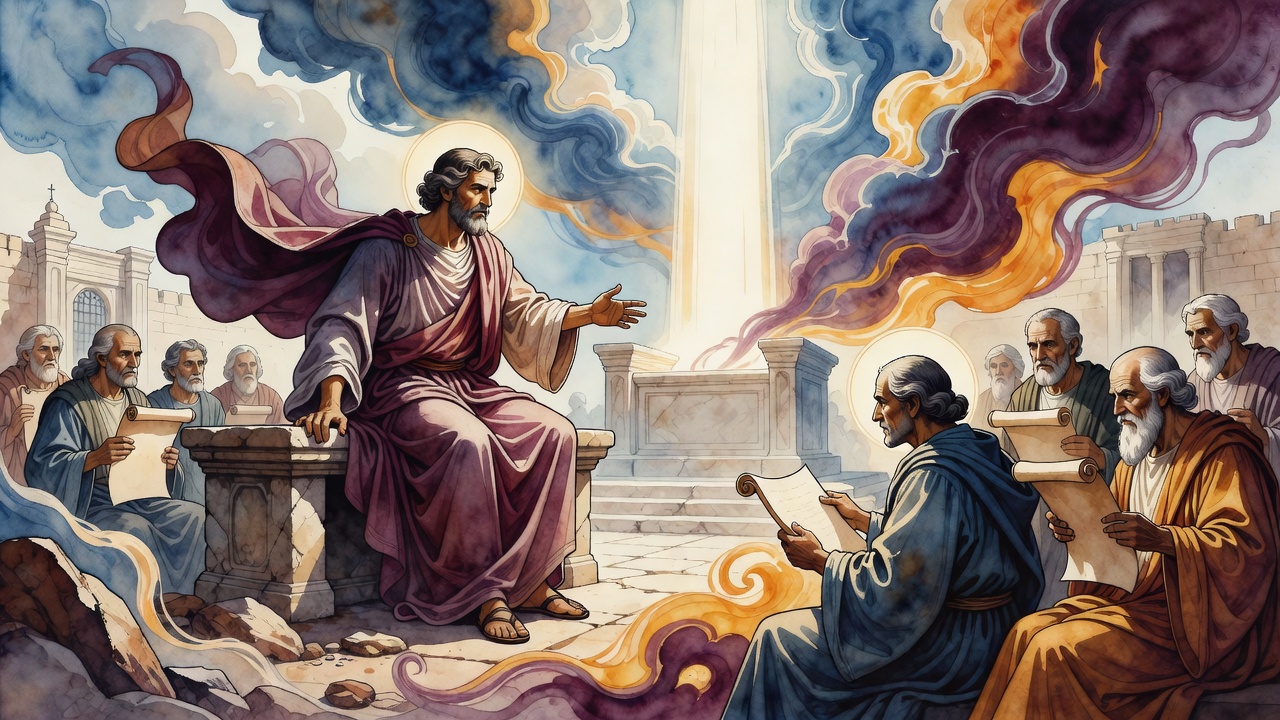
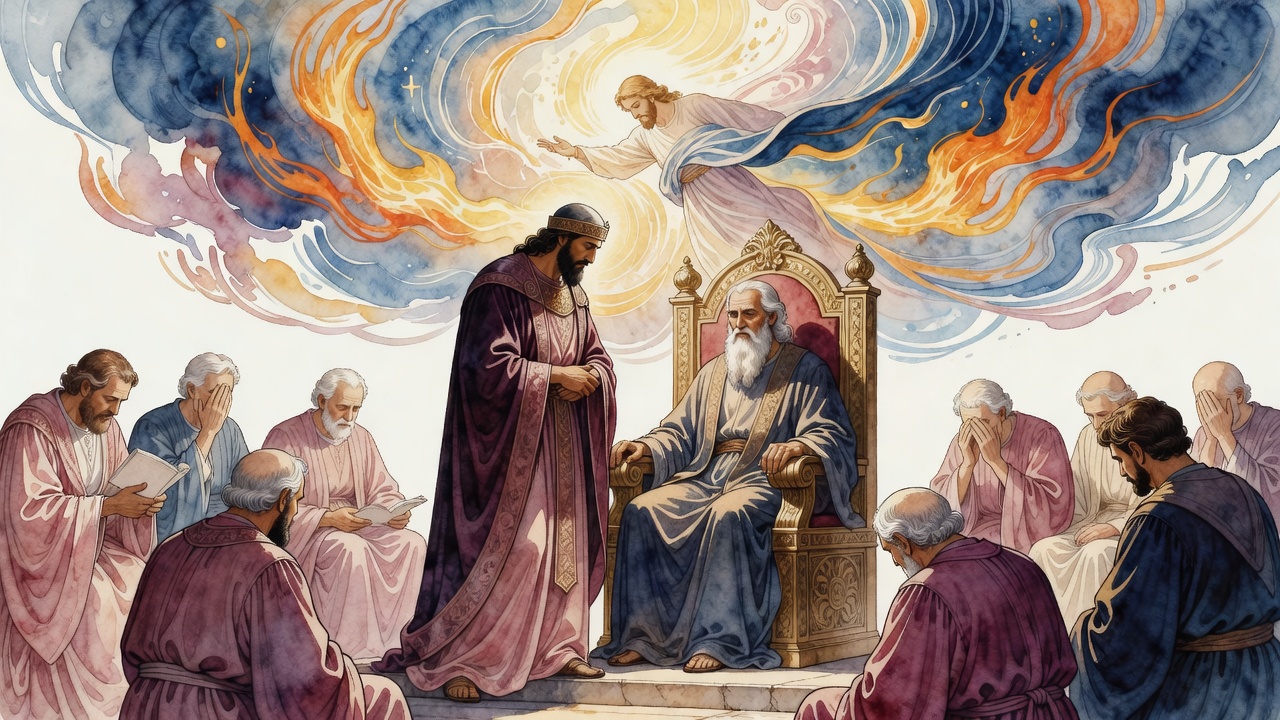
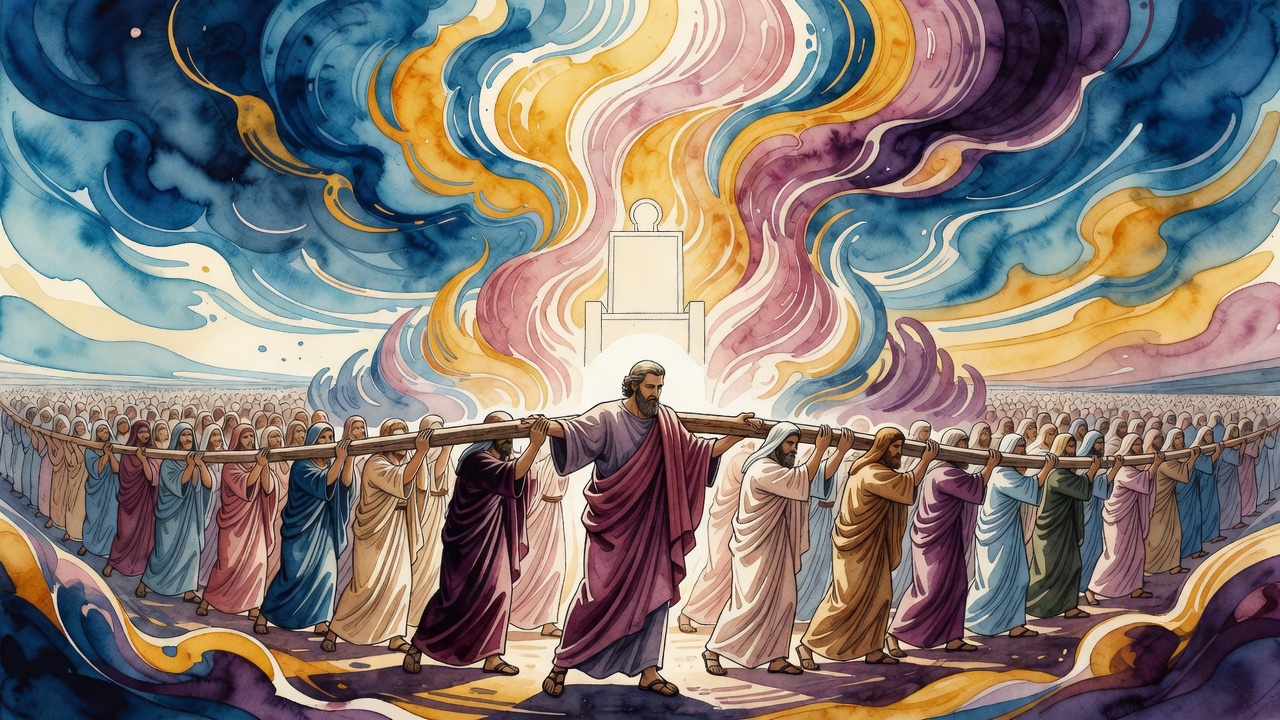
Jehoshaphat took the throne and did not chase the glitter first. He strengthened himself over Israel by appointing judges. Courtiers waited for festivals and processions. He waited for men who could sit still and hear two liars without becoming a third.

Scripture says his heart was lifted up in the ways of the Lord. The lift was not swagger. It was the height of a man who sets justice above his own appetite for praise.

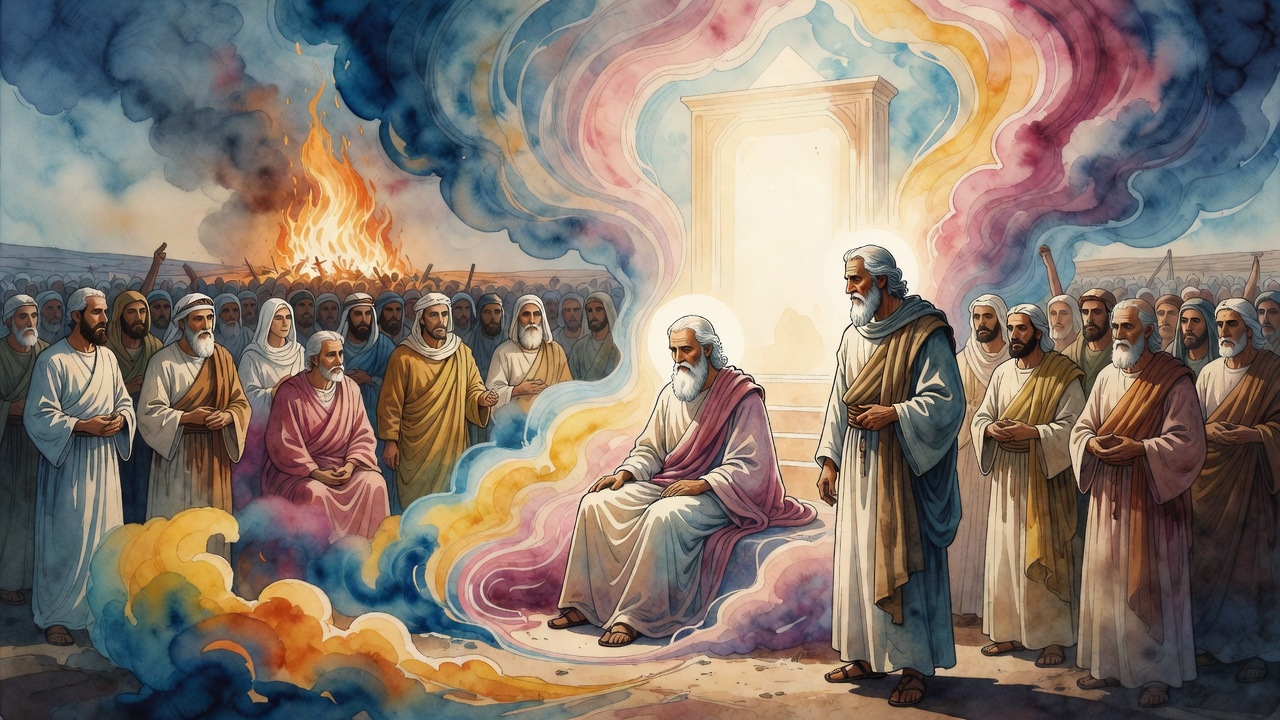
To the judges he spoke a sentence that still scrapes the throat: see what you are doing, for you judge not for man but for the Lord. The bench was not a stage. The bench was a place where heaven leaned in.

One appointee trembled and asked to be excused. The king refused the excuse and gave him a smaller court first, where the cases were ordinary and the fear could learn to stand without running.

Moses and the Advice He Accepted

Long before that king, Moses had learned the same pressure under a different sky. Jethro saw him drowning in cases and told him to seat help. Moses still seated the seed of a Sanhedrin (Israel's supreme court of elders) because a people without judgment is a camp with knives and no law.

How much more must those commanded "Judges and officers shall you appoint" actually appoint them. Jehoshaphat lived inside that "how much more." He treated the command as oxygen, not decoration.

A poor man arrived with a torn cloak and a true claim. A rich man arrived with a smooth mouth. The judge who feared the Lord more than the rich man's friends became the king's real wall.

Officers stood in the gates where bribes like to whisper. The new king rotated posts and watched whose houses grew too fast.

Jerusalem's Beauty Was a Court

Jerusalem sent her renown among the nations for beauty. The beauty that mattered was not only gold and cedar. It was a city where a widow could be heard. When that hearing died, the beauty died under it.

She fell, the sages insisted, for the corruption of justice. At that hour the Holy One swore He would exact payment from false judges. He Himself became the Av Bet Din, the head of the court, because the human heads of court had sold the scales.

Jehoshaphat ruled in an earlier light of that same law. He could feel the draft in the walls when a bribe slid under a door. He stuffed the draft with appointments and warnings.

On a morning of dry wind he walked the city without banners and listened at a gate. Two merchants argued over grain. A judge he had appointed cut the quarrel cleanly. The king left before anyone bowed.

Anger That Meant to Console

There is a hidden face to judgment that a king must learn or break. On the surface, reward and punishment look like a simple ledger. Under the surface, every middah (divine trait) God uses still aims at tikkun (repair), at a general rectification that does not throw the wicked away with both hands.

Isaiah would sing of anger that turns back into consolation. Metal goes into a kiln not because the smith hates the metal, but because slag must leave. Jehoshaphat's courts were a kiln for a people. Heat without hate.

A judge who only enjoys crushing is not the Lord's judge. A judge who only enjoys mercy until truth dies is not the Lord's judge either. The king wanted the hard middle.

Faith in the God of the fathers meant faith that heaven still watched the scales when men pretended otherwise. Declaration without benches was noise. Benches without fear of heaven were theater.

Restore Your Judges

The same stream that condemns false judgment promises restoration: I will restore your judges as at the first. Jehoshaphat tried to live as if that restoration could begin in his generation, on ordinary mornings, with ordinary cases about fields and vows and blood.

He walked past the pomp again and checked the benches. Were the officers still standing? Did the weak still find a door?

Night settled on Jerusalem. Lamps burned in rooms where scrolls and witnesses waited. The king slept poorly, which was a kind of faithfulness. A throne built on judgment never fully rests.

Before dawn he rose and wrote three names of men he still trusted. He folded the list into his sleeve and went back to the work of making beauty mean a court that could look a widow in the eye.


← All myths
From the tradition

Sources

3 sources

The texts behind this telling. Some cards carry a translation of the source; others are our own retelling of it, and each card says which. Every card links out to the original.

Midrash Tanchuma Buber, Shoftim 2:1Midrash Tanchuma Buber, Shoftim

Translation of the source text.Midrash Tanchuma (Buber), Public Domain, on Sefaria · CC-BY-SA

And Jehoshaphat too, once he was established in the kingship, did not occupy himself with the affairs of kingship, nor with honor, but with the affairs of judgment, as it is said: "[And Jehoshaphat reigned] and he strengthened himself over Israel" (II Chronicles 17:1). What is "and he strengthened himself"? That he strengthened himself and appointed the judges. And it says: "And his heart was lifted up in the ways of the LORD; and moreover he removed the high places and the Asherim out of Judah" (II Chronicles 17:6). Now was there haughtiness of spirit in him, that it says "and his heart was lifted up"? Rather, it is that he appointed over them the judges who knew how to walk in the ways of the LORD, and they kept the way of the LORD. "And he said to the judges: See what you are doing, for you do not judge for man but for the LORD, who is with you in the matter of judgment. And now let the dread of the LORD be upon you; take heed and act, for there is no iniquity with the LORD our God, nor respect of persons, nor taking of a bribe" (II Chronicles 19:6-7).

And if Moses our teacher, who was not commanded concerning the judges, rather Jethro said to him, "And you shall provide out of all the people [able men]" (Exodus 18:21), seated a Sanhedrin for Israel, we, who have indeed been commanded in the Torah, "Judges and officers shall you appoint for yourself" (Deuteronomy 16:18), how much more so! And from where do we know that Moses seated a Sanhedrin? As it is said: "And Moses chose able men out of all Israel [and made them heads over the people]" (Exodus 18:25).

And Jerusalem too was praised only on account of justice, as it is said: "And your renown went forth among the nations for your beauty" (Ezekiel 16:14). And what is this adornment (hadar)? This is justice, as it is said: "Nor shall you favor (tehdar) a poor man in his cause" (Exodus 23:3). And Jerusalem was destroyed only over the corruption of justice, as it is said: "You of the defiled name, full of tumult" (Ezekiel 22:5), the name that you had at first through justice you have defiled. And it is written: "She that was full of justice" (Isaiah 1:21). And so Jeremiah said to them: "The kings of the earth did not believe [that an adversary or enemy would enter the gates of Jerusalem]; it was for the sins of her prophets and the iniquities of her priests [who shed the blood of the righteous in her midst]" (Lamentations 4:12-13). At that hour the Holy One, blessed be He, swore that He Himself would exact punishment from them and from the judges, as it is said: "Therefore (lakhen) says the Lord, the LORD of hosts, the Mighty One (Avir) of Israel" (Isaiah 1:24). And "therefore" (lakhen) is nothing but a term of oath, as it is said: "And therefore I have sworn to the house of Eli" (I Samuel 3:14). And "Avir" is nothing but a term for the Av Bet Din (head of the court), as it is said: "the chief (abir) of the herdsmen who belonged to Saul" (I Samuel 21:8). This teaches you that the Holy One, blessed be He, became an Av Bet Din to exact punishment from them. And from where do we know that Scripture speaks of the judges? See what is written after it: "And I will restore your judges as at the first" (Isaiah 1:26). Therefore David said: "He declares His words to Jacob [His statutes and His ordinances to Israel]" (Psalms 147:19).

Full source
Da'at Tevunot 54:1Da'at Tevunot

Retold in our words. Read the original at the link below.Sefaria Community Translation · CC-BY

Da'at (Knowledge) Tevunot, a profound work of Jewish thought, offers a powerful perspective.

The "Intellect," as it's personified in this text, wants to share another layer of understanding with us. It says that in everything God does, in every characteristic – or middah – He uses to interact with us, we can discern two aspects: the apparent and the hidden.

The apparent is what we immediately see: reward and punishment. If you do good, good things happen. If you do bad… well, you get the idea. But that's just the surface. The hidden is the deeper wisdom, the underlying purpose that's always present. It's the force that guides all of creation towards tikkun (spiritual repair) olam, the general rectification of the world. every single action, big or small, is ultimately intended for complete rectification. As it says in Berachot 60 (according to the Ein Yaakov version), "All that is done from the heavens is good." Even when it doesn't feel like it.

The prophet Isaiah (12:1) put it beautifully: "...your anger turned back and you consoled me." The idea is that in the future, all of Israel will see how even the toughest rebukes and tribulations were actually invitations to goodness, preparations for blessings.

Because, ultimately, the Holy One, blessed be He, desires only the rectification of His creation. He doesn't push away the evildoers with both hands. Instead, He refines them, like metal in a kiln, to purify them and cleanse them of all impurities. It's a process, and it's not always easy, but the intention is always there: to bring us closer to wholeness. This refining process is what Da'at Tevunot implies when speaking of "to the right or to the left."

There's a hidden purpose, a deeper wisdom, guiding you towards rectification. It might not be easy to see in the moment, but trust that even in the midst of hardship, you are being refined, prepared for something greater. And that, my friends, is a powerful thought to hold onto.

Full source
Kalach Pitchei ChokhmahKalach Pitchei Chokhmah

Retold in our words. Read the original at the link below.138 Openings of Wisdom, trans. Rabbi Avraham Greenbaum, Azamra Institute (2005) · CC-BY

The idea behind it? Absolutely massive. The text is, essentially, a declaration of faith and reliance on God.

It begins with a powerful affirmation: "Blessed be God for ever Amen! Amen! For God’s share is His people, Jacob is the lot of His inheritance." It's a statement of belonging, of a divine connection between God and the Jewish people. We see this sentiment echoed throughout Jewish tradition, this idea of a special covenant, a unique relationship. "My share is God, says my soul, therefore I will hope in Him. A declaration that even amidst the chaos and uncertainty of life, our hope rests in something greater than ourselves. It's a commitment to faith, a recognition that our truest inheritance is our connection to the Divine. "My share is God, I said, to keep Your words."

This isn't just about blind obedience, though. It’s about actively choosing to live a life guided by divine wisdom. It's about aligning ourselves with a higher purpose, striving to embody the values and principles that we believe in. It's about making a conscious effort to "keep Your words," to integrate them into the very fabric of our being.

Then, the text concludes with a simple yet profound declaration: "Finished and complete, with praise to the Creator of the World!" It's a sense of closure, of having arrived at a place of understanding and acceptance. It's an acknowledgement that everything, ultimately, is connected to and guided by the Creator.

So, what are these 138 openings of wisdom, really? Perhaps they're not literal doors to be unlocked, but rather different facets of understanding, different perspectives on life and faith. Perhaps they are paths to draw closer to the Divine. Each one representing a unique opportunity to deepen our connection with God and with ourselves.

Maybe the real treasure isn't some hidden knowledge, but the unwavering belief that, even in the face of the unknown, our share – our portion – is always with the Divine. And that, my friends, is a powerful thought to carry with you.

Full source