A Hasmonean King Stood Before Simeon ben Shetah's Court
A Hasmonean king sets his throne beside the sage. Judges hide their faces. An angel strikes until the king rises and learns who sits in judgment.
Table of Contents
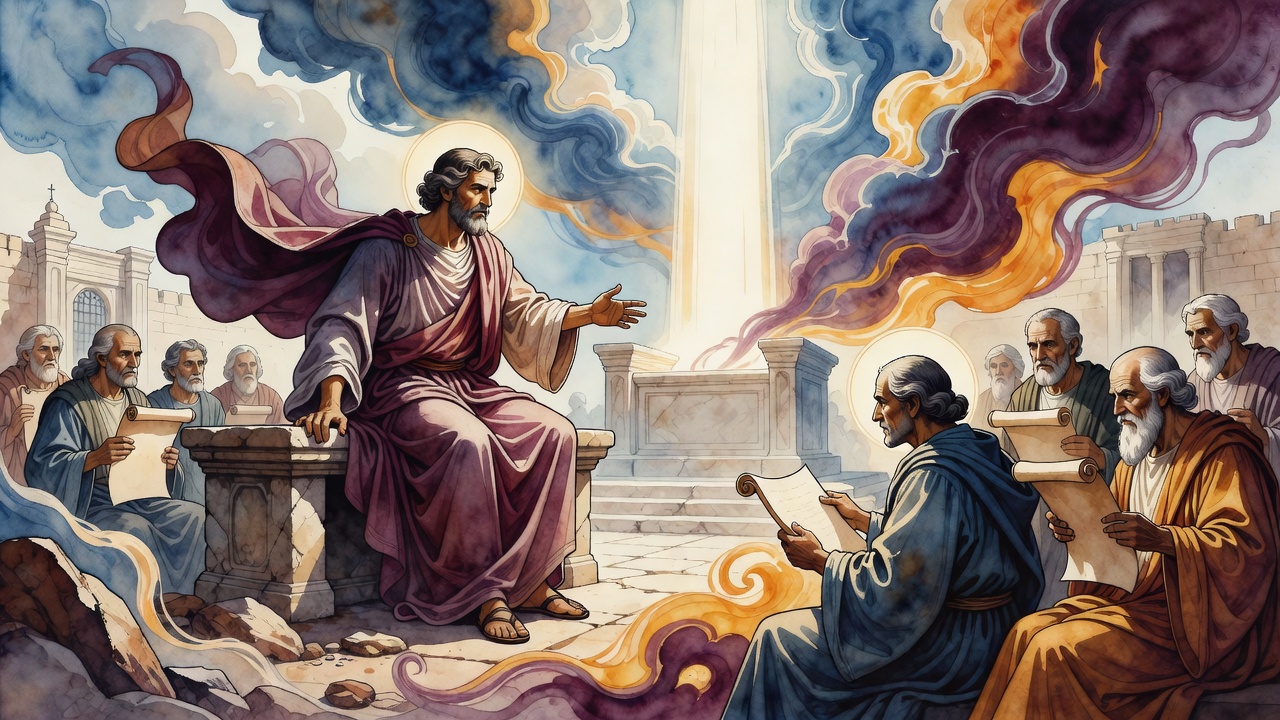
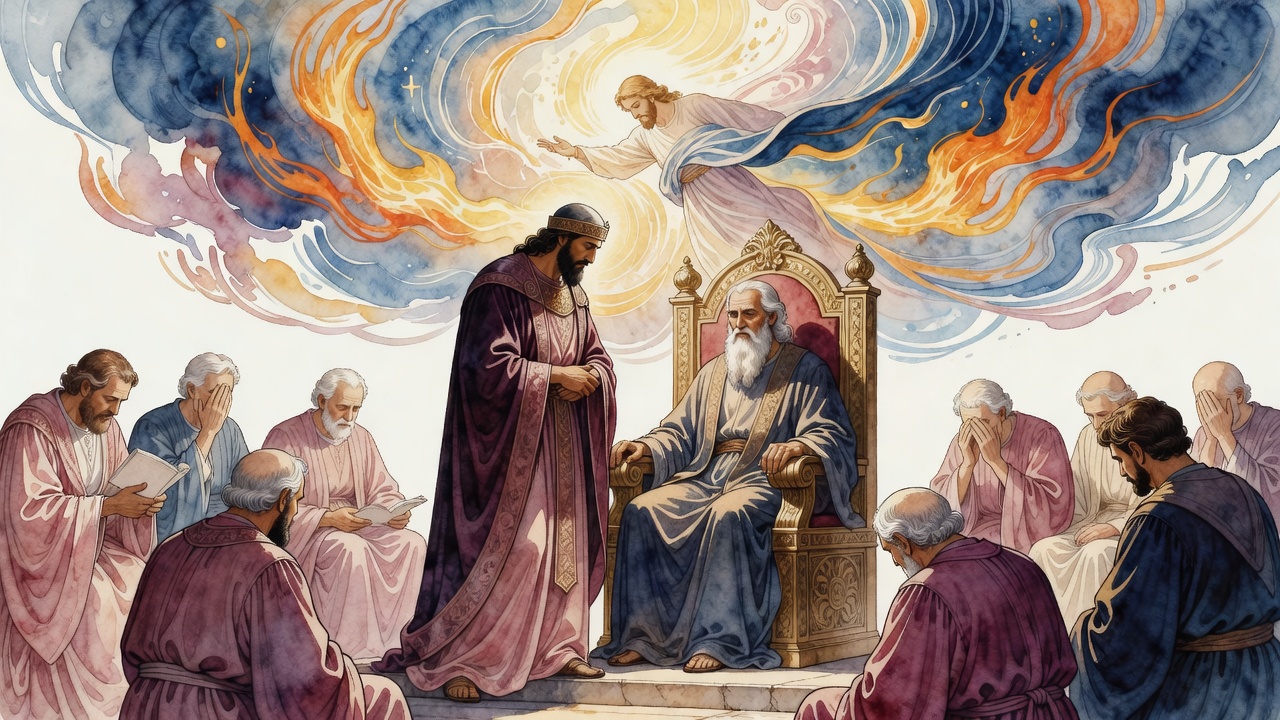
The king of a Hasmonean house arrived with a throne of his own and set it beside Simeon ben Shetah. Wood scraped stone. Purple settled into place as if courts were furniture for royalty. The courtroom suddenly had two centers, and only one of them was legal under the Torah that named no king as immune from standing.
 Click for full size
Simeon looked at the judges who sat with him. "If I send for the king, will you reprimand him?"
"Yes," they said, while the yes was still cheap.
They sent. He came. He sat as if the law were a guest in his palace rather than the other way around.
Stand on Your Feet
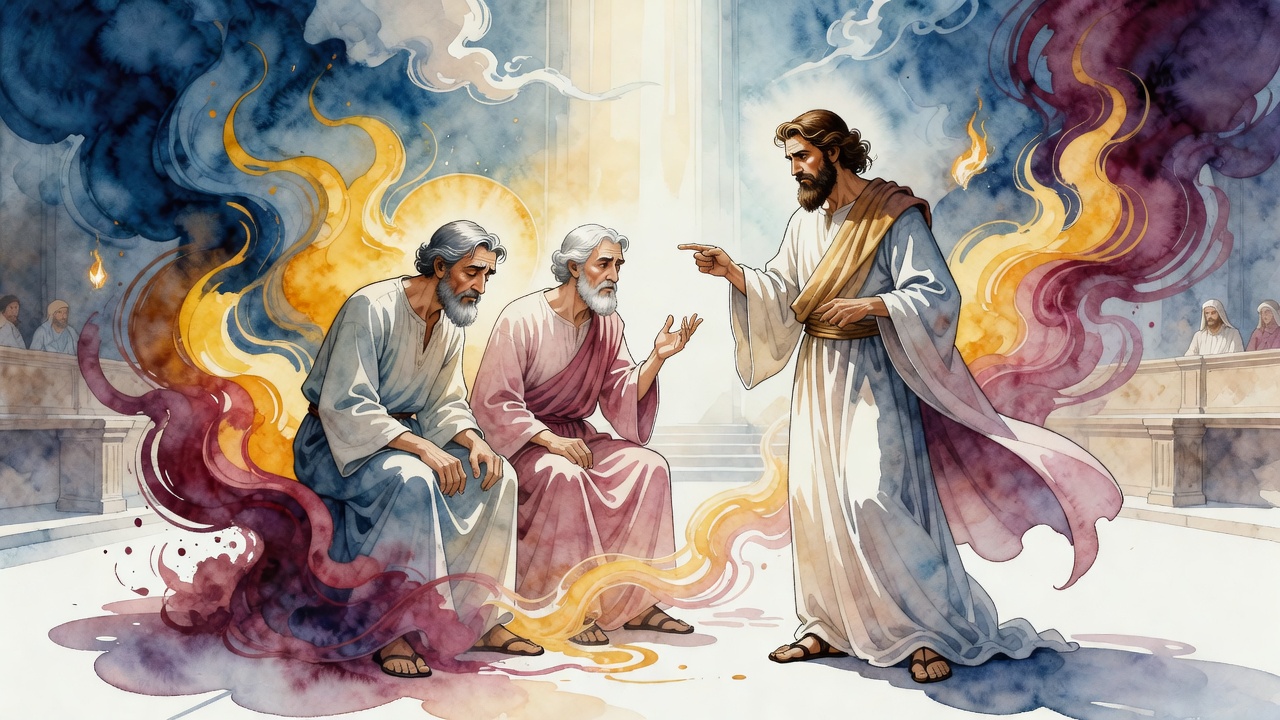
"Stand on your feet and give satisfaction," Simeon said.
"Do we judge a king?" the man answered, and the question hung like a challenge no one wanted to catch.
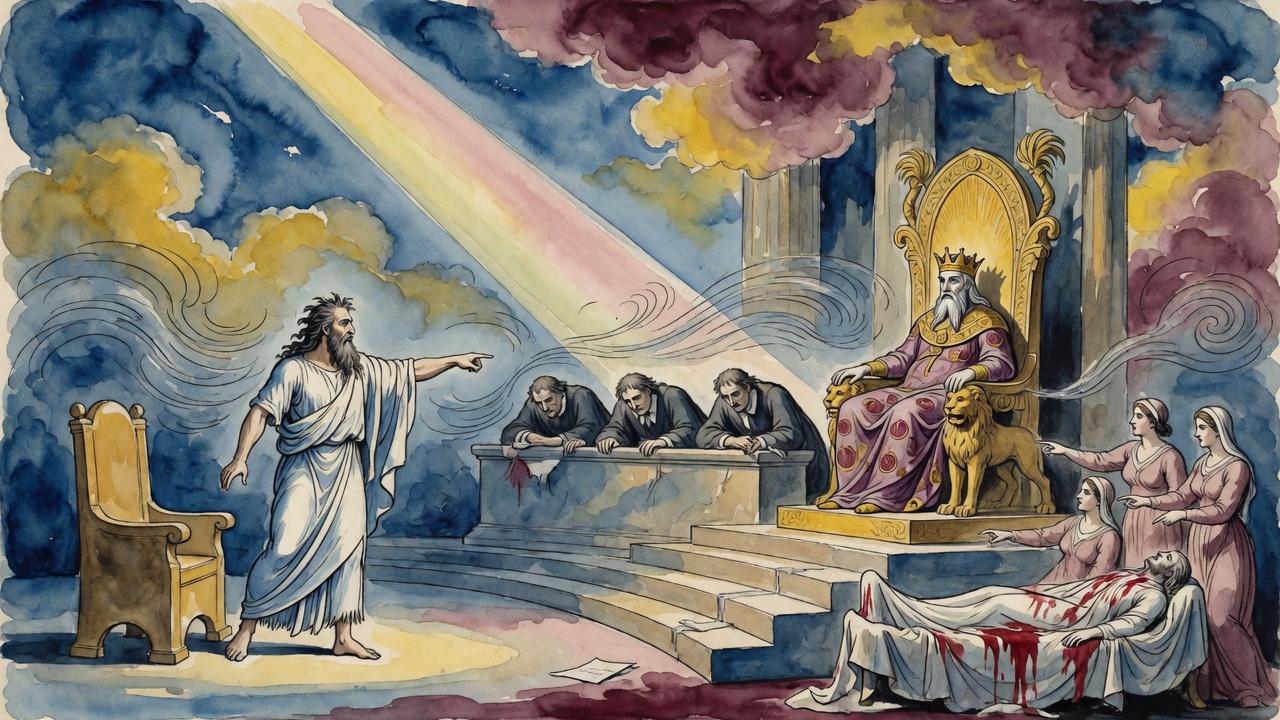
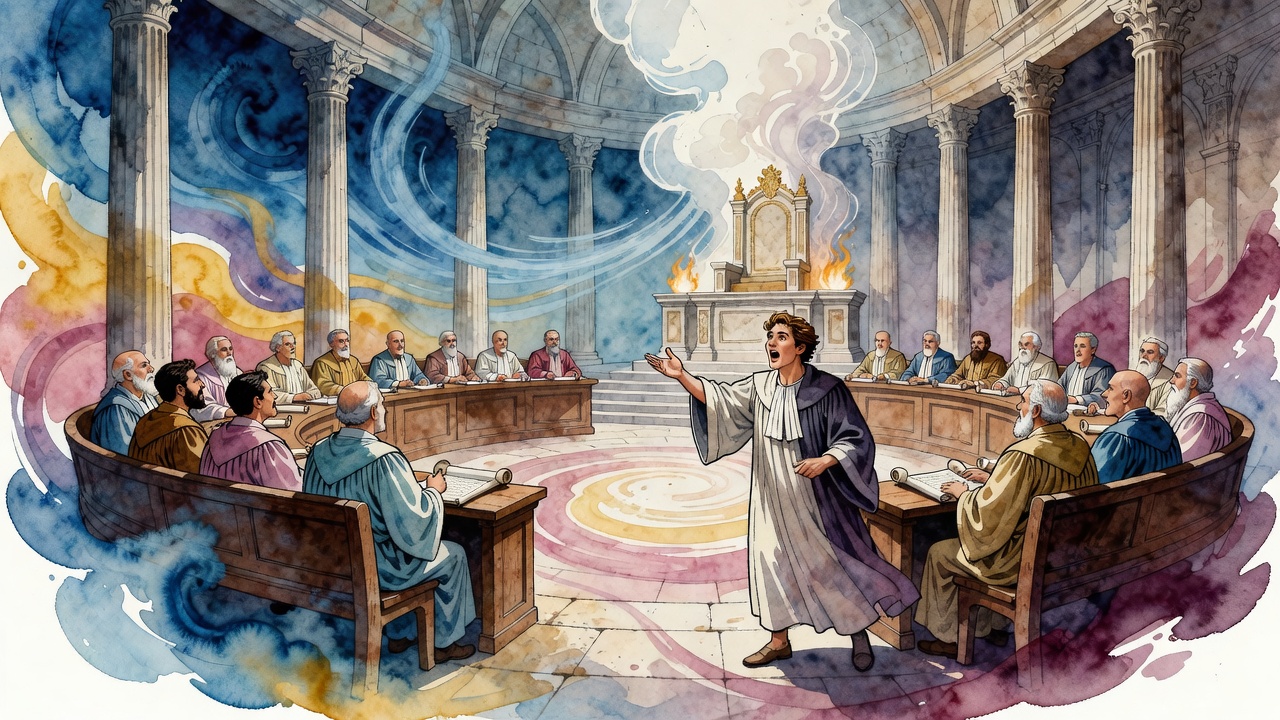
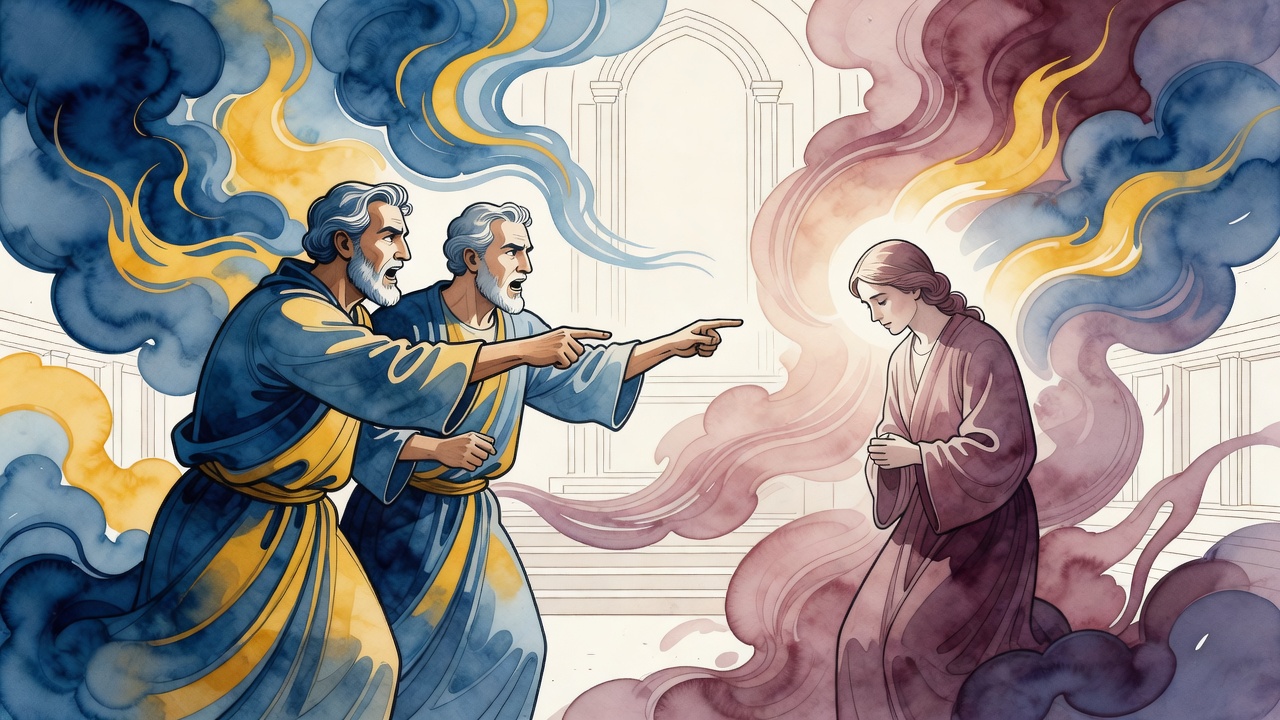
Simeon turned to the right. The judges there pressed their faces into the ground. He turned to the left. Those faces went down too. Courage had been easy in theory when the king was a name. In the room with a living crown it melted into the floor without a speech.
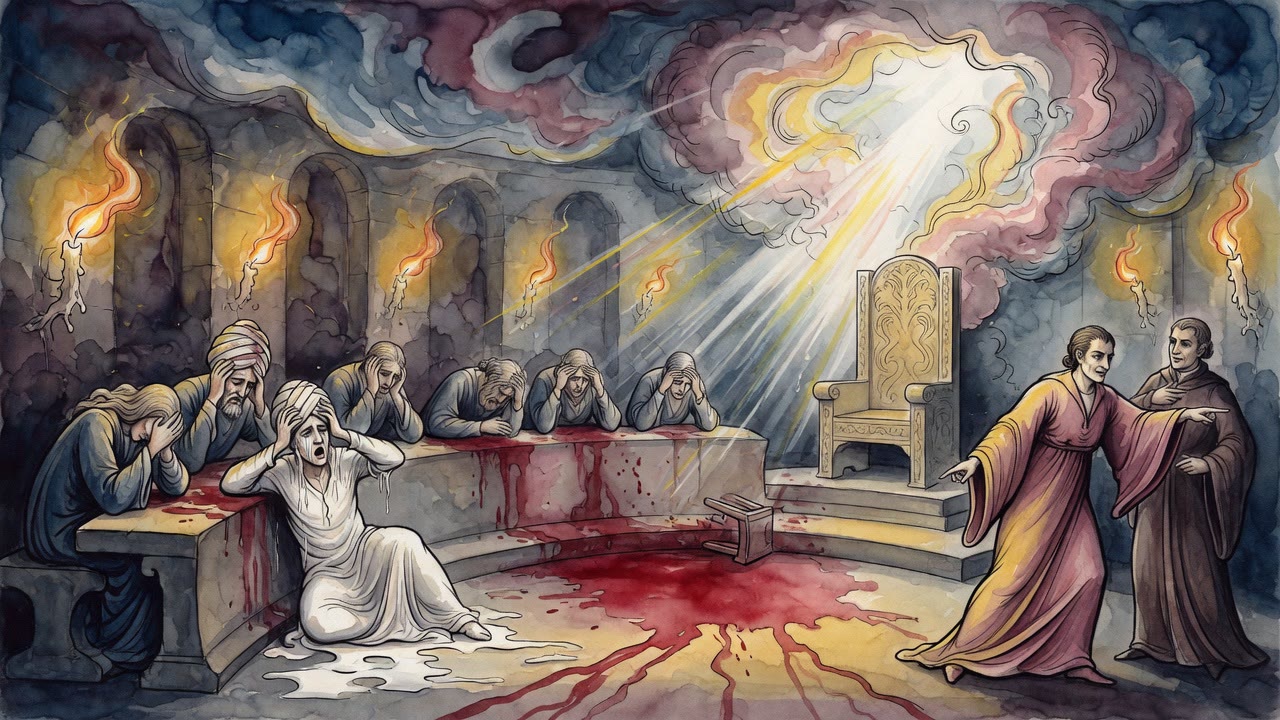
An angel came and struck them until their souls left. The king trembled in a silence full of empty seats. Empty seats do not argue. Empty seats accuse the living of what the dead can no longer fix.
"Stand on your feet and give satisfaction," Simeon said again, "since you are not standing before me, but before the One who spoke and the world came into being." "The two parties to the dispute shall stand before the Lord" (Deuteronomy 19:17). The king stood. Satisfaction was given. The court remembered its real audience, and the purple chair lost its second center.
Judges in All the Gates
Appoint judges in all your gates (Deuteronomy 16:18). Courts on Monday and Thursday in the cities. When a case sticks and local wisdom fails, send it up to the chamber of hewn stone where the higher court sits. "They shall judge the people with righteous judgment" means, for Rabbi Yehudah beRabbi Shalom, that they incline toward merit for Israel before God, not only toward conviction for the sake of looking strict.
Gideon learned the same craft in reverse when the generation was poor in deeds. No advocate for Israel could be found until he spoke merit, and then the angel said, "Go in this strength of yours" (Judges 6:14), the strength of the merit he had argued when no one else would open a mouth. A judge who only condemns has missed half the job. A judge who only flatters has missed the other half. The gate needs both eyes open.
No Partiality, No False Seat
"You shall not turn aside justice; you shall not show partiality" (Deuteronomy 16:19). Not for wealth. Not for honor. The poor must not stand while the rich sit as if legs were a tax on poverty. A sage must not seat beside him a man unfit for jurisdiction; doing so is like planting an asherah beside the altar, a holy place polluted by a false companion. Judges must feel the Divine Presence among them, God standing in the divine congregation (Psalm 82:1).
Jehoshaphat had already warned his courts in language that still stings. You are not rendering judgment for humans but for the Lord (2 Chronicles 19:6). Simeon's king learned it the hard way, with dead colleagues as tutors and an angel as the enforcement that human spines would not supply that day.
A Righteous One You Shall Not Kill
The Mekhilta tightens the same awe into procedure that protects even the disliked. "A clean one and a righteous one you shall not kill" (Exodus 23:7). If one witness saw sun-worship and another saw moon-worship, both saw idolatry and still cannot combine. The accused may be guilty in heaven's ledger. In the earthly court he is called righteous because the testimony fails the Torah's exact match. Two eyes that saw different idols cannot feed a single conviction without lying about what agreement means.
The king who wanted a special chair and the idolater who walks free on a technical mismatch live under one roof of law. Power does not get a softer bench. Suspicion does not get a lazier proof. The Presence that stands in the congregation is not impressed by purple or by zeal that skips the rules.
Simeon stayed seated until the king stood. That is the picture the Tanchuma leaves on the wall of every gate where Monday and Thursday still mean court, and where a throne is only wood until someone forgets.
Gideon argued merit. Simeon demanded feet on the floor. The Mekhilta demanded matching eyes for a capital charge. Three rooms, one awe. The Presence does not leave the congregation when a purple cloak enters, and the law does not loosen its grip when a king asks if kings are judged.
← All myths