Translation of the source text.Torat Emet (Yalkut Shimoni) · CC-BY-NC
From where do we learn that an edah, a congregation, is ten? It says "congregation" here, and it says "congregation" elsewhere: "How long shall I bear with this evil congregation?" (Numbers 14:27). Just as the congregation stated there was ten, so here it is ten. Rav Simon said: It says "midst" here and "midst" elsewhere; just as the "midst" stated there was ten, so here it is ten. Rabbi Yose bar Avin said: If one derived it from "among those who came," it could be any number. Rather, it says "children of Israel" here and "children of Israel" elsewhere; just as there it was ten, so here ten.
Rav Simon, [in the name of Rabbi] Yehoshua ben Levi, and Rabbi Yose ben Shaul in the name of Rabbi Ami, said: A child may be made an adjunct to ten. But was it not taught: One is not exacting about a minor? Rabbi Asi said, and some say Rabbi Simon: It was needed for two minors, one doubtful and one a minor. The doubtful one is made the main one, and the minor is made the adjunct. It was taught: A minor and a Torah scroll, one makes him an adjunct. Rabbi Yehudah ben Pazi said in the name of Rabbi Asi: If nine appear as ten, one makes him an adjunct. What is the case, a visibly distinct one? Rather, even if a minor is among them. Rabbi Berekhiah and Rabbi Yaakov bar Zavdi asked before Rabbi Simon: Just as one makes him an adjunct to ten, does one make him an adjunct to three? If there, where they utter the Name, one makes him an adjunct, here is it not all the more so? He said to him: This itself is no all-the-more-so. There, where he mentions the Name, one makes him an adjunct; here, where he does not mention the Name, one does not make him an adjunct. This says: for Birkat Hamazon one makes him an adjunct; for prayer and the recitation of Shema one does not make him an adjunct until he grows two hairs.
Rabbi Yose said: Many times I ate with Abba Tachlifa and with Rabbi Hanina bar Sisi, my beloved, and they did not perform zimun over me until I had grown two hairs. Until when may he recite? Rav said: The colleagues were divided, Rabbi Huna and Rabbi Yehudah, both in the name of Shmuel. One said: Until he knows how to bless. One said: Until he knows the character of blessing. They asked before Shmuel bar Shilat: If nine ate bread and one ate vegetables, [what is the law]? He said to them: They perform zimun over him. Eight ate bread and two ate vegetables, they perform zimun over him. Seven ate bread and three ate vegetables, they perform zimun. Six ate bread and four ate vegetables, they perform zimun. Rabbi Avina asked: Half bread and half vegetables, [what is the law]? Rabbi Zeira said: While I was there, I wanted to ask it, and I am pained over you that I did not ask it. Rabbi Yirmiyah asked: This one who ate vegetables, may they perform zimun over him?
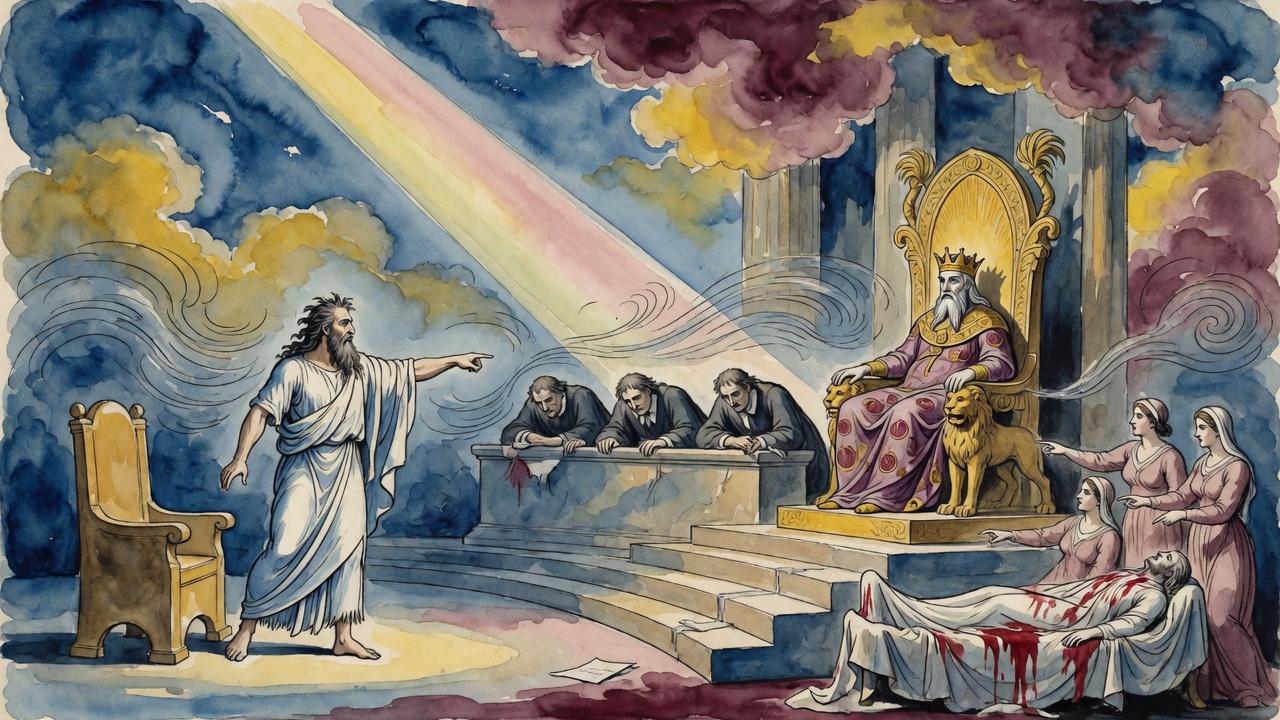
It was taught: Three hundred Nazirites came up in the days of Shimon ben Shatach, and they sought to bring nine hundred offerings. For one hundred and fifty he found an opening, and for one hundred and fifty he found no opening. He went up to Yannai the king and said to him: There are three hundred Nazirites, and they need nine hundred offerings, and they do not have them. Give half for them from what is yours, and I will give half for them from what is mine, and let them go and offer. Yannai gave for them and acted for them. They went and spoke evil speech to Yannai the king against Shimon ben Shatach: Be informed that everything they offered, they offered from what was yours, but he gave nothing at all from what was his. He heard and fled.
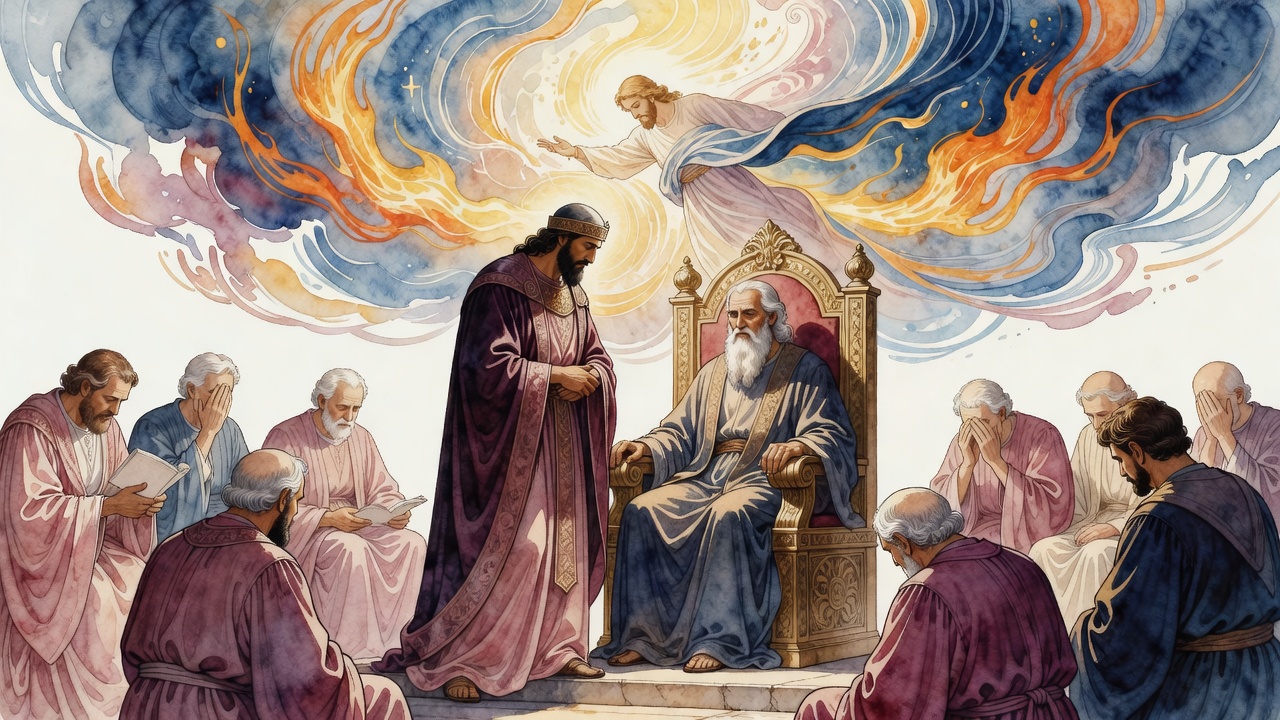
After some days, those Persians came and were dining at the table of Yannai the king. They said to him: We remember that there was one elder here, and he would say words of wisdom to us. He said to his sister: Send and bring him. She said to him: Give me your word, and send me your signet ring, and he will come. He gave her his word. He came and sat between the king and the queen. The king said to him: What is this? He said to him: For so it is written in the book of Ben Sira, "Cherish her and she will exalt you, and among nobles she will seat you." He said to him: And why did you deceive me? He said to him: Heaven forbid, I did not deceive you. Rather, you gave from what was yours, and I gave from what was mine, as it is written, "For wisdom is a defense, and money is a defense" (Ecclesiastes 7:12). He said to him: And why did you not tell me? He said to him: If I had told you, you would not have done it. He said to him: And why did you flee? He said to him: As it is written, "Hide yourself for a little moment, until the wrath passes" (Isaiah 26:20).
He poured him a cup and said to him: Bless. He said to him: Let us bless over the food that Yannai and those reclining with him have eaten. He said to him: In all my days I have never heard this matter from you. He said to him: What do you want me to say, "Let us bless over the food that I have not eaten"? He poured him a second cup. He said: Let us bless over the food that we have eaten from His. Rabbi Yohanan said: His colleagues disagree with Shimon ben Shatach. Rav Yirmiyah said: They disagree about the first wording. Rav Abba said: They disagree about the second. Does Rav Yirmiyah's position switch? There it was doubtful to him, and here it is obvious to him. What was doubtful to him? According to the Rabbis. What was obvious to him? According to Rabban Shimon ben Gamliel. For Rabban Shimon ben Gamliel taught: If one came up, reclined, and dipped with them, even though he did not eat an olive-bulk from grain, they perform zimun over him. But according to the words of the Sages, Rabbi Yaakov bar Acha said: They never perform zimun until he eats an olive-bulk of grain. It was taught: If two ate bread and one ate vegetables, they perform zimun over him. And whose teaching is this? Rabban Shimon ben Gamliel.
"And Joseph's brothers went down, ten" (Genesis 42:3). It would have been fitting for Scripture to say, "the sons of Jacob went down." What is meant by "Joseph's brothers"? At first they did not conduct themselves toward him with brotherhood, but sold him to Arabs. In the end they regretted it. Every day they would say: When shall we search for him and bring him back to his father? And when Jacob said to them, "Go down to Egypt," all of them set their eyes on conducting themselves toward him with brotherhood.
It is written, "He who withholds grain, the nation shall curse him" (Proverbs 11:26). This is wicked Pharaoh, who stored away the grain in the years of famine and did not seek to sell. "But blessing shall be upon the head of the one who sells grain" (Proverbs 11:26). This is righteous Joseph, who fed the whole world during the years of famine and led the whole world like a shepherd who leads his flock in good and level pasture. Concerning him David said, "Give ear, O Shepherd of Israel, You who lead Joseph like a flock" (Psalms 80:1). When famine came in the days of David, he sought mercy before the Holy One, blessed be He: Master of the universe, lead Your flock like Joseph, who led the world and fed them during the years of famine.
When the famine grew strong, the Egyptians came to Joseph. They said to him: Give us bread. He said to them: My God does not feed the Egyptians unless you go and circumcise yourselves. They went to Pharaoh and cried out before him, as it is said, "And all the land of Egypt was famished, and the people cried to Pharaoh for bread" (Genesis 41:55). He said to them: "Go to Joseph." They said to him: We already went to him, and he speaks extra matters with us. He said: What does he speak with you? They said: Matters that cannot be repeated. He said to them: Even so, what does he speak with you? They said: He says to us, Go circumcise yourselves. They said: Did we not tell you from the beginning, he is a slave, and it is not the way of a slave to rule as king over us? He said to them: Fools, did a herald not go out before him all those years of plenty, saying that famine was coming? Why did you not set aside grain for one year, or two, or three? At that moment they wept and said to him: Even the grain rotted. He said to them: Was no flour left from yesterday? They said to him: Even the bread that was in our basket rotted. He said to them: Fools, if he decrees against grain and it rots, perhaps he will decree against us and kill us. He said to them: Even if he tells you, Cut from your flesh and feed it to ostriches, listen to him: "Whatever he says to you, do" (Genesis 41:55).
"And the famine was upon all the land" is not written here, but "upon (all the face) [the face of all] the land" (Genesis 41:56). The famine began first only among the rich, for "face" here means the rich. When a person is rich, he has a cheerful face when he sees his fellow. Once he is poor, he has no face, because he is ashamed before his fellow.
(Genesis 42:6) Rabbi Yehudah beRabbi [Simon] said: Joseph also knew that his brothers were going down to Egypt. What did he do? He placed guards at ten gates. He said to them: Whoever enters by a gate, write down his name and bring it before me. This one would call out, "Reuben son of Jacob," and that one would call out, "Simeon son of Jacob," and so each one. Joseph said to them: Seal all the storehouses and open one. He gave their names to the one appointed over that storehouse. He said to him: When these men come to buy food, seize them and send them before me. Several days passed and they did not come. He sent men after them to the marketplace, gave them signs for them, and said: If you see them, seize them. They went and found them in the market of prostitutes. And what was their business in the market of prostitutes? Rather, they said: Because Joseph was handsome, they must have placed him in a booth of prostitutes. Immediately they seized them and brought them before Joseph, as it is said, "And Joseph was the ruler over the land" (Genesis 42:6).
Another interpretation: "And Joseph was the ruler" (Genesis 42:6). Joseph decreed three decrees: that no slave enter there and buy grain; that no person enter with two donkeys; and that no person enter until he wrote his name, his father's name, and his grandfather's name. Manasseh was there before him and received the slips. They said: Let us enter and see him. If we find him occupied with us only in customs and taxes, that is good. If not, in the morning we shall see what we do.
(Genesis 42:7-12) "Joseph saw his brothers and recognized them, and made himself a stranger to them." He became like a foreigner to them. He took the goblet and struck it, and he said to them: You are spies. They said: We are honest. He said to them: If you are honest, why did you not all enter through one gate? They said to him: Our father already commanded us. He said to them: What was your business in the market of prostitutes? They said to him: We lost a lost object, and we are searching for it, and we said: Perhaps we will find it there. He said to them: I see in the goblet in my hand that two of you destroyed a great city in Shechem, and one of you sold to Arabs. Immediately they trembled. They said to him, "We are twelve brothers" (Genesis 42:32). He said to them: And where are two of you? They said to him: One is dead, and one is with our father. He said to them: Go and bring him to me.
They went to their father. They said to him: Thus the man spoke to us, thus he distressed us. He said to us, "You are spies," and he said to us, "Bring your youngest brother" (Genesis 42:34). Jacob said to them: And where is Simeon? They said to him: He seized him from us. He said to them: You have added grief to my grief, as it is said, "And Jacob their father said to them: You have bereaved me," and so on (Genesis 42:36). "And Reuben spoke to his father, saying, You may kill my two sons" (Genesis 42:37). He said to him: How are your sons different from my sons? Judah said to them: Wait for the elder until the bread is gone from the house. Once it was gone, Judah said to him: Father, if Benjamin goes with us, perhaps he will be seized and perhaps he will not be seized. If he does not go with us, we will all die of famine. Better that you leave the doubtful and take hold of the certain. He said: Who will be responsible for him? He said to him, "I myself will be surety for him" (Genesis 43:9). Immediately he sent him with them. And once Joseph lifted his eyes and saw Benjamin, he rejoiced, because Benjamin resembled his mother.
Mari bar Isak had a brother come to him from Bei Chozai. He said to him: I do not know you. He came before Rav Chisda. He said to him: He has spoken well to you, as it is written, "Joseph recognized his brothers, but they did not recognize him" (Genesis 42:8). This teaches that he left without the seal of a beard and came with the seal of a beard. He said to him: Go bring witnesses that you are his brother. He said to him: I have witnesses, but I am afraid of him, for he is a powerful man. He said to the other one: You go bring witnesses that he is not your brother. He said to him: Is this the law? The one who seeks to extract from his fellow bears the burden of proof. He said to him: This is how I judge you and all powerful men like you. In the end he brought witnesses, and they testified about him that he was his brother. He said to him: Go divide with him. He said to him: Let him also divide with me in the orchards and gardens that I planted. He said to him: He has spoken well to you, for we learned: If one left adult sons and minor sons, and the adult sons improved the property, the improvement belongs to the middle, to all of them. Is it comparable? There, the adults know about the minors and waive their claim; here, did he know, so that he waived? The matter rolled around and came before Rabbi Ami. He said to them: They said more than this, that one assesses for them like a sharecropper. Now shall we not give him even what is his? They brought it back before Rav Chisda. He said to them: Is it comparable? There he entered with permission; here he did not enter with permission. And further, he is a minor, and one does not bring a relative down into the property of a minor. They brought it back before Rav Ami. He said: They did not specify before me that he was a minor.
Rabbi Levi said: "Joseph recognized his brothers" when they fell into his hand, "but they did not recognize him" when he had fallen into their hand (Genesis 42:8). "We are all sons of one man" (Genesis 42:11). The holy spirit flashed within them, and they said: You and we are sons of one man. "And he said: No, but you have come to see the nakedness of the land" (Genesis 42:12). Just as a person has limbs, so the land has limbs: "the head of the dusts of the world"; "and it covered the eye of the land" (Exodus 10:5); "and the earth opened its mouth" (Numbers 16:32); "a land that eats its inhabitants" (Numbers 13:32); "and underneath are the everlasting arms" (Deuteronomy 33:27); "behold, the land is broad of hands"; "He made him suck honey from the rock"; "those who dwell on the navel of the earth" (Ezekiel 38:12). "You have come to see the nakedness of the land" (Genesis 42:12), and "the earth endures forever" (Ecclesiastes 1:4).

 Click for full size