Parshat Pinchas5 min read

Five Sisters Took the Land the Men Had Feared

Zelophehad died without sons, his daughters forced a ruling on inheritance, and the women of the Exodus loved the land more than the men.

Curated by Arthur · Told by Maggid ·
Table of Contents
  1. A Father Without Sons
  2. Confession Without Change
  3. Moses Brings the Case Upward
  4. Women Who Loved the Land
  5. Portion, Name, and Memory
Five Sisters Took the Land the Men Had Feared Click for full size

A Father Without Sons

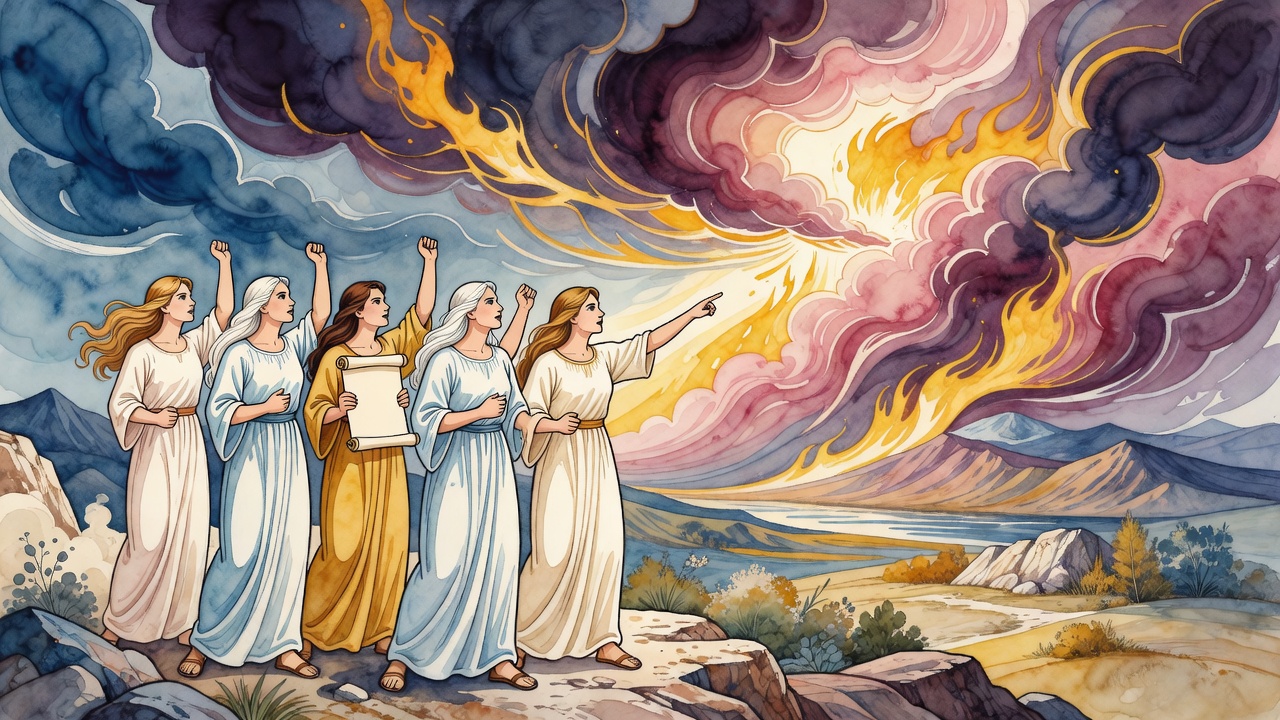
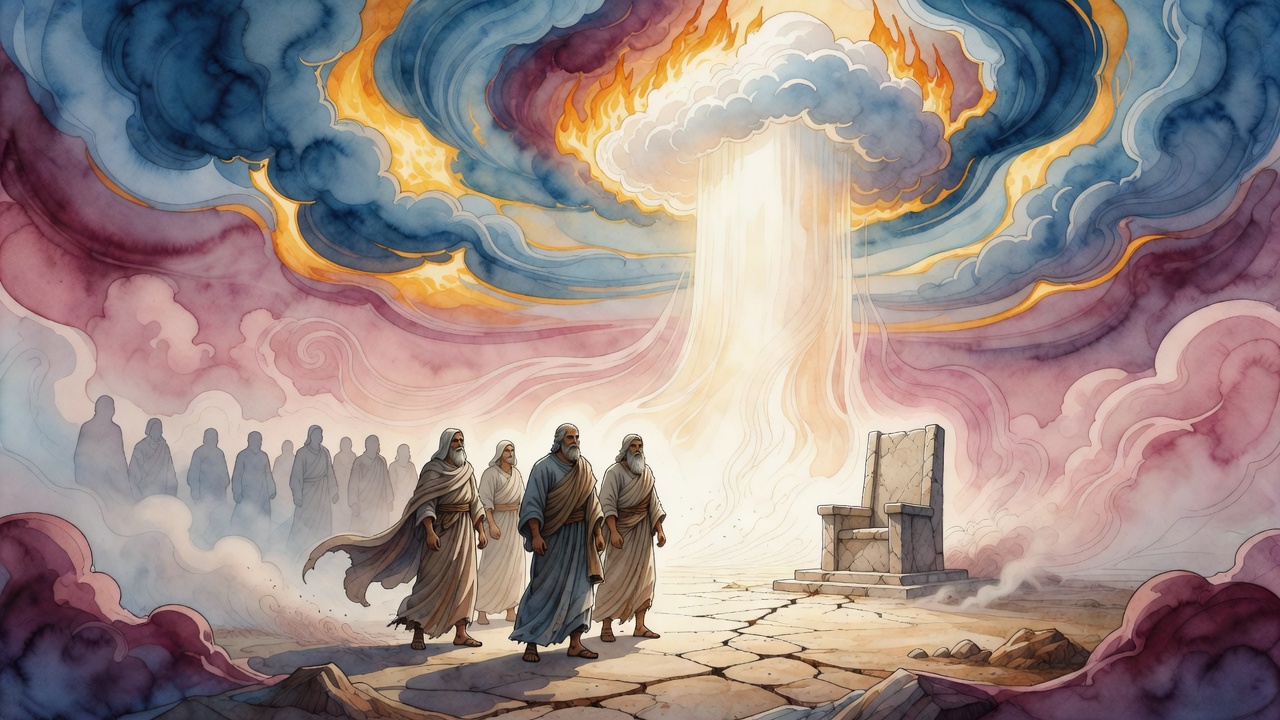
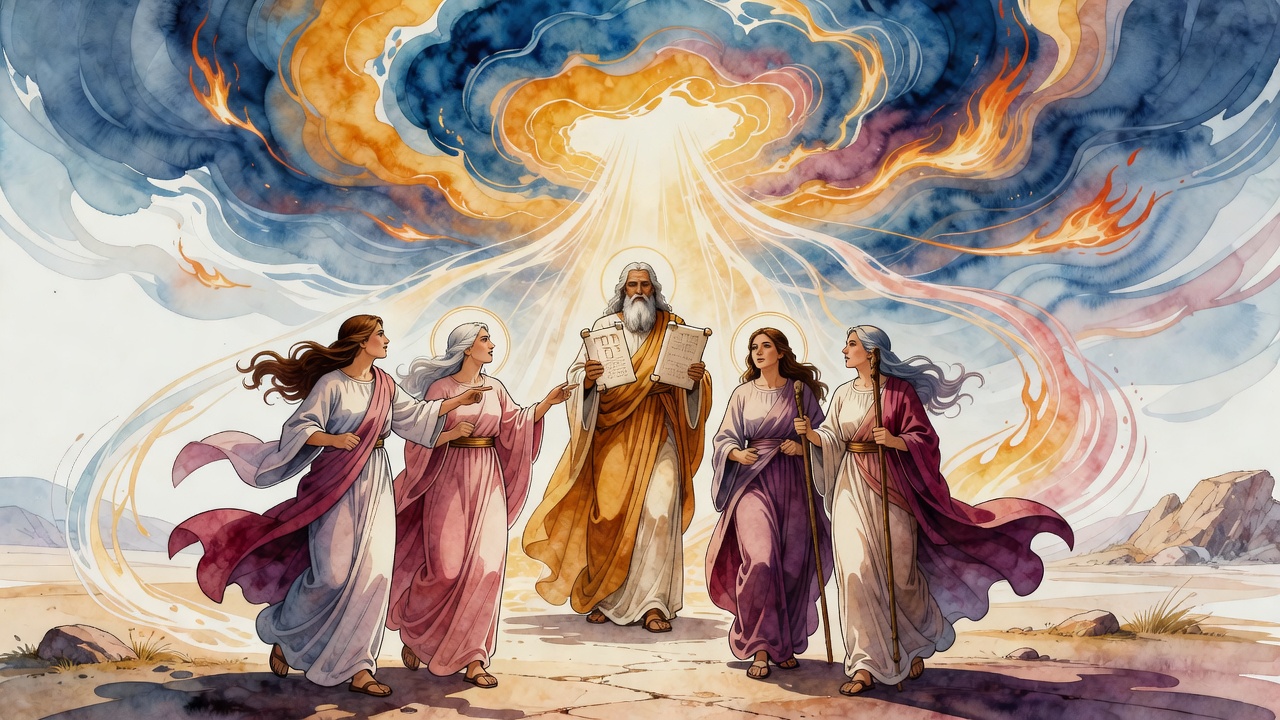
Zelophehad died in the wilderness without male heirs. Under the plain reading of inheritance, his name would thin out of the tribal map and his daughters would stand outside the land's arithmetic. Mahlah, Noah, Hoglah, Milcah, and Tirzah refused that erasure. They did not wail at the tent edge only. They walked to the door of judgment where Moses, Eleazar, the princes, and the whole congregation could hear a claim no statute had yet written in their favor.

Death of a father became a lawsuit of love for a portion in Canaan. The sisters named their fear with precision: if they received nothing, their father's name would drop from his family among his brothers. Land and memory were one demand. They did not ask for charity. They asked for continuity. A house without sons still has a claim if heaven says the name must not die on the sand.

Five women facing a male court could have been waved away. They were not. Their courage made the silence around inheritance law suddenly loud.

Confession Without Change

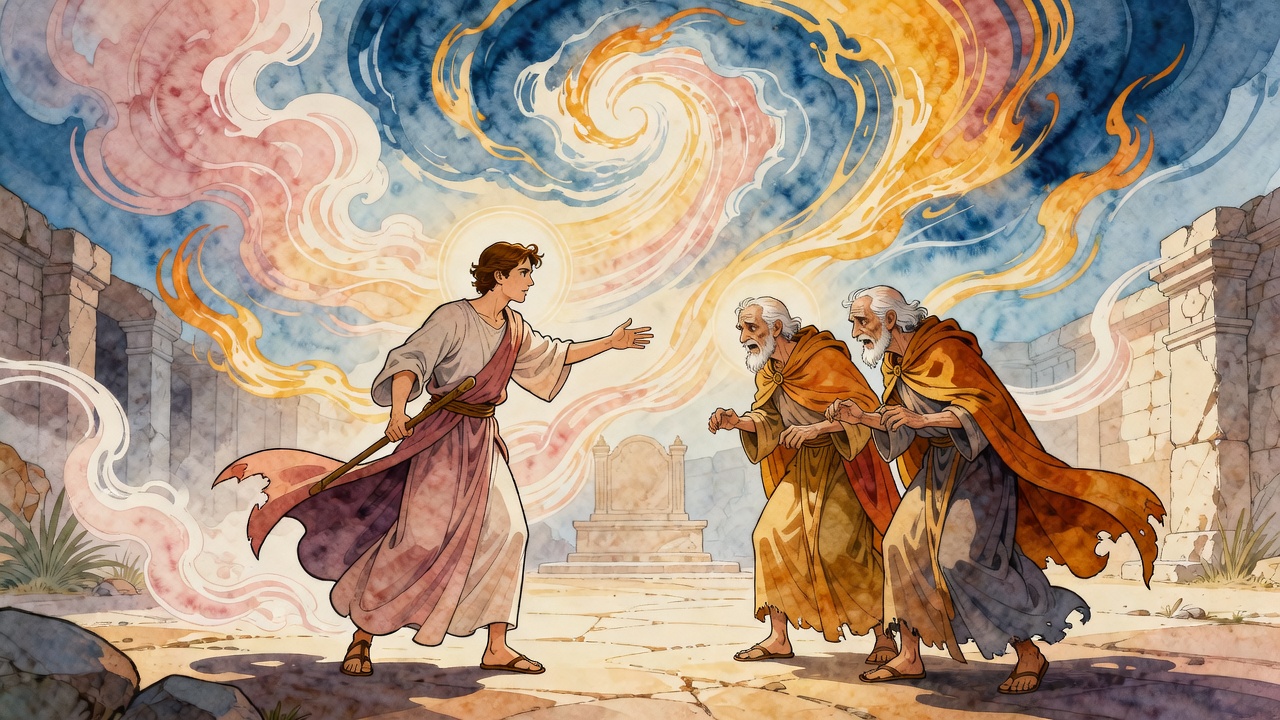
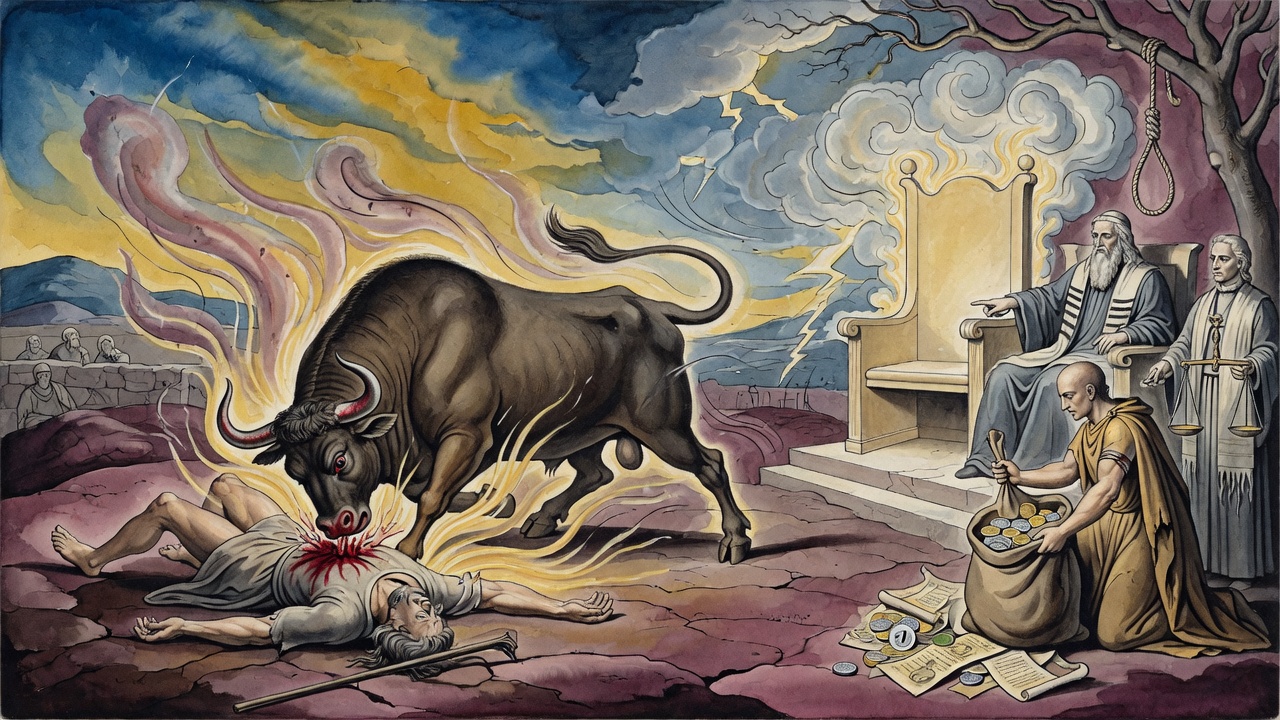
Tradition also turns on men who confessed sin and thought the words alone finished the work. True return, the teaching says, is changed action, not a sentence spoken once toward heaven. Those who stopped short of repair met a fire that confession could not cool. Gehinnom, in that reading, has room for mouths that apologized and feet that never turned. Beside that warning, the sisters look even sharper. They did not only speak sorrow. They moved the court. They forced a living repair of a law that would have left them landless.

Empty regret elsewhere in the wilderness story shows what speech without change is worth. Active justice in the sisters' mouths shows what speech with risk can win. One path ends in fire talk. The other ends in statutes that still name five women when the portion lists are read.

The contrast is deliberate in the legends. Men who said sorry and stayed the same stand near women who said give us our due and changed the book.

Moses Brings the Case Upward

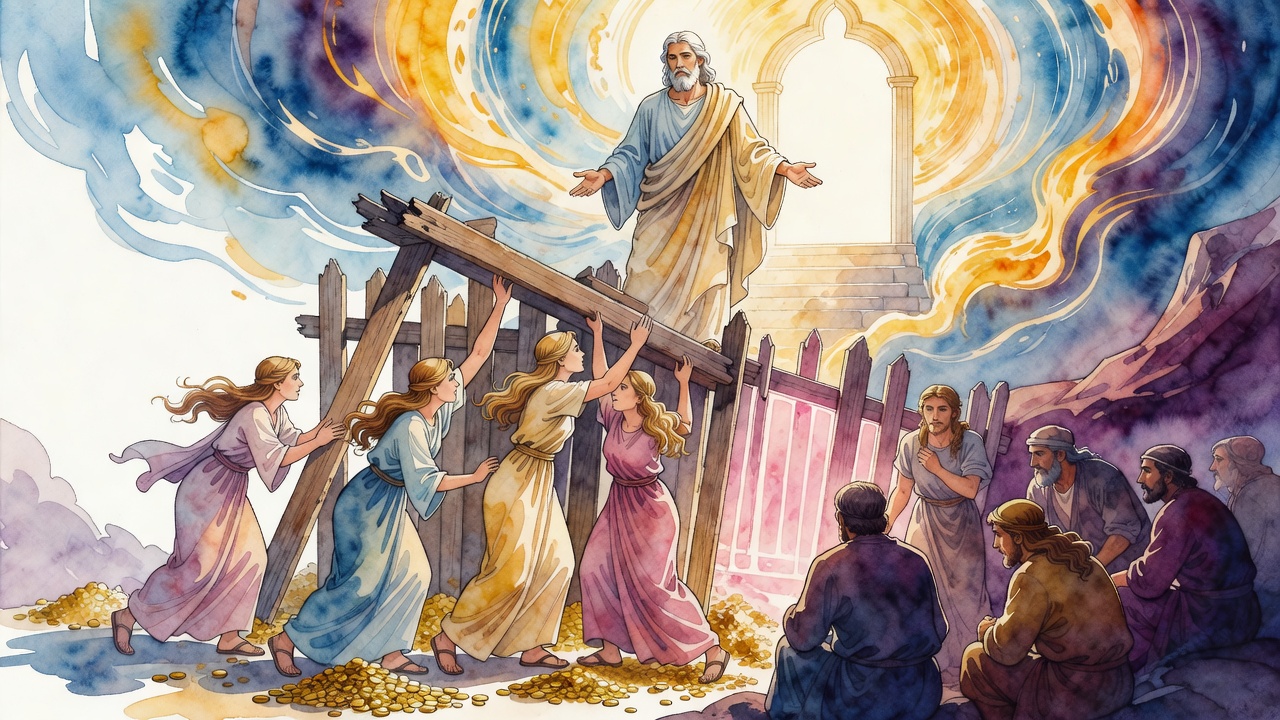
Moses did not dismiss them as nuisances. He brought their claim before God. The answer came clear. The daughters of Zelophehad spoke right. Transfer the inheritance. Write the rule for any man who dies without a son, so that his holding passes through his daughter and the name stays tied to soil. A gap in Torah became a revealed clause because five women refused to treat silence as destiny.

Later limits about marriage within the tribe protected the map from dissolving across borders of inheritance. The first word, though, was yes. Wisdom in their mouths matched justice in heaven's reply. The generation of complainers watched a lawful boldness succeed where panic had failed. Moses, who often stood between wrath and the people, here stood between an incomplete custom and a fuller law, and he chose to ask rather than invent.

That asking is itself leadership. Not every answer lives ready on a leader's tongue. Some must be fetched from the same Voice that spoke at Sinai.

Women Who Loved the Land

The wider teaching says the women of the Exodus loved the land more than the men. Men had cried to return to Egypt and had accepted the spies' terror. Women kept faith with the promise and, in the reckonings of the sages, held back from the worst of the calf and the scout panic. When the sisters stood up, they stood as the sharp edge of that larger loyalty. They wanted acres in a country their brothers had feared. Love of the land looked like legal courage, not soft sentiment.

While some men measured giants, these daughters measured parcels and names. The contrast is the story's spine. Fear wrote forty years. Desire for a rightful share wrote a chapter of inheritance law. A generation can be judged not only by who fell in the desert but by who still wanted the soil on the other side hard enough to argue for it in public.

Portion, Name, and Memory

Zelophehad's death could have been a quiet loss in the census rolls. His daughters made it a hinge. They saved a name from blankness and opened a road for every later house without sons. Their speech came with risk, public standing, and a demand that could have been refused. It was not refused. In the long march, some victories are walls falling and some are lines added to the book of law. The five sisters won the second kind, and the land they never feared became, in principle, theirs to hold.

Men who had wept for Egypt learned that the future of Israel sometimes arrives in the voices of women who still want the soil their fathers only glimpsed. Gehinnom 's (the realm of judgment after death) warning about false repentance and Canaan's open gate for true claimers share one wilderness. Between them walk Mahlah, Noah, Hoglah, Milcah, and Tirzah, carrying a father's name through a courtroom into the map of the tribes. That is how a death without sons becomes a life for a law that outlives the generation of fear.


← All myths
From the tradition

Sources

4 sources

The texts behind this telling. Some cards carry a translation of the source; others are our own retelling of it, and each card says which. Every card links out to the original.

Legends of the Jews 4:118Legends of the Jews

Retold in our words. Read the original at the link below.The Legends of the Jews by Louis Ginzberg (1909) · Public Domain

They confessed their sin, thinking that should be enough. But here's the thing: true repentance isn't just saying you're sorry. It's about changing your actions.

God, in his infinite mercy, gives them a way out, a chance to avoid immediate disaster. He instructs Moses, as we find in the text, to tell the people: "The Amalekites and the Canaanites are now dwelling in the valley, to-morrow turn you, and get you into the wilderness by the way of the Red Sea."

Why this detour? Because God, knowing what was in store, wouldn’t actively help them in a war against the inhabitants of Palestine at this point. They weren't ready. And if they tried to force their way in, annihilation was almost certain. God even says, "It had been My intention to exalt you, but now if you were to attempt to make war upon the inhabitants of Palestine, you would suffer humiliation." Ouch.

Did they listen? Of course not! That would be too easy, wouldn’t it? Instead, they thought, "Oh, we said we were sorry. Surely, God will back us up now!" They figured their transgression was just a little slip-up, a peccadillo, easily forgiven. "Surely these few drops have not filled the bucket," they reasoned.

Big mistake. Huge.

They completely disregarded God's instructions and, all at once, formed a battle array to attack the Amorites. They charged ahead without the Aron Kodesh, the Holy Ark, in their midst! It was a recipe for disaster.

As the text vividly describes, the enemies swarmed down on them like bees. Remember how the Israelites used to strike fear into the hearts of their enemies? Well, those days were gone, at least for now. According to Legends of the Jews, a single blow from the enemy was enough to kill an Israelite.

The attempt to wage war without divine guidance proved to be a miserable failure. Many of them, including Zelophehad, met their death. Others returned to camp wounded and defeated. The people wailed and wept, but it was too late. God remained firm in His resolve.

Their disobedience had brought grave punishment upon themselves. God tells Moses, "If I were to deal with them now in accordance with strict justice, they should never enter the land. After a while, however, I shall let them 'possess the land, which I sware unto their fathers to give unto them.'"

So, what’s the takeaway here? It's not enough to just say you're sorry. True repentance requires a change in behavior, a willingness to listen to and follow divine guidance. The Israelites learned this lesson the hard way. They were so focused on their own desires that they missed the opportunity for true redemption, and they paid the price. And sometimes, the path to redemption is a long and winding road.

Full source
Legends of the Jews 6:76Legends of the Jews

Retold in our words. Read the original at the link below.The Legends of the Jews by Louis Ginzberg (1909) · Public Domain

Your father has died, leaving no sons. Now, under the laws of inheritance, you and your sisters are facing a grim future: no land, no security, no real place in the community. What do you do?

Well, these women, whose names the Torah preserves as Mahlah, Noah, Hoglah, Milcah, and Tirzah (Numbers 27:1), weren’t about to accept their fate quietly. They were wise, learned, and knew their Torah. They saw an opening when Moses, in the house of teaching, was reciting the law concerning yibbum, levirate marriage.

This gave them an idea. They approached Moses with a powerful, elegantly constructed argument. "If we are as good as our brothers," they said, "then we should lay claim to our father's inheritance, and to his share of the land." But then came the zinger: "But if we are not to be considered as sons, then should our mother have to marry her brother-in-law, as our father has left no issue, since we do not count?"

They weren't just pulling this out of thin air. They carefully built their case, anticipating counter-arguments. They pointed out that their father, Zelophehad, wasn't among the spies who slandered the Land of Israel, nor was he a follower of Korah, whose rebellion led to their demise, thus forfeiting their claim to land. No, Zelophehad had met his end when some men, against Moses' warnings, tried to attack the Amalekites and Canaanites (as Rashi and others clarify, based on Sifrei Bamidbar 115). A brave, but ultimately fatal, act.

"Had our father left behind a son," they continued, "and that son were now also dead, then we should lay no claim to inheritance if this son had left a living child, even a daughter!" But they were the only descendants. Therefore, "Give us, we pray, 'a possession among the brethren of our father.'"

This is more than just a legal argument; it's a masterclass in rhetorical strategy. They appeal to fairness, to logic, and to the very heart of the law. They highlight the absurdity of their situation and force Moses to confront the inherent inequalities within the existing system.

What happens next? Moses, realizing the complexity and importance of the matter, takes it directly to God. And God, as we know, sides with the daughters of Zelophehad. This sets a new precedent in Jewish law, a precedent that recognizes the rights of women in inheritance.

What can we learn from this story? It’s a powerful reminder that even within seemingly rigid systems, there's always room for dialogue, for questioning, and for fighting for what is right. The daughters of Zelophehad teach us that even when the odds are stacked against us, we can, with wisdom and courage, challenge the status quo and create a more just world. Their story, preserved for millennia, continues to inspire us to speak truth to power and to never give up on the pursuit of justice.

Full source
Legends of the Jews 6:77Legends of the Jews

Retold in our words. Read the original at the link below.The Legends of the Jews by Louis Ginzberg (1909) · Public Domain

Sometimes, it's not who you expect.

In the story of the Israelites wandering in the desert, fresh from their Exodus from Egypt, readers often focus on the big figures: Moses, Aaron, the rebellious spies. But The source turns to the women of that generation for a moment. Their quiet strength and unwavering faith shine through, especially when things got tough. After hearing the spies' discouraging report about the Land of Israel, the men were ready to give up. "Let us make a captain, and let us return to Egypt," they cried. (Numbers 14:4) tells us this directly. But the women? They had a different idea. They stepped forward, declaring, "Give us a possession among the brethren of our father" (Numbers 36:2). They yearned for a share in the Promised Land, a future rooted in faith.

This, according to some rabbinic traditions, reveals a profound difference between the men and women of that generation. The women's desire for a connection to the Holy Land, their insistence on building a future there, demonstrates a deeper piety, a stronger commitment to God's promise. The text we're exploring here says that the women of this generation were "much better and more pious" than the men. Bold words!

It wasn't just during the spy debacle. Consider the Golden Calf incident. While the men were busy indulging in idolatry, the women, according to some accounts, tried to stop them! They attempted to restrain their husbands and sons from sin, clinging to the covenant they had made with God. Because of this steadfastness, only the men who succumbed to the spies' temptation faced death in the desert. The women, on the other hand, were granted entry into the Promised Land.

What does this tell us? Perhaps it’s a reminder that faith isn't always loud or showy. Sometimes, it’s the quiet, persistent voice that guides us back when we're lost. It's the unwavering commitment that endures even when hope seems dim.

Some traditions even speak of a woman named JochebedMoses, Aaron, and Miriam's mother – living to the astonishing age of 250! She outlived all her children and was, unbelievably, permitted to enter the Promised Land herself.

Remember their quiet strength, their unwavering faith, and their yearning for a future rooted in God's promise. They may not have been the loudest voices, but their actions speak volumes about the power of faith and the importance of holding onto hope, even in the darkest of times. What lessons can we draw from their example today?

Full source
Legends of the Jews 6:78Legends of the Jews

Retold in our words. Read the original at the link below.The Legends of the Jews by Louis Ginzberg (1909) · Public Domain

Legends of the Jews turns to Death of Zelophehad of Moses.

These weren't just any women; they were on a mission. Their father, Zelophehad, had died without sons, and they were determined to claim their right to his inheritance in the land of Israel. Now, it first appears they went straight to Moses, the ultimate authority. But, according to the Legends of the Jews, as retold by Ginzberg, their journey was far more circuitous.

They started small, approaching the "captains of tens," the lowest-ranking officers. "This is an important matter," these captains said, "since it touches upon laws of inheritance. It doesn't become us to decide this matter; greater men than we must settle it." So, they passed the buck, sending the sisters to the "captains of fifties."

The captains of fifties, mindful of the respect due to the captains of tens, also demurred. And so, the daughters of Zelophehad were sent on to the "captains of hundreds," then to the "captains of thousands," and finally to the "princes of the tribes." Can you feel their frustration building? It’s like an endless game of telephone, each level hesitant to make a decision that might overstep their bounds.

Finally, they reached Moses. He could have, in his authority, decided the case immediately. But Moses, in his legendary humility, thought, "There is still a higher authority than I, to wit, God." So, he waited, seeking divine guidance.

And what was God's answer? It was a resounding affirmation. "The daughters of Zelophehad have the law on their side," God declared. "For what they desire is in accordance with the law that was written in heaven by Me; give them therefore their father's inheritance, and also two parts of their grandfather Hepher's possessions, for their father Zelophehad was his firstborn and was therefore entitled to a double share."

So, these daughters, through their persistence and the justice of their cause, not only secured their inheritance but also helped to establish a precedent in Jewish law. Perhaps it's about the importance of perseverance, of not being afraid to challenge the status quo when we believe something is right. Or maybe it's a reminder that even the most powerful leaders should seek wisdom and guidance from a higher source. Whatever it is, the story of the daughters of Zelophehad continues to inspire and challenge us today.

Full source