Parshat Pinchas5 min read

The Daughters of Tzelofchad Stood Before Moses

Five sisters walked into the law with no brother to speak for them. They demanded land, and heaven answered through Moses.

Curated by Arthur · Told by Maggid ·
Table of Contents
  1. Not as the Mercies of Flesh
  2. Woe and Welcome in the Same Breath
  3. Seven Days Beside the Mother
  4. The Case Climbs to Heaven
  5. What the Camp Heard

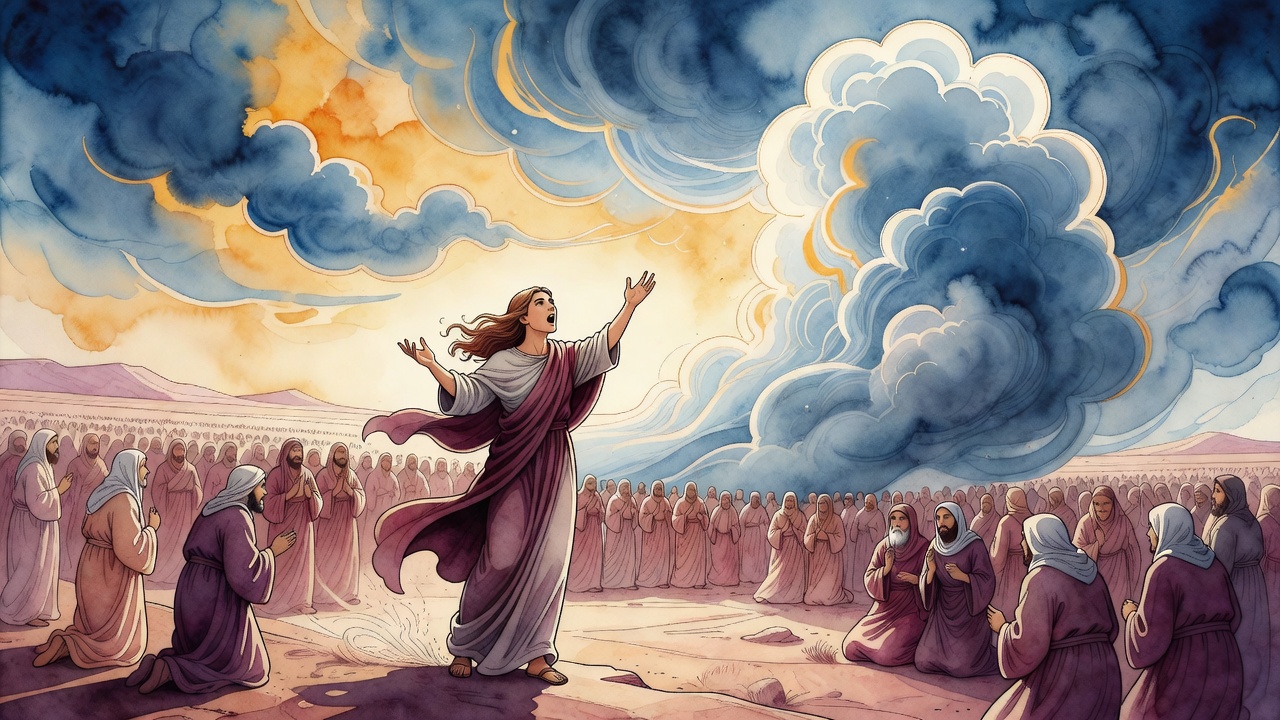
Five women stopped at the entrance of the tent of meeting with dust on their hems and a map of the future in their mouths. Their father was dead. No brother stood beside them. The land was being portioned by the names of fathers, and the first draft of the law seemed to leave them outside the gate.
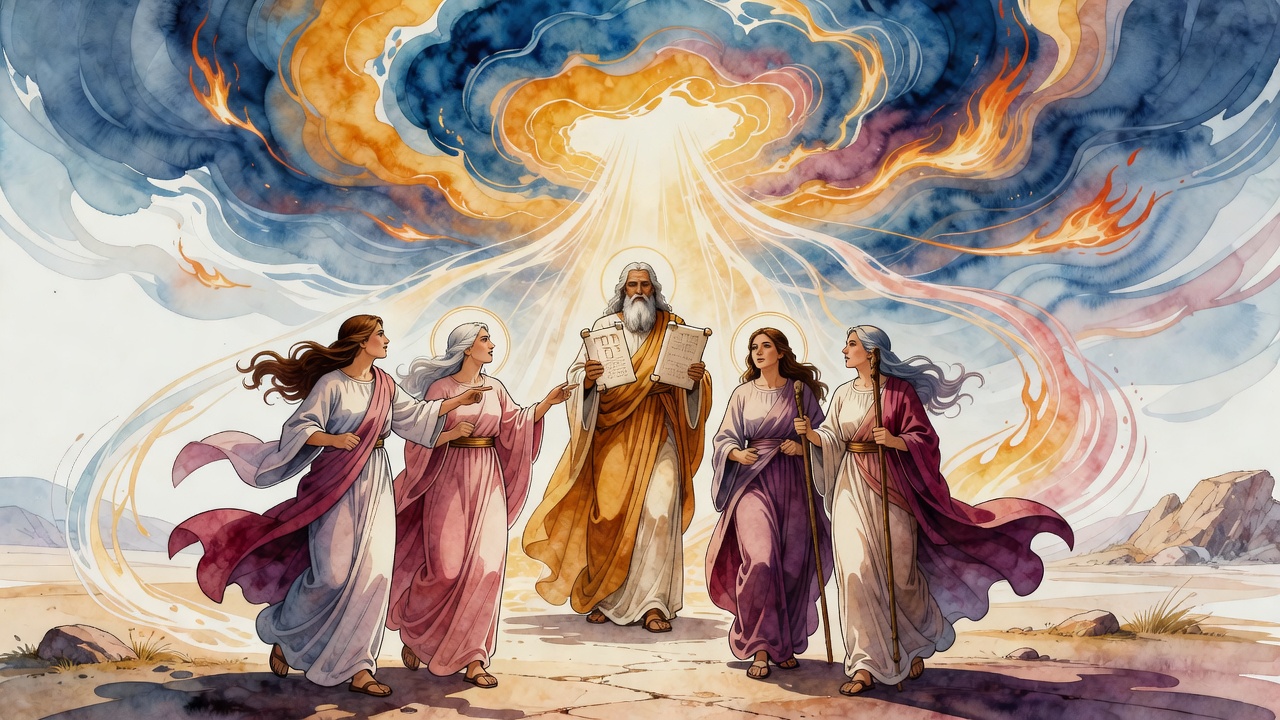
The Daughters of Tzelofchad Stood Before Moses Click for full size

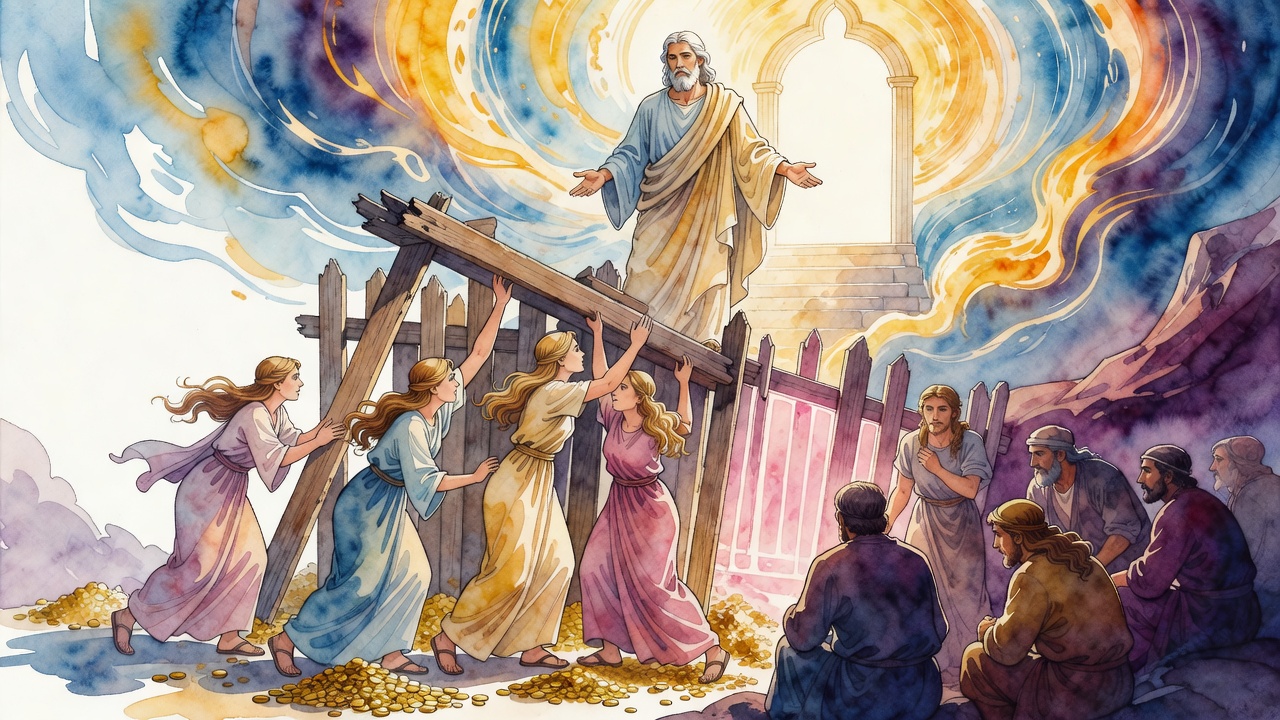
They did not send a messenger. Mahlah, Noah, Hoglah, Milcah, and Tirzah, the daughters of Tzelofchad, walked in together and set their claim before Moses, before Eleazar, before the princes and the whole congregation.

Not as the Mercies of Flesh

"Not as the mercies of flesh and blood are the mercies of the Lord," they said. Flesh and blood tilt toward sons. The One who spoke and the world came into being tilts toward all He made. His mercies are for male and female alike. They brought Psalm and nerve into the same sentence: the Lord is good to all, and His mercies are upon all His works.

The land itself was never only about size. A large field with poor soil could be worth less than a small fertile plot. Division ran between the large and the small by value, not by empty acreage. The sisters understood fairness as quality and standing, not as a joke told at their expense.

Inheritance by the names of the tribes of their fathers shut out proselytes and bondservants from tribal land. It did not, they argued, shut out daughters when no son remained. Their father's name still needed a place on the earth.

Woe and Welcome in the Same Breath

A later satirist put a bitter proverb in the mouth of wisdom literature: males are dear to all, but woe to fathers of females. The proverb was meant to sting. An educator in that tale answered with seven daughters who spun yarn and kept a household green as a garden, and with the simple question that ends the sneer: if there were no females, where would sons come from?

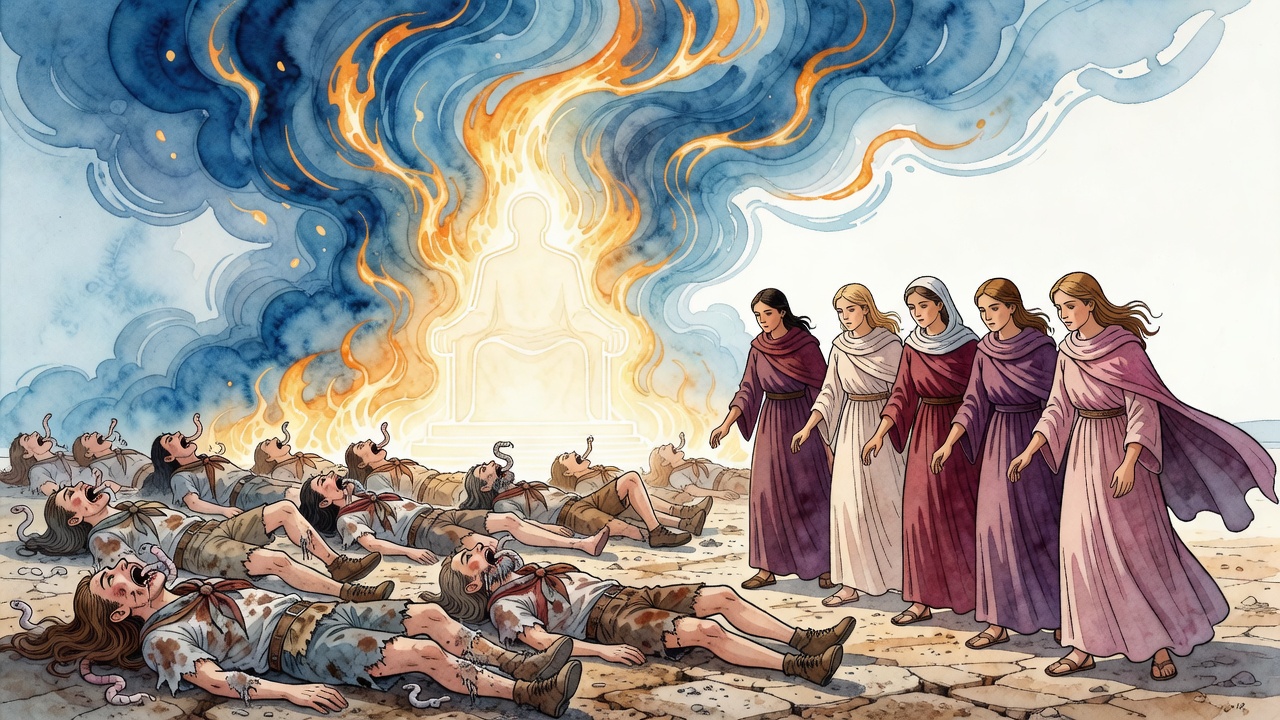
The daughters of Tzelofchad did not argue from satire. They argued from the character of God. Still the old scorn hung in the air of many tents: daughters as burden, daughters as risk, daughters as mouths without portion. Their stand turned burden into claimants and risk into courage.

Seven Days Beside the Mother

The law of firstborn beasts taught patience around new life. Seven days a firstborn animal stays with its mother, truly beside her, close enough to nurse. Priests who grab gifts early look like men loitering at a threshing floor for private gain. Holy gifts require holy timing.

The sisters' claim was not greed for quick spoil. It was a demand that their father's name not be erased from the census of the land. Like the young firstborn kept beside its mother, their portion needed protection until justice finished its count. Moses did not dismiss them as nuisances at the edge of a legal parade.

The Case Climbs to Heaven

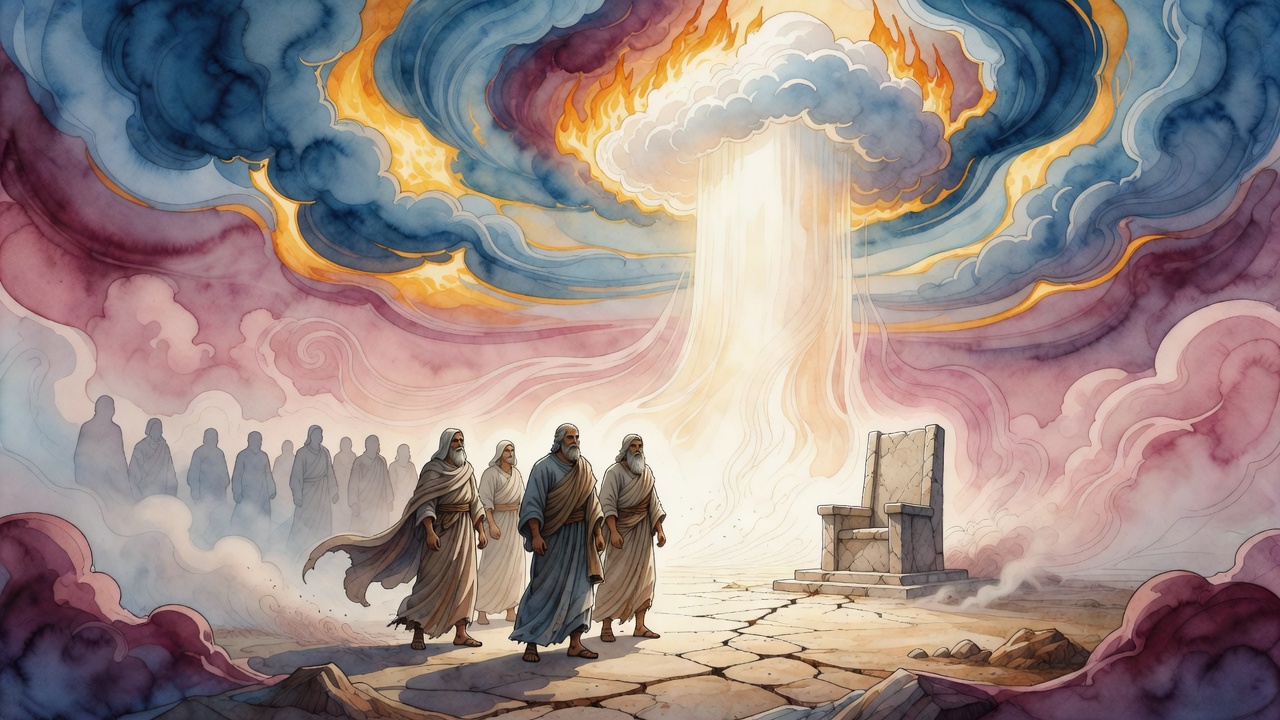
Moses brought their words before the Lord. The answer came down as law for them and for every generation after: if a man dies without a son, you shall transfer his inheritance to his daughter. The five sisters walked out with more than a field. They walked out having moved the statute book.

Men who had assumed the map was finished had to redraw lines. The mercies of heaven had overruled the mercies of custom. A father's name would not die because he left no male heir.

What the Camp Heard

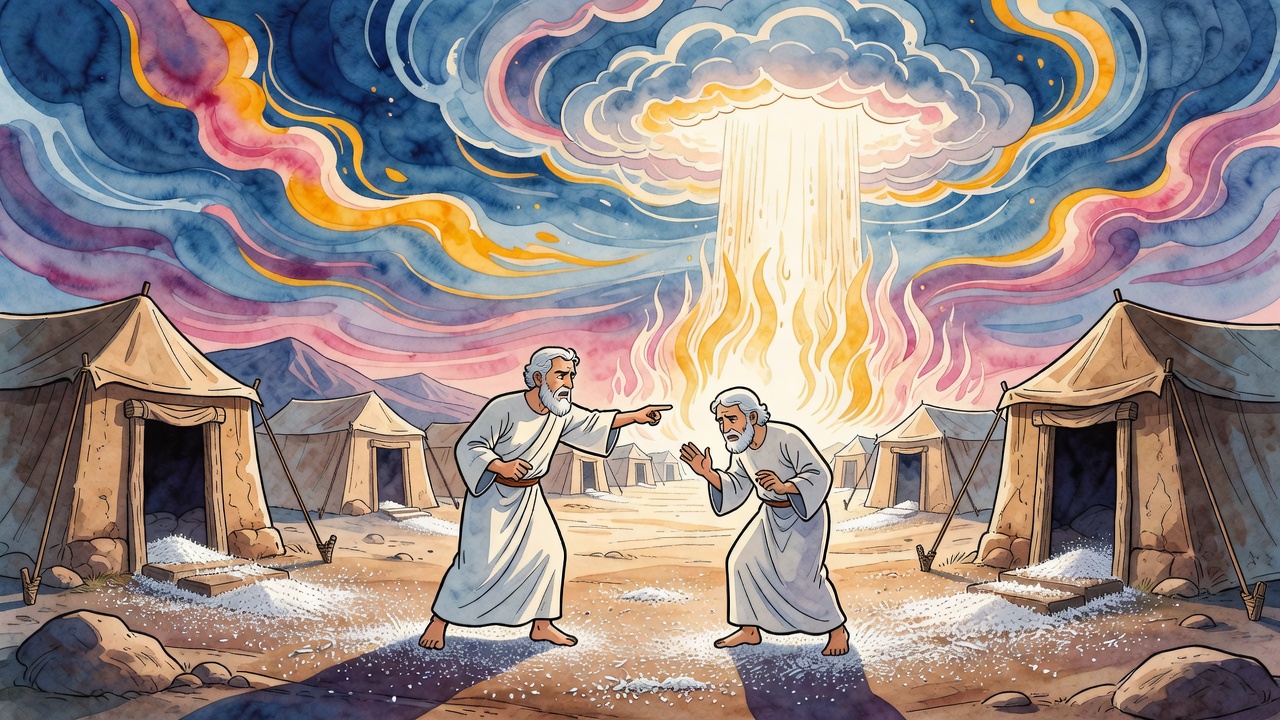
Some muttered that order was breaking. Others saw that order had been incomplete. The daughters returned to their tents with a portion and a precedent. Girls listening from other doorways learned that speech before the assembly could be holy work. Boys learned that a claim spoken with Torah in its bones can alter a nation's practice.

Moses did not invent their courage. He carried it upward. That detail matters. The law changed because five women refused to treat silence as piety. They named their father, their lack of a brother, and the character of God in one breath. The answer that came down did not scold them for boldness. It wrote their boldness into statute.

Years later, land would still be hard, droughts would still come, and scorn for daughters would still find tongues. The satirist's "woe" would still get a laugh in the wrong rooms. Against that laugh the five names remain in the record as a door that stayed open: when the first draft of justice forgets someone, someone may still walk into the tent and make the draft better. Holy gifts still require holy timing. Holy claims still require voices willing to stand where the map ends.


← All myths
From the tradition

Sources

3 sources

The texts behind this telling. Some cards carry a translation of the source; others are our own retelling of it, and each card says which. Every card links out to the original.

Sifrei Bamidbar 133:1Sifrei Bamidbar

Retold in our words. Read the original at the link below.Sifrei by Rabbi Shraga Silverstein · CC-BY

It’s not as simple as drawing lines on a map! Sifrei Bamidbar, a collection of rabbinic legal interpretations on the Book of Numbers, sheds some light on this. We learn that when the land was apportioned, it was done by estimate.

Think of it like this: a larger plot of land, a beth-kor (a large measure) might be considered less valuable if its soil wasn’t great, while a smaller plot, a beth-sa’ah (a small measure), could be highly prized if it was incredibly fertile. So, size wasn’t everything! It was all about the relative value and quality of the land. The verse in Bamidbar (Numbers) 26:55-56 emphasizes that the division was "between the large and the small" to highlight this principle. The point was fairness, not just acreage.

What about who got the land? Bamidbar 26:55 specifies "By the names of the tribes of their fathers," and Sifrei Bamidbar clarifies that this excludes proselytes and bondsmen from inheriting land through tribal affiliation. Inheritance was patrilineal, tied to ancestral tribal lines.

This brings us to a truly inspiring story: the daughters of Tzelofchad.

What happens when the rules don't seem fair? Well, in Numbers chapter 27, we meet these amazing women. They heard that the land was being divided among the tribes, and they understood that the initial plan didn't include women inheriting land. But did they just accept that? Absolutely not!

They came together, united, and approached Moses with a powerful argument. "Not as the mercies of flesh and blood are the mercies of the L-rd," they said, according to Sifrei Bamidbar. "The mercies of flesh and blood are greater for males than for females. Not so the mercies of He who spoke and brought the world into being. His mercies are for males and females (equally). His mercies are for all!" They quoted (Psalm 145:9), "The L-rd is good to all, and His mercies are upon all of His creations," to emphasize that divine compassion extends to everyone, regardless of gender.

What a powerful statement! They challenged the assumption that only men could inherit, appealing to a higher sense of justice and divine equality.

The text goes on to emphasize the lineage of Tzelofchad – "the son of Chefer, the son of Gilad, the son of Machir, the son of Menashe." Sifrei Bamidbar points out that Scripture highlights this lineage to show that just as Tzelofchad was a first-born, so were all of his ancestors in the line, to teach us that these were "worthy daughters of a worthy man." It connects their righteousness to the righteousness of their forefathers. There’s a general principle at play here: as the text says, "all whose deeds and the deeds of whose fathers are veiled and who Scripture traces (to their forbears) for praise are righteous ones the seed of righteous ones." Conversely, those whose ancestry is highlighted for denigration are seen as evildoers. Lineage matters.

But here’s where it gets even more interesting. Rabbi Nathan offers a fascinating insight. He draws a connection between the end of Numbers 26, which recounts the decree that the generation who left Egypt would die in the desert, and the beginning of Numbers 27, which introduces the daughters of Tzelofchad.

What's the connection? Rabbi Nathan suggests that the women of that generation were actually stronger in faith and resolve than the men! The men, remember, had wanted to give up and return to Egypt (Numbers 14:4). But the women? They demanded their rightful inheritance! "Give us a holding," they said (Numbers 27:4).

So, what does all this tell us? It's more than just a story about land division. It's about fairness, about challenging assumptions, and about the power of women to stand up for what they believe is right. It's a reminder that even when things seem set in stone, we have the right – and perhaps even the obligation – to question them and strive for a more just world. It’s a story of how faith and courage can change the course of history. And it all started with a simple question: "Why not us?"

Full source
Alphabet of Ben Sira, Letter ChetAlphabet of Ben Sira

Retold in our words. Read the original at the link below.Sefaria Community Translation · CC0

The letter Chet opens with Ben Sira's most provocative proverb so far:

"Males are dear to all, but woe to fathers of females."

Let's be clear about what this is. The Alphabet of Ben Sira, composed between 700 and 1000 CE, is a satirical and often deliberately outrageous text. It doesn't represent normative Jewish law or mainstream rabbinic values. Many scholars believe the work was designed to provoke, to test boundaries, even to parody the very tradition of wisdom literature it imitates. This proverb is a case in point.

The educator pushes back. And honestly, his defense is one of the more sympathetic moments in the entire text. "I have seven daughters," he says, "and they spin yarn and do all the chores of my household, and they are like a green olive tree or a beautiful garden in my house." Then he makes the logical point that should end the argument: "If there were no females, where would the males come from?"

Ben Sira isn't moved. He calls the educator a "poor one" who comforts himself with "empty comfort" and doubles down with a Talmudic citation (Pesachim 65a). Then he paints a picture of ancient social attitudes: when a daughter is born, the father announces it with a weak voice and downcast eyes. When a son is born, his voice sparkles and his eyes look upward. It's a description of how things were in the culture Ben Sira inhabits, not a prescription for how they should be. The text is holding up a mirror, and the reflection isn't pretty.

Full source
Yalkut Shimoni on Torah 351:6Yalkut Shimoni on Torah

Translation of the source text.Torat Emet (Yalkut Shimoni) · CC-BY-NC

"So you shall do with your ox (Exodus 22:29)." Scripture compared the firstborn of man to the firstborn of beast and the firstborn of beast to the firstborn of man. Just as with the firstborn of a beast, stillbirths exempt it from the law of the firstborn, so too with the firstborn of man, stillbirths exempt him from the law of the firstborn. And just as with the firstborn of man you are permitted to give him to any priest you wish, so too with the firstborn of a beast, and so forth. Because Scripture says, "And you shall bring there your burnt-offerings (Deuteronomy 12:6)," I might hear that there is an obligation to bring the firstborn to the chosen House; the verse teaches "among man and among beast (Exodus 13:2)," comparing the firstborn of man to the firstborn of beast. Just as with the firstborn of man one attends to him for thirty days, so too with the firstborn of a beast one attends to it for thirty days.

"Seven days it shall be with its mother" - why is this said? Because Scripture says, "It shall be seven days under its mother (Leviticus 22:27)" - "with its mother." Or does it mean literally "under its mother"? The verse teaches, "Seven days it shall be with its mother": just as here it means "with its mother," so too there it means "with its mother." Rabbi Natan says: "under its mother" is stated only to be expounded - "under its mother" means "after its mother." Or does "under its mother" mean as it plainly sounds? You may reason thus: it says "its mother" here and "its mother" there; just as there it means close to it, so too here it means close to it.

"Seven days it shall be with its mother" - just as the firstborn, being sacred, nurses only from non-sacred animals, so too all of them nurse only from non-sacred animals. From here they said: All consecrated animals may not nurse their young, and a lightly-tithed animal may not nurse its young. And all of these are derived only from the firstborn: just as the firstborn, being sacred, nurses only from non-sacred animals, so too all of them nurse only from non-sacred animals. How do they do it? They take money from the sanctuary, buy a non-sacred animal, and the consecrated ones have compassion upon the young and nurse them. Even though they said this, others were donating on this condition.

"And on the eighth day you shall give it to Me" - I know only the eighth; from where do I learn from the eighth onward? You may reason thus: it says "eighth" here and it says "from the eighth day onward it shall be accepted (Leviticus 22:27)." Just as the "eighth" stated there fits both the eighth and from the eighth onward, so too the "eighth" stated here fits from the eighth onward. "On the eighth day you shall give it to Me" - to exclude one whose time is lacking.

We learned there: For how long are Israelites obligated to attend to the firstborn? For small cattle, thirty days; for large cattle, fifty days. Rabbi Yose says: For small cattle, three months. If the priest said, "Give it to me within that time," he should not give it to him. And if it had a blemish and the priest said, "Give it to me that I may eat it," it is permitted. From where do we know these things? Rav Kahana said: Scripture says, "The firstborn of your sons you shall give to Me; so you shall do with your flock"; "Your fullness and your tithe-offering you shall not delay; so you shall do with your ox." Rava said: "You shall do" - Scripture added for you another act of attendance with your ox. And say sixty days? Scripture entrusted these matters only to the Sages. Rabbi Yose says: For small cattle, three months, because tending it is greater. It was taught: because its teeth are small. If the priest said, "Give it to me within that time," he should not give it, for he appears like a priest who assists at the threshing floors.

Full source