Parshat Pinchas5 min read

God Gave the Land Only to Those Who Stood

Six families vanished before the lots. God apportioned Canaan to the ones still standing, then retold every stage like a father naming a sick son's road.

Curated by Arthur · Told by Maggid ·
Table of Contents
  1. Six Families That Were Not There
  2. A Father Recounts the Road
  3. Blessings That Grew with the Land
  4. Lots for the Living
  5. The Sacred Way Ahead

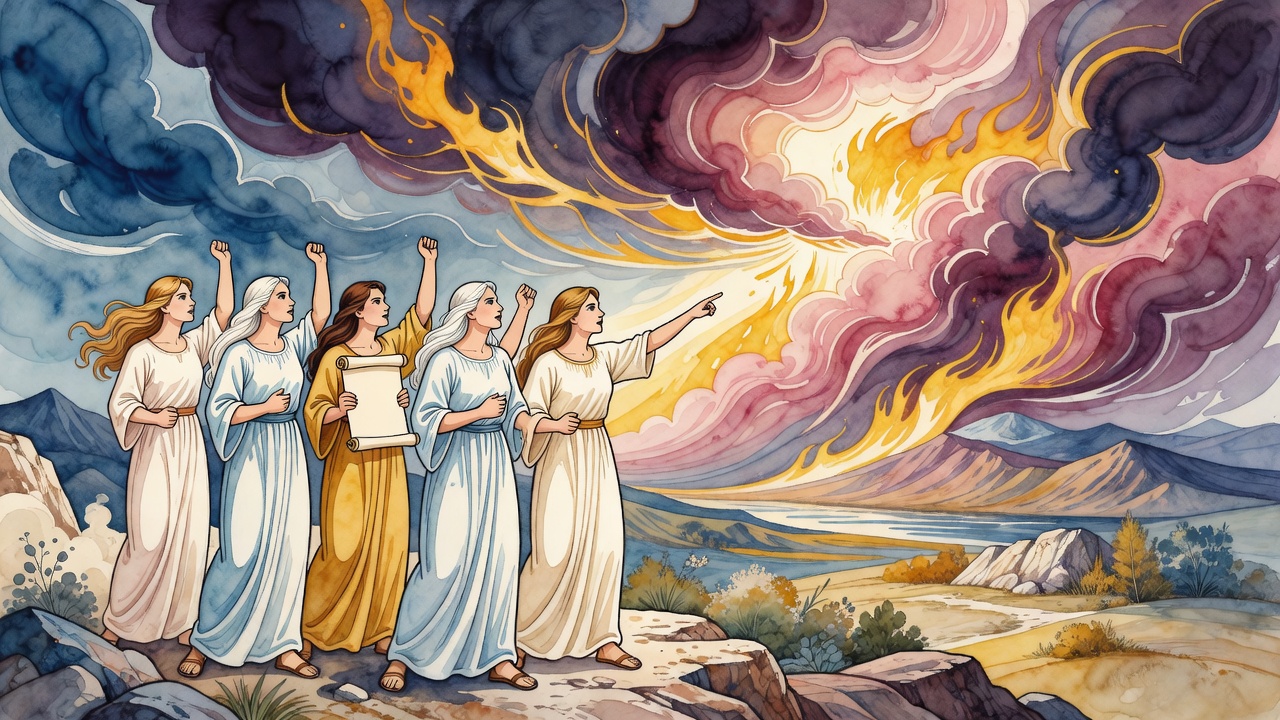
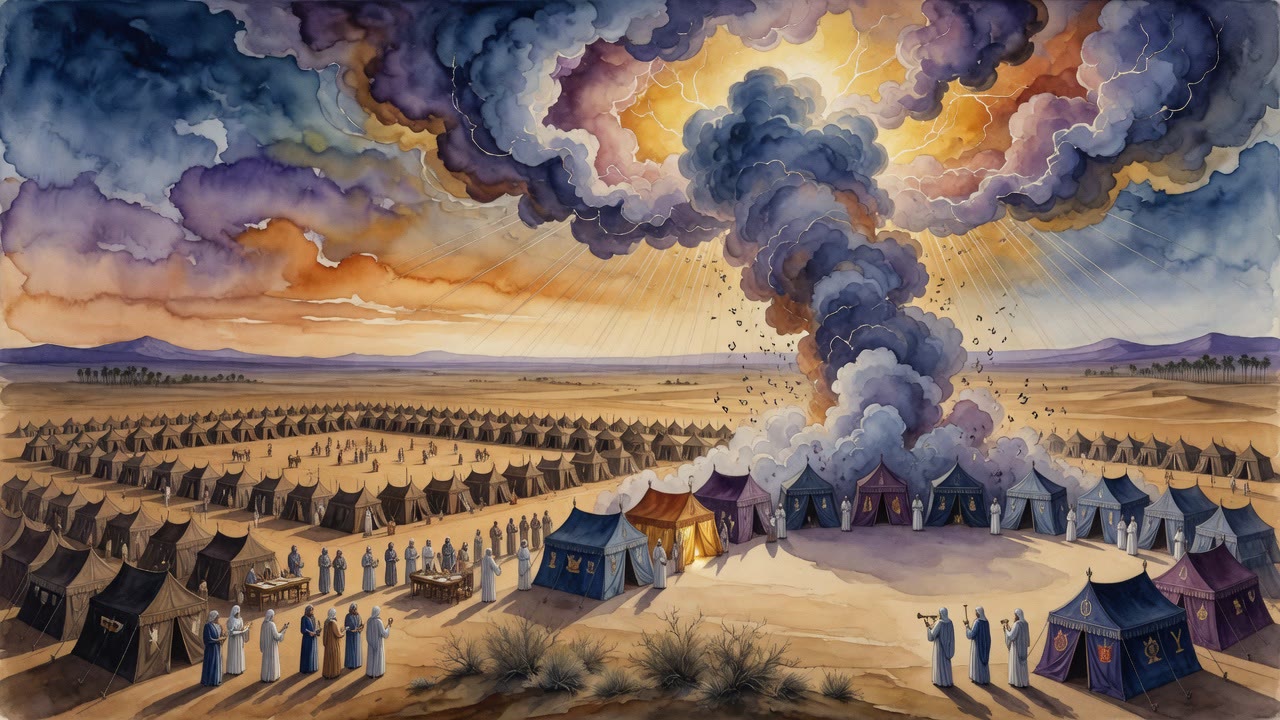
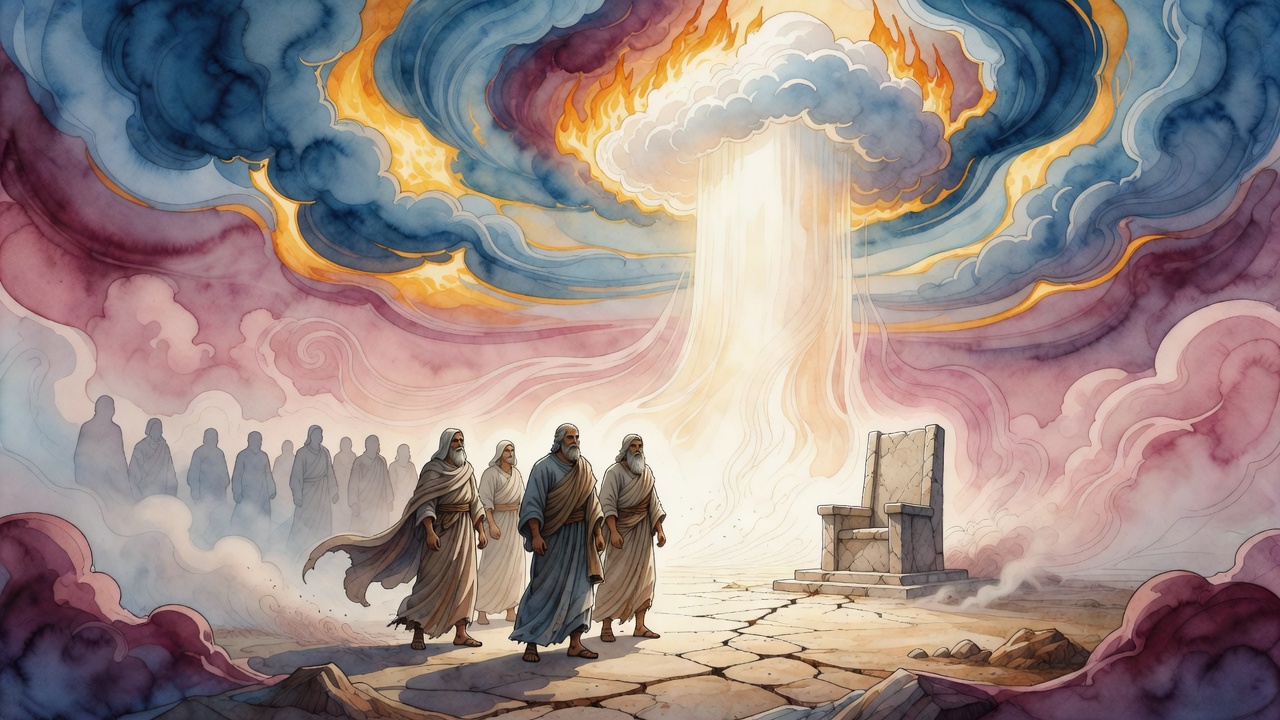
On the Plains of Moab the census closed under a hard sun, and God said, To these apportion the land (Numbers 26:53). Not to the names that left Egypt in the first rush of freedom with dough on their backs. To these. The ones still on their feet with desert grit in the seams of their sandals.
God Gave the Land Only to Those Who Stood Click for full size

Six Families That Were Not There

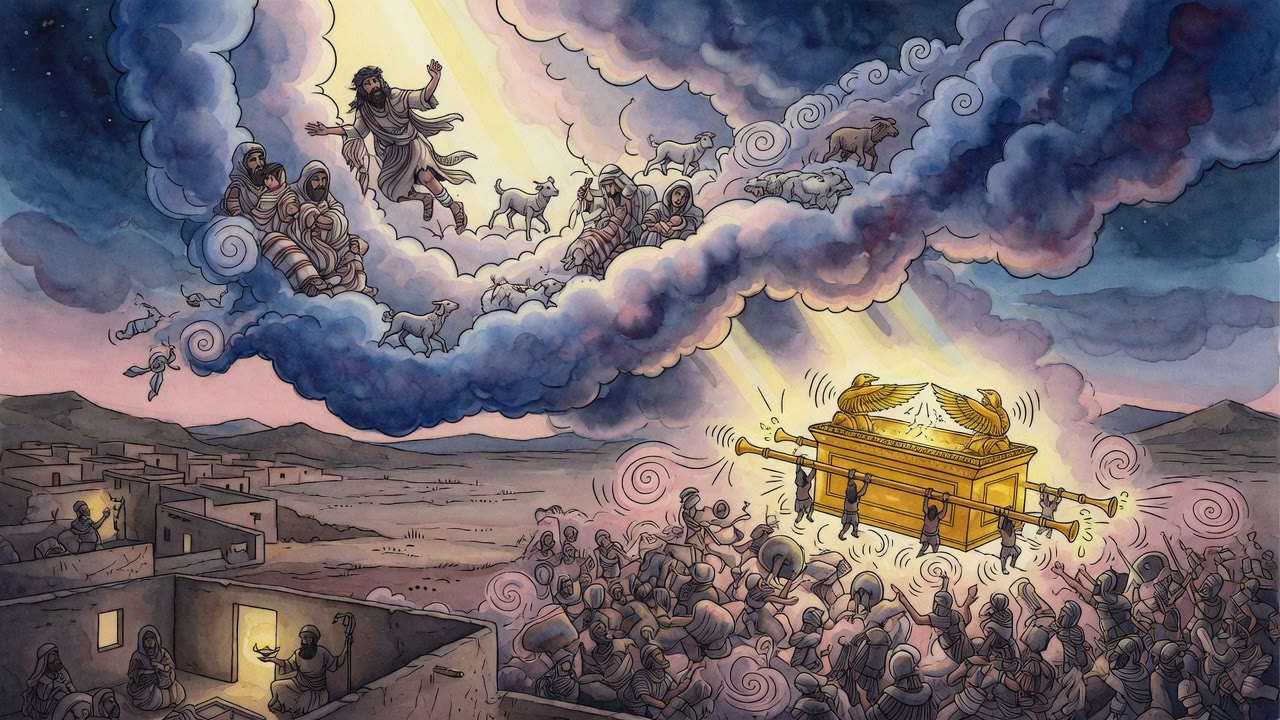
Exodus had promised possession to the generation that walked out under the bloodied doorposts (Exodus 6:8). Why shift the deed at the edge of the land? Because the Holy One foresaw six families erased before the lots were drawn and the lines cut into the soil. From Shimon's sons, Ohad and Tsohar appear in Genesis among the seventy who went down to Egypt and vanish from the Numbers count like ink washed by rain. From Benjamin, ten names thin to seven when the census is read aloud. From Gad, Etsbon drops away between the old list and the new. Six lines lost to the counsel of Balaam and the plague of licentiousness that followed Midian into the camp. No license fails to finish its work, the midrash warns without softening the edge.

God said, Shall I write inheritance for people already marked for deletion? He wrote it for the resilient who still answered when their names were called. To these. The land deed followed survival, not nostalgia for the first night of freedom.

The missing families haunt the edges of the map like empty chairs at a wedding feast. The ones who stood received the portion.

A Father Recounts the Road

These are the stages of the children of Israel (Numbers 33:1). A king had a sick son whose fever would not break in the palace. He took him from place to place to heal him, changing air and water and bed. On the way home the father named each stop with a finger on the memory. Here we slept when you could not breathe. Here we cooled your head. Here your pain was worst and we did not leave you. So God told Moses to recount every station where they provoked Him and every station that held them anyway. The list is not a dry itinerary for scribes. It is a medical chart read aloud after fever breaks and the patient can hear.

Another reading blesses the places themselves as hosts. The stages that received Israel will be paid in the future when deserts change their nature. The arid land shall be glad and blossom and shout (Isaiah 35:1-2). If sand earns reward for hosting the camp without a city wall, how much more a house that hosts a Torah scholar with bread and a lamp. Deserts become lakes of water. Settlements of the hated become waste. Cedar and acacia rise where only night travel by starlight was possible over loose sand. A highway appears and is called the Sacred Way (Isaiah 35:8).

The road that hurt them will one day bloom because it bore them.

Blessings That Grew with the Land

Before they entered, they blessed food with a single line after the meal, who sustains all. After entry they added for the land and for the food, tying bread to dirt that had a covenant on it. After Jerusalem fell they added builder of Jerusalem so the ruin would still be named in hope. After the slain of Bethther were buried they added who is good and does good, good because the bodies did not decay in the open, doing good because burial was finally granted. None of these clauses is dearer than the blessing of the land. Skip the land, the covenant, the Torah, life, and food, and the obligation of the blessing fails in the mouth that ate.

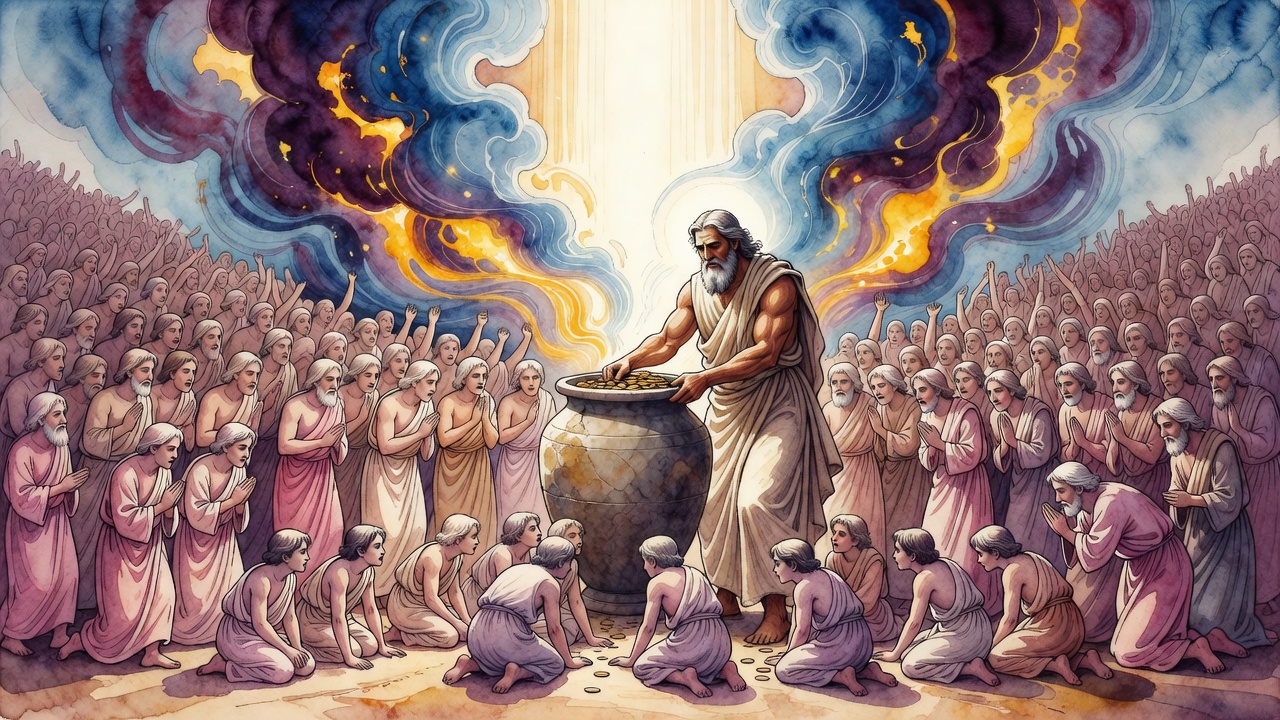
God said the land of Israel is dearer to Him than everything else under the sun. He sought it out with a raised hand (Ezekiel 20:6). Kings hired themselves to Sisera for free for a chance to drink its water in the wars of Deborah's day (Judges 5:19). No silver changed hands for their hire. Only thirst for Megiddo's streams and the reputation of that soil. Beloved sons into a beloved land (Numbers 34:2). The match is the point.

Lots for the Living

The missing families haunt the edges of the tribal lists. The stages name every provocation and every campsite that held them when they could have been left to the jackals. The blessings thicken as history scars them with exile and burial and rebuild. Through it all the deed stays pointed at the ones who stood on Moab's plain with breath still in their mouths and a future still possible.

Moses read the stages in order so no stop would be orphaned from memory. Joshua would draw the lots with the Urim's shadow still in the air. The land waited for names that had not been erased by plague or counsel or the long attrition of the road.

The Sacred Way Ahead

From the first promise in Egypt to the last blessing over bread in a ruined city, the story refuses to give Canaan to ghosts. It gives Canaan to survivors, then teaches them to thank the dirt that feeds them even when the dirt is only a memory. The father's voice still counts the stops for a son who lived. Here you were healed. Here you failed. Here you rose and learned to walk again.

To these. The shortest deed in the Torah, and the hardest to earn.


← All myths
From the tradition

Sources

3 sources

The texts behind this telling. Some cards carry a translation of the source; others are our own retelling of it, and each card says which. Every card links out to the original.

Midrash Tanchuma, Pinchas 5Midrash Tanchuma

Retold in our words. Read the original at the link below.Townsend 1989 translation of Midrash Tanhuma, S. Buber Recension · CC-BY

"To these apportion the land" (Numbers 26:53). And who are they? The ones standing on the Plains of Moav. And was the land not apportioned to those that left Egypt? As it is written (Exodus 6:8), "and I will give it to you as a possession." [So] for what reason was it [actually] apportioned to [the ones standing on the Plains of Moav]? Because the Holy One, blessed be He, foresaw that six families from [those that left Egypt] would be destroyed. And who are they? [Of] those written above (Genesis 46:10), "And the children of Shimon were Yemuel, Yamin, Ohad, Yakhin, Tsohar and Shaul," when you read "to Nemuel, the Nemeulite family" (Numbers 26:12-13), neither Ohad or Tsohar are there. Rather they were lost. And so [too,] with Binyamin: "Bela, Bekher, etc." (Genesis 26:21), behold there are ten. But when you come to count them [you read], "to Belaa, the Belaaite family [etc.] (Numbers 26:38-40), they are only seven. Behold [those missing] were lost. And so [too,] with the "children of Gad. Tsifion, Chagi, Shuni, Etsbon [etc.]" (Genesis 26:16); but when you count "to Tsafon, the Tsafonite family [etc.]" (26:15-17), Etsbon is not there. Behold six families got lost from the licentiousness of the counsel of Bilaam. And there is no licentiousness that does not accomplish its [end]. Hence the Holy One, blessed be He, said, "[Why should] I apportion the land to people who will be destroyed in the future?" And [so] He [rather] apportioned it [only] to the one that stood resilient. Hence it is stated, "To these apportion the land" (Numbers 26:53).

Full source
Midrash Tanchuma, Masei 3Midrash Tanchuma

Retold in our words. Read the original at the link below.Townsend 1989 translation of Midrash Tanhuma, S. Buber Recension · CC-BY

(Numb. 33:1:) “These are the stages of the Children of Israel.” [The matter] is comparable to a king whose son was ill. He brought him to a certain place to heal him. When they returned, his father began recounting the stages, “Here we slept. Here we cooled off. Here you had a headache.” Similarly the Holy One, blessed be He, said to Moses, “Recount to them all the places where they provoked Me.” It is therefore stated (in Numb. 33:1), “These are the stages....” Another interpretation: Why did all these stages (places) merit to be written in the Torah? Since they received (accommodated) Israel, the Holy One, blessed be He, will give them their reward in the future. It is so stated (in Is. 35:1-2), “The arid desert shall be glad.... It shall blossom abundantly, it shall also exult....” And if the desert [will receive] such for receiving Israel; one who receives a Torah scholar into his home, all the more so [will he be rewarded]. You find that in the future the desert will be a settlement and a settlement will be a desert. [That] a desert will be a settlement, as it states (Is. 41:8), “I will make a desert into a lake of water.” And where is it shown a settlement will be a desert in the future? It is so stated (Mal. 1:3), “And I have hated Esau....” Now there are no trees in the desert, but there will be trees there in the future, as stated (Is. 41:19), “I will put cedar and acacia in the desert....” Now there is no path there, as it is all sand and the caravan can only travel it at night with the light of the constellation. But there will be a path there in the future, as stated (Is. 43:19), “I will place a path in the desert.” And it is written (Is 35:8), “And there will be a highway there, and it shall be called the Sacred Way....”

Full source
Midrash Tanchuma, Masei 6Midrash Tanchuma

Retold in our words. Read the original at the link below.Townsend 1989 translation of Midrash Tanhuma, S. Buber Recension · CC-BY

(Numb. 34:1-2:) “Then the Lord spoke unto Moses, saying, ‘Command the Children of Israel and say unto them, “When you come into the land of Canaan.”’” Let our master instruct us: Before Israel entered the land, how did they say the blessing over the food? Thus have our masters taught: Before they entered the land, they used to only say a single blessing, “who sustains all.” After they had entered the land, they ordained the blessing, “for the land and for the food.” After Jerusalem was destroyed, they added “builder of Jerusalem.” After those slain at Bethther were buried, they added “who is good and does what is good.”Who is good,” because they did not decay; and “who does what is good,” because they were given burials. None of them, however, is more dear to you than the blessing of the land. The sages [therefore] said, “Whoever does not mention ‘for the land and for the food; a desirable, good, and spacious land; the covenant [of circumcision]; Torah; life; and food’ has not satisfied his obligation.” The Holy One, blessed be He, said, “The land of Israel is more dear to Me than everything. I am the one who sought it out, as stated (in Ezek. 20:6), ‘On that day I swore (literally, raised My hand) to them that I would bring them out of the land of Egypt unto a land which I had sought out for them.’” You find [the same love for the land], when Joshua slew those kings. R. Jannay the Priest said, “There were sixty-two kings, thirty-one at Jericho and thirty one with Sisera. When he went to fight with Israel they also were slain along with him. Why? Because they yearned to drink water from the waters of Israel. They made a request of Sisera and said to him, ‘If you please, let us come with you to war.’ And every king that requested to go to war sent and hired other kings with silver, so that they would help him. They said to Sisera, ‘We do not request anything from you, but rather we will come for free, because we yearn to fill our stomachs with water from that land.’ Thus it is stated (in Jud. 5:19), ‘The kings came, they fought; [... on account of the waters of Megiddo; they took no gain of silver.’ This verse serves] to inform you that nothing was more beloved than the land of Israel.” The Holy One, blessed be He, had said to Moses, “This land is dear to Me, as stated (in Deut. 11:12), ‘A land for which the Lord your God cares.’ Israel also is dear to Me, as stated (in Deut. 7:8), ‘Because the Lord loves you….’” The Holy One, blessed be He, said, “I will bring My sons, who are beloved to Me, into a land that is beloved to Me.” Where is it shown? From what they read about the matter (in Numb. 34:2), “when you come into the land of Canaan.”

Full source