5 min read

Manna Exposed the Liar Before the Camp Awoke

Each morning the manna fell like a verdict. A stolen claim shifted portion and doorstep, and Friday's bread kept Sabbath without spoil.

Curated by Arthur · Told by Maggid ·
Table of Contents
  1. The Quarrel Nobody Could Settle
  2. The Verdict That Fell at Dawn
  3. Bread That Told What a Prophet Tells
  4. Bake, Boil, and Lay Up
  5. The Second Lie He Was Offered
Manna Exposed the Liar Before the Camp Awoke Click for full size

The Quarrel Nobody Could Settle

He shouted first, because the man who shouts first is usually believed.

His neighbor had stolen from him, he said, and he said it standing between the tents where forty other families could hear him. The accused man denied it with his hands open. There were no witnesses, no lock, no door, nothing in the camp that could be sealed and later shown, so the elders who came over listened to both of them and went away again without a ruling. Two men were left facing each other in the dusk with the same story running in opposite directions.

The accuser slept badly, since he was the one who had taken the thing.

The Verdict That Fell at Dawn

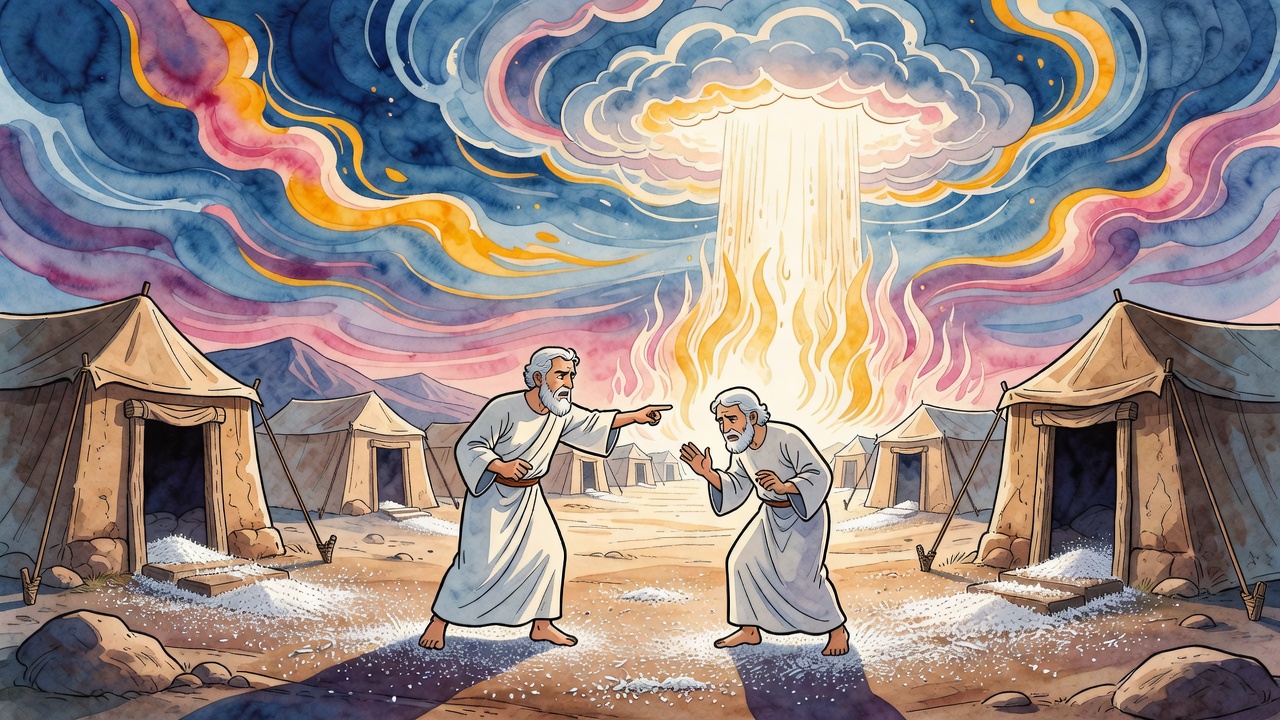
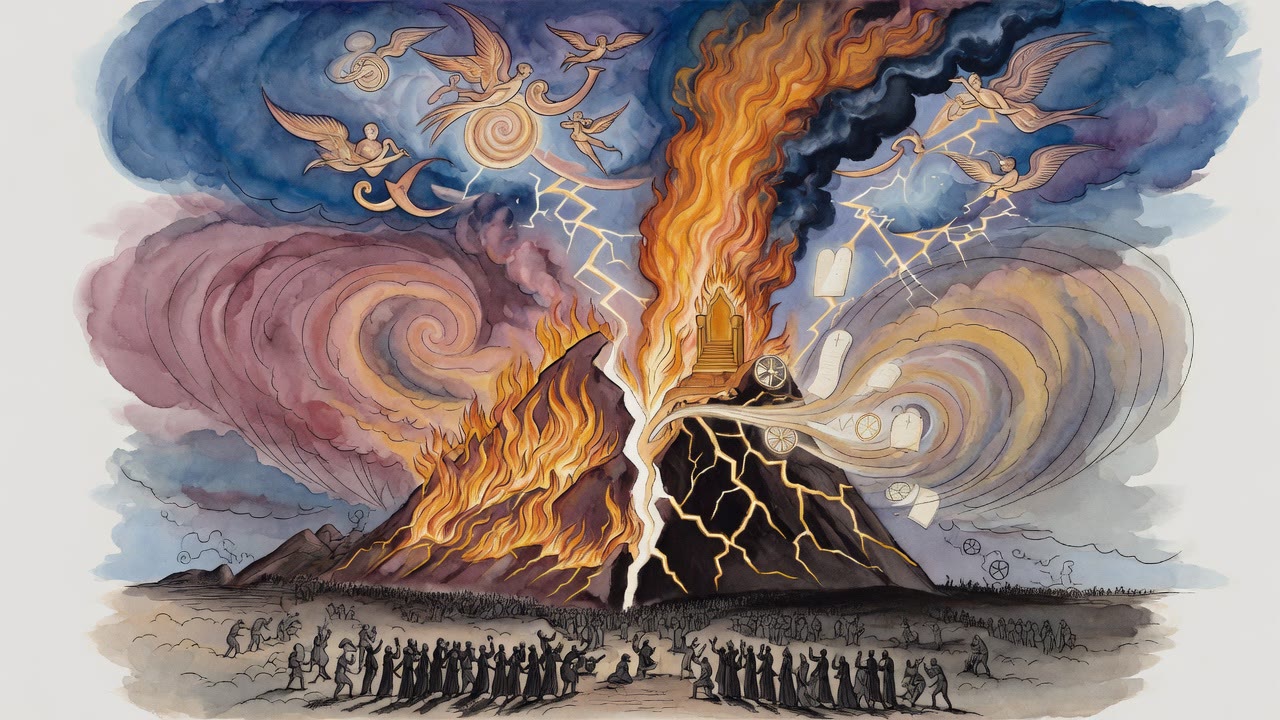
Manna came down before the camp woke. It lay on the ground around the tents like frost that had decided to be food, and every household went out at first light to take up its portion.

He went out early to see.

His own portion was not at his tent flap. It was lying at the neighbor's, in the measure he had denied taking, sitting there in the grey light while the man it belonged to was still asleep four steps away. Nothing had been announced. No court had been convened. The bread had simply been redistributed in the night by something that had watched the whole quarrel and had not needed to be told who was lying.

He stood over it long enough to consider picking it up and carrying it back before anyone stirred. Then he understood that the same hand would only move it again tomorrow, and the day after, and every morning for as long as the camp ate. So he waited where he was until the neighbor came out and saw him standing there.

Bread That Told What a Prophet Tells

Rabbi Yosei said the manna did what a prophet does, which is to say out loud the thing that was supposed to stay in the dark. A prophet can be shouted down or driven out of town. A portion of food sitting at the wrong doorway at sunrise cannot be argued with, and it arrives again the next morning whether or not anyone has repented.

So the camp learned that heaven fed them and judged them in the same motion, gently, with no flogging and no witnesses required. Disputes that would have poisoned two families for a generation were finished before breakfast. A man could refuse a prophet. It was much harder to refuse the measure at his own tent flap.

Bake, Boil, and Lay Up

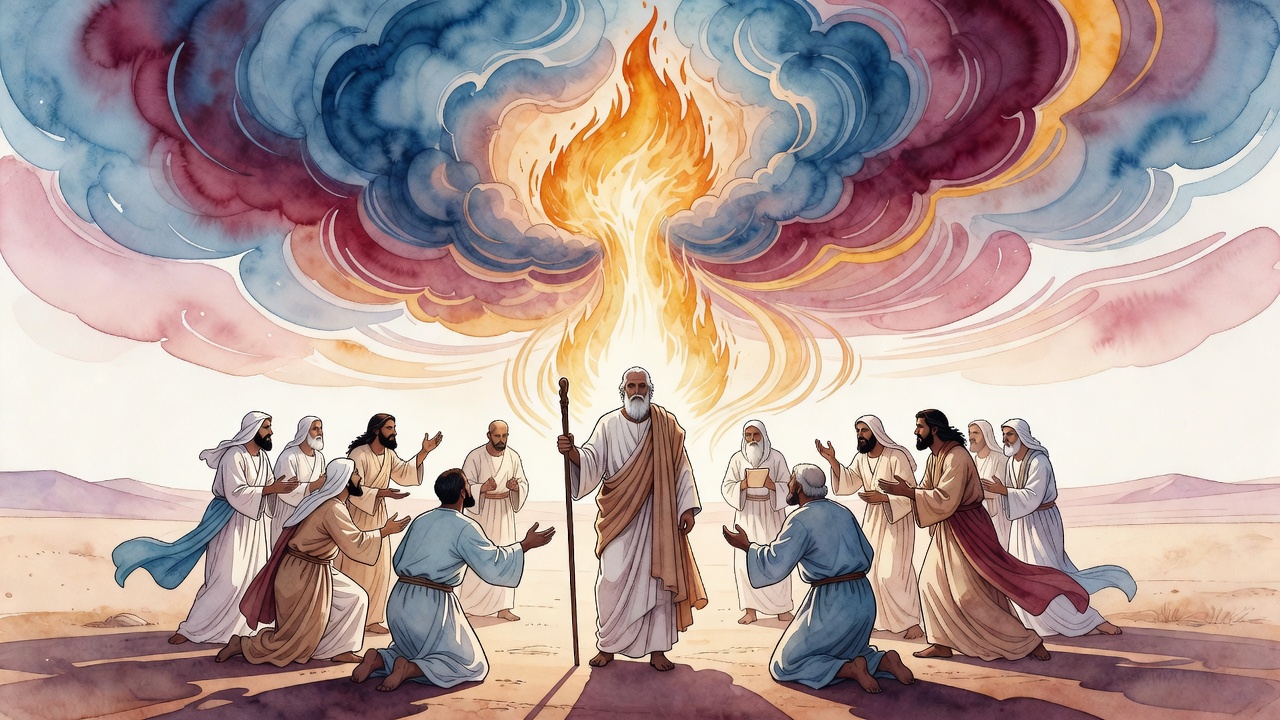
On the sixth day Moses gave the camp a different instruction, and the man who had been caught by the bread listened to this one closely.

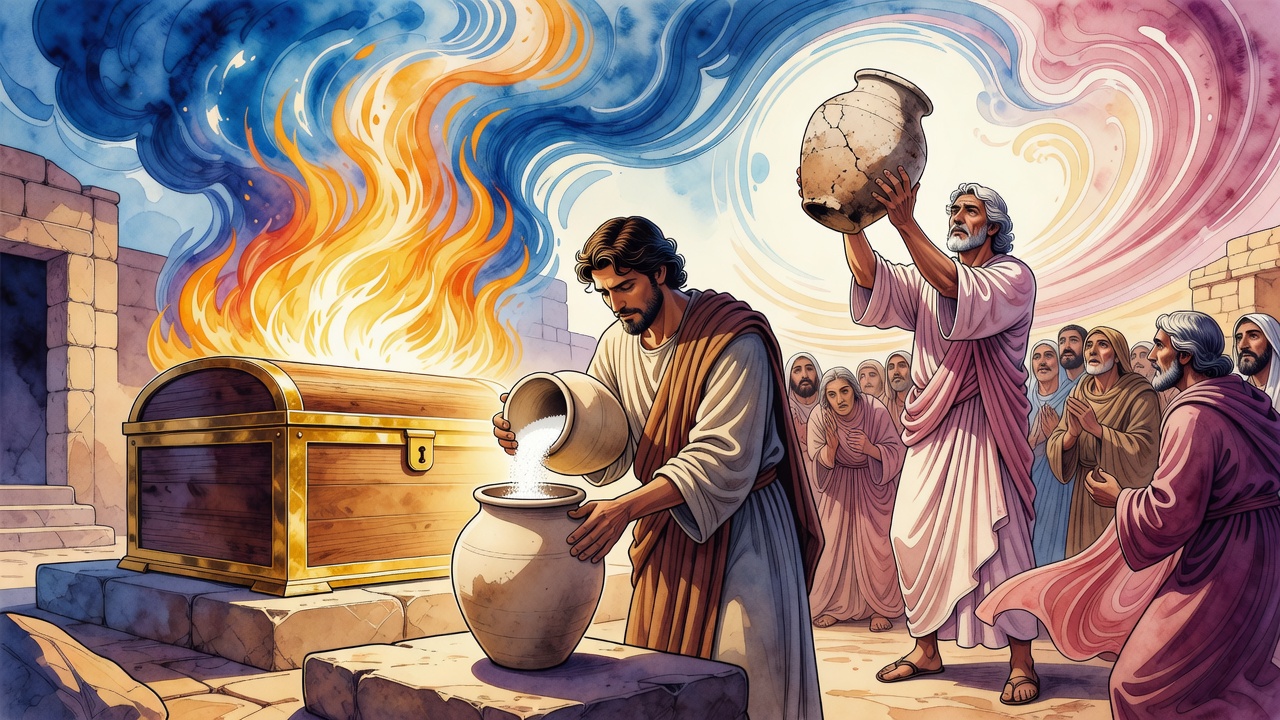
"Tomorrow is the rest of the holy Sabbath before the Lord," Moses said. "That which is needful to bake for tomorrow, bake today, and what is needful to boil for tomorrow, boil today, and all whatever remaineth of that which ye eat today lay it up, and it shall be preserved until the morning."

Three separate jobs, each with a window that closed at sundown. Bake. Boil. Lay up. The women worked through the afternoon and the camp smelled of double cooking, and the pots that would sit cold all the next day sat hot that evening.

Then came the part he was watching for. Any other night, manna kept until morning bred worms and stank so badly it had to be carried out of the tent. That night it did not. The same substance, the same jar, the same number of hours, and no rot in it, because the day it was being kept for was the seventh. The bread was keeping Sabbath before the people had entirely learned how.

The Second Lie He Was Offered

The Mekhilta sets "Remember the Sabbath day to sanctify it" on one tablet directly opposite "You shall not bear false witness" on the other, and the pairing is not decoration. A man who works on the seventh day testifies with his body, in front of the One who made the world, that the world was not made in six days and that its Maker did not rest. A man who stops testifies the opposite. Nobody has to say anything. The labor is the statement, or the stillness is.

He had already borne false witness once that week, against a neighbor, over a measure of food, and the food had answered him. On the seventh morning he was being asked not to bear it against the One who sent the food.

His wife had baked on Friday. The pot was covered and cold on the table, enough for the day, prepared while the light lasted. Out past the tent ropes the ground lay bare and white with nothing on it at all, and the basket he would have carried stayed hanging on its peg, and for the first time that week there was nothing lying at anyone's doorway that could be read against him.


← All myths
From the tradition

Sources

3 sources

The texts behind this telling. Some cards carry a translation of the source; others are our own retelling of it, and each card says which. Every card links out to the original.

Mekhilta Tractate Vayassa 6:9Mekhilta DeRabbi Yishmael

Retold in our words. Read the original at the link below.Mechilta, translated by Rabbi Shraga Silverstein · CC-BY

Rabbi Yossi offered a provocative comparison: just as a prophet reveals what is hidden, the manna did the same. The wordplay is built into the Hebrew, the word maggid (one who tells or reveals) connects to gad, a term associated with the manna's coriander-like appearance. But Rabbi Yossi was making a point far beyond etymology.

In tradition preserved in the Talmud (Yoma 75a), the manna served as a kind of divine lie detector. When two neighbors had a dispute, say, one accused the other of theft, the manna would reveal the truth. If a man claimed his neighbor's servant had stolen from him, the next morning the manna would fall in a way that exposed the facts. The guilty party's portion might appear at the other's doorstep, or the quantity would shift to reflect the true state of affairs.

The manna was not just food. It was prophecy in edible form. Just as God sends prophets to speak truth to a community that might prefer to hide behind lies, God sent the manna to make hidden realities visible. Disputes that might have festered for years were settled overnight by the heavenly bread's testimony.

Rabbi Yossi's teaching transforms the manna from a miracle of sustenance into a miracle of justice. The same heaven that fed Israel also judged Israel, gently, without violence, but with an honesty that no human court could match. Every morning when the Israelites stepped out of their tents to gather their portion, they were not only receiving breakfast. They were receiving a verdict. The manna revealed what was hidden, just as a prophet would, because its source was the same: the all-knowing God who sees every secret and conceals nothing from those who seek the truth.

Full source
Targum Pseudo-Jonathan on Exodus 16:23Targum Pseudo-Jonathan on Exodus

Retold in our words. Read the original at the link below.The Targum of Jonathan ben Uzziel, trans. J. W. Etheridge, London, 1862 · Public Domain

Targum Pseudo-Jonathan on (Exodus 16:23) gives us the first explicit teaching of Sabbath cookery in the Torah, and the Targumist relays it with a domestic precision that would be at home in any observant Jewish kitchen today.

Moses said: This which the Lord hath told you, do. Tomorrow is the rest of the holy Sabbath before the Lord. That which is needful to have to bake for tomorrow, bake today; and what is needful to boil for tomorrow, boil today: and all whatever remaineth of that which ye eat today lay it up, and it shall be preserved until the morning.

Notice the verbs. Bake. Boil. Lay up. Three separate actions, each assigned its own Friday window. The rabbinic tradition later expanded this into the full system of melachot, the thirty-nine categories of creative labor forbidden on Sabbath (Mishnah Shabbat 7:2, compiled c. 200 CE). But the seed is here, in the wilderness of Sin, before Sinai.

The Targumist also preserves a small miracle. On any other day, manna left overnight bred worms and putrefied. On the sixth day, manna left overnight did not spoil. It shall be preserved until the morning. The same substance behaved differently depending on which day it was saved for. The manna, in other words, kept Shabbat.

The Maggid draws a delicate point. Shabbat is not only a human discipline. Creation itself changes its rules on the seventh day. The wheat that would spoil on a Tuesday night does not spoil on a Friday night. The world adjusts itself to accommodate holiness.

Takeaway: when you prepare for Shabbat, you are not merely managing your schedule. You are joining creation in a weekly adjustment. The bread behaves. So should you.

Full source
Mekhilta Tractate Bachodesh 8:20Mekhilta DeRabbi Yishmael

Retold in our words. Read the original at the link below.Mechilta, translated by Rabbi Shraga Silverstein · CC-BY

The Mekhilta DeRabbi Yishmael, the early halakhic midrash on Exodus from the school of Rabbi Yishmael, reads the Ten Commandments as two facing tablets whose lines correspond to one another. "Remember the Sabbath day to sanctify it" stands on one tablet, and directly opposite it, on the other, stands "You shall not bear false witness." By setting these two side by side, the midrash teaches that the Sabbath is not only a day of rest but an act of testimony.

The logic is sharp. The one who desecrates the Sabbath testifies, by his very labor, before Him who spoke and brought the world into being, that the world was not created in six days and that its Maker did not rest on the seventh. The one who keeps the Sabbath testifies the opposite, that the world was indeed created in six days and that its Author rested on the seventh. Each person, by how he treats the day, becomes a witness for or against the account of creation given in the Torah.

This is why the sages anchor the teaching in the prophet, who hears the same word of testimony. As it is written (Isaiah 43:10), "You are My witnesses, says the Lord, that I am He. Before Me no god was created and there will be none after Me." The Sabbath, in this reading, is the standing evidence of Israel that the one God made the world and governs it alone.

Full source