At Marah the Well Was Bitter and Stones Were Ready
Three months out of Egypt, Israel found water the cattle refused. Doubt opened the door, and Amalek walked through it with swords.
Table of Contents
Three months from Egypt to the mountain, and the desert offered almost nothing. No shade that lasted. No food that waited. Water, when it appeared, was often a cruel joke. At a place called Marah, bitterness in Hebrew, they found a well even the cattle refused. Thirst makes a nation forget plagues and split seas. Thirst makes hands find stones.
 Click for full size
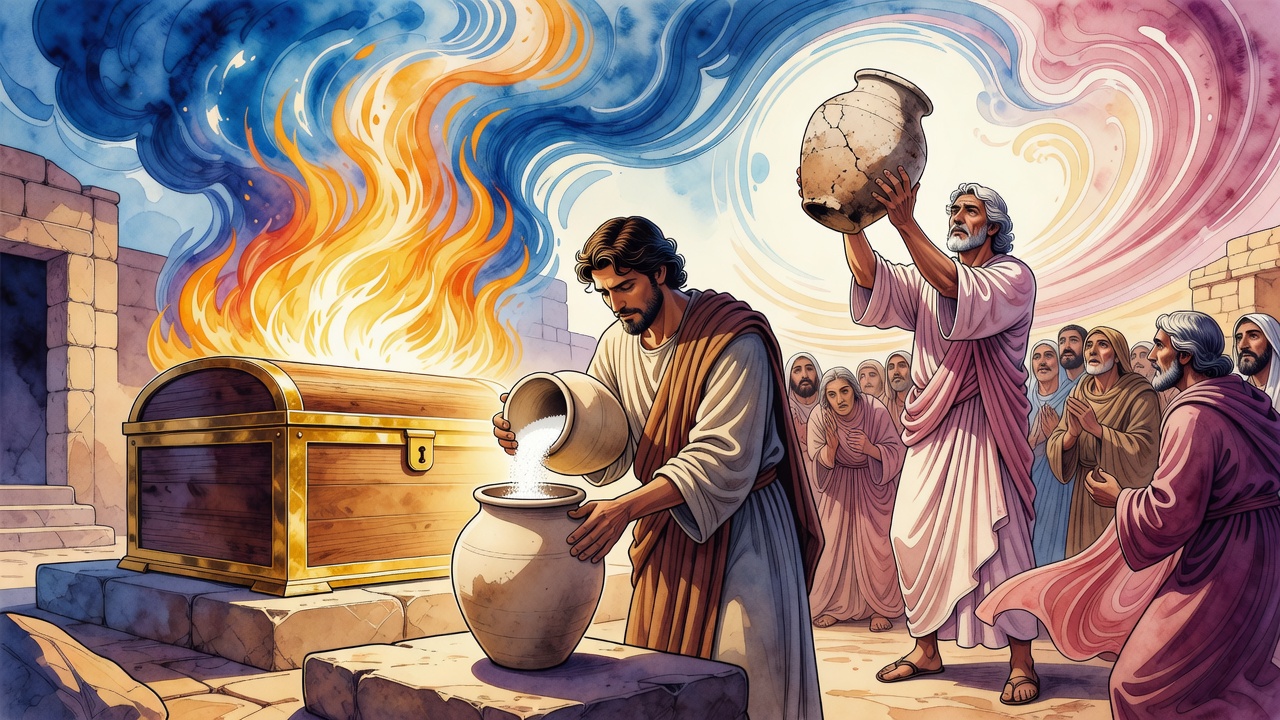
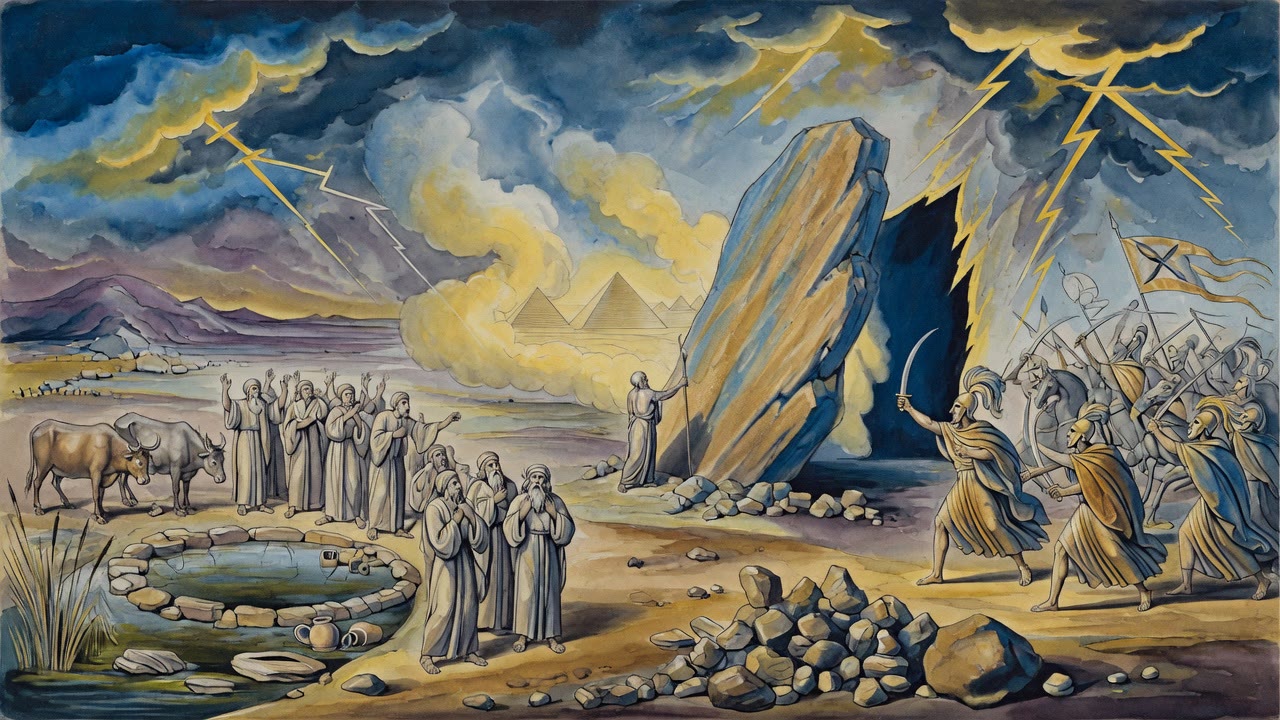
Moses prayed. The Holy One told him to split a stick lengthwise and lower it into the well. Then Moses ordered the strongest men to draw until most of the well was emptied. Only the water left at the bottom was drinkable. Not an instant charm. Grueling labor joined to instruction. Sweetness arrived as work and word together.
Quail, Manna, and the Question Man
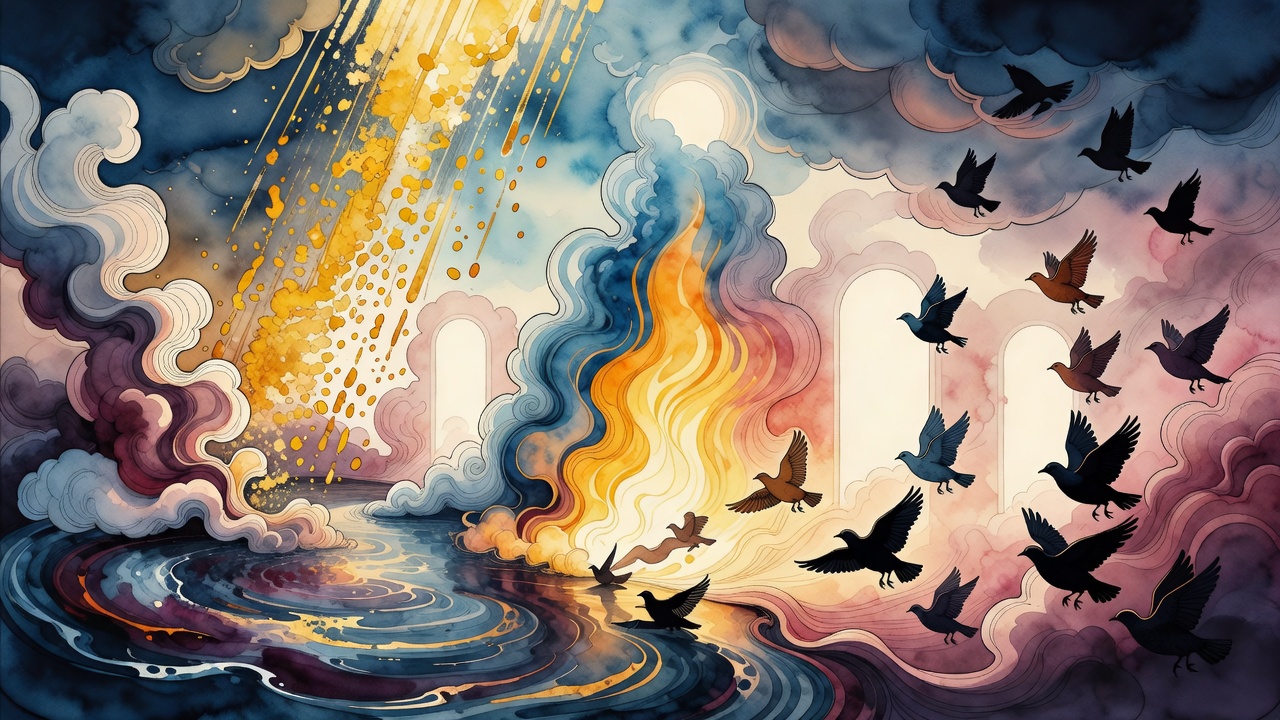
Then came quail in enormous flocks from the Arabian Gulf, so exhausted from the sea crossing that they dropped into the camp. After the quail came manna, a dew from heaven, sweet as honey, shaped like coriander seed, new every morning. Each person gathered one omer (a dry measure, one day's ration). Surplus rotted. Josephus claims manna still fell in that region in his own day, centuries after Moses. The Hebrews called it man, from the question, What is this, because that is what they asked when they first saw it on the ground.
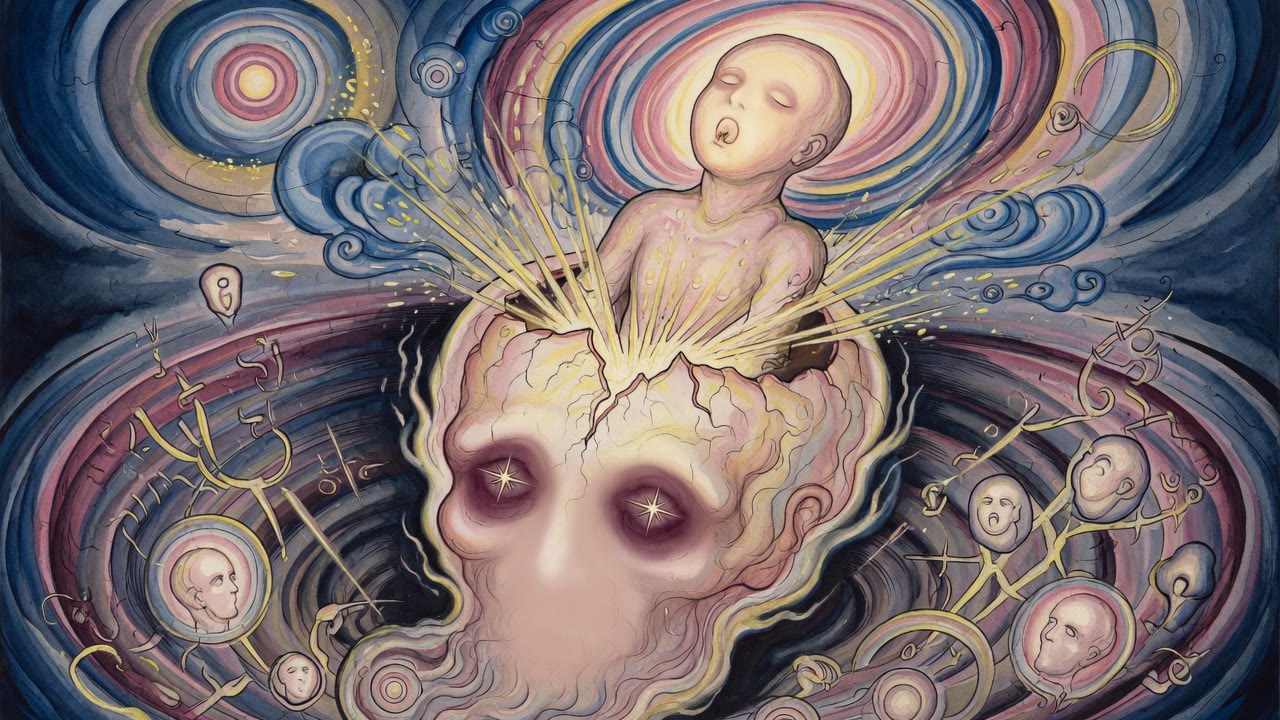
Miracles stacked like plates, and still the people tested. Ten times, the tradition counts, they tempted the Holy One. Not always with grand defiance. Often with slander, with grumbling that turned into a single question that opened a door. Is the Lord among us, or not? After the plagues, after the sea, they stood in sand and asked whether the Presence had left. That question is not thirst. That question is a declaration of abandonment spoken into a sky that had been busy saving them.
Amalek Heard the Doubt
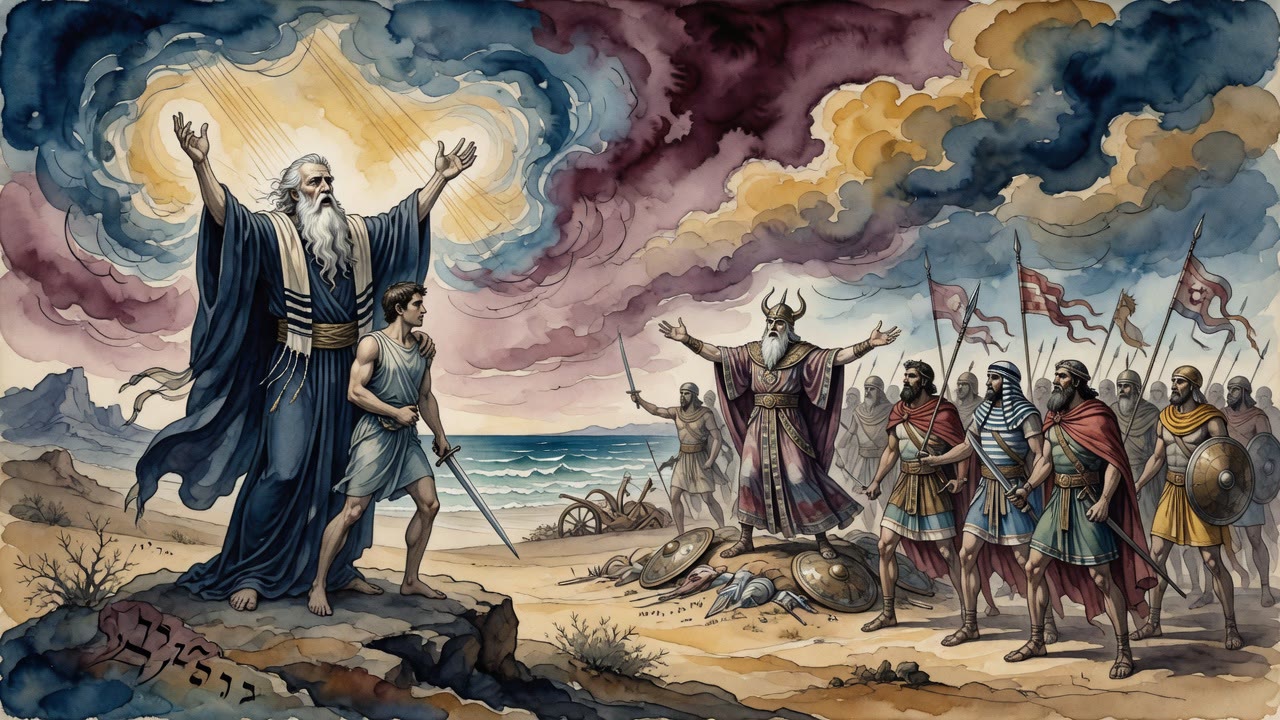
When that doubt rose at Rephidim, Amalek attacked. Doubt is not only an inner weather. In the wilderness stories it is a signal fire enemies can see. Moses placed Joshua in command and climbed a hill to pray with arms raised. Every time his arms dropped, Israel started losing. So Aaron and Hur stood on either side and held his hands up until sunset. Israel won. They seized the Amalekite camp, gold, silver, weapons enough to turn refugees into an army. Moses built an altar and named it The Lord the Conqueror, and prophesied that Amalek would one day be utterly destroyed.
The arms that needed holding are the same arms that once held a staff over a sea. Leadership in the desert is not endless strength. It is a body that tires in sight of the people, and friends who refuse to let the prayer fall. Victory came not from a leader who never weakened but from a trio that kept the gesture aloft when one man's muscles failed.
Stones Still in the Hand
Before the rock at another crisis, Josephus says the people were on the verge of stoning Moses when God told him to strike stone and a river poured out, not a trickle, a full river from dry cliff while stones were still in their hands. The pattern repeats. Bitterness. Complaint. Near violence. Then water, birds, bread, or war decided by raised arms. Israel lives in that pattern long enough to learn that the question Is the Lord among us is answered not by comfort first but by presence that keeps feeding, fighting, and sweetening wells after the cattle have already turned away.
Marah taught that the bottom of a bitter well can still hold a drink if the strong will draw. Amalek taught that a mouth that denies the Presence invites a sword. Between the stick in the water and the hands on the hill, the nation learned the cost of forgetting too soon and the mercy that still arrived when they had already bent to pick up stones.
The wilderness is a school that grades on memory. Forget the sea too quickly and you will pick up stones against the man who split it. Forget the manna and you will call the Presence absent because your throat is dry for an afternoon. Marah is early in the syllabus. Amalek is the exam that arrives when the question Is the Lord among us has already been spoken. Sinai will be the revelation, but only after the body has learned thirst, labor at a bitter well, held-up arms on a hill, and the taste of bread that answers What is this.
Holding Moses's arms is a picture of shared leadership the tradition never tires of retelling. Aaron the priest and Hur the companion make the prayer physically possible. Joshua makes the battle militarily possible. Moses makes the connection heavenward possible. No single office wins alone at Rephidim. The altar named The Lord the Conqueror records not a man's unbroken muscle but a day's cooperation under threat. Amalek remains the emblem of the enemy who strikes the rear and the weak when doubt has already softened the camp.
Josephus's detail that stones were still in their hands when water burst from rock is the image that binds the whole stretch of road. Violence nearly done. Mercy interrupting. The same hands that almost threw could later draw water from Marah's deep or lift a leader's arms until sundown. Israel is always that close to both gestures. The stick in the well and the hands on the hill train those hands toward life.
What the Camp Remembered
← All myths