Daniel Cross-Examines the Elders Who Lied About Susanna
Two elders condemned a righteous woman with false testimony. A young man with no standing interrupted and asked each elder which tree they had stood under.
Table of Contents
 Click for full size
The Woman and the Court
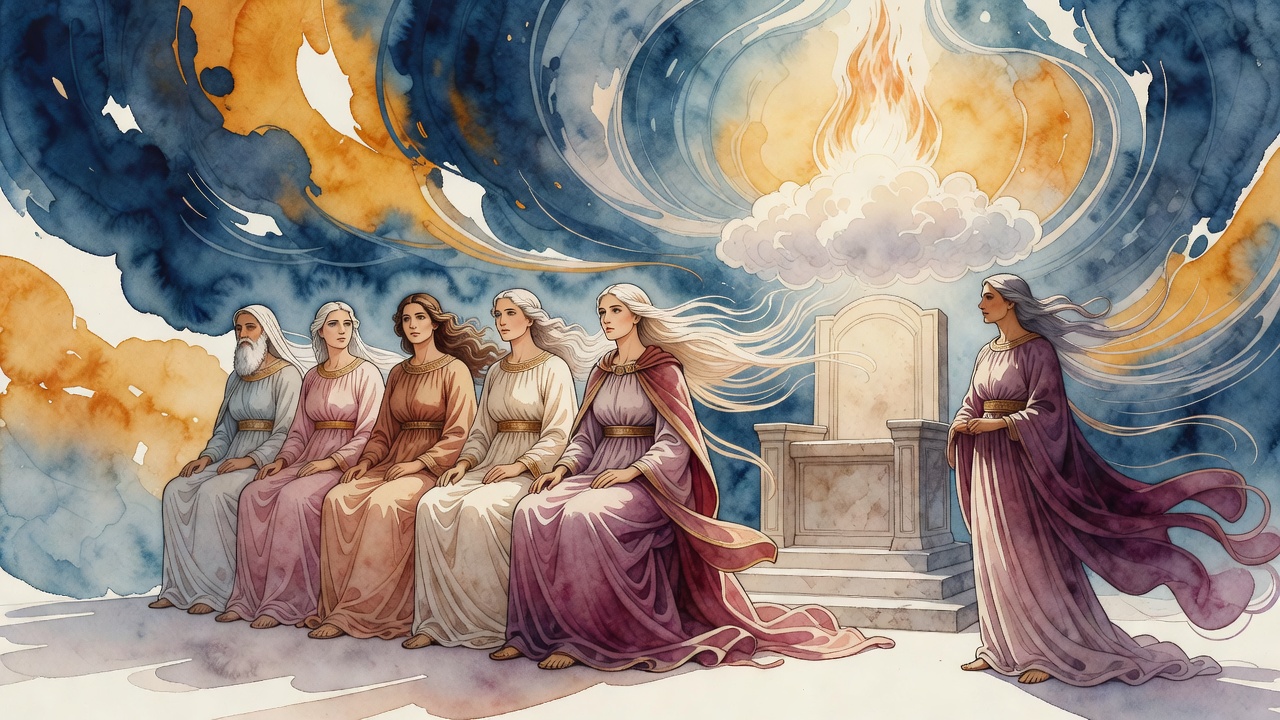
Two elders sat on the judicial bench, and a righteous woman was about to die for something she had not done.
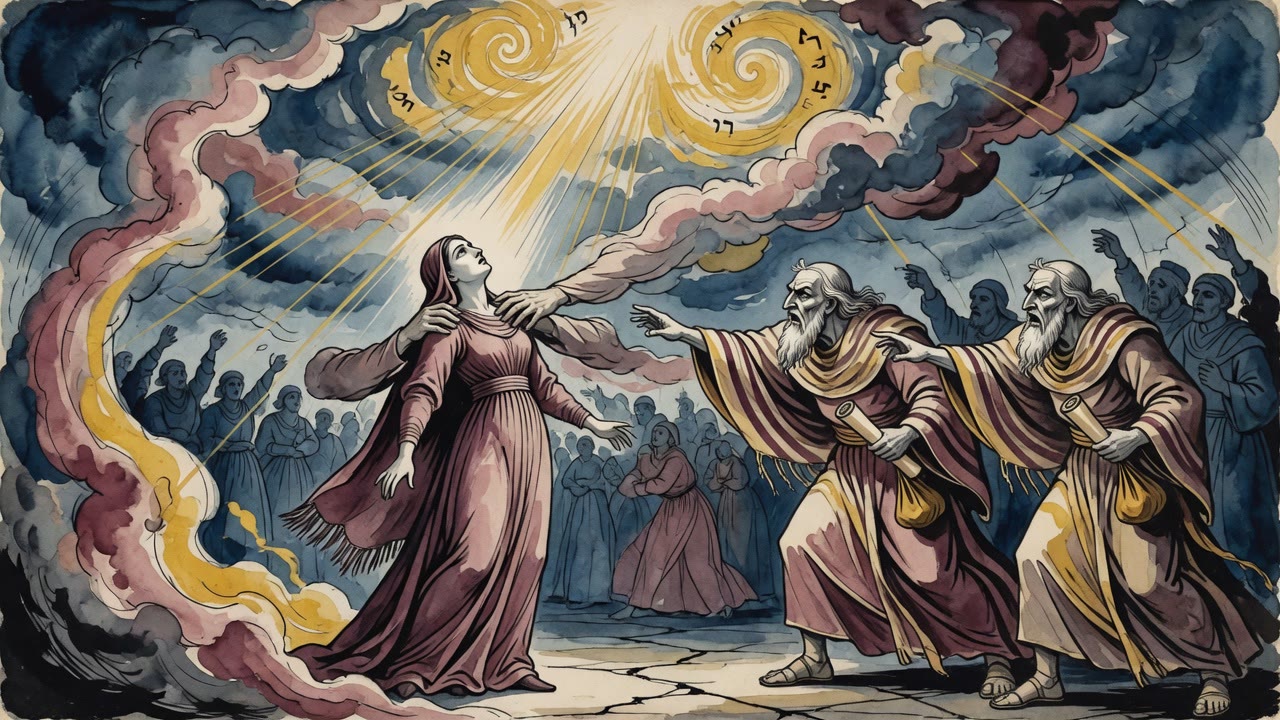
Susanna was beautiful and observant, and the elders had become obsessed with her. They had tried to coerce her in her husband's garden, threatening her with false accusation if she refused them. She had refused. She had said: if I do this, I die. If I do not, I fall into your hands. It is better for me to fall into your hands without having done wrong than to sin before God. She had screamed for help, and they had screamed louder over her, and when the household came running, the elders told the story they had prepared: they had caught her with a young man in the garden.
Two witnesses was the legal threshold. Two respected elders was an overwhelming case. The court of the Jewish community in Babylon believed them. Susanna was condemned to death. As she was being led out, she called out to God, and the tradition records that God heard her.
Then a young man named Daniel stood up and stopped the proceedings.
What Gave a Young Man the Right
He had no official standing. He was younger than the elders by decades. The judges who had just convicted Susanna were his seniors in every sense the Babylonian exile recognized. But he declared that a wrong had been committed and demanded the case be reopened, and the community listened. This is the detail that is easy to pass over: people under pressure, people who had just been presented with two witnesses and had rendered a verdict in the proper form, chose to hear a young man challenge the verdict. Something in the way he spoke made them stop.
The tradition records that a higher power moved in him at that moment, something the community around him could feel even if they could not name it. He was not making an argument from legal procedure. He was making an argument from certainty. Something in his bearing communicated that he knew, and that what he knew was important enough to make the crowd move back from the door where Susanna was being led out and hear what he had to say.
The Cross-Examination Under the Trees
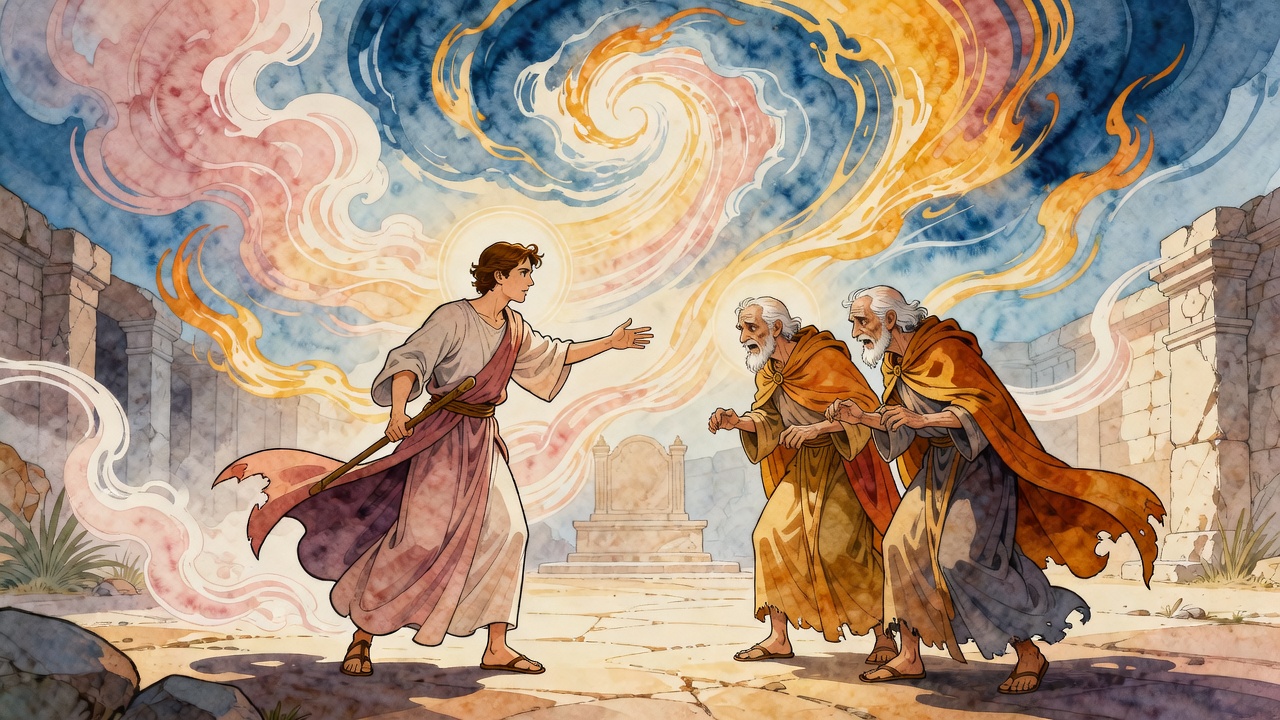
Daniel's method was simple and lethal. He had the two witnesses separated so they could not hear each other's answers. Then he questioned the first elder.
Under what tree did you see them together?
The elder gave his answer. A specific tree. Daniel thanked him and sent him aside.
He asked the second elder the same question.
A different tree. A different species, a different location in the garden. Two men who claimed to have stood in the same place and witnessed the same event named two different trees. The contradiction was complete, visible to everyone in the court, requiring no further argument.
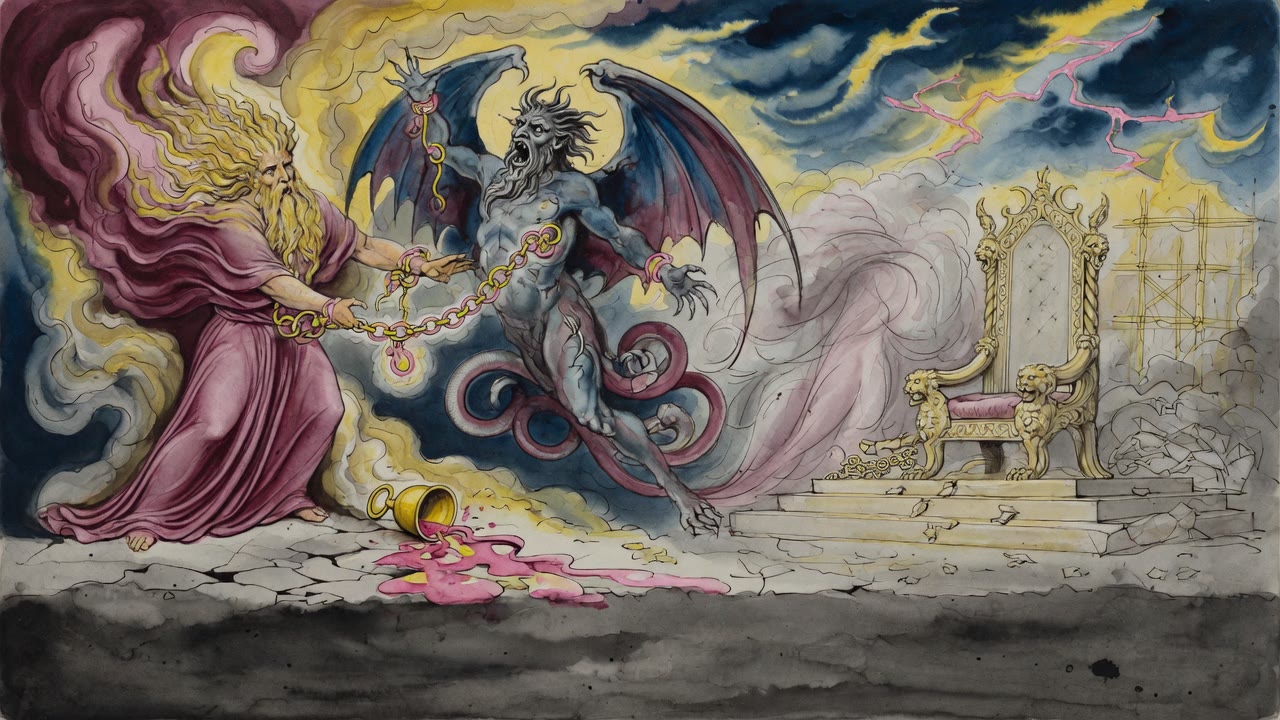
The crowd turned on the elders. The men who had wielded judicial authority to destroy an innocent woman were now on the ground of the same court where they had condemned her, and the reversal was total. They were condemned by their own words, with a pun that Daniel applied to each tree name: the angel would cut them as they had tried to cut Susanna down. The punishment they had intended for her came back on them exactly.
What Susanna's Refusal Preserved
Susanna's choice in the garden, her refusal when refusal meant certain accusation and likely death, was the hinge on which everything turned. Had she complied, there would have been no false testimony, no trial, no cross-examination, no vindication. The elders would have continued to sit on the judicial bench. The community in exile would have continued to trust them.
Her refusal made everything visible. It forced the elders to construct their lie, and the lie was the thing Daniel could take apart. The courage of her no in the garden created the conditions for the unraveling of two men who had been protected by their reputation for decades, and the community that had been governed by corrupt judges discovered what Daniel could do.
← All myths