Parshat Devarim5 min read

Each Father Earned the Land by His Own Labor

Moses lists Abraham, Isaac, and Jacob one by one because the land was not a blanket gift. Each patriarch worked the field until the promise stuck.

Curated by Arthur · Told by Maggid ·
Table of Contents
  1. Three Names, Not One Blanket
  2. Abraham After the Furnace
  3. Isaac and Jacob Keep Working the Soil
  4. Keini, Kenizi, Kadmoni
Each Father Earned the Land by His Own Labor Click for full size

Three Names, Not One Blanket

Moses stood with the land almost close enough to smell and refused to compress the fathers into a single slogan. The Lord swore to your fathers, to Abraham, to Isaac, and to Jacob (Deuteronomy 1:8). The list is not decoration. Each name is a separate claim that had to be earned in weather the others did not share.

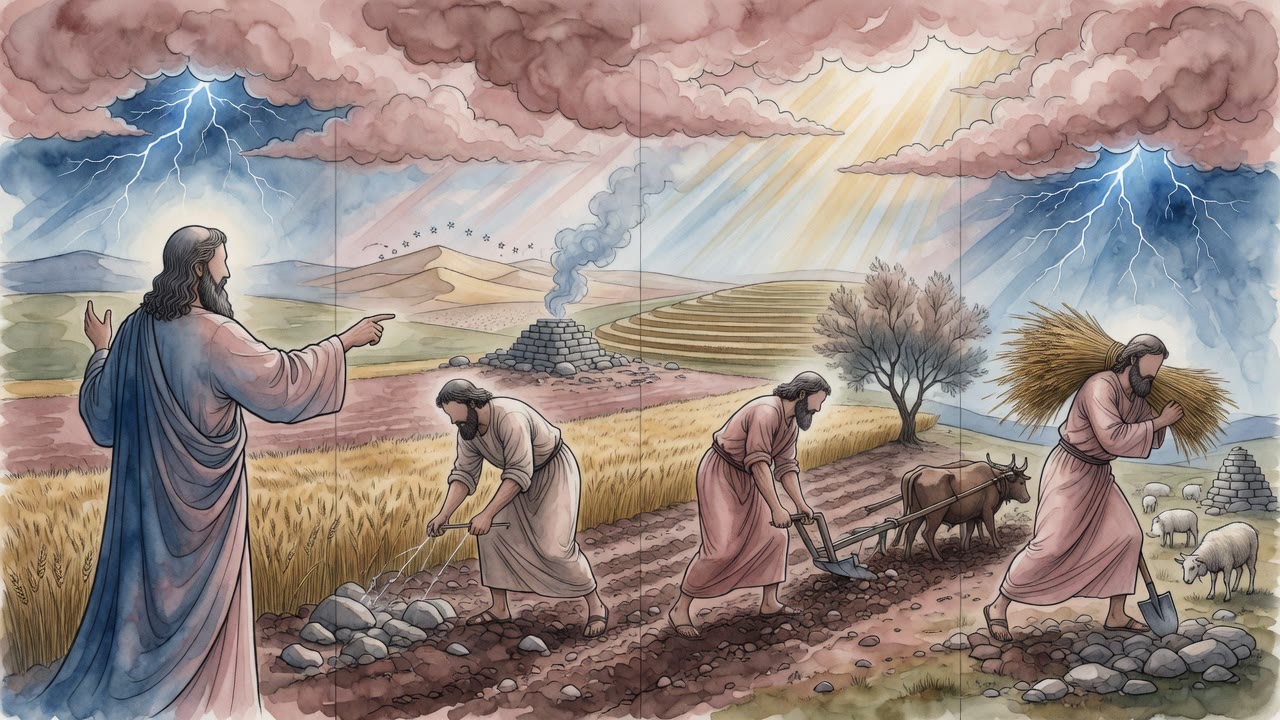
A king once gave a field to a servant just as it was, plain dirt. The servant did not leave it untouched. He cultivated it, planted a vineyard, and passed it to his son. The son improved it further. The grandson kept working. That is how the promise moved through the three. Gift, then labor, then a deeper gift that remembered every hand.

God gave the land to Abraham as it was. Abraham's life turned the gift into a path. Isaac held it under famine pressure. Jacob carried it into exile and still called it home by a stone pillow and a ladder dream. Moses made the camp hear three labors, not one inheritance slogan.

Abraham After the Furnace

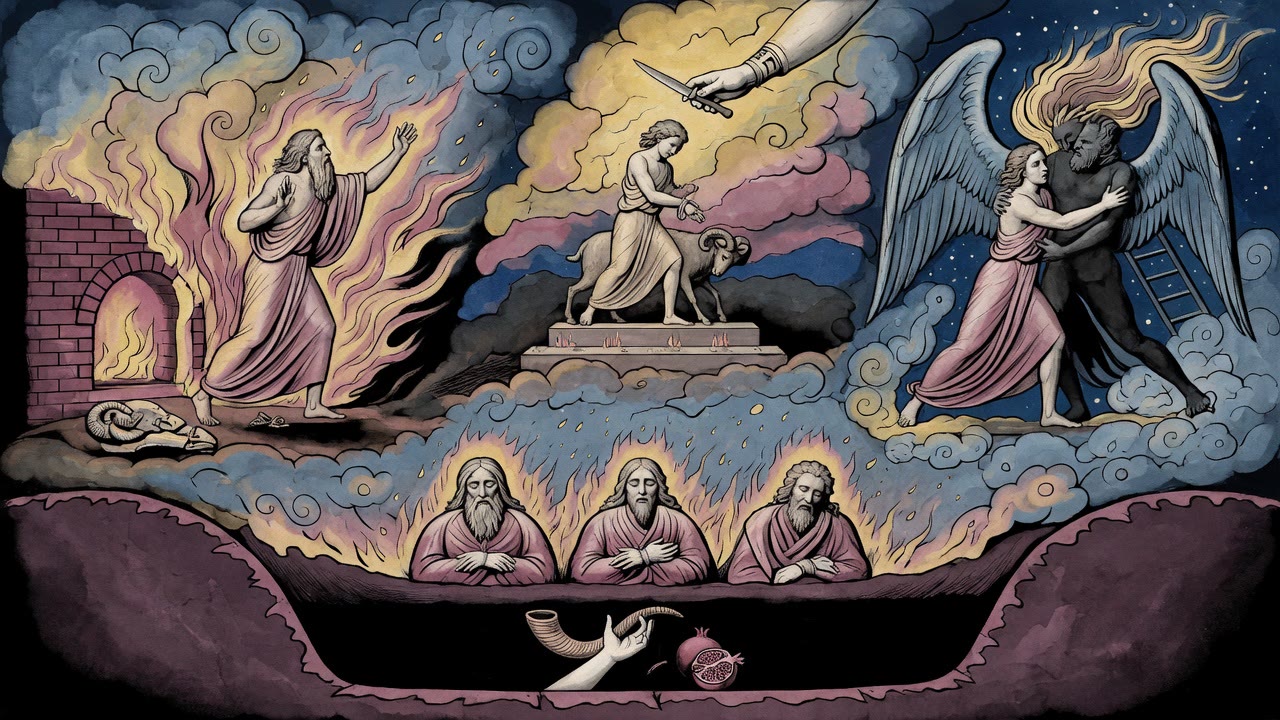
Abraham had already seen too much. Between the pieces he watched smoke, Gehinnom, and the four kingdoms, and then the Lord set a covenant that was rescue before it was acreage. He would not judge Abraham's sons in that furnace the way the wicked are judged. He would deliver them from the kingdom that held them. He would give land from the Nile of Egypt to the great river, the Euphrates (Genesis 15:18).

The borders marked safe country at the far end of fire. Abraham did not receive a real-estate brochure. He received a rescue plan with a map attached. That is why his name stands first in Moses' list. He took the field when it was still a promise spoken over dread, when the animals of the covenant still lay divided.

He walked the length of a land he did not yet hold and argued for cities he could not save. The field learned his footsteps. The oath thickened under the weight of a man who would not stop asking for mercy even when the fire was part of the vision.

Isaac and Jacob Keep Working the Soil

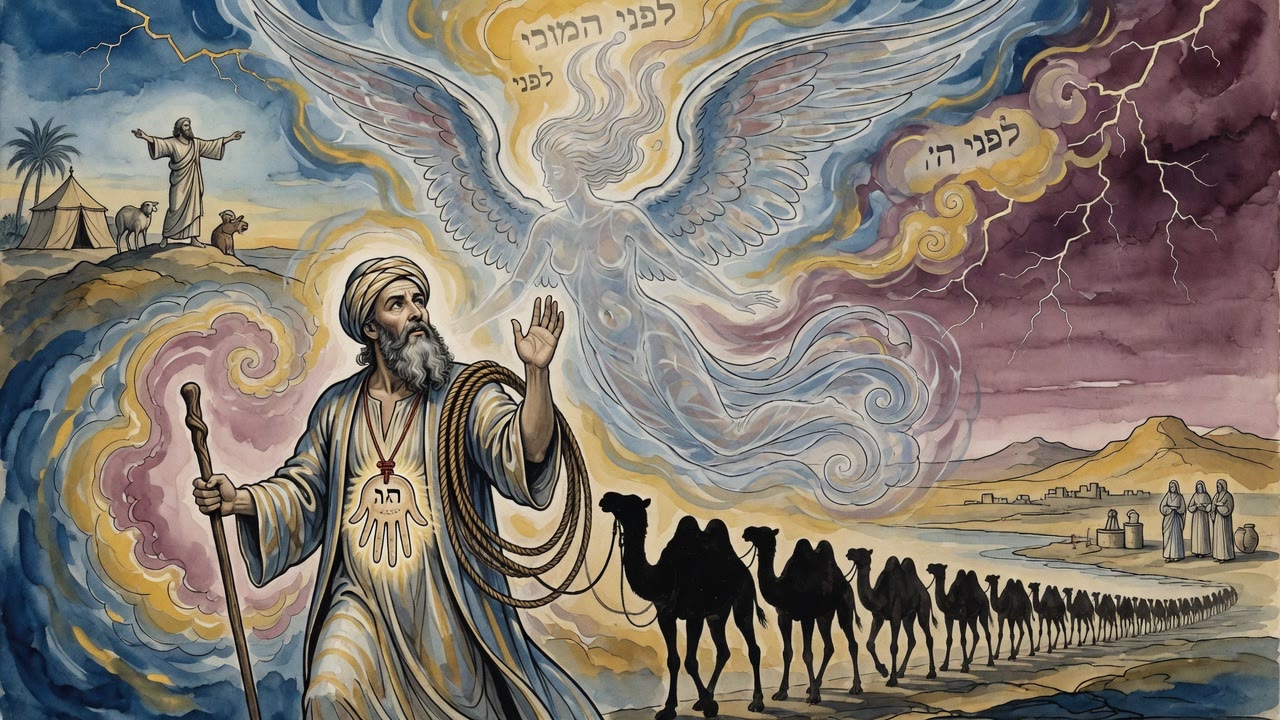
Isaac reopened wells his father had dug and stayed when leaving would have been easier. He planted in a year of hunger and found a hundredfold because the field remembered the first servant's work and because he refused to treat famine as a reason to abandon the claim. Enemies stopped the wells. He dug again. Persistence is a kind of agriculture.

Jacob fled with a stone for a pillow and still dreamed a ladder planted on that same claim. He worked seven years and then seven more, wrestled until dawn, and limped into the next chapter with a new name and the old promise still under his skin. Each man met a different weather. Each man left the field more claimed than he found it.

Moses names them separately so no one in the camp can say the land is only grandfather's luck. Merit stacked. Trials stacked. The oath thickened with each life that refused to drop the deed when the deed still looked like a rumor.

Keini, Kenizi, Kadmoni

Later Moses' book remembers lands spoken to Abraham, the Keini, the Kenizi, and the Kadmoni (Genesis 15:19), names that sit beyond the first simple map. Rabbi Judah haNasi hears the echo and will not let it stay antique. Ezekiel's tribal portions from east to west still carry the old promise forward, Dan one portion and the rest in their lines (Ezekiel 48:1-7). The future keeps measuring what the fathers began.

The inheritance is not only ancient borders. It is a future still being portioned out. Moses, on the plains, holds both the three fathers and the wider names so the people understand. They are about to enter a gift that three lives already paid for in different coins of trust.

He does not let them cross as tourists. He sends them as heirs of three separate labors, with a warning still warm from rebuke and a field that expects more hands. The land will not be held by a slogan. It will be held by people who dig, stay, wrestle, and remember why the names were listed one by one.

What remained after speech was not a lesson written on a board, but a changed set of hands and a road that would not reverse itself.


← All myths
From the tradition

Sources

3 sources

The texts behind this telling. Some cards carry a translation of the source; others are our own retelling of it, and each card says which. Every card links out to the original.

Sifrei Devarim 8:1Sifrei Devarim

Retold in our words. Read the original at the link below.Sifrei by Rabbi Shraga Silverstein · CC-BY

It's like when Moses, in the book of Devarim (Deuteronomy), reminds the Israelites about the land G-d promised them, saying, "which the L-rd swore to your fathers… to Abraham, to Isaac, and to Jacob" (Devarim 1:8). Why the extra emphasis on Abraham, Isaac, and Jacob?

The Sifrei Devarim, an ancient collection of legal interpretations on the book of Deuteronomy, asks this very question. It suggests it's because each of our patriarchs, each of our avot, was individually worthy of that promise. It wasn't just a blanket promise to a lineage, but a personal one to each of them.

The Sifrei Devarim illustrates this point with a beautiful analogy. Just as it is, plain and simple. The servant, however, doesn't leave it untouched. He cultivates it, plants a vineyard, and then passes it on to his son. The son, in turn, improves it even further, and then his son continues the work. Each generation builds upon the last, enhancing the gift they received.

That's how it was with Abraham, Isaac, and Jacob. G-d gave the land to Abraham, as it was. As it says in Genesis (Bereshith 13:17), "Arise, walk in the land in its length and its breadth, for to you shall I give it." But Abraham didn't just walk it. He improved it, planting a fruit grove in Beersheva (Bereshith 21:33).

Then came Isaac. He sowed in the land and reaped a hundredfold in that year, as we read in Genesis (Bereshith 26:12). He, too, didn't just accept the gift; he nurtured it and made it flourish.

And Jacob? He bought a piece of land, the very spot where he pitched his tent (Bereshith 33:19). He invested in it, making it his own.

So, each patriarch took the promise and made it real, tangible, and lasting. They didn't just receive the land; they worked it, they blessed it, and they made it their own. They were each worthy of the land, of the promise, in their own right.

But then, the Sifrei Devarim poses another question: if the oath to the fathers is already written, why reiterate "to your fathers"? If the promise to Abraham, Isaac and Jacob is clear, what's the need for this additional mention?

The text answers that this refers to a covenant with the tribes. As the prophet Habakkuk (3:9) says, "[These are] the oaths to the tribes, an enduring word." It emphasizes that the promise extended beyond the patriarchs to encompass all the tribes of Israel, each playing their part.

What does this all mean for us today? Perhaps it's a reminder that G-d's promises aren't just abstract ideas. They require our participation. We, too, are called to improve the world we inherit, to cultivate it, to make it flourish, and to pass it on to the next generation even better than we found it. We each have our unique role, like each of the patriarchs and each of the tribes, in fulfilling the promise. And that is a truly enduring word.

Full source
Sifrei Devarim 75:3Sifrei Devarim

Retold in our words. Read the original at the link below.Sifrei by Rabbi Shraga Silverstein · CC-BY

You stumble across something familiar, but the context is… different.

We find a curious phrase: "as He spoke to you," specifically about giving the lands of the Keini, the Kenizi, and the Kadmoni. Now, Rebbi – and when we say Rebbi, we're usually referring to Rabbi Judah haNasi, the editor of the Mishnah (the earliest code of rabbinic law) – points out, "Hold on a second! We've heard this before!" It echoes Bereshith (Genesis) 15:19. So, what's the Torah getting at here in Devarim (Deuteronomy)?

The text immediately pivots us to (Ezekiel 48:1-7), describing the tribal portions of land "from the eastern side to the west – Dan, one portion, etc." The implication? That the promise of these lands to the Israelites is being reiterated and clarified, perhaps with a new layer of prophetic significance tied to the future. It's not just about ancient borders; it’s about a divinely ordained inheritance.

He suggests that this verse reveals a fascinating shift in dietary laws. According to R. Yishmael, "flesh of desire" – meat eaten simply because you want it, not for a specific sacrificial purpose – was forbidden to the Israelites during their desert wanderings. Only when they entered Eretz Yisrael, the Land of Israel, was it permitted.

Why the change? What's so different about the desert versus the Promised Land?

Perhaps in the desert, where survival was a constant struggle and resources were scarce, unrestrained desire was seen as a threat to the community’s well-being. Every action, even eating, had to be mindful and purposeful. But in Eretz Yisrael, with its abundance and stability, a little more personal freedom and enjoyment were allowed.

It's a powerful reminder that even the most seemingly mundane aspects of life, like what we eat, can be deeply intertwined with our spiritual and historical context. What restrictions, born of necessity or tradition, shape our lives today? And what might change as we move into new chapters, new "promised lands" of our own?

Full source
Targum Pseudo-Jonathan on Genesis 15:18Targum Pseudo-Jonathan on Genesis

Retold in our words. Read the original at the link below.The Targum of Jonathan ben Uzziel, trans. J. W. Etheridge, London, 1862 · Public Domain

Right after the terrifying vision of Gehinnom and the four kingdoms, the Lord sets a covenant. And Targum Pseudo-Jonathan on (Genesis 15:18) spells out the promise with an emphasis the Hebrew leaves implicit.

On that day the Lord ordained a covenant with Abraham, that He would not judge therein his sons, but would deliver them from the kingdom.

Notice the order. First: I will not judge your children the way the wicked are judged in that furnace you just saw. Second: I will rescue them out of whichever kingdom of the four happens to be holding them at the time. Third: and by the way, here is the land, from the Nile of Egypt to the great river, the Pherath, the Euphrates.

The Targum reads the land-promise as the end of a rescue plan, not the start of a real-estate contract. The boundaries matter because they mark the safe country at the far end of the fire. Abraham is told in one verse that his children will be spared the worst punishment, delivered from the empire that enslaves them, and given a wide homeland to breathe in.

The Maggid hears the Lord's whole promise as one motion: no condemnation, no captivity, your own land (Genesis 15:18). After a vision that long and that dark, the covenant is exactly what Abraham needs, not an explanation of the furnace, but a word about where his children end up once the furnace is behind them.

Full source