5 min read

Abraham Fell on His Face and Laughed, Then Circumcised His House

At ninety-nine Abraham hits the ground twice under God's promise, laughs in his heart at Sarah's age, then rises into the cut that binds his house.

Curated by Arthur · Told by Maggid ·
Table of Contents
  1. The Second Collapse
  2. The Knife That Waited in the Tent
  3. Two Future Withholdings
  4. Isaac Named in the Dark of the Heart

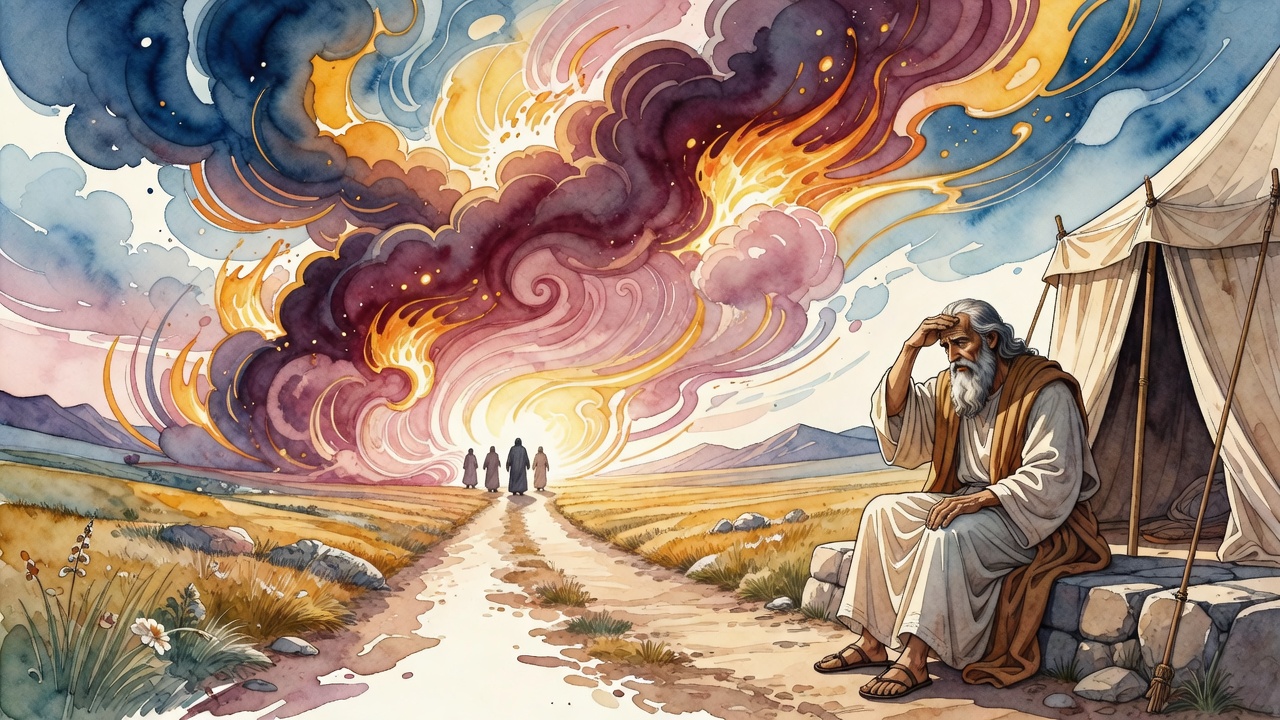
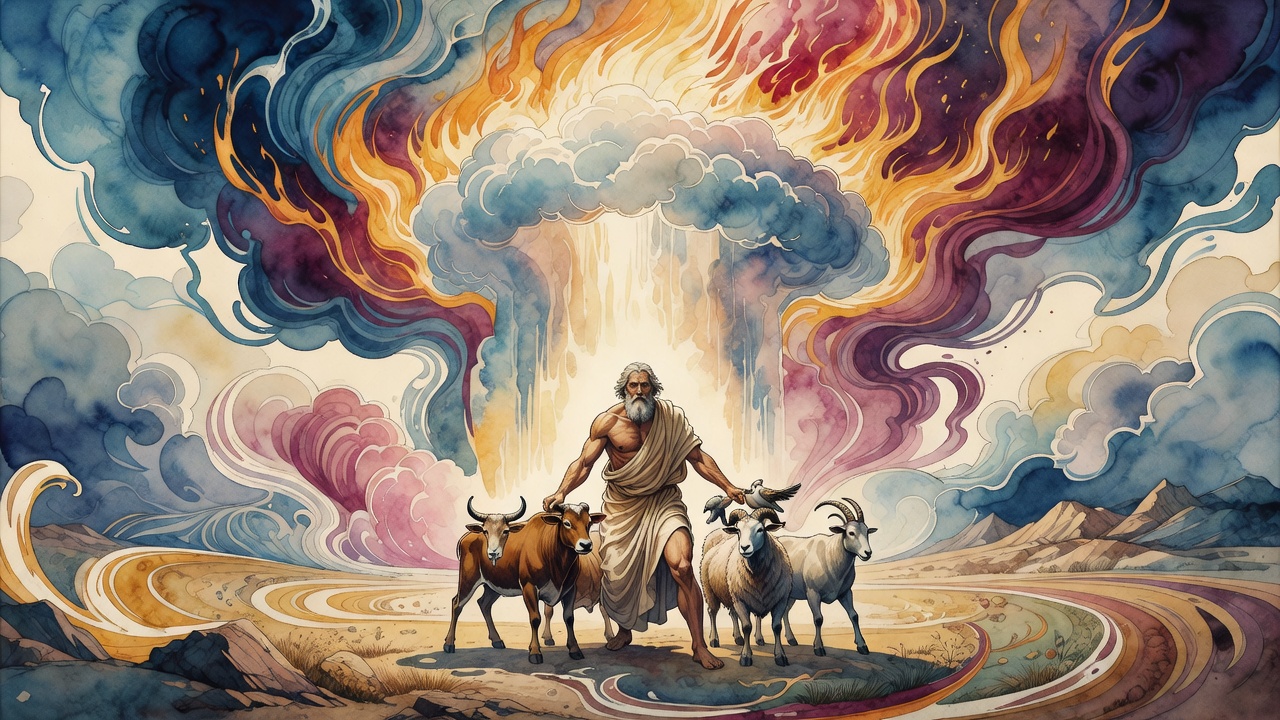
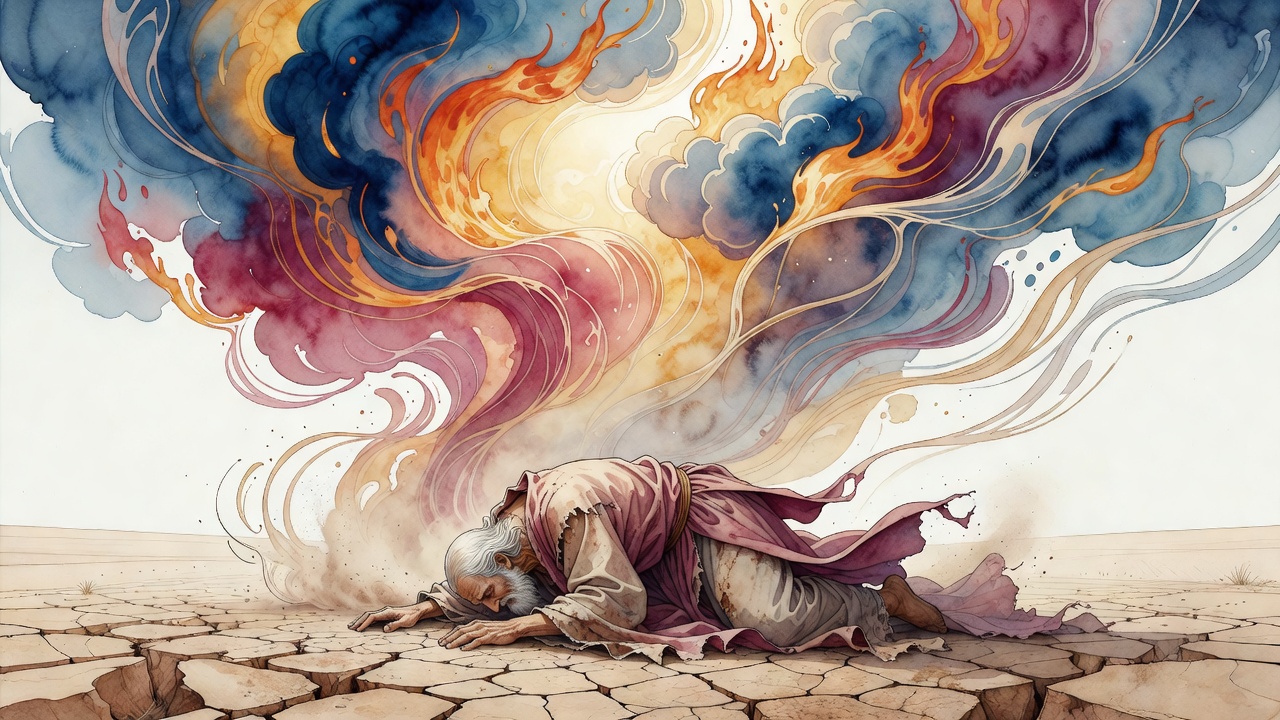
Abraham went down hard. Not a polite bow. Full face to dust, ribs pressing earth, while the Voice that had already renamed him kept speaking over his spine (Genesis 17:3). He had walked for decades on a promise that still lived mostly in stars and sand. Now the same God pressed closer than breath and demanded a mark in flesh.
Abraham Fell on His Face and Laughed, Then Circumcised His House Click for full size

The Second Collapse

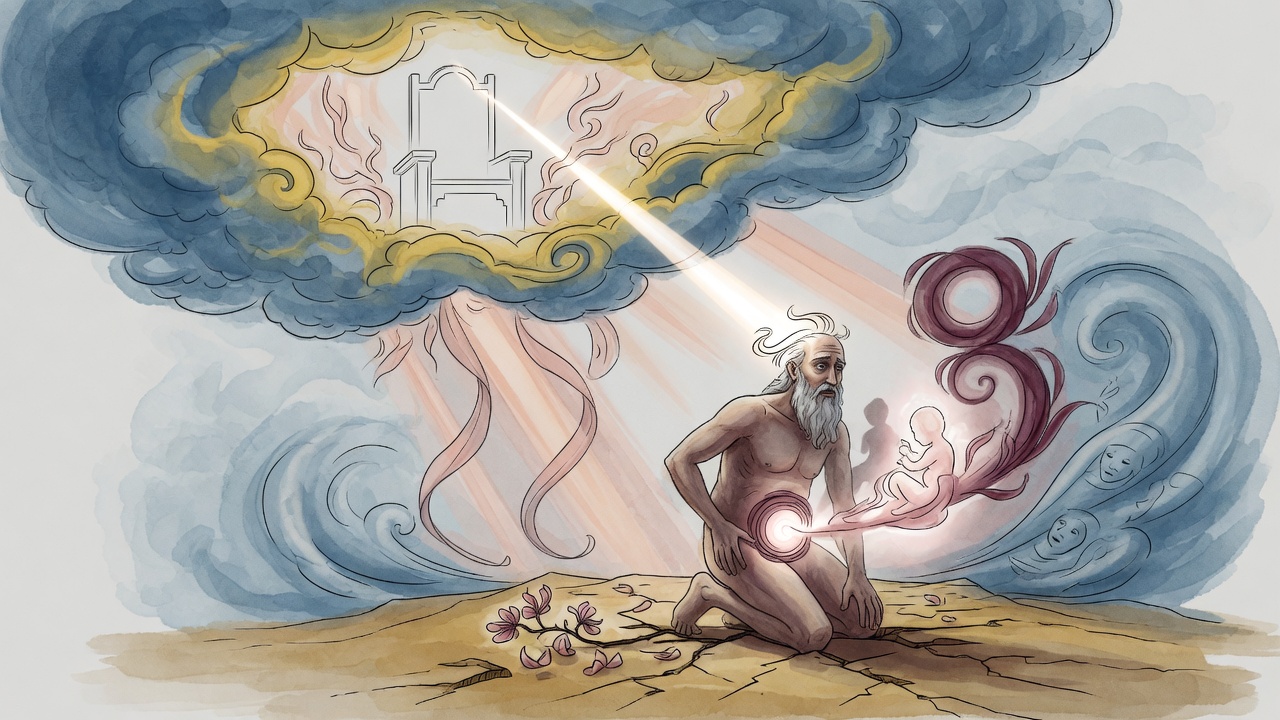
The first fall came when covenant language thickened into law. The second came when the promise got a name and a body still missing. "Abraham fell upon his face, and he laughed" (Genesis 17:17). The laugh stayed inside the bone. Shall a child be born to a man of a hundred years? Shall Sarah, ninety years old, give birth? He did not stand up to argue. He folded, and the laugh shook him like a fever that would not choose between joy and fear.

His heart measured Sarah's belly against the calendar and found no path. Street wisdom said men could still father late, that the real impossibility sat in her ninety years, not his hundred. The distinction did not cool the laugh. The man who had smashed idols still flinched when the promise named a date and a womb that had stayed shut through every earlier miracle.

The Knife That Waited in the Tent

Between the two falls sat the command that would not wait for Isaac's cry. Every male of the house, bought or born, would take the brit milah (ברית מילה), the covenant of circumcision. Abraham was ninety-nine. His body had carried wars, wells, and the long road from Ur. Now it would carry a cut that could not be undone. He rose from the dust with dirt in his beard and went to the work God had set in his hands.

The household felt the order before they understood it. Servants who had followed him through famine watched the patriarch go first. No younger man was asked to bleed while the master kept his skin whole. The tent filled with the smell of blood and crushed herbs. Outside, the afternoon kept its ordinary heat. Inside, a nation not yet born took its first irreversible mark.

Two Future Withholdings

Long after Abraham's tent cooled, the same mark went thin under Egyptian quotas. Mud filled the days. Knives for covenant work stayed sheathed. When the night of the lamb finally arrived, Moses would not let the people paint doorposts while their bodies stayed uncut. He made them take the brit again before the Passover blood could sit on wood (Exodus 12:48). Flesh first. Then the lintel. Freedom refused to ride on a wish.

In the wilderness the neglect returned under desert wind and long marches. At Gilgal Joshua raised flint and opened a generation before they stepped into inheritance (Joshua 5). The stones bit. Men who had crossed a sea still had to cross a covenant they had postponed. Abraham, face in the dust at ninety-nine, could not have named those later hands. The two falls still line up with the two restorations. Twice he went down. Twice the cut had to be taught again to bodies that had forgotten how to bleed for God.

Isaac Named in the Dark of the Heart

God did not punish the laugh. God folded it into the name. Isaac, Yitzhak (יצחק), the one who will laugh. The child would carry the sound Abraham had tried to keep inside his ribs. Sarah would laugh later in the tent flap, and the same root would catch her too. Between the two human laughs stood a covenant already bleeding on Abraham's flesh.

He walked out of the tent stiff, careful, every step a negotiation with pain. The stars he had been told to count still hung in their old places. Nothing in the sky looked new. Everything under his clothes did. The promise had stopped being a speech about dust and become a wound that would scar into a sign.

Sarah watched him move like a man carrying fire under cloth. She did not yet know the year that would open her womb. She knew only that the man who had bargained for Sodom and fed angels under a tree had come back from God with less dignity and more certainty, dirt on his face and a new silence around the mouth that had laughed without sound.

Night settled on the camp of tents. Abraham lay careful on his side, every turn a reminder. The covenant had left the sky and entered the skin. Tomorrow he would walk stiff among the flocks and no stranger would see what had changed. God had seen it. The dust of two falls still clung somewhere in the weave of his beard, and the laugh that had shaken his ribs had already been folded into a name waiting for a child not yet conceived.


← All myths

From the tradition

Sources

2 sources

The texts behind this telling. Some cards carry a translation of the source; others are our own retelling of it, and each card says which. Every card links out to the original.

Bereshit Rabbah 46:6Bereshit Rabbah

Retold in our words. Read the original at the link below.The Sefaria Midrash Rabbah, 2022 · CC-BY

It's never accidental. Jewish tradition teaches us that repetitions often hold profound significance, echoing through generations.

Take Abraham, for example, our patriarch. We find him falling on his face before God not once, but twice in Genesis. As it says, "Abram fell upon his face and God spoke with him, saying" (Genesis 17:3). But Rabbi Pinḥas, citing Rabbi Levi, sees a deeper connection. He points out that Abraham falls on his face twice – here, and also in (Genesis 17:17). And what, according to these rabbis, does this repetition foreshadow?

Well, get this: these two acts of prostration correspond to two instances when circumcision – the brit milah, the covenant of circumcision – was withheld from Abraham's descendants. A physical act of devotion mirrored by a physical act of covenant.

The first instance? Egypt. Remember the Exodus story? Our ancestors were enslaved, downtrodden. According to the Rabbis, the practice of circumcision was neglected. But then Moses arrived, a leader, a prophet. And what did he do? He circumcised the people, preparing them to partake in the Paschal sacrifice, as described in (Exodus 12:48). It was a re-dedication, a physical manifestation of their renewed commitment to God.

And the second time? In the wilderness, during those long, wandering years after the Exodus. Again, circumcision was neglected. And who stepped in then? Joshua. He, too, circumcised the people, solidifying their connection to the covenant before entering the Promised Land, as we read in Joshua chapter 5.

So, what's the big picture here? Why this connection between Abraham’s prostrations and the lapses in circumcision? It seems to be about the cyclical nature of faith and commitment. Times of spiritual fervor, like Abraham’s encounter with God, are sometimes followed by periods of neglect or forgetfulness. But the tradition suggests that these lapses are never permanent. There is always an opportunity for renewal, for a return to the covenant, a re-dedication to the Divine.

And isn't that a comforting thought? That even when we falter, when we lose our way, there's always a chance to fall on our faces, so to speak, and reconnect with something greater than ourselves. To recommit. To be circumcised again, figuratively, in our hearts.

Full source
Bereshit Rabbah 47:3Bereshit Rabbah

Retold in our words. Read the original at the link below.The Sefaria Midrash Rabbah, 2022 · CC-BY

It's right there in (Genesis 17:17): "Abraham fell upon his face, and he laughed. He said in his heart: Shall a child be born to one who is one hundred years old? And shall Sarah, a ninety-year-old woman, give birth?”

But the Rabbis of the Midrash (rabbinic interpretive commentary) dive deep, seeking to understand not just the words, but the why behind them.

Bereshit Rabbah, that magnificent collection of rabbinic interpretations on the Book of Genesis, offers a fascinating perspective. It points out that Abraham fell on his face twice in this chapter – once here, and once a few verses earlier (Genesis 17:3). And the Midrash connects these two prostrations to moments when circumcision was delayed for the Jewish people. Once in Egypt, and again in the wilderness. In Egypt, it was Moses who came and circumcised the people so they could partake in the Passover sacrifice. And later, in the wilderness, it was Joshua who stepped up to perform the circumcisions (as we see in Joshua chapter 5).

Pretty powerful connection. A physical act of devotion from Abraham mirroring future challenges and renewals for his descendants.

But let's get back to that laughter, and Abraham's internal question: "Shall a child be born to one who is one hundred years old?"

Rabbi Yudan and Rabbi Azarya offer insightful interpretations. Rabbi Yudan asks, essentially, why was Abraham so surprised? Why shouldn't an old man be able to father children? His answer? Because Abraham also questioned whether Sarah, at ninety, could give birth! Rabbi Yudan emphasizes the common belief that men don't necessarily lose their fertility with age in the same way women do. It's a question of her age, not just his.

Rabbi Azarya takes a slightly different tack. He suggests that Abraham shouldn't have been so surprised about Sarah either! He then offers a definition of what truly constitutes an "old woman": It's someone who is called "Mother So-and-so" and doesn't mind the title. In other words, Sarah, at ninety, still possessed a certain youthful spirit, a vitality that defied conventional notions of old age.

It's a subtle but important point. It's not just about the number of years, but about the spirit, the inner life force. Sarah, even at ninety, hadn't yet fully embraced the societal expectations of old age.

What are we to make of all this? Perhaps it's a reminder that age is more than just a number. It's about vitality, spirit, and defying expectations. And perhaps Abraham's laughter wasn't just disbelief, but also a dawning realization of the truly miraculous nature of what was about to happen. A miracle that defied not just the limitations of age, but the very fabric of possibility.

Full source