5 min read

Abraham Takes the Covenant Pieces and God Makes a Nation of Him

Abraham cut the animals himself and beat the birds off the meat until dark. God did not offer to promote him. God offered to make him.

Curated by Arthur · Told by Maggid ·
Table of Contents
  1. He Took the Animals Himself
  2. God Promised to Make Him, Not to Place Him
  3. Famine, Egypt, and Four Kings
  4. Everything That Happened to Him Happened Again
  5. Moses Counted the Camp and the Making Was Done
Abraham Takes the Covenant Pieces and God Makes a Nation of Him Click for full size

He Took the Animals Himself

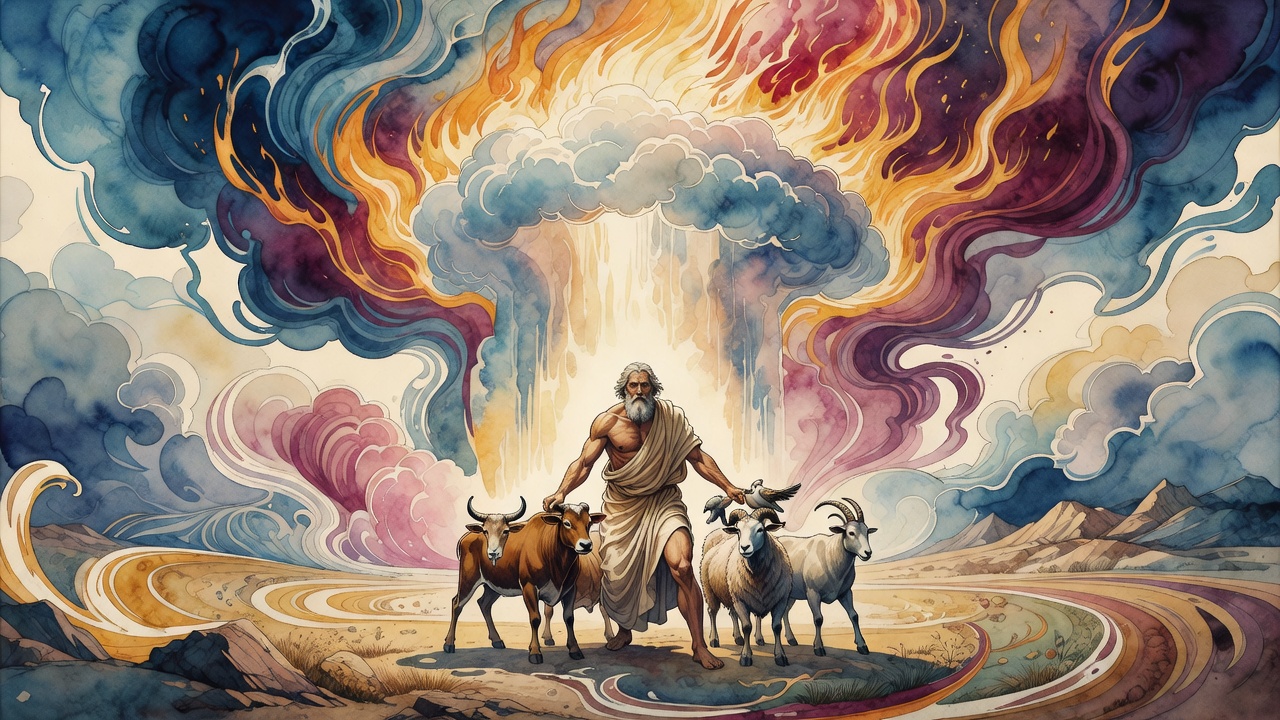
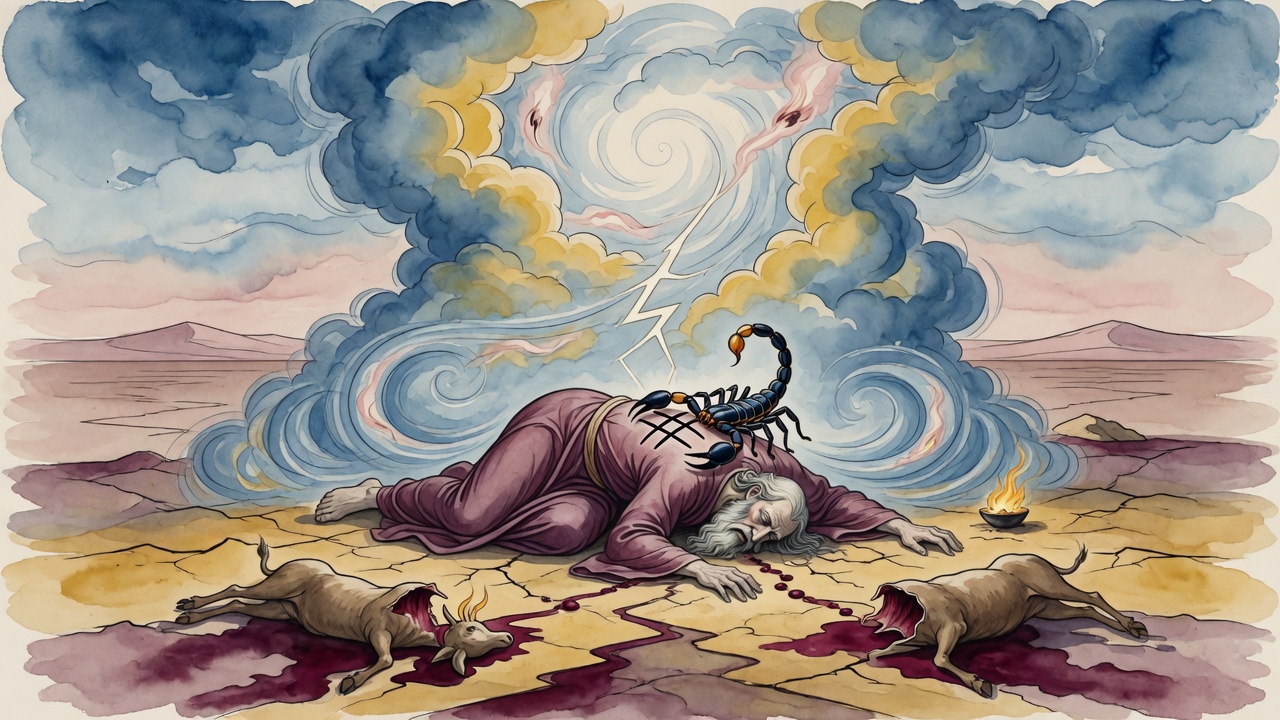
Abraham cut the heifer down the middle and pulled the halves apart until they lay facing each other on the ground. Then the goat. Then the ram. He set the turtledove and the young pigeon whole on the stones between them and stepped back into the smell of it.

Birds came down for the meat. He drove them off. They circled and came again, and he drove them off again, and the sun slid down the sky while he worked, and nobody came to take a turn.

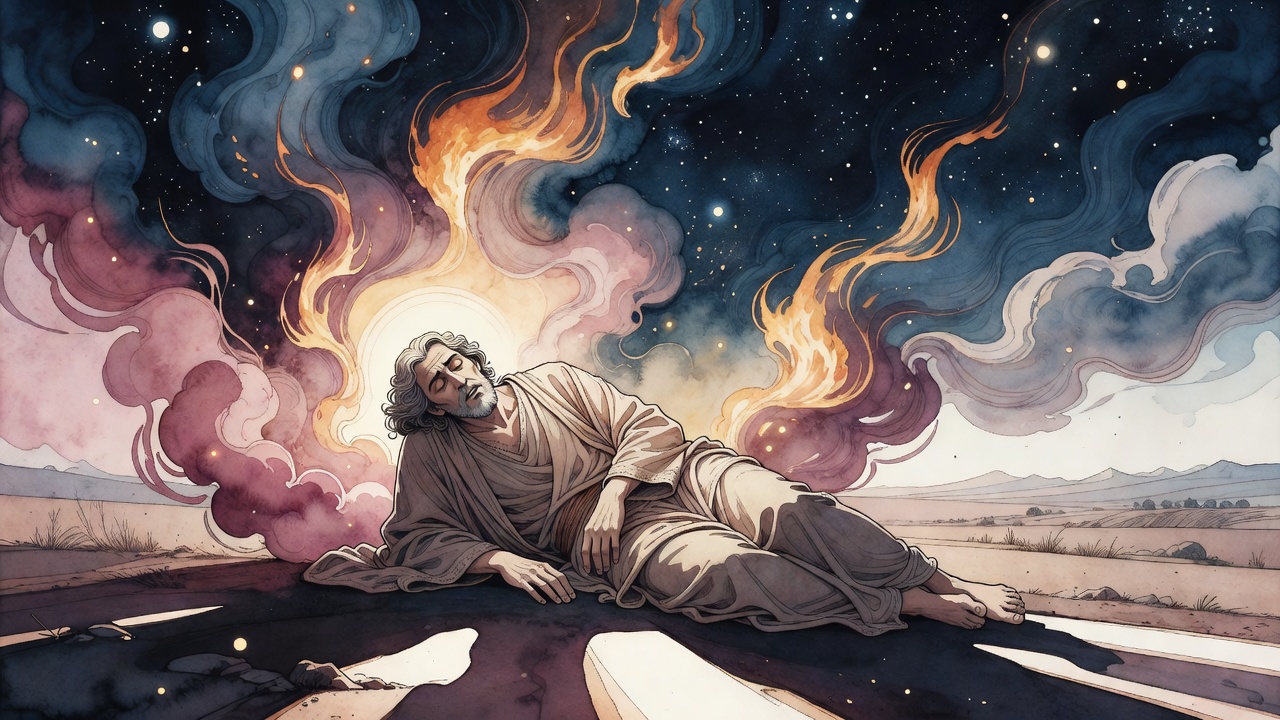
He had not been given the terms yet. He guarded the pieces anyway, beating wings away from a bargain whose price nobody had named, until the light went out of the field and something heavier than sleep took hold of him.

That is what the covenant looked like from the outside. Not a man lying still while heaven arranged things over him. A man with blood to the wrist, standing watch over meat.

God Promised to Make Him, Not to Place Him

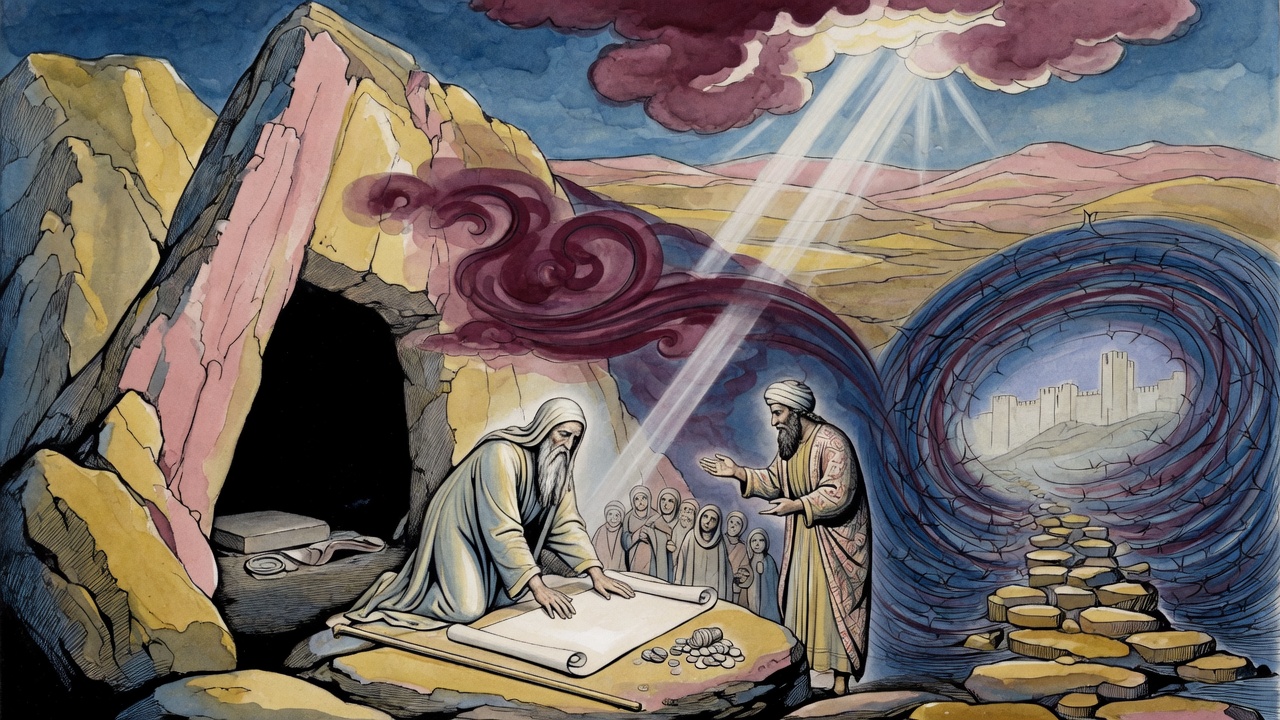
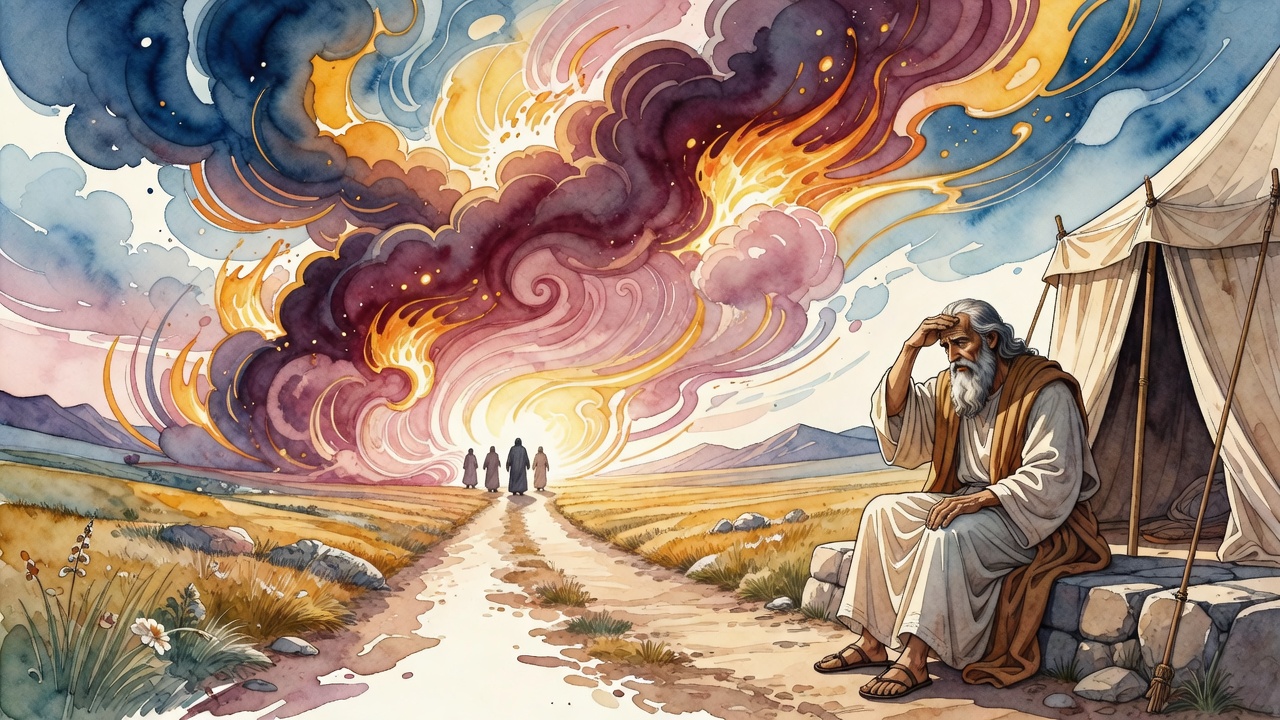
The order that started all of it had been thin on detail. Leave your country. Leave the house you were born in. Go to the land I will show you.

No name for the place. No direction. A land he would be shown once he was standing on it, which meant walking away from every measurable thing he owned on the strength of a sentence.

What he got in exchange was a verb. God did not say I will set you over a great nation. God said I will make you into one. Make was the verb from the first week, the one used when the firmament was made and the two great lights were made. Abraham was not being promoted above other men. He was being built, the way a thing is built that did not exist before.

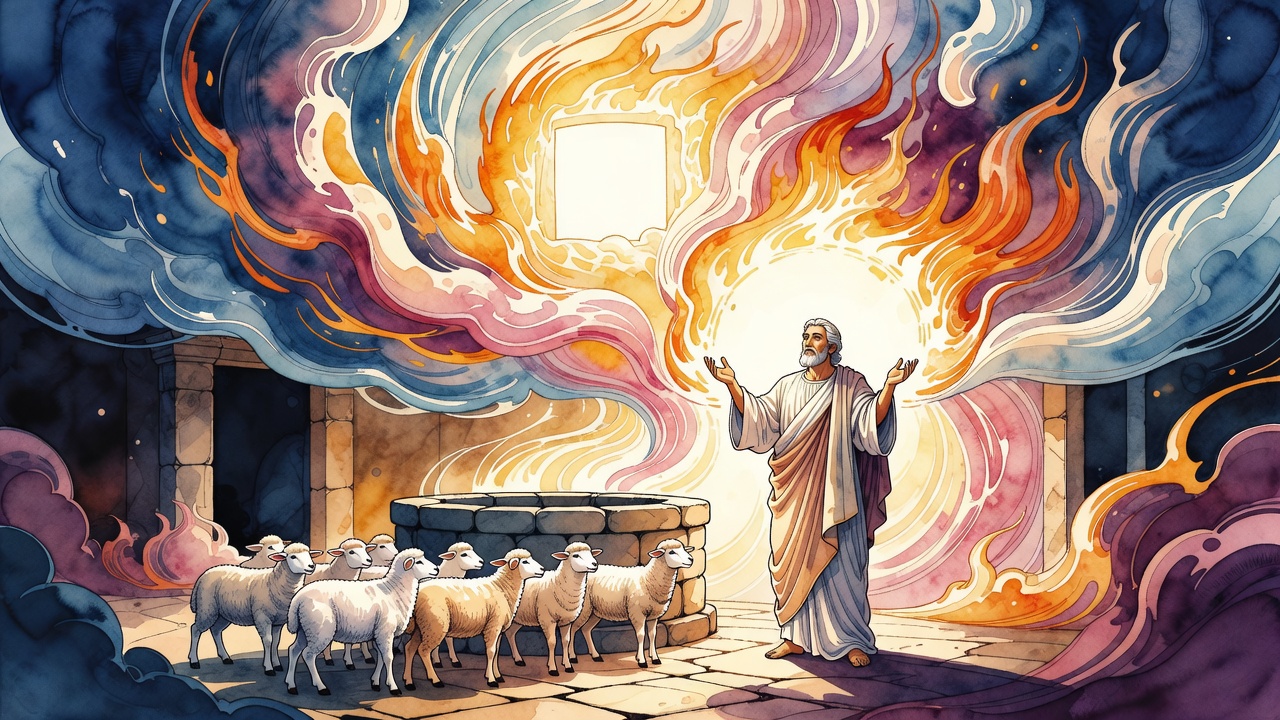
The promise came with equipment. I will teach you, and I will light your eyes. Wisdom put inside the man, and sight handed over like a lamp, because the country he was walking toward would have looked like any other stretch of dust and thornbush to a pair of ordinary eyes.

Famine, Egypt, and Four Kings

The road did not reward him for taking it. The land he had been shown dried out under him, and hunger pushed his household down into Egypt, where the officials looked at his wife and he learned exactly what a stranger is worth at a border.

He came back up. Then four kings came down out of the north, burned through the valley cities, and carried off his nephew with the rest of the plunder.

He went after them with the men born in his own house, a few hundred against an alliance that had just flattened five kingdoms. God went out in front of him and struck the enemies down. Abraham did not so much win that war as walk into the space it opened.

Everything That Happened to Him Happened Again

A sign came with the promise, and the sign was this. Whatever reached the father would reach the children.

He had been pulled alone out of his father's house. His children would be pulled out of seventy nations. Go forth, he was told, and they would be told, I will bring you up out of Egypt. Hunger sent him down to Egypt for bread, and hunger would send ten of his great-grandsons down the same road for grain.

Egypt harassed him at the border. Egypt would sit down with its advisers and say, let us deal shrewdly with them. Four kings banded together against one old man with a household of servants, and the kings of the earth would one day take their stand against a nation.

Only the last line of the sign came out in his favor, and it read less like comfort than like arithmetic. God had gone out and fought in front of Abraham. God would go out and fight in front of the children.

Moses Counted the Camp and the Making Was Done

Centuries passed before anyone could stand up and say the promise had been kept.

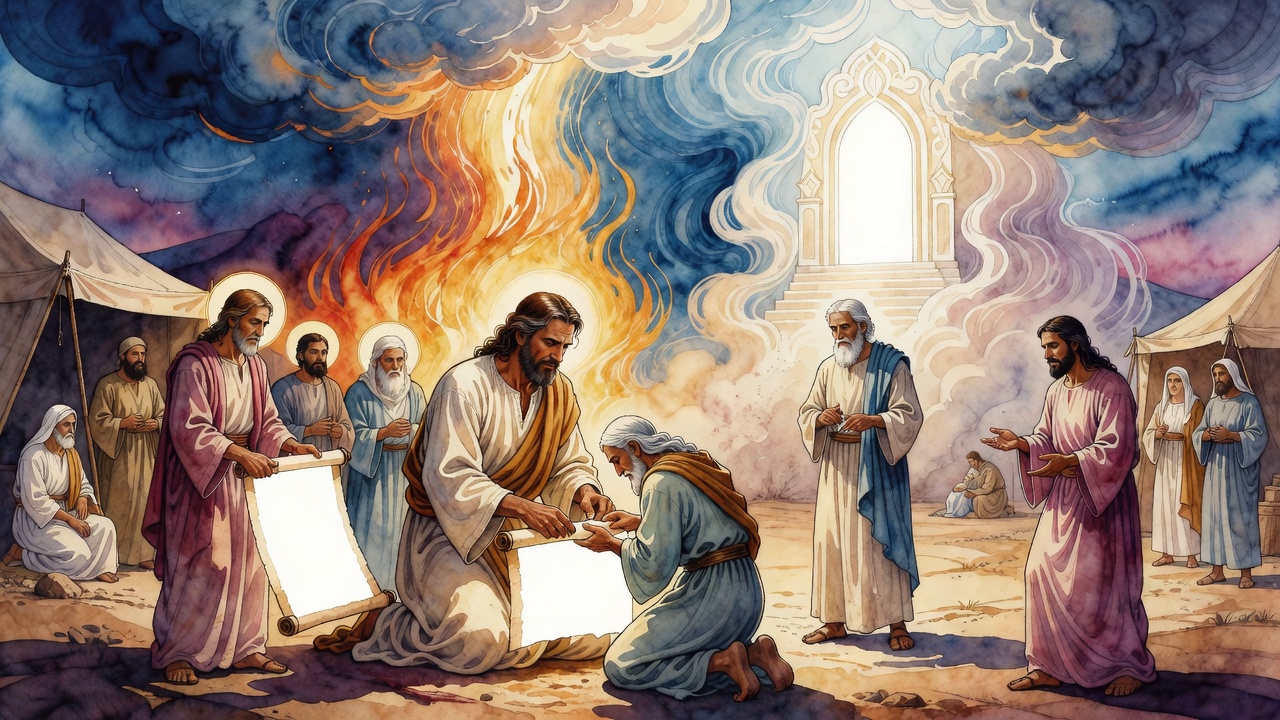
At the mountain, with the smoke still on it, Moses turned around and looked at what was assembled behind him. Tribes in ranks. Elders. Children on shoulders. Herds pressed against the edge of the camp. A whole people standing in one place with law in their arms.

He had spent his life arguing with this crowd. Now he counted it, and what came out of him was not a command. And what great nation is there.

The old man who cut the animals and beat off the birds had been dust for generations. He never saw the size of the thing he had been turned into, and he never learned that the making would take that long. He only knew the afternoon, the flies, the halves lying face to face, and the wings coming down again for the meat.


← All myths
From the tradition

Sources

4 sources

The texts behind this telling. Some cards carry a translation of the source; others are our own retelling of it, and each card says which. Every card links out to the original.

The Midrash of Philo 10:1The Midrash of Philo

Retold in our words. Read the original at the link below.The Works of Philo Judaeus, trans. C. D. Yonge, London, H. G. Bohn, 1854-1890 · Public Domain

The Midrash of Philo asks: Why does he say, "And he took unto him all these things"? (Genesis 15:10).

The source questions the taking of the covenant animals. Battle scenes are not in this line.

Full source
Midrash Tanchuma Buber, Lech Lecha 4:9Midrash Tanchuma Buber, Lech Lecha

Translation of the source text.Midrash Tanchuma (Buber), Public Domain, on Sefaria · CC-BY-SA

Another interpretation of "I will make you wise and instruct you" (Psalms 32:8): What is the meaning of "and instruct you"? "To the land that I will show you" (Genesis 12:1). He said to Abraham: You are not losing out, for "I will make you into a great nation" (Genesis 12:2). It is not written here "and I will set you," but rather "and I will make you," for I am creating you a new creature, as it is said, "And God made the firmament" (Genesis 1:7), and "And God made the two luminaries" (Genesis 1:16). Rabbi Pinhas the Priest bar Hama said: When did the Holy One, blessed be He, make Abraham into a great nation? When Israel went out from Egypt and came to Sinai and received the Torah, and Moses looked upon them and said: Behold, they are made just as the Holy One, blessed be He, promised to the elder, as it is said, "And what great nation is there" (Deuteronomy 4:8).

Full source
Midrash Tanchuma Buber, Lech Lecha 12:1Midrash Tanchuma Buber, Lech Lecha

Translation of the source text.Midrash Tanchuma (Buber), Public Domain, on Sefaria · CC-BY-SA

Rabbi Joshua of Sikhnin said in the name of Rabbi Levi: The Holy One, blessed be He, handed a sign to Abraham, that everything which happened to him would happen to his children. Abraham was chosen from his whole father's house; Israel too were chosen from the seventy tongues. It was said to Abraham, "Go forth" (Genesis 12:1), and it was said to Israel, "And I said, I will bring you up out of the affliction of Egypt" and so forth (Exodus 3:17). It was said to Abraham, "And I will bless those who bless you" (Genesis 12:3), and also to Israel, "May the LORD bless you and keep you" (Numbers 6:24). It was said to Abraham, "[And I will make of you a great nation, and I will bless you,] and I will make your name great" (Genesis 12:2), and also concerning Israel, "And what great nation is there" and so forth (Deuteronomy 4:8). Abraham was called "one," as it is said, "Abraham was one" (Ezekiel 33:24), and Israel too, "And who is like Your people Israel, one nation on the earth" (I Chronicles 17:21). Just as Abraham, when he came to the land, there was a famine in the land, so also Israel, when they settled in the land of Israel, there was a famine, as it is said, "And the famine was severe in the land" (Genesis 43:1). Just as Abraham, on account of famine, went down to Egypt, [as it is said, "And there was a famine in the land, and Abram went down to Egypt" (Genesis 12:10)], so also Israel, as it is said, "And the ten brothers of Joseph went down to buy grain" (Genesis 42:3). Just as Abraham, when he went down to Egypt, the Egyptians provoked him, so also Israel, as it is said, "Come, let us deal shrewdly with them" and so forth (Exodus 1:10). Just as Abraham, four kings joined battle against him, so also Israel: in time to come the nations are destined to make an alliance against them, as it is said, "The kings of the earth take their stand" (Psalms 2:2). Just as Abraham, the Holy One, blessed be He, went forth and fought before him and slew his enemies, so also the Holy One, blessed be He, fights for Israel; in the time to come the Holy One, blessed be He, goes forth and fights their wars, as it is said, "Then the LORD will go forth and fight against those nations, as when He fights on a day of battle" (Zechariah 14:3).

Full source
Midrash Tanchuma Buber, Lech Lecha 4:7Midrash Tanchuma Buber, Lech Lecha

Translation of the source text.Midrash Tanchuma (Buber), Public Domain, on Sefaria · CC-BY-SA

Another interpretation of (Genesis 12:1): "to the land that I will show you." Rabbi Berekhyah the Priest, son of Rabbi, said: This is what Scripture says (Psalms 32:8): "I will instruct you and teach you in the way you should go." For I will instruct you. What is the meaning of "I will instruct you"? I will place wisdom in you, as it is said (Joshua 1:7): "so that you may prosper." "And teach you" (Psalms 32:8) means that I will enlighten your eyes.

Full source