4 min read

Abraham Circumcised His Whole House on One Day

Ishmael was thirteen and went first, ahead of the servants and the men bought with silver. By dark nobody in the camp could walk properly.

Curated by Arthur · Told by Maggid ·
Table of Contents
  1. Ishmael Went First
  2. Every Male in the Camp
  3. What Sarah Was Promised the Same Morning
  4. Land He Did Not Own

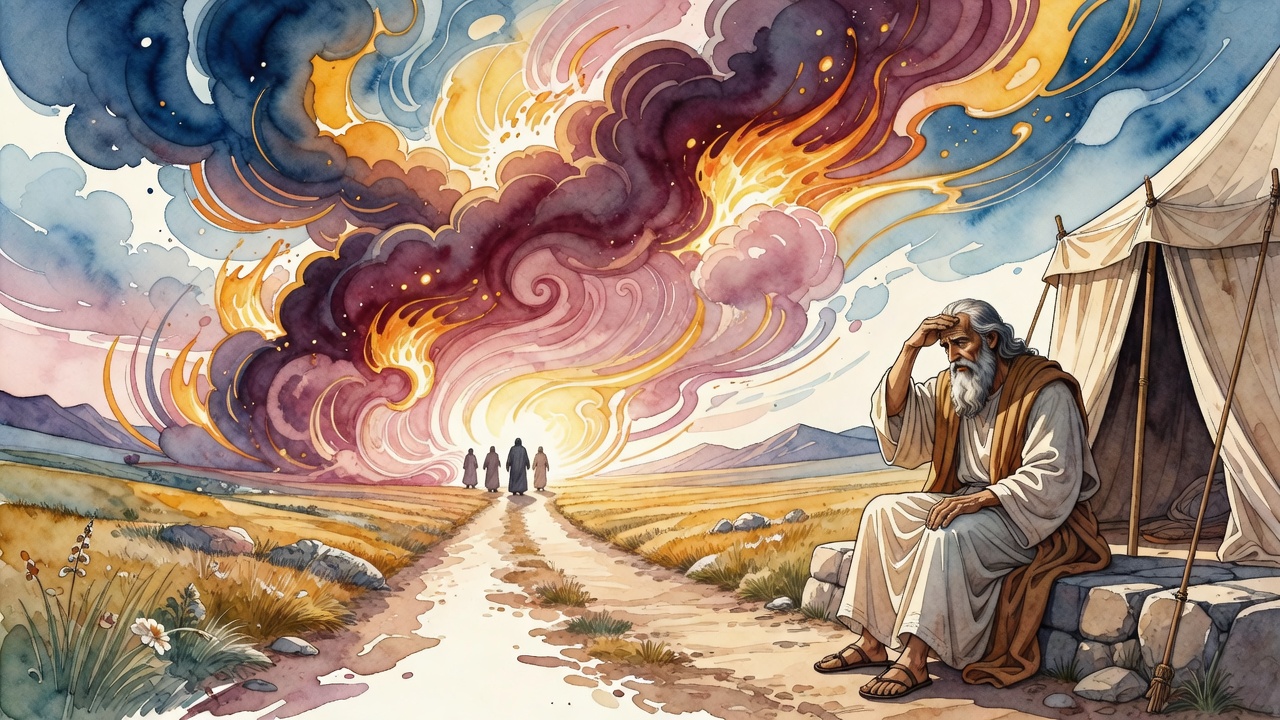
Abraham was ninety-nine years old when the command arrived, and he had the flint out before the morning was over.
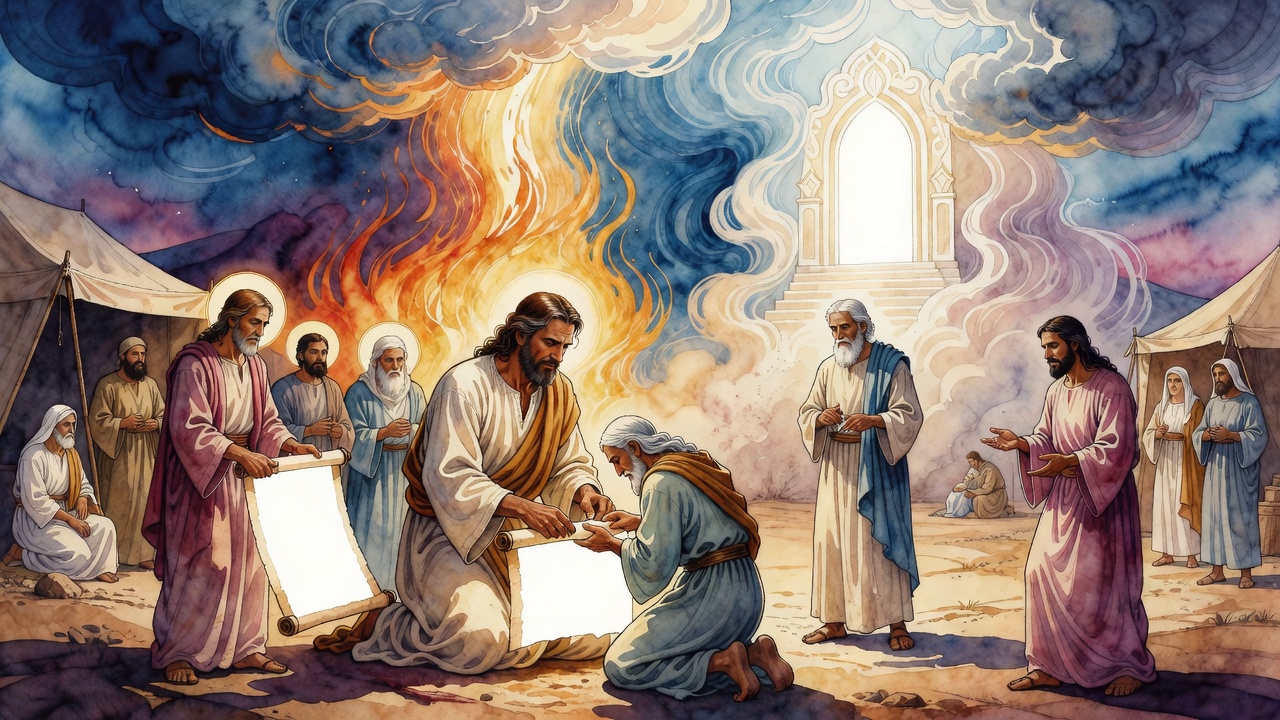
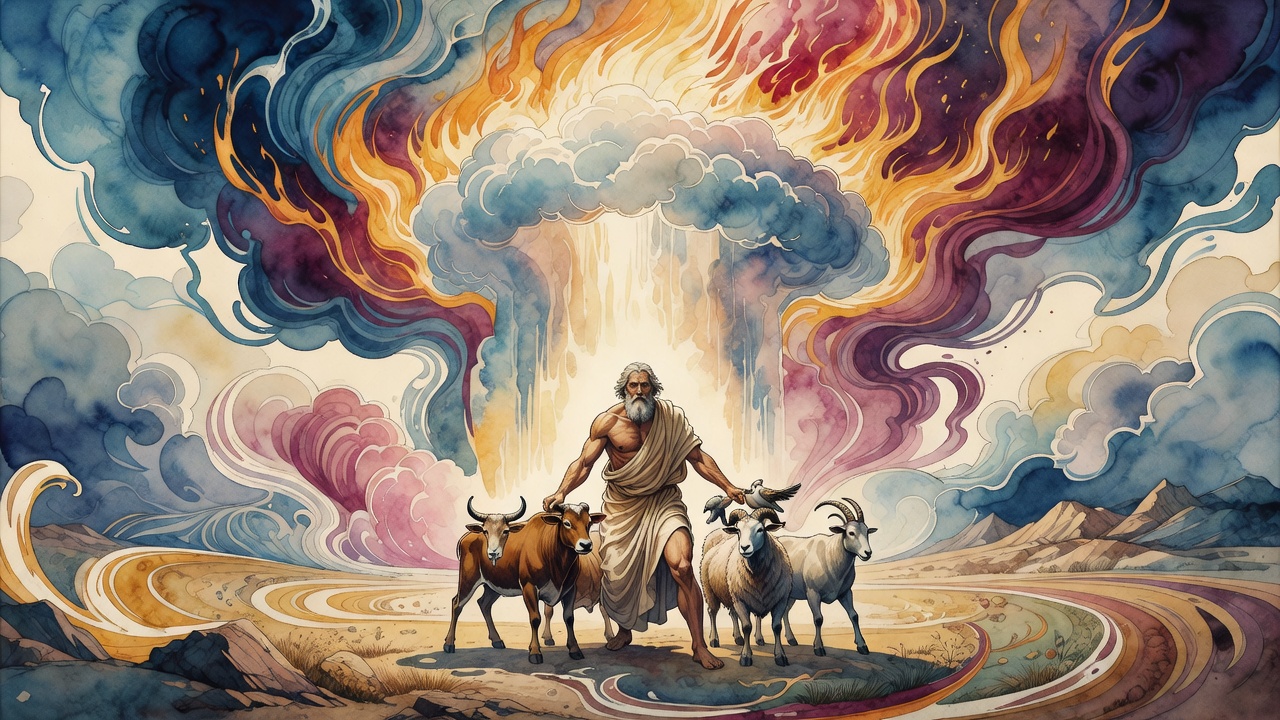
Abraham Circumcised His Whole House on One Day Click for full size

He could have waited for spring, when the weather would be kinder to a camp full of wounded men. He could have waited a week and let the household watch him heal first. The command had come at first light, and he would not let it go cold by the afternoon.

What he had been told was not a mood. The covenant stood between the Memra, the Word of the Lord, and Abraham, and it went on standing after him, to his sons in their generations, ad le-alma, forever. Abraham would die and his sons would die. The only thing that could carry a promise that long was a mark that did not come off.

Ishmael Went First

Ishmael was thirteen. He was old enough to have heard, from somewhere in the camp, that the covenant his father kept talking about would run through a son who had not been born yet. He had every reason to stand at the back and let the servants go ahead of him.

Abraham called him first. Not the home-born servants, who were loyal. Not the men bought with money, who had no say. The son who would not inherit the promise was the first one into it. He came forward and held still, and there was no argument on either side of the flint.

Afterward the boy sat down against a tent rope and did not make a sound.

Every Male in the Camp

After that the line went on all day. Men brought up in the house. Men bought with silver from traders whose names nobody in the camp remembered. Every male among Abraham's household people, cut on the selfsame day the Lord had spoken with him.

Some of them had never heard the voice that gave the order. They had been purchased, they had learned the work of the camp, and now they bled for an agreement announced that morning to an old man they served. Nobody was left outside it, because nobody in that camp got to be a spectator. Anyone who ate Abraham's bread took the mark into his body along with the rest.

By afternoon the camp had gone quiet in a particular way. Work stopped, since almost nobody could walk properly. The few who could walk carried water to the ones who could not.

What Sarah Was Promised the Same Morning

Sarah was ninety and had never carried a child. In the same conversation that produced the flint, she had been promised a son out of her own body, and crowds descending from that son, and kings ruling over nations coming out of her.

She stood at the tent door with nothing yet to show for any of it. The women around her had stopped expecting anything from her years ago. Behind her the camp was sitting down one careful man at a time, and the whole future line of a kingdom had just been handed to a body that had never once cooperated.

Land He Did Not Own

The country came attached to the same word. All of Canaan, the land Abraham was living in as a guest, given as a holding that does not expire, ahasanat alam. Not a long lease that runs out when a stronger people arrives. And the Lord would be their God, so the land and the God arrived in one breath.

He owned almost none of it. He had walked its length, dug a few wells, and bargained with the locals for shade under their trees. The one piece of ground that would ever be his by any court in Canaan was a burial cave he had not bought yet.

By dark, every male in the camp carried the same mark, and every field around them still belonged to somebody else.


← All myths
From the tradition

Sources

4 sources

The texts behind this telling. Some cards carry a translation of the source; others are our own retelling of it, and each card says which. Every card links out to the original.

Targum Pseudo-Jonathan on Genesis 17:7Targum Pseudo-Jonathan on Genesis

Retold in our words. Read the original at the link below.The Targum of Jonathan ben Uzziel, trans. J. W. Etheridge, London, 1862 · Public Domain

When the Lord frames the covenant in (Genesis 17:7), Targum Pseudo-Jonathan slips in one of its most telling technical terms. The covenant is established between My Word and thee.

Not between God and Abraham, as the Hebrew simply says. Between the Memra of the Lord and Abraham.

The Targum's Memra is the way the Aramaic paraphrase names God's active, speaking, covenanting Presence without ever violating divine transcendence. When God walks in the garden, it is the Memra walking. When God speaks at Sinai, it is the Memra speaking. When God cuts a covenant with a ninety-nine-year-old in Canaan, it is the Memra binding itself to him.

The covenant is everlasting, ad le-alma in the Aramaic. And extends to thy sons after thee in their generations. That is what makes it a covenant and not a mood. It outlives its signatories. Abraham will die; his sons will die; the Memra will not. Every generation walks into a contract already in force before they arrived.

The Maggid notices the promise inside the grammar. The Lord says, I will be a God to thee and to thy sons after thee (Genesis 17:7). The after is the point. A covenant is a promise that still applies when you are no longer in the room. Abraham signs, and his great-grandchildren are suddenly parties to a contract none of them ever read. This is the theology Jewish parents hand down on the way to the circumcision of an eight-day-old boy, you were already loved before you could understand the word love.

Full source
Targum Pseudo-Jonathan on Genesis 17:8Targum Pseudo-Jonathan on Genesis

Retold in our words. Read the original at the link below.The Targum of Jonathan ben Uzziel, trans. J. W. Etheridge, London, 1862 · Public Domain

Alongside the everlasting covenant comes an everlasting land. Targum Pseudo-Jonathan on (Genesis 17:8) sets the promise out cleanly: the land of Abraham's habitation, all of Canaan, for an everlasting possession.

The Aramaic phrase ahasanat alam does not mean a long lease. It means a holding that does not expire. The Targum pairs it with a closing promise that the Hebrew makes only once: and I will be to them Eloha, their God. The land and the God arrive together. You cannot separate the geography from the theology.

This is striking because, by Abraham's ninety-ninth year, he owns almost none of this land in practice. He has walked across it (Genesis 13:17). He has dug some wells. He has bargained with neighbors for the shade under certain trees. Legal possession of a single plot, the cave at Machpelah, is still chapters away. And yet the Lord says: this land is already yours, in a deeper ledger than the one kept by the locals.

The Maggid reads this as the Torah's most durable real-estate contract. The deed is not stored in Canaan. The deed is stored in the covenant itself. Which is why, through every exile, the Babylonian, the Roman, the dispersions that would last centuries. Jews kept praying toward a land they were not standing on (Genesis 17:8). The Targum understood already: the land is possessed even when you are not in it, because the covenant guarantees the return before the departure has begun.

Full source
Targum Pseudo-Jonathan on Genesis 17:16Targum Pseudo-Jonathan on Genesis

Retold in our words. Read the original at the link below.The Targum of Jonathan ben Uzziel, trans. J. W. Etheridge, London, 1862 · Public Domain

Targum Pseudo-Jonathan on (Genesis 17:16) takes the blessing the Lord pronounces over Sarah and stretches it forward across centuries. I will bless in her body, and will also give from her a son to thee, and I will bless him, and he shall be for assemblies, and kings ruling over nations shall be from her.

Three blessings stack in a single verse. A blessing on the body, the miracle that an aged, barren woman will carry a child. A blessing on the son himself, the future Isaac, who will one day father a nation. And a blessing on the line that will come out of her, assemblies, whole congregations, and kings ruling over nations.

The Aramaic word for assemblies is doing heavy lifting. It anticipates the tribes of Israel gathered at Sinai, the worshippers standing in the Temple courts, every Jewish congregation in every city across later history. From one woman's body, says the Lord, a long column of gathered peoples is going to descend.

The Maggid hears how much of the promise is carried by Sarah. The Hebrew already says this; the Targum presses it. Kings will come from her. Not from Abraham alone. Not from the handmaid. From Sarah. (Genesis 17:16) folds David, Solomon, and all the kings of Judah into the genealogy of a ninety-year-old laughing in her tent. It is one of the Torah's clearest warnings against writing women out of the covenant. The kingdom, the congregation, the nations, they all exit, eventually, through Sarah's body.

Full source
Targum Pseudo-Jonathan on Genesis 17:23Targum Pseudo-Jonathan on Genesis

Retold in our words. Read the original at the link below.The Targum of Jonathan ben Uzziel, trans. J. W. Etheridge, London, 1862 · Public Domain

(Genesis 17:23) is the verse in which Abraham stops listening and starts doing. Targum Pseudo-Jonathan renders it with the urgency the Hebrew encodes: Abraham took Ishmael his son, and all brought up in his house, and all bought with money, every male among the household people of Abraham, and he circumcised the flesh of their foreskin in the same day in which the Lord spake with him.

Three words carry the moral weight. Same day.

Abraham is ninety-nine. Ishmael is thirteen. The household includes hundreds of souls, home-born servants, purchased servants, men of every age and background. The law has just been revealed. And Abraham does not wait until spring. He does not wait until the household is prepared. He does not wait until he himself has recovered from his own circumcision. He circumcises them all, on the day the command was given.

The Maggid hears this as the Torah's first great lesson in zerizut, eager, immediate obedience. A commandment that arrives in the morning does not belong to the afternoon. Abraham's whole household becomes a covenant community in one day because Abraham refuses to let good news go cold (Genesis 17:23).

There is also tenderness buried in the list. Ishmael goes first. Not the servants, not the slaves. The son Abraham was told would not inherit the covenant gets cut into the covenant anyway, alongside his father, on the same afternoon. Ishmael may not be the covenant's chosen line, but he is still the covenant's first adult son.

Full source