Isaac Stakes His Neck Against Ishmael's Boast
Before the Akedah, Ishmael brags of willing circumcision at thirteen, and Isaac answers that he would offer his whole life if God asked.
Table of Contents
 Click for full size
After These Things Means After These Words
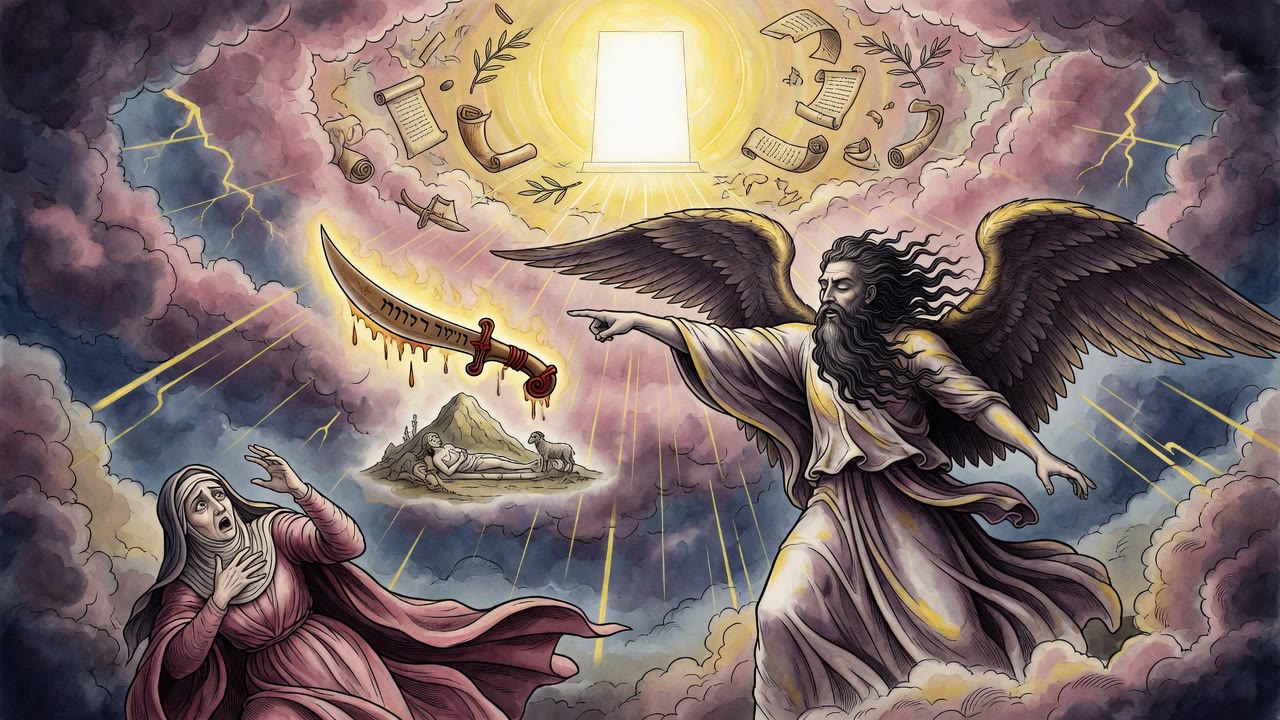
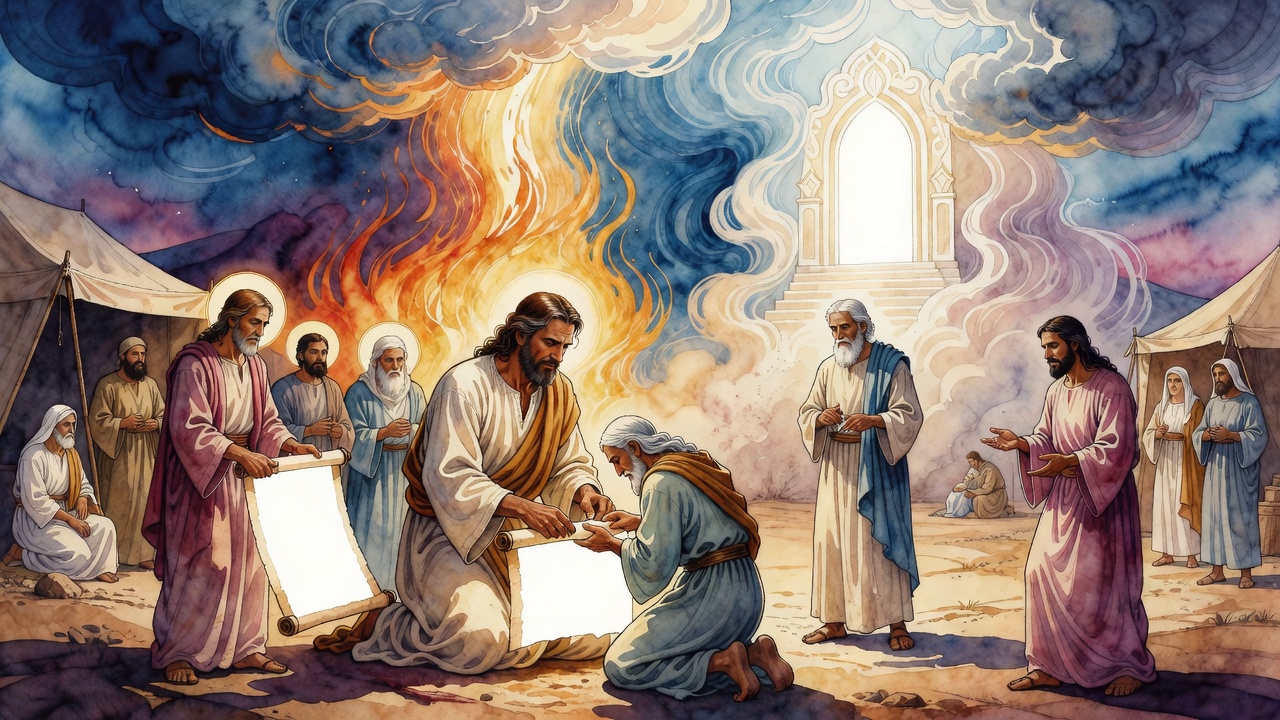
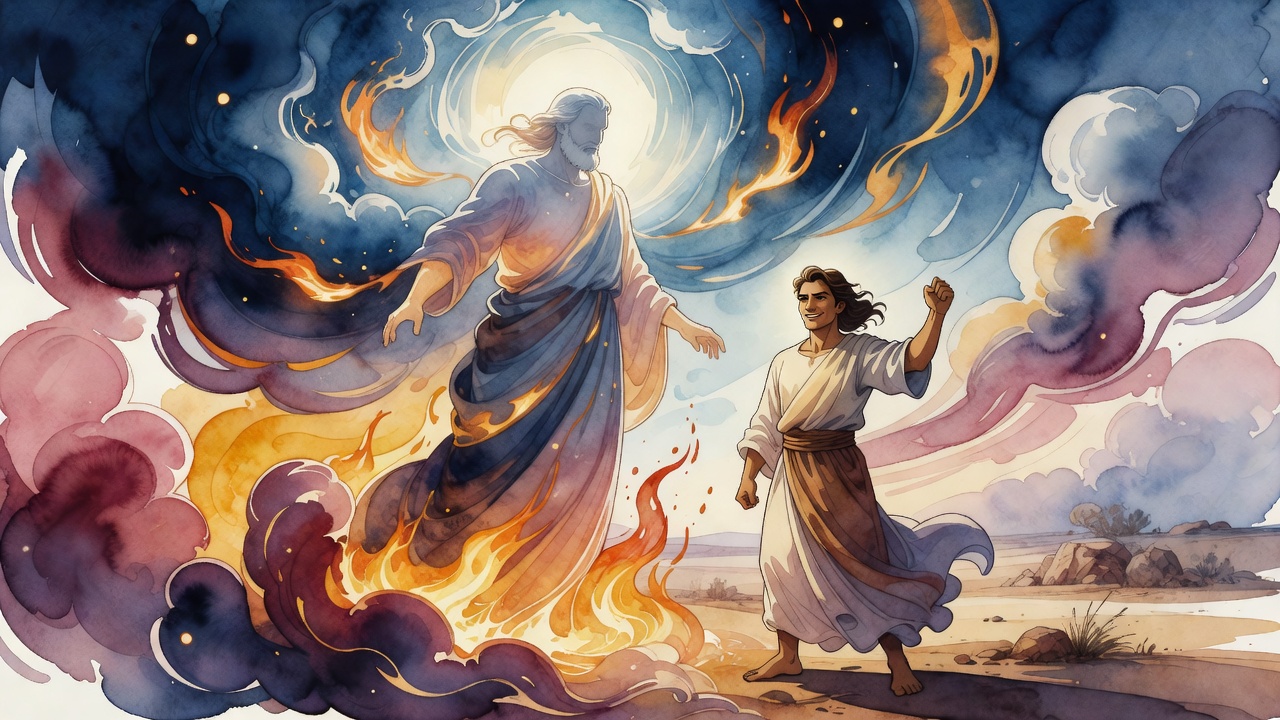
Ishmael stood in the courtyard with dust on his sandals and a firstborn's claim already loaded on his tongue. Isaac, thirty-seven, waited and did not interrupt. The quarrel that would open the road to Moriah began as brothers measuring merit, not as a sudden voice from a clear sky. Later the teachers would hear "after these things" as after these reflections, the human argument that precedes the test of Abraham (Genesis 22:1).
Ishmael spoke first, as older brothers often do when the inheritance of the world is the topic. "I am greater than you. I am the firstborn, and the firstborn inherits a double portion." The claim sat between them like a scale already tipped. Isaac did not answer with genealogy. He answered with a question that cut past the cradle.
"Tell me," he said, "what does the Holy One have from you?"
Three Drops Against a Whole Life
Ishmael drew himself up. At thirteen he had been circumcised with a mind old enough to refuse. He could have said no. He had given his life in the small sharp way a covenant asks of flesh and had not run. Was that nothing?
Isaac measured the gift without mockery. "All that you lent to Heaven were three drops of blood. I tell you what I know about myself. Should the Holy One ever ask that I be slaughtered, now, at thirty-seven years, and bid my father offer me up, I will not hinder it by so much as a breath."
The words rose. In the heavens they were heard. The trial that would soon walk father and son toward Moriah did not begin as a surprise sprung on a silent house. It began as a boast answered by a vow neither brother yet saw as schedule.
Flesh and the Other Circumcision
The covenant of circumcision is not only a knife on the eighth day or the thirteenth year. Philo of Alexandria, writing as a Jew under Rome in the first century, spoke of a twofold cutting. One is of the flesh, the mark in the body that names a people. The other is of the intellect itself, the masculine power of thought pruned of wicked shoots and wild ambitions, so reason can stand clean before its Maker.
Ishmael's three drops belonged to the first kind, real and costly. Isaac's vow reached for something harder: a heart and mind already offered, a will that would not flinch when the altar asked for more than blood at the edge of skin. The second circumcision is invisible until the day it is tested. Then it shows as stillness under a raised blade, or as a walk up a mountain without a bargain.
Abraham would rise early. Wood would be split. A knife would ride at a father's belt. Isaac's mouth had already signed the warrant.
The Road That Collects the Vow
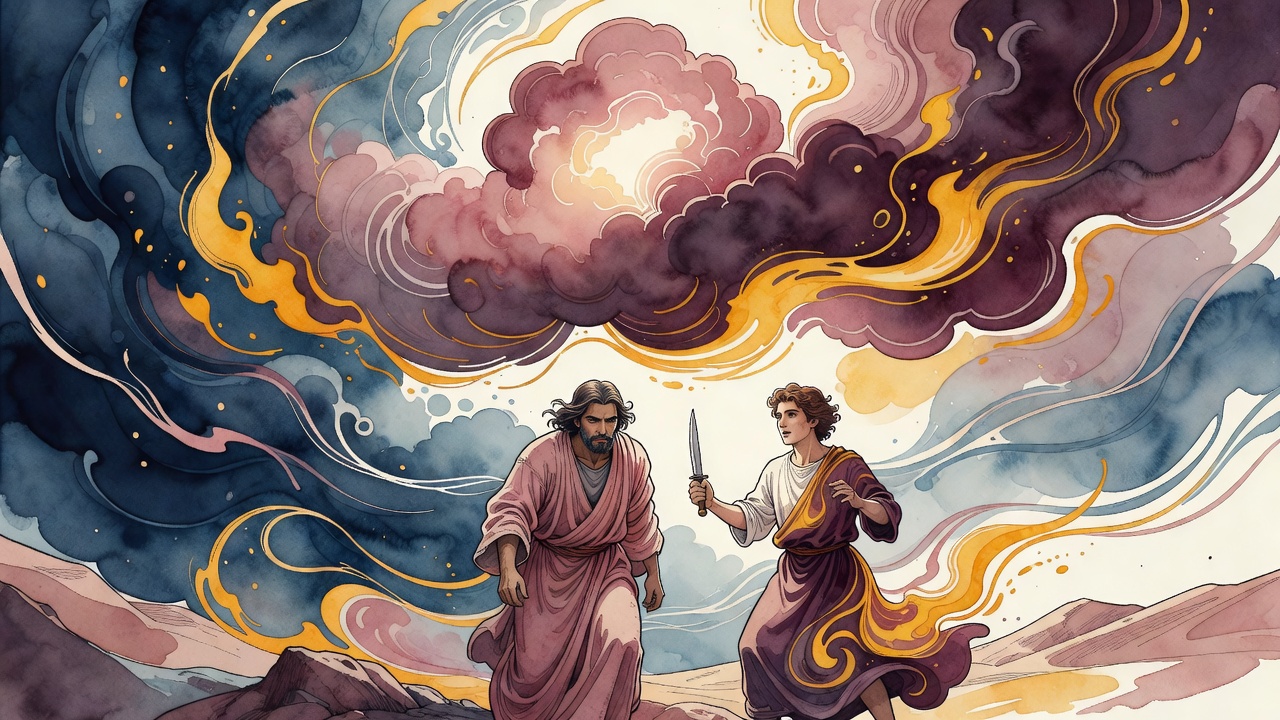
When the command came, Abraham did not need to invent Isaac's consent from nothing. The son's earlier speech waited in the air like a second staff. On the road Isaac asked where the lamb was. Abraham answered that God would see to the lamb. Both men carried more than wood and fire. They carried a private contest already settled in heaven's hearing.
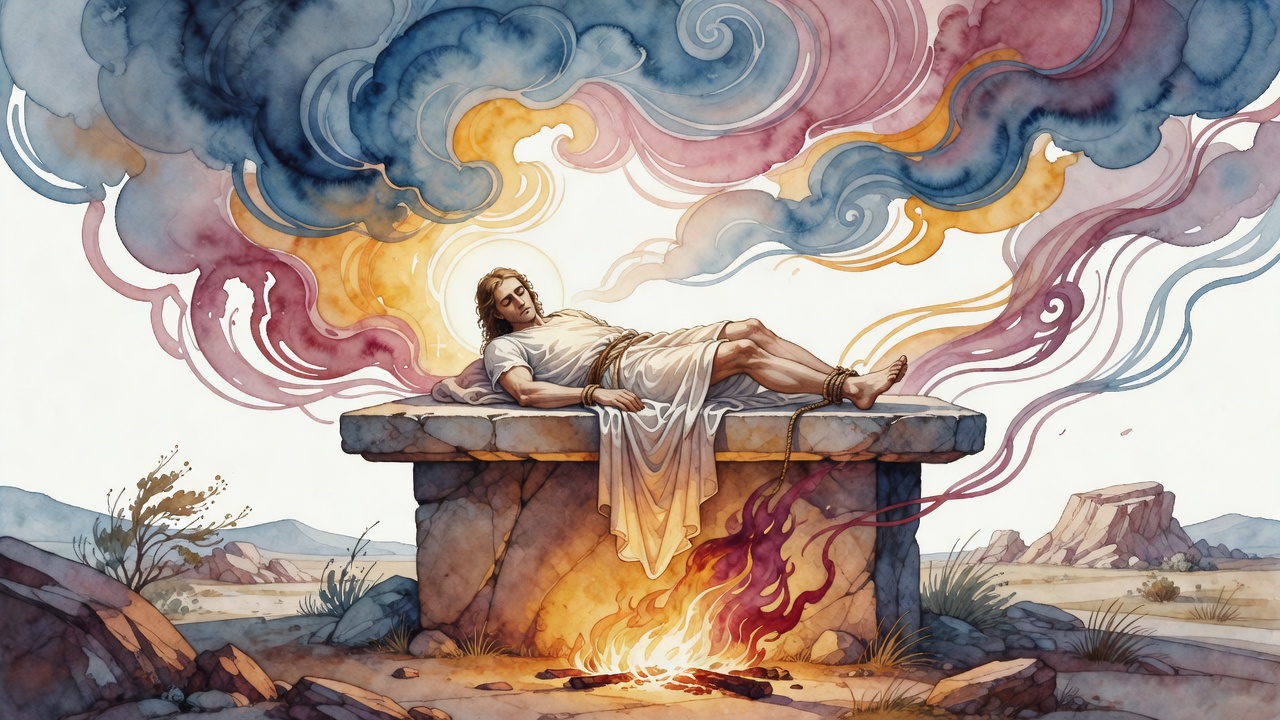
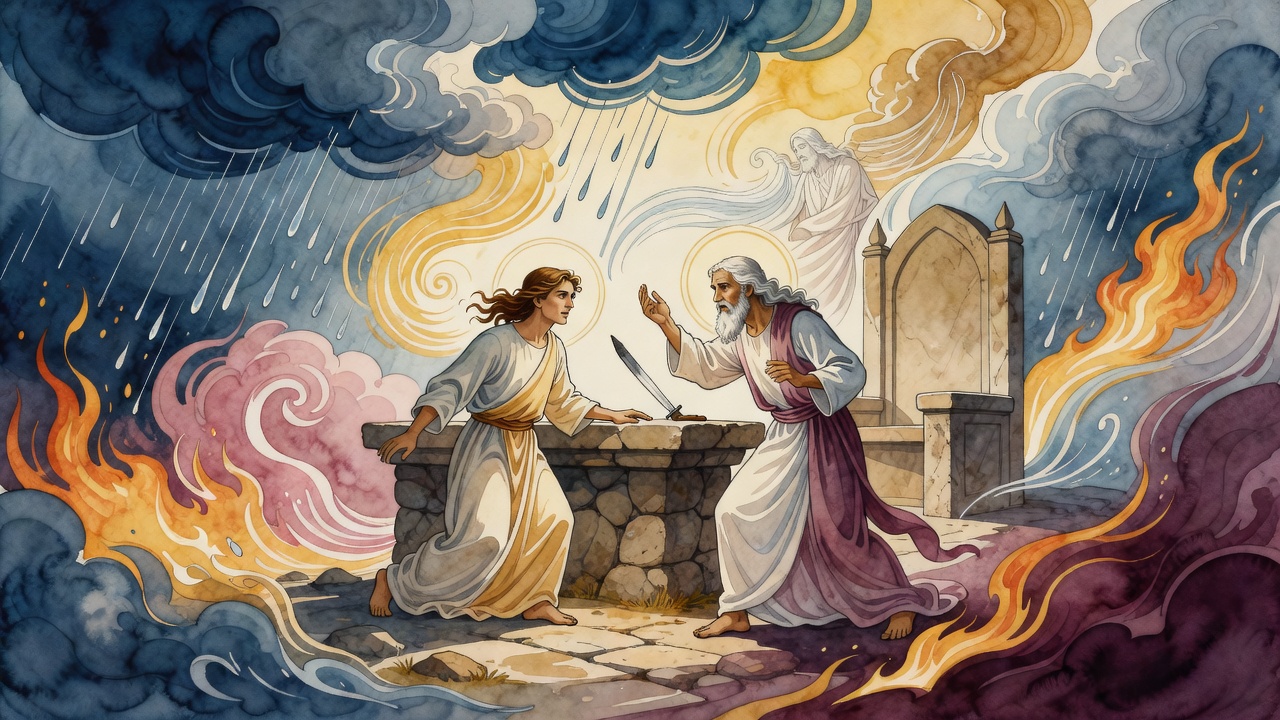
At the place, cords and altar stones did their ordinary work of terror. Isaac did not thrash the way a man thrashes when his boast was only talk. He had priced his life against three drops and refused to lower the price. The angel's call stopped the knife. The ram waited in the thicket. The vow had been collected without the final cut, which is how heaven sometimes banks a full payment from a willing heart.
What Remained Between Brothers
Ishmael would father nations. Isaac would father a people of promise. The old quarrel over double portion did not vanish because an angel spoke. It changed temperature. Merit is not a ledger anyone finishes counting. Still, the story keeps the courtyard scene because it shows how a trial can begin in a human mouth before it arrives as divine command.
Three drops. One neck. A father who consults God and a son who has already answered. The mountain remembers both the boast and the stillness that followed it.
The Morning Abraham Did Not Explain
Dawn came without a council. Abraham split wood with the same hands that had once welcomed angels under a tree. Isaac walked beside the donkey and felt the weight of his own earlier speech settle into his shoulders. A man can vow in a courtyard and still flinch on a road. He did not flinch. The silence between father and son was not empty. It was full of a contest already heard above.
When the place rose into view, Isaac helped build the altar. Stones do not care who won an argument last season. They only care that hands stack them true. The cords found his wrists. The knife found the light. For a breath the world held only the sound of a father's sleeve and a son's steady lungs. Then the angel spoke, and the ram's horns tangled in a thicket as if the thicket itself had been waiting for the exact second the vow became enough without the cut.
Ishmael was not on that mountain. His boast still lived in Isaac's memory like a goad that had done its work. Three drops had met a whole life, and heaven had collected the larger coin without spending it to the hilt. Isaac walked down changed, not by winning a quarrel, but by surviving the hour his mouth had invited.
← All myths