What the Accuser Showed Sarah About the Knife on Moriah
Abraham took Isaac up the mountain, and a stranger came to Sarah's tent with a vision of the raised knife. She screamed once, and her soul left.
Table of Contents
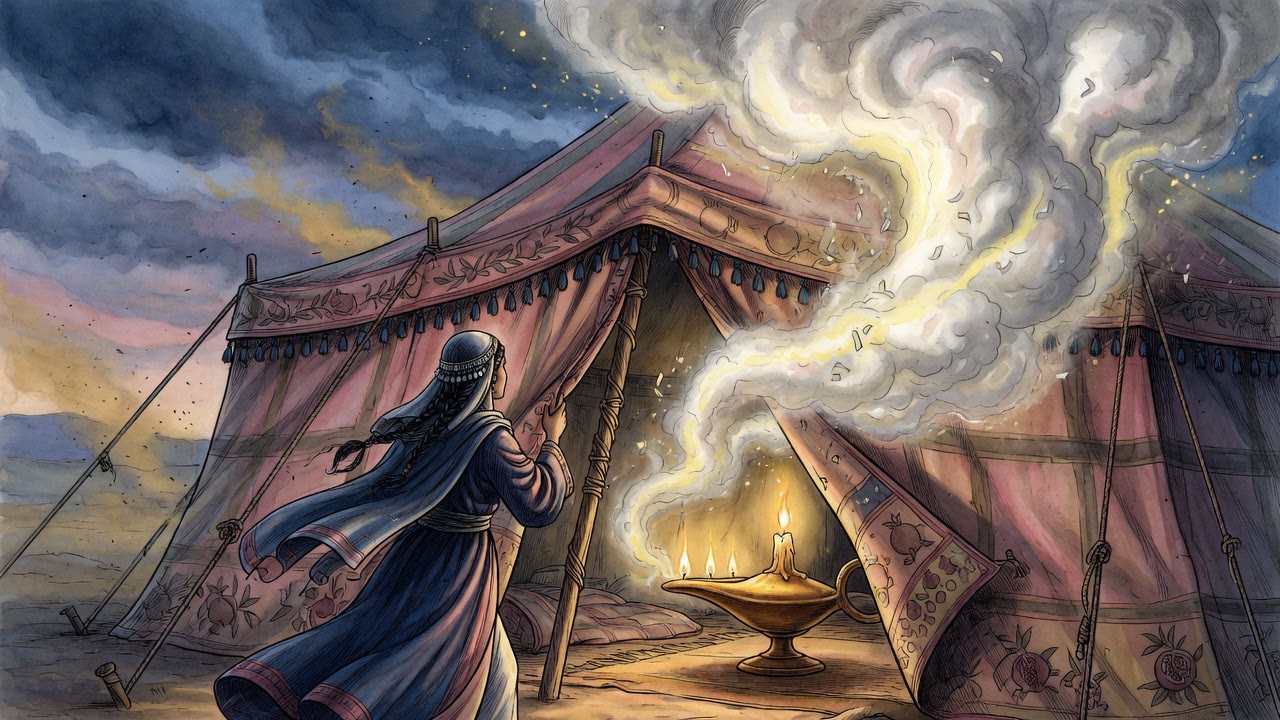
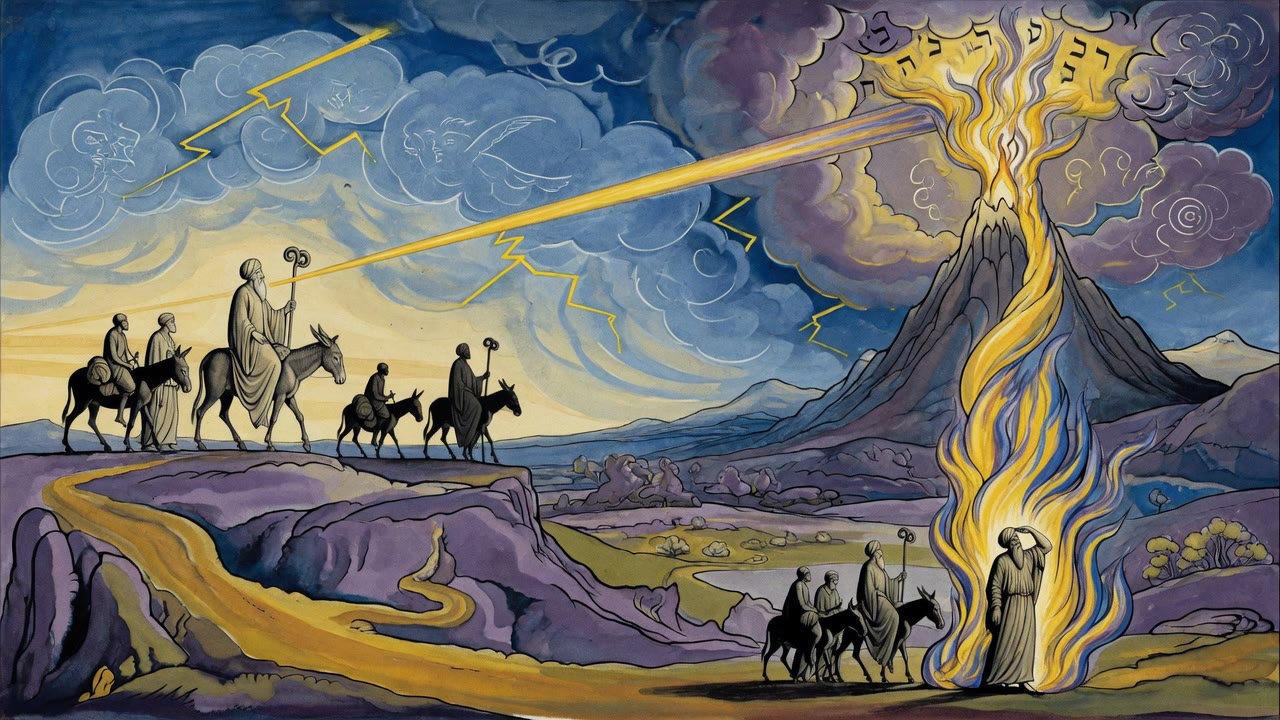
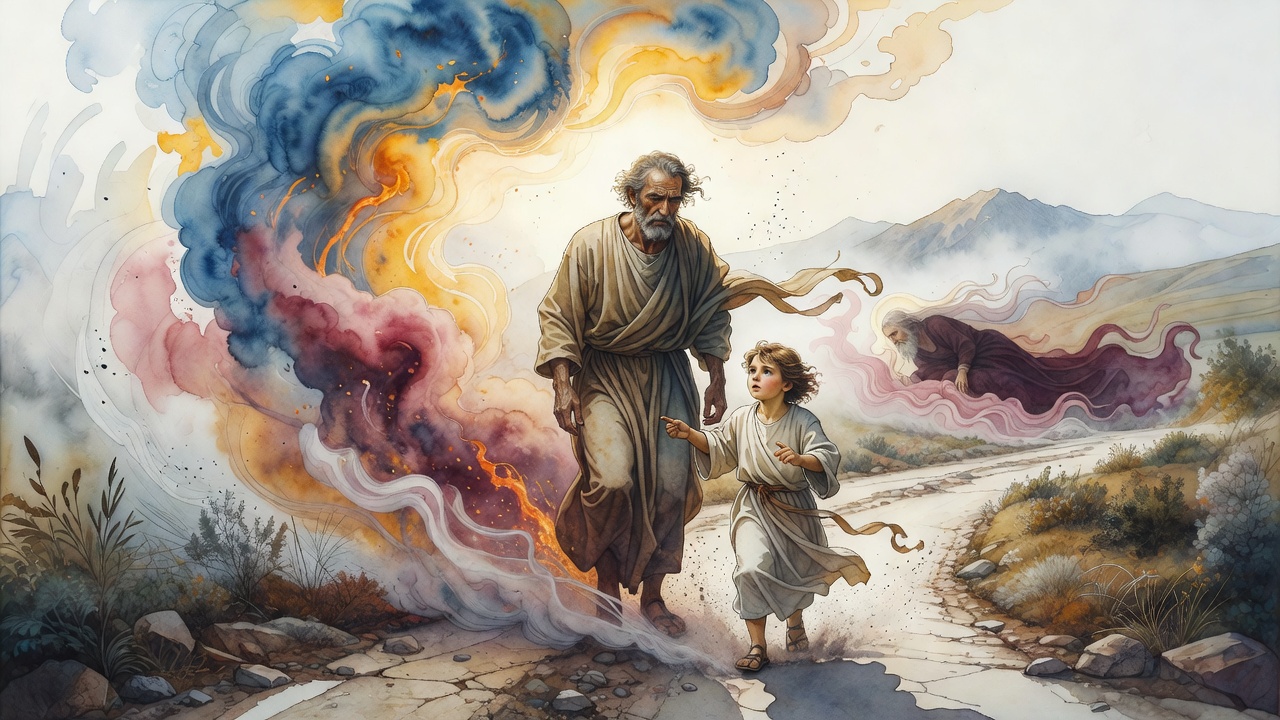
The tent was empty in a way it had never been empty before. Sarah sat at its mouth and watched the road that ran north out of Beersheba, the road her husband and her son had taken three mornings ago without telling her where it ended. She had asked. Abraham had not met her eyes. He had said only that he and the boy were going to worship, and that they would return, and then he had loaded the donkey with split wood and a fire pot and a long knife, and he had gone.
 Click for full size
She knew the wood was for a fire. She knew the knife was for an animal. She told herself this through the first day, and the second, and into the third, while the road stayed empty and the dust did not rise with the shape of returning men.
A Stranger Comes to the Tent at Beersheba
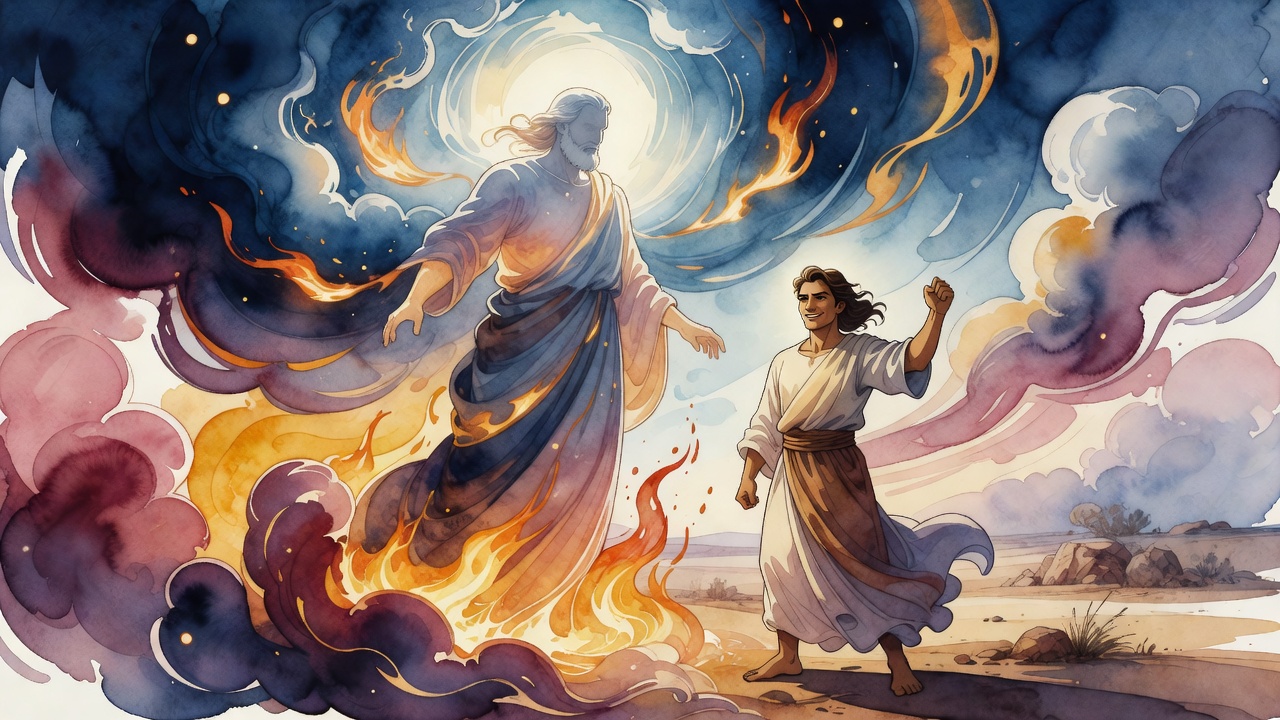
On the third day a figure came down the road, and her heart leapt before she could see his face, because for one breath she thought it was her son. It was not. It was a man she did not know, robed like a traveler, and he stopped at her tent as if he had come a long way only to find her.
He was gentle. That was the worst of it later, when she had time to think, that he was gentle. He asked if she was the wife of the man who had gone up to the mountain in the land of Moriah (Genesis 22:2). She said she was. He said he had come from there. He said she should know what her husband had done with the only son she had borne him in her old age.
The Vision of the Raised Knife
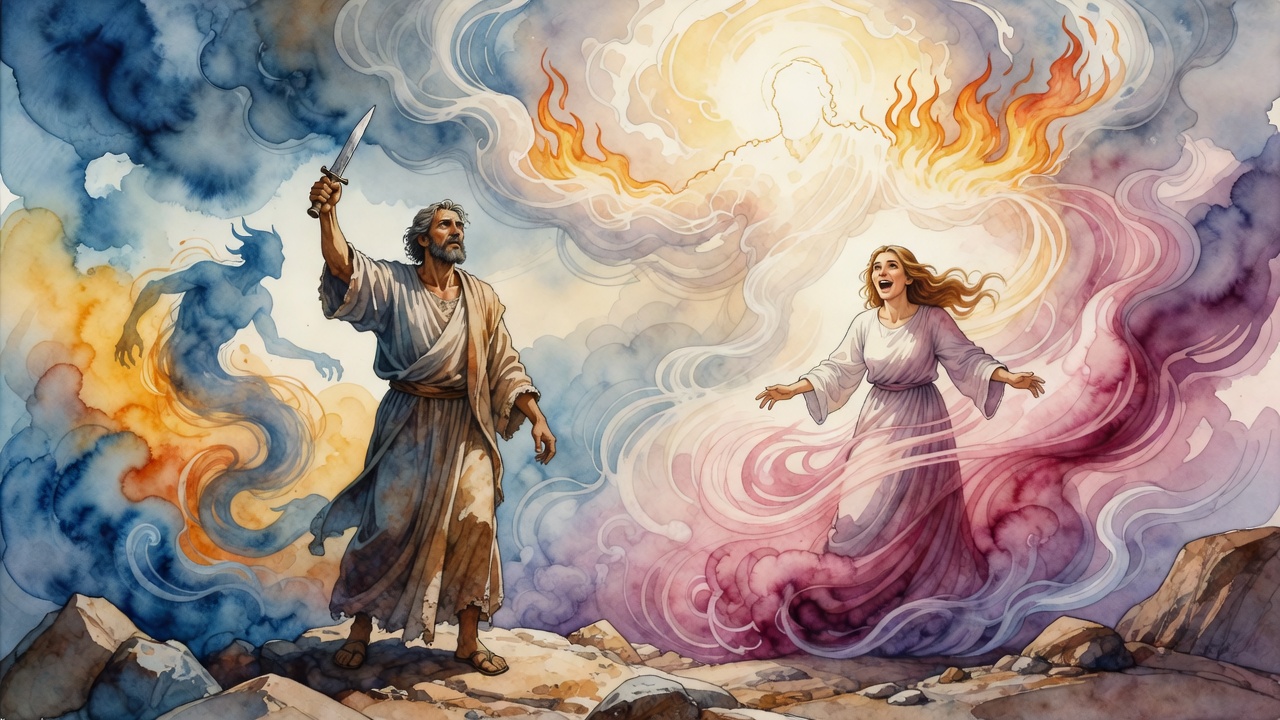
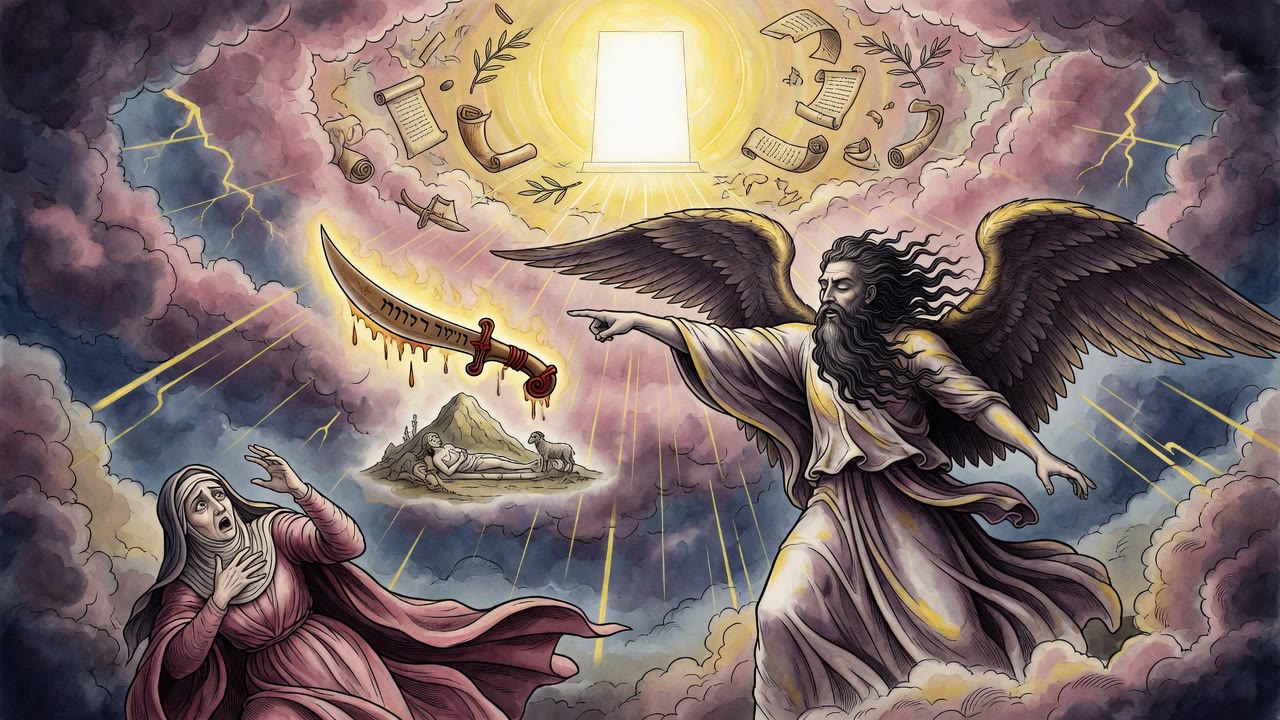
And then he showed her. She did not understand, afterward, how a man could show another person a thing that was happening far away, but he did. The air in front of her opened like water parting, and there was the mountain, and there was the altar of unsplit stones, and the wood laid in order upon it. There was Isaac, her Isaac, bound hand and foot and laid on the wood the way a lamb is laid. His head was tipped back. His throat was bare.
Abraham stood over him. His face was a face she had slept beside for a hundred years and did not recognize. His arm was raised. The long knife was in his fist, and the edge of it caught the light, and it was beginning to come down.
She did not see it land. The vision held there, the blade above the boy's throat, the father's arm at the top of its fall, and she heard a sound come out of her own body that she had never made, a single cry that tore loose everything inside her.
Her Soul Leaves Before the End
Her soul left her on that sound. It did not wait to learn how the story finished. It did not stay to hear the messenger call out of heaven, the second time, telling Abraham not to stretch out his hand against the boy (Genesis 22:11), nor to see the ram caught by its horns in the thicket and offered in Isaac's place (Genesis 22:13). The knife in the vision never fell. Isaac was already standing free on the mountain, alive, while his mother lay in the dust of the tent door at Beersheba, dead of a thing that had not happened.
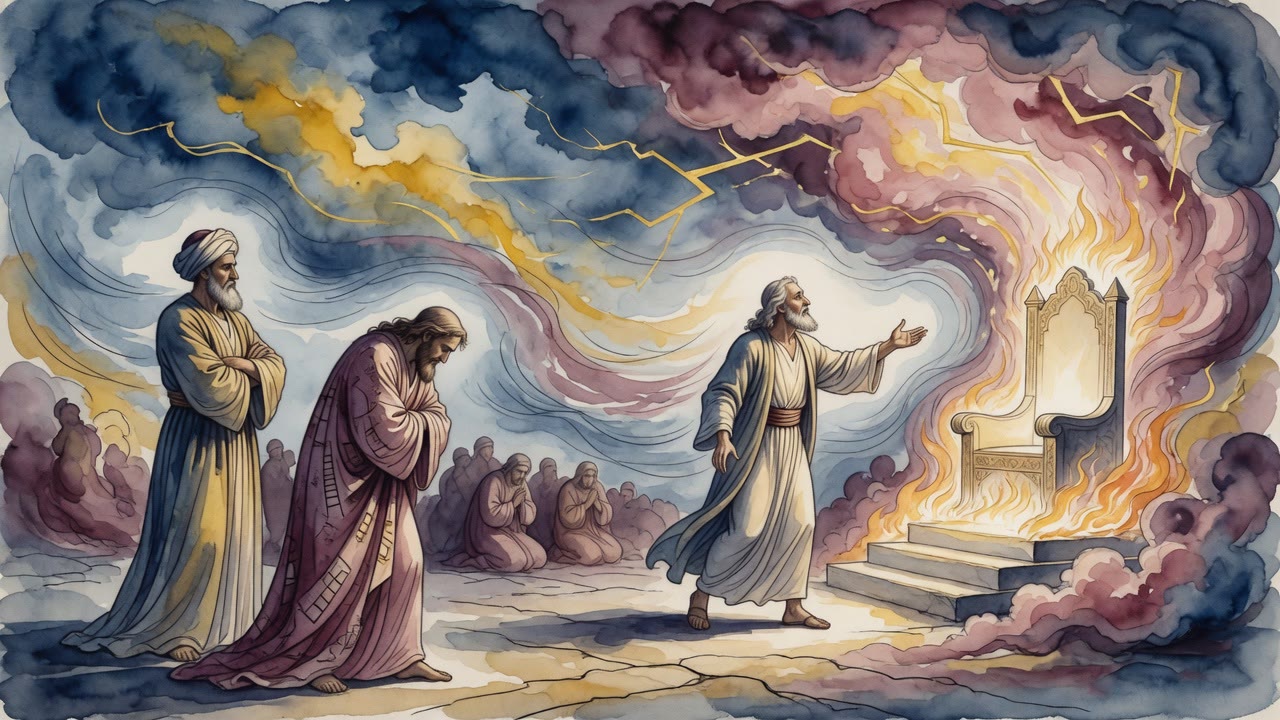
The stranger was gone. He had told her the truth of the journey and shown her the truth of the altar, and he had let her believe she had watched her son die, and that belief was enough. He was the Accuser, the one who walks before the throne and prosecutes the souls of the righteous, and he had been at the mountain not as a comfort but as a test, and when the test was won on the mountain he came down to take what the mountain had not.
The Other Telling, in the Shape of the Son
There is a second account of how the news reached her, and it is harder. In it the Accuser does not come during the journey but after it is over, and he does not come as a stranger. He comes wearing the face of Isaac himself. He walks down the road into Beersheba in the boy's shape, and Sarah sees her son returning and is filled, for one instant, with the whole flood of her relief.
And then he tells her, in the boy's voice, what his father had done. How Abraham had bound him on the altar, raised the knife, brought it to his throat. He lets her live through the binding a second time, told to her by the one who supposedly survived it, and the telling kills her as surely as the vision did. She dies inside the story, in the gap between hearing that her son was bound and hearing that he was spared.
Abraham Comes Home to Mourn
Either way the ending is the same. Abraham came down from Moriah with his son alive beside him, having passed through the worst thing God had ever asked of any man, and he came home to find the tent silent and his wife gone. Sarah lived a hundred years and twenty years and seven years (Genesis 23:1), and then she did not, and the chapter that records her death sits directly against the chapter that records the binding, the two of them touching like a wound and the blade that made it.
So Abraham rose from beside the body of his dead, and went to bargain with the sons of Heth for a cave in which to bury her (Genesis 23:3-4), a man who had been ready to give up his son and was made to give up his wife instead, and who was never told, by any voice from heaven, what his obedience on the mountain had cost in the tent below.
← All myths