Ishmael Came Home the Night That God Asked for Isaac
Ishmael returned from the wilderness the same night heaven said take your son. Brotherly boasts about circumcision had already armed Isaac for the knife.
Table of Contents
 Click for full size
Two Brothers and One Knife of Words
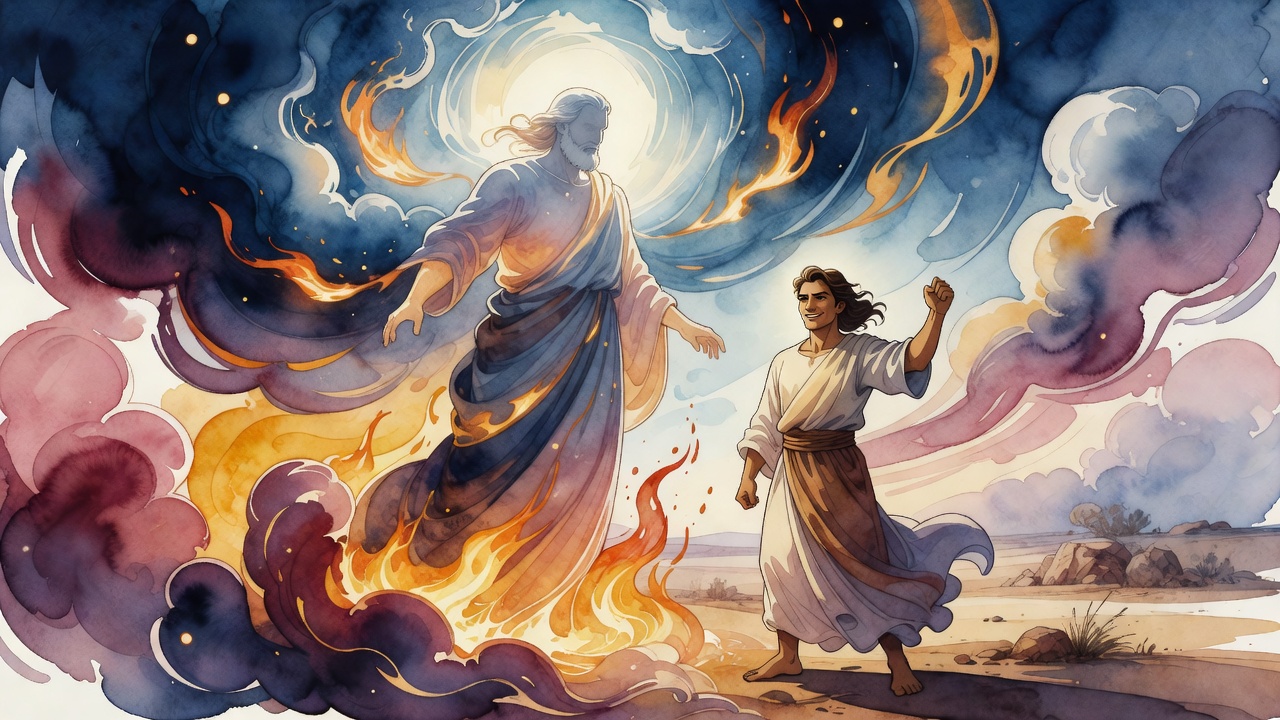
Isaac and Ishmael argued over who stood closer to their father's covenant. Isaac said he was greater, circumcised at eight days, born into the sign without choice or delay. Ishmael answered that love is proven by consent. He was thirteen when the knife came. He could have refused. He did not. His yes counted because a no had been possible.
The boast cut Isaac deeper than he expected. He would not be outdone in devotion by a brother who merely endured what an infant cannot refuse. If God asked, Isaac vowed, he would give not a limb but his whole self, and he would not hold back. The words were barely shaped when heaven treated them as a contract.
The Night Both Sons Were Near
This was the tenth trial, the summit of all that had bent Abraham already. On that very night Ishmael journeyed in from the wilderness where he had settled, a son returned to a father's table for a span of hours. The household held both boys near. Estrangement eased just enough for love to hurt more.
Then the Holy One spoke into that fullness. Take your son. The command did not fall into an empty house. It fell into a night already heavy with fatherhood, when Abraham's heart was crowded with the child of promise and the child of the desert at once. Heaven asked for the one through whom every oath was supposed to run, while the other son's footsteps were still warm in the yard.
After These Things
What were the "things" after which God tested Abraham? One tradition answers with the quarrel. Isaac's readiness, born in brotherly competition, became the hidden root of the binding. Another hearing lets Rabbi Akiva insist the trial was real, not a game, not a confusion. God tested him truly so no skeptic could claim Abraham was only rattled and did not know. Rabbi Yose the Galilean could speak of elevation like a banner on a mast. Akiva wanted the weight of an actual demand.
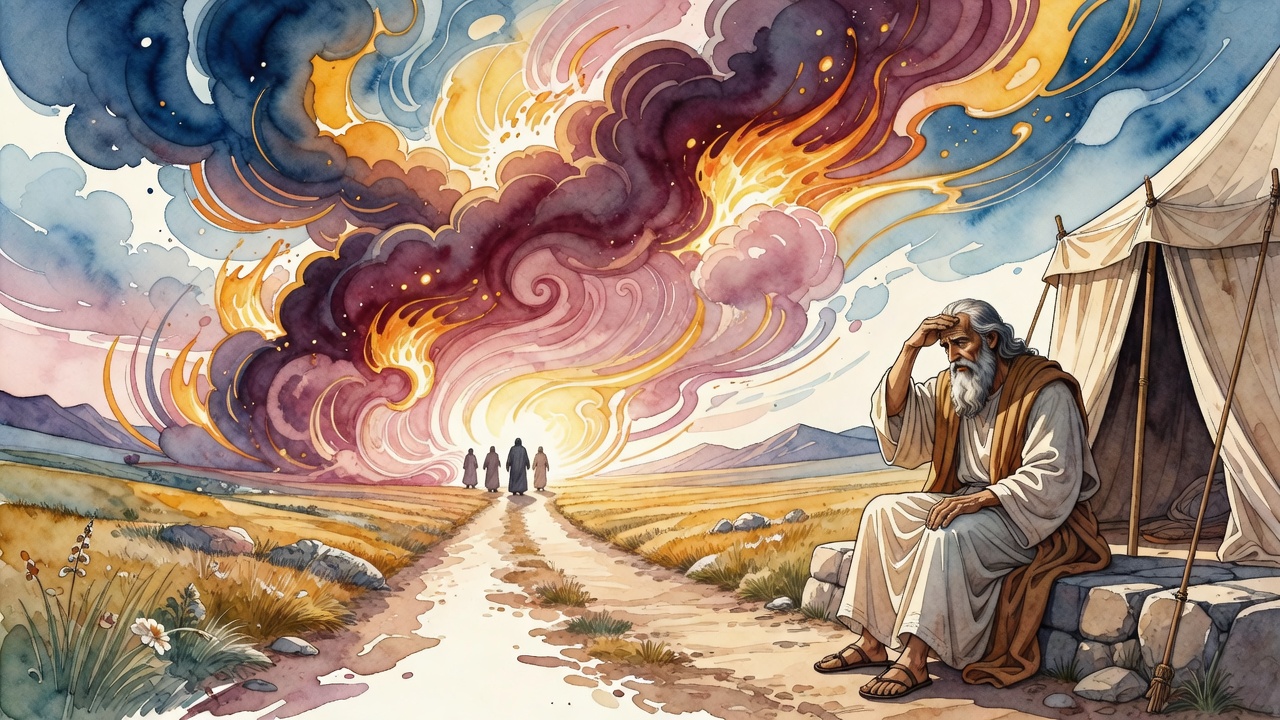
Abraham rose early. He did not advertise the night's visitors or the brothers' scorekeeping. He split wood. He saddled the donkey. He walked toward a mountain with a son who had already offered himself in speech and was about to offer himself in body.
Priesthood and Kingship on the Line
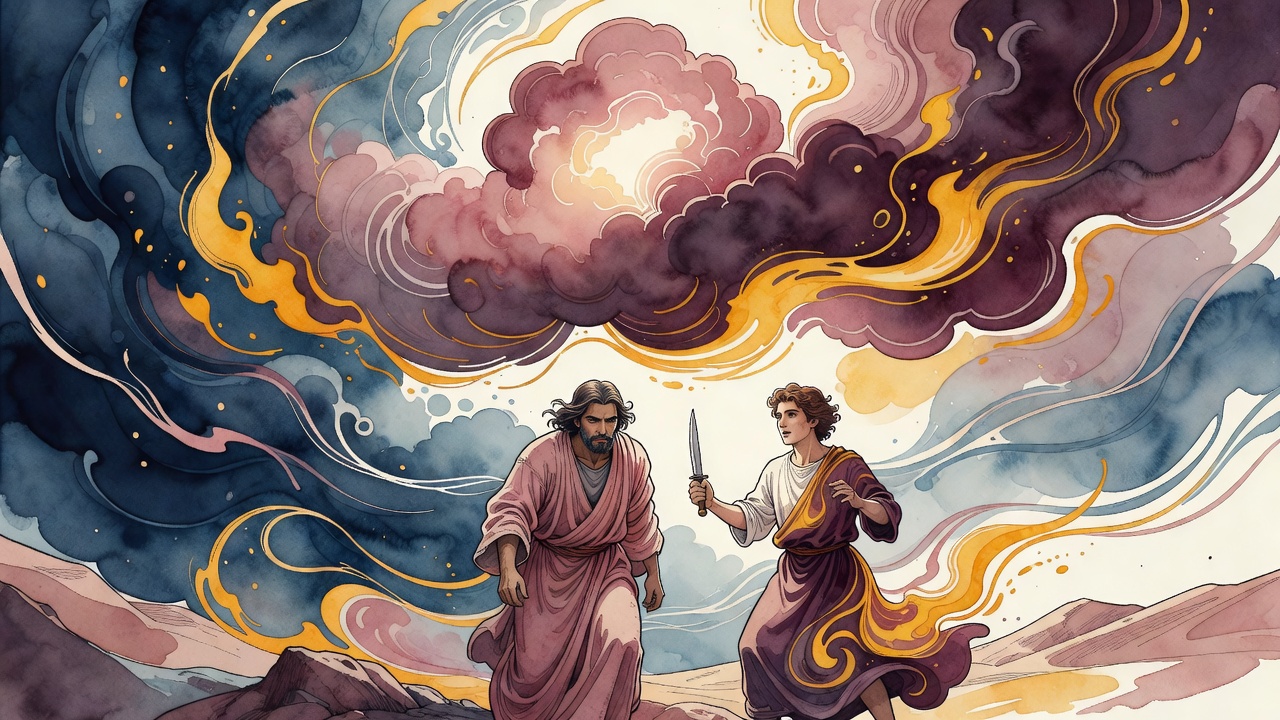
The midrash ties the trial to claims of priesthood and kingship that later mouths would argue over, Abraham and Moses among those who reach for sacred office through obedience under fire. For now the only office is father and son on a path. Isaac carries the wood. Abraham carries the fire and the knife. The argument about eight days and thirteen years has become three days of walking without an audience.
Ishmael is no longer in the frame. His visit did its work. It sharpened the cost. It filled the house so the emptying would be absolute. A father who has just tasted reunion is told to practice loss on the child who remains under the tent of promise.
The Condition Isaac Named
On the mountain the earlier vow stands behind every step. On that condition, that you would give yourself entirely and not delay, the test came. Isaac is not only a passive bound figure in this telling. He is a young man who talked himself into the altar during a fight about who loves the covenant more. Pride and holiness can share a sentence. Heaven answers both.
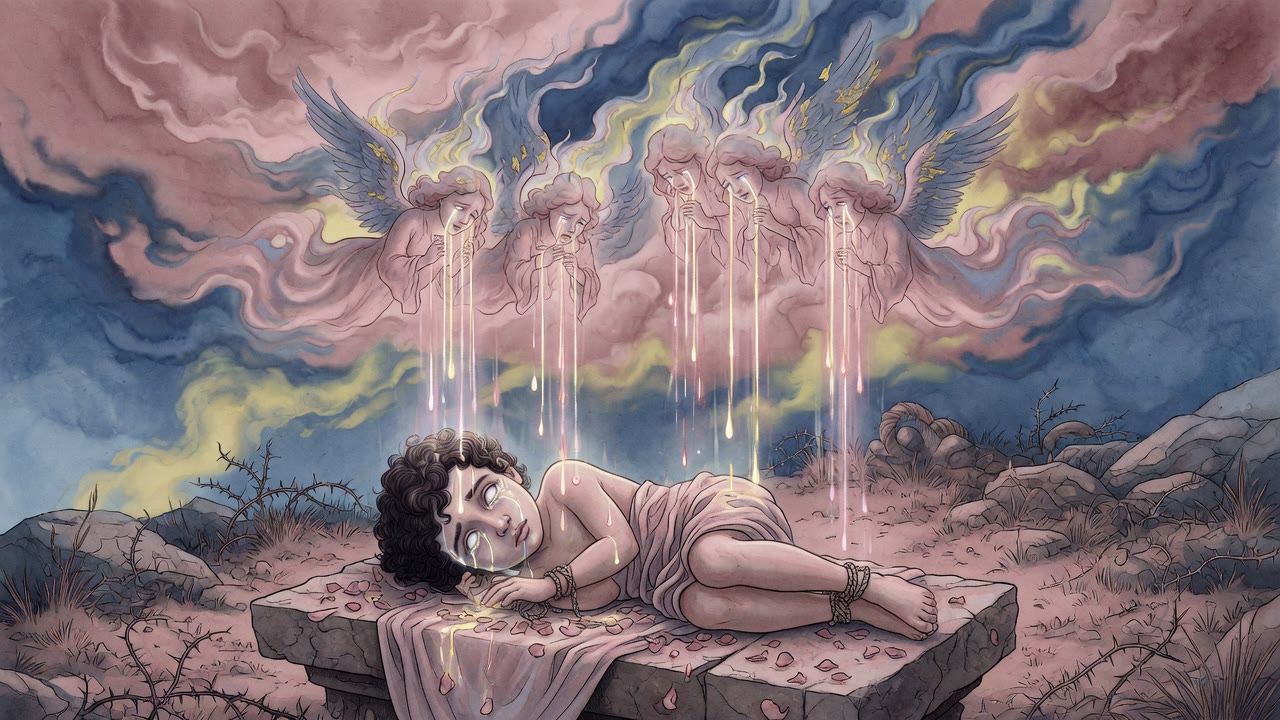
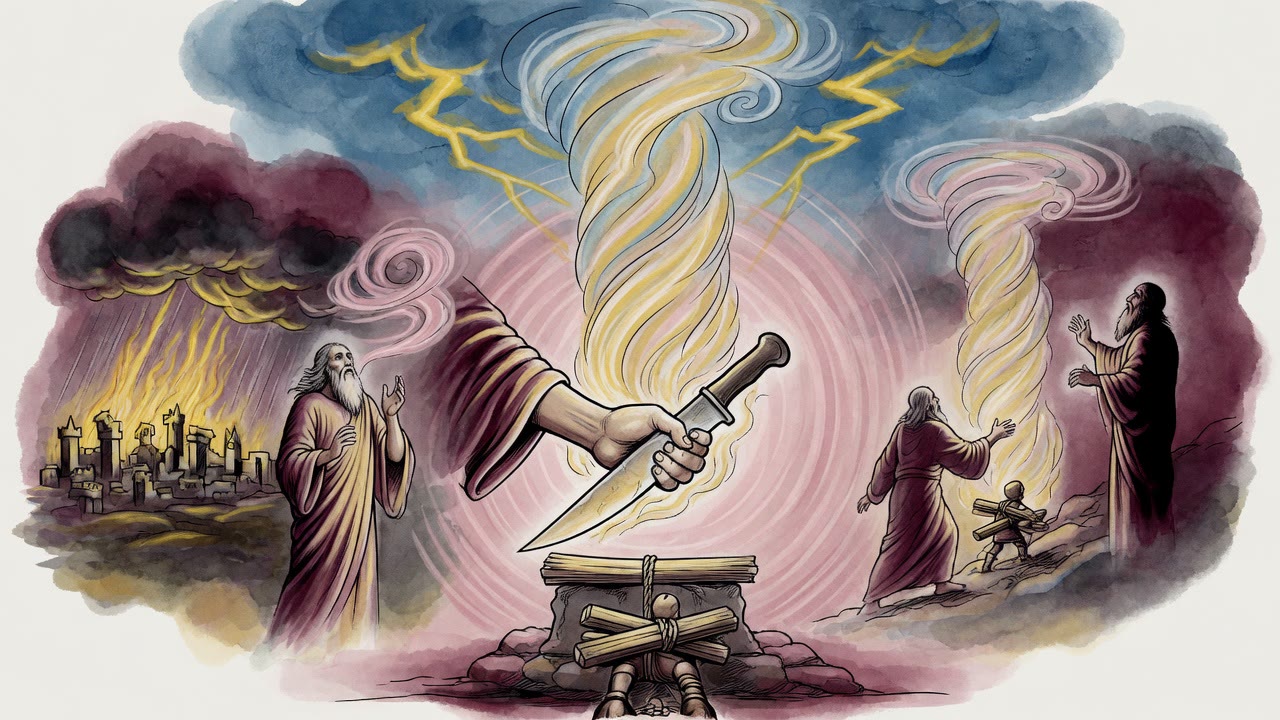
When the ram finally takes his place, the tenth trial ends without Isaac's blood, but not without Isaac's consent already spent. Ishmael's night visit becomes a dark jewel in the story, the detail that makes the command crueler and more precise. Two sons under one roof. One command. A knife that had begun as a boast about circumcision and ended as the tool of the Akedah.
Abraham had already walked through nine trials that bent his life into a shape heaven could use. Fire, exile, war, famine, the taking of Sarah, the sending of Hagar, covenants cut between pieces of animals. The tenth arrives not as a stranger but as a completion. That is why the timing with Ishmael's visit is so merciless. Completion does not wait for emotional convenience. It uses the night when a father's arms are fullest.
Dust of the wilderness still hung on Ishmael's cloak at the table. Isaac watched a brother who once shared the house and then did not. Abraham saw both futures at one table, the wild donkey of a man and the quiet son of laughter. Then sleep, or the edge of sleep, and the Voice that does not bargain the way Abraham bargained for Sodom. Take your son. Your only one. The one you love. Isaac. Each phrase a turn of the screw the midrash loves to count.
Isaac's earlier vow in the circumcision quarrel means he is not only victim when the wood is laid. He is a participant who talked himself into totality. Sibling rivalry becomes the strange fuel of martyrdom. The tradition is not embarrassed by that origin. It shows how even impure motives can be seized and purified by a real command. Akiva's insistence that the test was genuine blocks any later escape hatch that would call the Akedah theater. Theater does not leave a father and son forever changed on a mountain. Theater does not earn priesthood and kingship in the midrashic accounting of what obedience under the knife can claim.
When they came down, Ishmael was already gone back toward his roads, or soon would be. The night visit remains like a scar under the story's skin. Readers who skip it miss why "after these things" feels so heavy. The things include a boast, a brother, a full house, and a God who asks for the child while the other child's voice still echoes in the courtyard.
← All myths