5 min read

Ishmael Mocked Isaac's Circumcision Until Isaac Bore the Knife

Ishmael was circumcised at thirteen, awake and willing. He never let his half-brother forget that Isaac had been cut at eight days old, asleep in a cradle.

Curated by Arthur · Told by Maggid ·
Table of Contents
  1. The Son Who Looked Like the Father
  2. The Knife at Thirty-Seven
  3. Three Years of Dust and Delay
  4. The Door That Opened Late

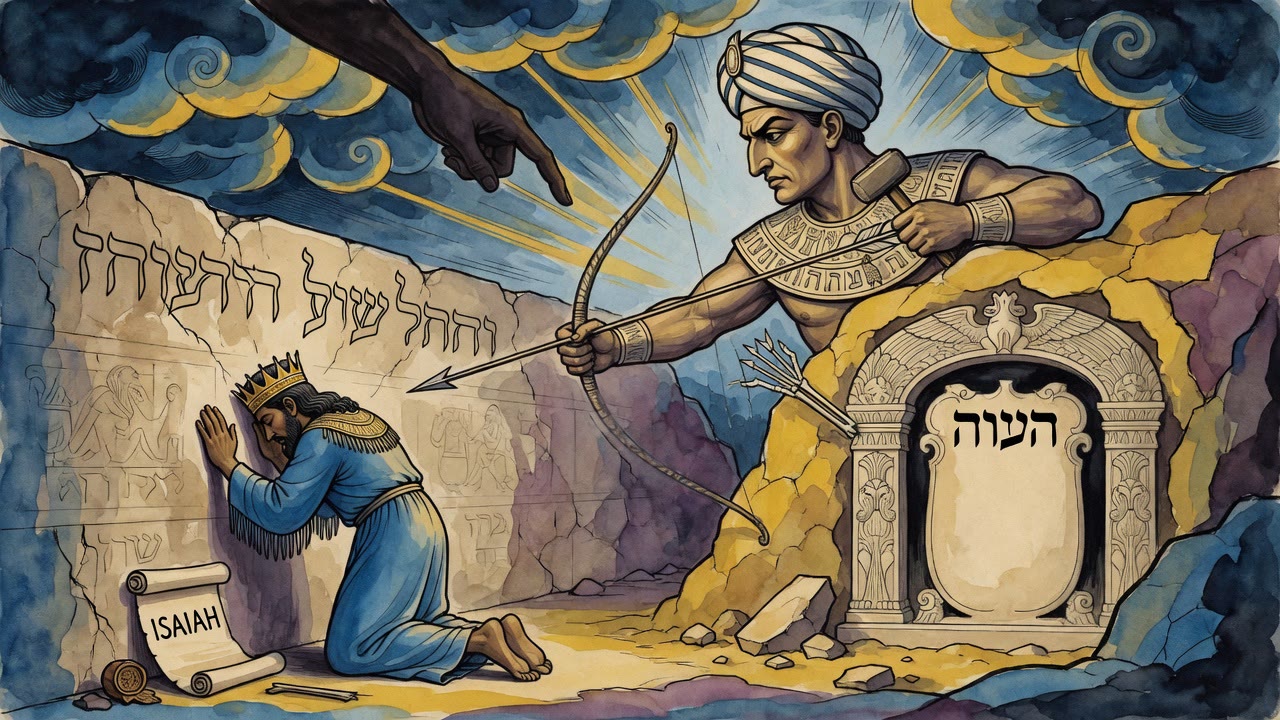
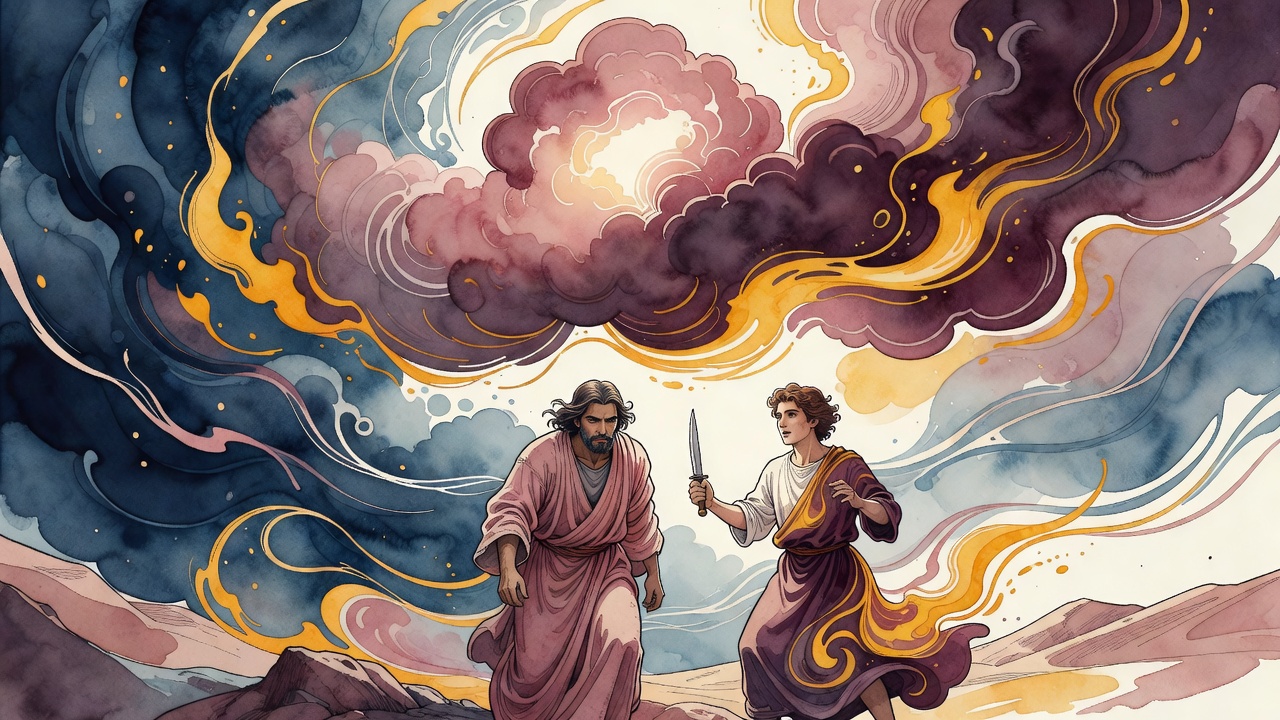
Ishmael found the soft place in his half-brother and pressed it. Isaac had been circumcised at eight days old, by command, before he could choose. Ishmael had taken the cut at thirteen, standing, deciding. He made the difference into a song of superiority and sang it where Isaac could hear.

Ishmael Mocked Isaac's Circumcision Until Isaac Bore the Knife Click for full size

Isaac did not answer with a matching taunt. He carried the resemblance of Abraham in face and stride and still heard, day after day, that he was the softer son, the one marked while sleeping in a cradle. The words stuck to the tents. Servants pretended not to listen. Isaac kept walking.

The mockery waited for a counterweight heavy enough to crush it.

The Son Who Looked Like the Father

People said Isaac resembled Abraham in beauty, wisdom, strength, wealth, and noble deeds. Being called Abraham's son was an honor equal to Abraham being called Isaac's father, even though Abraham stood at the head of thirty nations. The praise did not quiet Ishmael. If anything, it made the jibe sharper: the image of Abraham, cut without consent.

Isaac kept more than likeness. Before Sinai ever spoke the Sabbath law, he kept the limits of a Sabbath day's journey as if the command already bound him. Clean of hand, pure of heart, he did not lift his soul to vanity. On the day before rest he measured the road with his feet and stopped where the measure said stop. Neighbors saw a man refusing ordinary errands for a rule not yet thundered from a mountain.

God answered that anticipatory obedience by opening teachings expounded daily in the heavenly academy. The boy under mockery was already walking a path the world had not yet written down. He returned from those openings with a quiet that Ishmael mistook for weakness.

None of that stopped Ishmael's mouth.

The Knife at Thirty-Seven

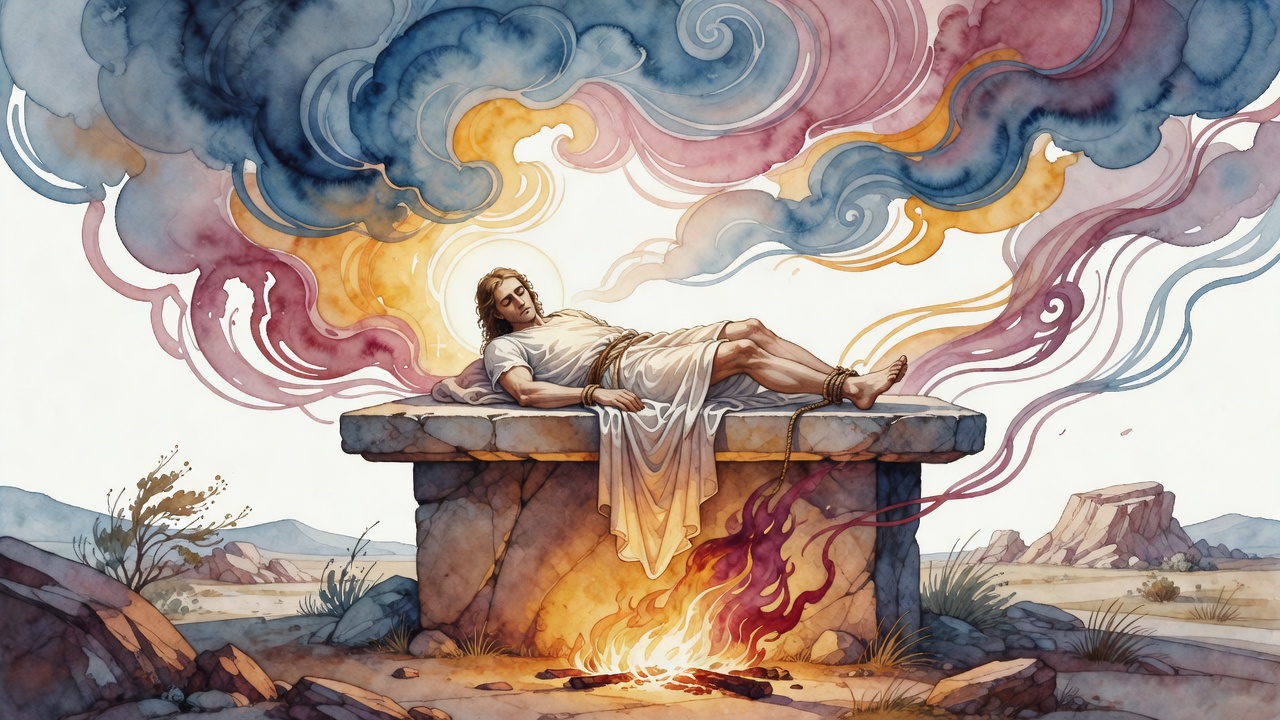
When Isaac was thirty-seven, a full man, God asked Abraham for him on Mount Moriah. The demand was not a private riddle between father and heaven alone. Isaac saw the wood stacked. He felt the rope. He watched the knife leave the sheath. He climbed knowing what the climb meant.

He did not bolt. He let his body be bound. The mountain air cut cold across his chest. Abraham's hand shook and still rose. For a span of breaths the son who had been called soft held still under the full weight of a grown man's consent.

The willingness of a man at thirty-seven closed the account Ishmael had opened over a cradle cut. A circumcision chosen at thirteen no longer outranked a life offered on stone. The taunt that had lived on timing died on the mountain. Only after that test, the tradition holds, was Isaac permitted to marry.

The counterweight had landed. Ishmael's song had nowhere left to stand. When they came down the slope, the old mockery sounded thin even in memory.

Three Years of Dust and Delay

Right after the near-sacrifice, Sarah died. Isaac mourned her for three years. Dust of grief filled the space where a wedding should have been. Marriage waited behind the grave. Abraham, stricken in age and unsure of the day of his death, called Eliezer, the servant who resembled him in appearance and in mastery over the yetzer hara (יצר הרע), the evil inclination.

"I am stricken in age, and I know not the day of my death," Abraham said. "Therefore prepare thyself, and go unto my country, and to my kindred, and fetch hither a wife for my son."

The request rose from a vow made on Moriah itself. If the sacrifice had finished, Isaac would have gone childless. That thought had already bitten Abraham while the knife was still warm from almost use. He had even considered daughters of his three friends Aner, Eshcol, and Mamre, men known for piety rather than for bloodline polish. God steered the search elsewhere. The road still belonged to Eliezer's feet and Isaac's waiting.

Isaac stayed inside the long pause: mockery silenced, mother buried, bride not yet in the tent. He kept the Sabbath measures. He tended flocks. He carried a body that had already been offered once and not taken.

The Door That Opened Late

When Rebekah finally came, she was fourteen and Isaac was a man who had already faced the knife and the grave of his mother. Camels halted. Water jars rose and fell. Eliezer finished the errand Abraham could not finish with local piety alone. Isaac brought her into the tent that still held Sarah's absence, and the next chapter began without erasing the last.

The marriage did not erase Moriah. It arrived because Moriah had been endured. The son who kept Sabbath before command, who matched his father's form, who answered Ishmael without a speech, entered the tent only after the body under pressure had paid in full view of heaven.

Ishmael had measured worth by the age of a cut. Isaac's answer was the climb, the binding, the years of mourning, and the delayed doorway. No matching insult was required. The mountain had done the talking, and the house that followed still smelled of rope and dust and delayed joy.


← All myths
From the tradition

Sources

2 sources

The texts behind this telling. Some cards carry a translation of the source; others are our own retelling of it, and each card says which. Every card links out to the original.

Legends of the Jews 5:281Legends of the Jews

Retold in our words. Read the original at the link below.The Legends of the Jews by Louis Ginzberg (1909) · Public Domain

It wasn’t just about being chosen; it was about who he was. In Legends of the Jews, that all the blessings showered upon him weren't undeserved. He was “clean of hand, and pure of heart, one that did not lift up his soul unto vanity." A pretty high bar, wouldn't you say?

It goes even deeper. He supposedly fulfilled all the commands that were revealed later – even Rabbinical injunctions! The text specifically mentions the limits of a Sabbath day's journey. And what was his reward for this anticipatory obedience? God disclosed to him the new teachings He expounded daily in the heavenly academy!

Abraham had it all. Blessings, divine connection, a son. But something was missing: a wife for Isaac. And

So, Abraham calls his old servant, Eliezer, to him. Now, Eliezer wasn’t just any servant. He resembled his master not only in appearance, but also spiritually. He possessed full power over the yetzer hara, the evil inclination, and was an adept in the law, just like Abraham. Imagine the trust Abraham must have had in this man!

Abraham tells Eliezer, "I am stricken in age, and I know not the day of my death. Therefore prepare thyself, and go unto my country, and to my kindred, and fetch hither a wife for my son." According to Ginzberg's Legends of the Jews, this request stemmed from a resolution Abraham made right after the Akeidah, the binding (or sacrifice) of Isaac on Mount Moriah. He realized that had the sacrifice been completed, Isaac would have gone hence childless.

He was even considering choosing a wife for his son from among the daughters of his three friends, Aner, Eshcol, and Mamre, because he knew them to be pious. Bloodlines and aristocratic stock? Apparently, those weren’t Abraham's priorities. Piety was key.

But then, God intervenes! "Concern thyself not about a wife for Isaac," God says. "One has already been provided for him." And it was revealed to Abraham that Milcah, the wife of his brother Nahor, who had been childless until Isaac's birth, had then been remembered by God and made fruitful. She bore Bethuel, and he, at the time of Isaac's sacrifice, begot the daughter destined to be the wife of IsaacRebekah.

What a beautiful, interplay of divine planning and human action! The story reminds us that even in our most proactive moments, there's often a larger, unseen hand guiding events. And sometimes, the solutions we seek are already in motion, waiting for the perfect moment to be revealed.

Full source
Legends of the Jews 6:3Legends of the Jews

Retold in our words. Read the original at the link below.The Legends of the Jews by Louis Ginzberg (1909) · Public Domain

Legend tells us Isaac wasn't just Abraham's son; he was his counterpart. The Legends of the Jews tells us he resembled his father "in beauty, wisdom, strength, wealth, and noble deeds." Can you imagine the pressure? It was as much an honor for Isaac to be called Abraham's son as it was for Abraham to be known as Isaac's father. – even though Abraham was the ancestor of thirty nations, he's always referred to as Isaac's father.

Isaac's story isn't without its challenges. He didn’t marry until later in life. Why? Well, according to the tradition, God wanted to be sure Isaac was worthy of his destined wife.

There’s a fascinating little story about Ishmael, Abraham's other son, and his taunts. Ishmael apparently used to mock Isaac for being circumcised at eight days old, a ritual commanded by God. Ishmael, on the other hand, underwent circumcision voluntarily at thirteen. He thought this made him superior.

So, how did Isaac disprove these "mocking charges," as Ginzberg puts it? God demanded Isaac as a sacrifice on Mount Moriah when he was thirty-seven years old, a full man. This was a test, of course, and Isaac's willingness to give up his life silenced Ishmael's jibes. Only then was Isaac permitted to marry.

But even then, there was another delay. Right after the near-sacrifice, Isaac's mother, Sarah, passed away, and he mourned her for three years. Finally, he married Rebekah, who, at the time, was only fourteen years old.

What does it mean to live up to a legacy? Isaac's story is a reminder that even in the face of immense pressure and personal loss, destiny eventually unfolds.

Full source