Parshat Lech Lecha5 min read

Abraham Fell and a Scorpion Cut the Covenant

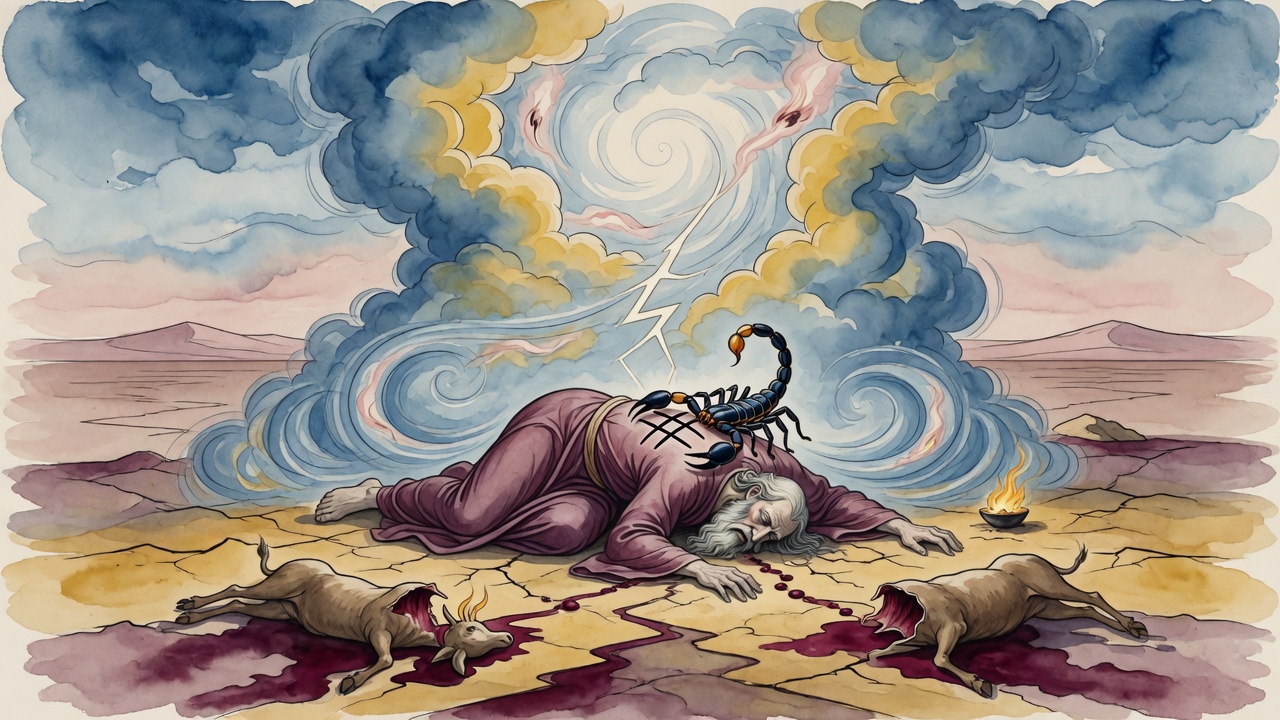
Abraham wondered where to cut the covenant. He fell on his face, a scorpion bit the place, and he rose already marked as God's partner.

Curated by Arthur · Told by Maggid ·
Table of Contents
  1. Walk Before Me Whole
  2. Face to the Ground, Sting to the Flesh
  3. Fear That the Reward Was Already Spent
  4. Kindness That Outlived One Burial
  5. The Mark and the Long Road
Abraham Fell and a Scorpion Cut the Covenant Click for full size

Walk Before Me Whole

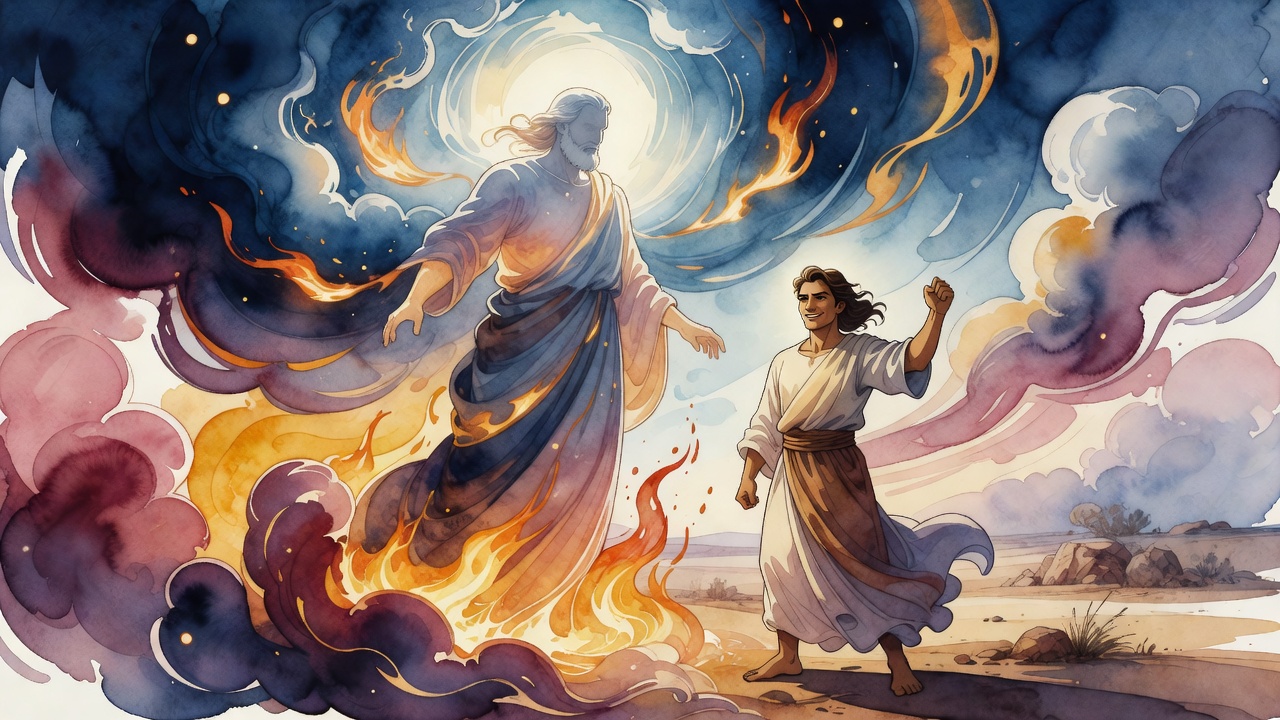
"Walk before Me, and be thou wholehearted" (Genesis 17:1). Scripture answers itself from the Psalms. As for God, His way is whole (Psalm 18:31). The Holy One cherished the precept of circumcision enough to wrap it in completeness language, as if the cut itself were a road into wholeness rather than a wound alone.

Rabbi Ishmael counted thirteen covenants issued because of that rite, stacked through the verses of the section until the ear tires of the word covenant and begins to feel its weight. Abraham heard he would receive a covenant between himself and God and sat wondering where on his body the mark should land (Genesis 17:2).

A man can agree to a covenant and still not know where the knife belongs. Wondering was not refusal. It was the last unmapped inch.

Face to the Ground, Sting to the Flesh

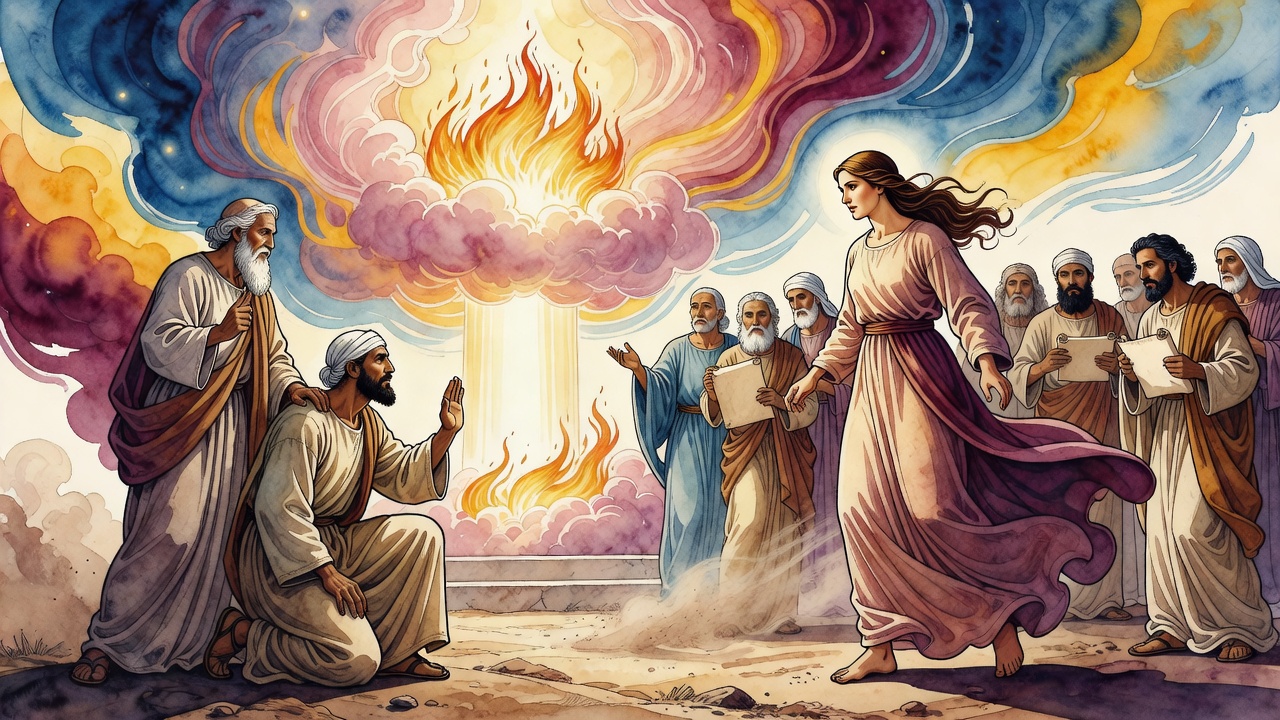
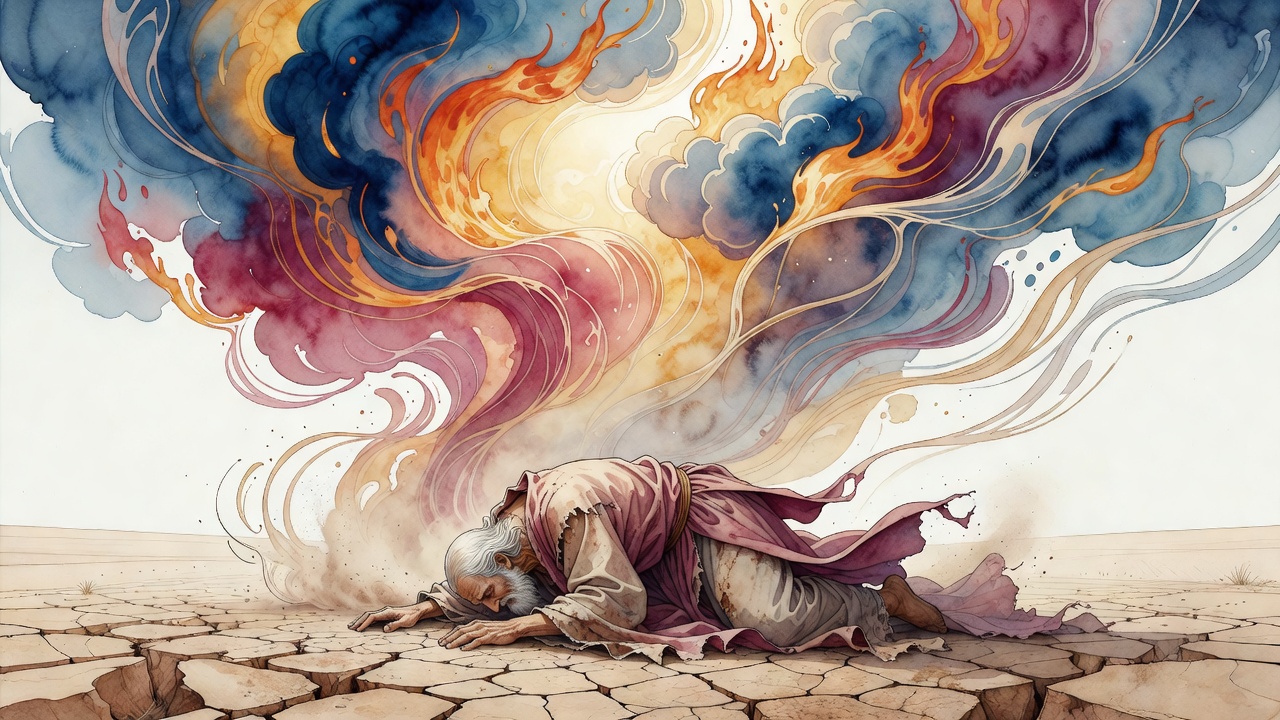
Abraham fell on his face (Genesis 17:3). While he lay there, the Holy One indicated the place in a way no diagram could match. A scorpion bit him there. Forthwith he found himself circumcised. The midrash will not soften the agent. Heaven used a creature of the dust to open the covenant cut when the patriarch's mind still searched for coordinates.

He rose marked. The partnership no longer lived only in speech and stars and a promised land. It lived in flesh that had met venom and command in the same instant. Walking wholehearted now meant walking with a body that had already paid the entrance fee.

Some covenants are signed with ink. This one signed itself with a sting while a man was still bowed.

Fear That the Reward Was Already Spent

After the wars of the kings and the rescue from the furnace, Abraham once pondered divine justice with a dangerous thought. Perhaps he had already received his full reward in this world. Assistance against kings. Escape from fire. Surely nothing remained stored for the world to come.

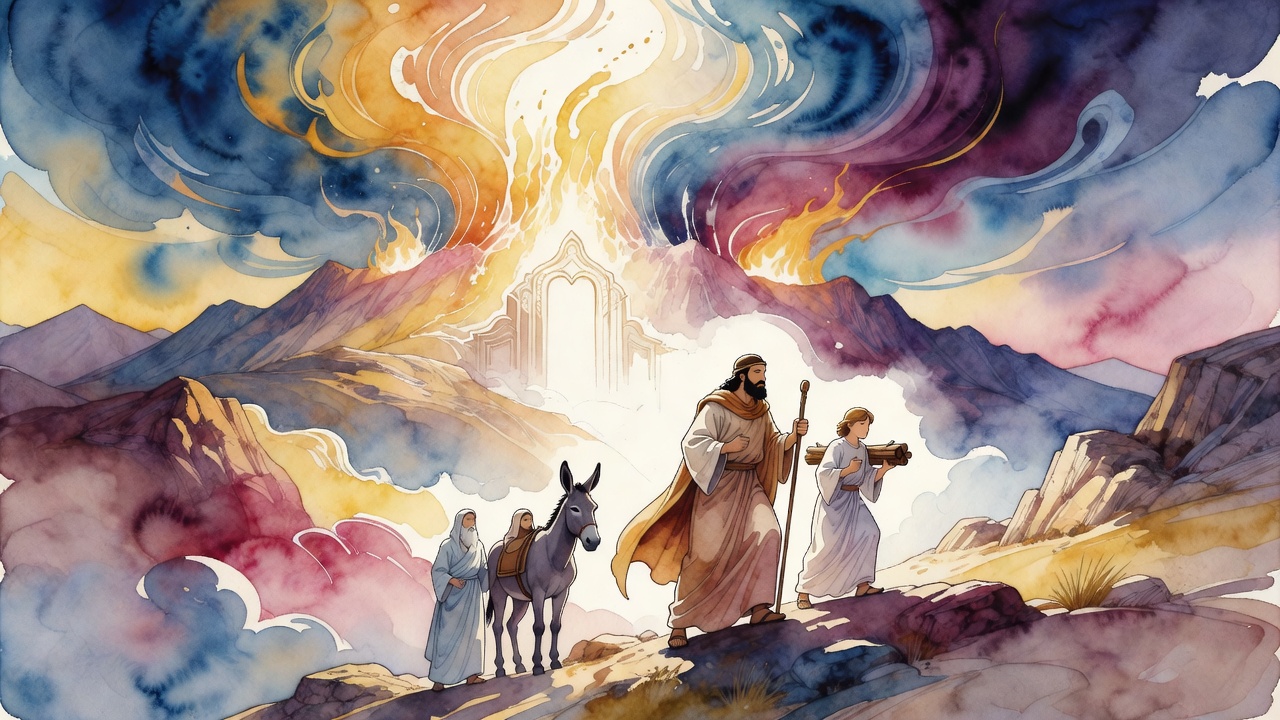
The Holy One answered the reflection as if it were a debt of awe unpaid. Since you dare to measure My actions that way, bring a burnt offering. The path ran toward Moriah and the binding of Isaac (Genesis 22:2). Rabbi Isaac adds another self-accusation. Abraham flayed himself with worry that among those he had killed in war some righteous men had fallen. God answered that they were thorns removed from before Him, and that reward, not guilt, waited now and later.

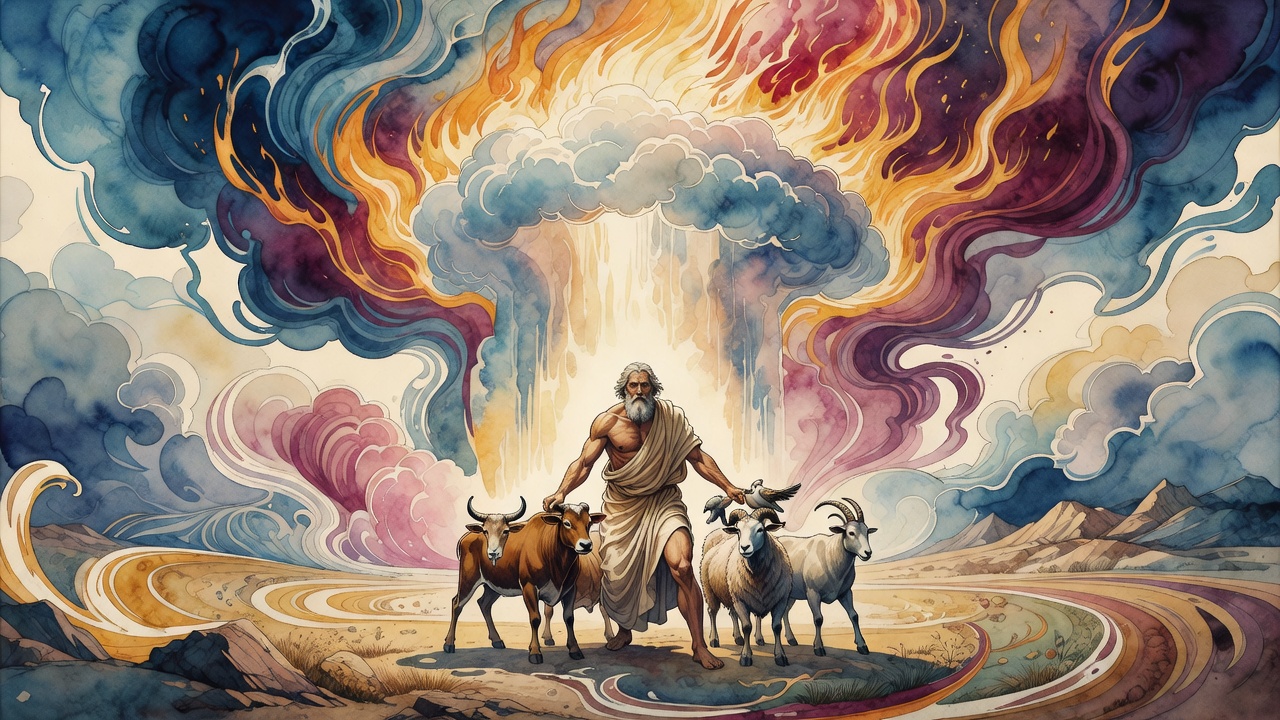
Burnt offerings, Rabbi Ishmael taught, atone for broken positive and negative commands. Rabbi Shimon son of Yohai added evil thoughts, the way Job rose early to offer for sons who might have cursed God in their hearts (Job 1:5). Abraham's dangerous accounting of reward sat in that family of thoughts that need fire.

Kindness That Outlived One Burial

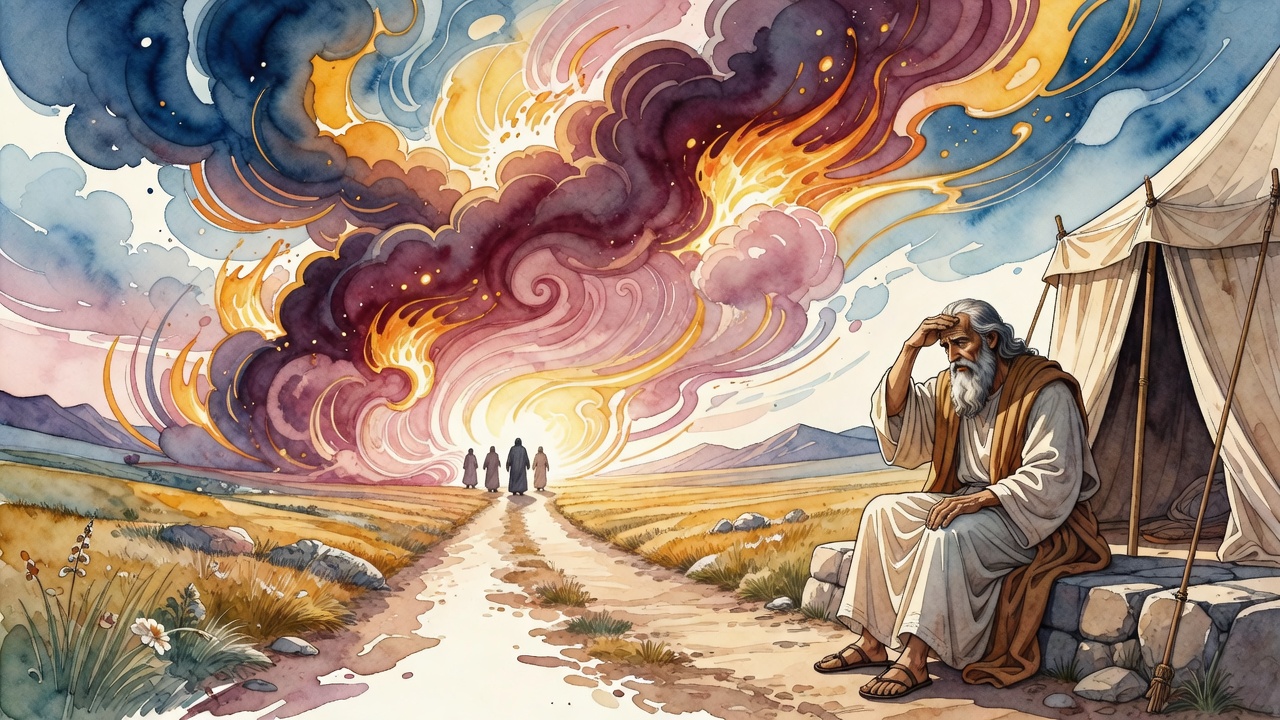
Years on, when Sarah died and then Abraham after her, the Torah names Machpelah again though thirty-eight years already separated the two burials. Rabbi Tanhuma heard reward inside the repetition. Whoever showed kindness at Sarah's death lived to show the same kindness at Abraham's. Rabbi Shmuel bar Nahman saw Shem and Eber walking before Abraham's bier to a chamber prepared beside the wife whose burial had opened the cave to the household.

Only after that laying-to-rest does Scripture say God blessed Isaac. The blessing passed through grief, burial, and memory. Covenant cut by a scorpion in one chapter becomes covenant carried by sons who bury parents in the next.

Wholeness is not only a private mark on a patriarch. It is a chain of people who keep showing up for the dead.

The Mark and the Long Road

Abraham wondered, fell, and rose cut. He feared his reward was spent and learned a harder altar waited. He was buried by kindness he had once received for Sarah, and Isaac stepped forward under a blessing that arrived only after the cave took both parents.

Thirteen covenants. One scorpion. A road through Moriah. A double burial in Machpelah. The wholehearted walk never meant a life without fear or calculation. It meant a life that kept answering when God moved the map under his feet.

The sting in the dust still sits under every later circumcised dawn in his line. A man face-down found the place he could not find with thought alone, and the God who whole-hearts His own way made a partner in the only language flesh cannot misfile.

Thirteen covenants around one cut sound like excess until you live inside a body that must remember God without constant fire from the sky. Abraham's wonder about location was practical holiness. The scorpion answered with a precision no human mapmaker offered.

Fear that reward was already spent is a rich man's spiritual poverty. Escaping furnaces and toppling kings can trick a heart into thinking the ledger is closed. Moriah reopened it with a demand that made earlier rescues look like preludes. Job's early offerings for secret heart-sins sit in the same school. Thought needs altar sometimes more than deed does.

Machpelah's double kindness closes the arc. A man marked by a desert sting is buried by people who once buried his wife with care, and only then does blessing swing fully toward Isaac. Covenant is cut in a moment and confirmed across funerals. Wholehearted walking includes falling on your face, rising marked, fearing you have been paid too soon, and trusting that kindness still moves between generations after you cannot walk at all.


← All myths
From the tradition

Sources

3 sources

The texts behind this telling. Some cards carry a translation of the source; others are our own retelling of it, and each card says which. Every card links out to the original.

Midrash Tanchuma, Lech Lecha 17Midrash Tanchuma

Retold in our words. Read the original at the link below.Townsend 1989 translation of Midrash Tanhuma, S. Buber Recension · CC-BY

Walk before Me, and be thou wholehearted (Gen. 17:1). Scripture states elsewhere in allusion to this verse: As for God, His way is whole (Ps. 18:31). What is the meaning of His way is whole? It signifies that the Holy One, blessed be He, cherished the precept of circumcision. R. Ishmael stated: The rite of circumcision is so important that thirteen covenants were issued because of it. They are stated explicitly in the verses (of this section of the Torah).

Abraham sat and wondered where he was to be circumcised, after the Holy One, blessed be Him, informed him: I will establish My covenant between Me and thee (Gen. 17:2). What follows this verse? And Abraham fell on his face (ibid. v. 3). Once he fell on his face, the Holy One, blessed be He, indicated that place, and a scorpion bit him there. Forthwith, Abraham found himself circumcised. Whence do we know this? We know it from the verse And God spoke unto him, saying: As for Me, behold, My covenant is with thee (ibid. vv. 3–4); that is, behold, thou art circumcised. It is written: In the self-same day was Abraham circumcised (ibid. v. 26). Scripture does not say “he circumcised himself” but he was circumcised.

What may this episode be compared to? It may be compared to a situation wherein a king’s friend is eager to marry the king’s daughter. Because he is extremely bashful, he does not know how to declare his love for her, whether to do so himself or through another. The king realized what was in the young man’s heart and so he said to him: “I know what you desire; my daughter is already in your house.” Abraham was likewise bewildered when the Holy One, blessed be He, said to him: I will make My covenant between Me and thee, and so he fell upon his face. While he was prostrate, he discovered that he was already circumcised. Forthwith, the Holy One, blessed be He, said: My covenant is made between Me and thee. Scripture says elsewhere in reference to the preceding verse: The word of the Lord is tried (Ps. 18:31). This implies that He tested Abraham’s offspring by bestowing upon them the precept of circumcision. Therefore, He is a shield unto all them that take refuge in Him (ibid.), to Israel who trust in Him.

Why was Abraham not circumcised until his ninety-ninth year? To teach us that a man who desires to be converted must not say: “I am old, how can I become a convert?” Let him learn from Abraham, who was circumcised in his ninety-ninth year. That is why Abraham was not circumcised until he attained that age.

Full source
Midrash Tanchuma, Lech Lecha 10Midrash Tanchuma

Retold in our words. Read the original at the link below.Townsend 1989 translation of Midrash Tanhuma, S. Buber Recension · CC-BY

After these things, the word of the Lord came unto Abraham, in a vision, saying: “Fear not, Abram!” (Gen. 15:1). May it please our master to teach us what (the) burnt offerings (prescribed in the Book of Leviticus) atone for? R. Ishmael taught us: Burnt offerings were introduced as an act of atonement for the violation of both positive and negative commandments. R. Simeon the son of Yohai said: They were introduced also as atonement for evil thoughts, as it is said: And it was so, when the days of their feasting were gone about, that Job sent and sanctified them, and rose up early in the morning, and offered burnt offerings according to the number of them all; for Job said: “It may be that my sons have sinned, and blasphemed God in their hearts.” Thus did Job continually (Job 1:5).

You find that Abraham once pondered over the matter of divine justice. What did he say to himself? R. Levi was of the opinion that he said to himself: It appears to me as though I have already received my full reward in this world, inasmuch as the Holy One, blessed be He, has assisted me against the kings and has saved me from the furnace. Surely, I have received my full reward; there can be no additional reward awaiting me in the world-to-come. The Holy One, blessed be He, said to him: Since you dare to reflect upon My actions, you must bring a burnt offering to Me. Therefore, He said: Take now thy son, thine only son, whom thou lovest, even Isaac, and get thee into the land of Moriah; and offer him there for a burnt offering upon one of the mountains which I will tell thee of (Gen. 22:2). R. Isaac declared: Abraham excoriated himself unmercifully, saying: Perhaps among those whom I have killed, there were some righteous men. The Holy One, blessed be He, replied: Those whom you have destroyed were like thorns that you eradicated from before Me. You have committed no sin because of it; rather you shall be greatly rewarded because of it, both now and in the future.

Full source
Yalkut Shimoni on Torah 110:8Yalkut Shimoni on Torah

Translation of the source text.Torat Emet (Yalkut Shimoni) + Sefaria Community Translation · CC-BY-NC

"The field which Abraham bought from the children of Heth" (Genesis 25:10), etc. Rabbi Tanhuma said: Was it not thirty-eight years from the burial of Sarah to the burial of Abraham our father? Yet here you say, "There Abraham and Sarah his wife were buried." Rather, it comes to teach you that everyone who performed kindness for Sarah merited to perform kindness for Abraham.

Rabbi Shmuel bar Nahman said: Shem and Eber walked before his bier, and they saw which place was open for Abraham our father, and they buried him in his own chamber. "And it came to pass after the death of Abraham, that God blessed Isaac" (Genesis 25:11). This is written in remez 13 and 33.

Full source