Abraham Left the Servants With the Donkey
The midrash puts the servants with the animal because they could not see what Abraham saw. Isaac carried the wood up and asked where the lamb was.
Table of Contents
On the third day Abraham lifted his eyes and saw the place from far off.
 Click for full size
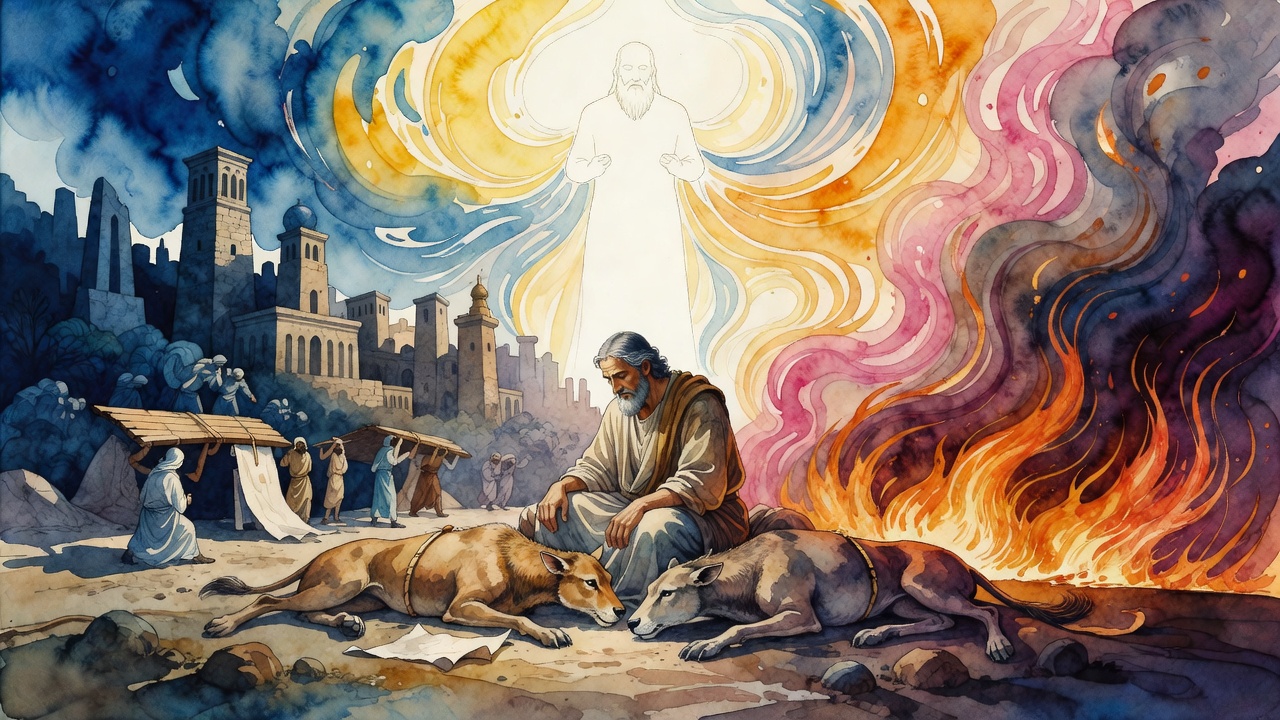
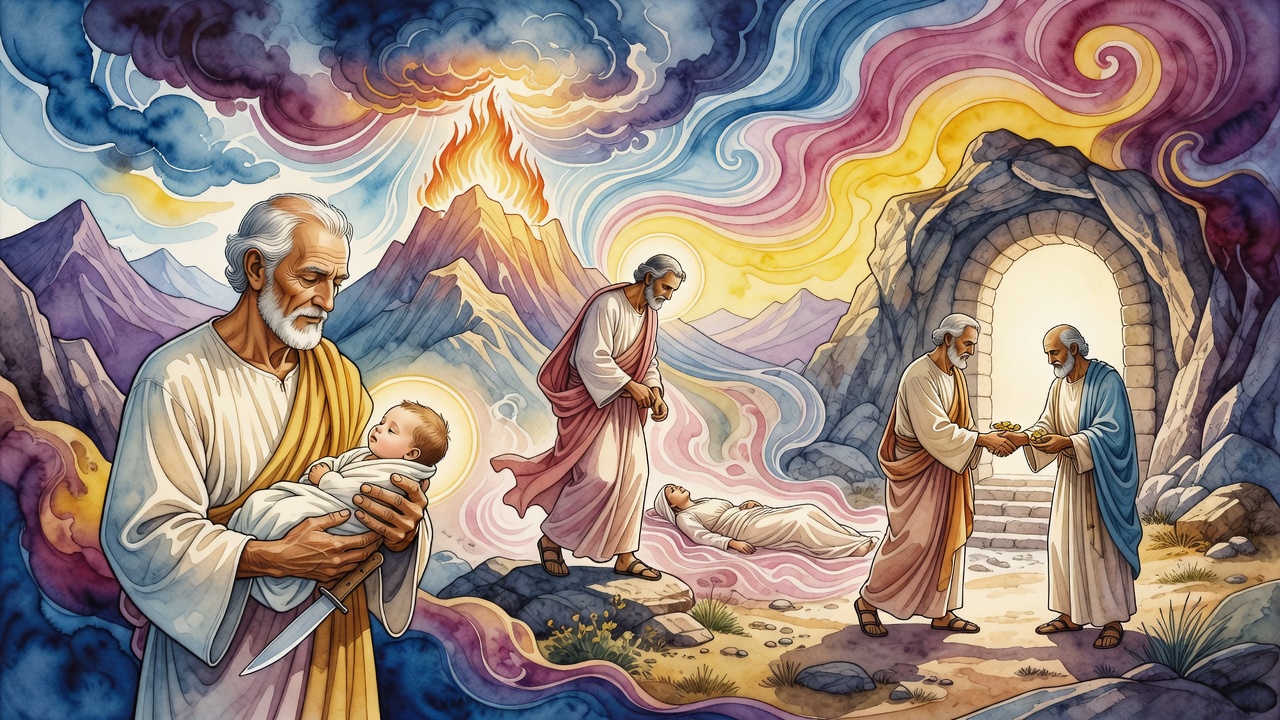
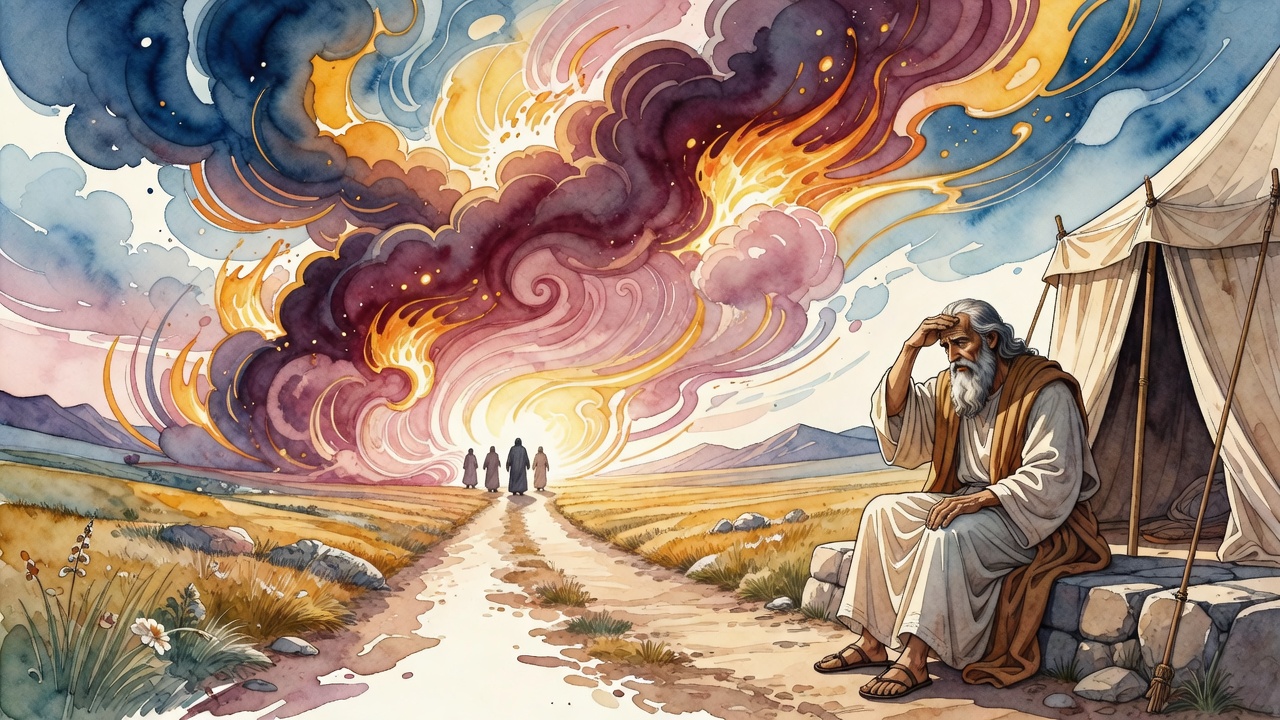
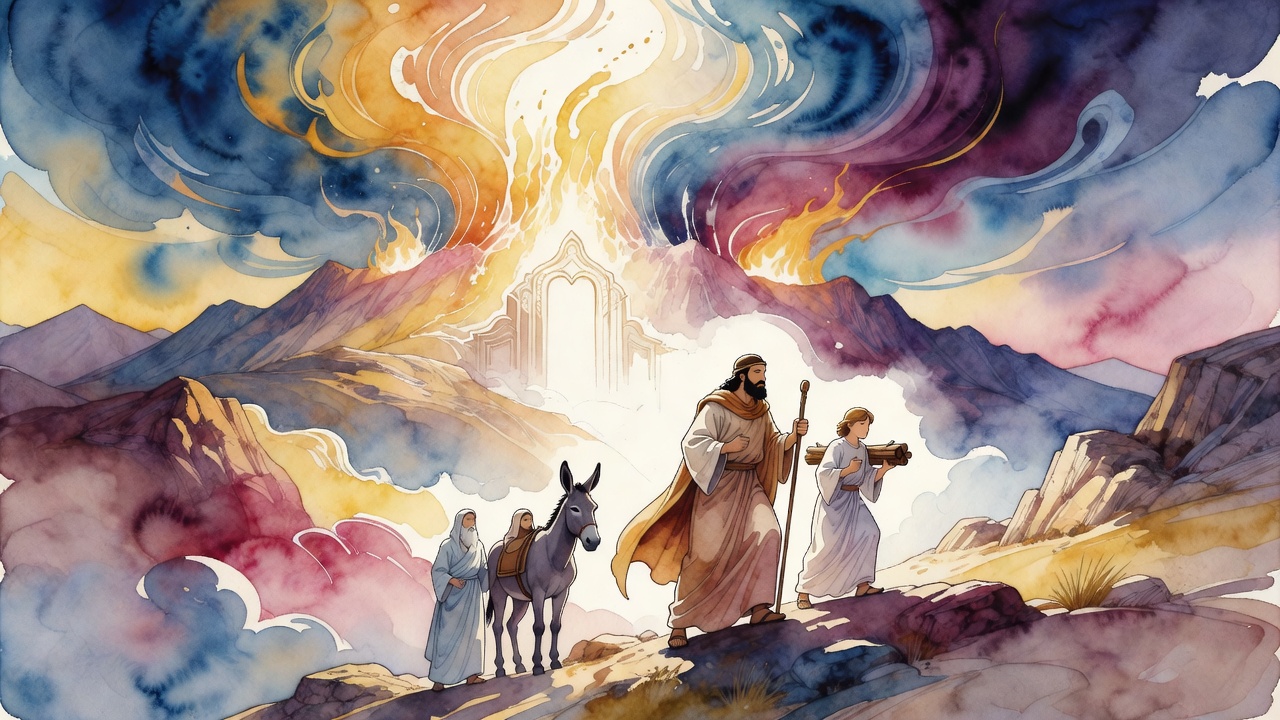
He turned to the young men who had walked with them from Beer-sheba and said, "Stay here with the donkey, and I and the lad will go yonder and we will worship and come back to you" (Genesis 22:5). The animal stamped. The servants waited with ropes and questions they did not speak. Father and son took the wood and the fire and the knife up the slope alone.
The midrash hears more than logistics in that sentence. It hears a sorting of the world.
With the Donkey
On the surface he leaves the servants with the beast. Beneath the surface the phrase "with the donkey" is heard as a sorting of souls. Those who stand outside the climb are set with the animal, people who do not yet share the seeing that Abraham and Isaac share. The mountain is not for every pair of eyes. Some stay below because the covenant at the top is still a private fire between father, son, and the Voice that asked for everything.
Isaac carries the wood like a man carrying his own pyre. He walks. He asks, after a silence that lasts too long, where the lamb is. Abraham answers that God will see to the lamb for the burnt offering. The servants hear none of that exchange. They hold a rope and watch two figures shrink into stone and sky until even the knife is only a glint and then nothing.
Stay here. The words are soft. The exclusion is absolute.
The Covenant Already Cut
Years earlier, when the covenant of circumcision was sealed, the household's foreskins had been left in a heap until they bred worms. The midrash does not flinch from the image. Their odor rose to heaven like incense and a whole burnt offering. God promised that when Abraham's descendants stumbled into sin, He would recall that fragrance and be moved to mercy. The wound of the covenant became a permanent plea on behalf of a people not yet born.
So the climb of Moriah does not start from zero. Isaac is the son of the promise fixed on a sanctified body, the boy of whom God said the covenant would run. The knife in Abraham's hand is not the first blade the house has known. It is the hardest. Angels wait while Abraham takes leave of the Presence with manners the sages later turn into law: ask permission before you part, even from the smaller person in the room.
The pile of foreskins still smells, in heaven's memory, like a sacrifice. The mountain asks for a living son. The two scents meet in the air above the servants who smell only donkey and dust.
Dust That Stops a Curse
From the dust under Abraham's feet when he walked the land in its length and breadth, the sages draw a later chain. "Arise, walk through the land" (Genesis 13:17) ties his soles to the soil of the promise. Generations later, Balaam looked out over the wilderness and saw it covered with the signs of Israel's circumcision mixed into the dust, and he despaired of cursing them. Who can stand against the merit of the blood of the covenant hidden in the dust of Jacob?
Because of such words, the foreskin and the blood of circumcision are covered with earth. Israel kept the covenant until a later kingdom split and Ephraim abandoned it. Elijah rose in zeal over the breach, as he had burned at Shittim, and heaven answered that no circumcision would ever be performed without him present to see it. A chair still waits for the angel of the covenant at every brit milah, empty to the eye, occupied to the tradition.
The servants at Moriah do not know that chair. They know a donkey and an order to wait.
What the Servants Never Saw
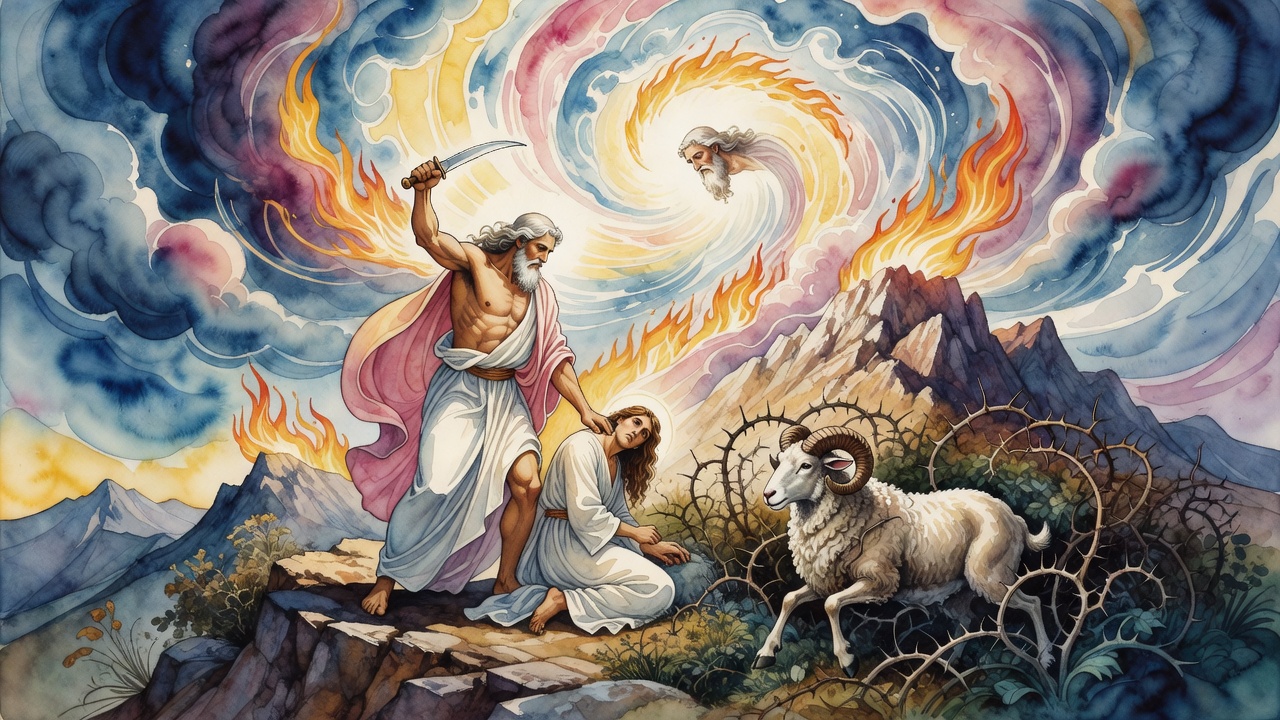
On the mountain the angel called, the ram tangled in the thicket, the knife stopped. Isaac's bonds loosened. Abraham's hands shook with a different fear than the one he had carried up. Below, the young men still stood with the donkey, outside the vision, outside the ram, outside the voice that said not to lay a hand on the lad.
Abraham came down with Isaac alive, and the household's future walked on two feet instead of rising as smoke. The servants saw two men return. They did not see the moment when heaven traded a ram for a son and taught the world that the pile of foreskins was not the last time blood and mercy would share a hill.
Stay with the donkey. The line sorts the world into those who climb into the terror of the promise and those who hold the rope. The dust of the covenant, the pile of foreskins, the chair of Elijah, all trail from that sorting like a long shadow of blood that mercy refuses to forget.
← All myths