Abraham's Tree Became the Middle Bar of the Tabernacle
Angels cut Abraham's tamarisk and threw it into the Sea of Reeds. Israel pulled the wood out and ran it through the Mishkan as the middle bar.
Table of Contents
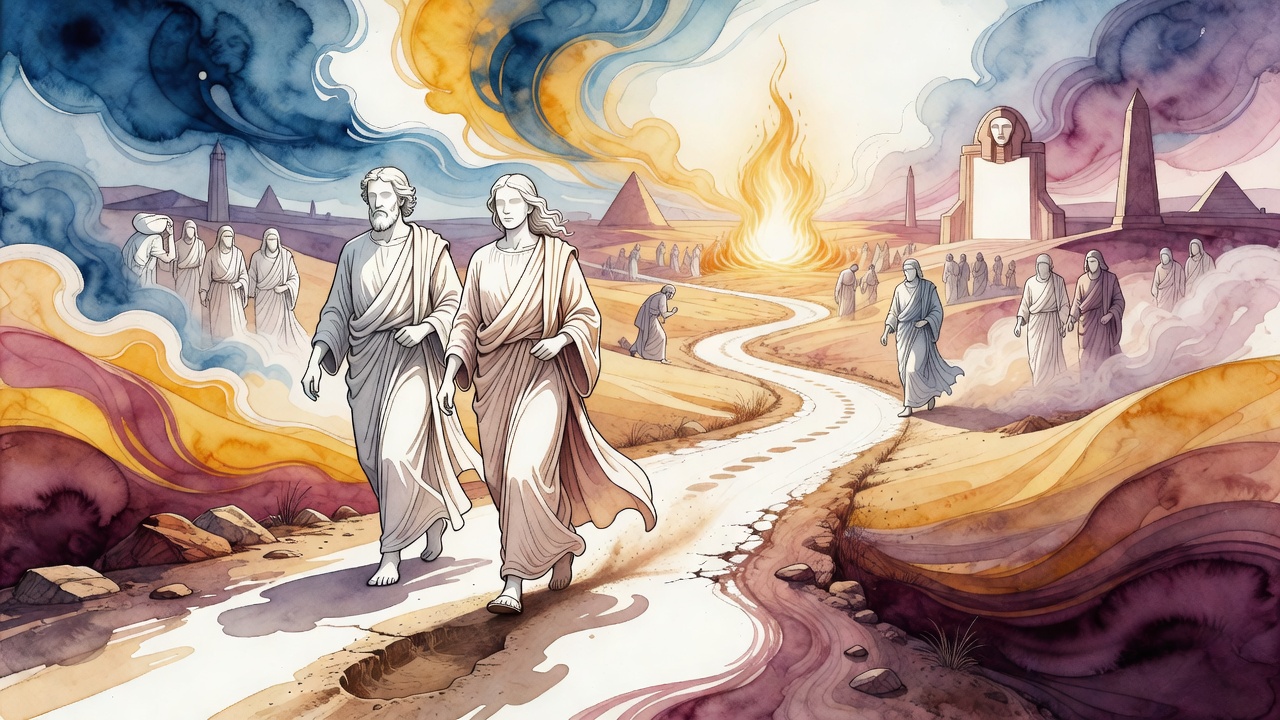
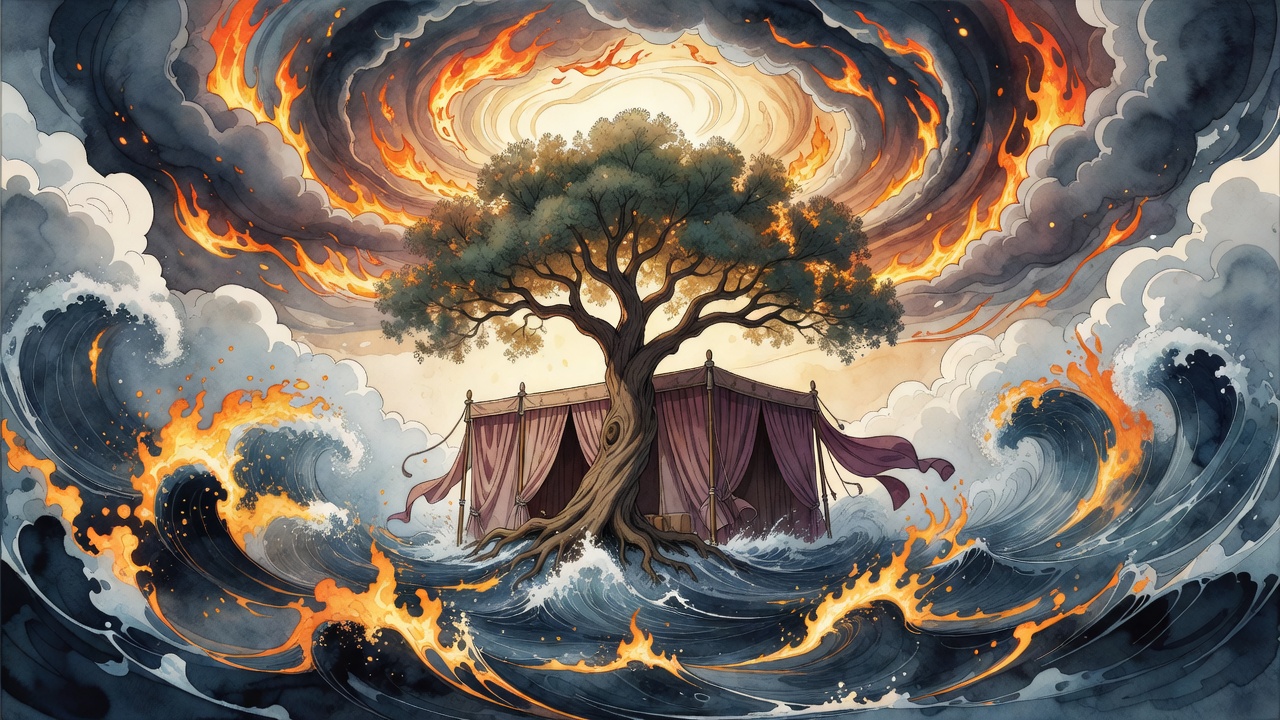
The tree hit the water with a sound too heavy for driftwood. Angels had cut it in Beersheba and cast it into the Sea of Reeds after the chariots went under. Israel waded out and put hands on grain that had once drunk well-water on the desert's edge.
 Click for full size
They did not treat it as wreckage. Some objects arrive on a tide already assigned.
Abraham Planted a Name at the Well
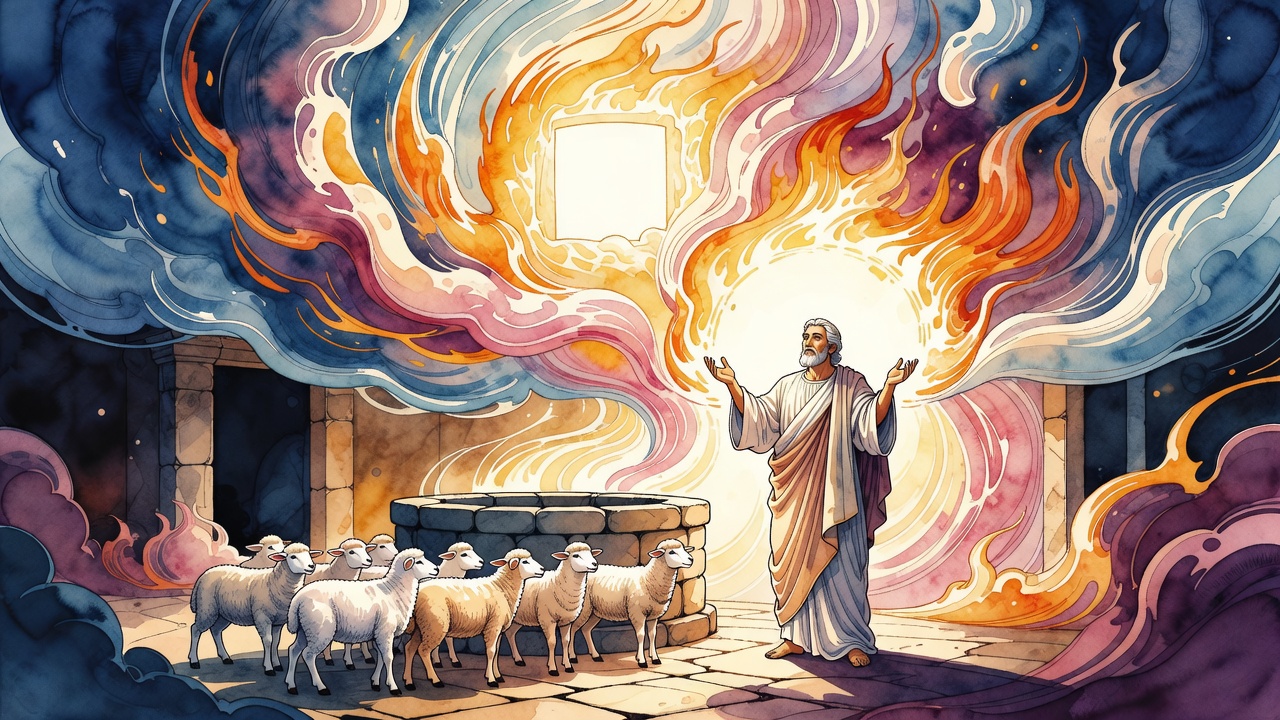
Long before the sea, Abraham planted a tamarisk in Beersheba, the Well of the Seven, and called there on the Name of the Word of the Lord (Genesis 21:33). The tree was not landscaping. It was a living marker that this well and this open ground belonged to a covenant conversation.
Travelers sat in its shade the way three men once sat under another tree and ate before Sodom's smoke rose. Abraham's hospitality had always run through wood and water and bread. He taught thanks in the Name of the Word, the Memra (מימרא), before guests moved on. The tamarisk stood as a green witness that the Word was not a private idea. It was a public Name spoken over a well.
The tree waited. Trees are good at waiting. Wind moved through its branches while Isaac dug wells and Jacob fled and Joseph ruled and a people learned brick under a king who did not know Joseph. The everlasting covenant between the Word and Abraham sat in the grain, unused, uncut, still vertical in the sand.
Angels Cut the Old Wood
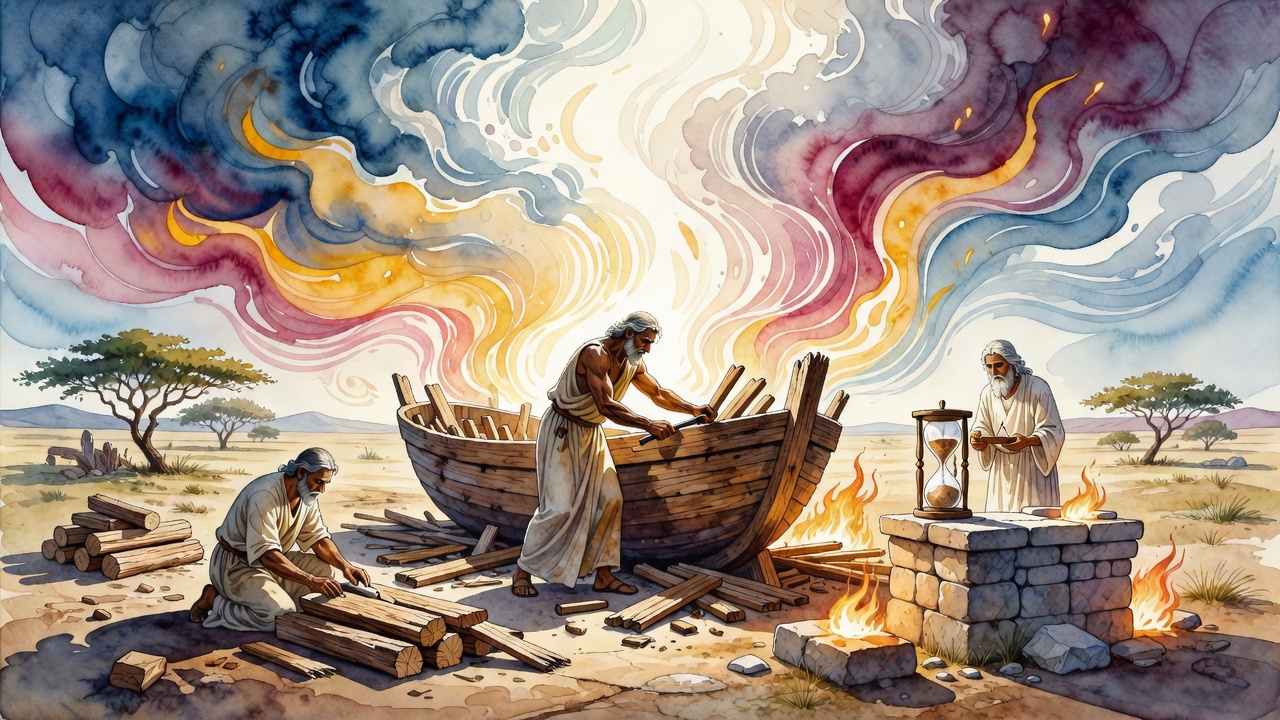
Israel crossed the Sea of Reeds and the Egyptian army drowned behind them. Then the angels descended. They put blades to Abraham's tree. They cut it down and threw it into the waters. The wood that had shaded a patriarch's prayers floated like a raft on the same sea that had just become a grave for horses.
A tree from Beersheba in the middle of the sea is a strange sight. It is also a map. The God who bound Himself to Abraham by the Word was not finished with Abraham's furniture. What was planted in peace was harvested in redemption. What once marked a well would soon mark the spine of a portable sanctuary.
Israel saw the wood and hauled it. Wet bark tore palms. Men grunted and got it onto dry ground. No one asked why angels had become a lumber crew. The camp already knew that some work in heaven has a long memory.
The Bar Ran From End to End
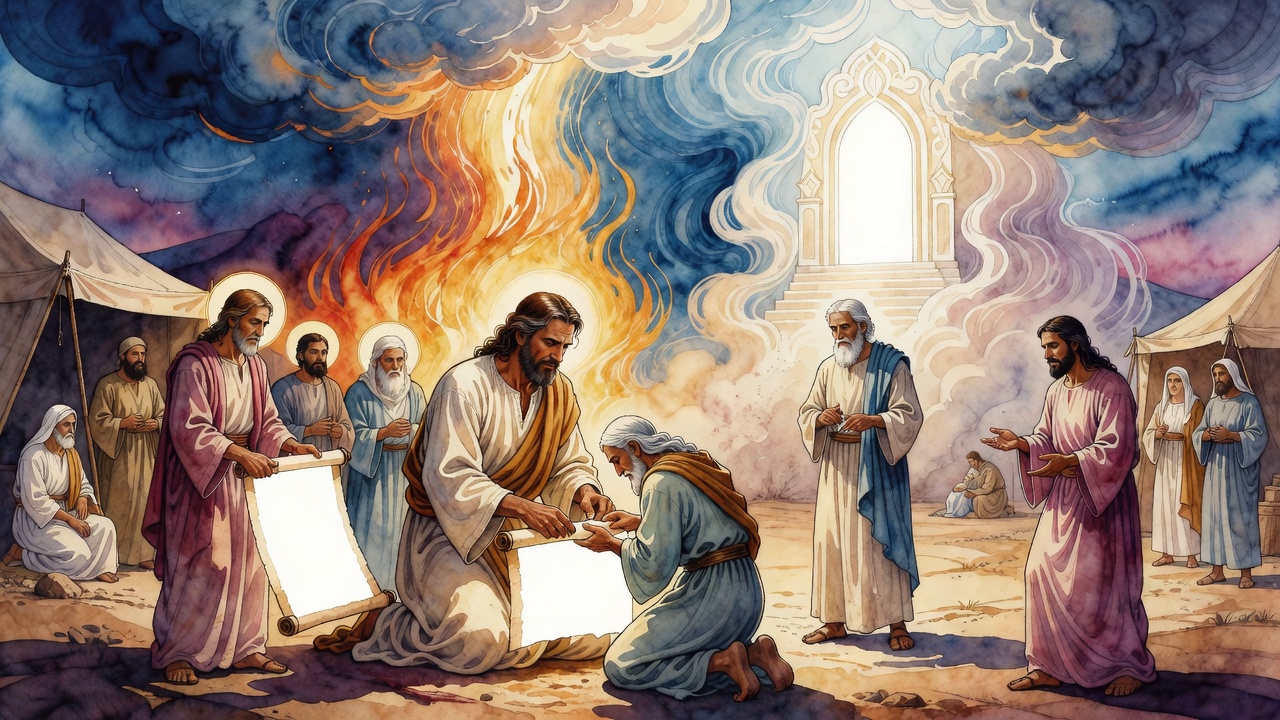
In the wilderness the Holy One ordered boards and sockets and bars for the Tabernacle. A middle bar would pass through the boards from end to end, holding the walls together (Exodus 26:28). Plain joinery. The wood in Israel's hands was not plain.
That middle bar came from Abraham's tree. The timber that once stood vertical in Beersheba now ran horizontal through the Mishkan, locking north wall to south wall, turning separate planks into one house for the Presence. Bezalel fitted it. Covenant history became a beam. The everlasting Word that had cut a covenant with Abraham now sat in a tent stiffened by Abraham's own planted wood.
Every time the camp moved, Levites lifted that bar. Every time the cloud stopped, the bar slid back through the boards and the house stood. Abraham's tamarisk had learned to travel. No gold covered that middle beam in the telling that matters. Memory did.
Israel Answered Together
Before the boards rose, Israel stood at Sinai and answered as one mouth. "All that the Lord has spoken we will do" (Exodus 19:8). The same unity that made them fit to encamp made them fit to answer. They accepted a covenant whose details they did not yet fully hold, the way Abraham once accepted a land he did not yet own.
The middle bar is quiet proof that acceptance has a history. It is not only thunder and smoke. It is also a tree planted centuries earlier by a man who thanked the Word after bread, waiting for a nation of his seed to lift it into the walls of holiness.
When the cloud lifted, the bar came out. When the cloud rested, the bar went in. A hand running along the hidden beam inside the boards would have felt grain that once drank water from Beersheba and heard Abraham pray. The Tabernacle did not begin at Sinai alone. Part of it began under a tamarisk where an old man still believed the Word could use ordinary wood for an everlasting purpose.
← All myths