God Called Moses In From Outside the Cloud
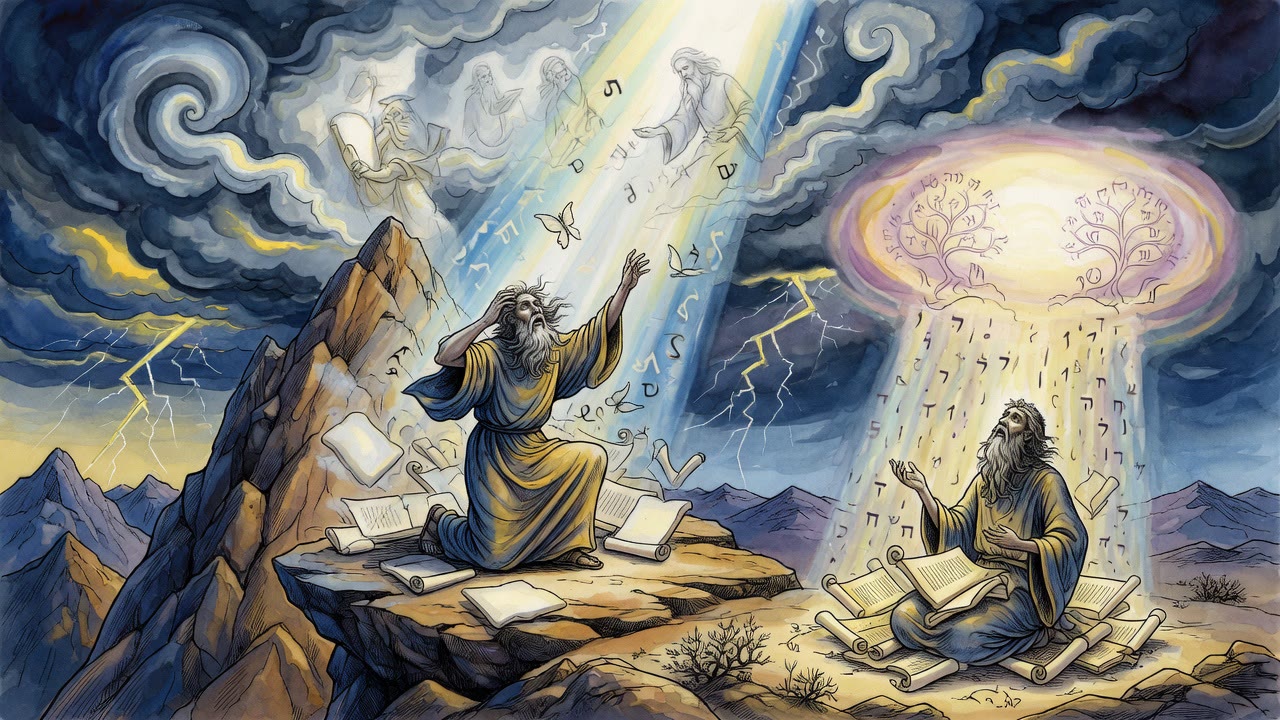
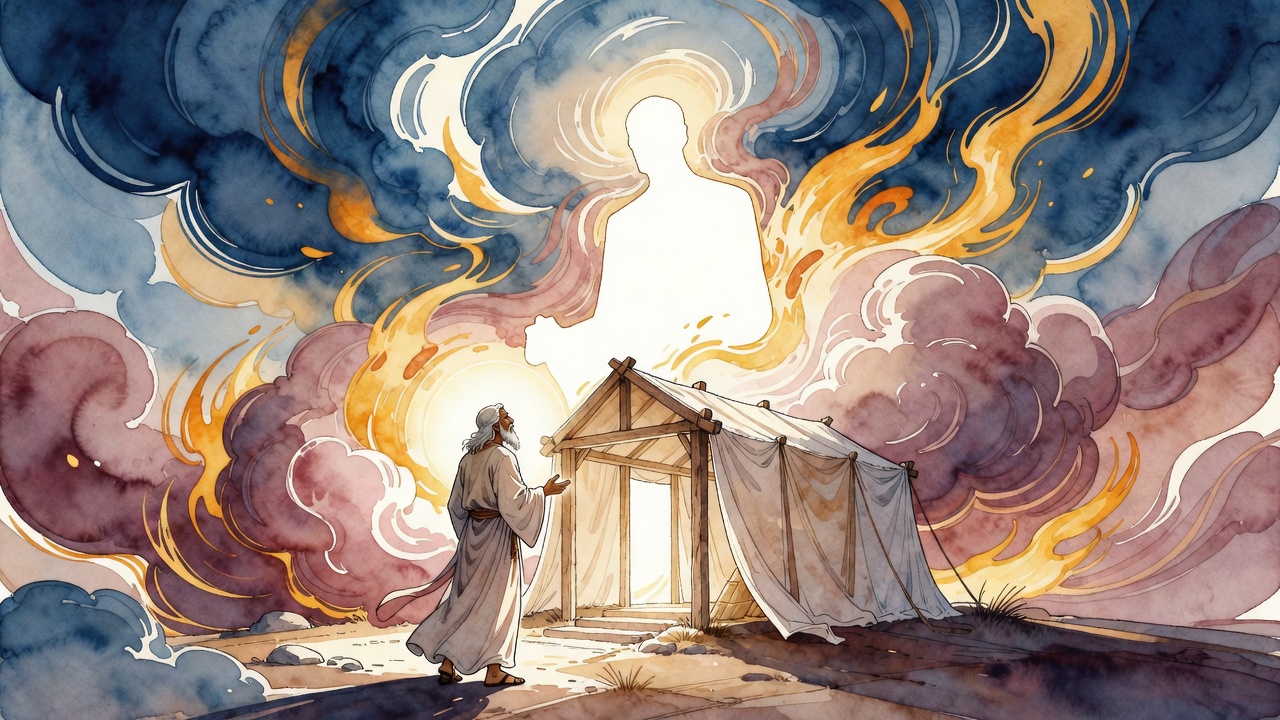
Moses built the Mishkan beam by beam as the Lord commanded, then stood outside while the Name filled the house. Heaven refused to leave him at the door.
Table of Contents
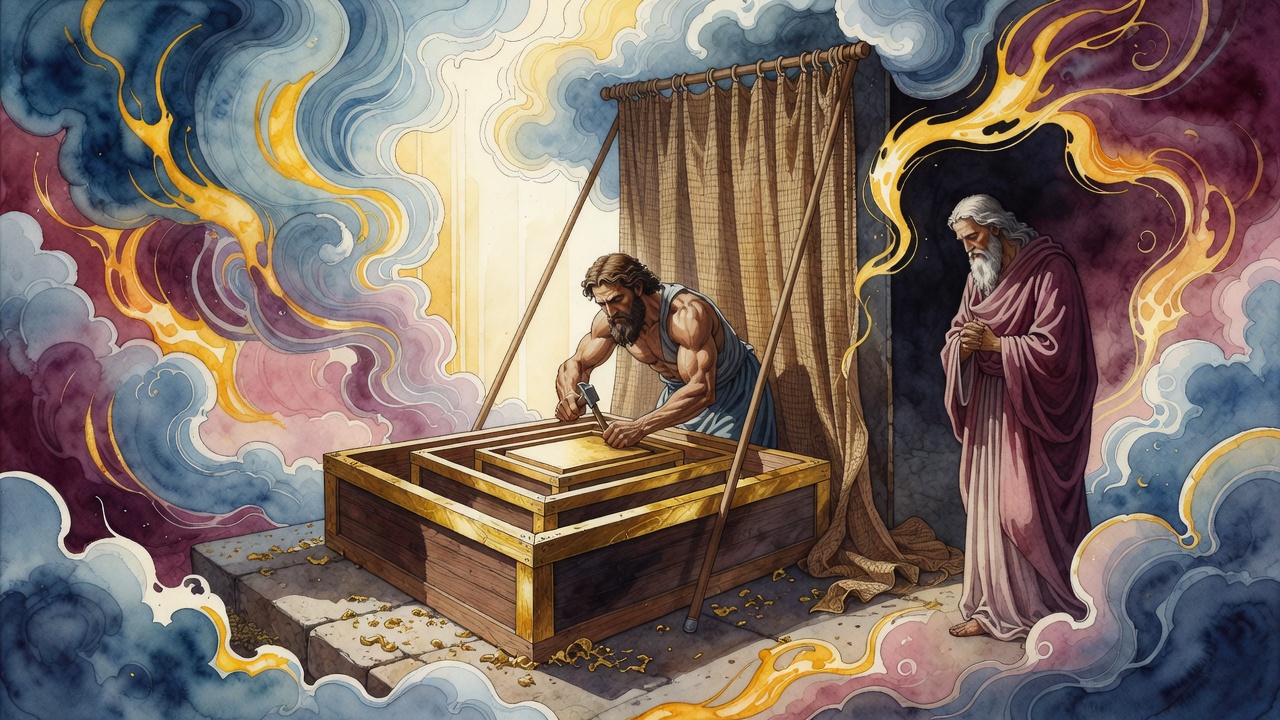
Moses did not finish the work with a flourish. He finished it with a refrain. Board after board, curtain after curtain, clasp after clasp, the record keeps the same drumbeat: as the Lord commanded Moses (Exodus 39). His hands obeyed until the portable house stood ready and the cloud waited to claim it.
 Click for full size
He had carried the instructions down from the mountain. He had checked the craftsmen's measures. He had refused the small shortcuts that would have made the work easier and the honor thinner. When the last loop sat true on its counterpart, Moses stepped back from the threshold and the Presence moved in.
The Servant and the Palace Walls
A king once ordered a servant to build him a palace. The servant did more than raise stone. He wrote the king's name on the walls. He cut it into pillars. He set it on the ceiling beams so that every glance upward found the royal letters. When the king entered, the name met him from every surface. Honor pressed in from the plaster and the wood.
Then the king stopped. His servant had given him all this, and the servant still stood outside. That could not stand. He called the man in, past the outer courts, into the rooms where only the trusted walk.
So it was with the Mishkan (the portable sanctuary Israel carried through the wilderness). Moses had stamped obedience on every detail until the structure itself seemed to speak the command. God filled the house. Moses remained in the open air, builder of a place he had not yet been invited to enter as guest.
Outside While the Name Sat Within
The cloud settled. Heat and light and the weight of nearness closed over the inner rooms. Moses could hear the camp behind him, the low talk of people who had watched gold become furniture for heaven. He could not cross on his own authority. The work that had proven his loyalty had also placed a door between him and the One he served.
He waited. Dust on his sandals. The smell of new wood and beaten metal still on his clothes. The servant who had written the Name everywhere stood where servants stand when the king has gone in first.
Heaven's thought turned on that pressure. Moses had accorded all this honor, and still he was outside. The call that opens Leviticus is not a clerk's summons. It is the king refusing to keep the builder at the gate.
Fire That Lived In the Altar
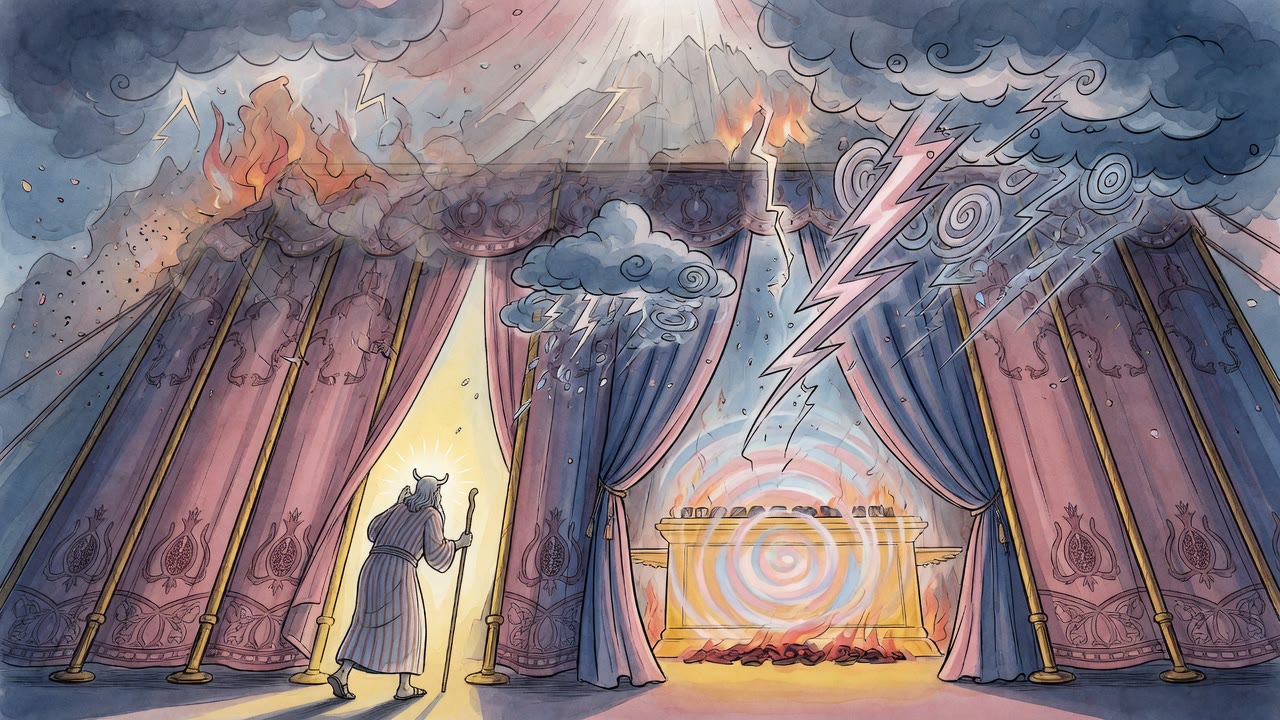
Inside the same order of worship another impossibility held. The fire of the altar was to be kept burning in it, not merely on it (Leviticus 6:2). The altar itself flamed. Wood that should have blackened held. Bronze that should have run thin as wax stayed firm. For nearly one hundred sixteen years the fire burned from the structure, and the structure did not fail.
Men measured the thickness later in the memory of the sages. Not a fortress wall. Thin as a Gordian dinar, they said, and still it did not melt. The incense altar carried the same strangeness. It did not only receive smoke. It burned as if the altar itself were the act of offering. Elsewhere, in another generation, Elisha slaughtered oxen and the flesh was read as heating the implements, fire reversing the expected order of fuel and tool (I Kings 19:21).
The house Moses built was a place where ordinary physics bent. Flame lived in metal. Honor lived in obedience. A man could stand outside a miracle he had assembled with his own hands.
The Call Across the Threshold
"He called to Moses." The voice crossed the gap the cloud had made. Moses stepped from dust into the charged air of the innermost service. The servant entered the palace whose every beam already wore the king's name.
Nothing in the building changed at that instant. The sockets still held. The curtains still hung. The altar's fire still ate and did not consume its bed. What changed was Moses' place in the scene. He was no longer only the executor who finishes and withdraws. He was the one drawn near after he had finished drawing near for someone else.
Behind him the camp would go on arguing, fearing, forgetting. Ahead of him waited the laws of offering and purity, spoken to a man who had already proven he would not carve his own name over the command. The first word of Leviticus is a door opening for a builder who had left himself outside on purpose.
Moses crossed. The cloud did not lift to make it easy. It held, and he walked into it because he had been called, not because he had forced the latch.
← All myths