God Counted the Levites Because They Stood Near
Everyone in the camp would have said they were loyal. Moses asked a narrower question, and only the men who had kept their gold could answer it.
Table of Contents
 Click for full size
Moses Stood in the Gate and Asked a Narrower Question
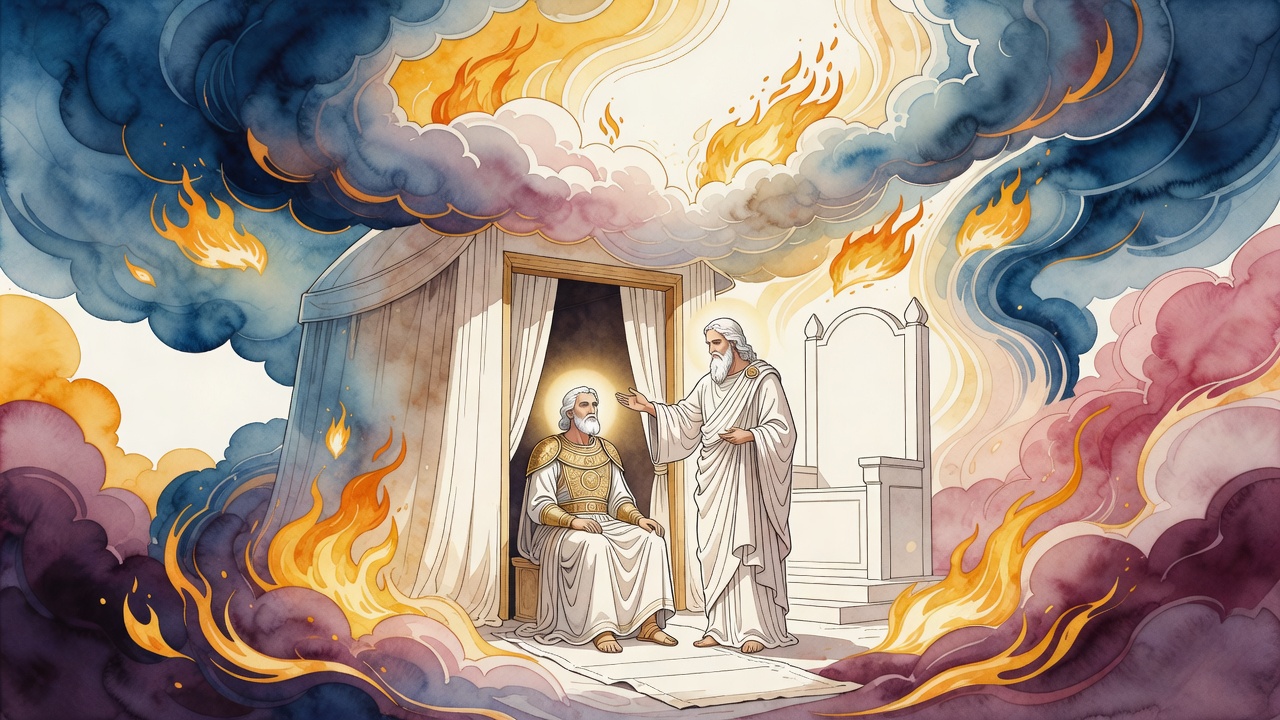
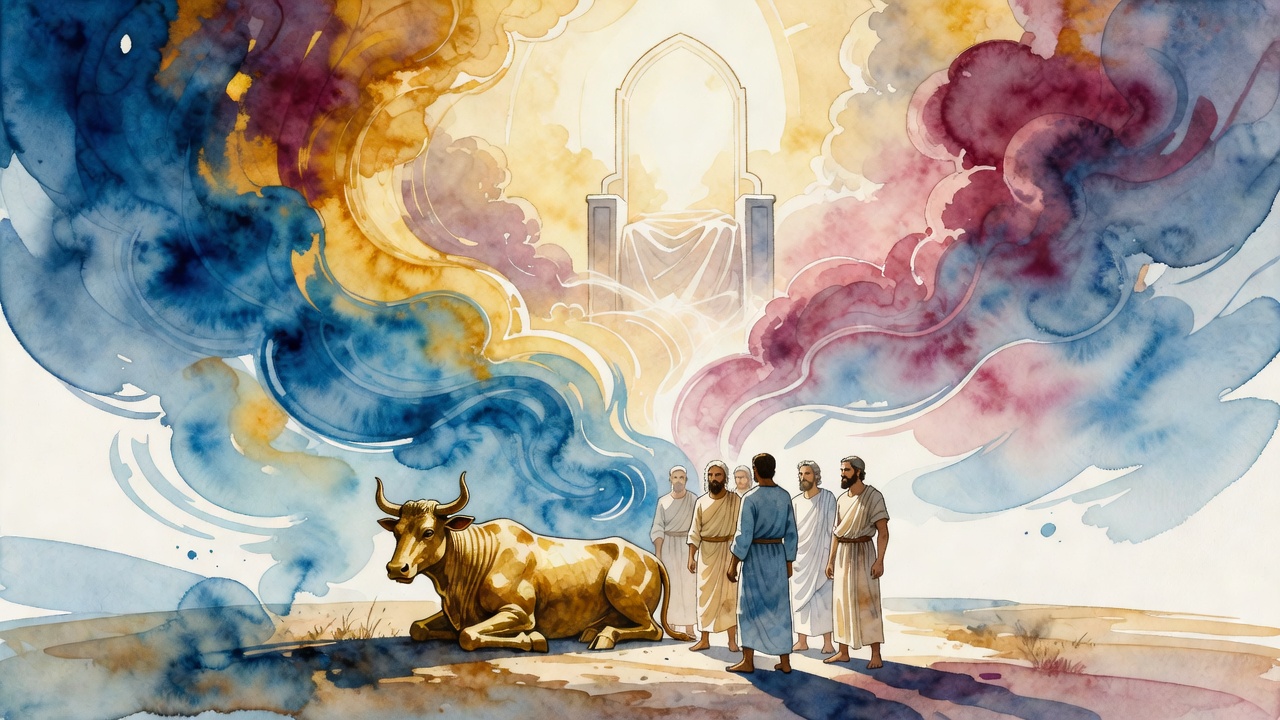
Moses came down through a camp that had been dancing an hour earlier and stopped in the gate. The calf was already powder in the water. He shouted the line everyone remembers. Whoever is for the Lord, to me.
Put that question to a camp and every hand in it goes up. Who does not want to be counted in the king's house? Rav Chisda would not let the sentence stay that easy. What Moses actually asked, he said, was narrower and impossible to fake: whoever did not hand a nose-ring to the calf, come and stand here. The gold had come off their own ears in front of witnesses. Everybody knew whose ring had gone into the fire.
The sons of Levi walked out of the crowd. The whole tribe. Rav Chisda held that not one of them had served the thing.
The Sword Went Into Their Mothers' Families
Then Moses told them to put a sword on the hip and go through the camp from gate to gate and kill.
Someone pushed back on Rav Chisda with the verse from Moses' last blessing, the one that praises Levi as the man who said of his own father and mother, I never saw them. If no Levite worshipped, whose fathers were the Levites killing?
The answer took the family apart piece by piece. His father meant his mother's father, an Israelite from another tribe. His brother meant the brother he shared a mother with. His sons meant his daughter's sons. A Levite man married outside the tribe, and his wife's people were the ones on the wrong side of the line. So the swords went out through the camp that afternoon and came down on grandfathers, half brothers, and grandchildren, and the tribe was told to look at none of them.
Three thousand fell before it stopped.
Three Ways to Die for the Same Afternoon
A wise woman came to Rabbi Eliezer with the question everyone else was avoiding. If they all did the same thing at the calf, why did they not all die the same way? Rabbi Eliezer told her that a woman has no wisdom except at the spindle, and that was the whole of his answer.
Rav and Levi took her question seriously. One of them graded the deaths by what a man had actually done. Whoever slaughtered to the calf and burned incense to it went down under the sword. Whoever only embraced it and kissed it died later, quietly, without a blade. Whoever did nothing but stand in the crowd and feel glad got dropsy, and swelled up, and the swelling gave him away.
The other graded them by evidence. Witnesses plus a warning, sword. Witnesses but nobody had warned him, plague. No witnesses and no warning at all, dropsy, because there was no court on earth that could have convicted him and something had to.
The Princes Turned and Looked at Nachshon
Months later the Tabernacle went up and the whole thing began again in a gentler key. The princes of the twelve tribes came and stood in front of the altar with their wagons and their silver, and Moses would not take anything from them until he was told to. Then he was told each man on his own day, and he still did not know who went first.
Nobody argued. Every prince in the line turned his head and looked at the same man. This one walked into the sea, they said. He sanctified the Name in the water while the rest of us were still talking about it. Let him bring first. Nachshon son of Aminadav carried his silver bowl to the altar on the opening day.
Rabbi Shmuel bar Abba said that day was called the first day for a reason that had nothing to do with the Tabernacle. From the hour He made the world, God had wanted to live downstairs among His creatures, and He had not. Genesis does not say the first day. It says one day, and one is what you call a thing that is alone. Only when the boards were standing and the princes were queuing did God say, let it be written that on this day the world was created. Fire came down out of nowhere and took the offering off the altar, and the people fell on their faces.
God Came to the Doorways and Counted the Babies
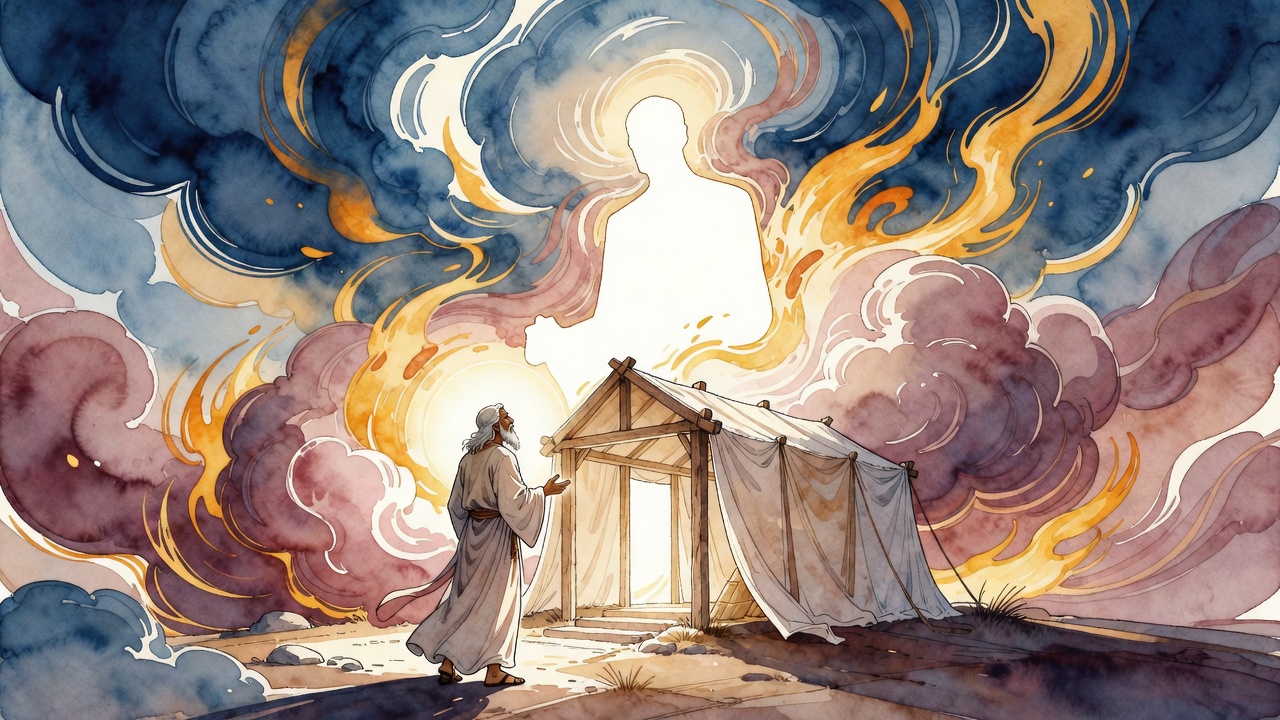
When it was time to number the tribe, the Torah changes one small phrase. Moses counted the firstborn of Israel as the Lord commanded him. Moses counted the Levites at the mouth of the Lord.
At the mouth means what it sounds like. God went with him. House by house through the Levite camp, doorway by doorway, a voice at his shoulder telling him what was inside before he knocked. There are this many babies in this house. This many in the next. Nobody had to lift a curtain or wake anyone. The count was already known and it was being spoken aloud like an inventory of things somebody loved.
The firstborn got no such escort. They had been the priests of Israel by right of birth, and they had bowed to the calf with everyone else, and God was in the process of taking the work away from them. He did not put His name on that census. They were tallied, correctly and completely, by a man with a tablet and no company.
← All myths