Bezalel Nested Gold Around Wood and Hid the Ark
Bezalel builds three nested boxes for the Ark. Poles press the curtain, and Josiah hides what exile must never drag away.
Table of Contents
 Click for full size
Three Boxes, One Heart
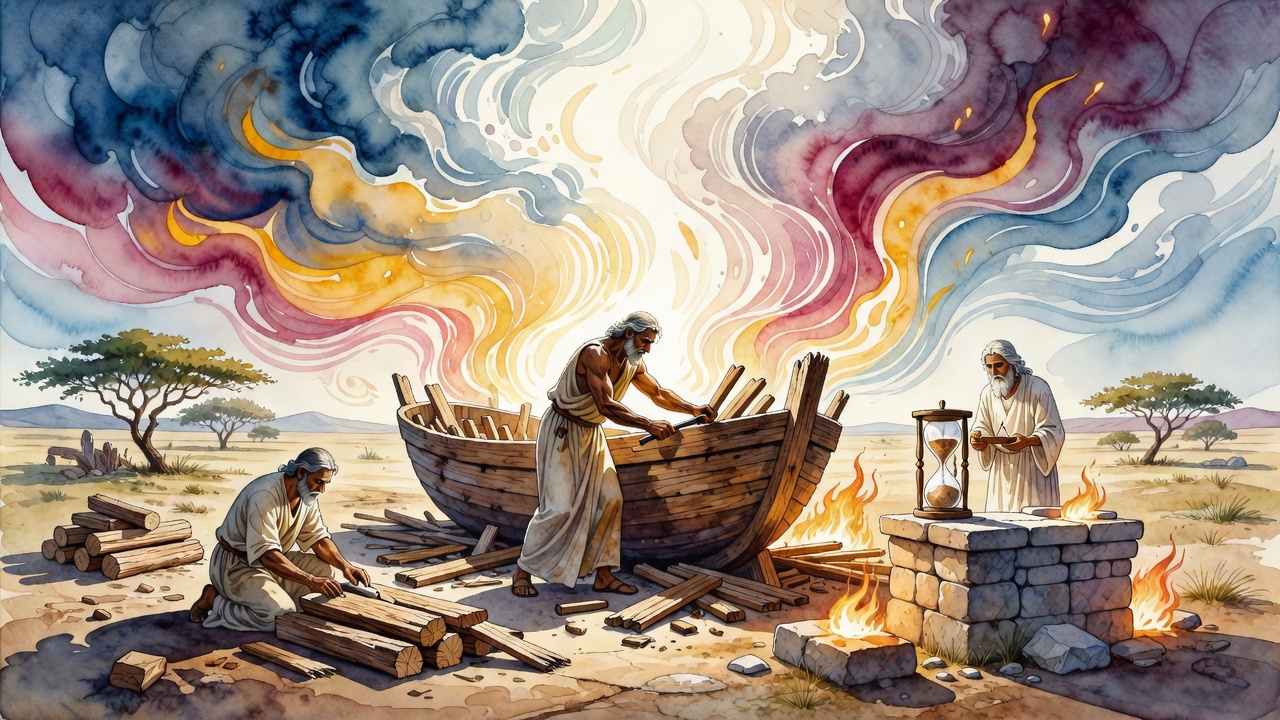
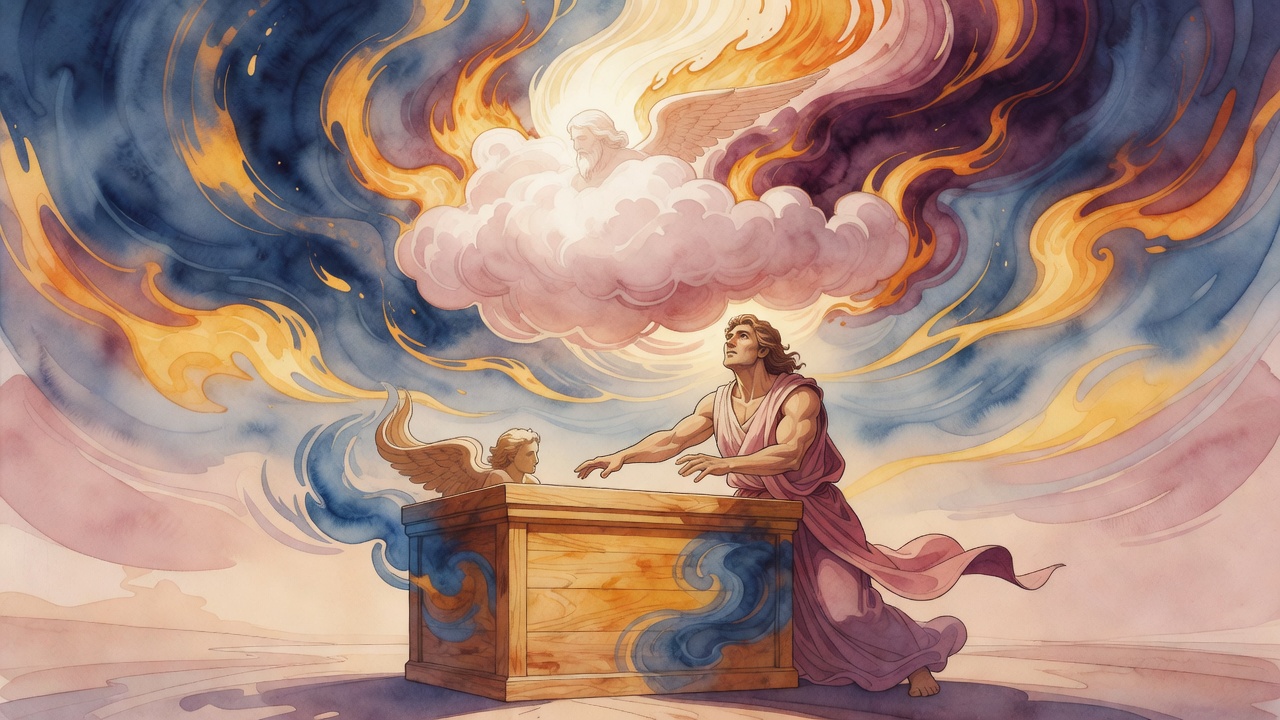
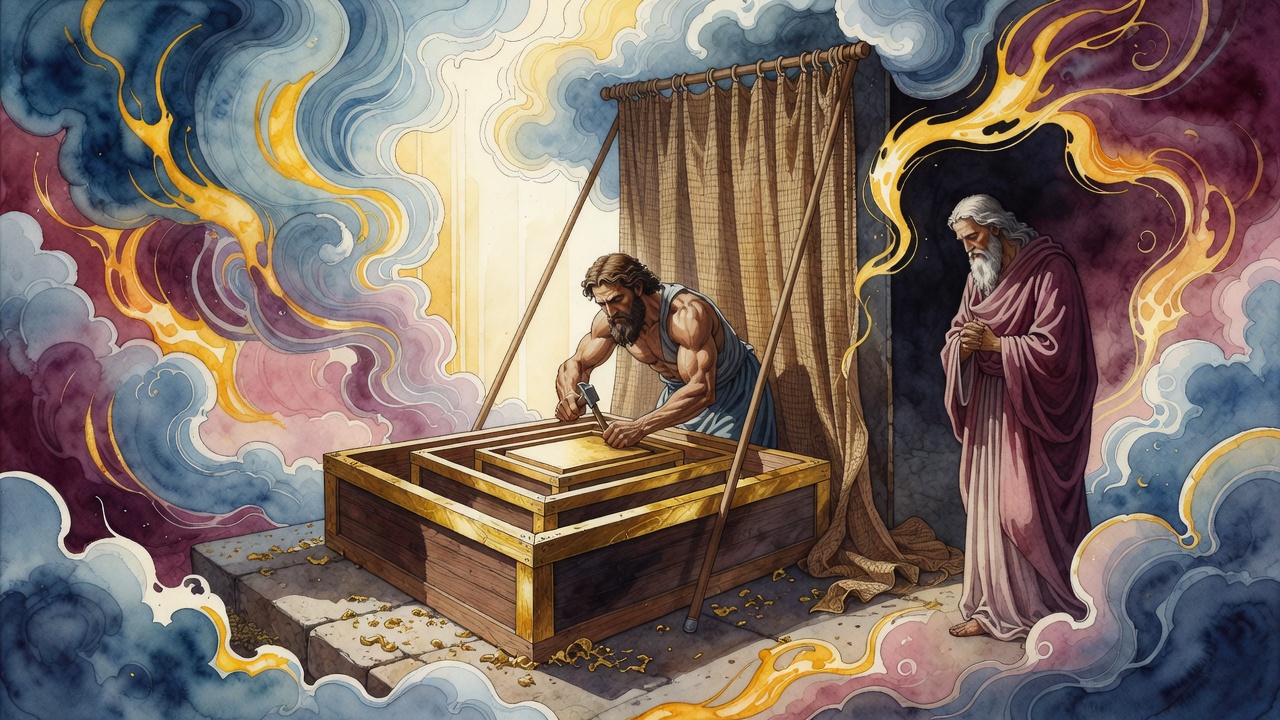
Bezalel did not build a single chest and call it done. He nested three boxes: gold within, wood in the middle, gold without, so holiness was sheathed on both faces of the grain. Acacia held the tablets of stone. Gold held the acacia away from common air. The craftsman's secret was a sandwich of presence, a heart protected from both inside and out.
Four rings took poles that, once inserted, were never withdrawn. The Ark was always ready to move and always already complete, a traveler that never set its burden down. When Solomon later copied every sacred vessel for his Temple, lamps and tables and altars in new gold, he would not copy this one. The original alone walked into the Holy of Holies. Copies could shine. Only this wood had heard Sinai's words settle into silence.
Workmen watched Bezalel's hands and learned that holiness is not a coat of paint. It is layers that refuse to touch the wrong world too quickly.
Poles Against the Cloth
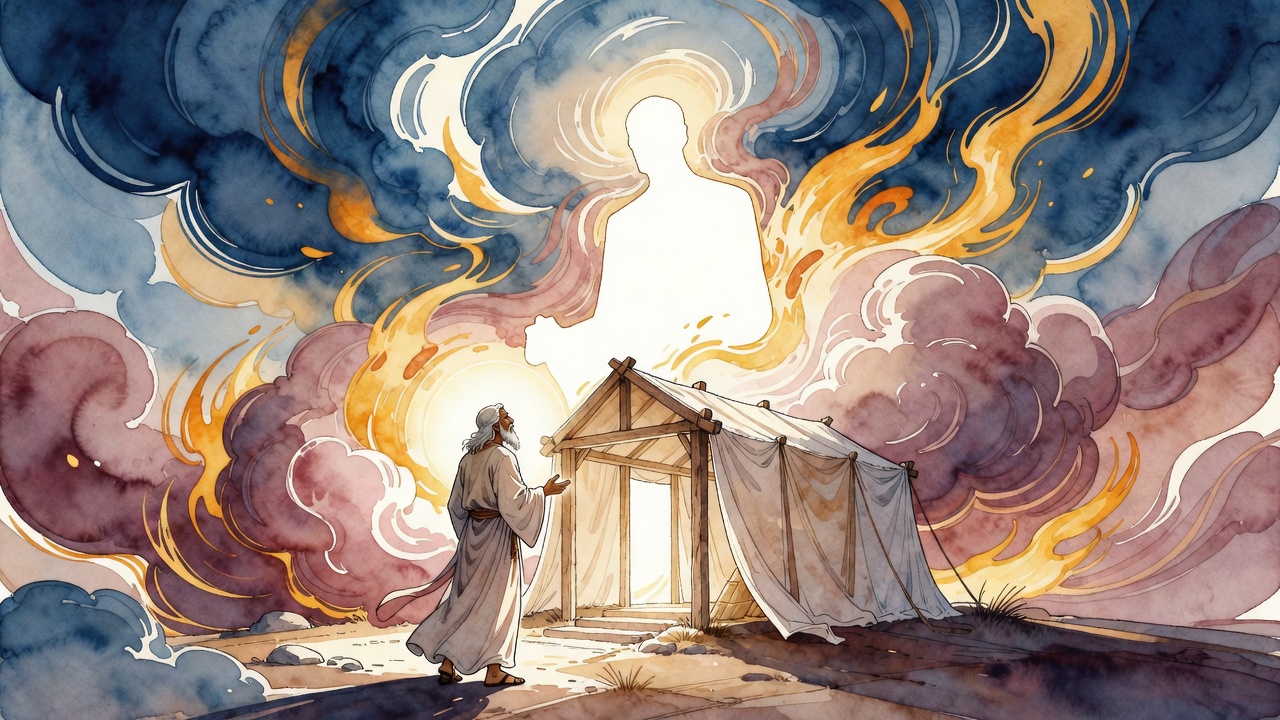
In the Holy of Holies the poles stretched until they pressed the inner curtain. Doors could never fully close the impression they made. From outside, two soft shapes showed through the fabric like knuckles under cloth. From outside, no one saw the wood itself. Presence announced itself as pressure on a veil, a claim of space that architecture could not quite contain.
One verse says "you shall make" the Ark; another says "they shall make." The singular, the sages teach, speaks when Israel does God's will and the work feels personal; the plural, when they do not and the labor becomes a communal debt. Even the grammar of building tracks obedience. A town that houses a Torah scholar owes labor the way a camp owed boards and rings, gold and goat hair, because the presence among them is never only private property.
May the Shekinah Dwell
When every piece of the sanctuary stood assembled, Moses surveyed the work with a leader's slow eye and only then spoke. Inspection first, blessing after. Praise before examination is flattery. Praise after examination is truth that can stand in court.
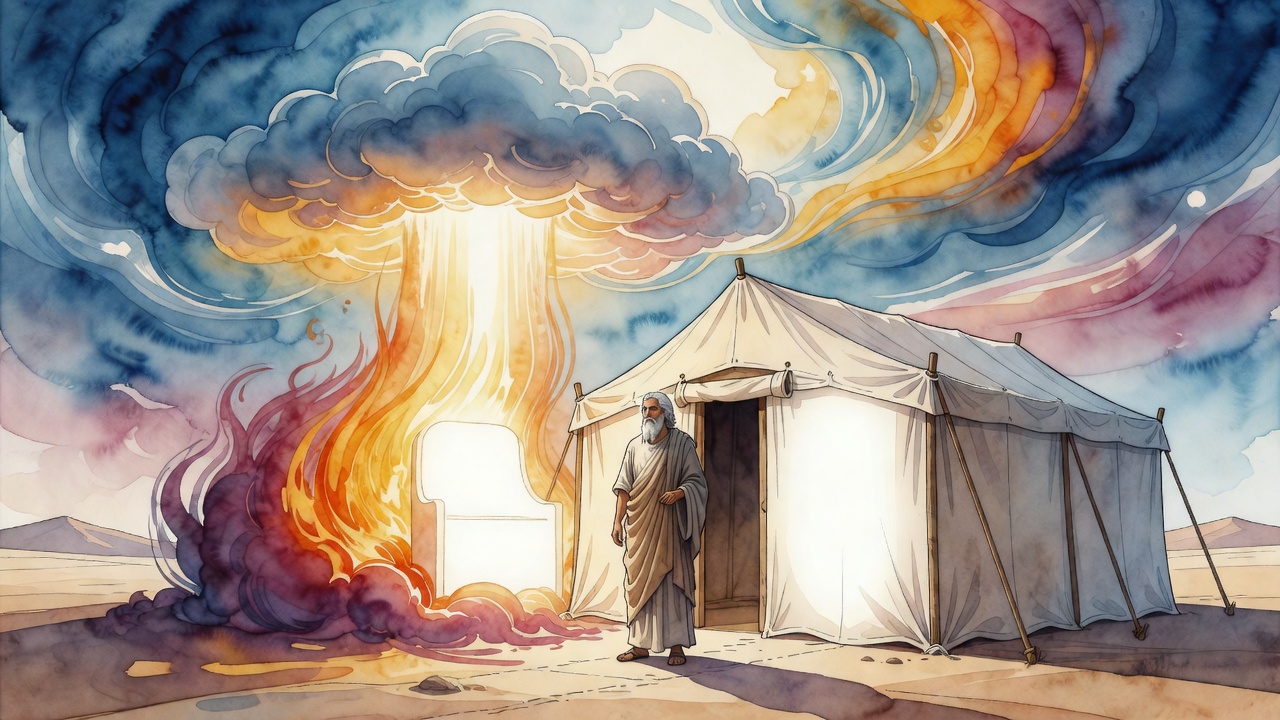
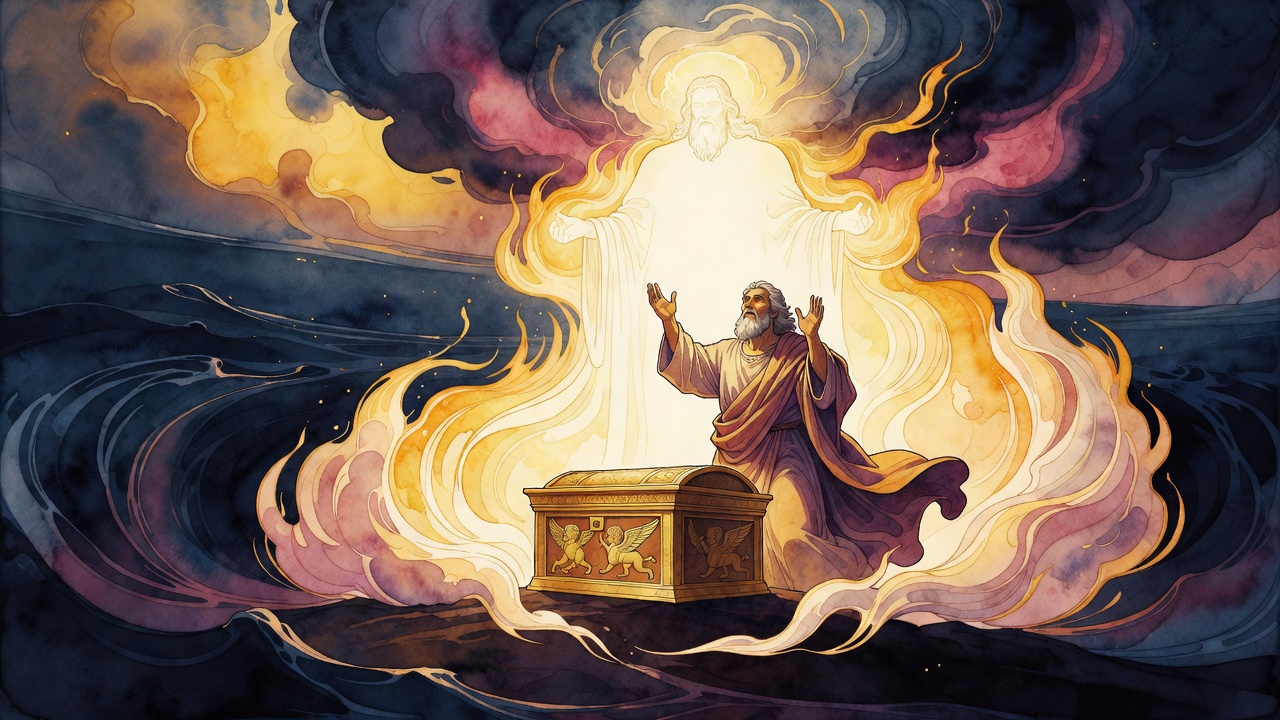
He did not say "good work." He did not say "you obeyed." He said, in the Aramaic the meturgeman keeps for (Exodus 39:43): "May the Shekinah of the Lord dwell within the work of your hands." Wood, goat hair, silver clasps, woven curtains, sockets heavy as verdicts. Human hands had made a seat. He asked that those hands be answered from above, that craft become dwelling.
Sinai had been revelation given downward in fire and voice. The Mishkan (the portable sanctuary Israel carried through the wilderness) was revelation built upward in volunteered gold and willing hearts. For the first time, labor from below became fit to house the dwelling presence. The blessing planted a line Jewish memory still sets over new houses, synagogues, and study halls when the last nail is driven and someone with authority finally looks and means what they say.
Foundation Stone and the Missing Chest
Song of Songs speaks of a palanquin Solomon made of Lebanon timber (Song of Songs 3:9). The midrash reads the palanquin as the world, and Solomon as the King to whom peace belongs. The timber is taken from the place of the Holy of Holies below. After the Ark was taken, a rock remained from the days of the early prophets, called Foundation, because the entire world was founded from it, beauty going out from Zion (Psalms 50:2).
Where does the Ark itself go when empire comes? Some say it rests still in its place under the Mount, poles and nested gold intact in a dark that no procession finds. Some name a hidden woodshed chamber in the Temple complex. Some say Babylon carried it off on defeated shoulders. Rabbi teaches that good King Josiah, foreseeing exile, hid it so that the heart of the camp would never be dragged through a foreign gate as loot while the people walked in chains.
Hide the heart, and the body may still travel. Show the heart to conquerors, and the end is only inventory.
What the Veil Still Shows
Poles press cloth. Nested gold keeps wood from common air. A blessing asks presence into made things after honest looking. A king buries the craftsman's work before the road to captivity opens. The Foundation Stone remains when the chest does not, a navel of the world that remembers what sat above it.
The craftsman finishes under a desert sky. The prophet surveys and blesses. The veil takes the shape of poles that never leave their rings. Somewhere under stone or board, the three boxes wait for a world that still names Zion as the perfection of beauty and still builds rooms hoping the Shekinah will agree to dwell in the work of human hands.
← All myths