5 min read

Bezalel Built the Ark as God's Own Shade

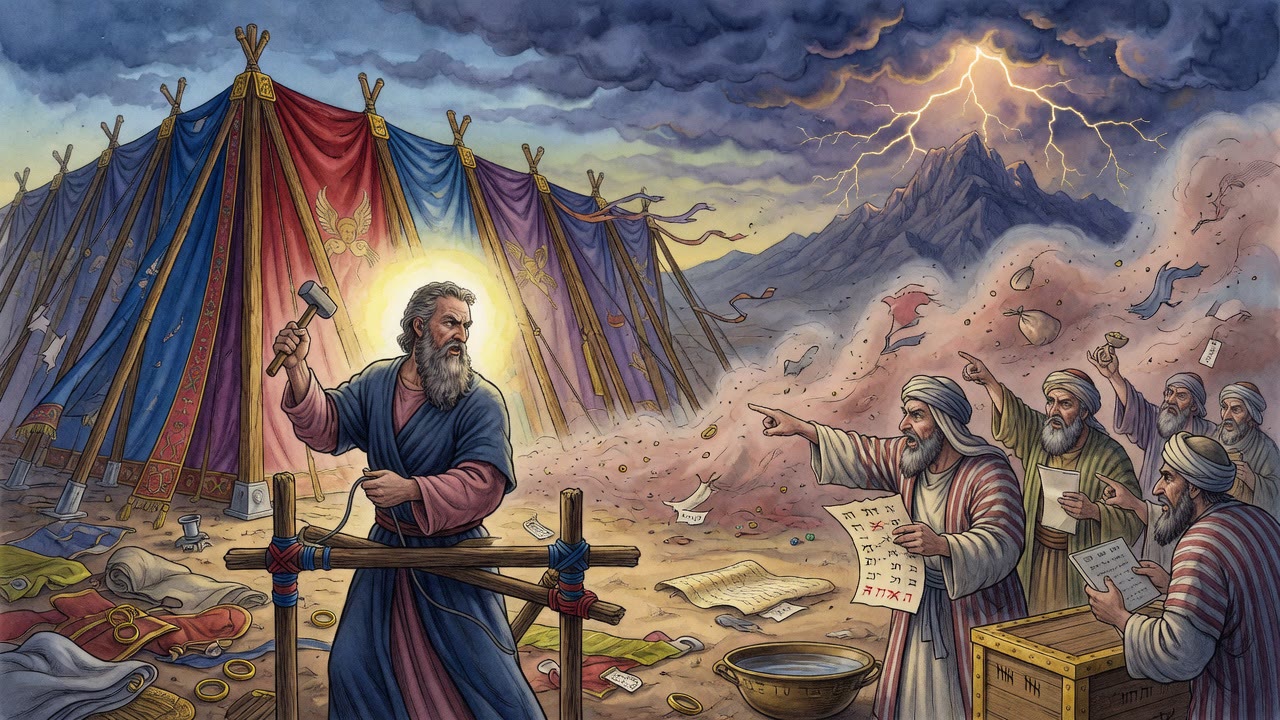
Bezalel's name rang in heaven before he touched acacia. He alone built the ark, a shade where the Shekhinah, the Divine Presence, would rest between cherubim.

Curated by Arthur · Told by Maggid ·
Table of Contents
  1. Praised Above and Below
  2. Only the Ark Bears His Hands Alone
  3. Spirit That Rests on Flesh
  4. A Name Older Than the Tools

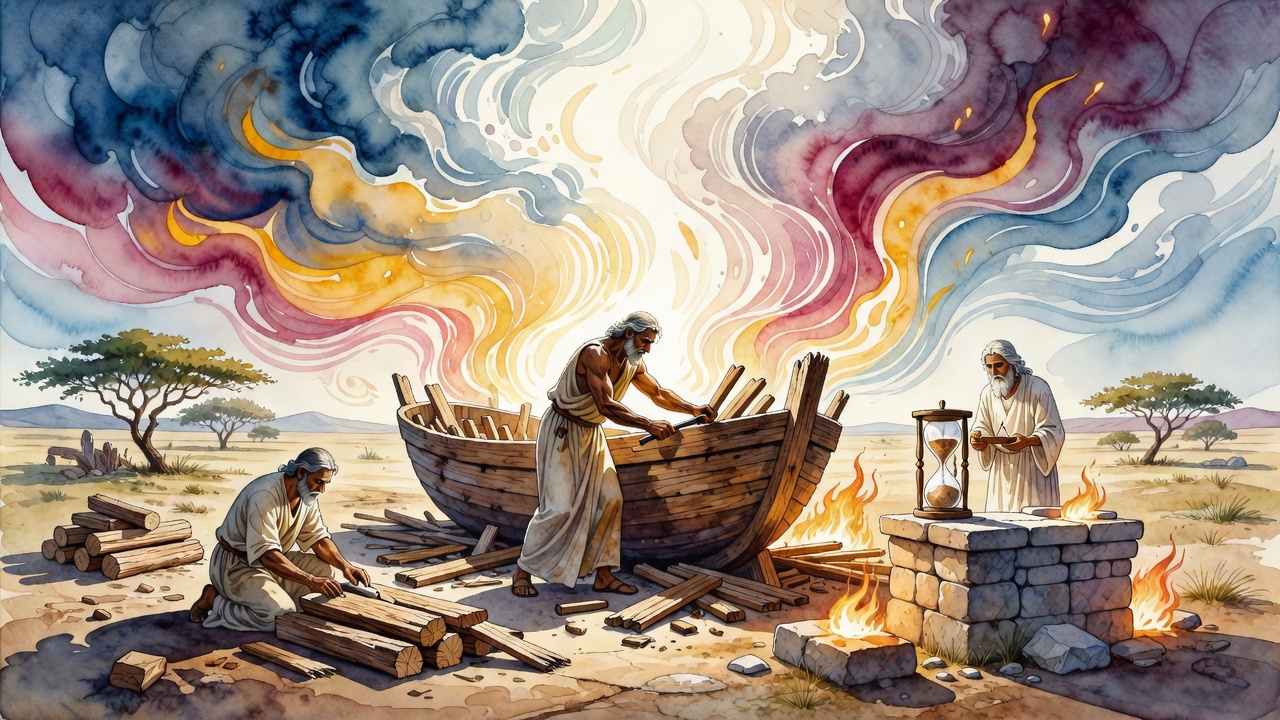
Before the first board of the Mishkan (the portable sanctuary Israel carried through the wilderness) was cut, the Holy One said, "See, I have called by name Bezalel" (Exodus 31:2). The name was not a surprise discovered in a talent search. It was announced from the beginning of time, when the Sanctuary itself was only a decision in the mind of God.

Bezalel Built the Ark as God's Own Shade Click for full size

Even when the first man lay as a lifeless mass, God showed him the righteous who would hang from his body like fruit from a tree: some from the head, some from the hair, the neck, the eyes, the mouth, the arms. Bezalel was already among the named.

Praised Above and Below

Scripture says "See" twice about Bezalel, once when God speaks to Moses, once when Moses speaks to Israel (Exodus 35:30). Tanchuma hears two audiences. "See" in the upper regions. "See" on earth. The craftsman found favor in the sight of God and man. Heaven and the workshop agreed on one name.

Moses stood as treasurer over the Tabernacle accounts, trusted in all God's house, though ordinary custom demands two overseers for communal funds. Bezalel stood as the hands those accounts became wood, gold, and woven sky.

Angels heard the name. Foremen heard the name. In a camp still sticky with the memory of a calf, a different kind of gold work began, measured, commanded, and aimed at presence rather than panic.

Bezalel of the tribe of Judah did not swagger through the lanes. The midrash's praise is public, but the labor is bent-backed and exact. Boards had to match. Rings had to hold. A wrong cubit would still be gold and still be wrong. The man called from the beginning worked as if the beginning were watching.

Only the Ark Bears His Hands Alone

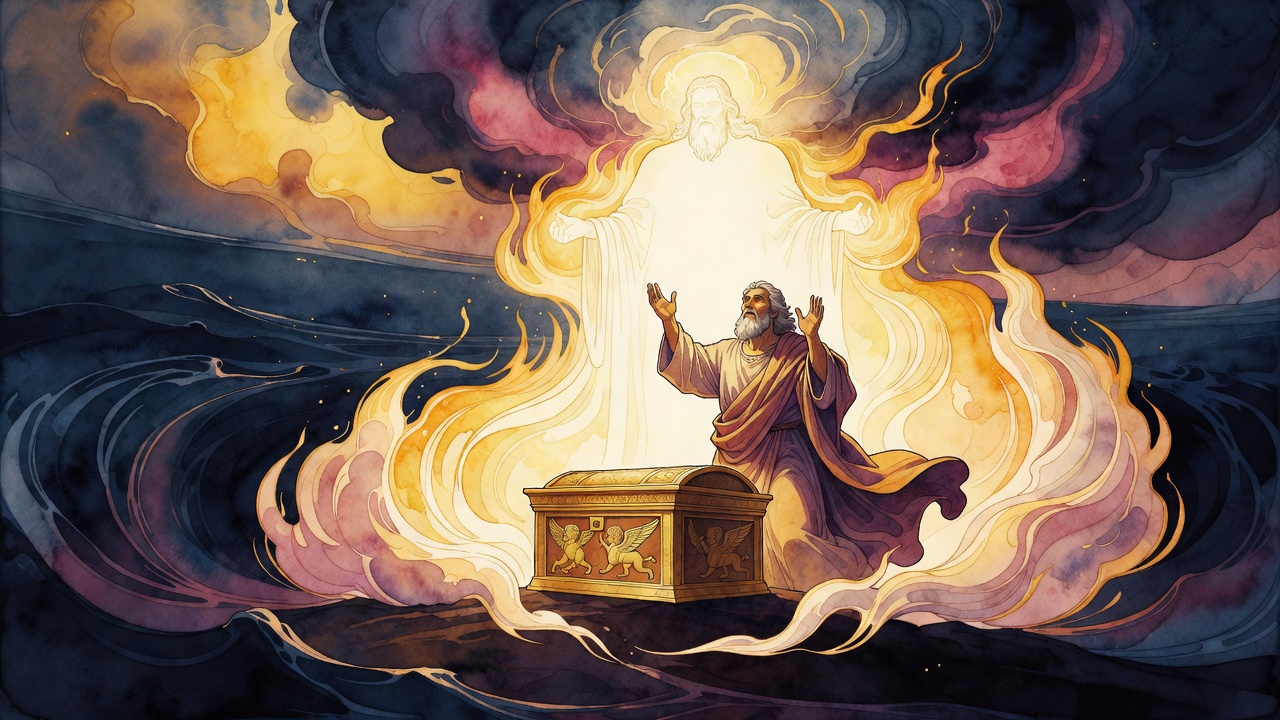
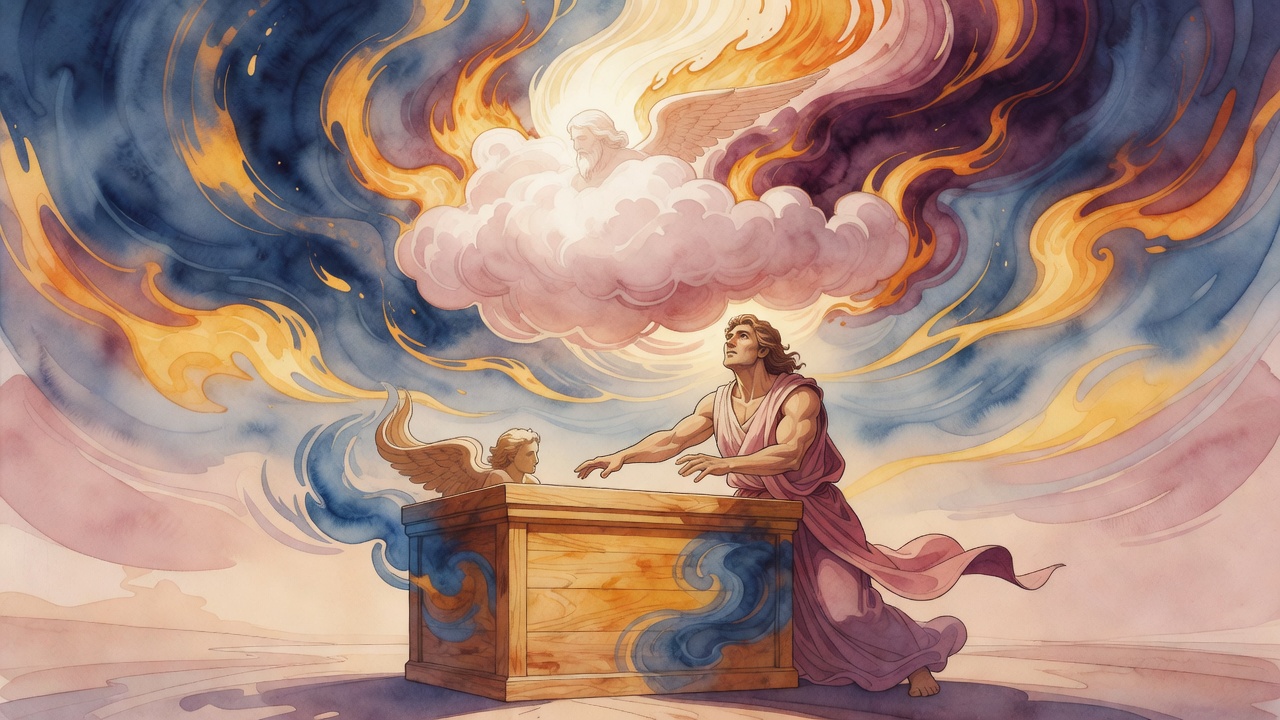
For every other vessel, Bezalel directed and advised. For the ark, the text says he made it himself (Exodus 37:1). Why the exception? Because the ark was to be a shade for the Holy One, a place where He would compress His Shekhinah (God's indwelling presence) between the cherubim and speak (Exodus 25:22).

The God who fills heaven and earth chose a box of acacia and gold as a meeting point. Rabbi Joshua of Sikhnin offers the sea-and-cave mashal. The sea rushes into a cave at the shore and fills it, yet the sea lacks nothing. So the Presence fills the narrow shade without leaving the wide world empty.

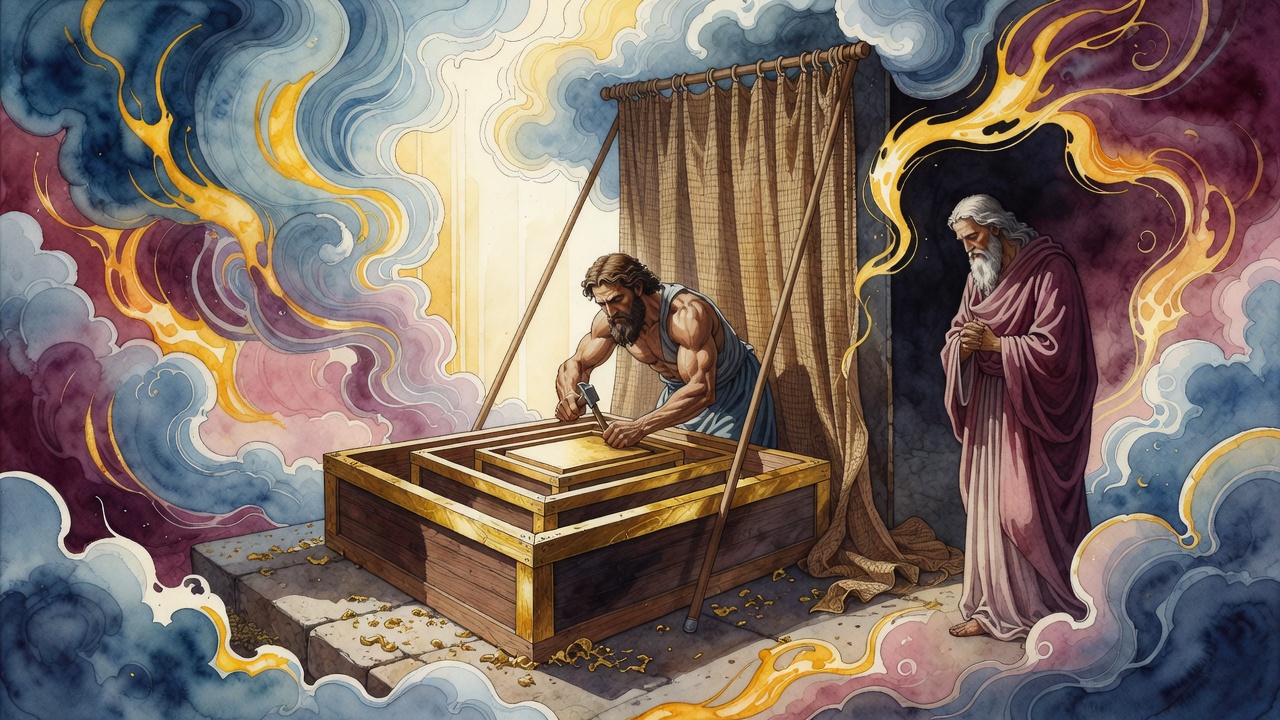
Bezalel's hands built the furniture of nearness. That work he would not fully delegate. Assistants could shape hooks and frames. The shade required the man whose name heaven had already practiced saying.

He planed. He overlaid. He set the rings for poles that would never be removed. Between the cherubim he left a space small enough for speech and large enough for a people to orient their lives toward.

Spirit That Rests on Flesh

The divine spirit of wisdom and understanding filled him for the labor. Spirit comes upon human beings. It does not always stay, for they are flesh, and flesh makes alliance with desire. For a span of holy construction, intellect and skill ran clearer than ordinary blood. The Mishkan rose on that borrowed clarity.

Israel saw gold boards and priestly stitches. Heaven saw a man whose name had been spoken before Adam stood up, now fitting a shade for the God who needs no shade. The paradox does not bother the midrash. Need is not the point. Nearness is.

When the work paused, Bezalel was still a man who ate and slept. When the work ran, something cooler than ambition held the chisel steady. The camp needed both truths: that skill is human, and that some skill arrives as gift with a deadline.

A Name Older Than the Tools

Solomon said that whatever comes into being, its name was given long ago. Isaiah said the One who called the generations from the beginning is the One who works and does. Bezalel's story is that claim with sawdust on it. The ark's poles wait in rings. The cherubim face each other. Between them, a voice will meet Moses. The craftsman steps back. The shade holds.

Outside, the camp still wanders. Inside the pattern of boards, a sea has entered a cave and not diminished. Bezalel, called by name twice for two worlds, leaves the world a piece of furniture that is also a weather of holiness.

Later ages would lose and rebuild sanctuaries. The first shade taught the pattern: God chooses a craftsman before the wood exists, praises him in two realms, and asks for one object made by hands that understand they are building a meeting, not a cage.

When Moses came later to speak from between the cherubim, the shade Bezalel had made held. The poles stayed in their rings. The gold face of the cover took no image of the voice that used it. A human workshop had finished its part. The rest belonged to a Presence that still filled the sea outside the cave.


← All myths

From the tradition

Sources

3 sources

The texts behind this telling. Some cards carry a translation of the source; others are our own retelling of it, and each card says which. Every card links out to the original.

Midrash Tanchuma, Pekudei 3Midrash Tanchuma

Retold in our words. Read the original at the link below.Townsend 1989 translation of Midrash Tanhuma, S. Buber Recension · CC-BY

For example, Bezalel, who built the ark, was extolled before the Holy One, blessed be He, and the angels. He was praised in the upper regions and in the terrestrial regions, as it is said: See, I have called by name Bezalel (Exod. 31:2) and See, the Lord hath called by name Bezalel (ibid. 35:30). The word see in the former verse speaks of the upper regions, and the word see in the latter verse refers to the terrestrial regions. Thus Scripture says: So shalt thou find grace and favor in the sight of God and man (Prov. 3:4).

A faithful man shall abound with blessings (ibid. 28:20). This refers to Moses, who was appointed treasurer of the Tabernacle. Our sages tell us that no less than two men must be appointed as overseer of a community, but regarding Moses, who was most trustworthy, it is said: My servant Moses is not so; he is trusted in all My house (Num. 12:7).

Another explanation of It hath been already (Eccles. 1:10). It is written: The Lord by wisdom founded the earth (Prov. 3:19) and also: I have filled him with the spirit of wisdom (Exod. 31:3). This teaches us that the Tabernacle was equal both to all the world and to a human embryo, which is a world in miniature. How is that so? When the Holy One, blessed be He, created His world, He did so just as a child is born to a woman. A child starts to grow at the navel and then develops in all directions, and the Holy One, blessed be He, began the creation of His world at the foundation stone, and built the world upon it. Why was it called a foundation stone? Because the Holy One, blessed be He, began the creation of His world upon it. Then He created the celestial Temple, as it is said: The place, O Lord, which Thou hast made to dwell in (Exod. 15:14). Do not read the word as makhon (“foundation”), but as mekuvan (“exactly opposite”). Your dwelling place above is directly opposite Your dwelling place below. The formation of the embryo is like the formation of the world, for just as the embryo is formed in the womb of its mother, so too the world was formed at the foundation stone.

R. Johanan asked: Why is it written: Who doeth great things past finding; yea, marvelous things without number (Job 9:10)? You should know that every soul, from Adam to the end of the world, was formed during the six days of creation, and that all of them were present in the Garden of Eden and at the time of the giving of the Torah, as it is said: With him that standeth here with us this day, and also with him that is not here with us this day (Deut. 29:14). What is the meaning of Great things past finding out? It refers to the great deeds the Holy One, blessed be He, did in the formation of the embryo. At the time that a man is about to have intercourse with his wife, the Holy One, blessed be He, informs the angel in charge of conception, whose name is Lailah.

The Holy One, blessed be He, says to her: Know that on this night a person will be formed from the semen of a certain individual known to you. Guard this drop of semen, take it into the palm of your hand, and sow it on the threshing floor, in three hundred and sixty-five parts. And she would do so. She took it into her hand and brought it at once to Him who had said It hath been already (Eccles. 1:10) and said to Him: “I have done all that You have commanded. Here is the drop, what have You decreed concerning it?” The Holy One, blessed be He, forthwith decreed concerning the semen what its end would be, whether male or female, weak or strong, poor or rich, short or tall, ugly or handsome, heavy or thin, humble or haughty. He decreed concerning everything that would happen to it except whether it would be righteous or wicked. That choice alone he left to the individual, as it is said: See, I have set before thee this day life and good, and death and evil (Deut. 30:15).

The Holy One, blessed be He, would summon the angel in charge of souls and say to him: Bring Me a certain soul which is in the Garden of Eden, whose name is so-and-so, and whose form is such-and-such. All the souls that would exist in the future were fashioned with the first man, and they will exist to the end of the world. All of them were created on the sixth day of creation. They were designated to be the descendants of Adam, as it is said: Whatsoever cometh into being, the name thereof was given long ago (Eccles. 6:10). Then the angel departed to bring the soul to the Holy One, blessed be He. When the soul was brought in, it prostrated itself before the King of Kings, the Holy One, blessed be He. At that time the Holy One, blessed be He, says to the soul: Enter the semen that is in this one’s hand. The soul opens its mouth and cries out: “Master of the Universe, I have always been satisfied with the place in which I dwelt from the day you created me, why do You desire that I enter this putrid drop? Now I am holy and pure, but then I will be cut off from the place of Thy glory.” Thereupon the Holy One, blessed be He, replied: The place which you are to enter is better for you than where you have dwelt. From the moment I created you it was only for this drop of semen. Then the Holy One, blessed be He, forced him to enter there though against his will. After that the angel turned around and placed the soul in the womb of his mother, and two angels were assigned to guard it lest it go out and fall. He placed a lighted candle at his head, as it is said: Oh, that I were as in the months of old, as in the days when God watched over me; when His light shined over my head (Job 29:2).

He looked about and peered from one end of the world to the other. The angel took him and led him into the Garden of Eden and showed him the righteous ones sitting there in honor, with crowns on their heads. The angel said to him: “O soul, do you know who these are?” And the soul replied: “No, my master.” Whereupon the angel told him: “These that you see were formed at first, like you, in the womb of their mothers, and then went out into the world. They observed the Torah and the commandments, and therefore were deserving and were selected for this beautiful place that you see. Know that when you leave this world, if you are worthy and keep the law of the Holy One, blessed be He, you will merit sitting among these. But if not, be assured, you will be assigned to another place.”

That evening he led him to the netherworld and showed him the wicked ones whom the demons were smiting with brands of fire and who were crying: “Woe is me, woe is me,” and none had mercy for them. The angel then said to the soul: “Do you know who these are?” And he replied: “No, my master.” Whereupon the angel told him: “These are the ones who will be consumed. They were formed like you and went out into the world, but they did not keep the Torah and the statutes of the Holy One, blessed be He, and that is why they have come to this disgraceful end that you are witnessing. Be assured that you will ultimately leave this world, but if you are righteous and not wicked, you will be worthy to enjoy life in the world-to-come.” How do we know that this is so? From the fact that it is said: For I was a son unto my father, tender and an only one in the sight of my mother. And he taught me, and said unto me: “Let thy heart hold fast upon My words, keep My commandments and live” (Prov. 4:3–4).

For I was a son unto my father indicates that before I left my mother’s womb I was the son of the Holy One, blessed be He, who rebuked me as a father rebukes his son. Tender and an only one in the sight of my mother alludes to the time I was tender and alone and no one was with me in my mother’s womb. Then the angel instructed me and told me: “Take my words to heart, keep my commandments and it shall be as described above.” The Holy One, blessed be He, then warned him concerning everything that would transpire, and the angel led him about from morning until evening. He showed him where he would die and where he would be buried. Then he led him about and walked with him through the world, showing him the righteous and the wicked and everything else. In the evening he brought him back to his mother’s womb. The Holy One, blessed be He, fashioned bolts and doors (Job 38:10) before him, as it is said: Or who shut up the sea with the doors? (ibid., v. 8), and I have put My words in thy mouth, and have covered thee in the shadow of My hand (Isa. 51:6). Then He said to him: Thus far shalt you come, but no farther (Job 38:11).

The child remains in the womb of his mother for nine months. The first three months the child dwells in the lowest part of the mother’s womb; the next three months he dwells in the middle part; and the last three months he dwells in the upper part. When the time arrives for him to enter the light of the world, he rolls downward and descends in a single moment from the upper to the middle and from the middle to the lower part of the womb. He eats and drinks what his mother eats and drinks from the very beginning, so that he will not depart from her hungry. Hence Scripture says: Who doeth great things and unsearchable, marvelous things without number (Job 5:9).

When at last the time arrives for his entrance into the world, the angel comes to him and says: “At a certain hour your time will come to enter the light of the world.” He pleads with him, saying: “Why do you wish me to go out into the light of the world?” The angel replies: “You know, my son, that you were formed against your will; against your will you will be born; against your will you will die; and against your will you are destined to give an accounting before the King of Kings, the Holy One, blessed be He”. Nevertheless, he remained unwilling to leave, and so the angel struck him with the candle that was burning at his head. Thereupon he went out into the light of the world, though against his will. Upon going out the infant forgot everything he had witnessed and everything he knew. Why does the child cry out on leaving his mother’s womb? Because the place wherein he had been at rest and at ease was irretrievable and because of the condition of the world into which he must enter.

Then the seven stages in the life of man begin for him. In the first stage he is like a king, for everyone inquires about his health and is eager to look at him. They hug him and kiss him, since he is only one year old. In the second stage he is like a swine that grovels in dunghills, for a child waddles in the dirt when he is two years old. In the third stage he is like a kid who skips about in the pasture. He is a delight in the eyes of his mother and a joy to his father. He skips about here and there, while laughing, and everyone takes delight in him. In the fourth stage he acts like a horse about to run in a race. When is that? At the time of maturity, when he is eighteen years old. Just as the horse prances about and preens himself, so the youth preens himself before his companions. In the fifth stage he is like an ass upon which a saddle has been placed. Men place a saddle upon him by giving him a wife who bears him sons and daughters. He roams hither and yon to obtain food and sustenance for his children. They pile additional burdens upon him, and he is overwhelmed with problems because of his sons and daughters. When is that? When he is forty years old. In the sixth stage he is like a dog, who intrudes here and there, and takes from one and gives to another and is not embarrassed. In the seventh stage he resembles a monkey, who is different from all other creatures. He asks about everything, he eats and drinks like a youngster and laughs like a child. He returns to his childish ways in discernment but not in other things. Even his children and the men of his household mock him, curse him, and hate him. When he offers an opinion they say: “Ignore him, for he is an old fool.” He behaves like an ape in all situations and in whatever he says. Even the children laugh at him and mock him, and the wild birds can awaken him from his sleep.

Finally, as his end draws near, the angel comes to him and asks: “Do you not recognize me?” And he answers: “Yes, but why do you come to me on this day of all days?” The angel replies: “To take you from this world; the time of your departure has come.” He begins to cry out immediately, and his voice can be heard from one end of the earth to the other, but no one recognizes or heeds his voice except a crowing cock. He says to the angel: “Have you not already taken me out of two worlds and brought me into this one?” And the angel responds: “Did I not tell you that you were formed against your will, that you were born against your will, that you would live against your will, and that ultimately you will have to render an accounting before the Holy One, blessed be He, against your will?”

These are the four camps that the Holy One, blessed be He, revealed to Elijah of blessed memory, as it is said: Go forth, and stand upon the mountain before the Lord and behold, etc. (I (Kings 19:1)1). Elijah said to Him: “What are they?” These are the four camps that you will see. He told Him: “Master of the Universe, I do not know what they are.” The Holy One, blessed be He, replied: These are the four experiences a man undergoes. They are: The strong and mighty winds of this world, for man’s days are as a wind that passeth by. After the wind comes the earthquake, which corresponds to the day of death, for death is like an earthquake, causing the body of man to quake. After the earthquake comes fire, and after death comes the judgment of the netherworld, which is composed of fire. Following the fire there is a still, small voice, and after the judgment of the netherworld there is this great day of judgment, as is said. For great is the day of the Lord (Joel 2:11). And none shall remain in His world except the Holy One, blessed be He, as it is said: And the Lord alone shall be exalted on that day (Isa. 2:11).

This is explained in the tradition by David, king of Israel, as is said: My frame was not hidden from Thee, when I was made in secret and curiously wrought in the lowest parts of the earth (Ps. 139:15). This refers to the lowest portion of the mother’s womb.

Another comment on Curiously wrought in the lowest parts of the earth. Blessed be He, who fashioned man with wisdom just as He created the earth with wisdom, as is said: The Lord with wisdom founded the earth (Prov. 3:19). Concerning Bezalel it is stated: He hath filled him with the spirit of God, in wisdom and understanding, and in knowledge (Exod. 35:31). The very attributes with which the Holy One, blessed be he, created His world and fashioned man were possessed by Bezalel. And he constructed the Tabernacle. It is stated: The Lord by wisdom founded the earth; by understanding He established the heavens; by His knowledge the depths were broken up (Prov. 3:19–20). And about Bezalel it is written: And he hath filled him with the spirit of God, in wisdom and in understanding, and in knowledge (Exod. 35:31). The three attributes mentioned in the verse are referred to in the other: Therefore who doeth great things and unsearchable, marvelous things without number (Job 5:9).

When the Holy One, blessed be he, contemplated fashioning man, he said to the Torah: Let us make man (Gen. 1:26). It replied: Master of the Universe, the man You wish to make is of few days, and full of trouble (Job 14:1), and he will sin. If You are not forbearing with him, it would be better that he should not come into the world. He retorted: Is it for nothing that I am described as Slow to anger and plenteous in loving-kindness (Num. 17:18)? Whereupon He began to collect the dust for the body of the first man from the four corners of the earth, so that no one part of the earth might say: “The dust of the body of man is mine.” If he took the dust from the east and the man passed away to the west, the earth of the west might say: “The dust of your body did not come from me, I will not welcome you.” Therefore He took the dust from the four corners of the world, so that wherever man man passes away the earth would welcome him, as it is written: For dust thou art (Gen. 3:19).

There were twelve hours in that day. During the first hour He collected the dust for the body of man; in the second hour He kneaded the dust of the east and the west together, as it is said: Thou hast hemmed me in behind and before (Ps. 139:4). Behind refers to the west, and before to the east, as is said: Before the east side (Exod. 38:13). The creatures of the earth saw him and feared him. They believed that he was their creator. They came and bowed down before him, and he said to them: “Why do you come to bow before me?” “All of us have come because we have seen all the creatures that the Holy One, blessed be he, has created.” And his heart was filled with wonder. He began to praise and extol his Creator, saying: Oh, how abundant is Thy goodness, which Thou hast laid up for those that fear Thee (Ps. 31:20), and also How manifold are Thy works, O Lord (Ps. 104:24). He arose and had the appearance and the likeness of God; he was tall in stature and was clothed with majesty and glory, and he ruled over them for His creator. And they said: The Lord reigneth; he is clothed in majesty (Ps. 93:1).

Full source
Midrash Tanchuma, Vayakhel 7Midrash Tanchuma

Retold in our words. Read the original at the link below.Townsend 1989 translation of Midrash Tanhuma, S. Buber Recension · CC-BY

And Bezalel made the ark (Exod. 37:1). You do not find Bezalel’s name associated with any vessel made for the Sanctuary other than the ark. All the other work and all the other implements were made at his suggestion and upon his advice. Why did he make an exception in the work of the ark by doing it himself? Because it was to be a shade for the Holy One, blessed be He, in which He would compress His Shekhinah (the Divine Presence). That is why He called Bezalel to make a shade for the Holy One, blessed He, between the cherubim, as it is said: And there I will meet with thee, and I will speak with thee from between the two cherubim (Exod. 25:22).

Has it not already been stated: Do I not fill heaven and the earth (Jer. 23:24)? R. Joshua of Sikhnin said in the name of R. Levi: This may be compared to a cave situated at the edge of the sea. Though the sea rushes forth and fills the cave, the sea lacks nothing. Similarly with the Holy One, blessed be He, may His name be blessed, for though it is written: And the glory of the Lord filled the Tabernacle (Exod. 40:34), nevertheless His glory is above the heaven and the earth (Ps. 148:13). You should not say that the Holy One, blessed be He, compressed His Shekhinah only into the Tabernacle. He likewise compressed His Shekhinah into the ark that Bezalel had made, as it is written: Behold, the ark of the covenant of the Lord of all the earth (Josh. 3:11). This indicates that the Holy One, blessed be He, was within it. Who other than Bezalel could have made it, since it says: And Bezalel made the ark?

R. Hanina of Sepphoris said that Bezalel made three chests for the ark, two of gold and one of wood. He inserted the wooden chest into one golden one, and then the other golden one into the wooden one. After that he covered the edges with gold in order to fulfill what is written: And he overlaid it with gold within and without (Exod. 37:2), and it is written elsewhere; And shalt make upon it a crown of gold roundabout (ibid. 25:11). From here we learn that a scholar’s “inside” should be as his exterior (i.e., he should not be a hypocrite), since it is said: Thou shalt overlay it with pure gold, within and without shalt thou overlay it (ibid.).

What is meant by Thou shalt overlay it with gold, within and without? He said to him: Even though the wooden casket is to be inserted between them, handle it with the utmost care. Why? Because the Torah, the tablets, and even the broken tablets will be placed within it. Hence treat it with honor, since it is said: Thou shalt put them in the ark (Deut. 10:2); that is, both the (second) tablets and the broken tablets shall be placed inside it. And thou shalt put them in the ark. That is to say, even if you should see students of the Torah who are poor and unfortunate, treat them with respect, for the law is stored within them. And make a crown of gold (Exod. 37:2). Why? Because the Torah rests therein. There are three crowns, the crown of the Torah, the crown of priesthood, (and) the crown of kingship, but there is an additional crown, the crown of a good name, that excels them all. How do we know abut the crown of the Torah? It is said: That wisdom preserveth the life of him who has it (Exod. 7:12) both in this world and the world-to-come. Hence it is written: And made a crown of gold.

You may be assured that the ark is beloved (by God), for just as the Throne of Glory is beloved, so too is the ark beloved, for the Torah was placed within it. Because the Torah was located at the right hand of the Holy One, blessed be He, as it is said: At His right hand was a fiery law unto them (Deut. 33:2), therefore the ark was precious because the Torah was placed within it. As it is said: The tables were the work of God (Exod. 32:16).

Why was the acacia-wood placed in between? Because the Torah is called the tree of life, as it is said: She is a tree of life to them that lay hold upon her (Prov. 3:18). He overlaid it with pure gold (Exod. 37:2). Because the words of the Torah are more precious than gold, yea, than fine gold, as is said: More to be desired are they than gold, yea, than much fine gold (Ps. 19:11). And thou shalt make staves of acacia-wood wherewith to bear the ark (Exod. 25:15). They bore the ark with them, and it bore away the sins of Israel, for the Torah within it carries away the sins of Israel.

R. Nathan said: The building of the ark was as beloved as the Throne of Glory on high, as it is said: The place, O Lord, which Thou hast made for Thee to dwell in, the Sanctuary, O Lord, which thy hands have established (Exod. 15:17). The location of the Sanctuary on high is directly opposite the Sanctuary below, and the ark is directly opposite the Throne of Glory, as is said: Thy throne of glory on high from the beginning (Jer. 17:12). What place is referred to here? The place in which our Sanctuary is situated. Hence it says: The Sanctuary, O Lord, which Thy hands have established (Exod. 15:17). You should not read the word as makhon (“foundation”) but as mekhuvvan (“directly opposite”) the Throne of Glory which He established on high that they might atone.

He made a cover for its top so that the seraphim might be placed upon it. Then he fashioned the two cherubim for it, which were dear to Him, to correspond to heaven and earth for the dwelling place of the Holy One, blessed be He, was between them, as it is stated: And I will speak with thee from above the ark cover, from between the two cherubim (Exod. 25:22).

It is written: One cherub at one end, and one cherub at the other end (ibid. 37:8). Just as the heavens open their treasures to the earth, as is said: The Lord will open unto thee His good treasure the heaven to give the rain of thy land in its season (Deut. 28:12), so the Shekhinah was placed above the two cherubim, which were face-to-face. And Israel was exalted through the tablets, as it is said: On the one side and on the other were they written (Exod. 32:15).

The cherubim were placed directly opposite each other, as it is said: With their faces one to another (ibid. 37:9). This corresponds to the Throne of Glory, which was directly opposite the two cherubim. Each one was directly opposite, as it is said: Out of Zion, the perfection of beauty, God hath shined forth (Ps. 50:2).

Observe how beloved the ark was from the fact that the entire Sanctuary was built because of the ark, in which the Shekhinah resided. All the miracles that were performed for Israel occurred by virtue of the ark, in which the Shekhinah dwelt. Notice that it is written concerning it: And the ark of the covenant of the Lord went before them three days’ journey, to seek out a resting place for them (Num. 10:33). It killed the snakes and scorpions, burned the thorns, and destroyed the enemies of Israel.

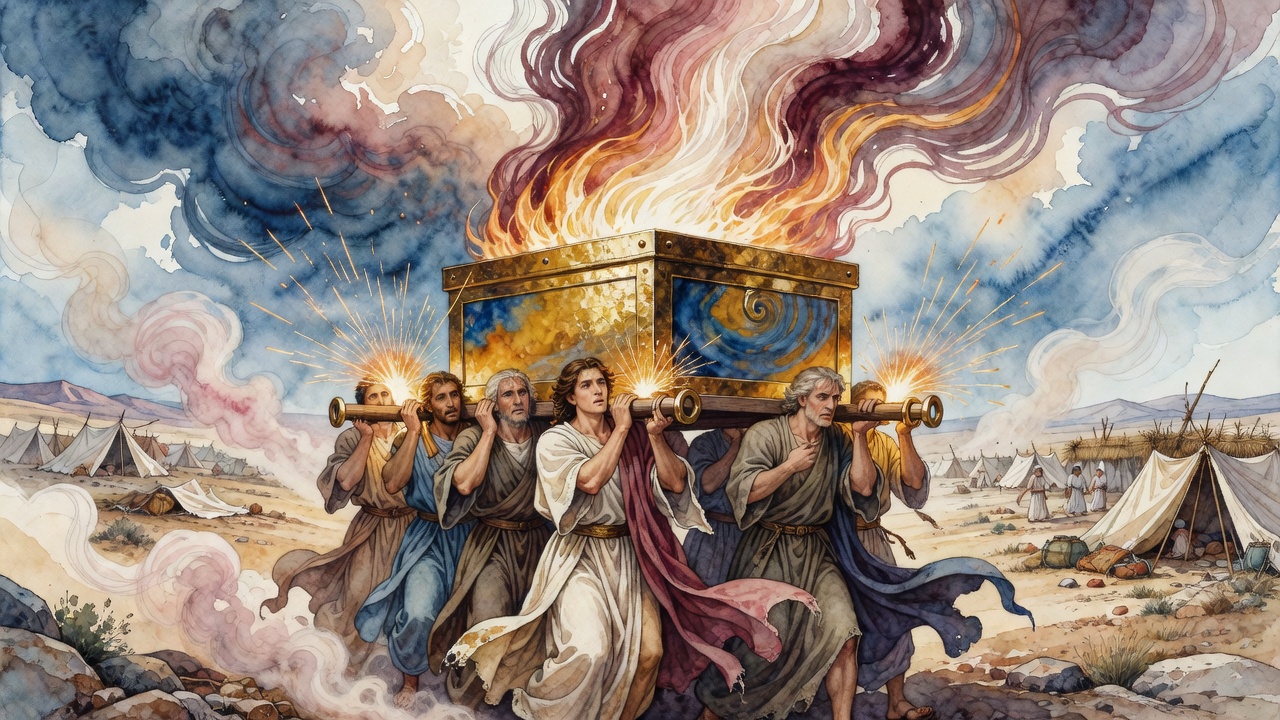
R. Eleazar the son of Pedat declared in the name of R. Yosé the son of Zimra: Two sparks issued from between the cherubim that killed the snakes and scorpions and burned the thorns. The smoke rose up from it in a straight column, and all the nations that experienced the odor that issued forth called out: Who is this that cometh out of the wilderness like pillars of smoke? (Song 3:6). It preceded them at a distance of three days’ journey, both day and night in order to find a resting place for them, as it is said: And the ark of the Lord went before them three days’ journey, to seek out a resting place for them (Num. 10:33). Moses would say at that time: Rise up, O Lord. That is to say, Stand and wait for us, do not leave us, as it is said: And it came to pass, when the ark set forward, that Moses said: Rise up, O Lord, and let thine enemies be scattered (ibid., v. 35). And when it came to rest, he would exclaim: Return, O Lord, unto the ten thousands of the families of Israel (ibid., v. 36).

Observe that many miracles were performed by means of the ark. Since that is so, how were they able to carry it? Were they not afraid? That is why the sons of Kohath bore it. Two important priests bore the ark cover on a pole. It was a huge curtain the thickness of a handbreadth. The curtain was woven out of seventy-two strands, and each strand was composed of twenty-four threads. Three hundred priests would wash it, and two of the highest priests would bear it on a pole before the ark. Then they placed a sealskin covering over the ark so that they would not be able to see into it, as it is said: But they shall not go in to see the holy things as they are being covered, lest they die (Num. 4:20).

What is meant by As they are being covered? R. Levi said: If they glanced into the ark for as long as the blinking of an eye, they would have died at once. You know this is so from the fact that when the Philistines captured the ark and then sought to return it, they took the kine and hitched them in the usual way with their buttocks toward the ark, but the milch kine realized what was expected of them and turned their heads toward the ark and pushed it on the way, as is said: And the kine took the straight way (I Sam. 6:12).

What is meant by The kine took the straight way (vayisharnah)? It means that the kine opened their mouths and sang (vayashir). When the kine reached Beth-shemesh and the people saw the cart and heard the kine singing, they looked at the ark that was on the cart: They lifted up their eyes, and saw the ark, and rejoiced to see it (ibid., v. 13). Whereupon a strong wind arose and revealed what was in the ark, and seventy thousand of them perished, as it is said: And he smote the men of Beth-shemesh, because they had gazed upon the ark of the Lord, even He smote of the people seventy men, and fifty thousand men (ibid, v. 19). Observe, therefore, how many miracles were performed because of the ark. Why did they occur? Because the Shekhinah and the Torah were within it. Wherever the Torah is present the Shekhinah accompanies it, as it is said: They that feared the Lord spoke to one another; and the Lord harkened and heard (Num. 13:16). Therefore the ark was more beloved than any other vessel in the Sanctuary.

Full source
Midrash Tanchuma, Ki Tisa 12Midrash Tanchuma

Retold in our words. Read the original at the link below.Townsend 1989 translation of Midrash Tanhuma, S. Buber Recension · CC-BY

And the Lord spoke unto Moses, saying: “See, I have called by name Bezalel” (Exod. 31:1). Solomon said: Whatsoever cometh into being, the name thereof was given long ago, and it is foreknown what man is (Eccles. 6:10). Scripture also says elsewhere in reference to this: Who hath wrought and done it? He that called the generations from the beginning (Isa. 41:4). The Holy One, blessed be He, declared: When I determined at the very beginning of time to build the Sanctuary, I already announced his name, and made his name known. And it is foreknown what man is. Even when the first man was a lifeless mass, the Holy One, blessed be He, showed him all the righteous men who would descend from him. Some hung from his head, others were suspended from his hair, and still others from his neck, his two eyes, his nose, his mouth, his ears, and his arms. Proof of this is in the fact that when Job complained against his Creator, saying: O that I knew where I might find Him, that I might come even unto His seat! I would order my cause before Him, and fill my mouth with arguments. I would know the words which He would answer me, and understand what He would say unto me (Job 23:3–5). The Holy One, blessed be He, replied to him: Where wast thou when I laid the foundations of the earth? (ibid. 38:4). R. Simeon the son of Lakish maintained: Where wast thou is written because the Holy One, blessed be He, was in fact asking Job: Where were you suspended from the first man? Was it from his head, his hair, his neck, his eyes, or from one of his limbs?

The Holy One, blessed be He, also revealed to Adam that Abraham would descend from him, and that his descendants would go down to Egypt and become enslaved. He revealed to him Moses appearing and redeeming them, Joseph feeding the tribes, Moses anointing the priests, the prophet Samuel anointing the king, Joshua leading them into their land, David laying the foundation of the Temple, and Solomon erecting it. He disclosed to him Athaliah, the mother of Ahaziah, and her children removing the nails from the Temple, Jehoiada replacing them, Amon erecting idols, Josiah destroying them, Nebuchadnezzar demolishing the Temple, Darius rebuilding it, and Bezalel erecting the Tabernacle. Hence, I have called by name Bezalel; that is to say, his name was known previously, and He had called him at the time of Adam. Therefore, Who hath wrought and done it? He that called the generations from the beginning (Isa. 41:4).

Full source