Parshat Pekudei5 min read

Moses Forgot the Hooks and Opened the Books

Moses opened the Tabernacle accounts before Israel and blanked on 1,775 shekels. Heaven lit his eyes. Bezalel built with wisdom.

Curated by Arthur · Told by Maggid ·
Table of Contents
  1. The Missing 1,775
  2. Wisdom in a Named Craftsman
  3. Merchandise That Doubles
  4. Why the Books Stayed Open
  5. Hooks That Hold a People

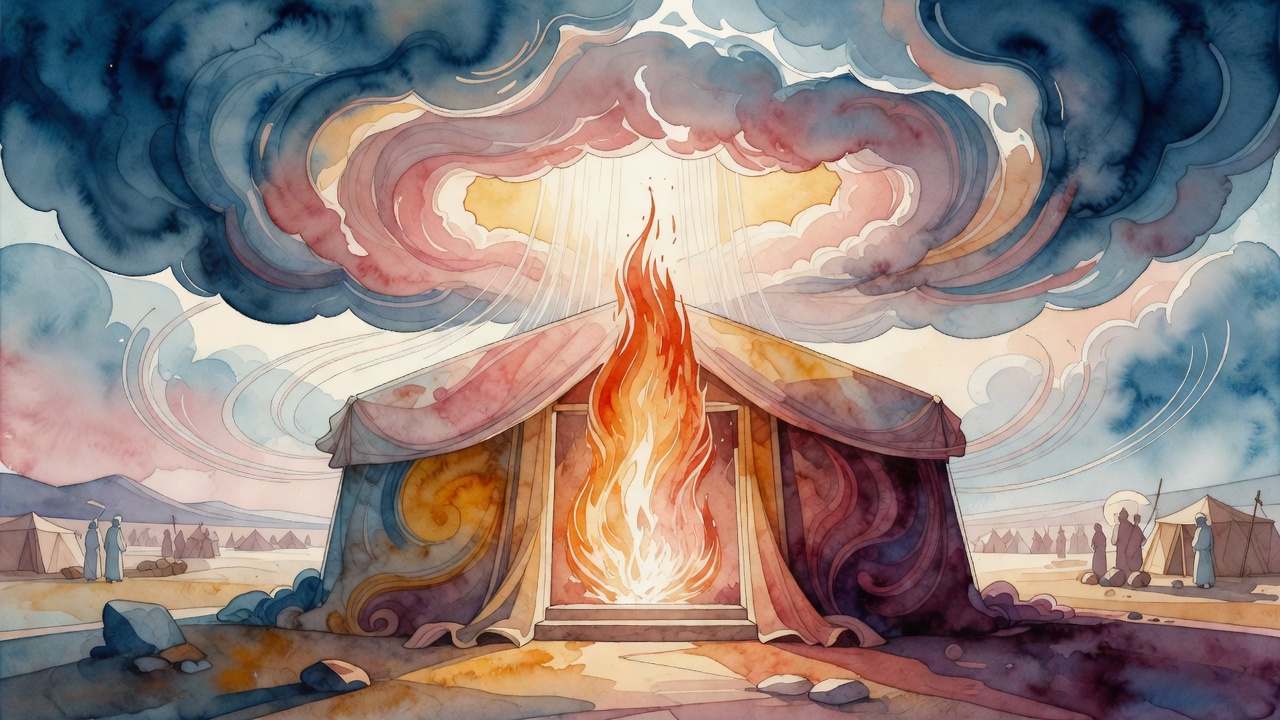
Moses called the camp to the reckoning. "Come, and I will make an accounting before you." The Tabernacle stood finished. Gold had been given. Silver weighed. Bronze counted. He would not hide a single shekel behind the trust of Heaven. "Not so is My servant Moses; in My entire house he is trusted" (Numbers 12:7). Still he opened the books.

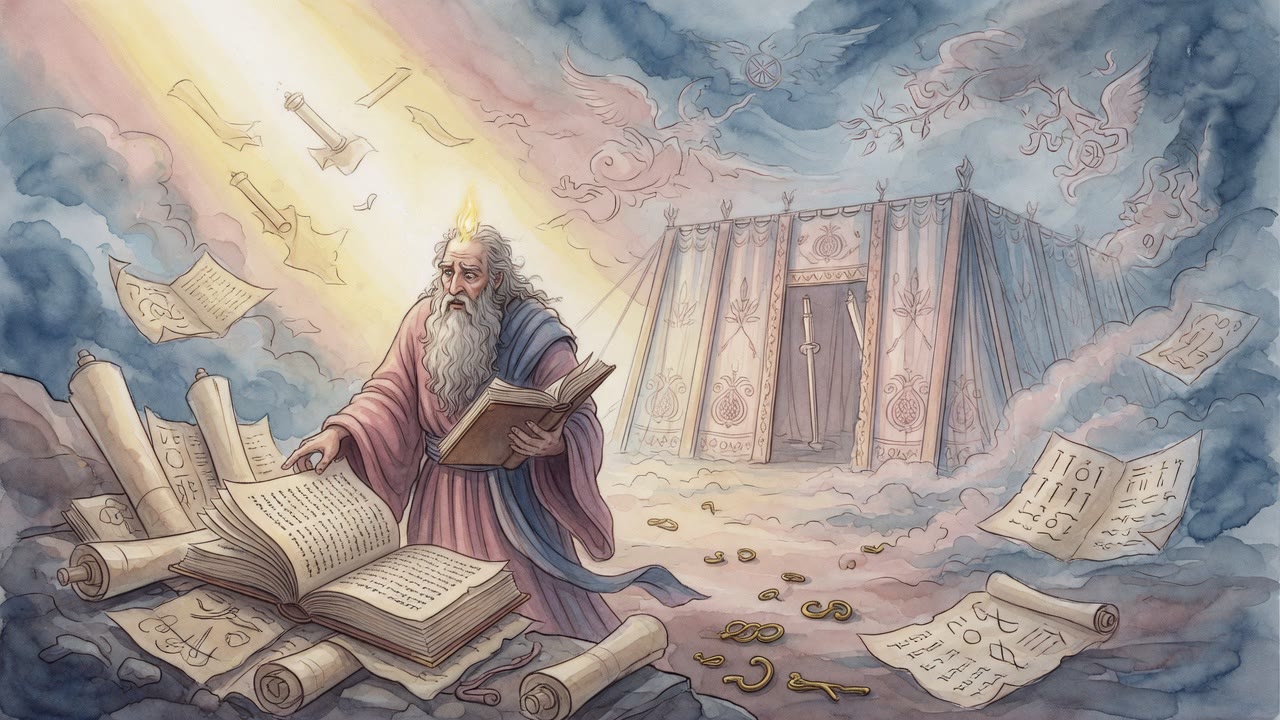
Moses Forgot the Hooks and Opened the Books Click for full size

Whispers had already moved through the tents. A man who handles the treasury of a nation attracts suspicion the way a lamp attracts moths. Moses heard them. He answered with numbers, not with a claim of rank. The desert had trained the people to watch every hand that touched food and metal. He would give them a clean ledger or nothing.

The Missing 1,775

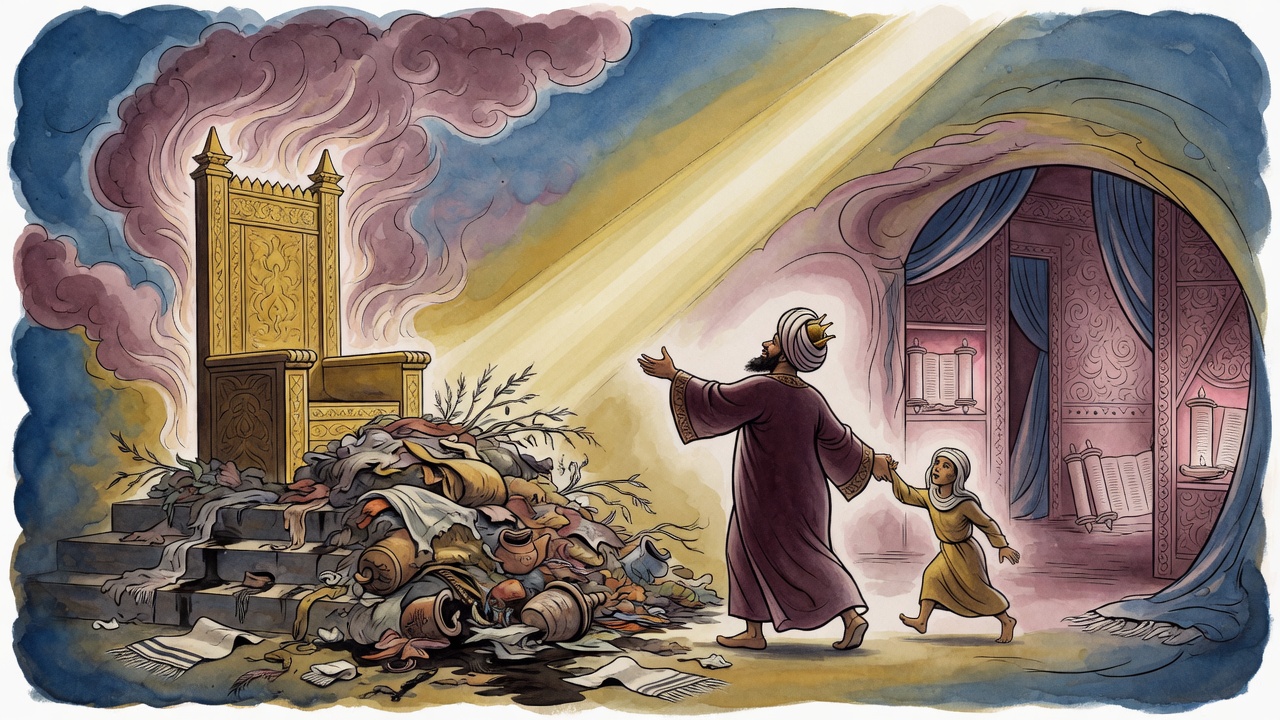
He read the expenditures aloud. Such and such for the sockets. Such and such for the boards. Such and such for the curtains. Then his mouth stopped. He could not place 1,775 shekels. The hooks for the pillars. The small metal that held the house together. Gone from his memory as if the desert had swallowed the figure.

The leader chosen by God sat stumped before the people. He feared the charge that would rise if the sum stayed blank: he pocketed it. The silence thickened until it pressed on every ear. Then the Holy One enlightened his eyes. The hooks returned to speech. Relief moved through the assembly, not only because the numbers balanced, but because the trusted servant refused to treat trust as a cloak for secrecy.

He had not worked alone. The service of the Levites ran by means of Itamar, son of Aaron the priest. The reckoning was shared labor under one transparent roof. No private corner of the treasury was left for rumor to furnish with a story.

Wisdom in a Named Craftsman

Far from the ledger, another scene had already set the house's character. "See, He hath called by name Bezalel" (Exodus 35:30). The Holy One filled him with the spirit of God in wisdom, understanding, and knowledge. With those same three the Holy One founded the earth, established the heavens, and broke up the depths (Proverbs 3:19-20). Bezalel raised the Tabernacle by the tools of creation itself.

Hiram's later work on the Temple would carry the same three. The future house, the sages say, will rise by them again. Wisdom does not invent a private craft. It borrows the Maker's own attributes and sets them to wood and gold. A named craftsman is not a celebrity. He is a vessel for the same three powers that split the deep.

Merchandise That Doubles

What kind of offering feeds such a house? Two merchants traveled together. One held silk. The other held pepper. They exchanged. What each had owned was no longer his. That is ordinary trade. One man's gain is another man's empty hand.

With the law it is not so. One man studies Tractate Zeraim. Another studies Tractate Moed. They instruct each other. Each leaves holding both. Is there any merchandise more valuable? "For I give you good doctrine; forsake ye not My teaching" (Proverbs 4:2). The Terumah that builds a sanctuary is not only metal. It is teaching that multiplies when shared.

A passenger on a crowded ship was asked what merchandise he carried. "My merchandise is superior to yours." They searched the boat and found nothing of his. He answered that he carried Torah. At the port robbers stripped the merchants of their goods. His cargo could not be stolen. He walked into the city and taught, and the city fed him. The Terumah that outlasts bandits is the learning that fills two mouths at once.

Why the Books Stayed Open

Moses did not open the accounts because Heaven doubted him. He opened them because Israel is taught by what its leaders show. A house built with creation's wisdom still needs a public ledger. Bezalel's name was called in the open. The silver was counted in the open. The hooks that almost vanished returned in the open.

Suspicion is cheap in a camp that has just left slavery. Transparency is expensive. Moses paid that price before the people could invent a story about missing metal. God lit the forgotten line so the story would die before it breathed. The miracle was not only memory restored. The miracle was a leader willing to look foolish for a moment rather than look pure by force of title.

Hooks That Hold a People

The pillars needed those 1,775 shekels. Without hooks the curtains fail. Without a clean reckoning the trust of the camp fails. The small number was not small. It was the joint between craft and confidence. Curtains hang on metal the eye almost misses. Nations hang on honesty the eye is trained to miss.

When the books closed, the Tabernacle was no longer only a miracle of standing boards. It was a miracle of numbers that could be spoken aloud. Wisdom, understanding, and knowledge built the walls. An honest mouth kept them from becoming a scandal. Israel would forget many sermons. It would remember that the most trusted man in God's house still counted the hooks.


← All myths
From the tradition

Sources

3 sources

The texts behind this telling. Some cards carry a translation of the source; others are our own retelling of it, and each card says which. Every card links out to the original.

Shemot Rabbah 51:6Shemot Rabbah

Retold in our words. Read the original at the link below.The Sefaria Midrash Rabbah, 2022 · CC-BY

Our story comes from Shemot Rabbah, a collection of rabbinic interpretations on the Book of Exodus. It centers on a seemingly simple verse: “The Tabernacle of the Testimony, as they were reckoned at the directive of Moses.” The rabbis find profound meaning in these words, seeing a vital principle about leadership and accountability.

The text emphasizes that everything was done at Moses' direction. But here's the fascinating twist: Moses didn't act alone. As it says, “The service of the Levites was by means of Itamar, son of Aaron the priest.” Moses worked with others. He wasn't some solitary figure making all the decisions in a vacuum.

The real drama unfolds when the construction is complete. Moses says, "Come, and I will make an accounting before you." He wants to publicly review the finances, saying, "These are the reckonings of the Tabernacle; such and such was expended." But while he's going through the numbers, a problem arises. He forgets about 1,775 shekels used for crafting the hooks for the pillars!

The scene. Moses, the leader chosen by God, is sitting there, stumped. According to Ginzberg's retelling in Legends of the Jews, he's worried. He fears people will accuse him of pocketing the money.

And then, a miracle. God "enlightened his eyes," and Moses remembers the hooks. Relief washes over everyone. The people are satisfied, not just because the Tabernacle is complete, but because Moses was transparent and accountable.

But why did Moses feel the need to do this in the first place? After all, as (Numbers 12:7) states, “Not so is My servant Moses; in My entire house he is trusted.” God Himself vouches for Moses' integrity!

The answer, according to our text, is that Moses had heard whispers. As we find in Midrash Rabbah, people were gossiping. They saw the pillar of cloud descend when Moses entered the tent and remarked, “Happy is the one who bore this man! What does she see in him? That all his days, the Holy One blessed be He speaks with him; all his days he is faultless with the Holy One blessed be He."

Rabbi Hama even adds a more cutting detail: "They would say: Look at the nape of the son of Amram!" The "nape," in this context, was seen as an indicator of wealth and indulgence. People were suggesting Moses was living the high life off the Tabernacle funds.

When Moses heard these criticisms, he vowed to provide a full accounting. "As you live," he said, "when the Tabernacle is completed, I will make an accounting for you."

So, what's the takeaway? Even when you are the most trusted person, transparency matters. Even when you have divine approval, accountability is essential. Moses, despite his unimpeachable character, understood that perceptions matter. He knew that true trust isn't just given; it's earned and maintained through open communication and a willingness to be scrutinized.

This story from Shemot Rabbah reminds us that leadership isn't just about authority; it's about building confidence and fostering a sense of shared ownership."

Full source
Midrash Tanchuma, Vayakhel 5Midrash Tanchuma

Retold in our words. Read the original at the link below.Townsend 1989 translation of Midrash Tanhuma, S. Buber Recension · CC-BY

See, he hath called by name Bezalel (Exod. 35:30). Observe what He did for Bezalel. The Holy One, blessed be He, instilled wisdom in his heart, as it is said: And he hath filled him with the spirit of God, in wisdom, in understanding, and in knowledge (ibid., v. 31). It was with these attributes the Holy One, blessed be He, created His world, as it is said: The Lord by wisdom founded the earth; by understanding He established the heavens; by knowledge the depths were broken up (Prov. 3:19–20). With these same attributes Bezalel erected the Tabernacle.

The Temple was similarly constructed by means of these three attributes, as it is said: He was the son of a widow of the tribe of Naphtali, and his father was a man of Tyre, and he was filled with wisdom, understanding, and skill (I (Kings 7:1)4). Similarly, the Temple will be rebuilt in the future with these three attributes, as is said: Through wisdom is a house builded, and by understanding it is established; and by knowledge are the chambers filled with all precious and pleasant riches (Prov. 24:3–4). Therefore, And He hath filled him with the spirit of God. Where did all this wisdom come from? From the spirit of God. And He filled him with the spirit of God alludes also to Joshua, who descended from the tribe of Ephraim, as it is written: And Joshua the son of Nun was full of the spirit of wisdom (Deut. 34:9). And it refers as well to Othniel the son of Kenaz, who came from the tribe of Judah, since it is written about him: And the spirit of the Lord came upon him, and he judged Israel (Judg. 3:10). All this happened because Moses blessed the tribe: And this for Judah, and he said: “Hear, Lord, the voice of Judah, and bring him in unto his people; his hands shall contend for him, and Thou shalt be a help against his adversaries” (Deut. 33:7). When they become involved in difficulties, You shall be a help to them.

Another explanation of Hear, Lord, the voice of Judah. When You put in him the Holy Spirit, he will be exalted and grow strong. Therefore all of Bezalel’s distinction came from the Holy One, blessed be He, as it is said: And He hath filled him with the spirit of God.

Elihu disclosed: I said: “Days should speak, and multitude of years should teach wisdom.” But it is a spirit in man, and the breath of the Almighty, that giveth them understanding (Job 32:7). All of the understanding possessed by Bezalel came from the spirit of the Almighty, and it was instilled into him. And He hath filled him with the spirit of God, in wisdom. Understanding and knowledge (Exod. 35:31). He was wise in his knowledge of the Torah, in understanding, because he comprehended the law, and knowledge, because his mind was full of learning, and in all manner of workmanship, according to its plain meaning. The Holy One, blessed be He, said: In this world, My spirit instills wisdom within you, but in the future I will implant My spirit within you and you will be restored to life, as it is said: And I will put My spirit within you and you shall live (Ezek. 37:14).

Full source
Midrash Tanchuma, Terumah 2Midrash Tanchuma

Retold in our words. Read the original at the link below.Townsend 1989 translation of Midrash Tanhuma, S. Buber Recension · CC-BY

That they take for Me an offering (Exod. 25:2). Scripture says elsewhere in allusion to this verse: For I give you good doctrine; forsake ye not My teaching (Prov. 4:2). R. Simeon the son of Lakish explained this verse as follows: Once there were two merchants who were traveling together. One of them held a bolt of silk material in his hand, while the other held some pepper. They said to each other: “Let us exchange our merchandise.” One took the pepper and the other took the silk. What one of them had previously owned was no longer his, and that which the other had owned was, likewise, no longer his. With the law, however, this is not so. If one man studies Tractate Ze’raim, and another Tractate Mo’ed, and they instruct each other, each possesses knowledge of both. Truly, is there any merchandise more valuable than this? Therefore, For I give you good doctrine; forsake ye not My teaching.

Once a passenger aboard a ship, on which many were traveling, was asked by them: “What kind of merchandise do you possess?” He answered: “My merchandise is superior to yours.” Whereupon they searched the boat to examine his merchandise. When they were unable to find anything that belonged to him, they began to scoff at him. Shortly after, pirates attacked them, and carried the men and everything they found in the ship away. After some time they reached port, and all the men were brought to the city, without food to eat or clothes to wear. What did the one passenger do? He went to the schoolhouse, where he sat and studied. When the residents of the town discovered that he was a learned student of the law, they treated him with the greatest respect. They made a collection in his behalf, as was customary and proper for a man of distinction. The important men of the community would walk at his right and his left, accompanying him wherever he went. When the merchants saw what was happening, they went to him and pleaded: “Please, we beg you to help us, speak in our behalf to the men of the city, for you know what has happened to us and how much we lost in the ship. We implore you to ask them to give us some bread, that we may live and not die of starvation.” He answered: “Did I not tell you that my merchandise was better than yours? Yours has been destroyed, but mine endures.” Therefore it says: For I give you good doctrine.

Full source