God Came to His Garden When the Tabernacle Stood
Moses drives the last board home, the banished queen of heaven waits for a new gift, and God enters only after the bride invites Him below.
Table of Contents
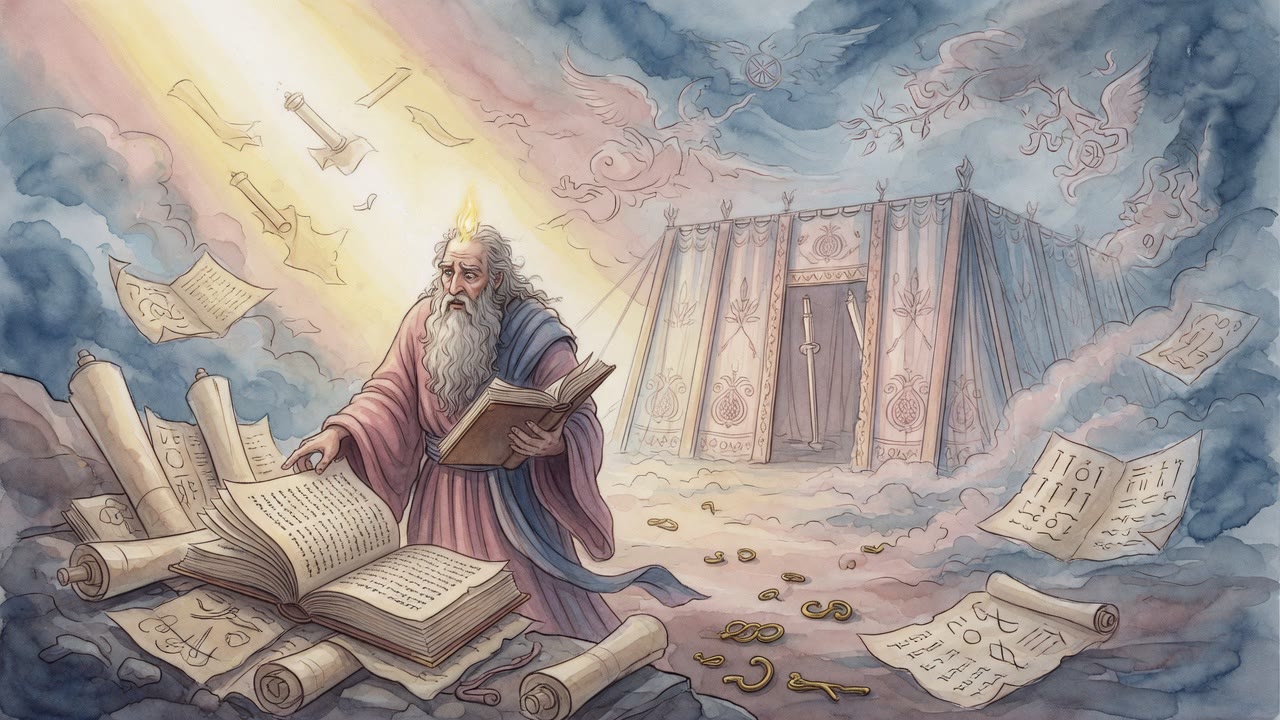
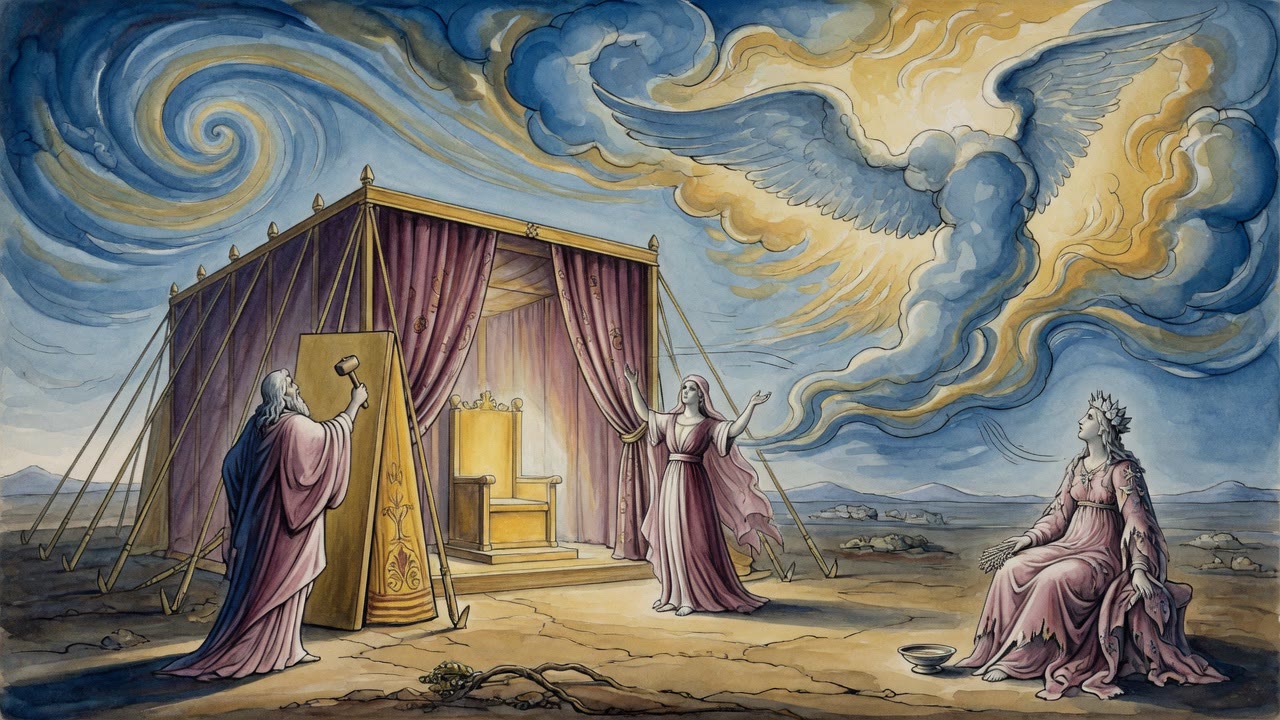
Moses set his shoulder against the last upright board and felt the acacia bite into his robe. Dust rose from the courtyard. Gold caught noon and threw it back into his eyes. The sockets locked. The bars slid home. For a breath the whole camp went quiet, as if every hammer had agreed to stop at once.
 Click for full size
"And it was on the day that Moses completed erecting the Tabernacle" (Numbers 7:1). The word for completed, kalot, hung in the air like a wedding name. Somewhere under that same sky a different verse was already waiting: "I have come to my garden, my sister, my bride" (Song of Songs 5:1). Bride is kalah. Completion and bride share one sound, and on this day they shared one place.
The Queen Who Would Not Come Cheap
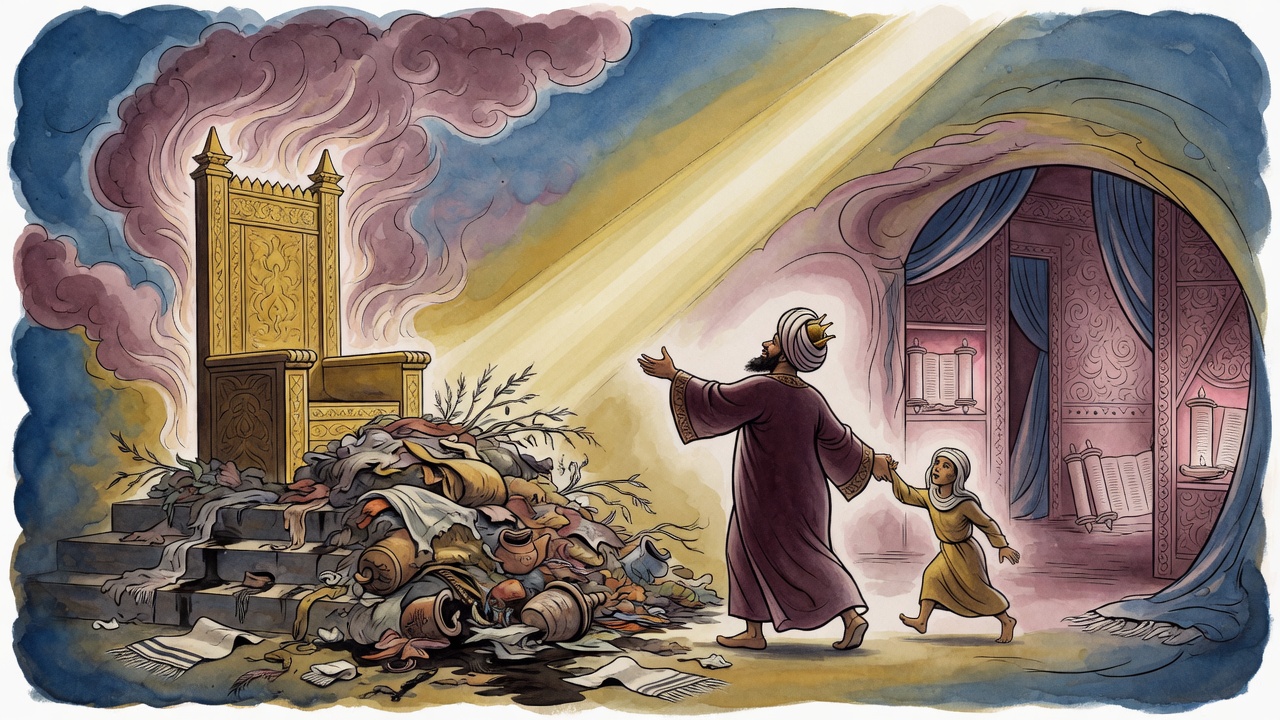
Before any smoke rose from the new altar, the older story pressed in. A king once grew angry with his matrona, his queen, and drove her from the palace. Courtiers watched the gates shut. Months passed. The king wanted her back. He sent word as if longing alone could reopen the rooms.
She answered from exile without lowering her head. "Give me something new, something special, and then I will consider returning." Not the old corridor. Not the old table. A gift that proved the ban had ended and the house had changed.
Heaven had known that bargain. In the first ages God received offerings from above, celestial smoke, fragrance that never rose from a human hand. "And the Lord smelled the pleasing fragrance" after the flood (Genesis 8:21). Angels could keep a calendar of offerings. What they could not do was stand in desert heat with boards on their shoulders and say, take this house I built with fingers that still remember brick.
Israel had finished a house from below. Earthly blood. Earthly flour. Earthly gold beaten thin by free men who had been slaves. The queen's condition was met in timber and sockets. The King could come home without shame on either side.
The Bride Speaks First
Moses did not throw the gates wide and drag the Presence in. Another order held the threshold. "Awake, O north wind, and come, O south. Blow upon my garden, that its spices may flow out. Let my beloved come to his garden and eat his precious fruits" (Song of Songs 4:16). Only after that invitation does the next verse answer, "I have come to my garden."
A groom does not shove past the canopy while the bride still stands outside arranging her veil. In a camp that had once built a calf without waiting for Moses to come down, the order still cut clean. Consent first. Then entry. Proper conduct is not a footnote to holiness. It is the doorframe.
Moses wiped resin from his hands and stepped back from the boards. The courtyard smelled of new wood and sheep. He waited the way a man waits when the next move is not his to force. Priests stood ready with fire they had not yet been told to light. Children pressed against the rope line until a mother pulled them back by the sleeve.
Then the voice that had spoken from a bush and from a mountain spoke as a bridegroom who had been invited. "I have come to my garden, my sister, my bride." Not to a random plot of sand. To my garden, l'gani, to the canopy that had been His from the beginning, the lower world where the first glory once walked before any exile of Presence taught humans how empty a courtyard can feel.
Smoke From Below, Not Only From Above
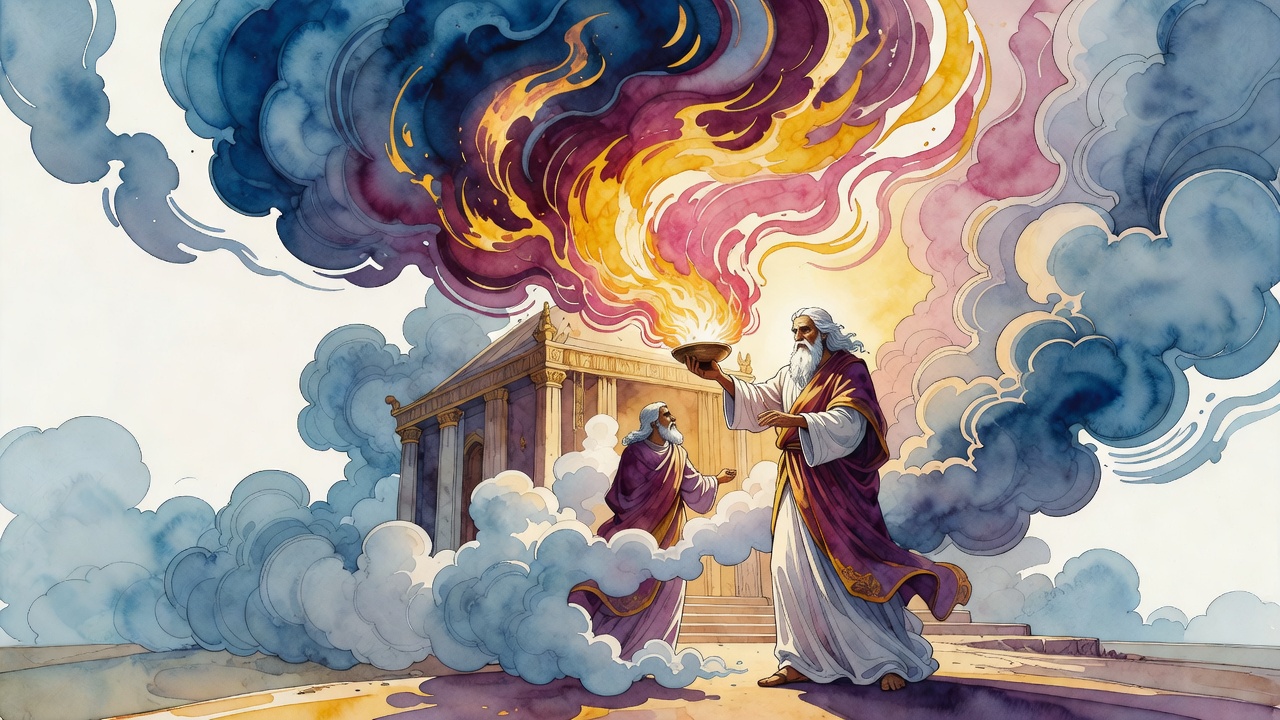
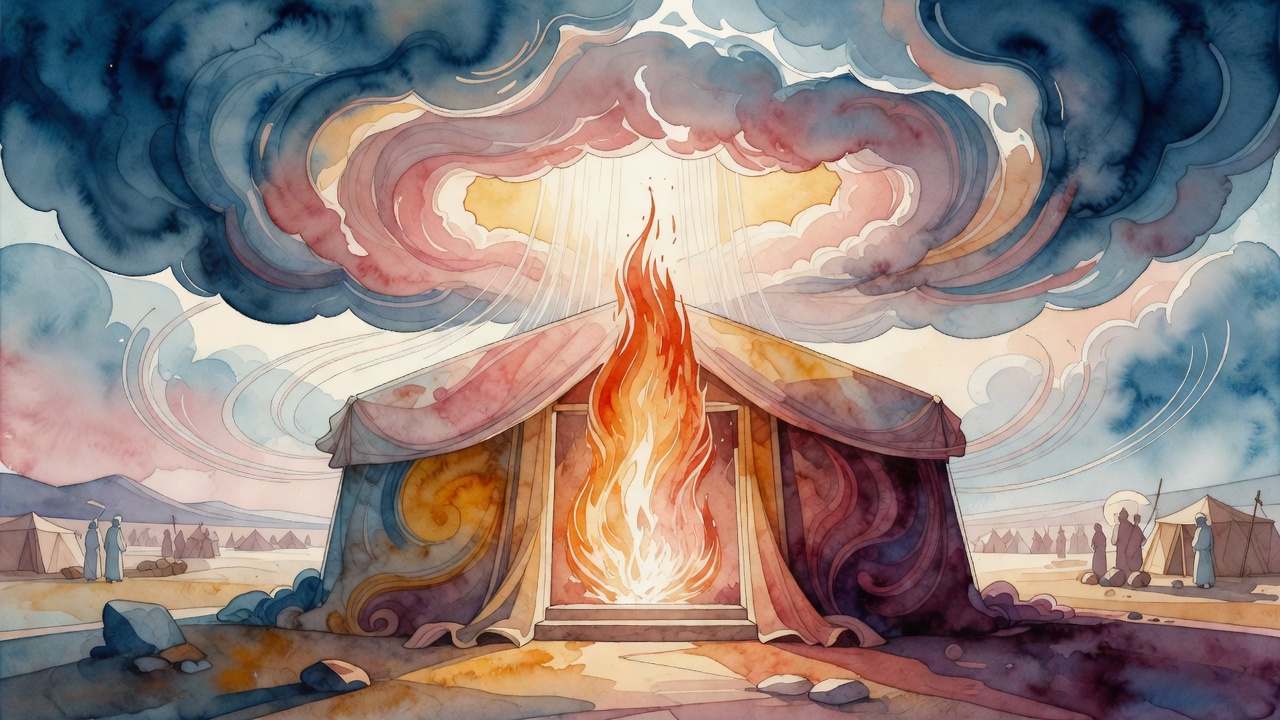
The first earthly offerings left the new altar. Fat hissed. Grain browned. Wine darkened the base of the fire. Smoke climbed the still air and mixed with the heat that already sat on the desert. God received from human hands what heaven had once carried alone. The homecoming was not a lecture. It was a smell in the nostrils of the King.
Moses watched the smoke thin against the blue and felt the weight of a second fear that never left him on days of dedication. Israel could finish a house and still fail a day. Merit rises and falls. What happens when the camp has no merit left to offer and the King is already inside the garden?
He spoke the plea he had learned to speak when counting souls. "Master of the Universe, when Israel has merit, forgive them. When they do not, treat it as a loan. Give them a chance once a year, so the Day of Atonement will come and atone for them." The census language of raising a head and the loan language of a creditor met in one mouth. "For on this day shall atonement be made for you" (Leviticus 16:30). The garden would need a yearly repair as surely as the boards needed bars.
The Garment That Sticks to the Flesh
Later, when the order came to count Israel and only Israel, Moses asked the question that still burned. Of seventy nations under heaven, why this people alone for every "speak," every "command," every "take a census of the children of Israel"?
The answer came as a king with many garments who cares for one set above the rest. The servant is told, lay these out, fold them, watch them. The servant asks why these. The king answers, because these stick to my flesh.
Israel was not a banner stored in a chest. Israel was the cloth against the King's skin. The Tabernacle stood because that closeness wanted a room. The yearly loan of atonement stood because cloth against flesh still tears, still needs mending, still comes back to the same body.
On the day of completion Moses walked the outer court once more. Pegs held. Curtains hung true. The bride had invited. The King had entered His own lower garden with smoke from below rising to meet whatever still burned above. The first entry could not be unmade. The house was finished. The Presence had crossed the threshold by invitation, not by force, and the camp that had once danced around gold now stood around wood that smelled of work and wedding in the same breath.
Night fell on sockets and silver hooks. Moses slept with resin still under his nails. In the dark the garden kept its new guest, and the loan of the coming year already waited in the calendar like a second gate no one had built with hammers.
← All myths