Parshat Ki Tisa6 min read

Where the North of the World Was Left Unwalled

The Holy One walled three directions and left the north open, stacking fire and ice beside the pit, while one man climbed past the sky to argue.

Curated by Arthur · Told by Maggid ·
Table of Contents
  1. The Open Mouth Behind the Settled World
  2. Three Gates the Earth Already Knows
  3. The Other End of the Same Vertical Line
  4. Why the Holy One Guards Only the One People

The builder of the world walled three directions and left the fourth open on purpose. East, south, and west were sealed and finished. The north He stretched out over emptiness and did not close, and into that unfinished corner He carried His storehouses.
Behind the last settled towns of Babylon and Chaldea, past where any road ends, the treasuries stand stacked in the cold dark. A house of fire. A house of snow. Houses of hail, of frost, of vapor, of the storm wind that has never once been let off its chain. Between those storehouses and the edge of inhabited land runs a buffer of empty country, a journey of five years wide, and the gap is not decoration. On the far side of it dwell the demons, the harmful ones, the destroying spirits. If the five-year distance ever closed, they would come across and unmake everything that breathes.

The Open Mouth Behind the Settled World

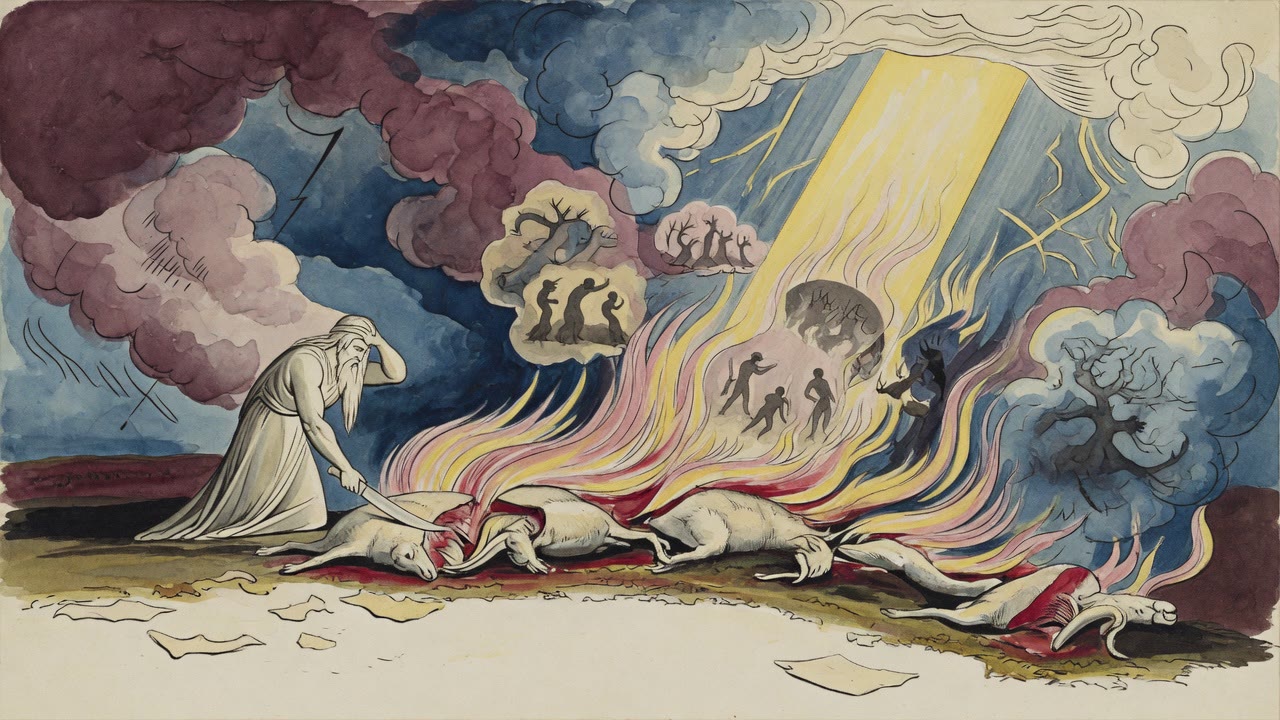
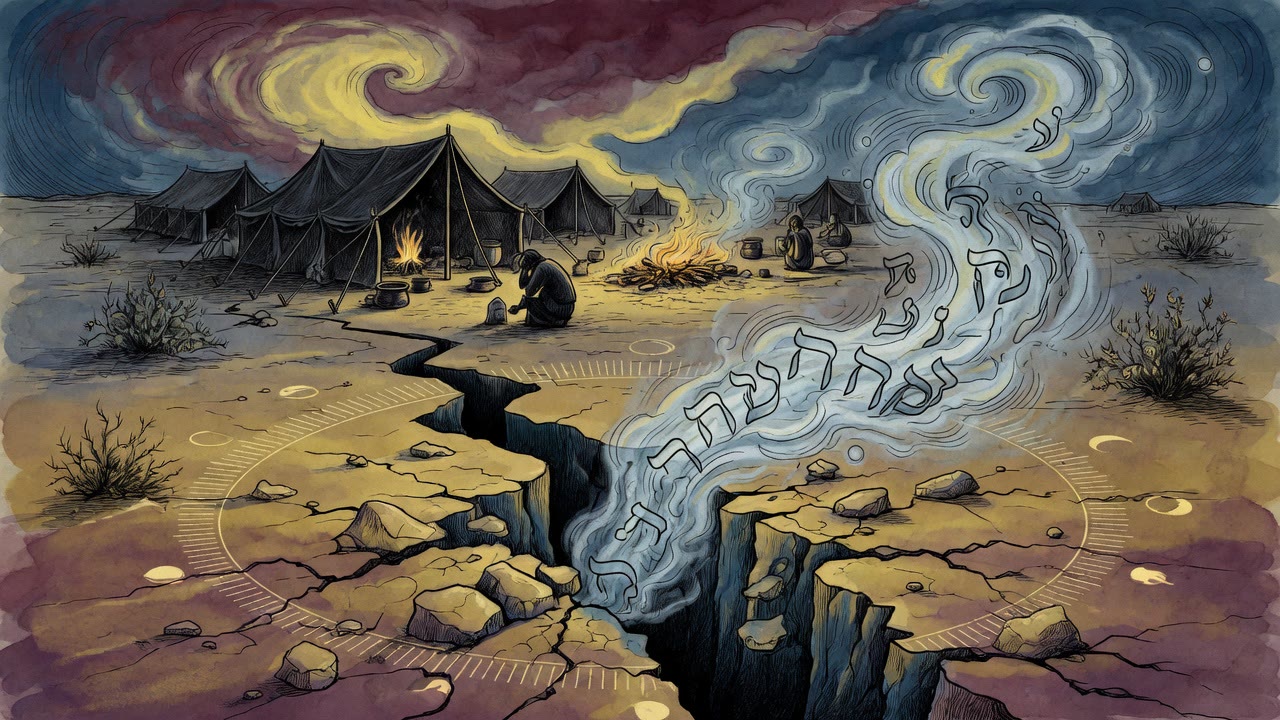
And there, in the unwalled north, the ground gives way into Gehinnom. Its furnace runs deep enough that a man would fall through it for two thousand one hundred years and still not strike the bottom. Seven compartments open one beneath the next, each one its own country of punishment. In the chamber called Sheol, the wicked stew twelve months like meat turning in a cauldron. In the Roaring Pit, two wells pour into each other forever and are never full. In Miry Clay the lewd sink and do not rise. In the place called Dumah, the shadow of death, informers hang by the tongues they used, and the men who narrowed their eyes against scholars of Torah burn beside them.

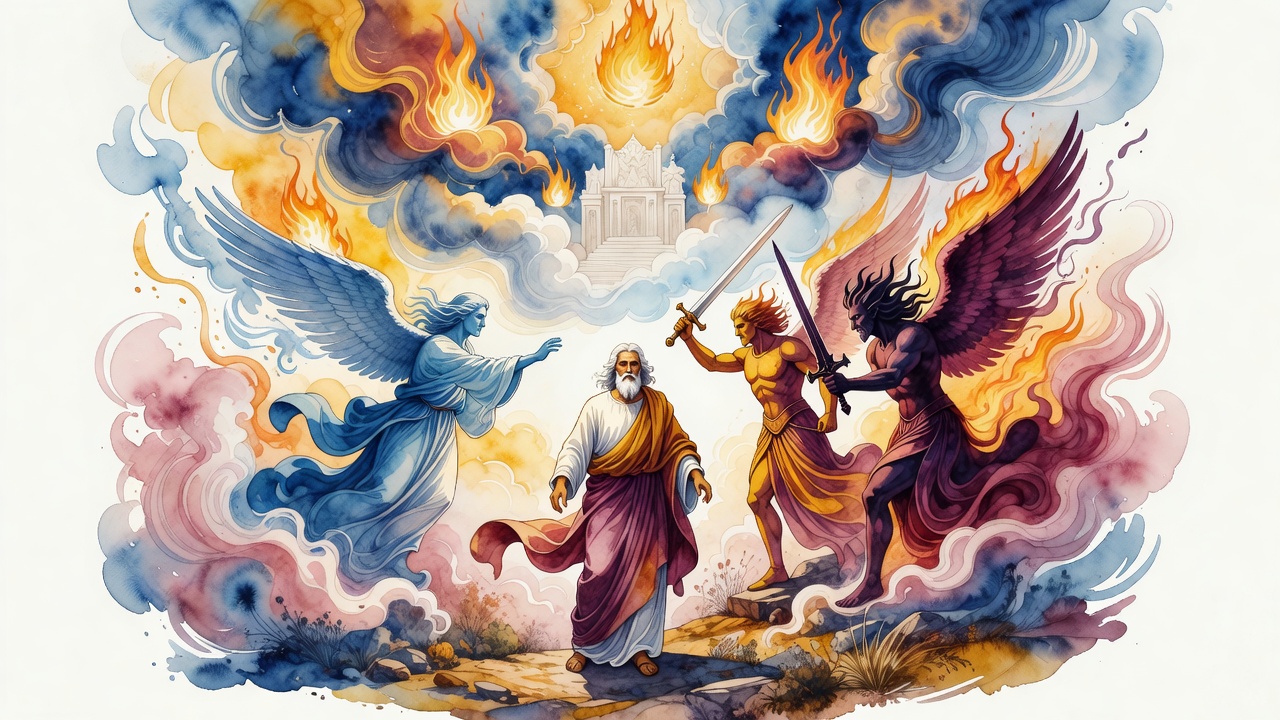
Three princes hold the keys. Kippod rules the seven chambers. Behind him stands Negadsagiel, and behind them both stands Samael, who keeps his company here at the cold mouth of the world.

Three Gates the Earth Already Knows

The mouth is not only down there in the dark frontier. It opens onto the inhabited world through three gates, and people have already fallen through all three.

The first gate is in the wilderness, in the bare ground that swallowed Korah and his whole assembly when the earth split under their feet and closed over their screaming. Kippod waits at that gate. The second gate is in the sea, far out where the water goes black, and a fleeing prophet found it from the inside. "From the belly of Sheol I cried out," Jonah said, and Negadsagiel was the warden who heard him. The third gate stands in the Valley of Ben Hinnom, in plain sight of Zion, close enough to Jerusalem that the prophets called it a furnace whose fire burns in Zion and whose oven stands in the holy city. A man can walk to the rim of that one on an ordinary afternoon.

This is the bottom of the map. Treasuries of fire and ice stockpiled at the edge of creation, a pit two thousand years deep, three jailers, three doors. It is the direction the Holy One refused to finish.

The Other End of the Same Vertical Line

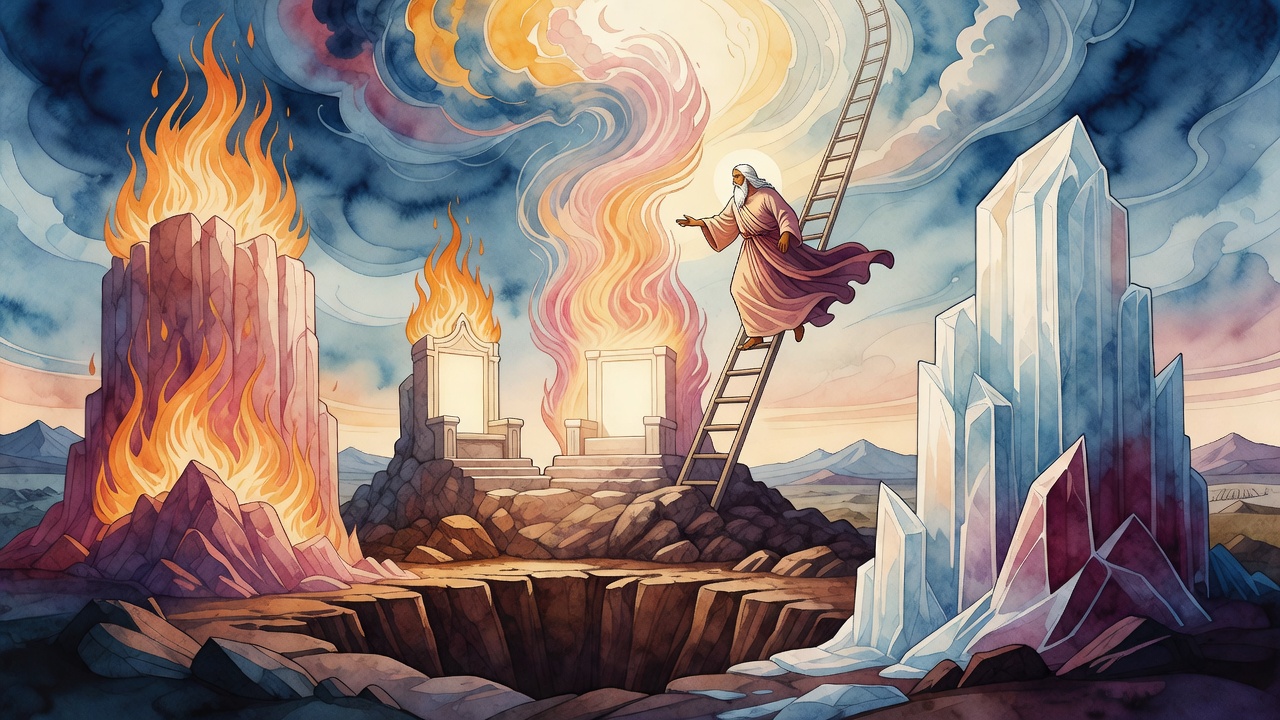
Run a line straight up from that open north and it ends somewhere a mortal was not supposed to go. Past the settled sky, past the firmament, in the place where the Holy One sits and keeps accounts of the nations.

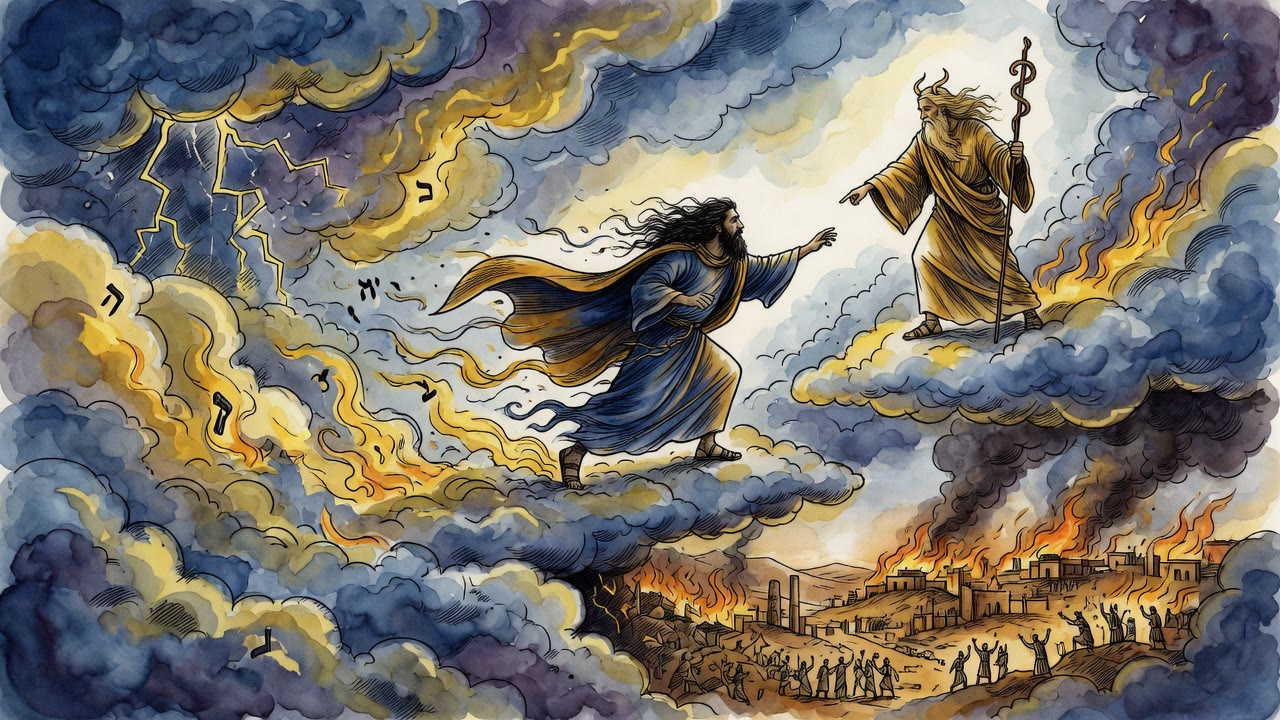
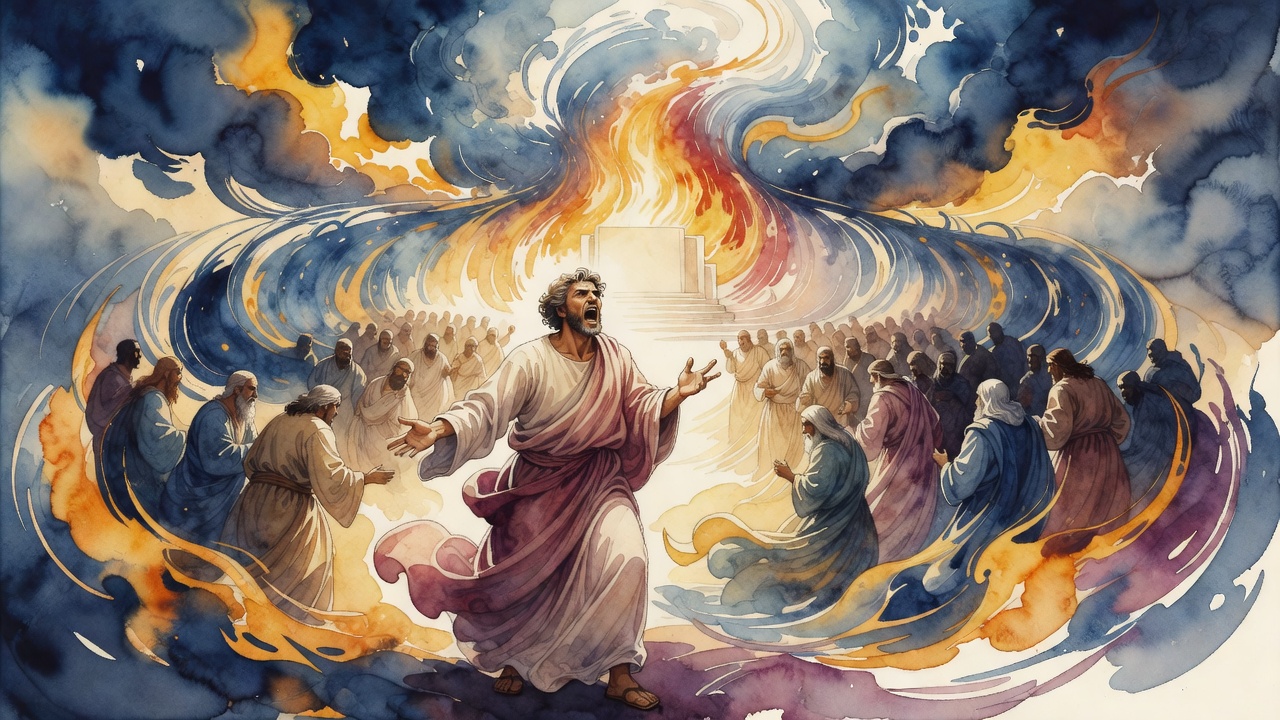
One man climbed there and stood in that accounting, and his name was Moshe. He came not to escape Gehinnom but to argue. The Holy One had set a reckoning over Israel, a half-shekel counted from every head, and Moses leaned in and bargained the terms. "When they have merit, leave them be," he said. "When they have none, then count it as a loan against them, only once a year, so the Day of Atonement can come and wipe the debt clean." He stood among the realms above and haggled over his people like a man buying back a relative from a creditor.

Why the Holy One Guards Only the One People

And Moses pressed the question that the cold north made urgent. Out of seventy ruling nations spread across the world, why this charge laid on him again and again, speak to Israel, command Israel, say to Israel, the same people named five times in a single breath of Torah?

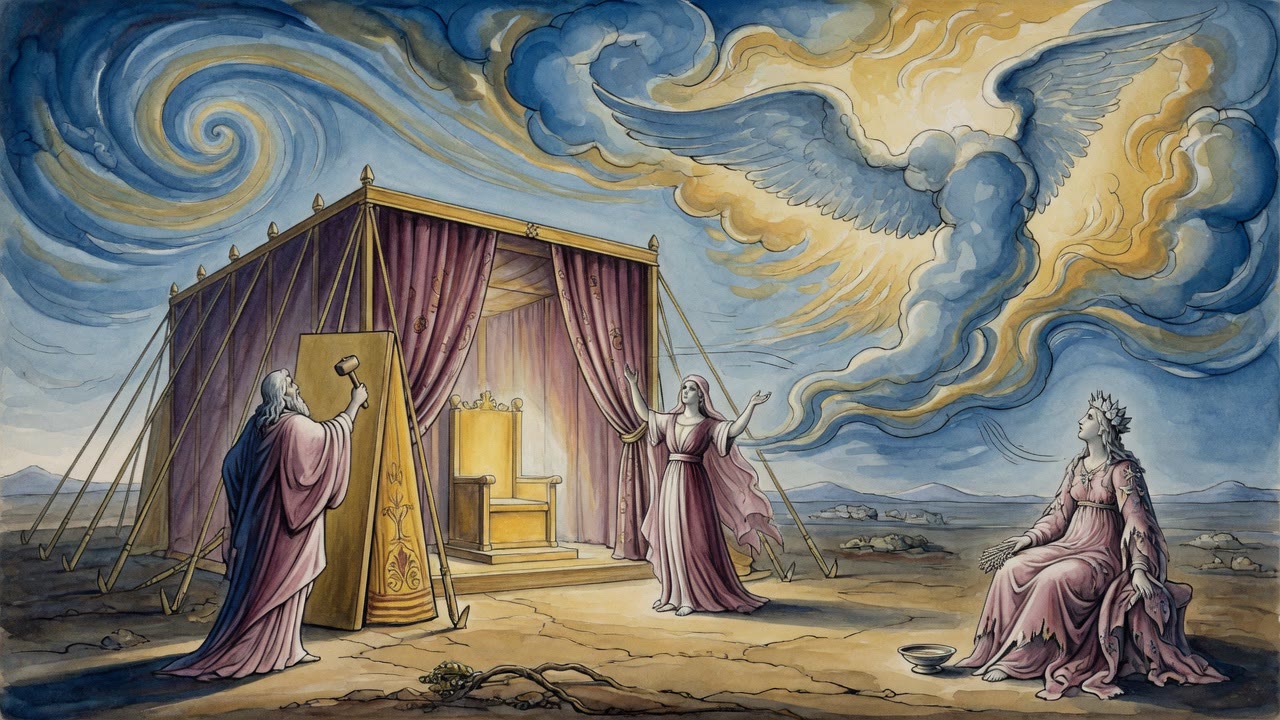
The Holy One answered him with the plain talk of a man explaining the one possession he cannot lose. A king has a closet of fine garments, He said, yet he warns his servant only about one. Shake out that one. Fold it. Guard it. "Of all your robes," the servant asks, "you trouble me only over this?" "Because it touches my skin." A second time He answered with the purple robe a king wore the hour he first became king, and a third with the cloak an elder wrapped himself in the day he was first an elder. The garment a man wore at the moment everything changed for him is the garment he never stops watching.

"They made Me king at the sea," the Holy One said. "They put the crown on Me at Sinai when they answered before they had even heard. They cleave to Me as a belt clings to a man's loins." So He charges Moses about Israel and no one else, and counts them over and over, the way a father reports every small thing his son does, my son ate, my son went to school, my son came home, for the joy of saying the name again.

The same vertical line runs through both ends. Down in the unfinished north, the storehouses of fire wait behind a five-year wall of empty ground, and the pit gapes through three gates the world already fears. Up past the firmament, one man stands in the heights and talks a debt down to a loan, because the people he is buying back are the garment that touches the King's own skin.


← All myths
From the tradition

Sources

2 sources

The texts this telling draws on, in full. Open a card to read inline, or expand it for a wider, quieter read.

Otzar Midrashim, Midrash Konen ('He Established') 2:6Midrash Konen

North, Gehinnom: the northern direction includes the settlement of the land of Babylon and Chaldea. Outside the settlement, behind them, are the treasuries of the fire of Gehinnom, and treasuries of snow, hail, vapor, frost, darkness, and storm wind.

It is one thousand thousands and seven hundred five years. Within it is a journey of five years where demons, harmful beings, and destructive spirits dwell. There is Gehinnom, whose measure is two thousand one hundred years. There the wicked are judged in the seven compartments of Gehinnom, and there is the company of Samael.

The northern direction is not surrounded, as it says, "He stretches out the north over emptiness" (Job 26:7). There is a five-year separation between the dwelling of demons and the settlement of the northern direction, for if not, they would destroy the whole world.

The prince of Gehinnom is named Kippod. His second companion is Negadsagiel, and the third prince is Samael. They are appointed over three great gates. The first gate is in the wilderness, where Korah and all his congregation went down to Sheol, and Kippod is appointed there. The second gate is in the sea of Tarshish, and so it is written about Jonah, "From the belly of Sheol I cried out" (Jonah 2:3), and Negadsagiel is appointed there. The third gate is in the Valley of Ben Hinnom, opposite Zion and Jerusalem, as it says, "whose fire is in Zion and whose furnace is in Jerusalem" (Isaiah 31:9). A furnace means nothing other than Gehinnom, as it says, "For behold, the day is coming, burning like a furnace" (Malachi 3:19).

There are seven compartments in Gehinnom, and these are their names. Sheol: its course is three hundred years, and there Korah and all his congregation are judged for twelve months like meat in a cauldron. Abaddon: its course is three hundred years, and there the souls of the wicked are lost. The Pit of Destruction: its course is three hundred years; there robbers, thieves, and those who withhold a worker's wages are judged. The Roaring Pit: two pits are there, filled from one another and pouring one into the other, yet never filled.

Miry Clay: its course is three hundred years, and there those who commit sexual transgressions are judged. They sink there and never come up. Shadow of Death, also called Dumah: its course is three hundred years. There informers are judged by being hung by their tongues. There, with every kind of death and heavy punishment, are also judged those whose eyes are narrow toward Torah scholars. The Lower Earth: its course is three hundred years. There, in darkness, sink the Jews who divide themselves against Torah scholars, and so on.

Full source
Pesikta DeRav Kahana 2:7Pesikta de-Rav Kahana

What is written above the passage? "And Aaron shall make atonement upon its horns once a year" (Exodus 30:10). What is written after it? "When you take the sum of the head of the children of Israel", "when you lend" (ki tisheh) is written [the consonants read as a loan], as you say, "When you lend anything to your neighbor" (Deuteronomy 24:10). Moses said before the Holy One, blessed be He: "Master of the worlds, at a time when Israel have merit, let them be; and at a time when Israel have no merit, then, as it were, lend it to them once a year, so that the Day of Atonement may come and atone, for 'on this day He shall make atonement for you,' etc. (Leviticus 16:30)." "The head" (et rosh): Rabbi Yose bar Hanina said: He hinted to him that he [a tribe] was destined to be brought near as the first of the tribes; and which is this? This is Reuben: "Let Reuben live" (Deuteronomy 33:6). "The children of Israel": Rabbi Yudan in the name of Rabbi Shmuel bar Nahman gave a parable of a king who had a fine garment, and he would charge his servant and say to him: "Shake it out, fold it, give it your attention." He said to him: "My lord the king, of all the garments that you have, you charge me only concerning this one?" He said to him: "Because it clings to my flesh." So too Moses said before the Holy One, blessed be He: "Master of the worlds, of the seventy sovereign nations that You have in Your world, You charge me only concerning Israel: 'And to the children of Israel you shall say' (Leviticus 20:2), 'And to the children of Israel you shall speak' (Exodus 30:31), 'Say to the children of Israel' (ibid. 33:5), 'Speak to the children of Israel' (ibid. 31:13), 'Command the children of Israel' (Leviticus 24:2), 'And you shall command the children of Israel' (Exodus 27:20), 'When you take the sum of the head of the children of Israel' (ibid. 30:12)." The Holy One said to him: "Because they cleave to Me, as it is written, 'For as the girdle cleaves to the loins of a man, so have I caused to cleave to Me the whole house of Israel,' etc. (Jeremiah 13:11)." Rabbi Avin gave a parable of a king who had a purple robe, and he would charge his servant and say to him: "Shake it out, fold it, give it your attention." He said to him: "My lord the king, of all the purple robes that you have, you charge me only concerning this one?" He said to him: "Because I wore that one at the hour when I first became king." So too Moses said before the Holy One, blessed be He: "Master of the worlds, of the seventy sovereign nations of the world that You have in Your world, You charge me only concerning Israel," as it is written: "And to the children of Israel you shall say, and to the children of Israel you shall speak, say to the children of Israel, speak to the children of Israel, command the children of Israel, and you shall command the children of Israel, when you take the sum of the head of the children of Israel." He said to him: "Because they made Me king at the sea and said, 'The LORD shall reign forever and ever' (Exodus 15:18)." Rabbi Berekhiah gave a parable of an elder who had a cloak, and he would charge his attendant and say to him: "Shake it out, fold it, give it your attention." He said to him: "My lord the elder, of all the cloaks that you have, you charge me only concerning this one?" He said to him: "Because I wrapped myself in it at the hour when I was first appointed an elder." So too Moses said before the Holy One, blessed be He: "Master of the worlds, of the seventy sovereign nations that there are in Your world, You charge me only concerning Israel: 'And to the children of Israel you shall say, and to the children of Israel you shall speak, say to the children of Israel, speak to the children of Israel, command the children of Israel, and you shall command the children of Israel, when you take the sum of the head of the children of Israel.'" He said to him: "Because they accepted upon themselves the yoke of My kingship at Sinai and said, 'All that the LORD has spoken we will do and we will hear' (Exodus 24:7)." Rabbi Yudan said: Come and see how greatly the Holy One, blessed be He, loved Israel, that He mentions them five times in a single verse. This is what is written: "And I have given the Levites as a gift to Aaron and to his sons from among the children of Israel, to do the service of the children of Israel in the Tent of Meeting, and to make atonement for the children of Israel, that there be no plague among the children of Israel when the children of Israel come near to the sanctuary" (Numbers 8:19). Rabbi Shimon ben Yohai taught a parable of a king who handed over his son to his tutor and would charge him and say to him: "My son has eaten, my son has drunk, my son has gone to the schoolhouse, my son has come back from the schoolhouse." So too the Holy One, blessed be He, desires to mention Israel at every hour. Rabbi Yehudah bar Simon gave a parable of one who was sitting and making a crown for the king. Someone passed by and saw him and said to him: "What are you sitting and making?" He said to him: "A crown for the king." He said to him: "Whatever you are able to set in it of emeralds, set; of precious stones and pearls, set; for it is destined to be placed upon the head of the king." So too the Holy One, blessed be He, said to Moses: "Moses, whatever you are able to praise in Israel before Me, praise; to glorify, glorify; for I am destined to be glorified through them, as it says, 'And He said to me, You are My servant, O Israel, in whom I will be glorified' (Isaiah 49:3)."

Full source