5 min read

Moses Held the Altar Fire Before Aaron Could

For seven days Moses served as high priest in smoke Aaron would own. When the Mishkan rose, the Shekhinah, the Divine Presence, came home by invitation.

Curated by Arthur · Told by Maggid ·
Table of Contents
  1. Seven Days on Loan
  2. When the Mishkan Was Finished
  3. The Groom Waits for Permission
  4. Aaron's Name Beside Moses
  5. Fire That Stays

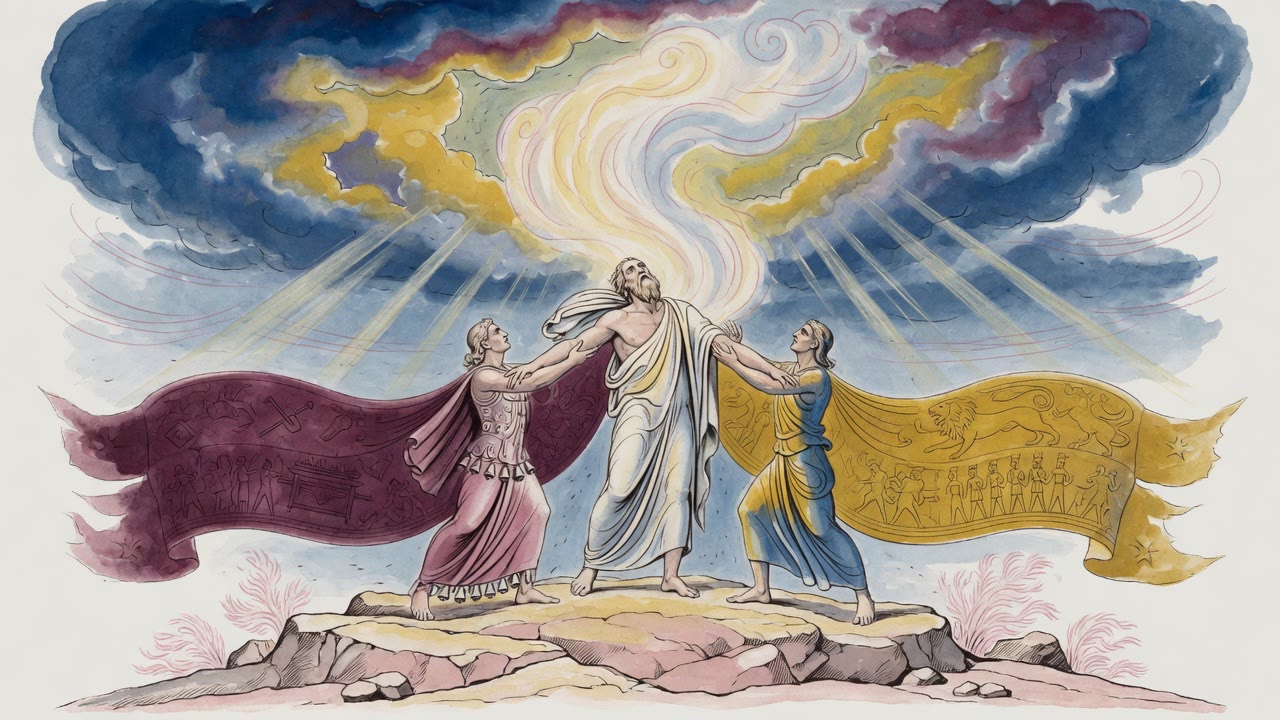
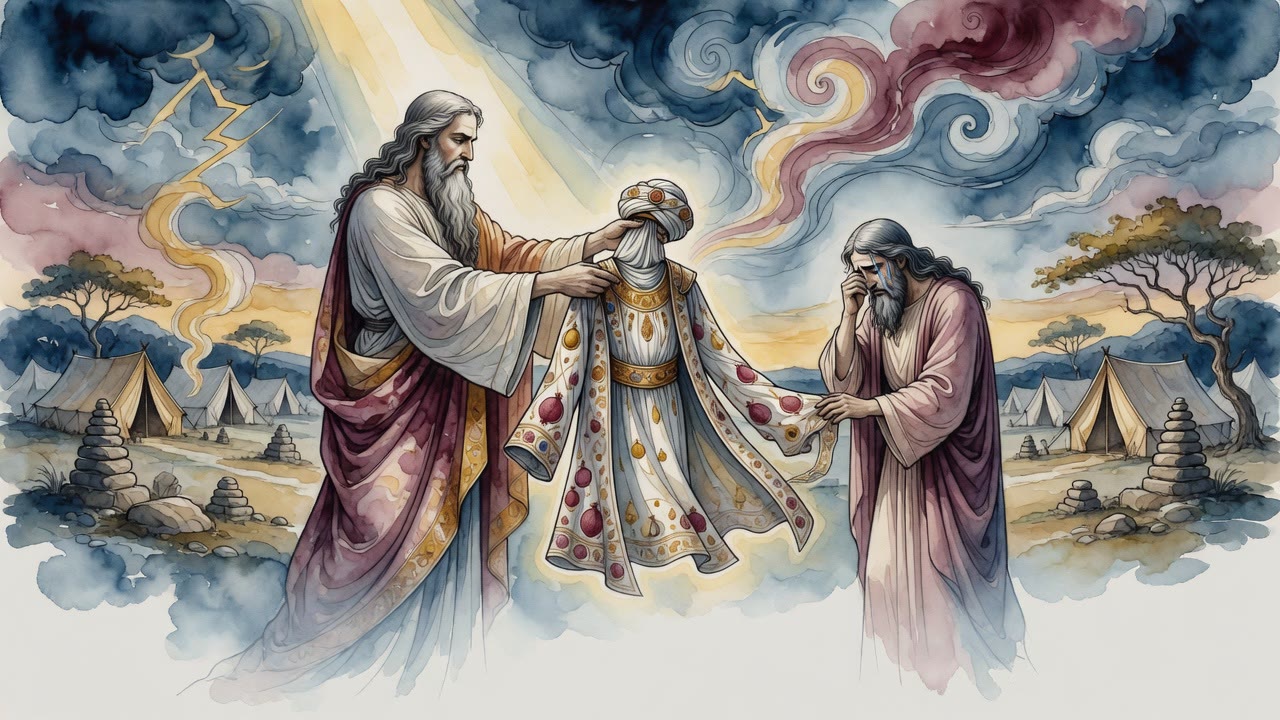
Moses stood at the altar in clothes that were not his forever and lifted offerings with hands that shook only on the inside. For seven days of consecration he served as high priest while Aaron watched the choreography he would inherit. Smoke rose. Blood marked. The camp smelled of sacrifice and new wool. Moses did not wink at the crowd. He worked.
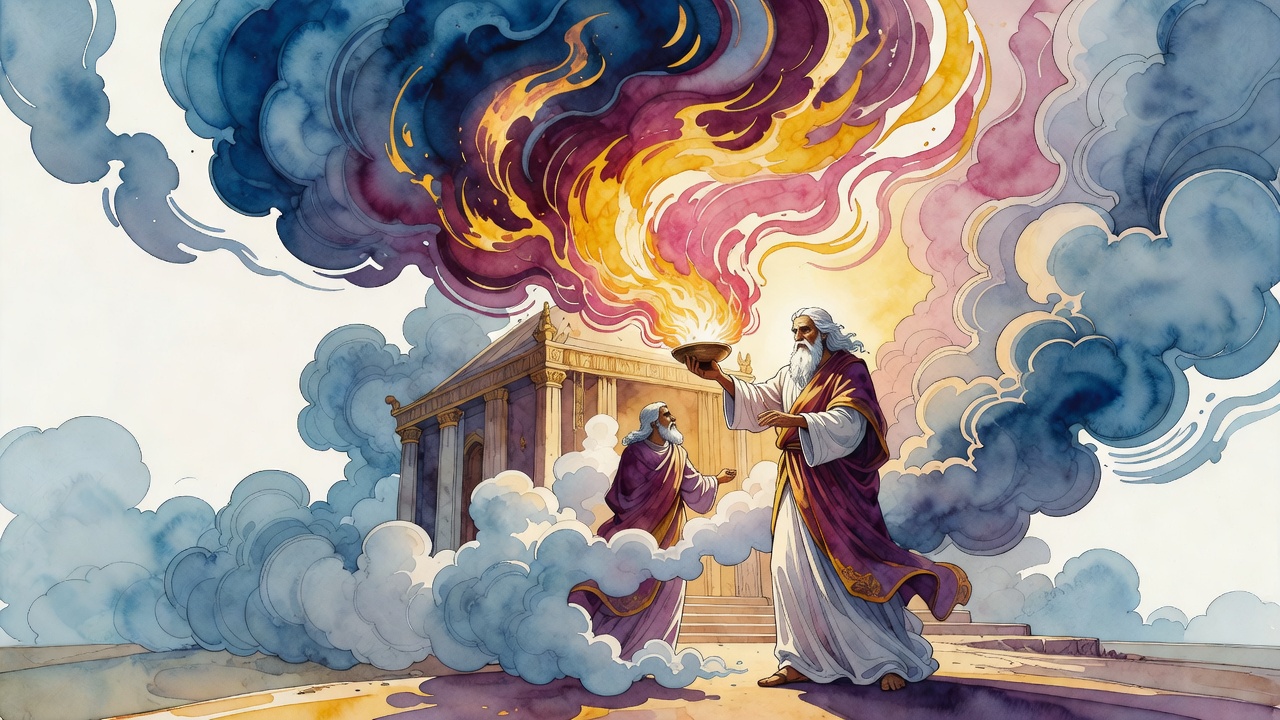
Moses Held the Altar Fire Before Aaron Could Click for full size

"Moses and Aaron in their priesthood," the psalm would later say in one breath (Psalm 99:6), as if the two names could share a single office without tearing.

Seven Days on Loan

Rabbi Yehoshua ben Yossi's memory of the wilderness is blunt. During the seven days of miluim, the filling of sacred hands, Moses himself served as high priest each day. Not as a tourist. Not as a supervisor with clean sleeves. As the one who approached, who burned, who bore the danger of nearness before Aaron's line locked the role for generations.

Other sages push further. Through forty years, they say, Moses never fully stepped out of priestly service. Chronicles lists the sons of Amram, Moses and Aaron, then sets Aaron apart for the most holy work while still naming Moses the man of God in the same family ledger (1 Chronicles 23:13-14). Leadership and sanctuary refuse to live in separate tents in this telling.

When the Mishkan Was Finished

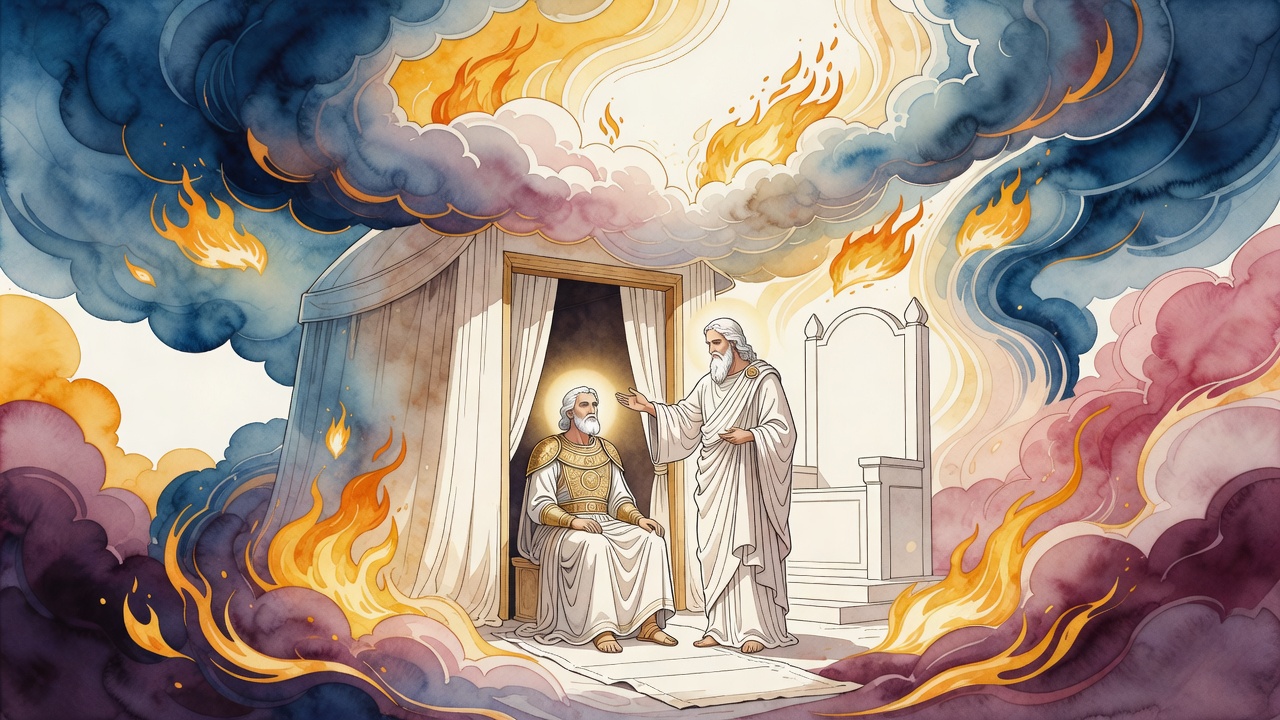
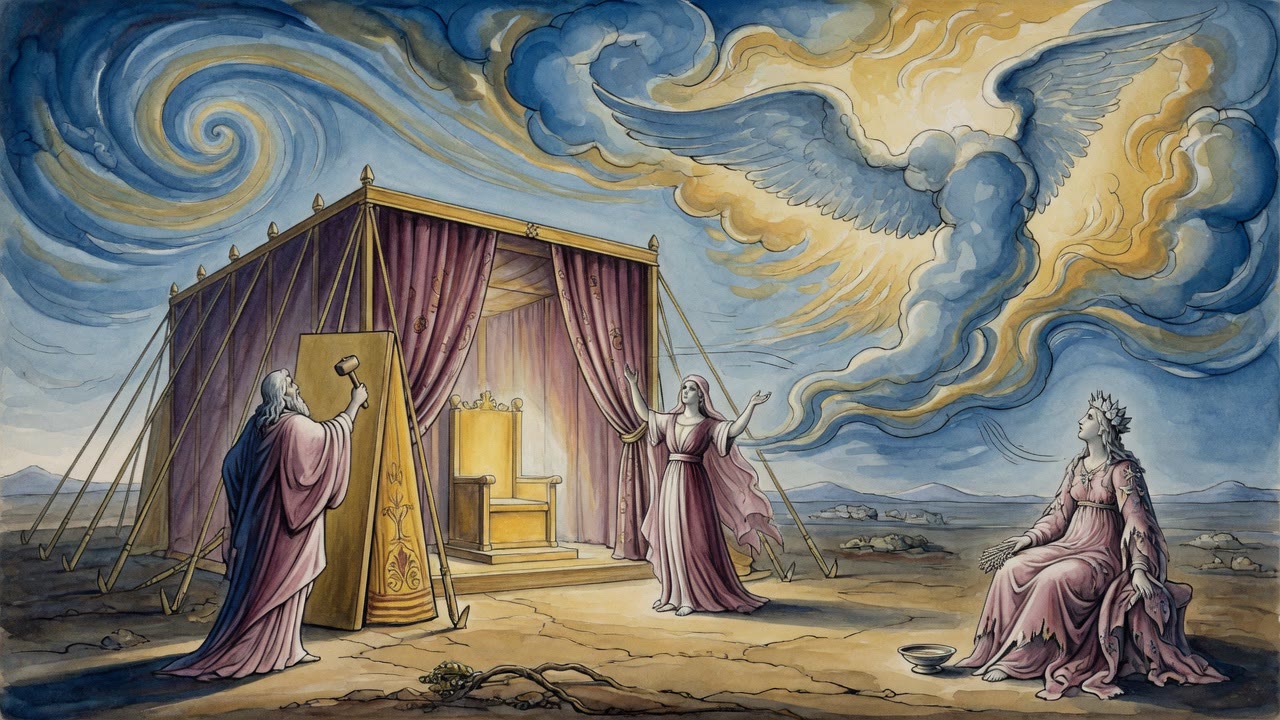
"On the day Moses completed erecting the Tabernacle" (Numbers 7:1). The Hebrew kalot carries a hush of bride language for ears trained by Song of Songs. The Pesikta hears the Mishkan (the portable sanctuary Israel carried through the wilderness) as a wedding canopy returned to earth. "I have come to my garden," says the Beloved, not a stranger's garden, but My own, the place that was preeminent from the beginning (Song of Songs 5:1).

After Adam's failure, the Shekhinah (שכינה), the indwelling Presence, had moved in the garden with a restless motion, mit'halech, leaping upward rather than strolling at ease (Genesis 3:8). Distance entered the story like a cold front. The Tabernacle's dedication is not interior design. It is a homecoming negotiated from below. The lower world invites. Heaven answers.

The Groom Waits for Permission

Rabbi Chaninah draws derech eretz, proper conduct, out of the sequence. The verse "My beloved shall come to his garden" (Song of Songs 4:16) precedes "I have come to my garden." Invitation before entry. Consent before canopy. Even the Holy One, in this daring homily, models arrival that waits to be welcomed. Moses' priestly week is the human side of that welcome: hands preparing a house until the Guest can enter without shame on either side.

Aaron's Name Beside Moses

When Numbers opens the generations of Aaron and Moses, the midrash notices Moses' children missing from the priestly tree and refuses to call it an insult. The verse includes Moses for honor, so his stature will not shrink when the camera pans to Aaron's anointed sons. Priestly investiture belongs to Aaron's line. Legacy still demands Moses in the frame. The man who held the altar for seven days cannot be edited out of the family album of holiness.

Aaron will later wear the names on his heart and the bells on his hem. Moses will still be the one who taught the motions when the fire was new and the danger unnamed.

Fire That Stays

After the week, Aaron steps fully into the role. Moses steps back without emptying himself of the sacred. The camp learns that power can be loaned without being stolen, that a brother can serve another's future office without poisoning the future. When glory finally fills the Mishkan, both men stand in the heat of a Presence that chose the lower regions again because someone built, someone invited, someone kept the fire for seven careful dawns.

Israel's priesthood begins not with a man grabbing a crown, but with a prophet wearing borrowed linen until the appointed priest can bear the weight.

Aaron had not always been ready to wear the garments. Earlier midrashic memory shows Moses persuading his older brother that the role was not theft but assignment. The seven days reverse the anxiety. Moses holds the fire so Aaron can watch without the full weight yet crushing his shoulders. Each dawn of the miluim week is a lesson plan written in blood and flour and fragrance.

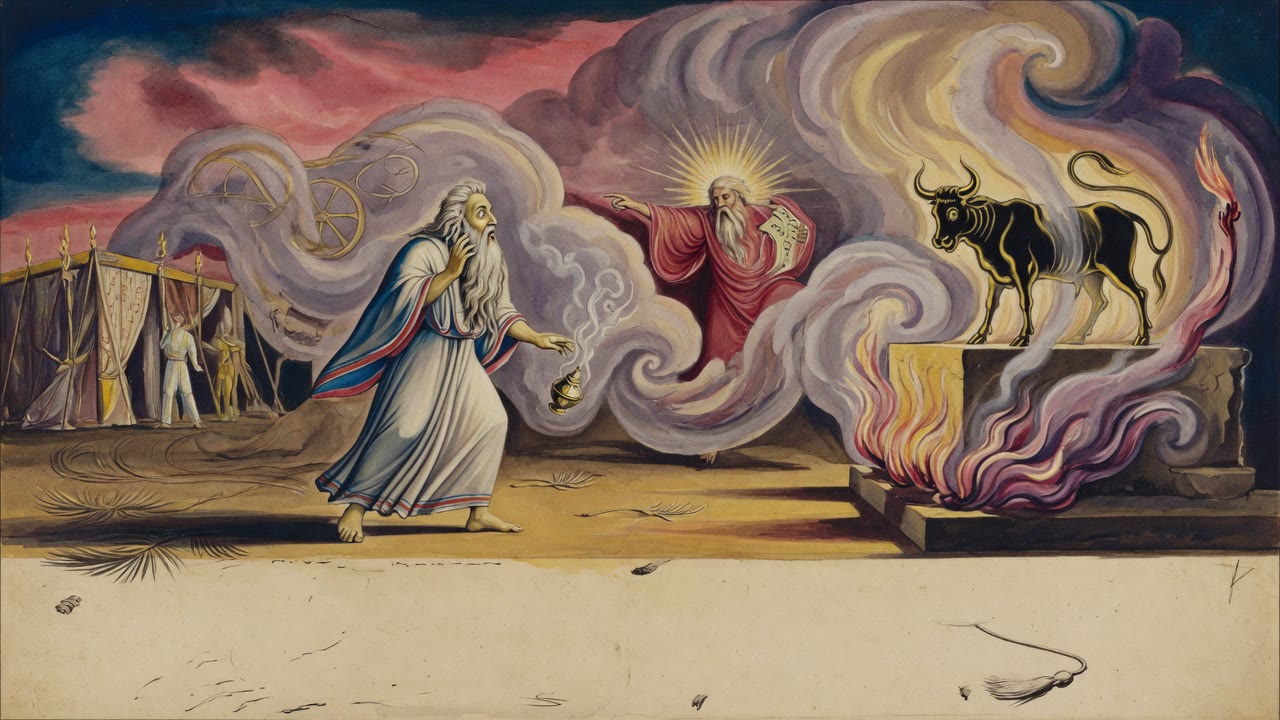
The people saw smoke and learned that nearness has a procedure. Not every enthusiastic Israelite could invent a private priesthood, a lesson Korah would later refuse at the cost of the ground itself. Moses' temporary service authorized Aaron's permanent one. Authority moved by demonstration, not by slogan.

When the eighth day came and glory appeared, the brothers stood in a heat that belonged to neither of them. The Shekhinah (the Divine Presence) had accepted the invitation. Moses stepped back into prophecy and judgment. Aaron stepped forward into a lifetime of bells and blood. Between them the altar remembered both sets of hands.

In the census language of Numbers, Moses remains beside Aaron so no reader can shrink the man of God into a preface. The honor is structural. Remove Moses from the sentence and the priesthood looks like a dynasty without a teacher. Keep him there and every later high priest inherits a week when the prophet himself refused to treat holy service as beneath a leader.


← All myths
From the tradition

Sources

3 sources

The texts behind this telling. Some cards carry a translation of the source; others are our own retelling of it, and each card says which. Every card links out to the original.

Midrash Tehillim 99:2Midrash Tehillim

Retold in our words. Read the original at the link below.Rabbi Mike Feuer, Jerusalem Anthology · CC-BY

Midrash Tehillim turns to Did Moses Serve as a Priest Before Aaron.

To picture Moses, not just as the lawgiver and prophet, but also performing the sacred rituals in the Mishkan, the Tabernacle.

This idea comes to us from Midrash Tehillim, a collection of interpretations on the Book of Psalms. In the context of Psalm 99, which speaks of God’s holiness and the role of priests, the Midrash (rabbinic interpretive commentary) explores the relationship between Moses and Aaron.

Rabbi Yudan, citing Rabbi Yossi son of Rabbi Judah, and Rabbi Berachiah, quoting Rabbi Yehoshua ben Korcha, both suggest that throughout the forty years in the wilderness, Moses never stopped serving in the priesthood, pointing to the verse, "Moses and Aaron in their priesthood." (Psalm 99:6)

Rabbi Berachiah, in the name of Rabbi Simon, even brings a verse from Chronicles to bolster this claim: "The sons of Amram: Moses and Aaron. And Aaron was set apart to sanctify him as most holy, he and his sons forever, to offer the bread of the presence. And Moses, the man of God." (1 (Chronicles 23:13-1)4)

The text subtly elevates Moses's role, intertwining it with Aaron's priestly duties. It's as if to say that Moses, even in his role as leader and lawgiver, was perpetually connected to the sacred service.

But it goes further. Rabbi Yehoshua ben Yossi adds another layer: during the seven days of consecration for Aaron and his sons, Moses himself served as High Priest each day! This further emphasizes the notion that Moses's connection to the priesthood was not just a passing phase, but a constant throughout that formative period.

Why is this important? What does it tell us? Perhaps it highlights the idea that true leadership isn't just about authority, but also about service and dedication to the sacred. Moses, in this view, embodies the perfect leader – one who guides the people and also humbly serves in the most holy of roles.

It challenges us to think about leadership in a more holistic way. It's not enough to simply hold a position of power; we must also be willing to serve and dedicate ourselves to something greater than ourselves. Moses, whether literally or figuratively, shows us that the greatest leaders are those who are also the greatest servants.

Full source
Pesikta DeRav Kahana 1:1Pesikta de-Rav Kahana

Translation of the source text.Sefaria-hosted English translation · CC-BY

"And it came to pass on the day that Moses had finished" (Numbers 7:1). "I am come into my garden, my sister, my bride" (Song of Songs 5:1). Rabbi Azariah said in the name of Rabbi Simon: This may be compared to a king who became angry with the queen, drove her out, and expelled her from his palace. After a time he wished to bring her back. She said: Let him renew for me some new thing, and afterward he may bring me back. So too, in former times the Holy One, blessed be He, would receive offerings from above, as it is said, "And the LORD smelled the sweet savor" (Genesis 8:21), but now He receives them from below, "I am come into my garden, my sister, my bride" (Song of Songs).

Rabbi Hanina said: The Torah has taught you proper conduct, that the bridegroom should not enter the bridal chamber until the bride gives him permission, "Let my beloved come into his garden" (Song of Songs 4:16), and afterward, "I am come into my garden."

Rabbi Tanhum the son-in-law of Rabbi Eleazar ben Avina said in the name of Rabbi Simeon ben Yosni: It is not written here "I am come into a garden," but "I am come into my garden," into my bridal canopy, to the place where its root was at the beginning. The root of the Divine Presence was among those below, and this is what is written, "And they heard the voice of the LORD God walking in the garden" (Genesis 3:8). Rabbi Abba bar Kahana said: It is not written here "walking" (in the simple sense of moving along), but "walking about" [the verb mit-hallekh, in a reflexive form, read as] leaping up and ascending.

"And the man and his wife hid themselves" (Genesis 3:8). Rabbi Aivu said: At that moment the stature of Adam, the first man, was cut down and reduced to one hundred cubits. Rabbi Isaac said: It is written, "The righteous shall inherit the land" (Psalms 37:29). And where then are the wicked? They fly in the air. Rather, what is the meaning of "and dwell therein forever" (Psalms 37:29)? They shall cause the Divine Presence to dwell upon the earth.

The root of the Divine Presence was at the beginning among those below, and when Adam, the first man, sinned, it withdrew to the first firmament. The generation of Enosh arose and sinned, and it withdrew from the first to the second. The generation of the Flood, and they sinned, and it withdrew from the second to the third. The generation of the Dispersion, and they sinned, from the third to the fourth. The Egyptians in the days of Abraham our father, and they sinned, it withdrew from the fourth to the fifth. The Sodomites, and they sinned, from the fifth to the sixth. The Egyptians in the days of Moses, from the sixth to the seventh.

And corresponding to them seven righteous men arose and brought it back down to the earth. Abraham our father arose, was worthy, and brought it down from the seventh to the sixth. Isaac arose, was worthy, and brought it down from the sixth to the fifth. Jacob arose, was worthy, and brought it down from the fifth to the fourth. Levi arose, was worthy, and brought it down from the fourth to the third. Kohath arose, was worthy, and brought it down from the third to the second. Amram arose, was worthy, and brought it down from the second to the first. Moses arose, was worthy, and brought it down to the earth. Therefore it is said, "And it came to pass on the day that Moses had finished" (Numbers 7:1).

Full source
Bamidbar Rabbah 2:22Bamidbar Rabbah

Retold in our words. Read the original at the link below.The Sefaria Midrash Rabbah, 2022 · CC-BY

That feeling of imbalance, of unspoken credit, is something the ancient rabbis grappled with too. And we find a fascinating example of it right at the beginning of the Book of Numbers, in Bamidbar Rabbah – one of the great Midrashic (rabbinic interpretive commentary) collections that unpacks and illuminates the Torah.

Simple enough. But then comes a twist. The verse right before it states, “These are the generations of Aaron and Moses.”

Wait a minute. Where are Moses’ kids?

Why is Moses, the leader, the lawgiver, the one who spoke to God face-to-face, seemingly missing from his own family tree?

The rabbis of the Midrash weren't ones to shy away from a good textual puzzle. And in Bamidbar Rabbah, they offer a powerful explanation. It’s not an oversight, they say. It’s about honor. Specifically, the honor of Moses. The verse could have easily just said, “These are the generations of Aaron.” But it doesn’t. It deliberately includes Moses. Why? "It is due to the honor of Moses," the Midrash explains, "to avoid diminishing his honor."

So, what’s really going on here?

The Midrash is suggesting that even though Moses’ biological descendants aren’t listed in connection to the priesthood (which belonged to Aaron’s line), his influence, his spiritual legacy, is so profound that he can’t be omitted. He’s intrinsically tied to the idea of leadership and legacy itself. To leave him out would be a disservice, a diminishment of his true stature.

And it’s not just about giving Moses a symbolic pat on the back. The passage goes on to emphasize that the verses are explicitly concerned with the "sons of Aaron, the anointed priests, whom he invested to serve as priests.” In other words, the focus is intentionally narrowed to the priestly line.

So, the Midrash is making a subtle but important point: Sometimes, inclusion is about more than just bloodlines or direct descent. It's about recognizing the impact, the influence, the spiritual weight someone carries. Even when their name isn’t explicitly etched in the family tree.

Who are the "Moseses The people whose impact is so significant, so profound, that they shape our stories even when they're not directly in the spotlight? And are we doing enough to acknowledge their contributions?

Full source