Heaven Said Woe When the Tabernacle Was Done
A king told his quarrelsome wife to make herself a royal robe. She sewed for months and never once picked a fight. Then he looked at it and said woe.
Table of Contents
 Click for full size
The Garment That Kept Her Quiet
A king had a wife who fought with him at every meal. Word against word, morning and night, for years.
One day he said, "Make yourself a royal robe." Purple, the heavy kind, the kind that takes months.
She took the work and sat down with it, and while her hands were full of thread she stopped fighting him, because a woman with a needle in her hand has nowhere to put an argument. She measured and cut and sewed through a whole season, and the house was quiet in a way it had not been since the wedding.
Then she carried the finished robe into the throne room and laid it in front of him. He picked it up and turned it over and it was beautiful, better than he had asked for.
"Woe," the king said. "Woe."
She stood there with thread still on her fingers. "My lord. I have worked myself half to death doing what you wanted, and you say woe?"
"The work is perfect," he said. "That is not it. The whole time you were busy with it you did not come after me once. Now your hands are empty."
The Day the Camp Ran Out of Work
For months the camp in the wilderness had gone to bed exhausted.
Copper sockets do not complain about the water. Acacia boards do not ask why somebody else got a better position. Goats' hair has to be spun by hand and blue wool has to be dyed and the silver hooks have to be set, and while all of it was going on, nobody in Israel opened his mouth about meat or rank or the road.
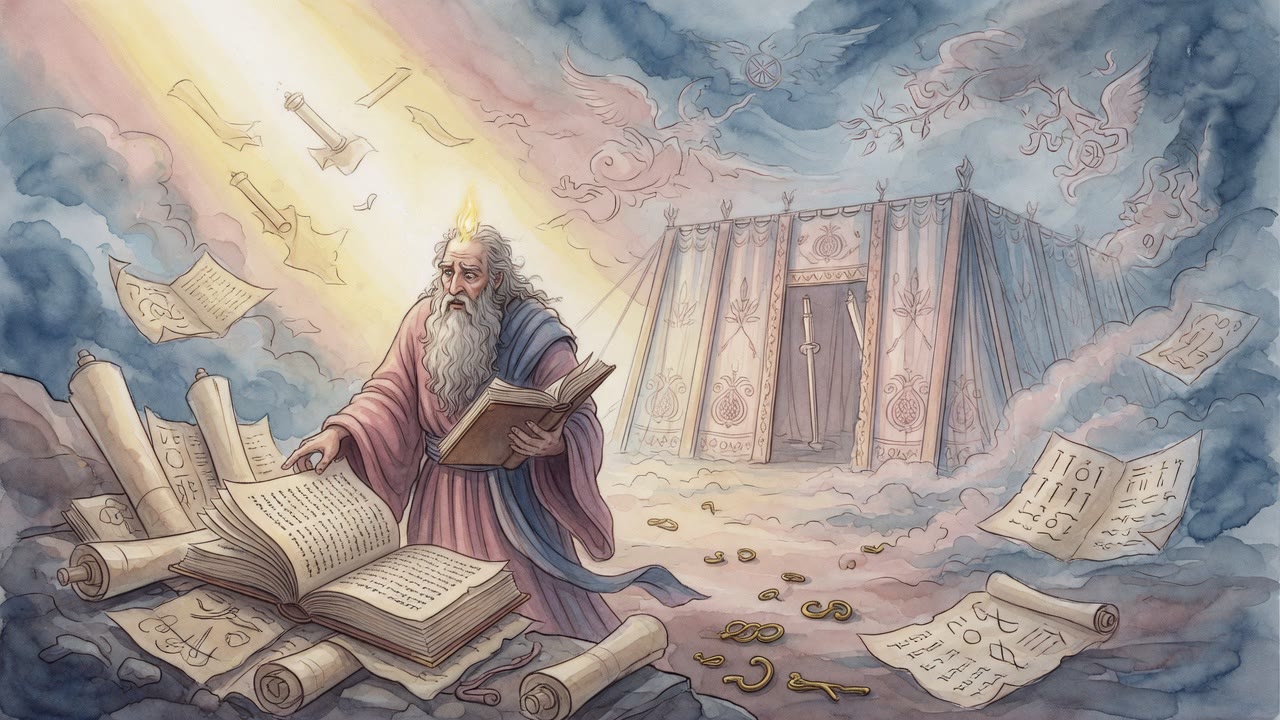
Then Moses finished the Tabernacle, and the word that opens the account of that day sits with a groan inside it. Vayehi, and it was, but inside the word sits vay, which is woe.
"Woe on the day Moses finished, because My children have nothing left to do with their hands, and the complaining starts again tomorrow."
The Angels Heard What Was Happening
The same word carried upstairs, and the ministering angels understood it faster than anyone in the camp did.
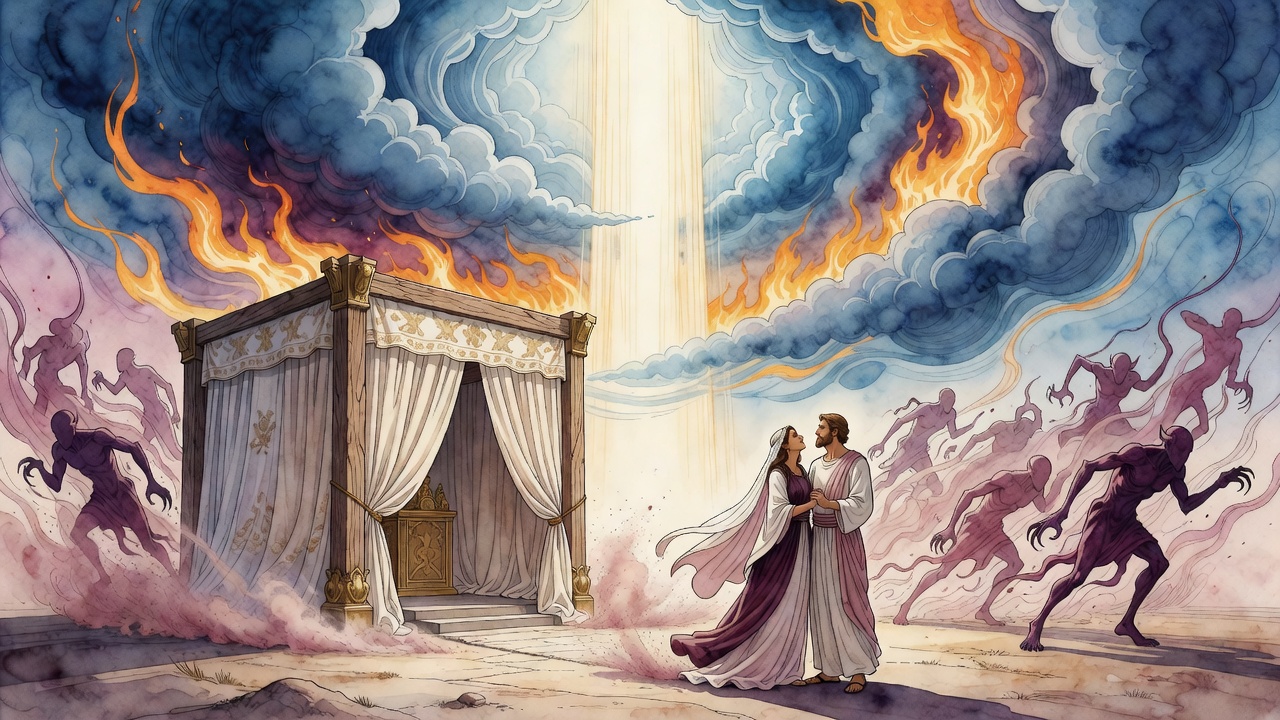
He is leaving, they said, because He is taking the Presence out from among us and putting His glory downstairs with His children.
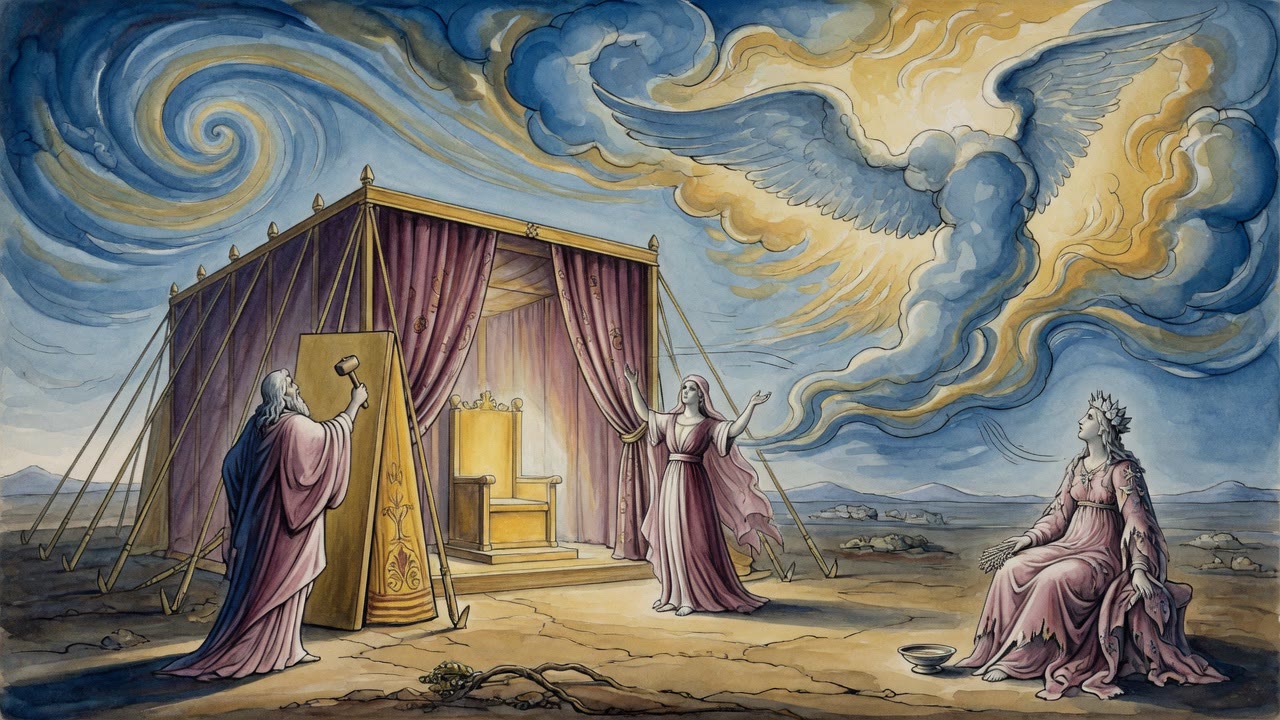
They had sung over that Throne without competition since before there was dust, but now a tent of skins and boards was going up on the desert floor, and the neighbor was packing.
God answered them. "Do not think about it that way. My Presence stays with you above. His majesty is set upon the heavens."
It was thin, and nobody in that court was fooled. The other psalm they all knew ran the other direction and put the order plainly. His majesty is upon the earth. And after that, upon the heavens. The house downstairs was the main house. The angels were given a verse to hold and no vote.
How a King Moves
Rabbi Tanchuma bar Abba opened that day with a riddle out of Proverbs. Who went up to heaven and came back down.
When a king of flesh and blood travels from one place to another, the road is cleared for him first. Torches out in front. Beacons lit on the high points so the next town knows. Trumpets and rams' horns going the whole way, so that ordinary traffic pulls aside and waits in the ditch until the column has passed.
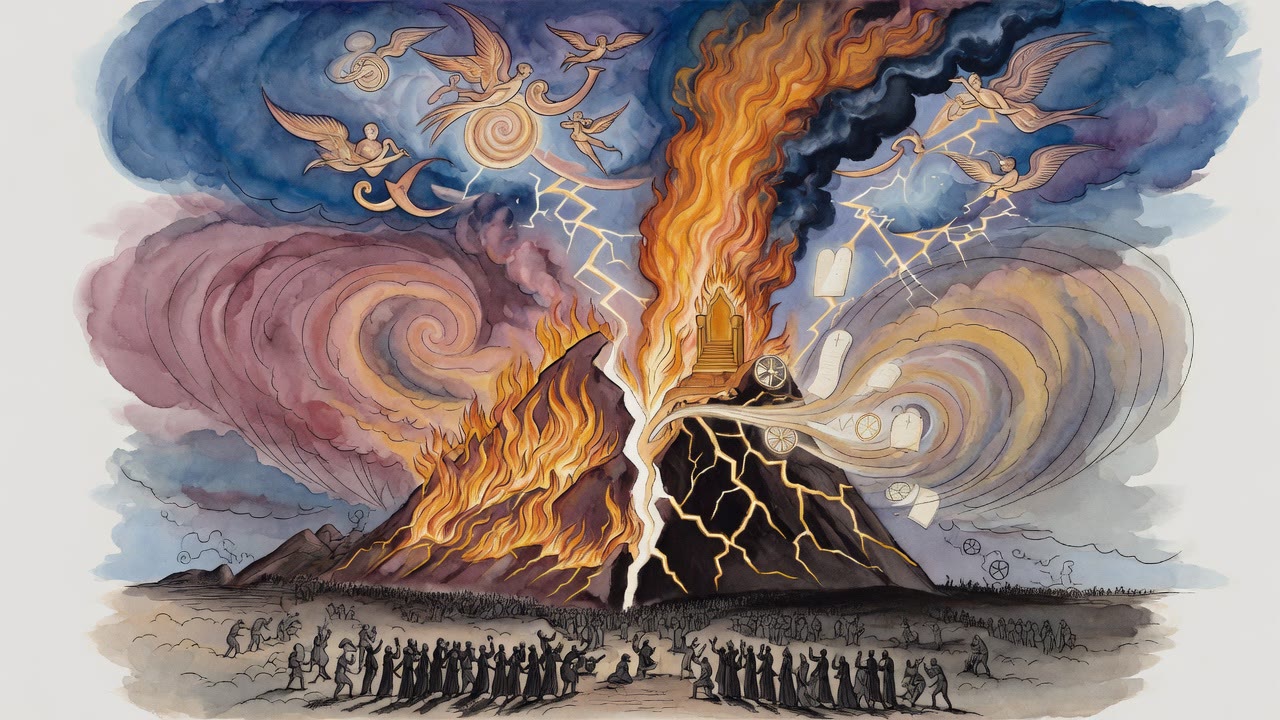
God went up with a shout and horns sounding in front of Him. Then He came down on Sinai in fire, and the mountain smoked under Him.
The riddle keeps asking. Who gathered the wind up in the hollow of his hand. Every living soul is in that hand, and the breath of every human being with it. Who tied the waters into his cloak. He binds them up in the clouds, and the cloth holds, and the world is not drowned this morning. Who raised up the ends of the earth. He is the one who kills and brings to life, who takes down to the grave and brings back up.
What Is His Son's Name
Two questions close the riddle, and the second one is the whole point of it. What is His name. The LORD, and He has said so Himself. "That is My name, and I do not hand it to anyone else."
And what is His son's name.
Israel. My firstborn.
That was the answer waiting at the bottom of the whole procession. The torches and the horns and the fire on the mountain were all going one direction, toward a camp of freed slaves who would be arguing about water again within the month, and toward a tent of goats' hair with a curtain across the front of it.
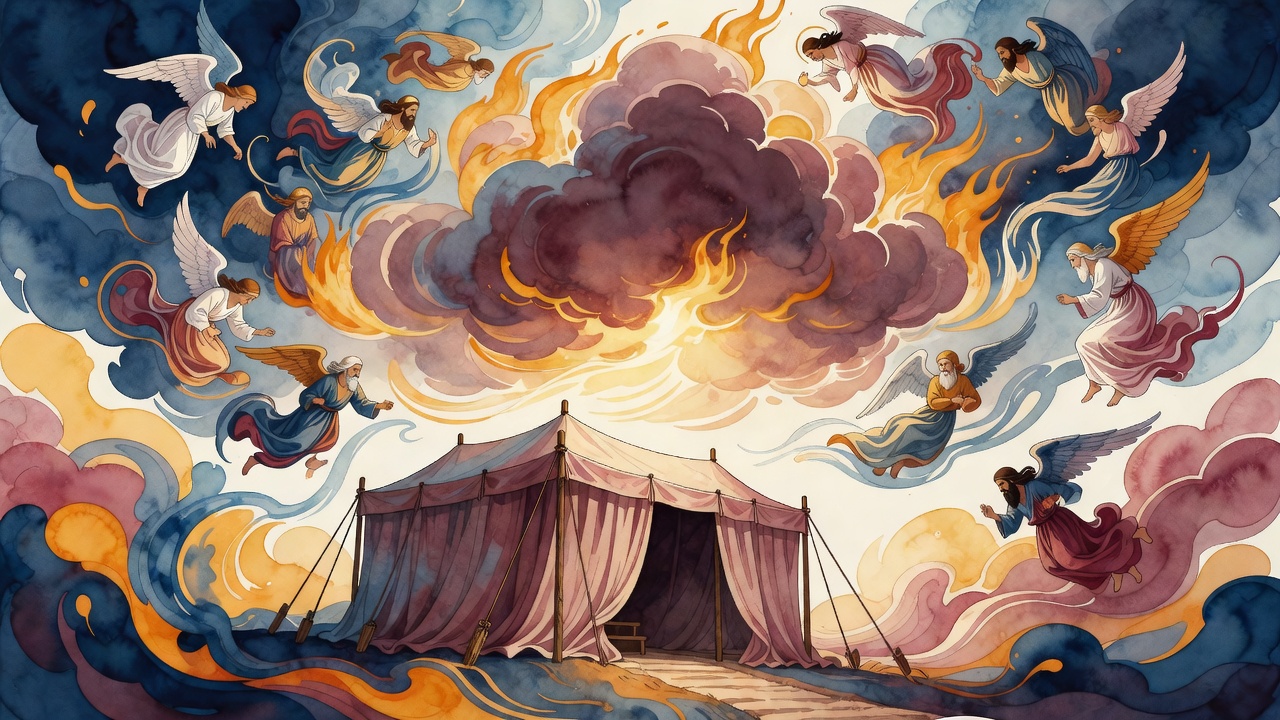
The cloud came down and went in. Above it the angels went on singing, holding the verse they had been handed.
← All myths